Depressing Christmas Songs, Ctd

by Chris Bodenner

A reader writes:

Laura Nyro's "Christmas in My Soul" is the most depressing Christmas song. Written about the the Vietnam War, the Civil Right Era, the poisonous politics of those times, and it is just as relevant today, although and perhaps because it contains a call for peace, tolerance and hope.

Lyrics after the jump:

I love my country as it dies
In war and pain before my eyes
I walk the streets where disrespect has been
The sins of politics, the politics of sin
The heartlessness that darkens my soul
On Christmas.

Red and silver on the leaves
Fallen white snow runs softly through the trees
Madonnas weep for wars of hell
They blow out the candles and haunt Noel
The missing love that rings through the world
On Christmas.

Black panther brothers bound in jail
Chicago seven and the justice scale
Homeless Indian of Manhattan Isle
All God's sons have gone to trial
And all God's love is out of style
On Christmas.

Now the time has come to fight
laws in the book of love burn bright
people you must win for thee America
her dignity
for all the high court world to see
on christmas

Christmas in my soul
Christmas in my soul.

Come young braves
Come young children

Christmas in my soul
Christmas
in my soul
Joy

to this world.

Over Multitasking

by Patrick Appel

Nick Carr continues to warn about the dangers of technology:

The problem today is not that we multitask. We’ve always multitasked. The problem is that we never stop multitasking. The natural busyness of our lives is being amplified by the networked gadgets that constantly send us messages and alerts, bombard us with other bits of important and trivial information, and generally interrupt the train of our thought. The data barrage never lets up. As a result, we devote ever less time to the calmer, more attentive modes of thinking that have always given richness to our intellectual lives and our culture—the modes of thinking that involve concentration, contemplation, reflection, introspection. The less we practice these habits of mind, the more we risk losing them altogether.

There’s evidence that, as Howard Rheingold suggests, we can train ourselves to be better multitaskers, to shift our attention even more swiftly and fluidly among contending chores and stimuli. And that will surely help us navigate the fast-moving stream of modern life. But improving our ability to multitask, neuroscience tells us in no uncertain terms, will never return to us the depth of understanding that comes with attentive, singleminded thought. You can improve your agility at multitasking, but you will never be able to multitask and engage in deep thought at the same time.

A Full, Delicious Life

Ogle-dog

by Chris Bodenner

Goldblog has an engaging interview with Jonathan Safran Foer over his new book, "Eating Animals." Here Jeff basically asks Jonathan why he's not militant about his principled stance against meat:

I was really moved, I have to say, by some of the small farms that I went to. I would say that the goodness of good farmers might have surprised me more than the badness of bad farmers. Maybe that's just because I had more exposure to what factory farming was. But I went to farms where animals were treated better than I treat my dog, and it would just be impossible to try to honestly argue that they don't have good lives. So of course, they're killed in the end, but our lives are destined for death also. We're not getting killed, but there are slaughterhouses that kill these animals in ways that they don't anticipate death or feel it. So to argue against such farms, you have to get into a sort of philosophical terrain that I don't get into

(Photo by Alex Ogle)

Depressing (near) Christmas Poem (for Sunday)

by Andrew Sprung

A NOCTURNAL UPON ST. LUCY'S DAY,
BEING THE SHORTEST DAY.

by John Donne

'TIS the year's midnight, and it is the day's,
Lucy's, who scarce seven hours herself unmasks ;
    The sun is spent, and now his flasks
    Send forth light squibs, no constant rays ;
            The world's whole sap is sunk ;
The general balm th' hydroptic earth hath drunk,
Whither, as to the bed's-feet, life is shrunk,
Dead and interr'd ; yet all these seem to laugh,
Compared with me, who am their epitaph.

Study me then, you who shall lovers be
At the next world, that is, at the next spring ;
    For I am every dead thing,
    In whom Love wrought new alchemy.
            For his art did express
A quintessence even from nothingness,
From dull privations, and lean emptiness ;
He ruin'd me, and I am re-begot
Of absence, darkness, death—things which are not.

All others, from all things, draw all that's good,
Life, soul, form, spirit, whence they being have ;
    I, by Love's limbec, am the grave
    Of all, that's nothing. Oft a flood
            Have we two wept, and so
Drown'd the whole world, us two ; oft did we grow,
To be two chaoses, when we did show
Care to aught else ; and often absences
Withdrew our souls, and made us carcasses.

But I am by her death—which word wrongs her—
Of the first nothing the elixir grown ;
    Were I a man, that I were one
    I needs must know ; I should prefer,
            If I were any beast,
Some ends, some means ; yea plants, yea stones detest,
And love ; all, all some properties invest.
If I an ordinary nothing were,
As shadow, a light, and body must be here.

But I am none ; nor will my sun renew.
You lovers, for whose sake the lesser sun
    At this time to the Goat is run
    To fetch new lust, and give it you,
            Enjoy your summer all,
Since she enjoys her long night's festival.
Let me prepare towards her, and let me call
This hour her vigil, and her eve, since this
Both the year's and the day's deep midnight is.

And now, by way of consolation, the best poem about a lovers' separation ever, same guy:

A VALEDICTION FORBIDDING MOURNING.
by John Donne

AS virtuous men pass mildly away, 
    And whisper to their souls to go, 
Whilst some of their sad friends do say,
    "Now his breath goes," and some say, "No."                     

So let us melt, and make no noise,                                       5
    No tear-floods, nor sigh-tempests move ;
'Twere profanation of our joys 
    To tell the laity our love. 

Moving of th' earth brings harms and fears ;
    Men reckon what it did, and meant ;                              10
But trepidation of the spheres, 
    Though greater far, is innocent. 

Dull sublunary lovers' love 
    —Whose soul is sense—cannot admit 
Of absence, 'cause it doth remove                                     15
    The thing which elemented it. 

But we by a love so much refined,
    That ourselves know not what it is, 
Inter-assurèd of the mind, 
    Care less, eyes, lips and hands to miss.                           20

Our two souls therefore, which are one, 
    Though I must go, endure not yet 
A breach, but an expansion, 
    Like gold to aery thinness beat. 

If they be two, they are two so                                          25
    As stiff twin compasses are two ; 
Thy soul, the fix'd foot, makes no show 
    To move, but doth, if th' other do. 

And though it in the centre sit, 
    Yet, when the other far doth roam,                                30
It leans, and hearkens after it, 
    And grows erect, as that comes home. 

Such wilt thou be to me, who must,
    Like th' other foot, obliquely run ;
Thy firmness makes my circle just,                                    35
    And makes me end where I begun. 

The Uniqueness Of Humans

by Patrick Appel

A reader writes:

I know this is a long video, but it seems to touch on many of the ideas you have been swirling around on this blog this past year.  For me, the Daily Dish (whether I agree with the sides it takes or not) has been all about defining humanity and putting it under the lens.  From the mental health breaks to the view from your window to the long actual ongoing discussions, it is all about looking at the world through the shoes of others and embracing mankind. The lecture is beautifully written and delivered by the renowned primatologist and neurobiologist Robert Sapolsky, enjoy.

The speech starts exactly at the 5:00 mark and is well worth watching. I know that I deserve a Poseur Alert nomination for saying this, but the way this reader describes the Dish corresponds well with what I think of as the overarching goal of the blog.

Fake War Ends

by Patrick Appel

Chris Beam thinks that the war on Christmas is basically over:

Just as the "war on Christmas" has obscured legitimate debate over church and state, other national issues seem to be overwhelming the "war on Christmas." Health care reform, climate change talks, and tax breaks for bankers provide plenty of fuel for conservative anger—and eat up plenty of air time. And perhaps Obama is diffusing some of the fear that his election would usher in an era of secular humanism. A devout Christian, he has continued many of the religious traditions of his predecessor, including the National Day of Prayer.

Then there's the rise of third-way groups like the Advent Conspiracy, which embraces the religious aspects of Christmas but rejects the consumerism surrounding it. (Watch their promo video here.) Rather than a war on Christmas, they're fighting a war for Christmas.

The Speed Of Thought

by Patrick Appel

Carl Zimmer studies it:

[R]educing the speed of thought in just the right places is crucial to the fundamentals of consciousness. Our moment-to-moment awareness of our inner selves and the outer world depends on the thalamus, a region near the core of the brain, which sends out pacemaker-like signals to the brain’s outer layers. Even though some of the axons reaching out from the thalamus are short and some are long, their signals arrive throughout all parts of the brain at the same time—a good thing, since otherwise we would not be able to think straight.

Moral Facts And Honda Civics

by Patrick Appel

Wilkinson debates moral realism:

I’m definitely a realist about institutional facts, such as the fact that I own my 1996 Honda Civic. As John Searle helpfully puts it, these kinds of facts are ontologically subjective — they are facts in virtue of mental states — but epistemically objective. If you believe that I don’t own my 1996 Civic, you’re just wrong. I do own it. And I have a piece of paper from the State of Iowa that proves it. That this piece of paper proves it is due to a firmly-established, widely-shared set of beliefs and intentions.

I think moral facts are a lot like the fact that I own my car. But the firmly-established, widely-shared beliefs, sentiments, and dispositions to judgment in virtue of which moral claims are true or false vary over time and space. I do think some of these moral facts give us rationally authoritative reasons for action, but others don’t. (There are bad moralities!) So, I’m still not sure whether or not I count as a moral realist.

Montazeri, RIP

52014379

by Chris Bodenner

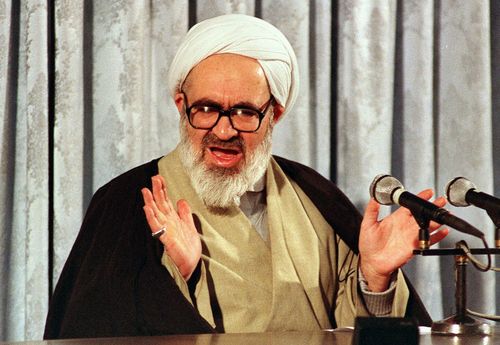
Scott Lucas reacts to the passing of Ayatollah Hossein Ali Montazeri, who died in his sleep this morning:

Montazeri, 87, was one of the most prominent clerics in Iran since the 1979 Islamic Revolution. In the 1980s he was the designated successor to the Supreme Leader, Ayatollah Khomeini, until he was sidelined because of political and religious divisions and a falling-out with Khomeini. Ayatollah Khameini eventually became Supreme Leader. Montazeri was isolated and then placed under house arrest after clashes with Khamenei.

In recent months, Montazeri was one of the most vocal supporters of the opposition movement, going as far as to criticise the legimitacy of the Supreme Leader. … On 11 December, the Defenders of Human Rights Center in Iran named Montazeri as its Human Rights Activist of the Year. In his acceptance speech, Montazeri said, “None of those [aggressive actions by the Iranian Government] are legal.”

Masoud discusses the implications for the protest movement:

It is significant that yesterday marked the first day of Moharram, the current holy month that has several consecutive days of mourning and public ceremonies. As with previous occasions, the opposition will no doubt exploit the ceremonies to launch political protests. Ashur, the most important day when Imam Hossein is mourned, falls on December 27th.

Montazeri's death just before this day has significant implications. While the regime may be glad to have one of its harshest critics gone, his death is only bound to lead to an enormous outpouring in the streets of Tehran next week. The demonstrations, in fact, may likely be the largest in months.

Picture dated 05 February 1989 shows Ayatollah Hossein Ali Montazeri speaking on the occasion of the 10th anniversary of Iran's Islamic Revolution. Montazeri, the second most powerful man in Iran until eight years ago, has become one of the Islamic Republic's leading dissidents and a catalyst of recent political unrest. (NORBERT SCHILLER/AFP/Getty Images)