Face Of The Day

Screen Shot 2014-06-05 at 7.25.04 PM

Photographer Chloe Aftel photographs agender youth:

In the wake of a horrific incident in which Sasha Fleischman, an 18 year old “agender” youth, was set on fire after falling asleep on a bus in the Bay Area, San Francisco Magazine commissioned photographer Chloe Aftel to capture a series of portraits of young people (including Fleischman) who defy the male/female gender binary.

Aftel’s “Agender” series seeks to raise awareness of an overlooked and misunderstood community of gender fluid people who face oppression and harassment simply for not conforming.

See more of Aftel’s work here.


Having Faith In Overfishing

Adam Weymouth traveled to Alaska to cover “the trial of 23 Yup’ik fishermen who had violated a ban on the fishing of king (or Chinook) salmon”:

In court, the fishermen’s civil disobedience has been framed as a First Amendment issue: The Yup’ik believe they have an obligation to continue their ancestral traditions. As Jim Davis summarized it, in a brief submitted before the trial: “If Yup’ik people do not fish for King Salmon, the King Salmon spirit will be offended and it will not return to the river.”

But collapsing fish stocks have put those beliefs in conflict with conservation efforts:

“Nobody here knows the weather,” said 66-year-old fisherman Noah Okoviak, speaking from the witness stand in the Bethel courtroom. “Nobody here knows how many fish will come. Only the creator.”

Judge Ward listened to Okoviak’s defense and found his beliefs to be sincere. But as with the other 22 fishermen, he found Okoviak guilty. The state had sufficient reason to impose the ban, the judge explained, and the fishermen had violated it. But the sentences were lenient—a year of probation and a fine of $250 apiece (in one case, $500) to be paid over the course of a year or sometimes two. At times, the judge was openly sympathetic. “When this case goes up for appeal,” he said, as Okoviak took his seat, “the cold transcript will not reflect that everyone in the courtroom was standing, and that record will not reflect that there are a number of people in the courtroom with tears in their eyes.”

The fishermen’s cases have indeed moved on to the Alaska Court of Appeals, where their oral arguments may be heard as early as this summer. There, state-appointed judges will grapple with the same question the court faced in 1979, when an indigenous hunter named Carlos Frank was charged with illegally transporting a newly slain moose. Frank argued that he had needed the animal for a religious ceremony. Two lower courts found him guilty, but the Alaska Supreme Court reversed the verdict, calling moose meat “the sacramental equivalent to the wine and wafer in Christianity.”

“Happy Talk”

Last year, Philip Seymour Hoffman gave a speech by that name at the Rubin Museum with Simon Critchley. Above, the excellent PBS series Blank on Blank has animated a segment of the discussion:

[A]nimator Patrick Smith captured Hoffman’s self-deprecating whimsy as he discussed the difference between pleasure and true, lasting contentment. Hoffman also discussed the ever-present nature of the past and the fleeting status of moments of happiness—as well as how each person’s internal darkness affects how he plays his parts.

“Learning how to die,” he explains, “and therefore learning how to live.”

Watch the full conversation here.

Can Agnostics Get A Little Love?

In a brief but compelling history of agnosticism, George Dvorsky laments that “the current culture war” over religion has little use for intellectual humility:

Atheists and theists are battling it out for memetic supremacy, each side making cocksure proclamations as to whether or not God truly exists. Theists make the case for God by appealing to faith, scripture, or any number of now-archaic arguments. Atheists take the diametrically opposed stance, arguing that there’s no reason to believe that a supreme being exists. And woe betide anyone who dares to complexify the polarized nature of this debate. As far as this battle is concerned, the answer is either black or white; there’s no tolerance for nuance or doubt.

The vociferousness of these sentiments have largely forced agnosticism to the philosophical sidelines. That and some fairly serious misconceptions as to what it really means. These days, agnosticism is often mischaracterized as an undecided response to a question. And in fact, the term is frequently applied outside of a religious context when describing things for which we haven’t yet made an opinion. For example, we can say we’re “agnostic” about climate change, neither believing it or disbelieving it. Alternately, it’s used to express our ambivalence about something, using the term to equate to such sentiments as, “I don’t care,” “I don’t really want to know,” or “I don’t even want to think about it.”

But this casual usage of the term betrays its original purpose, an epistemological stance and methodology in which skepticism and empiricism – two hallmarks of the scientific method — takes center stage.

The Trial That Saved A Town

Rachel Maddux visits Dayton, Tennessee, to check out the town’s annual Scopes Festival, which celebrates the famous trial over the teaching of evolution in public schools that took place there. She finds that the episode just wasn’t about religion:

[T]he real story of the trial, like Dayton itself, began with the mines: they were dwindling, the town was suffering, and a group of local boosters—including drug store owner and school board president F. E. Robinson and school superintendent Walter White—were looking for a pick-me-up. Meanwhile, the fledgling ACLU was offering pro-bono legal representation for any teacher accused of breaking Tennessee’s recently passed Butler Act. Soon as the boosters got a whiff, they pounced. The trial was bound to be a big to-do somewhere, so why not Dayton? A willing defendant was found in John T. Scopes, a teacher and football coach at Rhea County Central High School. “I wasn’t sure if I had taught evolution,” Scopes wrote in his 1967 memoir. “Robinson and the others apparently weren’t concerned with this technicality. I had expressed willingness to stand trial. That was enough.”

The prospect of tourism still drives the town’s relationship to the trial – spurred by the fact that William Jennings Bryan, who argued for the prosecution that the state was justified in keeping evolution out of schools, died there just five days after the verdict:

If Bryan hadn’t died here and made way for [Bryan College], the town might have unraveled completely—the mines closed in 1930, just before the Great Depression rolled in. Dayton eventually came back as a manufacturing town, which it remains today, lately cultivating a sprawl of strip malls and chain stores. Bryan College hosts 1,300 students every year, or retains them—many are local and many more settle in Dayton after graduation to raise their own kids here. There are lakes and hills and woods all around, old coke ovens turned into nature preserves. Niche tourism is on the rise, so there’s even a chance the old boosters’ scheme might finally pay off. Coal isn’t the best source of metaphors for sustainable industry, but some things do need time to sit under great pressure before they can be of use. The Scopes Trial Museum, housed in the courthouse basement, brings in a few thousand visitors each year; in 2013, a few hundred attended the festival. Not quite Disney World, but it’s more appealing than blinkered silence.

Conservative Churches: The Exception To Secularization?

Pivoting off the news that the conservative Southern Baptist Convention saw its membership decline for the seventh year in a row, Molly Worthen argues that it might be time to discard the idea that “the churches that grow are the strictest, most demanding churches”:

If you step back and assess the big picture, few conservative churches are growing anymore (the Assemblies of God is, but by less than 2 percent per year). Evangelicals’ recent strategies—ranging from a hipster makeover to appeal to the Millennial crowd to the mistaken hope that millions of Latinos are leaving Catholicism and becoming conservative Protestants—cannot hold off the world-historical forces of secularization. As the historian David Hollinger has argued, even if liberal churches have lost the battle for butts in the pews, the steady advance of civil rights, the sexual revolution, and gay liberation suggests that they are winning the wider culture.

You’ve probably heard that the United States has been the exception to the decline of organized religion in the developed West over the last 200 years, and that’s true. But American exceptionalism has merely delayed secularization, not halted it. Poll numbers—rising numbers of “nones” who say they have no religious affiliation; slowly falling rates of church attendance—suggest that even if Americans continue to believe that life has a supernatural dimension, many may be drifting out of institutionalized worship. Traditional religious organizations are losing their grip on the public sphere and their influence in the lives of individuals.

As Emma Green reports, however, Southern Baptists aren’t responding to the news by rethinking their approach to an issue many believe are hurting them with young people – gay marriage. She quotes Russell Moore as proclaiming “there is not space in Southern Baptist churches for someone who is unrepentantly engaged in homosexual conduct.” Her take on the matter:

As laws on marriage change, popular belief may change, too, and that may affect the strength of the Southern Baptist movement. But no matter what environment the denomination is operating within, Moore seems to be saying, the core of their beliefs remain the same. Sex is a procreative act, defined by the intention of giving life. Marriage is biblically circumscribed, a union created by God, not the state. And Southern Baptists believe it is their duty to evangelize, to share these views with the world. Insofar as they succeed in creating converts, they will have persuaded those people that this is the right way of seeing marriage and sexuality, just as gay-marriage advocates have persuaded others that theirs is the right view. This doesn’t have to be a “war,” with one winner and one loser; people can have a variety of opinions that are fundamentally at odds, and Moore seems to believe that can happen with civility. As he said at a recent discussion held by the Ethics & Public Policy Center:

I don’t think that what we’re seeing is a move within evangelicalism … away from, for instance, a Christian sexual ethic. I do think, though, that we’re seeing an era in which Christianity is able to be clear. Nominal, cultural, almost-gospel Christianity is going away, and with it, the impulse to try to make Christianity marketable by making Christianity normal.

The creative question is not whether Southern Baptists will finally “admit defeat” and cede their views, now that many states are starting to allow gay marriage and many people are having pre-marital sex. It’s how Southern Baptists will live side-by-side with those who live and believe differently than them.

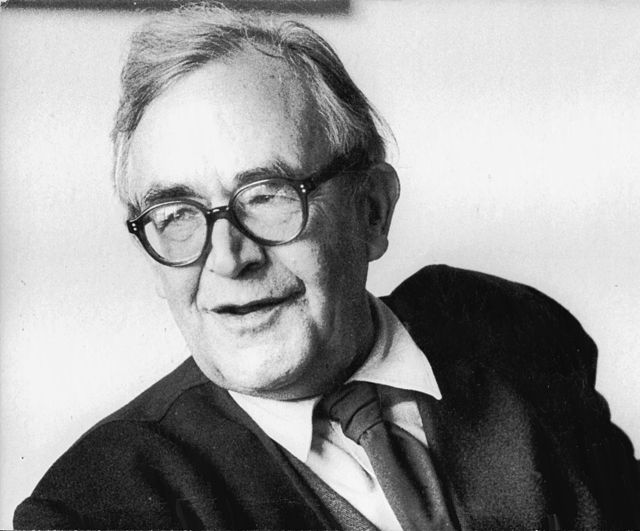
The Christians Who Said No To Nazism

Wikipedia-karlbarth01

On the 80th anniversary of its signing, Dale Coulter looks back at the Barmen Declaration, a statement largely written by the theologian Karl Barth “on behalf of the German Evangelical Church, a federal union of Lutheran, Reformed, and United churches” that proffered a “resounding ‘no’ to the political agenda of the Third Reich.” One of its insights? Everybody worships something:

To frame everything in terms of acts of worship, as [the Barmen Declaration] does, places the situation squarely in terms of competing claims to lordship. As social animals, humans enter into a web of relations that make claims on their lives. In Augustinian terms, humans are made to love and whatever they do love functions authoritatively in their lives. Humans break the grip of one authority by finding another love, which is how conversions occur. Simply put, there is no neutral ground from which humans form moral and political judgments because such decisions embody an embrace of this authority or that authority. Since there is no freedom from authority, the question becomes what authority offers a genuine freedom—a freedom to live in the truth.

In its structure, the Barmen Declaration proclaims that genuine freedom is found in the message of grace from Jesus Christ who is the Lord of the church. This message flows through Barmen’s movement between affirmations of the Lordship of Christ and denunciations of other claims to lordship. There can be only one Lord of life, one true lover of soul and society. The state oversteps its boundaries and encroaches upon human dignity when it seeks to extend its authority into all areas of human life in the same way that the church ceases to be true to its own commission when it becomes an organ of the state. In its own way, the Declaration argues for religious freedom as not simply entailing private acts of worship, but also the guarantee of a public space for the institutional expression of religious commitment. To guarantee religious freedom is to acknowledge the limitations of the authority of the state to define the lives of its citizens. Part of the proclamation of the gospel is that the state cannot be Lord of life without turning into the beast.

Read the entire Barmen Declaration here.

(Photo of Barth via Wikimedia Commons)

Quote For The Day

“[Carl Friedrich von] Weizsacker’s book The World-View of Physics is still keeping me very busy. It has again brought home to me quite clearly how wrong it is to use God as a stop-gap for the incompleteness of our knowledge. If in fact the frontiers of knowledge are being pushed further and further back (and that is bound to be the case), then God is being pushed back with them, and is therefore continually in retreat. We are to find God in what we know, not in what we don’t know; God wants us to realize his presence, not in unsolved problems but in those that are solved. That is true of the relationship between God and scientific knowledge, but it is also true of wider human problems of death, suffering, and guilt. It is now possible to find, even for these questions, human answers that take no account whatever of God. In point of fact, people deal with these questions without God (it has always been so), and it is simply not true to say that only Christianity has the answers to them.

As to the idea of ‘solving’ problems, it may be that the Christian answers are just as unconvincing – or convincing – as any others. Here again, God is no stop-gap; he must be recognized at the centre of life, not when we are at the end of our resources; it is his will to be recognized in life, and not only when death comes; in health and vigour, and not only in suffering; in our activities, and not only in sin. The ground for this lies in the revelation of God in Jesus Christ. He is the centre of life, and he certainly didn’t ‘come’ to answer our unsolved problems,” – Dietrich Bonhoeffer, May 29, 1944, in a letter to Eberhard Bethge, from Bonhoeffer’s Letters and Papers from Prison.

The View From Your Window

photo (2)

Seattle, Washington, 9 am. The reader writes:

My grandfather recently passed away. He did stained glass his whole life, and at his funeral almost everyone who spoke talked about the several glass birds, stars or even whole windows that he had made for them. I took this photo shortly after getting back from his funeral. That’s his glass nuthatch in the upper left of my kitchen window.

Going Back To Where Christianity Was Defined

During his recent trip to the Holy Land, Pope Francis prayed with Ecumenical Patriarch Bartholomew I, the primary leader of Eastern Orthodox Christians, at the Church of Holy Sepulchre in Jerusalem. Afterward, Bartholomew announced that he and Francis were planning an ecumenical gathering in Nicaea in 2025, marking the 1700th anniversary of the Church council that gave Christians the Nicene Creed. Emma Green tries to decipher the news:

That’s a pretty big deal; in 1054, theological disagreements led to a schism in Christianity, which is how Roman Catholics and Eastern Orthodox Christians became separate faith traditions. This is a call back to a time before the schism, before the fundamental disagreements that kept popes and patriarchs from talking to each other for more than 900 years.

But the specifics are still pretty fuzzy. Will it be a formal ecumenical council, with leaders from the two faiths earnestly trying to reconcile their theological differences? Or will it be just what Bartholomew said—a celebration, full of meaningful dialogue but little actual change? Hard to tell, says Rocco Palmo, the author of the blog Whispers in the Loggia. 

“It’s 12 years away,” he pointed out. Trying to predict what will happen in 2025 is like an extreme version of confidently declaring who will be president of the United States in 2016—there’s just no way to know. Plus, Francis and Bartholomew are both in their 70s. Bartholomew said the pair wanted to leave this council “as a legacy to ourselves and our successors,” which seems like an acknowledgment that they could both be dead—or retired—11 years from now.

Michael Peppard adds:

The ongoing Catholic-Orthodox dialogue will be intensified in preparation for the event. What began in Jerusalem in 1964 and was celebrated last week at the Holy Sepulchre will continue in the holy city this fall, when, in Bartholomew’s words, “a meeting of the Catholic-Orthodox Joint Commission  will be held hosted by the Greek Orthodox patriarch Theophilos III. It is a long journey in which we all must be committed without hypocrisy.”

In all the attention to the Pope’s gestures toward political peace in the Holy Land last week, the joint event with the Orthodox got a bit lost in the mix. But Francis and Bartholomew didn’t lose focus. And they’ve got a date on the calendar to prove it.

Bart Gingerich, however, downplays what might happen at Nicaea 2025:

[B]efore my fellow Christians of a more traditionalist persuasion get too fired up, they must remember that this is not an ecumenical council itself. There is no heresy at stake. There is no summons from an emperor. Indeed, unless there is a very distinct order of business, Nicaea 2025 could possibly become a tremendous photo-shoot, with little effective action aside from some high-profile handshakes.

We must keep in mind that there is still much theological plaque that church leaders need to deal with in order to achieve a some kind of organic unity. First of all, the East and West have different views of sin and the Trinity. This fundamental disagreement comes in part to the influence of the Cappadocian Fathers on the East and St. Augustine of Hippo on the West.  Moreover, both communions have the “OTC syndrome.” The Roman Catholic Church and the Eastern Orthodox churches claim to be the exclusive “One True Church (TM)”; both are going to have to admit “We have been wrong for centuries” in order to have actual union. This takes no small amount of humility and may even open the door to the legitimacy of other communions and denominations. However, the more difficult issues may arise at the grassroots and in the local pulpits of the two communions. While Rome has developed and fallen in love with the concept of papal infallibility, outspoken critiques of “western rationalism” have become a homiletical staple in Orthodox circles.

A reminder of the theological issues separating east and west:

The two theological sticking points are the same now as they were in 1054. One is the pope. Orthodox Christians are happy with him as a figurehead, like the Queen, but are alarmed at the idea that he might intervene in their affairs or boss around their patriarchs. Catholic teaching, meanwhile, holds that the pope has “full, supreme and universal power”. The way around this is to define clearly the limited situations in which he might exercise jurisdiction over the east.

The other problem is the filioque. This refers to the words “and the Son” added unilaterally by the western church to the Nicene Creed (the summary of the Christian faith agreed on in the fourth century). This inflamed east-west relations so much that in 867 AD, Patriarch Photius of Constantinople called the pope who approved it a “heretic who ravages the vineyard of the Lord”. The change itself is a subtle one. It annoyed the Orthodox church though, because it believed that any amendment to such a central part of the faith should be agreed by consensus at a council. Most theologians now think the filioque issue is minor – that it is an acceptable variant between east and west. Yet that relaxed approach won’t go down well with many Orthodox Christians, for whom it is still a serious heresy.