That's the trouble with populism: the populace can get mad if they don't get all their books signed. My favorite insult yelled at Palin in Indiana: "Quitting on the job right there!":
The Fundamentalist Era, Ctd
A reader writes:
The day Palin's book came out I wrote the original review on Amazon that you quoted from buzzfeed ("So what if Sarah Palin didn't write this book? Even God used early scribes to write the Bible,"), although someone named "Moe Hong" later came along and quoted me. The scary thing is, I don't know if Moe was being facetious. I was, but now feel guilty about it.
I rated Going Rogue five-stars because I wanted my satire to be complete. Admittedly, my intent was to be ranked the most helpful review so that customers would read it, click my profile and go to MY books (my memoir details growing up and coming out of and leaving fundamentalism) but after reading your blog this week about why you take her seriously, I have had second thoughts about treating her and this book so lightly. Just because I can't possibly take her seriously, nor see any way anyone else could take her seriously, doesn't mean she's not a serious danger to my country.
I think Moe Hong was engaging in satire as well on reflection. But who knows? That we even have to ask suggests how deeply fundamentalism has infected our consciousness.
If Roe Were Overturned, Ctd
A reader writes:
Yes, I have heard the whole "laboratories of democracy" spiel, but can you please explain why you and (other?) conservatives in this country are so enamoured with states' rights? Why is the "state" the political subdivision you think should be able to decide such things as gay marriage, abortion, segregation, etc., etc., etc.? Frankly, I have never understood why states rights have anything to do with complex political issues – particularly when it comes to issues, like civil rights, where there is a clear wrong answer and a clear right answer).
To my mind, either you believe same-sex-marriage is a basic human right, or you don't. Either you believe abortion is profoundly immoral or you don't. I fail to see why so many are focused on whether it's a state or the country that allows or forbids either issue. We all vote in local, state and federal elections, so is it simply because one's vote in a state election counts for more than one's vote in a federal election? And, if this is really your preference, why aren't conservatives lobbying for cities' and counties' rights as well? Similarly, given the vast differences in state populations, the whole "let the individual states decide" argument inherently accepts that the vote of a pro-life Californian is worth less than that of a pro-life voter in Montana. Why do you prefer such an inequitable system? Yes,states are clearly defined political entities and, as such, are easy to talk about, but so are nations. And, in federal elections, the vote of any one American is worth the same as that of any other American. As to the whole "laboratories" concept, I certainly understand how that makes sense with respect to things like "small d" democracy issues. Allowing the individual states to test 50 different ways of registering voters makes sense - eventually, a "better" or even a "best" way of registering voters should rise to the top. However, when it comes to questions to which one can only respond yes/no, true/false or right/wrong, that same "good, better, best" scale isn't really appropriate. Incubation in the states simply results in an incoherent patchwork ofopposing rules - and not a distillation of 50 different ways to accomplish a goal. Either gays can get married or they can't. Either women can have abortions or they can't. Yes, there are gray areas like civil unions, but for the most part, these are binary issues where repeated experimentation will not produce an outcome other than 0 or 1. I think it's wrong to prevent any gay couple from getting married. I also think it's wrong to prevent any woman from making her own reproductive decisions. Obviously, many disagree with me and neither side will rest until our side is universally victorious. So, I ask again, why are you so convinced that debating these issues in 50 state capitals is so much better than doing so in one?
Because these are areas of deep and principled disagreement and this is a vast and diverse country. Getting Massachusetts and Alabama to agree on a deep moral issue is almost impossible. And I remain a conservative who wants to see necessary change occur as far as possible with as broad a consensus as possible and who believes that decisions made closest to the ground are the least worst ways of avoiding massive errors or hideous unintended consequences. This means that injustice will remain longer than it should in an ideal world. But we live in a real world. And that distinction between theory and practice matters to an Oakeshottian like myself. But it also means that justice when it arrives is real, more durable and can more easily become part of the fabric of a society.
Denying Her The Spotlight
Friedersdorf counters Linker and wishes the Dish hadn't gone silent for a day:
Ms. Palin’s political critics can no more deny her the spotlight than they can stop her appearances on Rush Limbaugh’s radio show, or demand that Oprah’s producers ignore her, or remove the book displays at Barnes and Noble. Insofar as unfair criticisms of Ms. Palin cause Americans who’d otherwise tune her out to rally around, critics can diminish her influence by refraining from wrongheaded attacks and unfair arguments. But denying her the spotlight wouldn’t be within our power even if we could all coordinate our actions, which we can’t.
Do I think that we should obsess over Ms. Palin? I do not.
Mr. Linker alludes to her staunchest critic, my former colleague Andrew Sullivan. When he decided that The Daily Dish would go silent for a day to delve into Going Rogue, I wished that he hadn’t — I admire the impulse to pull back from immediately publishing on complicated matters where you’ve got a deep emotional investment, in favor of gathering and analyzing facts and hashing things out with colleagues who dissent from your own viewpoints, but I want to read The Dish’s take on Iran, see reader accounts of their health care experiences, get links to exceptional arguments elsewhere in the blogosphere, etc. There are all sorts of issues that matter more than a former Alaska governor’s quixotic attempt to… well, what she’s doing is a subject for a different post.
Pray For Obama
The coded Christianist messages on various bumper stickers and t-shirts call for Obama's wife to be a widow.
Reagan and Obama
USA Today's interactive graph of presidential approval ratings over the decades is great fun. What you see is that the president whose early ratings most closely match Obama's is Reagan. Within a few months, Reagan was at 35 percent approval and 59 percent disapproval. (Hat tip: Taegan.)
Talking About Healthcare, Forevermore
Suderman worries:
Reform won't just mess up our health care system, it will infect our political system; the more our politics and our health care are tied together, the more our political debates will become indistinguishable from our health care debates. They'll become permanently intertwined, going on and on, forever and ever, cable news without end.
Ross adds:
[S]ince the stakes are literally life and death, it stands to reason that the more power the government has to divvy up health care dollars, the more rancorous these debates will get. “Death panels” and “Republicans want you to die quickly” are just the beginning …
I agree.
When you listen to political debates in Britain, every politician is subject to the accusation that they effectively killed some patient who needed some treatment that he or she didn't get in time or ever. Anyone who tries to cut healthcare spending becomes a mass murderer overnight.
The difference, of course, is that the British government does have direct control over these things – because healthcare really is socialized in Britain. In America, under the likely reforms, health insurance companies will bear the overwhelming burden of making such decisions. But that assumes rationality on the part of politicians. We know that in America, on most issues, such rationality always cedes to demagoguery. But equally, the government clearly needs to do something to make the current system less callous and less fiscally insane.
Yglesias Award Nominee
"[T]here is no question about the legitimacy of U.S. federal courts to incapacitate terrorists. Many of Holder’s critics appear to have forgotten that the Bush administration used civilian courts to put away dozens of terrorists, including “shoe bomber” Richard Reid; al-Qaeda agent Jose Padilla; “American Taliban” John Walker Lindh; the Lackawanna Six; and Zacarias Moussaoui, who was prosecuted for the same conspiracy for which Mohammed is likely to be charged. Many of these terrorists are locked in a supermax prison in Colorado, never to be seen again," – Jim Comey and Jack Goldsmith, deputy attorney general and assistant attorney general under George W. Bush, respectively.
Chart Of The Day II
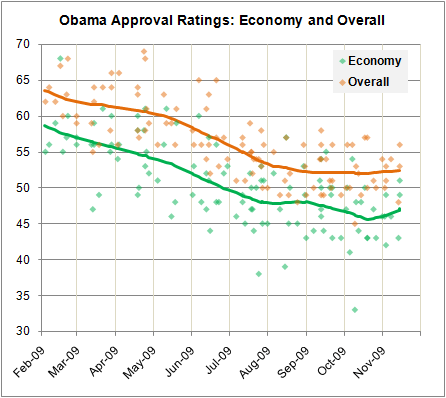
Silver analyzes.
The View From Your Window

Medford, Massachusetts, 2.20 pm
 The Dish