When Poe Punk’d America

The Daily What writes, "Yo Balloon Boy, I’m happy for you, and I’mma let you finish, but Edgar Allan Poe had the best balloon hoax of all time." Bill Lucey takes it away:

On April 13, 1844, Edgar Allan Poe wrote an article in The New York Sun, chronicling how Monck Mason, leaving England for Paris drifted off course and had traveled across the Atlantic in three days, landing safely on Sullivan’s Island near Charleston South Carolina, while riding an “egg-shaped gas-filled balloon’’, named the Victoria. The story caused such a stir that an excited mob quickly gathered outside of the editorial offices of the Sun, hoping to land a copy of the historic edition. Not until two days later did the New York daily publish a correction, noting the story was pure fiction. The published correction read: “We are inclined to believe the intelligence is erroneous.’’

Not only was the story untrue, but a balloon would never cross the Atlantic until 1978, when the Double Eagle II successfully landed in Misreay near Paris, 137 hours after departing Presque Isle, Maine.

Whose Country? Ctd

A reader writes:

Like most young Americans (and Obama voters), I certainly agree that Pat Buchanan is a nut, and I wish he had not added all the bizarre racialism to his essay. But if you strip out the "whiteness" part, a lot of what he says makes a lot of sense. In fact, it mirrors some of the things you have been saying. Unwinnable wars? Huge bailouts that help Wall Street without helping the little guy? Out of control spending? Horrible problem with illegal immigration? A lot of reasonable people think these are serious issues. And Pat was saying a lot of this stuff a long time before it was fashionable.

Pat Buchanan may be a racist, he's certainly tone-deaf, and he's never getting my vote. But, while I hate to say it, his essay really resonated with me. One of the pities of the Republican party is that people like Buchanan, who seem to have legitimate and important conservative points to make, allow themselves to be marginalized by ridiculous discussions of what white people are feeling, whatever that means.

I take my reader's point, and agree with it, by and large.

I too was complaining about spending when Fox News was ignoring it. I too am deeply concerned about nation-building in places that require long term colonialism to rescue. I don't see why the border cannot be secured. Or why corporate welfare continues; why it requires professionals to do my taxes; why wealthy seniors keep getting entitlements while poor working families cannot get health insurance; and I too oppose affirmative action and hate crimes laws.

But isn't this the Republican problem? The party has lost the capacity to convey its ideas with humor and good will or in a way that includes and speaks to non-white and non-Southern voters. (Reagan was rarely angry, always good-humored, civil, adept at arguing, and counted the West as his base. Now think of Huckabee or Romney and wince.) The GOP insults our intelligence with farces like Palin, idiots like Steele, bigots like Inhofe and lunatics like Beck. It expresses anger far more readily than reason or optimism. It rationalizes the evil of torture and the cruelty of discrimination. And its hero worship of the last president would make the most hardcore Obamaphile blush. 

I'd like to support a party of the right that made its case with reason and care to the next generation. It doesn't exist. And it seems further away now than ever.

Persecuting Gays With A Dead Law

Daniel Redman explains:

In 1983, New York's high court struck down as unconstitutional a 1960s-era provision that made it illegal to cruise—that is, to hit on someone in a public place. […T]he court's ruling should have killed off the statute. Instead, in the 26 years of this law's odd posthumous career, district attorneys brought 4,750 prosecutions and judges convicted 2,550 defendants. For violating an imaginary law, these defendants paid a decidedly non-imaginary $70,000 in bail and $190,000 in court fees and fines. In the last 10 years, NYPD officers also issued 9,693 citations, forcing citizens to pay $71,000 in fees. The criminal records of these victims have never been expunged and the fees and fines have not been refunded.

It's a good revenue raiser – because most people pay the fine for fear of being exposed. Every now and again, it's worth remembering that beneath the veneer of increasing gay acceptance, in many places in America, the attitudes and policies of the 1950s linger on – especially in law enforcement.

Anti-Gitmo Forces Push Back

Amanda Sterling reports:

A former Congressman has joined with two retired generals and an Iraq war veteran in a push to pressure lawmakers to close the Guantanamo Bay prison facility. The group is calling upon Congress to “ignore the scare tactics” of former vice president Dick Cheney, who they accuse of leading “a concerted right-wing smear campaign” against closure of the facility.

Sign the petition here.

Whose Country? Ctd

A reader writes:

As a southern white man, I was particularly pleased with your description of how "black" our country is.  This is a nuanced perspective that few of us seem to see or realize. 

I came to the same conclusion ten years ago, spending six months traveling extensively throughout southern Africa. The most salient feeling I encountered was a sense of "coming home."  As "white" as I am, I was completely surprised by this. When I explored the thought further, I realized the profound influence black culture had on me. The smiles, warmth, easy laughter, tasty food, and potent spirituality were all recognizable qualities I saw in the Africans I met and reminded me of so many of my African American friends.  But more than that, I saw these qualities within myself. 

Unknowingly, I had accumulated them and they had become an inextricable part of who I am. And for that, I was and still am profoundly grateful.

The Unplanned Stimulus

Buttonwood reminds us that much of the deficit is due to falling revenues and not just stimulus spending:

The economic news is coming so thick and fast at the moment that it is easy to miss some of the more amazing data. Figures released on Monday show that, in the 12 months ending September, federal personal income tax receipts were down more than 20%, while corporate tax receipts dropped a remarkable 54.6%. These are the biggest declines since World War Two, and explain why the deficit has risen so sharply. A large part of the current stimulus is unplanned rather than deliberate.

An Iran Breakthrough?

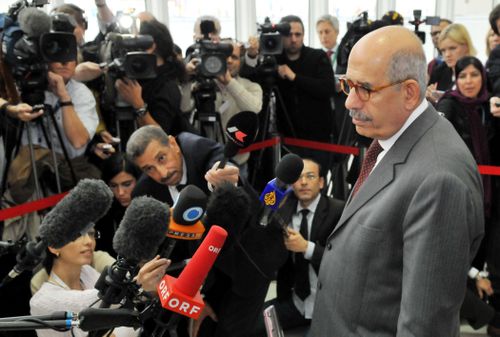
OCT21SamuelKubani:AFP:Getty

The blogosphere reacts. Joshua Pollack:

It’s easy to get absorbed in the minutiae of site-specific safeguards and takeback arrangements, so let’s keep in mind what the parties really seem to be getting. Iran can duck the worst of the fallout from the Qom affair and gain implicit acceptance of its enrichment activities. (Emphasis on “implicit.”) The P5+1 can put time back on the clock by getting that 1,200 kg LEU out of the country. And in the implementation phase, the sides will be able to test each other’s intentions and create some trust at the working level, assuming there are no major hitches.

Michael Singh:

Like all purchases of information…this one comes at a cost. The P5+1 have had to accept the uranium enrichment which Iran has conducted in recent years in defiance of multiple U.N. Security Council resolutions. Even if it ultimately does not reach a deal to send its LEU abroad, Iran will surely seek to pocket this concession and declare a measure of victory. Similarly, by presenting the admission of IAEA inspectors to the until-recently-covert Qom enrichment plant as a concession, Iran gains tacit international acceptance of a facility built in defiance of its Nonproliferation Treaty obligations.

Kevin Sullivan:

One reason for the sea change is the domestic discomfort inside Iran. Still smarting from the June 12 unrest, Tehran has some tough decisions to make in the coming months on public gas subsidies and declining oil prices are limiting Iranian options—to fulfill domestic consumption needs, the country must diversify its energy production. Multilateral or unilateral sanctions are not something they can afford at this time. But I believe it was Washington's acknowledgment of those energy needs and nuclear rights that have made a big difference in getting Tehran to play ball on this.

Ultimately, Iran can still cheat and wiggle its way toward a bomb but – like North Korea during the 1990s Agreed Framework – they'll have to work their way there along a more torturous path. Not ideal, but with an Iranian population clearly hostile to its current regime, any play for time is valuable.

Emanuele Ottolenghi:

[U]nless Iran’s enrichment activities are verifiably suspended, the deal will gain only a little time for the international community. Part of the reason for the deal stems from a desire to reduce Iran’s LEU stockpile to the point where Iran does not have sufficient declared fissile material to build a nuclear weapon (once it’s been reprocessed). It is generally agreed that the minimum quantity of LEU required to do that is approximately one ton — and Iran would transfer more than that to Russia and France if the deal were reached. But Iran is currently capable of enriching 2.77 Kgs of uranium per day, on average, at least according to recent IAEA reports. At that pace, Iran would replenish the stockpile in less than a year if enrichment continues.

Dylan Matthews:

I worry about the specifics of financing here….One of the main reasons the Agreed Framework [with North Korea] collapsed in 2002 was because the Republican Congress refused to adequately fund the construction of nuclear reactors in North Korea, a key American obligation under the agreement. If a combination of conservatives and hawkish liberals in Congress is able to block or limit funding for the fuel transfer in Iran, it would seriously undermine the administration's ability to negotiate a broader deal. After all, what incentive would Iran have to make a deal when America politically cannot hold up its end of the bargain?

Laura Rozen:

If implemented, such a plan would conceivably put several months back on the clock to try to resolve international concerns about Iran's nuclear program. The deal seemingly offers Iran the appearance of de facto international recognition of its enrichment program, if not acceptance. It also gives Iran and world powers a chance to see if the other comes through on their side of the deal.

Spencer Ackerman:

This would represent the first time that anyone has succeeded in putting time back on the Iranian nuclear clock. It would be a major diplomatic victory for Obama, and for the Forces Of Good in general. A nuclear Iran is in no one’s interest.

(Photo: International Atomic Energy Agency (IAEA) Director General Mohammed El Baradei gives short speech after the meeting of representatives from France, Iran, Russia and the United States at Agency's headquarters in Vienna on October 21, 2009. A draft agreement has been drawn up after talks between Iran, Russia, the United States and France on supply of enriched uranium to Tehran and sent to capitals for approval by October 23, 2009, UN watchdog Mohamed ElBaradei said. By Samuel Kubani/AFP/Getty Images).