Sigh Of The Times

Indy-graph

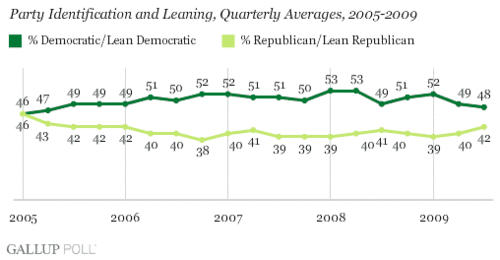
Scott Payne condemns Serwer and Sargent for excusing Grayson's "GOP wants you to die quickly" comments. But then he looks at the chart above and sighs:

I was going to premise at least part of my rationale for that post on the idea that playing into these kinds of antics is no way to win over the ever important independents and build a lasting coalition for positive change in the country. Sadly, I can’t write that post because the facts don’t support it (stubborn as they are). […] Democrats having been losing ground with independents to Republicans in a fairly steady manner since Obama took office, during which time just the types of antics about which I have been wagging my finger have been employed. […] What I’m left thinking is that it is a sad state of affairs when “death panels” and “the GOP wants you to die quickly” are the rallying cries that animate independently-minded voters in the country and that we have a good deal of work remaining in reinvesting a sense of intellectual rigourousness into our political discourse.

For goodness' sake. I don't interpret these numbers as a dramatic endorsement of the tea-party antics at all. I think most Americans view the expansion of government as worrying. So do I. I think we had little choice this past year to do what we did, and Obama's solid ratings suggest many understand that. The GOP, of course, is far more fiscally reckless than Obama – and supporting the current crew because of a desire to return to balanced budgets is absurd. What the Democrats need to do is reinforce this fact relentlessly – but, alas, too many of them find attacking the right on fiscal grounds too much of an ideological strain.

Too Boring To Run?

Ed Kilgore looks at Pawlenty's downside:

Pawlenty was, and remains, a fine "on-paper" candidate who doesn't have much else going for him.  Yes, he seems to be putting together a pretty good campaign team.   And yes, he's made at least one attempt to get into the manic spirit of today's conservativism by flirting with "tenther" nullification theories.  But unless he undergoes both an ideological and personality change of a major nature, he's never going to be more than a third or fourth choice among the kind of hard-core conservative activists who dominate the Republican presidential nominating process (particularly in Iowa, where familiarity with Pawlenty as the mild-mannered governor of a neighboring state might actually hurt him).

I fear he's Dubya II: a soft mask for an extremist base. I hope he's serious about government. Speaking of which, a shout-out to Bobby Jindal. His recent statement that his party needs to focus on constructive policy ideas rather than the Fox circus was running against the current. That's a sign of leadership and promise.

Are Nukes Really That Influential?

Stephen Walt casts doubt on the idea that a nuclearized Iran would spark an arms race in the Middle East:

There are between 40 and 60 states with the technological capacity and economic wherewithal to build a nuclear bomb, and the vast majority of them have decided not to do so, even when there were other nuclear powers in their neighborhood. A few states have started down that road and then turned back, sometimes in the face of international pressure (Libya, Brazil, Argentina), and sometimes mostly on their own (Sweden, South Africa). […]  Iran’s own nuclear program (which began under the Shah) reflected broader security concerns and the Shah's own desire for status, and doesn't appear to have been a direct response to anyone else's bomb.  North Korea’s entry into the nuclear club hasn't led South Korea, Japan, or anyone else to start a new nuclear weapons program yet. In short, people have been forecasting the rapid proliferation of nuclear weapons ever since the nuclear age began, but all of those forecasts have been overly pessimistic.

Americans really should understand this: we have several thousand nuclear weapons and we have a tough enough time getting other states — even rather weak ones — to do what we want. The same would be true for a nuclear Iran: it could not blackmail anyone because the threat would not be credible, and even nearby states might find it easier to adjust to than we sometimes think.

By the way, this same logic may also help convince Iran that it doesn’t need to go all the way to full acquisition of a nuclear capability. It won't by them much influence, but it still might encourage some of their neighbors to follow suit. Ironically, that situation might decrease Iran’s regional influence over time. Iran is the most populous state in the Gulf region, and it has enormous economic potential. If the mullahs ever get their act together, Iran’s conventional capabilities would overshadow the other states in the region. And if that's the case, crossing the nuclear threshold might lead others to look for a cheap way to counter that. Thus, from Iran's own point of view, staying on this side of the nuclear threshold (but having the capacity to go nuclear quickly if need be), might be the optimal strategy, particularly if they were less worried about an imminent Israeli or U.S. attack.

Pandering To Rich Seniors

Bruce Bartlett notes:

On Sept. 23, Rep. Dina Titus, D-Nev., introduced H.R. 3631, which would freeze all Part B premiums for one year–including those for couples with incomes over $170,000. It would pay for the $2.8 billion cost by raiding the Federal Supplementary Medical Insurance Trust Fund and the Medicare Improvement Fund. This legislation came up the following day and passed the House by a vote of 406 to 18.

This is why this country is fiscally paralyzed. And the tea-party Republicans joined the panderthon. They are utterly unserious about limiting government.

Engaging Iran: Iranian-Americans Speak

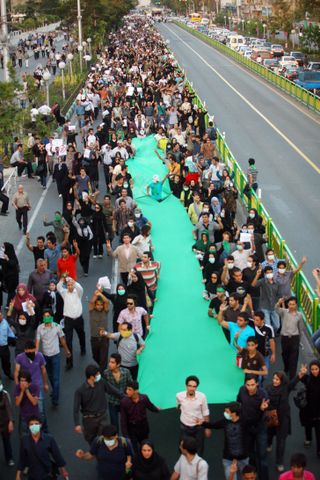
Since Obama took office intent on engaging Iran, a revolution has taken place, a revolution that both exposes the poignant power of the Iranian people and the vile repression of an illegitimate and torturing regime. Like many, I am torn between the need to see things very clearly and to promote American and Western interests and prevent avoidable conflict and the need to show absolute solidarity with those amazing people who changed the world’s consciousness last June. I’ve been hoping for a clearer message from the Green movement’s leaders as to what they think Obama and the West should do. Mousavi and Karroubi both oppose sanctions. And yet legitimizing the coup is a real danger of engagement. Here is a response, just posted and signed by many distinguished members of the Iranian diaspora in America:

Over the past century, the U.S relationship with Iran has been volatile, and the coming months may prove to be a decisive era in the history of the relationship between the two 0717GETTY countries. A misreading of the situation in Iran might lead to decisions which will damage the national interests of both countries.

The harsh repression of peaceful protests in the wake of the disputed Iranian election this past June removed any doubt about the cruelty of the Iranian totalitarian regime. Direct shots fired at unarmed civilians in Iran captured global attention, but this was only an example of the atrocities that were committed. Intensifying pressure on protesters, the use of Stalinist methods against detainees, and threatening university students and faculty are only few more examples of the continuing campaign against peaceful opposition in the weeks since the election.

Recent news indicates the US administration’s intention to negotiate with the Iranian government. While maintaining an active venue of negotiation is necessary for resolving the conflict between the two countries, a constructive dialogue with Iran must address the Iranian regime’s recent brutalities. Neglecting such atrocities by any country, particularly in this crucial period, would have a severe negative effect on the Iranian public. As people with deep connections to their Iranian homeland, and who have studied and worked at universities across the world, the signers of this letter are concerned about the neglect of human rights violations in Iran by the rest of the world. As the current regime faces an internal crisis of legitimacy, it is obvious that the goal of the Iranian government is not the resolution of its international conflicts. Rather, they seek a false victory for their confrontational policies, which could be used as justification for escalating the violent crackdown against domestic political opposition.

From our point of view, the confrontational policies of the previous US administration, coupled with the use of double standard in dealing with issues of human rights, have had a negative impact on the public perception of the United States’ intentions in the Middle East. While we oppose any military threat against Iran, we remind American policy makers that turning a blind eye to human rights abuses, which began in 1953 with the coup against Mohammed Mosaddeq, has created suspicion within Iran about American intentions. In our opinion, neglecting the recent atrocities in future negotiations with Iran would confirm this suspicion in the eyes of the Iranian people and would have a negative effect on long-term relations between the two countries. We believe the issues of human rights violations and the Iranian government’s atrocities against its own citizens are critical issues that should not be sacrificed for short term gains. It is important to remember that the Iranian public is carefully following the interactions of foreign governments with those who violated their civil rights.

They Tortured A Man They Knew To Be Innocent, Ctd.

A reader writes:

As a trial attorney with the Department of Justice, I am

familiar with the al-Rabiah case (however, to be clear, I am not a trial attorney who worked on the case).  My opinions stated GITMOmarkwilsongetty herein, of course, are not the opinions of the Department.  I write for myself and myself alone.

I had a long conversation regarding the al-Rabiah case with colleagues when the decision came down.  Our expertise and experiences are varied, but we all work on matters ranging from criminal matters to civil habeas cases.  We are litigators, and we know what makes a case, and when a case is weak. 

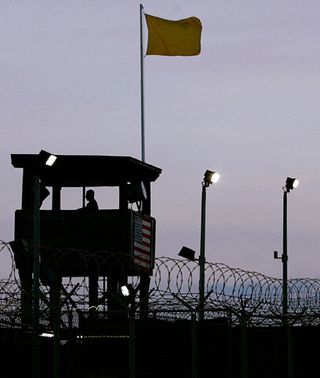
The conclusion drawn by each of my colleagues – some of whom are liberal Democrats, some of whom are conservative, law-and-order Republicans – is, to a person, that the detention and interrogation programs the United States implemented in the months and years following 9/11 is not only a complete abrogation and violation of international law and, in many cases, federal law – it is also fundamentally immoral.  We also agree that the al-Rabiah case is by far the most egregious yet to come to light.  To repeat: yet to come to light.  I can only guess that there are other, far worse cases. 

That said, I am surprised you did not highlight what me and my colleagues agreed was the single most horrifying passage from the Court’s decision.  It was the Court’s quotation of something an interrogator said to al-Rabiah during his interrogation.  The interrogator told al-Rabiah:

“There is nothing against you. But there is no innocent person here. So, you should confess to something so you can be charged and sentenced and serve your sentence and then go back to your family and country, because you will not leave this place innocent.”

Court Memorandum and Order, p. 41 (emphasis mine). 

This was an agent of the United States saying this.

This was not a statement pulled from the transcripts of the Nuremburg trials, nor archival evidence taken from reports smuggled out of one of Stalin’s gulags.  This was a statement made by an agent of this government less than 7 years ago to a detainee.  The enormity of that is nearly incomprehensible. 

But even worse – far worse – is the fact that the government would nevertheless still seek to convict based on the resulting confession.    

To those of us who read that passage and who vowed and make it our vocation to serve and protect the Constitution of the United States, that fact is a gut-punch.  For me and my colleagues, it literally took our breath away.  It makes one wonder how far down into the abyss we have allowed ourselves to drop.  And whether there is the political will to find our way out. 

It took my breath away as well. I used to wonder how democracies became tyrannies. I know now. Because good men like Obama do nothing.

Iran In Afghanistan

Ackerman highlights this paragraph from Gen. McChrystal's remarks in London:

Iran, of course, being, you know, in such proximity to Afghanistan and having significant influence inside Afghanistan, is a big player. They, in my view, they have a lot of very positive influence inside Afghanistan, some of it cultural, some of it financial, just things that any neighbor would have to try to build the stability. I think that if Iran takes a very mature look at a stable Afghanistan and support the government of Afghanistan, then we’ll be — we’ll be in good shape. If they were to choose not to do that, and they were to choose to support insurgents, I think that would be a significant miscalculation.

Ackerman swipes:

I can’t wait for the braying conservative outcry against McChrystal’s craven appeasement of the butchers of Tehran or whatever.

Option C

KHOSTPaulaBronstein:Getty
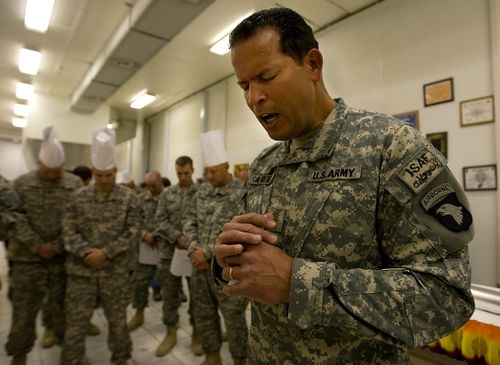
My assignment for the Sunday column this week is Afghanistan. I tried last night but was blocked ( a rare event for an OCD hack like me). Of course, I’ve been thinking about it for quite a while now and airing a range of opinions on this blog. What the president faces is an excruciatingly difficult choice in an immensely complex and dangerous region where power is in flux and the future very hard to assess. The way he’s handling this decision – as transparently as feasible – is admirable. I’ve had some deep worries about general McChrystal, and was appalled that he was allegedly threatening to resign if he didn’t get his way. But it seems clear now that he never threatened to resign, and those who leaked that non-fact were trying to bounce him as much as the president. And his speeches and comments this past week seem to me to speak very highly of him, and his bluntness in public and private suggest a man serious about winning this war. On a human level, anyone who can recite whole sections of Monty Python And The Holy Grail by heart is all right with me. But I worry that his analysis – “all in or all out” – is not quite right. I’ve relied on this formula myself in the past, but every time I follow through in my head the full consequences of either path, I end up feeling deeply uncomfortable. I’ll be candid and note, as readers will surely have twigged by now, that my Tory pessimism is resurgent. This is not just Afghanistan; it’s Afghanistan after thirty years of violence, mayhem, brutality and anarchy. To believe that America can create a functioning stable state in that context seems insane to me, and given this country’s fiscal crisis, a reckless commitment for the distant future. At the same time, letting Afghanistan unravel still further right now, with the ramifications for Pakistan’s knife-edge struggle with Islamism, is a risk few American presidents would willingly take. Pakistan’s military is on the verge of a major offensive against the Taliban. Last time, they lost. This time, they sound more determined. We don’t know the outcome of that. The election in Afghanistan is unresolved, with serious and credible allegations of fraud, and the possibility of a run-off or any number of possible unforeseen developments. Again, we do not know the outcome of that. Iraq is far from stable and could descend into sectarian anarchy when the US leaves. There are some encouraging signs there – especially Maliki’s inclusion of Sunni groups in his new coalition and an apparent resurgence of national unity as a theme in the current campaign. If Iraqis are finally ready to leave the past behind, if the bloody chaos of the worst years have shifted that national psyche, then that would indeed be miraculous. But anyone boldly predicting triumph needs their head examined. The truth is: we do not know the outcome of that either, and since the US has limited resources, and has already pummeled the troops beyond what most mortals could tolerate, we should, it seems to me, be very cautious about over-extension in very volatile regions. Marc Lynch is pretty much on the same page at this point, and he draws the following conclusion:

What’s so terrible with muddling through for a while, giving the new tactics a chance to work at the local level while preventing the worst-case scenarios from happening? Why choose between escalation or withdrawal at exactly the time when the political picture is at its least clear? Why not maintain a lousy Afghan government which doesn’t quite fall, keep the Taliban on the ropes without defeating it, cut deals where we can, and try to figture out a strategy to deal with the Pakistan part which all the smart set agrees is the real issue these days? Why not focus on applying the improved COIN tactics with available resources right now instead of focusing on more troops? If the American core objective in Afghanistan is to prevent its re-emergence as an al-Qaeda safe haven, or to prevent the Taliban from taking Kabul, those seem to be manageable at lower troop levels.

At this point, it seems to me we have to leave our past behind as much as Iraqis need to leave theirs’. What’s vital is that we make this decision based on the facts on the ground and as hard-nosed an assessment of reality as we can muster – not as a means to further or inflame our ideological and political battles of the past eight years. At this point in time, I think Lynch’s case for kicking the can down the road for a little while longer, while we absorb as many data points as we can about the events in the region and beyond, is pretty damn persuasive.

It isn’t weakness; and it isn’t surrender. It’s just being responsible. Too much is at stake to be anything else right now. And, to be honest, I have every confidence in this cabinet and this general and this president will do the best they absolutely can. And while we shouldn’t stint in criticism, we should allow them some lee-way in an immensely difficult and fateful call.

(Photo: the great Paula Bronstein/Getty.)