Face Of The Day

HomelessGetty

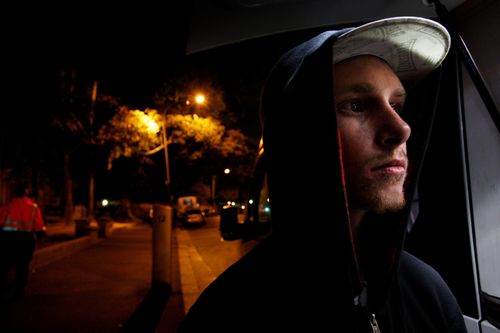
A young man lines up at the Youth Off The Streets food van and outreach service at Green Park, Darlinghurst on on September 2, 2009 in Sydney, Australia. Today sees the start of the 2-day National Homelessness Summit in Sydney, following the Government's White Paper 'The Road Home – A National Approach To Reducing Homelessness.' The City of Sydney conducted a street count of rough sleepers in February 2009, noting 340 people sleeping in Sydney and the surrounding suburbs alone. By Lisa Maree Williams/Getty.

The Price Of Remission

by Chris Bodenner

A reader writes:

There’s one big reason I have for feeling that Catholic annulments are bogus.  They charge for them. I worked with a guy who was divorced.  He was soon to be married again and wanted to be married by a Catholic priest.  When he spoke to his priest about an annulment, he was told almost immediately that it would cost him $5,000 for the various courses and sessions he would have to attend.  He was so taken back and insulted that he walked out, with a few words to the priest, and left the church.

We’re talking about an enormous potential mistake, where two people supposedly entered into a Sacrament but were incorrect to do so, against God’s approval.  So if the church were serious about correcting such a mistake, why do they charge for it?  And why do they charge so much?  Do only well off people make mistakes when they are young?

A Mugging on Lake Street

by Jonah Lehrer

On the afternoon of May 9, 2008, John Conroy was biking home from the Loop in Chicago, when he noticed a group of teenagers standing around a street corner. The next thing he remembers is lying face down in the street, his mouth leaking blood and his face littered with bits of asphalt. For the last year, Conroy has been investigating this random act of violence, as he tries to figure out why he was targeted. His answers are unsettling: 

On the evening of the incident, one of the police officers who had been at the scene stopped by the hospital to see how I was doing, and I learned that someone had been arrested. Charges against him depended in part on the damage done to me. (If I had died, for instance, the charge would have been murder.) The news that someone would be held responsible was welcome. What I really looked forward to, however, was hearing a reason for the attack.

I’d have been happy enough with robbery, but nothing was taken. Perhaps theft was thwarted when my Samaritans pulled over? Perhaps it was an initial desire for a bicycle, the idea abandoned because the bike was of poor quality? But six kids, one bike? Who’d get to ride while the others fled on foot?

Via Kottke

Government Not Made Of Angels Either

by Chris Bodenner

Ta-Nehisi writes:

I think there's this presumption that people who are anti-death penalty get there out of some sympathy for criminals, or some wide-eye naivete. Maybe some people get there that way. I came up in an era where young boys thought nothing of killing each other over cheap Starter jackets. I don't have any illusions about the criminal mind. I don't believe in the essential goodness of man–which is exactly why I oppose the death penalty.

The Fruits Of Domestic Terrorism

by Chris Bodenner

Clark-Flory writes:

Extreme antiabortion activism works. It works so well, in fact, that it is responsible, at least in part, for a critical decline in doctors who perform abortions in the United States, according to the Washington Post. It seems medical students aren't so keen on the idea of spending their entire career wearing a bullet proof vest, being targeted with bombs and arson, having their loved ones lives' threatened and having their mug displayed around town on homemade wanted posters. […] "The number of abortion providers dropped from 2,908 in 1982 to 1,787 in 2005," the Post's Sandra G. Boodman reports. "Eighty-seven percent of counties in the United States and 31 percent of metropolitan areas have no abortion services."

Wrong Model, Ctd

by Chris Bodenner

A read writes:

As someone in the film business, I can tell you that the amount someone gets paid does not have a direct correlation to their beauty, or even to how willing people are to pay to see them. It's a function of track record as much as anything else, which is why you don't see Megan Fox on that list, despite her being the current hottest (in the sense of business, not looks) actress currently working in Hollywood. She doesn't yet have the kind of track record that her agent can leverage into massive $$$. If I made a top ten list, the only two that would have a CHANCE to make it from the highest-paid list are Angelina and Halle. If you want to understand men's idea of beauty in it's purest form, look at men's magazines. Maxim, FHM, Zoo Weekly, and Nuts (last two UK). Those mags are marketed exclusively to men (unlike movies) and they know what we like: Fit girls with great curves and soft, small features, lustrous skin, and shiny, healthy hair. There are random women in the back pages of those mags who put 99% of anorexic Hollywood actresses and NYC fashion models to shame.

This UK study (photo NSFW, kinda) found that the ideal female body size according to men is 12 and women 8. (The actual average is 16.) It's not a survey of Americans, and the corresponding US sizes are a little skewed, but the basic conclusions also seem true here.

The Paradox of Libertarianism

by Jim Manzi

I’ve been attending a fascinating series of monthly dinners here in Washington, in which liberals and libertarians exchange ideas. One thing that has become clear to me through these dinners is that there are two strands of libertarian thought. In somewhat cartoon terms, one strand takes liberty to be a (or in extreme cases, the) fundamental human good in and of itself; the other takes liberty to be a means to the end of discovery of methods of social organization that create other benefits. I’ll call the first “liberty-as-goal” libertarianism and the second “liberty-as-means” libertarianism. Obviously, one can hold both of these beliefs simultaneously, and many people do. But in my observation, when pushed to develop a position on some difficult issue, most self-described libertarians reveal a temperament that leans strongly in one direction or the other. Again, in cartoon terms, I’d describe the first temperament as idealistic, deductive and theory-based, and the second as practical, inductive and experiment-based. To lay my cards on the table, I fall squarely into the second camp.

Liberty-as-means libertarianism sees the world in an evolutionary framework: societies evolve rules, norms, laws and so forth in order to adapt and survive in a complex and changing external environment. At a high level of abstraction, internal freedoms are necessary so that the society can learn (which requires trial-and-error learning because the external reality is believed to be too complex to be fully comprehended by any existing theory) and adapt (which is important because the external reality is changing). We need liberty, therefore, because we are so ignorant of what works in practical, material terms. But this raises what I think of as the paradox of libertarianism, or more precisely, the paradox of liberty-as-means libertarianism.

Start with a practical question: should prostitution be legal? The canonical libertarian position is that this is a consensual act between adults, and should be legal. The liberty-as-means position is far more tentative. We don’t know the overall effects of legalized prostitution. Some people have the theory that it will make people happier, provide incomes and stabilize marriages. Others think it will lead to personal degradation, female victimization and societal collapse. It is very hard to know which theory is right, or if there is only one right answer as opposed to different best answers for different social contexts, or if the relative predictive accuracy of various theories will change over time as the environment changes. What the liberty-as-means libertarian calls for is the freedom to experiment: let different localities try different things, and learn from this experience. In the best case this is literally consciousness learning from structured experiments, and in the weaker case it is only metaphorical learning, in that the localities with more adaptive sets of such rules will tend to win out in evolutionary competition over time.

This leads then to a call for “states as laboratories of democracy” federalism in matters of social policy; or in a more formal sense, a call for subsidiarity – the principle that matters ought to be handled by the smallest competent authority. After all, a typical American lives in a state that is a huge political entity governing millions of people. As many decisions as possible ought to be made by counties, towns, neighborhoods and families (in which parents have significant coercive rights over children). In this way, not only can different preferences be met, but we can learn from experience how various social arrangements perform.

The characteristic error of contemporary conservatives in this regard has been a want of prudential judgment in trying to enforce too many social norms on a national basis. The characteristic error of liberty-as-goal libertarianism has been the parallel failure to appreciate that a national rule of “no restrictions on non-coercive behavior” (which, admittedly, is something of a cartoon) contravenes a primary rationale for libertarianism. What if social conservatives are right and the wheels really will come off society in the long run if we don’t legally restrict various sexual behaviors? What if left-wing economists are right and it is better to have aggressive zoning laws that prohibit big-box retailers? I think both are mistaken, but I might be wrong. What if I’m right for some people at this moment in time, but wrong for others, or wrong the same people ten years from now? The freedom to experiment needs to include freedom to experiment with different governmental (i.e., coercive) rules. So here we have the paradox: a liberty-as-means libertarian ought to argue, in some cases, for local autonomy to restrict some personal freedoms.

Now, obviously, there are limits to this. What if some states want to allow human chattel slavery? Well, we had a civil war to rule that out of bounds. Further, this imposes trade-offs on people who happen to live in some family, town or state that limits behavior in some way that they find odious, and must therefore move to some other location or be repressed. But this is a trade-off, not a tyranny.

Illustrating The Value Of Healthcare

by Chris Bodenner

…by biting off your opponent's finger?

Ventura County Sheriff's Capt. Frank O'Hanlon says about 100 people demonstrating in favor of health care reforms rallied Wednesday night on a street corner. One protester walked across the street to confront about 25 counter-demonstrators. O'Hanlon says the man got into an argument and fist fight, during which he bit off the left pinky of a 65-year-old man who opposed health care reform. A hospital spokeswoman says the man lost half the finger, but doctors reattached it and he was sent home the same night. She says he had Medicare.