A Short Story For Saturday

by Jessie Roberts

Today’s story has remarkable staying power: E.M. Forster wrote “The Machine Stops” in 1909, but it’s proved so prescient that technologist Jaron Lanier has called it “that preternatural oracle of internet culture.” An excerpt:

For a moment Vashti felt lonely.

Then she generated the light, and the sight of her room, flooded with radiance and studded with electric buttons, revived her. There were buttons and switches everywhere – buttons to call for food for music, for clothing. There was the hot-bath button, by pressure of which a basin of (imitation) marble rose out of the floor, filled to the brim with a warm deodorized liquid. There was the cold-bath button. There was the button that produced literature. and there were of course the buttons by which she communicated with her friends. The room, though it contained nothing, was in touch with all that she cared for in the world.

Keep reading here. Previous SSFSs here.

The View From Your Window Contest

vfyw_3-22

You have until noon on Tuesday to guess it. City and/or state first, then country. Please put the location in the subject heading, along with any description within the email. If no one guesses the exact location, proximity counts.  Be sure to email entries to contest@andrewsullivan.com. Winner gets a free The View From Your Window book or two free gift subscriptions to the Dish. Have at it.

The Conscience Of Carnivores

by Jessie Roberts

James McWilliams expands on the ethical conundrum raised by Bob Comis, a pig farmer who believes that “[w]hat I do is wrong, in spite of its acceptance by nearly 95 percent of the American population”:

Comis’s call for a more philosophical approach to animal agriculture is neither an arbitrary nor an academic appeal to an abstract notion of animal rights. Instead, it’s grounded in the humble workings of daily life, especially the humble, if complex, workings that bring to our plate animal protein—which has been shown to be not only unnecessary but often harmful to human health. A secular and religious consensus exists that living an ethical life means accepting that my own interests are no more important than another’s simply because they are mine. Basic decency, not to mention social cohesion, requires us to concede that like interests deserve equal consideration. If we have an interest in anything, it is in avoiding unnecessary pain. Thus, even though a farm animal’s experience of suffering might be different from a human’s experience of suffering, that suffering requires that we consider the animal’s interest in not being raised and eaten much as we would consider our own interest in not being raised and eaten. Once we do that, we would have to demonstrate, in order to justifiably eat a farm animal, that some weighty competing moral consideration was at stake. The succulence of pancetta, unfortunately, won’t cut it.

Previous Dish on the processing of livestock here, here, and here.

A Poem For Saturday

by Alice Quinn

?????????

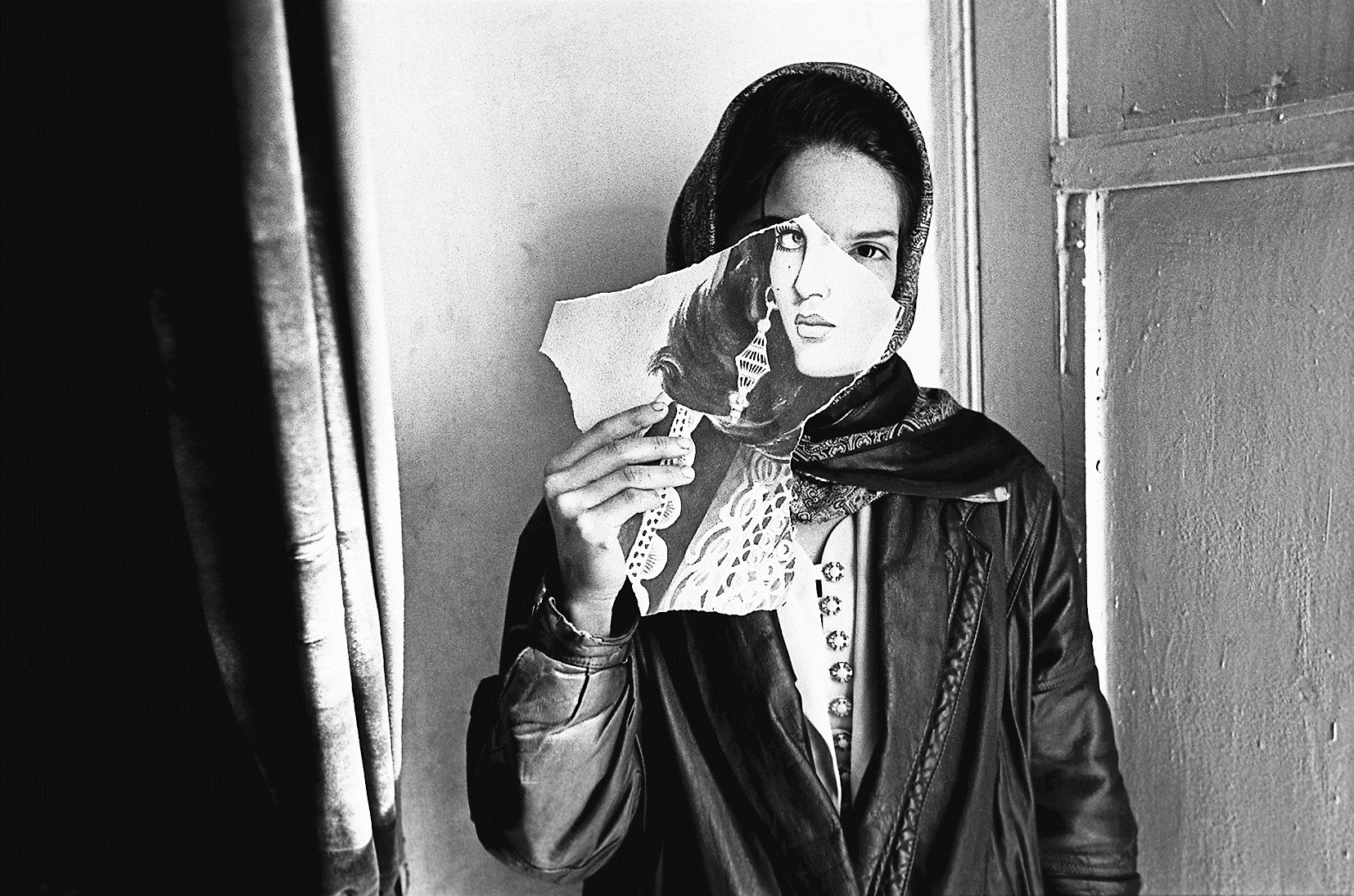
The poet and journalist Eliza Griswold is the editor and translator of the forthcoming volume I Am the Beggar of the World: Landays from Contemporary Afghanistan, with photographs by Seamus Murphy, to be published in April by Farrar, Straus & Giroux.

In her introduction to the collection, Griswold writes, “In Afghan culture, poetry is revered…. A folk couplet—a landay—[is] an oral and often anonymous scrap of song created by and for mostly illiterate people: the more than twenty million Pashtun women who span the border between Afghanistan and Pakistan. . . . Sometimes landays rhyme, but more often not. In Pashto, they lilt internally from word to word in a kind of two-line lullaby that belies the sharpness of their content, which is distinctive not only for its beauty, bawdiness, and wit, but also for its piercing ability to articulate a common truth about love, grief, separation, homeland, and war.”

Today and over the weekend, we’ll post sets of these landays, which Edward Hirsch, award-winning poet and President of the Guggenheim Foundation, praises for the way in which they enlarge “our sense of the work that poetry does in the world.”

On Thursday, April 3rd at 7PM, Eliza will be appearing at McNally-Jackson Books at 52 Prince Street in New York in conversation with the New York Times’ writer Elizabeth Rubin and Sonia Nassery Cole, and I will be on hand to introduce the event. Here’s the first selection from the book:

When sisters sit together, they always praise their brothers.
When brothers sit together, they sell their sisters to others.

*

My body belongs to me;
to others its mastery.

*

Don’t shout, my love, my father isn’t giving me to you.
Don’t shame me in the busy street by crying out, “I’ll die for you.”

(From I Am the Beggar of the World: Landays from Contemporary Afghanistan, translated and presented by Eliza Griswold, photographs by Seamus Murphy, to be published in April 2014 by Farrar, Straus and Giroux. LLC. Text copyright © 2014 by Eliza Griswold. Photographs copyright © 2014 by Seamus Murphy. All rights reserved.)

The New Longform

by Jessie Roberts

Last week, Teju Cole published a 4,000-word non-fiction essay on immigration, A Piece Of The Wall, entirely on Twitter. In an interview with BuzzFeed, he talked about why he chose to tell the story in tweets:

What made you decide that this specific essay would be best presented in this medium?

Teju Cole: I’ll answer that by saying I didn’t think this essay could be “best” presented in this medium, but I asked the opposite question:

Why does a serious longform investigative piece have to be in print in a major magazine? In various parts of West Africa, there are different iterations of the idea that “white people like paper so much that they even wipe their butts with it.” You know, you spend your life staring at paper, you spend paper money, proof of ownership of everything is on paper, you fill your house with paper, and when you die, the announcement is in the paper.

I love paper too. I love print. But maybe not everything has to be on it. And in the case of Twitter (and, before that, blogging), I just feel so strongly that there’s an audience here, and audience that deserves to be treated with the same seriousness as the paper crowd. …

I’m not getting my hopes up, but the point of writing about these things, and hoping they reach a big audience, has nothing to do with “innovation” or with “writing.” It’s about the hope that more and more people will have their conscience moved about the plight of other human beings. In the case of drones, for example, I think that all the writing and sorrow about it has led to a scaling back of operations: It continues, it’s still awful, but the rate has been scaled back, and this has been in specific response to public criticism. I continue to believe the emperor has a soul.

Earlier this month, Cole assessed (NYT) how Twitter has affected his writing, noting that “being active on Twitter … means that the literary part of my brain — the part that tries to make good sentences — is engaged all the time. My memory is worse than it was a few years ago, but I hope that my ability to write a good sentence has improved.” Follow Cole’s latest tweets here.

Face Of The Day

by Katie Zavadski

unnamed4

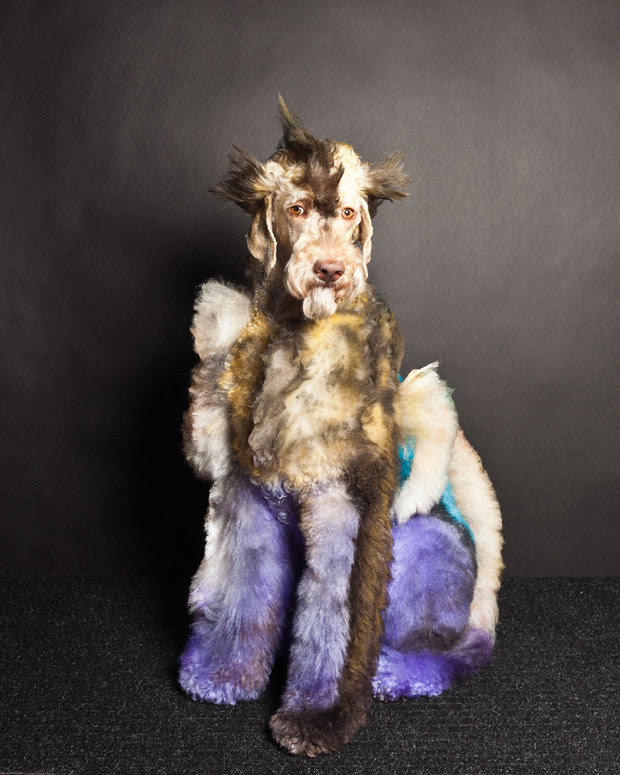
Paul Nathan takes dog grooming to another level:

New Zealand-born, NYC-based photographer Paul Nathan shines the light on some perfectly primped canines in his new book Groomed, released this Spring by Pelluceo Publishing. Shooting at multiple high-profile grooming competitions, Nathan explores the world—and art—of dog grooming, capturing the creations of some of the world’s top dog groomers. The selection here are from what’s known as the ‘creative’ category. Humorous and delightful, Nathan’s pre-show portraits reveal character in both the artist and the canvas. He recently told us more about the world of dog grooming.

Check out his books here and here.

(Photo by Paul Nathan)

Undercover MD

by Tracy R. Walsh

Taking a page from Nellie Bly, the psychiatrist who blogs as “Simple Citizen” spent a day as an inpatient at the adolescent Residential Treatment Center where he ordinarily works:

I first learn how boring the morning is, and how many times you get woken up. First they shine a flashlight on you every 15 minutes during the night to make sure you are still in bed, alive, and not hurting yourself or trying to commit suicide. Then the phlebotomist wakes up anyone who needs their blood drawn for labs that have been ordered. (likely by me)

Then we get woken up again by the sound of “med-pass” when all the kids who take morning medications have to go to the nurse one by one, take their pills, swallow, open their mouths and move their tongues all around to show that they really swallowed and didn’t “cheek” the pill. Then it’s shower time. I have to push the button every 25 seconds to keep the hot water coming, and there is no bathroom door or shower door – there are curtains only. The curtains are only held up by Velcro, so you couldn’t use them to hang yourself.

After a day in the facility, he concludes:

I see how residential treatment can help. I also see how it can drive you up the wall, make you want to scream, and leave you overweight and out of shape when you leave after 90 days. I can see how it seems pointless at times. I felt a little bit of the helplessness these kids must feel, and that was even knowing that I wasn’t really locked in there. How would it be to spend 90 days there? How about 180 days like some kids I’ve seen?  Or worse – be told you’re going to Disneyland with a short stop on the way and then find out your parents lied to you and they’ve admitted you to a locked psychiatric facility?  (It’s happened multiple times.)

Dinah Miller praises this type of experiment while noting its limitations:

I don’t believe these experiences are anything like the real thing, nor do I believe they are meant to be. For one thing, the person having them has not gone through the lifetime of events, traumas, distresses that led the inmate or patient to be in those places. Or in the case of the patient, the doctor also is not experiencing both the internal discomfort that comes with the mental illness, or the side effects which come with the medications, or the emotional upheaval that comes from having been left there by their family … Still, I like that these people did this, it’s good that they want to try to understand what their charges are going through. Even if it’s not a complete understanding, it still acknowledges that the condition is different with a willingness to see and understand what the other is going through, for better or for worse.

Voyeurism vs Journalism

by Jessie Roberts

Erika Thorkelson worries that camera phones encourage people to document others’ bad behavior rather than attempt to intervene:

Many professional journalists agonize over the ethics of this kind of reporting. Some argue that journalistic objectivity overrides any particular responsibility to act. Photojournalists train themselves to grab their cameras and start shooting before they fully recognize what’s happening around them, believing that documenting the moment does more long-term good than acting to stop it, or at least fulfills a separate but necessary societal obligation. But what happens when everyone with a camera phone sees him or herself as a journalist on a story, when everyone is a fly on the wall?

[This] brings to mind a classic This American Life story from 2007 about a craze for fake newscasts that took over an elementary school [see above video].

Children built elaborate cameras out of construction paper and toilet paper rolls, and began reporting on everything they saw. The school’s principal told Ira Glass that the trend reached its height when he discovered a brutal fight in the schoolyard, one student pummeling the other. Crowding around the fight, students were “breathlessly reporting” on what they saw, turning it into a news story rather than going for help.

Thanks to our phones, most of us carry cameras everywhere we go. Like journalists reporting on our own lives, our experiences become part of a narrative, honed in order to endear us to our various social media connections. We live with our faces angled toward the screens of our various devices, oblivious to the events beyond the viewfinder. Our bodies stilled to reduce shaking and our eyes trained on the screen, our filming—no matter how well-framed or widely shared, no matter how much attention we receive for it afterward—remains passive. We project the control we exert over the image we’re creating onto the experience itself, giving us a false sense of power, when in reality we have done very little.

Maintaining The Mother Tongue

by Katie Zavadski

Alina Dizik and her family fled the former Soviet Union as Jewish refugees, and she broke away from the language and culture. Yet she recently decided to raise her newborn daughter bilingual:

So, even though I find it simpler to speak English with my Soviet-born husband, I’ve been speaking only Russian to our child—and it’s surprisingly comforting. I find that I want her to know the language, after all. There’s an innate part of me that identifies with the language and feels like I can express my love for her better in Russian, the language my own family still uses to speak to me. Subconsciously, it’s the language I associate with love and family, regardless of politics. And I’d hate to watch her grandparents and great-grandparents struggle to find appropriate words during their own conversations with her if they had to be in English, a language that still feels foreign to them. Her being able to communicate with our family is important to me.

I’ve also realized that I have a personal connection with the language that I can’t just erase. The words mean something. The bluntness of some Russian phrases makes it easier to say what I really mean, even if those same words sound harsh in English. So what if it sounds (to those who don’t speak the language) like we’re constantly berating each other? Sometimes we are. Speaking Russian has given me thicker skin and a constant insight into a culture that I don’t always love. But even with my own atrocious American accent, speaking Russian still feels like home.

She worries that her “American daughter will start kindergarten with a Russian accent.” I’ll have her know that’s nothing to worry about—they tell me I didn’t speak a word of English before entering kindergarten, but I can’t recall ever thinking in another language. A child’s mind is an amazing thing.

But her first concern has a second element: grandparents adapt, and grandchildren pick up scattered phrases. The trouble comes with the extended family. Perhaps Dizik’s, like my own, is scattered across Israel, Europe, and parts of the former USSR. How can we maintain connections without this lingua franca of our ancestors?

Previous Dish on bilingualism here, here, and here.

Planning Your Digital Detox

by Chris Bodenner

Ruben_brulat_5

Sue Thomas’ post is making me pine for the wilderness:

This year some people might consider the idea of a digital detox vacation. Perhaps a trip to the Scottish Highlands, where communities deprived of decent broadband are wondering whether to market themselves as digital-free destinations in an attempt to flip a lack of poor reception into “meaningful and emotional experiences”. A digital detox can be simply achieved by disconnecting yourself from the internet and turning off your phone for short bursts of time to flush out the anxiety infesting your poor wired mind. Digital detox coach Frances Booth lists the benefits of switching off including reduced stress, an increased sense of calm, better sleep and a sense of freedom.

But is it worth the bother and expense?

Some hardliners go offline for a whole year, but usually only to write a book about it. Or you might purchase a detox vacation in some area of wild natural beauty where others take control of your consumption by confiscating your kit and enticing you towards other kinds of social and unwired interactions. The Caribbean island of St Vincent and the Grenadines offers a digital detox holiday package where travellers exchange their smartphones for a guidebook explaining how to function without technology and a life coach to help them through it. And in northern California, Camp Grounded says it helps visitors to “disconnect from technology and reconnect with yourself”.

However, in line with her book on the benefits of technobiophilia, Thomas suggests that the ideal escape “offers not detox but intoxication – with both nature and with digital life.” Apparently even Dish features can provide a respite:

[I’ve come] across a number of influential and widely cited experiments which demonstrated the positive effects of nature on physiological and mental health. But a considerable amount of their data came from subjects looking at still or moving images, such as window views, … rather than going outdoors.

So in lieu of that detox:

san-juan-PR-948am

San Juan, Puerto Rico, 9.48 am

(Top photo by Ruben Brulat. See many more stirring images from his series here. Read more Sue Thomas at the The Conversation.)