Photographer Sarolta Bán connected her work to a cause:
Budapest, Hungary-based photographer Sarolta Bán is best known for her stunningly surreal scenes that include sky high paintbrush trees and flying origami birds. To help change the perception of abandoned shelter animals, and to help find them homes, she recently embarked on a new series that all feature a furry friend. The project is called Help Dogs with Images.
On her Facebook page, she’s asked her over 103,000 fans to share a photo of a dog, cat or other animal who needs a home. To increase their visibility, she will create a spectacular photo montage of them and then share that image on her Facebook page. As a nice gift, the future owner of that animal will get a free print of the picture.
Bán’s work is so successful because its soulfulness never veers into saccharine or cutesy territory; each image is hopeful yet serious, its emotionality heightened by stark contrasts and high resolutions. In one desperately heartrending photograph, a dog and cat watch an hourglass begin to count down; each knows the gravity of his situation, and they are left within a darkly tinted frame, anticipating uncertain futures. Shining canine coats and piercing feline eyes entreat the viewer to consider the dignity, humanity, and thoughtfulness that each creature possesses.
See more of Bán’s work here, and submit your own photos of homeless animals here.
In Meyers’ view, advertising is not something appended to radio and TV broadcasts or shimmied into the pages of newspapers and magazines. Advertising has been both the dog wagging the tail and the tail wagging the dog, sometimes occupying points in between, its symbiotic relationship with popular media forever ebbing and cresting. And while the past never predicts the future, this book gives readers a peak around the media future’s corner. …
I’m no media purist. Like Meyers, I appreciate that advertising has never stood outside news creation. Without advertising, the daily newspaper, the news broadcast, the news magazine and news on the Web would scarcely exist. One of the things that has prevented advertisers and their clients from controlling the whole ball of wax in the past has been the sheer capital costs of building out a newspaper — its presses, circulation, ad sales, news collection, etc. But the affordability of Web, which has benefited such new entrants as Gawker, Business Insider, BuzzFeed, Vox and the rest, will also benefit advertisers and their clients. If the advertising industrial complex masters editorial creation in a future media season — becoming such a big dog that it needs no tail to wag — old news hands might come to regard the era in which gobs of sponsored content propped up ailing news properties as “the good old days.”
When even the lefty Guardian is now merged with Unilever, I think it’s already here. Check out this breathless piece of enthusiasm about the merging of journalism and advertizing. And, yes, it was a sponsored post.
Human rights groups have criticized the Globe Theater for planning to take a touring production to North Korea:
The Globe will perform the play in the secretive state in September 2015 as part of a global tour marking the 450th anniversary of the English playwright’s birth. “We do not believe that anyone should be excluded from the chance to experience this play,” the theatre said in a statement.
But Phil Robertson, the deputy director of Human Rights Watch’s Asia division, said exclusion would be the order of the day if the performance went ahead in Pyongyang. “It’s going to be an extremely limited, elite audience that would see a production in any case,” Robertson told AFP on Tuesday. “It would have to be in Pyongyang, which is a showcase city whose residents are selected to live there because they have shown their loyalty,” Robertson said. “So there’s a strict pre-selection process involved right from the off.”… Amnesty International urged the theatre to “read up” on the reality of North Korea before going there. “No tragic play could come close to the misery that the 100,000 people trapped in the country’s prison camps endure – where torture, rape, starvation and execution are everyday occurrences,” Amnesty said in a statement.
Mark Lawson thinks the Globe should go ahead with the tour, arguing that North Korea is not apartheid-era South Africa:
The obvious reference point in any discussion about which stamps actors should have on their passports is the boycott of South Africa by the theatrical union Equity and other representatives of the entertainment industry, which ran from 1965 until the Mandela presidency. … [T]here was a solid logic to the embargo on exporting drama to South Africa. The plays would be performed in venues operating a policy of segregation, with the result that touring productions participated in and legitimized apartheid. The governments during the discriminatory years also strictly censored the sort of material that was admitted.
Hateful as the North Korean regime is, the situation is significantly different. The Globe will presumably have no control over the makeup of the audience, but the choice of play is its own, and the use of Shakespeare’s plays as a weapon against repression has an honorable history.
Zeljka Marosevic looks back at that “honorable history”:
When Prague was under the rule of Russia, the Czech author and philosopher Pavel Kohout ran a politically charged production of Macbeth, and the staging of this was later used as the basis for Tom Stoppard’s Cahoot’s Macbeth. Not only this, but PEN actively encouraged Harold Pinter and Arthur Miller to go to Turkey in 1985; “when the dramatists challenged the prevailing political climate so fiercely that they were ejected from a dinner at the US embassy.” And it’s not just Shakespeare that has been used as a kind of theatrical intervention. Susan Sontag’s staging of a production of Beckett’s Waiting for Godot in Sarajevo made its mark in a city that was undergoing the longest siege in the history of modern warfare.
Meanwhile, Tierney Sneed marvels at how dramatically attitudes toward cultural diplomacy have changed in less than 10 years:
In 2008, the New York Philharmonic performed in Pyongyang upon invitation from the North Korean government amid US efforts to engage North Korea in nuclear weapons talks. When the Philharmonic agreed to play in 2007, a George W. Bush administration official defended the trip – which the State Department helped to coordinate – calling it a sign that “North Korea is beginning to come out of its shell,” and that it represented “a shift in how they view us, and it’s the sort of shift that can be helpful as we go forward in nuclear weapons negotiations.” PBS even broadcast the concert.
However attitudes toward North Korea have changed since Kim Jong Un took over upon his father Kim Jong Il’s 2011 death, says Sheila Smith, a senior fellow in Asia studies at the Council of Foreign Relations. “There’s now an increasing hesitancy to allow informal arts diplomacy between [North Korea] and other countries” she says, as the regime under Kim Jong Un has engaged in increasingly provocative behavior. … “It can actually run the risk of enhancing a regime that is guilty of oppression,” Smith says.
The avant-garde writer Yi Sang’s dreamlike 1937 short story Child’s Bone (pdf) – one of 20 modern Korean classics now available free online – opens dramatically:
This is the scene that my feelers detect.
After a long period of time I open my eyes to find myself on my own, lying in a neat, empty room on the city’s outskirts. When I look around me, the room settles like a memory. The window is dark.
Soon after, I’m shocked to discover a suitcase that I must guard. I also discover a young woman placed like a potted plant beside the suitcase.
When I continue to look at this strange sight, would you believe it, she gives me a smile! Ha ha, this I remember. I think hard. Who is it that loves this woman? While I’m still thinking, I start by asking, “Is it dawn? Or is it dusk?”
She nods and then smiles again. Her skirt and jacket, which are suitable for May, swish as she opens the suitcase. She takes out a gleaming knife.
Keep reading here (pdf). Check out previous SSFSs here.
You have until noon on Tuesday to guess it. City and/or state first, then country. Please put the location in the subject heading, along with any description within the email. If no one guesses the exact location, proximity counts. Be sure to email entries to contest@andrewsullivan.com. Winner gets a free The View From Your Window book or two free gift subscriptions to the Dish. Have at it.
Walter Kirn’s new book Blood Will Out is an account of his friendship with the conman and murderer Christian Karl Gerhartsreiter, who charmed many in high society under the alias Clark Rockefeller. In an excerpt from the book, Kirn considers the place of the impostor in the American imagination – and his own complicity in “Rockefeller’s” deception:
The kidnapping, which made international news and later inspired a TV movie, exposed Clark Rockefeller as a fraud, the most prodigious serial impostor in recent history. It also connected him to a lineage older, and in a certain fashion richer, than that of the founding family of Standard Oil: the shape-shifting trickster of American myth and literature. In Melville’s The Confidence-Man: His Masquerade, this figure takes the form of a mutating devil aboard a riverboat who feeds on his fellow passengers’ moral defects. In Huckleberry Finn, he again stalks the Mississippi River as the Duke and the Dauphin, flamboyant mock aristocrats whose swindles are cloaked in Elizabethan claptrap. InThe Great Gatsby he’s a preening gangster sprouted from a North Dakota farm boy. In Patricia Highsmith’s Ripley novels he’s a murderous social-climbing dilettante. In Joseph Heller’s Catch-22 he’s Milo Minderbinder, the blithe wheeler-dealer who’d blow up the world if he saw a profit in it. He’s the villain with a thousand faces, a kind of charming, dark-side cowboy, perennially slipping off into the sunset and reappearing at dawn in a new outfit.
But if Clark was all that (I’d learn after the trial that he understood his literary provenance and took great pride in it), then what was I?
A fool. A stubborn fool. When his story began to unravel during the manhunt, and the Rockefellers claimed not to know him, I told a fellow reporter that they were lying, a family of cowards running from a scandal. I only backed down when his German name was published and the word Lebensraum echoed through my head. The disclosure unsettled me but it also softened me, especially when more facts about his background trickled out in the days after his capture. I too had a German name and German blood, and I’d spent a summer during college living in Bavaria, his home province. I was 18 then, about the same age he was when, in 1979, two years before my stay in Munich, he left the small town of his youth for the United States. I’d left my own small town that year, for Princeton. I knew the yearning. No wonder we’d been friends.
Laura Miller calls the work “an absorbing spectacle of self-surgery,” detailing the psychology of the mark as well as that of the con man. Meanwhile, Meg Wolitzer shivers:
[T]he way Kirn tells it all makes me feel it’s entirely possible that I too might’ve allowed Clark Rockefeller to stay in my life because of a kind of lazy vanity and the pleasurable, ongoing thought that a really rich and powerful person likes me – despite the fact that I don’t like him at all. Even as the absurdities mount up, I could still imagine passively allowing a joyless friendship to continue. Life can feel so ordinary. You get up in the morning, you go to work, you pay taxes like all the other poor schlubs. The idea that someone in your midst doesn’t have to do any of that opens up a little fantasy door in the brain, a door unlocked by a pathetic magic key.
Lucas Klein thinks that’s the best way to understand his work:
A performer needs to know the lines or the score or the dance she or he is performing, which covers the accuracy, and also do so in a way that the audience can appreciate, which means acceptability. There’s no limit to how many performances of a certain piece there can be, nor is there any confusion between concrete performance and the abstract “artwork” it is performing – even reading the script of a play creates a certain kind of performance in the mind of the reader. This also highlights the fallacy behind the statement, common amongst readers of more than one language who do not themselves translate, that they prefer the original to the translation (or the other way around). That’s like saying, “I like Hamlet written by Shakespeare better than Hamlet directed by Kenneth Branagh.” Performances can only really be compared to other performances.
Previous Dish on translation here, here, and here. More on Holly Maniatty, the ASL translator/performer above, here.
A report by a commission led by former Surgeon General Joycelyn Elders (pdf) finds there is no good rationale for a transgender ban. Nathaniel Frank, author of Unfriendly Fire: How the Gay Ban Undermines the Military and Weakens America, looks into the history behind it:
The ban on transgender military service is really a string of different restrictions left over from a time when anything outside a straight and narrow norm was regarded as a mystifying and dangerous difference. Defense Department medical standards disqualify applicants with “major abnormalities or defects of the genitalia such as change of sex,” as well as what the Pentagon calls “psychosexual conditions,” which include “transsexualism, exhibitionism, transvestism, voyeurism, and other paraphilias.”
The trans restrictions are embedded, for the most part, in medical regulations whose purpose is perfectly sensible: to minimize the chances that anyone who joins the military will endanger the health of the force, lose excessive duty time, or become undeployable. (They are not, interestingly, expressed in the same terms as the DADT restrictions, which presumed that openly gay troops would so disturb other service members that they would leave or that unit cohesion would suffer.) But when the commission looked into the rationale for including transgender identity and trans-related medical procedures in the list of disqualifiers to service, they made two important discoveries—that the restrictions are hugely out of date, and that there is no documented history of why they ever existed in the first place.
Poetry in Motion, the program placing poems on subways and buses, is co-sponsored in New York by the Poetry Society of America and MTA Arts for Transit & Urban. Right now, this poem by Jim Moore is one of two appearing in train cars and buses and on the back of MetroCards and on taxi screens, too.
I remember my mother toward the end,
folding the tablecloth after dinner
so carefully,
as if it were the flag
of a country that no longer existed,
but once had ruled the world.
Today and in the days ahead we will feature other gems from Moore’s most recent book, Invisible Strings.
From “Love in the Ruins” by Jim Moore:
Survived
another winter: my black stocking cap,
my mismatched gloves,
my suspicious, chilly heart.
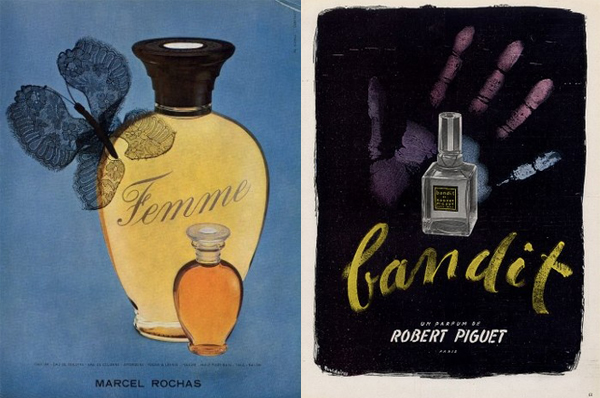
The story is about evolving gender roles and societal norms, from the smoky, sharp, groundbreaking fragrances of the twenties all the way to the watery, unisex “office smells” of the nineties, and beyond. But it’s not as simple as the story of feminine scents turning more masculine (Charlie!) then turning unisex (L’Eau d’Issey). According to Herman, when you pay attention to the narrative of how perfume actually smells, rather than how it is marketed, the story becomes delightfully non-linear.
A chief example of this complexity is in Herman’s chapter on the nineteen-forties, when Femme was born. Herman gives the impression that this was a particularly confusing time to try to figure out how to smell. For the first half of the decade, women had to go to work in factories to support the war effort, and, when men came back, women were supposed to happily return to their kitchens. It was a moment when fashion enforced a cartoonish, almost camp femininity: think crinolined, wasp-waisted dresses. But, according to Herman, women’s perfume belied the New Look, or at least underscored its artificiality. She points to the “butch, leather-clad masculinity” of Bandit and the “aggressive, almost-drag femininity” of Fracas to demonstrate that women now at least knew that they were capable of playing multiple roles.