About Those Criminals We’re Deporting

Edward Delman shares the story of how his brother Saul was nearly deported for “a misdemeanor—check fraud—that Saul had committed at the age of 19”:

You could be a wife and mother to U.S. citizen children, contributing to your community and working to support your family, and they could deport you because of a shoplifting conviction you committed 15 years ago, despite years of rehabilitation in the meantime,” says Heidi Altman, an attorney and legal director of the Capital Area Immigrants’ Rights (CAIR) Coalition. And that’s exactly what seems to be happening to many immigrants.

A Human Rights Watch report shows that between 1997 and 2007, 77.1 percent of legal immigrants who were deported were deported for non-violent offenses, such as immigration crimes, DUIs, and illegal entry. Moreover, according to a report from the Transactional Records Access Clearinghouse at Syracuse University, the number of deportees who have been convicted “of any criminal offense apart from an immigration or traffic violation has actually declined.” Despite the administration’s claim that it is targeting threats to the public, the numbers tell a different story.

The good news is that if the government files deportation proceedings against you, you have the ability to appeal. The bad news is that if you can’t afford representation or aren’t lucky enough to get your case taken on pro bono, you’re on your own in court. Unlike in criminal court, where anyone—citizen and non-citizen alike—is entitled to counsel, there is no such right in immigration law. As a result, 60 percent of detained immigrants and 27 percent of non-detained immigrants lack any legal representation when facing removal. The importance of having representation cannot be overstated: Immigrants with lawyers are six times more likely to successfully appeal deportation, according to CAIR.

A Poem From The Year

6186207976_b29da5e9a6_b

“1 Corinthians 13” by Spencer Reece:

How long do we wait for love?
Long ago, we rowed on a pond.
Our oars left the moon broken—
our gestures ruining the surface.
Our parents wanted us to marry.
Beyond the roses where we lay,
men who loved men grew wounds.
When do we start to forget our age?
Your husband and I look the same.
All day, your mother confuses us
as her dementia grows stronger.
Your boys yell: Red Rover!
We whisper your sister’s name
like librarians; at last on the list,
her heart clapping in her rib cage,
having stopped now six times,
the pumps opened by balloons,
we await her new heart cut
out from the chest of a stranger.
Your old house settles in its bones,
pleased by how we are arranged.
Our shadow grows like an obituary.
One of us says: “It is getting so dark.”
Your children end their game.
Trees stiffen into scrapbooks.
The sky’s shelves fill with stars.

Please consider supporting the work of the Poetry Society of America here.

(From The Road to Emmaus © 2014 by Spencer Reece. Reprinted by permission of Farrar, Straus & Giroux. Photo by Jenny Downing)

The Perks Of Being A Worrywart

According to Christian Jarrett, they’re considerable:

Psychologists are recognizing the strengths of people who are prone to anxiety. For example, there’s research showing that people more prone to anxiety are quicker to detect threats and better at lie detection. Now Alexander Penney and his colleagues have conducted a survey of over 100 students and they report that a tendency to worry goes hand in hand with higher intelligence.

The researchers asked the students to complete measures of worry, anxiety, depression, rumination, social phobia, dwelling on past social events, mood, verbal intelligence, non-verbal intelligence, and test anxiety. This last measure was important because the researchers wanted to distinguish trait anxiety from in-the-moment state anxiety and how each relates to intelligence. The key finding was that after controlling for the influence of test anxiety and current mood, the students who reported a general habit of worrying more (e.g. they agreed with survey statements like “I am always worrying about something”) and/or ruminating more (e.g. they said they tended to think about their sadness, or think “what am doing to deserve this?”) also tended to score higher on the test of verbal intelligence, which was taken from the well-known Wechsler Adult Intelligence Scale.

The Best Of The Dish Today

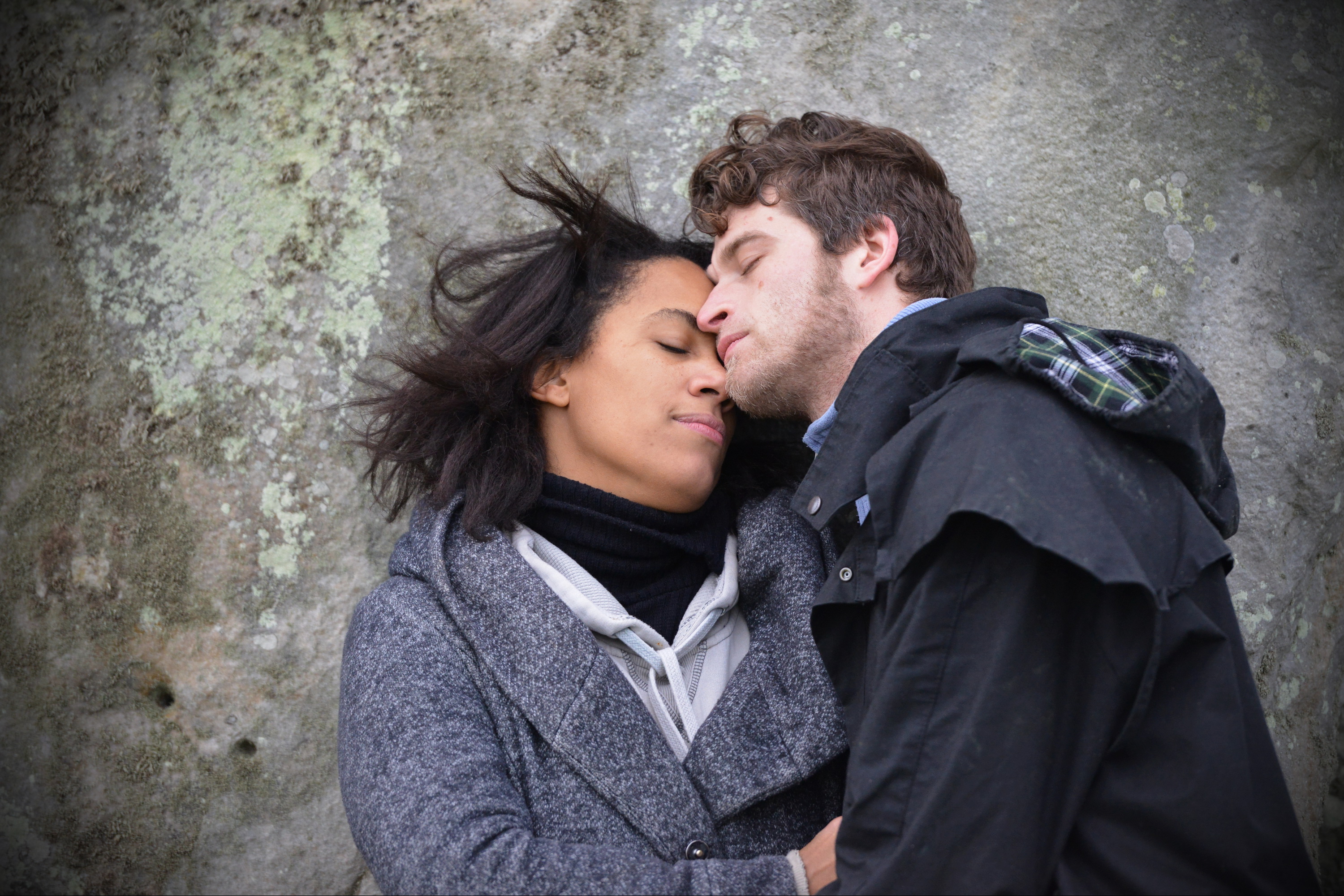
Winter Solstice Celebrated At Stonehenge

Today, a beleaguered Mayor De Blasio called for an end to the recent protests at the racial bias of the criminal justice system in America:

“It’s time for everyone to put aside political debates, put aside protests, put aside all of the things that we will talk about in due time,” Mr. de Blasio said in a speech. “That can be for another day.” The mayor’s call came a few hours after the police commissioner, William J. Bratton, said that the killing of the officers on Saturday was a “direct spinoff of this issue” of the protests that have roiled the nation in recent weeks.

There’s more Dish on the brutal murder of two cops here, and, from a cop’s point of view, here. A few simple things. It is appalling that some demonstrators used vile anti-police language as shown in this video. But it is also appalling that police officers would turn their backs on their own mayor and that their own union leader can place the blame for the murder of two cops on Mayor De Blasio. The reason? That De Blasio had to tell his own bi-racial son to be very careful when dealing with the police, and that he used the word “alleged” to describe a bunch of demonstrators attacking the police. Please. The NYPD needs an attitude adjustment. They’re not the CIA. They remain under democratic control.

A reader adds:

I haven’t to spoken about this to anyone of my family and friends because of a simple reason. I have several close family members who are (white) police officers, and I also have several family members (my adopted daughter and others) who are black.

I understand that police officers often work in very dangerous situations, and I totally abhor what those protesters said and what that murderer did. And nothing excuses either, but this statement by your previous reader about racist cops doesn’t ring true to me: “Good cops despise those cops.”

I’ve heard the stories from black family members and friends about how endemic harassment and profiling are. But I don’t need to take their word for it; I’ve watched my (very young) daughter being profiled by white officers and managers (white, Asian and others) all the time and the data supports those stories.

And yet I’ve heard very little from the police acknowledging that. Instead, I have watched both my relatives and police spokesmen double down on the defense of racist cops and racism. They all immediately come to the defense of the very racist cops your reader says they despise. Rarely have I seen a police chief or spokesman say “We despise what this officer has done.” But worse still is watching my family members defend these obviously racist cops and poston social media racist stuff as some kind of defense. I’ve had to block them from my feeds. I am not sure I am able to explain to my daughter that some of the people she loves are racist … and cops.

I respect and love what the police do for our society, but even I am starting to worry they are becoming militarized group feeling they are in a war.

What I worry about even more is the polarization that makes all this worse. You already know what Fox will be doing with this – as well as MSNBC, to much less effect. And when the police start to form a monolithic bloc within only one camp – and when that has a racial component, we’re in very troubled waters. They key here is de-escalation – from the extreme rhetoric of some protestors to the incendiary blame-assigning of Pat Lynch. And reform – to ensure that what passes for justice is not so racially skewed. What we have instead of either is tribal warfare, in which moments where we should all be in complete agreement – the cold-blooded execution of two NYPD cops – become moments for further polarization. Another reason this year was such an almighty bummer.

Today, I defended airing the Bell Curve debate. Because liberalism. I also lamented the end of some illusions I once held about America’s commitment to freedom as a core principle of its identity. We celebrated an ISIS defeat and watched some cows get into festive cheer.

My question: why are there no trigger warnings for Christmas?

The most popular post of the day was Excuse Me, Mr Coates; followed by We’ll Meet Again – on Stephen Colbert’s genius. You can always leave your unfiltered comments at our Facebook page and @dishfeed. 35 more readers became subscribers today. You can join them here – and get access to all the readons and Deep Dish – for a little as $1.99 month. Gift subscriptions are available here (you purchase one today and have it auto-delivered on Christmas Day). Dish t-shirts are for sale here and our new mugs here.

See you in the morning.

(Photo: A couple embraces as revellers take part in celebrations to mark the winter solstice at Stonehenge prehistoric monument in Amesbury, England on December 22, 2014. About 1,500 revelers, druids and pagans gathered at the monument to celebrate the solstice, a tradition believed to date back thousands of years. By Rufus Cox/Getty Images.)

The Best Poems From The Year

MartinLutherKingMalcolmX

There isn’t another political or current affairs blog I know of that has poems suddenly poking up all over the place. It’s one of the things I’m proudest of here at the Dish – because it makes the implicit point that wisdom comes in many guises and that there are more ways to understand life than explainer-journalism. All of this is very fine and dandy in theory, but none of it would be possible in practice without our Poetry Editor, Alice Quinn. In the world of poetry, Alice is a legend. Her impeccable taste and depth of knowledge, her passion for the form, and her dedication to its survival and its necessity are the stuff of literary lore. And sometimes it seems not only that she knows a poet’s work, but that she actually knows him or her, and is or was a friend. So when I think of how we can sustain the kind of culture that the now-dying liberal arts magazines once did, I hope the integration of poetry into blogging is one small sally into the prevailing winds.

Alice was Knopf’s poetry editor from 1976 – 1986 and the New Yorker’s poetry editor for the next twenty years, and is now the executive director of the Poetry Society of America. And, every Christmas, we invite our poetry-loving readers to express their appreciation by joining the Society. This year, they are running a special year-end membership campaign from now until January 2nd. While supplies last, anyone who joins at the basic membership level gets a signed, limited-edition broadside of “Frogs” by Gerald Stern with an extra $10 donation. Any donation is tax-deductible – and for a short time, you also get a beautiful broadside in the bargain. Sign up for your membership here.

In the week ahead, we’ll also be looking back at a few of the poems offered this year, chosen by Alice and Matt Sitman, our literary editor – think of it as an idiosyncratic “greatest hits” of Dish poetry. Each of these poems will include a link to the Poetry Society of America’s membership drive. The first poem we’re revisiting is below.

“For Malcolm X” by Margaret Walker:

All you violated ones with gentle hearts;
You violent dreamers whose cries shout heartbreak;
Whose voices echo clamors of our cool capers,
And whose black faces have hollowed pits for eyes.
All you gambling sons and hooked children and bowery
bums
Hating white devils and black bourgeoisie,
Thumbing your noses at your burning red suns,
Gather round this coffin and mourn your dying swan.
Snow-white moslem head-dress around a dead black face!

Beautiful were your sand-papering words against our skins!
Our blood and water pour from your flowing wounds.
You have cut open our breasts and dug scalpels in our
brains.
When and Where will another come to take your holy place?
Old man mumbling in his dotage, or crying child, unborn?

(From This is My Century: New and Collected Poems by Margaret Walker © by Margaret Walker Alexander. Reprinted by kind permission of the University of Georgia Press. Photo of Martin Luther King, Jr. and Malcolm X, March 26, 1964, from the United States Library of Congress‘s Prints and Photographs division via Wikimedia Commons)

Quote For The Day

“We have been silent witnesses of evil deeds; we have been drenched by many storms; we have learnt the arts of equivocation and pretence; experience has made us suspicious of others and kept us from being truthful and open; intolerable conflicts have worn us down and even made us cynical. Are we still of any use? What we shall need is not geniuses, or cynics, or misanthropes, or clever tacticians, but plain, honest, and straightforward men. Will our inward power of resistance be strong enough, and our honesty with ourselves remorseless enough, for us to find our way back to simplicity and straightforwardness?” – Dietrich Bonhoeffer, “Letters and Papers From Prison.”

Citizen Canine

3004027422_392296ac9b_o

Zack Beauchamp interviews philosopher Will Kymlicka:

ZB: So what’s wrong with just saying we’ll take a number of steps to protect animal rights without going so far as to declare them citizens?

WK: As I’ve said, the core of our theory is the idea of membership. It’s a rich concept if you think about it seriously: it’s the idea that domestic animals belong here. It’s where we disagree with one strain of animal rights theory, which says we should extinguish domesticated animals because it was a mistake ever to bring them in.

We need to create a shared interspecies society which is responsive to the interests of both its human and animal members. That means that it’s not just a question of how you ensure that animals aren’t abused. If we view them as members of society — it’s as much their society as ours — then it changes the perspective 180 degrees. The question is no longer “how do we make sure they’re not so badly treated?” We instead need to ask “what kind of relationships do they want to have with us?”

That’s really a radical question. It’s one we’ve never really bothered to ask. I think there are some domesticated animals that enjoy activities with us — I think that’s clearest in the case of dogs, but it’s also true of other domesticated animals whose lives are enriched by being part of interspecies activities with us. But there are other animals who, if we took what they wanted seriously, would probably choose to have less and less to do with us. I think this would be true of horses.

(Photo by Flickr user alaindemour)

Face Of The Day

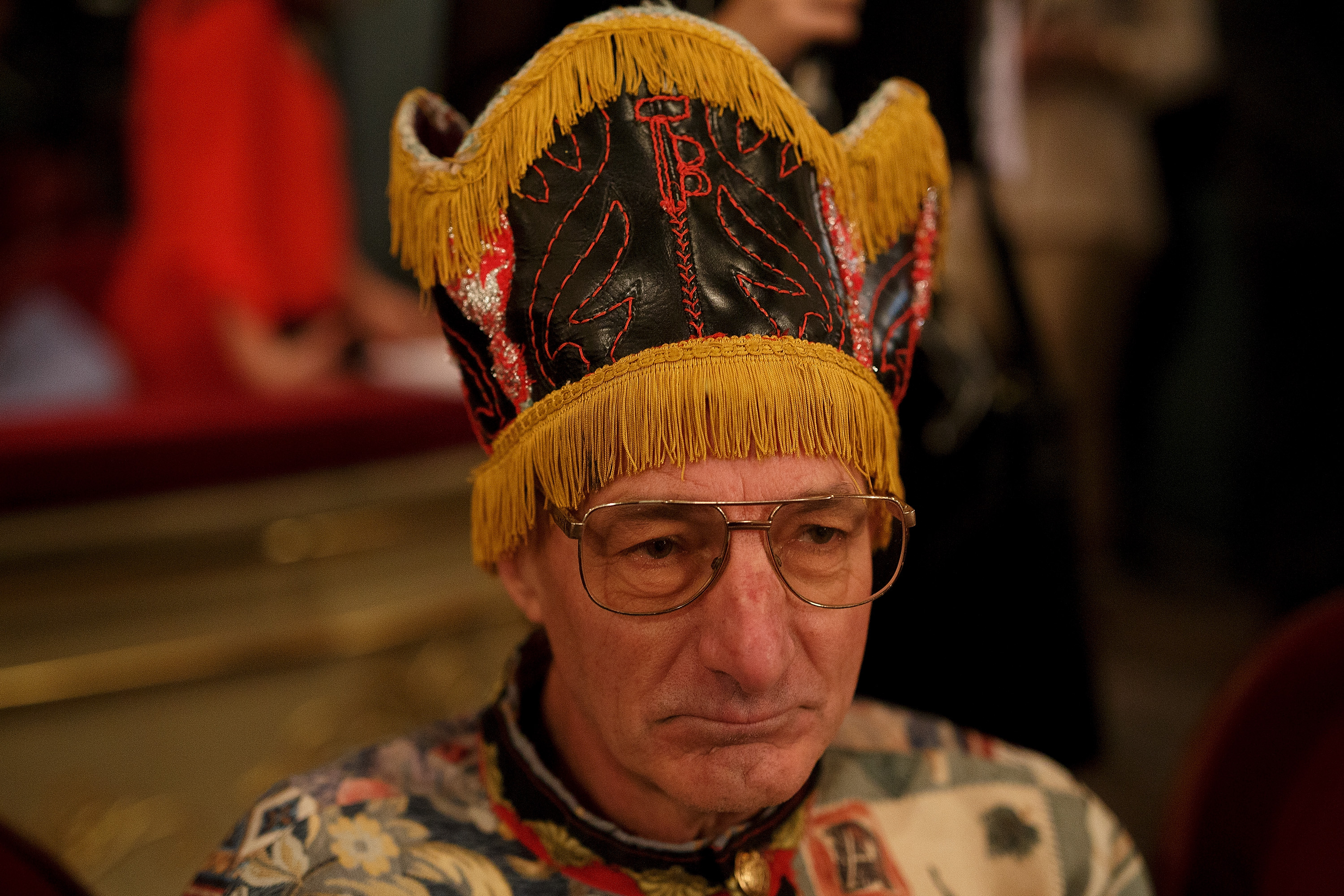
El Gordo Christmas Lottery

A man wears a costume as he attends the draw of Spain’s Christmas lottery, which is named ‘El Gordo’ (Fat One) at Teatro Real in Madrid, Spain on December 22, 2014. This year’s winning number is 13437. The top prize of 4 million euros will be shared between ten ticket holders. The total prize fund is worth 2.24bn euros. By Pablo Blazquez Dominguez/Getty Images.

Losing Your Faith In Santa, Ctd

Readers continue the popular thread:

I remember the moment I knew for a fact that Santa wasn’t real. All my life, Santa used different wrapping paper than my mom. Gifts from my parents were in one style and Santa’s gifts looked completely different. One July, when I was 11 or 12, I was helping my mom clean out the garage and I came across Santa’s wrapping paper. I was old enough that I had a good idea that Santa wasn’t real, but I remember the look my mom and I exchanged. Mom said, “Well, that’s that. Don’t tell your little sister.” And I didn’t.

The next Christmas, when Santa used the special paper again, I felt like I was in on some big secret. I knew the truth! My sister figured it out logically a year later. She was 8. I am clearly the slow one of the family.

Another’s reason for disbelief was pretty simple:

Santa had the same handwriting as my parents.

Another reader:

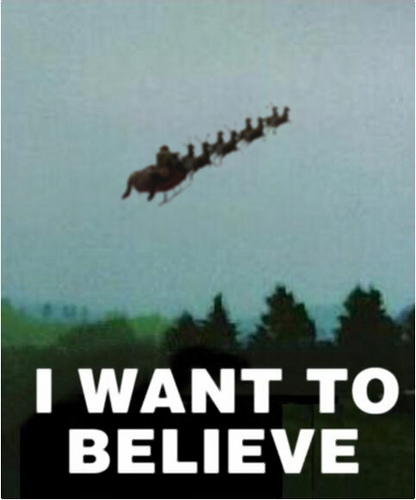
I had been suspecting Santa was a myth for a few years, but when I was 10 I cornered my dad because he somehow couldn’t lie to me when asked a straight question. (As an 8 year old who had just i-want-to-believefinished D.A.R.E., I caught him burning incense and smoking, I thought, a cigarette. Being the smart ass I was, I asked, “are you smoking marijuana?” His answer was, “Yes, don’t tell your mother.” I didn’t.)
I asked him if Santa was real, and he told me no – it was him and my mom. To this day he says my face dropped, my heart broke, and that he’s always regretted telling me. I remember it differently. I remember being glad he told me the honest truth and didn’t keep lying to me like all the other adults. Of course I WANTED Santa to be real, I still do! That’d be awesome! But I had already found their stash of presents and he was just confirming what I already knew.

Another confesses:

I should probably keep this to myself, but what the Hell:

I held on to a belief in Santa until an embarrassingly late age. I may have been as old as 12, certainly over 10, but either way much too old to still be believing in Santa. I don’t recall arguing with other kids who told me the truth, just an iron-clad confidence they were wrong. Besides, I remain to this day much too gullible and trusting.

I was in the kitchen with my mother when my oldest sister, who was six years older than me, walked into the kitchen and asked my mother for help writing a paper for school about the reaction children have upon learning that Santa is not real. I was stunned and crestfallen. I responded with “you could just watch me” or something to that effect and left the room.

I wasn’t angry at my parents or siblings for allowing me to continue to hold onto such a childish belief. I was more embarrassed that I had allowed myself to believe in such a ridiculous idea for so long. The Santa concept falls apart even under mild questioning that it was deflating to think I had never pressed it.

Another can relate:

I love this thread, please keep it up! Like several others have mentioned, I also believed in Santa for a longer time than I probably should have. I, too, hung on due to some clever lies from my parents and my certainty of their own human nature.

My first picture with Santa from my first Christmas was actually my dad in a Santa suit.  I of course didn’t know that at the time, and I guess when “Santa” was holding me, being an 8 month old, I grabbed his beard and PULLED.  Out came a tuft of rental Santa beard fluff, and my parents saved it in one of those hinging jewelry boxes.

When I started to doubt Santa at an early age due to some school kids who brought me to tears by telling the truth, my parents pulled out my picture with Santa and the beard fluff as proof of his existence.  That’s all I needed to defend Santa for years: “I have a piece of his beard!” (By the way, Andrew, to this day I have profound respect for beards and love that my husband has one.)

Another reader:

I found out when I was eight. I don’t recall exactly what tipped me off, probably the logistical impossibility of visiting so many kids on a single night. Whatever my reasoning, I confronted my mother with my suspicions and, after some hemming and hawing about it, she finally admitted the truth. Far from being disappointed, I was indignant that I had been lied to, not only by my parents but every other adult, as well. This was an injustice that had to be remedied.

So the next day at school, my teacher started saying something about Santa. I raised my hand, and proudly informed everyone in my third grade class what I had learned. I honestly thought (1) they would be happy to learn the truth and (2) they would be as upset with adults as I was. This is not what happened.

Every single kid in my class, including my best friend, Jimmy, was outraged, all right, but not with our teacher, their parents, and every other lying adult, but with me. Pretty much everyone in class started yelling at once, saying I was wrong, stupid, etc. I had to be sent out of the room so the teacher could placate my classmates, probably by telling them I was a kook and of course Santa is real.

I was flabbergasted. I thought I would be hailed as a hero for uncovering the sordid truth, but instead I was a pariah. No one played with me at recess that day, nor for a number of days thereafter. Jimmy and I finally reconciled after I made some mealy-mouthed concession about how I was wrong and there really was a Santa Claus. Everyone else eventually forgot about it after Christmas passed, but I never did. Third grade was a long time ago, but I can still see the hateful looks on their little faces after I spouted off about Santa.

I can’t say this changed my life or anything, but it was a pretty damn good lesson about human nature, though it took me a few years to fully absorb that. But now that I have kids of my own, I’m all in on filling their heads full of Santa nonsense. So clearly I didn’t learn that lesson.

Another confronted another kind of spite:

Back in the early 1950s, I was in kindergarten and a neighbor girl who was a couple of years older offered to help me write to Santa.  We were upstairs in my house, both writing our letters, and she misspelled “from” as “form”.  Even then I was a stickler for accuracy, so I informed her that she had misspelled it.  Probably irked at being corrected by a younger child, she snapped back, “So what!  There’s no Santa Claus anyway – it’s your parents.”

I rushed downstairs to check with my mother, but as soon as I heard my neighbor’s words, I knew they were true.  My mom’s face (probably a long time before she thought she would have to confront this question) just confirmed it.

Another reader ends on a brighter note:

My sister did it the best way. Her son was simply not disbelieving despite being like 10 years old – way too old to still believe in Santa. So last Christmas Eve, she woke him up at 2am and told him: “I have something to tell you. Me and your Dad are Santa Claus. He’s not real. But we have exciting news! Now, YOU get to be Santa for your little sister.”

And my nephew has kept that secret now. And he relishes his role as his sister’s secret-keeper.

Terminating A Pregnancy Based On A Test

Beth Daley recently reported on prenatal screening errors:

Two recent industry-funded studies show that test results indicating a fetus is at high risk for a chromosomal condition can be a false alarm half of the time. And the rate of false alarms goes up the more rare the condition, such as Trisomy 13, which almost always causes death. Companies selling the most popular of these screens do not make it clear enough to patients and doctors that the results of their tests are not reliable enough to make a diagnosis. …

Now, evidence is building that some women are terminating pregnancies based on the screening tests alone. A recent study by another California-based testing company, Natera Inc., which offers a screen called Panorama, found that 6.2 percent of women who received test results showing their fetus at high risk for a chromosomal condition terminated pregnancies without getting a diagnostic test such as an amniocentesis.

Libby Copeland summarizes Daley’s findings:

The problem with the new class of prenatal screenings, which look at placental DNA in the mother’s bloodstream, is that these companies’ tests are not regulated by the FDA due to a loophole that dates back to the 1970s, Daley writes. So there’s no one evaluating their claims of accuracy. Many doctors appear not to understand how predictive the tests they’re giving are, since they often get information about a test’s purported accuracy from the salespeople selling them the tests.

Genetic counselors should be stepping in to explain the tests’ limitations to patients, Daley writes, but that’s not always happening. She points to an apparently smaller but growing group of women who gave birth to severely ill babies—some of whom died within days—after screens showed their fetuses at minimal risk. (In a separate story, she outlines one of these stories, and another about a healthy baby born after a prenatal screen predicted, supposedly with 97 percent accuracy, that he would be born with a fatal chromosomal disorder.)

The companies that make these tests say they’re studying the false positive rate, but they’re also poised to push back on the FDA’s looming efforts to regulate them. For now, the industry is policing itself, which doesn’t seem to be working out so well for a number of American women.

However, Emily Oster defends the tests as “a huge leap in accuracy over what was previously available”:

The problem may not lie in the claims made by the companies who make the tests, but in the interpretation of these results by doctors and patients. The earlier versions of the screening tests were so inaccurate that no one would think of acting on their results by terminating a pregnancy. The enhanced accuracy here may, perversely, encourage acting on this information when it is still not certain. But that problem can’t be fixed by the test manufacturers; it requires greater statistical literacy among doctors and patients.