Joe Carter criticizes what he calls "Sullivanism" – a form of conservatism he thinks is closer to Eric Cartman than Edmund Burke. He raises a lot of points. But his core case is that conservatism, in his view, cannot lose a sense of transcendent, revealed, objective truths in its relationship to society. This is the crux of the matter, and it is a very complicated question that I’ve been trying to figure out most of my adult life.
I’d respond as follows: I don’t think the kind of conservatism I favor denies the existence of objective moral truth. It denies our capacity to access it easily or without layer upon layer of error. My basic concern with Christianism is its conflation of religion and politics but also its erasure of the distinction between what is true for ever and what is true for humans in the practical here and now. This core distinction between theory and practice, between eternal truth and temporal politics, is, to my mind, the central contribution of conservatism as a political theory – and that is why fundamentalism is, in fact, the 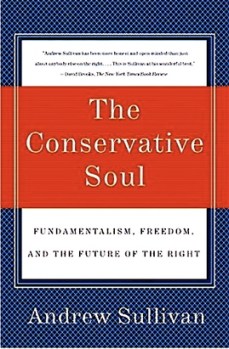 nemesis of conservatism, not its complement. The theory-practice distinction enables conservatism to resist both the rationalist problem-solution approach to politics and the absolutist idea that politics is about conforming a messy human world to unaltering divine Truth. It resists both liberal managerialism and fundamentalist Christianism.
But it’s not a denial of God, or an abolition of a moral order, let alone a dismissal of tradition as it has shaped us and our society. It is imbued with skepticism – not nihilism. And because Oakeshottian conservatives understand how blindly human beings live – blind as bats – the patterns of behavior and language and politics that we inherit actually become more important, not less. It’s all we know as a society – where we’ve been and how we got here. That’s the foundation for all social change, and sometimes it will mean radicalism and sometimes gradualism and sometimes pragmatism – and every decision is filtered through a prudential judgment that adjusts for the current moment and its perceived needs and intimations.
I don’t think this is a refutation of Burke; it’s actually an extrapolation of his message for a post-modern generation. And it acknowledges, in a way that the theoconservatism doesn’t, the profound shifts in human consciousness over the past century, the lessons of science and evolution, the success of the limited liberal state, and the threat of the fundamentalist psyche – Islamic and Christian – to Western freedom. This conservatism’s core interest is in protecting the remarkable freedom we in the West have achieved for such a short period of time in human history and pre-history. And in conserving that freedom – and in being vigilant against its many enemies, including those who come in the name of God and country – it is, in my view, the most authentic expression of the conservative temperament around.
I don’t expect a Huckabee supporter to find this persuasive, any more than I expect Huckabee himself to have grappled with any of these issues in any depth at all. But I certainly think its place within the American conservative conversation is as valid as any fundamentalist’s.


