Face Of The Day

dish_FOTDsun2

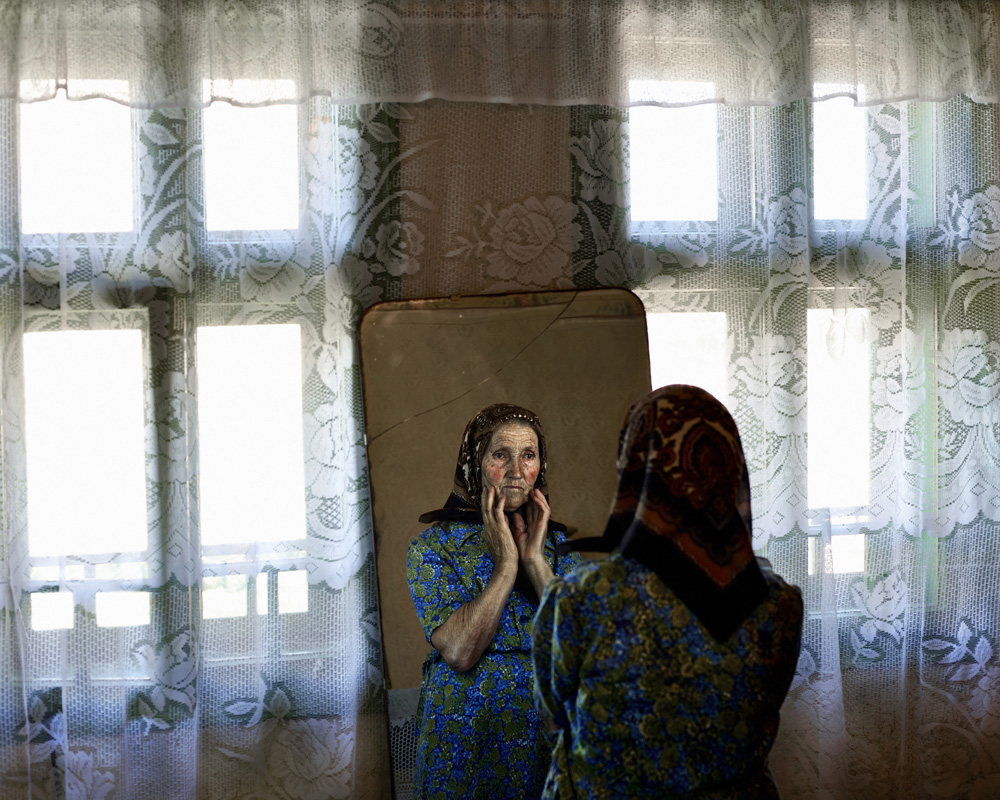
For his series Notes for an Epilogue, Tamas Dezso captured scenes of post-Soviet Romania:

[T]here is a documentary element to the photos, which chronicles a way of life that is fast disappearing. The communist-era factories and structures being salvaged for scrap will eventually vanish. Entire villages, like Geamana in the fifth slide, have already been abandoned entirely. The cultures in the area are also disappearing…. It may seem rural Romania’s transition into post-soviet life is taking an inordinately long time, but Dezso says the region operates at a different pace than many westerners are used to. This is another imperative behind his effort to capture the essence of what’s being lost — these are cultures and traditions that have lasted a very long time, and now stand to disappear in the equivalent blink of an eye.

(Photo by Tamas Dezso)

The Moral Fiber Of Fiction

Paula M.L. Moya explores the connection between literature and morality:

Because works of literary fiction engage our emotions and challenge our perceptions, they both reflect on and help shape what we consider to be moral in the first place. Importantly, this can be the case as much for the author as for the reader.

Consider Toni Morrison’s Sula.

In a 1985 interview conducted by Bessie Jones, Morrison formulated the question that motivated the novel Sula: “If you say you are somebody’s friend as in Sula, now what does that mean? What are the lines that you do not step across?” Elsewhere in that same interview, Morrison explains that she views writing as a way of testing out the moral fiber of her characters in order to see how they respond to difficult situations: “Well, I think my goal is to see really and truly of what these people are made, and I put them in situations of great duress and pain, you know, I ‘call their hand.’ And, then when I see them in life threatening circumstances or see their hands called, then I know who they are.” Moreover, because Morrison regards writing as a process of moral and epistemic investigation, she does not write about ordinary, everyday people or events. Instead, she plumbs the hard cases—the situations where “something really terrible happens.” She explains: “that’s the way I find out what is heroic. That’s the way I know why such people survive, who went under, who didn’t, what the civilization was, because quiet as its kept much of our business, our existence here, has been grotesque.” The process of writing a novel can be mode of inquiry in which the “answer” surprises even the author.

Reading The Rain

As California enjoys a welcome reprieve from its ongoing drought, David Ulin considers how the state’s legendary downpours have shaped its literary – and psychological – landscape:

“Easterners commonly complain that there is no ‘weather’ in Southern California,” Joan Didion observes in “Los Angeles Notebook,” “that the days and the seasons slip by relentlessly, numbingly bland. That is quite misleading. In fact, the climate is characterized by infrequent but violent extremes: two periods of torrential subtropical rains which continue for weeks and wash out the hills and send subdivisions sliding toward the sea; about twenty scattered days a year of the Santa Ana, which, with its incendiary dryness, invariably means fire.”

I could do without the Santa Ana, but in such a landscape, the rain — especially when it is torrential — is a revelation, and I have missed it this year. Why? Because in California, rain reminds us (to borrow another phrase from Didion) of “how close to the edge we are.” It is often neither gentle nor reassuring, which the region’s writers have recognized all along.

In one of the climactic scenes in his novel Mildred Pierce, James M. Cain describes the New Year’s flood of 1934: “She slogged on,” he writes of his protagonist, “up the long hill to Glendale, down block after block of rubble, torrents, seas of water. Her galoshes filled repeatedly, and periodically she stopped, holding first one foot high behind her, then the other, to let the water run out.” It’s a vivid image, of nature in ascendance, of the elemental world asserting itself over the human, as every Southern Californian understands will happen in the end.

Recent Dish on California’s endless summer herehere, and here.

Invasion Is Imminent, Ctd

Earlier tweet reax here. Max Seddon summarizes today’s developments:

Putin asked Russia’s upper house of parliament for permission “to use the Armed Forces of the Russian Federation on the territory of Ukraine until the normalization of the socio-political situation in that country,” the Kremlin said in a statement. The body is a rubberstamp institution that fulfills Putin’s every wish and voted unanimously to approve his request less than two hours later.

In an extraordinary session of the Federation Council reminiscent of a Soviet party congress, senators accused protesters in Kiev of having been trained in Lithuania and Poland to overthrow President Viktor Yanukovych and moved to ask Putin to recall Russia’s ambassador to the United States as a rebuke to U.S. President Barack Obama[.] … Ukraine has accused Russia of an “invasion” of Crimea, where Russia has a key naval base, but Putin’s request would give him the right to send troops anywhere in the country.

It’s not yet clear if or when a formal invasion might begin. But the US seems to have been caught flat-footed:

“Nobody thought Putin was going to invade last night,” one Senate aide who works closely on the Ukraine crisis. “He has the G8 summit in Sochi coming up, no one really saw this kind of thing coming.” This source also stressed that events are still moving quickly on the ground. “There is still a question about whether this is Russian troops coming across the border or Russian troops moving around the installations in Crimea.” …

Among the options being considered [by the Obama administration], according to U.S. officials, is boycotting the G8 Summit scheduled for Sochi in June and encouraging other countries to do the same. If Russian troops stay in Crimea, it could scare off trade and further investment in Russia and also further weaken the ruble. It’s debatable whether that would influence Russian thinking.

Michael Weiss is critical of the administration:

It’s obvious that Putin calculated correctly yet again. The United States was gulled into thinking that Russia would forbear this time because the siloviki gave assurances to a U.S. diplomatic corps eager to believe anything that it would do. Washington’s own intelligence community, fresh from proclaiming a year ago that Bashar al-Assad had “weeks left” in power, assessed yesterday that “we don’t have any reason to think” that the surprise drill of 150,000 soldiers announced overnight by Russian Defense Minister Sergei Shoigu would amount to “more than military exercises.” And given that the United States has yet to definitively label what transpired eight months ago in Egypt a “coup,” the Kremlin must have also reckoned that a rapid takeover of Crimea would be all over but for the shouting as Washington sputtered to define exactly what had just transpired, much less attempted a coherent response to yet another international crisis.

Ioffe sizes up the Russians:

We didn’t think Putin would do this. Why, exactly? This has often puzzled me about Western analysis of Russia. It is often predicated on wholly Western logic: surely, Russia won’t invade [Georgia, Ukraine, TK] because war is costly and the Russian economy isn’t doing well and surely doesn’t want another hit to an already weak ruble; because Russia doesn’t need to conquer Crimea if Crimea is going to secede on its own; Russia will not want to risk the geopolitical isolation, and “what’s really in it for Russia?“—stop. Russia, or, more accurately, Putin, sees the world according to his own logic, and the logic goes like this: it is better to be feared than loved, it is better to be overly strong than to risk appearing weak, and Russia was, is, and will be an empire with an eternal appetite for expansion. And it will gather whatever spurious reasons it needs to insulate itself territorially from what it still perceives to be a large and growing NATO threat. Trying to harness Russia with our own logic just makes us miss Putin’s next steps.

Larison’s take on the crisis:

Obama has threatened Russia that there would be unspecified “costs” for what it is doing, but whatever real costs Russia pays will not be imposed by Western governments or the U.N. Moscow is not only wrecking its reputation with most Ukrainians, but it is also potentially risking a ruinous war that could make it a pariah in much of the world for little real gain.

Western mediation is probably of little use here, but if there is a government that might be able to get through to Moscow at the moment it might be Germany. Because Germany has taken Russian interests into account more often in the past than other major Western governments, it might be able to defuse the situation before it results in violence and further escalation. It should go without saying that the U.S. and NATO shouldn’t make any threats to take their own military action or make promises to Ukraine that everyone already knows they aren’t going to keep. They would be foolish, they wouldn’t be meant or taken seriously, and they would only make the crisis harder to resolve. …

Annexing Crimea outright would be a clumsy and provocative action that would leave the new government in Kiev with almost no choice but to fight, so it seems more likely that there would be an attempt to use continued control over Crimea as leverage in future dealings with Kiev. Does Russia “want” Crimea? Maybe not officially as a part of Russia, but it does seem to want to be able to use control of it to its advantage. Whether this takes the form of phony independence or just autonomy remains to be seen.

Millman wonders if the Ukraine would be better off giving up Crimea:

I can make a reasonable case that Ukrainian nationalists should welcome Russian intervention in Crimea. The status-quo ante meant a large Russian bloc, and a large Russian naval base, within Ukraine. The former makes it harder for Ukrainian nationalists to dominate the country electorally; the latter makes it harder to maintain a policy of distancing from Russia. Lose Crimea, and both problems are solved.

Of course, nationalists can’t simply allow sovereign territory to be seized by enemy forces. But what if Crimea achieves de-facto independence, but is not annexed by Russia and independence is not recognized by any other country? Kiev could demand an end to the violation of its sovereignty. And Russia could refuse to accede to that demand. And this could become the new status quo. Wouldn’t that, in the short-term, anyway, be optimal from the perspective of a Ukrainian nationalist?

Josh Marshall wonders if control of Crimea is all the Russians are considering:

There is of course the possibility that Putin may have in mind the occupation of most or all of Ukraine. But this is difficult to envision. Not only would the international response be ferocious. More importantly, recent events have shown that sustaining and normalizing such an occupation in the vast portions of the country where ethnic Ukrainians predominate would be difficult and debilitating.

The real levers Obama or more specifically the US and Europe have are the ability to make the price of a Russian land grab some version of international pariah status, through a mix of economic and diplomatic exclusion. Europe’s dependence on Russian natural gas and oil significantly complicates that option. But the combined economic might of the US and the EU is vast in comparison to Russia’s.

Taking a step back, Masha feels that “the Crimean invasion is a landmark in Russian domestic politics”:

It signals a loss of innocence: no longer will Russians be able to think that Putin merely feels nostalgic for the USSR. It also signals ever greater polarisation of Russian society: in addition to all the other lines along which Russians are divided and across which civilised dialogue is impossible, there is now the chasm between supporters and opponents of the planned annexation. It also means the political crackdown in Russia will intensify further.

These clear and tragic consequences obscure the challenge the new Crimean war poses to Russia’s post-imperial consciousness. “I can be reasonable about everything, but I cannot give up the Crimea,” was a line from the late Galina Starovoitova, who as Boris Yeltsin’s adviser on nationalities policy, oversaw Russia’s first attempts at releasing its colonies. She meant that, like just about every Russian, she felt the Black Sea resort area was part of her birthright, whatever the maps may say.
Jane Austen vs Feminism

Terry Castle, a professor at Stanford who has written controversially about Austen, muses about the enduring appeal of her novels as stories of “Upwardly-Mobile-Hetero-Girl-Love-Fantasy”:

My female students—the ones who claim to be besotted by Austen and her books—tell me that even now, in 2014, they read her and watch the movies not for the social comedy or the brilliant style or the moral themes, but for the ‘love stories’.

Getting to kiss the hero. Or not. Such readerly euphoria can maybe seem regressive or childish but probably has everything to do, I’m thinking, with the so-called ‘post-feminist’ world we are all now said to inhabit. In some saddening, hugely entropic sense, feminism appears to be ‘gone’ or ‘over’ for these young women—or else never really existed for them. If they think about feminism at all, it’s merely as a sentimental vestige some long-ago-concluded sociopolitical readjustment carried out by no doubt distinguished but nameless female worthies.

[So] bizarre though it sounds, I think reading Austen’s fiction acts for them as a displaced surrogate for a feminist point of view—a more wholesome way of rebelling and resisting than bulimia or cutting yourself with a razor blade. A novel such as Emma or Pride and Prejudice represents an imaginary realm in which, however inchoately or metaphorically, female rage and desire—ongoing longings for power, physical safety, intellectual and moral authority, social acceptance, emotional freedom and fulfillment—can all be dramatized at once. My students don’t ‘get’ feminism, but they sure do ‘get’ Jane Austen.  She’s like swallowing a happy pill for them. The spectacular pop-culture fetishisation of Austen’s fiction in print and on film in recent decades may reflect what feminism itself has become in the early 21st century—a sort of amnesiac, occluded, teacup-filled, muslin-skirted version of itself.

Previous Dish on Austen here, here, and here.

A Secret Stash

Adam Baran’s Jackpot depicts a teenager’s quest to acquire a treasure trove of gay porn magazines (the movie takes place in 1994, when Internet porn wasn’t so accessible). Scott Beggs calls the film “simple and sweet”:

It stops just short of being schmaltzy due to a genuinely likable hero in Ethan Navarro’s Jack, and a comic relief porn-star-of-many-wardrobe-changes played by Adam Fleming. Plus, as bully-dodging stories go, this one feels a bit more honest when it comes to danger, consequences and the anticipated payoff. It’s a warm look at the complicated problem of learning about your own sexuality — which probably felt world-collapsingly insurmountable when we were all that age — that’s pulled off with a large heart and a rebellious attitude.

TV vs Literature

Novelist Moshin Hamid is awed by advances in TV storytelling (NYT):

Recently we’ve been treated to many shows that seem better than any that came before: the brilliant ethnography of “The Wire,” the dazzling sci-fi of “Battlestar Galactica,” the gorgeous period re-creation of “Mad Men,” the gripping fantasy of “Game of Thrones,” the lacerating self-exploration of “Girls.” Nor is TV’s rise confined to shows originating in only one country. Pakistani, Indian, British and dubbed Turkish dramas are all being devoured here in Pakistan. Thanks to downloads, even Denmark’s “Borgen” has found its local niche.

I now watch a lot of TV. And I’m not alone, even among my colleagues. Ask novelists today whether they spend more time watching TV or reading fiction and prepare yourself, at least occasionally, to hear them say the unsayable.

Adam Kirsch, meanwhile, insists on a distinction between novels and TV shows:

Spectacle and melodrama remain at the heart of TV, as they do with all arts that must reach a large audience in order to be economically viable. But it is voice, tone, the sense of the author’s mind at work, that are the essence of literature, and they exist in language, not in images. This doesn’t mean we shouldn’t be grateful for our good TV shows; but let’s not fool ourselves into thinking that they give us what only literature can.

Gary Shteyngart reflected on similar themes in a recent interview:

Why and to where do you think our attentions have shifted?

The need for stories is always there, but what is the water cooler conversation now? It’s beautiful shows like Breaking Bad, or Mad Men, or Girls. That’s where it’s migrated, and I’m not against any of that—in fact, they’re trying to turn [my book Super Sad True Love Story] into a TV series. I love those shows. But I do feel that because they satisfy a certain need for narrative, they’ve pushed books out of the way. Also, our attention span has shrunk to such an extent and it’s harder to concentrate on text for a very long period of time, especially when it’s not on a screen. People lack that capacity.

I lack that capacity. I was doing a reading in upstate New York, way up in the mountains, and I started out from New York, of course checking my iPhone while trying to read a beautiful Chinese novel in translation. I had so much trouble getting into the book because it was in a different culture with all these other signifiers. Meanwhile, the iPhone is just pinging with messages and I’m answering and tweeting like crazy, all while trying to read this book. Then we got into the mountains and the signal died, and when the signal died, I remembered what it’s like to read a book and I started really getting into the book. I started inhabiting the world of the book until everything else was crowded out except for the book and the characters in it. I thought “So that’s what reading is.” Fifteen years ago, that was how I read. Now I have to end up surrounded by mountains to do it. I do this professionally—what is it like for the casual reader.

The View From Your Window Contest

vfyw_

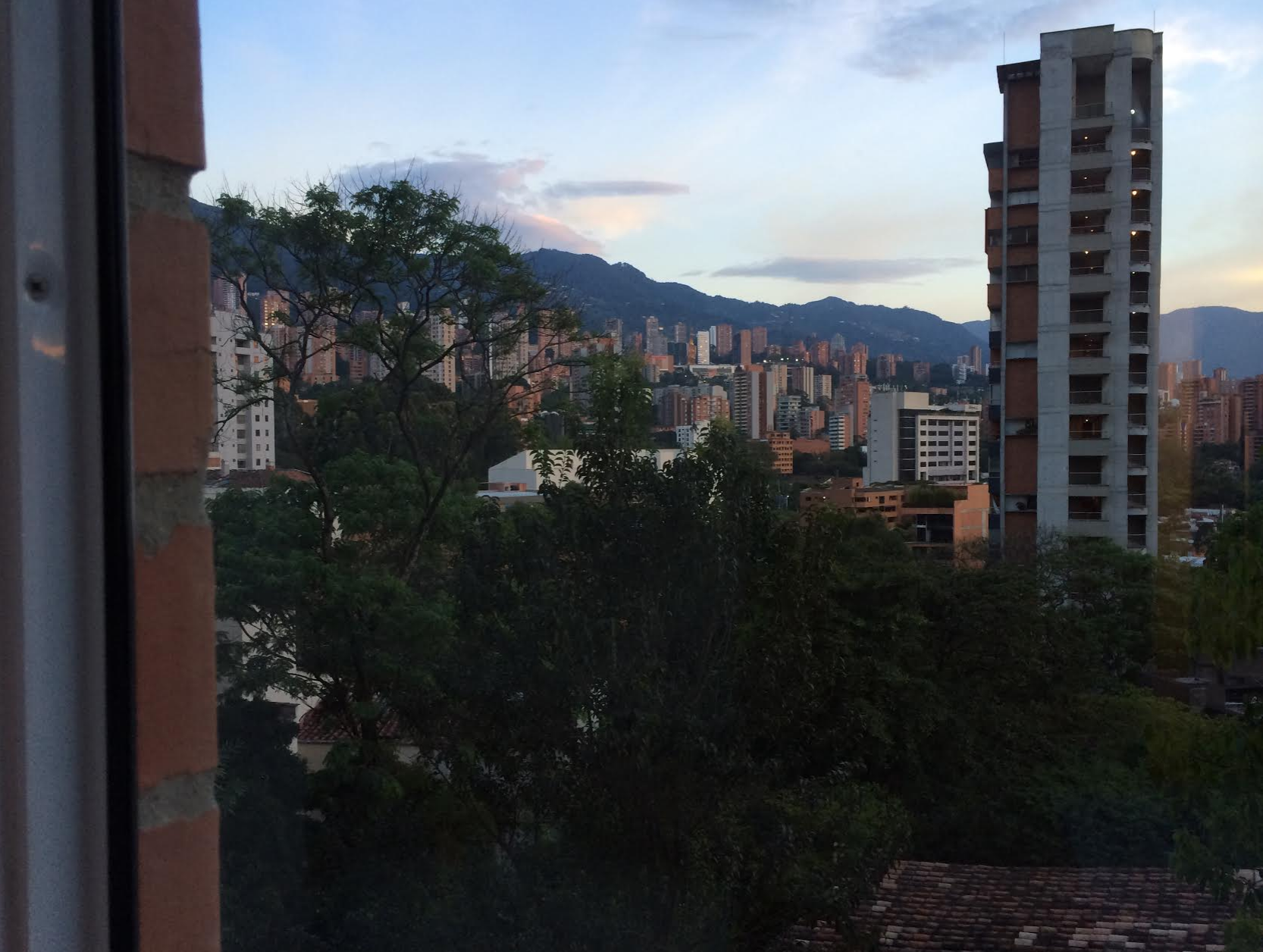
You have until noon on Tuesday to guess it. City and/or state first, then country. Please put the location in the subject heading, along with any description within the email. If no one guesses the exact location, proximity counts.  Be sure to email entries to contest@andrewsullivan.com. Winner gets a free The View From Your Window book or two free gift subscriptions to the Dish. Have at it.