Lovely juxtaposition of shop names in March. pic.twitter.com/6TM3I9Nru9
— Alison Kiddle (@ajkiddle) February 8, 2014
(Hat tip: Steven Nash)
Lovely juxtaposition of shop names in March. pic.twitter.com/6TM3I9Nru9
— Alison Kiddle (@ajkiddle) February 8, 2014
(Hat tip: Steven Nash)
“We recognize that the scourge of AIDS has been devastating to the people of Uganda. Measures must be taken to encourage faithful marital love and to discourage sexual immorality of every type. It is critical, however, that these measures be shaped in a just and Christian manner, and not in a punitive spirit. Harshness and excess must be avoided. Those who experience homosexual desire and yield to it should not be singled out for extreme measures or for revulsion. Homosexual persons, whether they struggle to live chastely or, alas, do not, are human beings. They are children of God made in His very image and likeness. They are our brothers and sisters. Christ loves them as he loves all of us,” – the late Chuck Colson, Robert P. George, and Timothy George, in a 2009 letter to fellow Christians in Uganda. Mercifully, not all American Christians are aiding and abetting the anti-gay pogroms and violence and persecution now cresting in the developing world.
Daniel Soar suggests that “there’s a serious sense in which Snowden is more journalist than whistleblower”:
As journalist, Snowden was extraordinarily conscientious. [Glenn] Greenwald says that on the memory sticks he was given the documents were meticulously organised and indexed, with not a single one miscategorised: he didn’t doubt that Snowden had read them all. The evidence certainly points to Snowden’s knowing quite a bit about their contents.
In his book [The Snowden Files, author Luke] Harding describes the moment when Ewen MacAskill, the Guardian journalist who travelled to Hong Kong along with Greenwald and [Laura] Poitras to meet Snowden for the first time, took out his iPhone and asked Snowden whether he minded ‘if he taped their interview, and perhaps took some photos’.
‘Snowden flung up his arms in alarm,’ Harding writes, ‘as if prodded by an electric stick … The young technician explained that the spy agency was capable of turning a mobile phone into a microphone and tracking device; bringing it into the room was an elementary mistake in operational security, or op-sec.’ Every paranoiac probably supposes as much, but Snowden knew exactly what it was that the spooks might have done to MacAskill’s phone. We too now know, thanks to a document released at the end of January, that GCHQ has developed a virus called WARRIOR PRIDE that can be invisibly installed on devices. It comes with ‘iPhone specific plugins’: the one that does the tracking is TRACKER SMURF; the one that turns the thing into a microphone is NOSEY SMURF. These are facts that you wouldn’t want to unlearn.
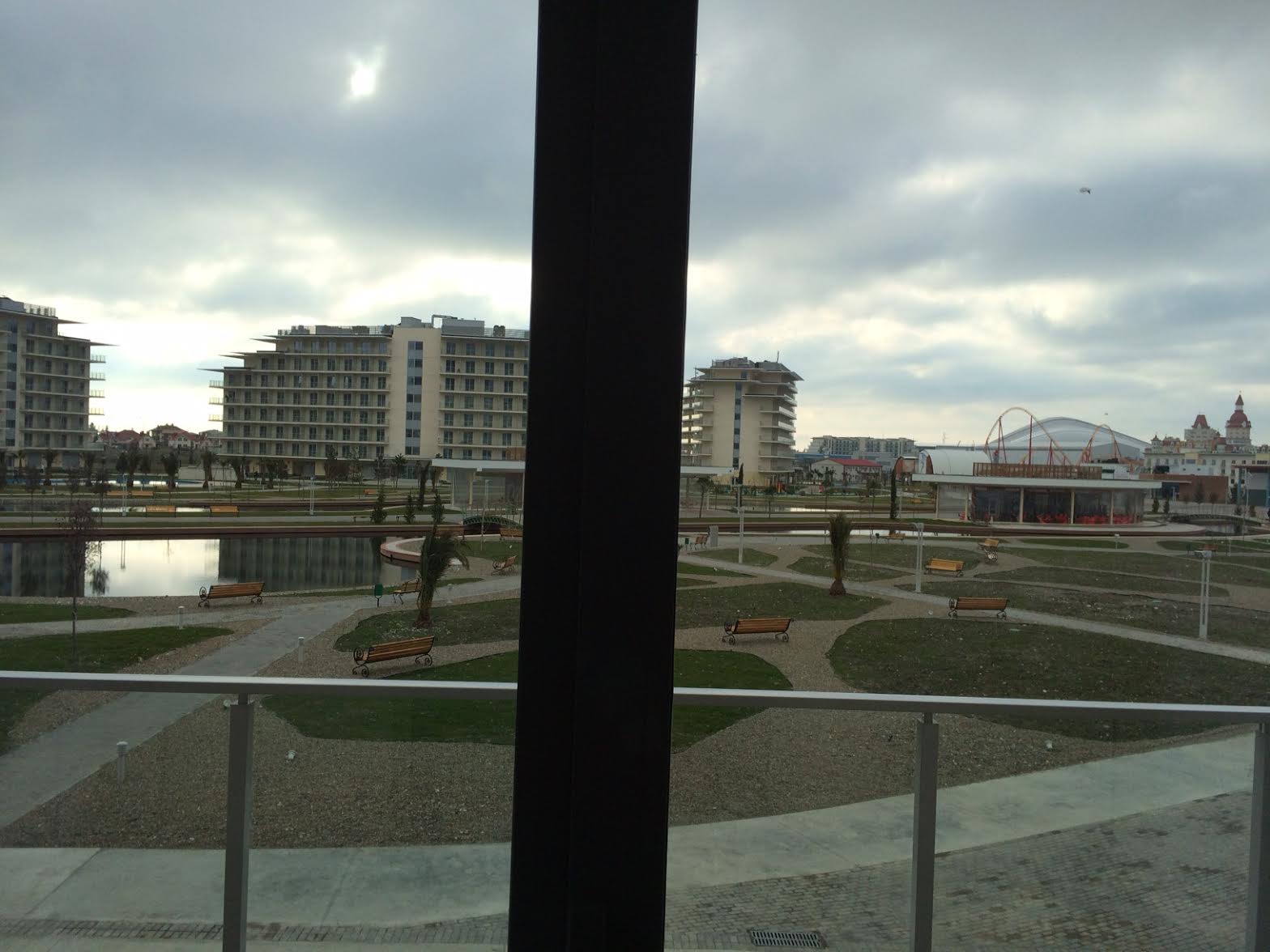
Sochi, Russia, 4.38 pm
A reader writes:
A long-time Dish fan and subscriber here. I wanted to offer a reality check on the Mother Jones article. Newspaper horoscopes are the one topic that both professional astrologers and diehard skeptics actually agree on – they are ridiculous and an insult to common sense. Everyone born during a specific month is going to have the exact same experience? It’s laughable and rightly so.
However, the National Science Foundation study shows something is clearly shifting within the culture
in regards to astrology, particularly for those under 45. What has shifted? It’s that astrology is slowly winning hearts and minds, not through silly horoscopes, but through consistent, effective counseling that clients find useful, practical and relevant to their lives. Professional astrologers cater to working-class individuals all the way up to lawyers, doctors, politicians, businessmen, and professionals of all stripes, every day in this country. Since the field is not routinely covered in the media, many would be surprised to learn that the average professional astrologer is highly educated, socially and politically liberal, and extremely intellectual. I encourage you to google the names of the top three astrologers in the U.S. right now – Richard Tarnas (author of The Passion of the Western Mind), Robert Hand and Steven Forrest – to get an idea of the high-level of professionalism in the field.
Think of the profile of your average psychologist and you get the picture of the average astrologer.
Unfortunately, taking astrology seriously is still an extremely taboo topic in this culture. Similar to the shame and derision people received when they visited psychologists in the 1940s and 1950s, people who visit astrologers are secretive about doing so. They do not want to be shamed, ridiculed, and discriminated against by people who do not understand them. So the majority of clients stay in the closet. (A professional astrologer friend of mine is seeing two clients at the same law firm, but neither of them know the other is going because it’s not a topic they would think of discussing to each other. They are afraid they would be mocked by the other.)
Another is on the same page:
As a professional scientist, I wanted to throw out a perhaps unpopular opinion about astrology and see whether it’s enough to get your readers’ interest. “Astrology” taken broadly includes horoscopes (which are clearly bunk) but also a typology of personalities on the Zodiac. I’m a father of a young child, so I’ve been thinking a lot about what goes into making a good person, or more generally how early childhood influences adult behavior. I want to advance the idea that there may be insight to be had about a person based solely on when during the year they were born: weather.
There are innumerable “firsts” in a child’s life – from the first breath of air to the first steps to the first conceptualization of the self as a social being. Particularly in ancient times, a very young child’s experience of these things was strongly mediated by the natural environment. Is it really so odd to think that people born in July, when it’s 80 degrees in the afternoon and the sun is out for 15 hours a day, might have something in common that is distinct from people born in December, when it’s 40 out and the sun sits low in the sky? Especially 2500 years ago, when the only way to be warm was to be indoors by a fire?
Even now we have no real idea (because no scientific way to properly study) how much of cognition is formed in the first three months or first year of life. I don’t think it’s implausible to suggest that (a) natural seasonal variations could have a significant effect in this early period and (b) those variations could result in phenomenological differences that could be generalized into zodiac “types.” Of course, the rest of it – with Jupiter in the house of Leo and mercury retrograde – is complete baloney. There’s no causal mechanism, but at least for predicting personality types (especially in an ancient and largely homogeneous culture) it doesn’t seem that far off the mark to blame the seasons.
I’m not saying “Astrology is very scientific,” but depending on the day, and the way the question is framed, I might well say “sort of” for the above reason. In this spirit, another good question to ask is: how many people identify with their Zodiac sign (“very much”, “sort of”, “a little”, or “not at all”)? I suspect it would be a high proportion. Even if the answers to that question are culturally mediated, does that make them less valid?
Another shifts to tarot:
As someone who teaches critical thinking and literature, and who has a reasonably literate level of knowledge and experience with both tarot cards and astrology, I have a unique take on this question. One unique quality of community college English professors is that we teach both literature and college-level writing, whereas in many larger four-year schools the professors teach literature and the GTF’s teach writing. So I have a mind that switches back and forth every day between the metaphor/symbolism/irony/tone part of my brain to the argument/critical-thinking/research part of my brain. This dual-mind ability has been very helpful for me as I explored tarot and astrology.
When I began to study tarot from a local teacher, I was immediately struck by the story-telling/metaphor/dream imagery of the cards and the narrative arc that a layout of cards would provide in response to someone’s question. I also felt like I was experiencing Jung’s concept of synchronicity in a powerful way – almost always the cards that come up in readings I do have very powerful metaphorical information about the question or situation being asked about.
I immediately began to see that the layout of cards almost always created the equivalent of a “short story” or a “dream-on-demand” about the person’s situation, both in terms of his or her psyche, and the outside situation. As I walk a person through my understanding of the images and metaphors of each card and how they might apply to the person’s situation or question, they often interrupt me to tell me that they’re seeing their situation much more clearly. They also tell me they see what’s holding them back, and what options and resources they have for moving forward. In other words, they’re getting useful “scientia” that resonates strongly with their situation and mind. I often use the term “a dream on demand” for a tarot card reading because they seem so helpful and appropriate to the question someone asks.
While I’m not as skilled in astrology, I see the same kind of synchronicity, insight, and practical information come through when a good astrologist does a reading for me. They don’t give silly predictions for the future, but help me see what kinds of “seasons” or “weather” are at play for me, and how I can work with my own particular set of impulses, ways of thinking and feeling, etc.
So, are these “scientific” or literal ways to knowing reality or the future? No. But neither are they cartoonish fortune-telling that yield nothing but arbitrary nonsense, unless the reader has been very poorly educated and the querent is only looking for cartoonish fortune-telling, in which case they get what they deserve.
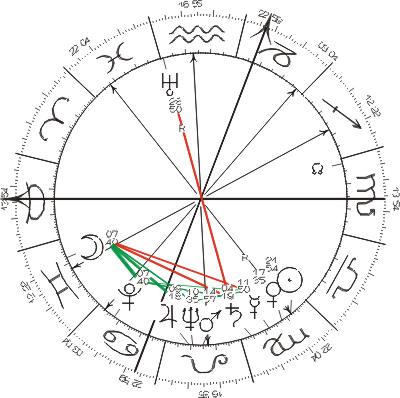
(Image of Fausto Coppi’s Birth Chart via Wikimedia Commons)

From a profile of Klaus Teuber, inventor of the wildly popular Settlers of Catan:
A board game with economic theory, land development, and cute little buildings: one is naturally reminded of something else. The Washington Post hailed Catan as the Monopoly “of our time.” Wired called it the “Monopoly Killer.” Meanwhile, Monopoly itself has begun to respond to the shifting tides. In 2007, Hasbro published Tropical Tycoon Monopoly, in which the original Atlantic City layout frames the perimeter while Rich Uncle Pennybags erupts from a volcanic tropical island in the center. U-Build Monopoly, released in 2010, replaces the rectangle properties with hexagonal tiles that resemble Catan’s terrain. Still, Derk Solko, a co-founder of the popular gaming forum Boardgamegeek.com, said to Wired in 2009, “If I could wave a magic wand and replace all the copies of Monopoly out there with Settlers, I truly think the world would be a better place.” Fenlon told me, “Our mission in life is to make Catan the preëminent game—to have people think of Catan instead of Monopoly when they think of a board game.”
(Photo of Catan costumes by David Trawin)
Charlie Cook pegs them at 70 percent. He focuses on the age factor:
The choice to run for president is effectively a nine-year commitment: one year to run, another four years if she wins a first term—finishing up that term at age 73—and then, assuming she runs for reelection and wins, serving four more years to end a second term at 77 years of age. None of this is to say that the age issue could successfully be used against her. After all, Reagan won the presidency at the same age. But how many 67-year-olds make nine-year commitments, and what concerns have to be addressed if they do?
Update from a reader:
Timing is everything, as Obama showed by seizing the moment in 2008. Clinton’s time has passed. It has been over a quarter-century since America elected a president over age 60 (George H. W. Bush in 1988). The zeitgeist as I read it is suggesting Clinton will not run, because of a health problem or some other unexpected turn of events.
There is only one woman who perfectly suits the emerging spirit of the age:
Kirsten Gillibrand. She’s smart, tough, politically savvy, and willing to challenge entrenched patriarchal power structures. And she is a babe. Why shouldn’t the first female president have iconic female characteristics, in the same way that male presidents have had iconic male characteristics (tall, virile, heroic)? It may not be politically correct to say so, but women who are as gorgeous as Palin and Gillibrand have a better chance of getting elected president than their less attractive peers. It is simple human psychology to want the leader to look the part of the alpha female or male.
So, you heard it here first. Kirsten Gillibrand will be the next president of the United States.
Classics scholar Laura Swift notes that historically, you didn’t have to be a winner to be a hero:
To become a hero meant something concrete in the Greek world: it normally occurred after death, and meant that you’d receive worship at the site of your tomb. Nowadays we’re familiar with the great mythological heroes like Achilles, Ajax, or Theseus, but there were hundreds if not thousands of other heroes, many of whom were real individuals who had died within living memory. And while these people were often made heroes because they’d achieved something memorable, this could involve doing something strange or outlandish just as easily as something good. …
The historian Herodotus, for example, tells us of a construction worker who was heroized because he was believed to have had the loudest voice in the world. In another even more bizarre story, we learn of a man who became a hero because after his death a swarm of bees made a nest in his skull. The underlying idea seems to have been that these were people who were somehow different from the rest and who stood out. This gave them a power that was believed to abide after their death.
So when you see media attention directed to an eccentric athlete at Sochi, remember that idolizing the improbable has just as good a pedigree as praising the greatest of talents.
Another reason to cheer on Mohammad Karim, who taught himself to ski using wooden planks and today is the sole Pakistani competitor at the Games. A video profile of Karim is seen above.
Sonya Lea’s husband had an invasive surgery to treat his cancer, during which he lost his memory and forgot how to have sex:
His hand reaches out, enfolds my hip. It’s the first time he has moved toward me since the surgery. I do not cry, though I wish I could. In my mind, I add sex to the list of things forgotten. Things like the day we met, the day we married, the days our children were born. I think about the ways I have made myself a “we” — who we are, and what we like and what we don’t like, what we do and what we will never do — and I watch those things vanish, too. After a while, I watch him sleep. The man who taught me to explore has become as unknowing as a stranger in a strange land.
At first I think the teenage sex will dissipate, that the fast intercourse, few words and all-boy appetite will be replaced by the experienced sexuality the two of us shared before the cancer treatment. Three years after the brain injury, it still isn’t possible for him to ask for what he wants, or conduct a conversation, or remember the ways my body responds. And that’s not even important, because we’re in survival mode, trying to get our children through college, and help him relearn his career, and sell the house, and apply for disability. My husband suffers both long-term and short-term memory loss, making remembering arduous. Still, the brain changes have made his desire immense. He artlessly reaches for me, his man-hands grasp my breasts before an exchange of words, glances, clinches. Even though I’m angry at what’s happened to us, I cannot ignore his longing.
Tim Parks wonders why literary biographers tend to present their subjects “as simply the most gifted and well-meaning of writers, while their behavior, however problematic and possibly outrageous … is invariably described in a flattering light”:
Returning … to these over-generous biographies, and to the constant insinuation of academe that
writers are talented laborers in a good cause, one can only assume that they are satisfying a general need to reinforce a positive conception of narrative art, thus bolstering the self-esteem of readers, and even more of critics and biographers, who inwriting about literature are likewise contributing to the very same good causes. Authors themselves, though often contradicting this positive image in private (Dickens frequently acknowledged that certain negative characters in his books were based on himself), soon learn how to play the part. Beckett must have been aware of how those famous author photos, suggesting a lean, suffering asceticism, fed the public’s perception of an austere and virtuous separateness. “How easy,” wrote Beckett’s friend Emil Cioran, “to imagine him … in a naked cell, undisturbed by the least decoration, not even a crucifix.” Actually Beckett was sharing a spacious flat in central Paris with lifetime companion Suzanne, spending weekends and summers with her in their country cottage, but drinking heavily with friends (never Suzanne) most evenings and generally making time for mistresses when possible.
(Image: Caricature of Beckett by by Edmund S. Valtman via Wikimedia Commons)
 The Dish

