A De Facto Schism?

I’m intrigued by the Latin mass, being a Second Council baby myself. But it seems to me that the likeliest result of the new shift toward the 1950s is the one sketched in the NYT on Saturday:

It’s easy enough to see where this is going: same God, same church, but separate camps, each with an affinity for vernacular or Latin, John XXIII or Benedict XVI. Smart, devout, ambitious Catholics — ecclesial young Republicans, home-schoolers, seminarians and other shock troops of the faith — will have their Mass. The rest of us — a lumpy assortment of cafeteria Catholics, guilty parents, peace-’n’-justice lefties, stubborn Vatican II die-hards — will have ours. We’ll have to prod our snoozing pewmates when to sit and stand; they’ll have to rein in their zealots.

And we probably won’t see one another on Sunday mornings, if ever.

One of the consequences of the collapse in the moral authority of the Catholic hierarchy, in the wake of Humanae Vitae and then the child and teen abuse revelations, is the inability to hold the Catholicity of the church together. The hierarchy does not command all of us any more. And then there is the suspicion that this kind of schism is actually deliberate, a way to deter the not-so-devout or traditional or politically conservative Catholics. It has worked and will continue to work. And the church will get smaller and smaller in the West.

Dow Jones and the Morality of Murdoch

Jim Fallows has a great post on the eternal question of the press’s need for profitability and its public mission. I might add (cue massive slurpy suck-up sound) that I’ve written for a Murdoch paper for well over a decade every week (the Sunday Times). I’ve never had even a scintilla of a sense of any intervention from the gods. And I’ve written not a few controversial pieces.

Best. Movie. Line. Ever. Contest

I keep posting them because you keep sending them and they’re great glimpses and reminders of some great movies. But I hope to wind things up in the next couple of weeks and then construct a page for all the clips and a voting mechanism. You’ll pick the top three movie lines of all time – and we’ll announce the winners the day after Labor Day. If you have one that hasn’t appeared yet, send it in. The YouTube clips should not be more than a couple of minutes long at the most – and those under a minute get priority. This is a blog. We don’t have all day.

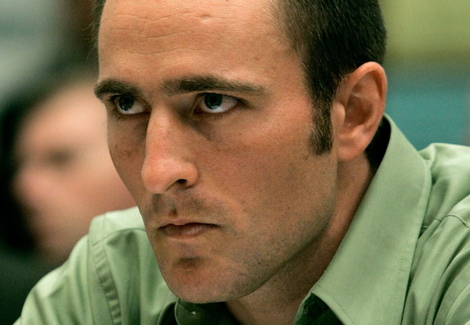
Was Pat Tillman Murdered?

Tillmanmarkwilsongetty

I don’t know, but it seems increasingly conceivable. Just absorb these facts:

O’Neal said Tillman, a corporal, threw a smoke grenade to identify themselves to fellow soldiers who were firing at them. Tillman was waving his arms shouting "Cease fire, friendlies, I am Pat [expletive] Tillman, damn it!" again and again when he was killed, O’Neal said…

In the same testimony, medical examiners said the bullet holes in Tillman’s head were so close together that it appeared the Army Ranger was cut down by an M-16 fired from a mere 10 yards or so away.

The motive? I don’t know. It’s still likeliest it was an accident. But there’s some mysterious testimony in the SI report about nameless snipers. A reader suggests the following interpretation:

News this weekend said that there were "snipers" present and the witnesses didn’t remember their names. I believe that’s code in the Army–these guys were Delta. In the Tillman incident, these snipers weren’t part of the unit and they were never mentioned publicly before. That’s a key indicator that they weren’t supposed to be acknowledged.

If you’ve ever read Blackhawk Down, Mark Bowden explains how he grew frustrated because interviewed Rangers kept referring to "soldiers from another unit" while claiming they didn’t know the unit ID or the soldiers’ names. It took him months to crack the unit ID and find people from Delta who were present at the fight.

Randy Shugart and Gary Gordon, the Delta operators who earned Medals of Honor in Mogadishu, have always been identified as snipers, too.

If my theory is correct, the Delta guys could have fired the shots – a three-round burst to the forehead from 50 yards is impossible for normal soldiers and Rangers, but is probably an easy shot for those guys. But because Delta doesn’t officially exist and Tillman was a hero, nobody in the Army would want to have to explain exactly how the event went down. Easier just to claim hostile fire until the family forced them to do otherwise.

This makes some sense to me, although we shouldn’t dismiss the chance he was murdered. Tillman was a star and might have aroused jealousy or resentment. He also opposed the Iraq war and was a proud atheist. In Bush’s increasingly sectarian military, that might have stirred hostility. I don’t know. But I know enough to want a deeper investigation. My atheist readers will no doubt admire the way Tillman left this world, according to the man who was with him:

As bullets flew above their heads, the young soldier at Pat Tillman’s side started praying. "I thought I was praying to myself, but I guess he heard me," Sgt. Bryan O’Neal recalled in an interview Saturday with The Associated Press. "He said something like, ‘Hey, O’Neal, why are you praying? God can’t help us now."’

Maybe the Congress can.

(Photo: Pat Tillman’s brother, Kevin, testifying before Congress, by Mark Wilson/Getty.)

The Jews and Iraq

A reader writes:

I thought very highly of your latest column on growing isolationist impulses in the U.S.

I was curious, though, about one of your statements, that "the Israel lobby may panic at signs of swift disengagement." What’s your thinking behind that? I ask, because my sources indicate that many within AIPAC would welcome disengagement from Iraq as soon as possible – since, in their view, they’d prefer the administration to devote what little energy and credibility it has left to resolving the Iranian nuclear crisis.

Indeed, when Cheney urged AIPAC to oppose a timetable for withdrawal back in March, he got a very cool reception from the delegates.

The Washington bureau chief for the Jewish Telegraphic Agency described the scene to Juan Cole thusly:

"I was one of the reporters noting the relatively cool reception for Cheney’s remarks, an impression I confirmed later in extensive conversations at the conference. (Similar accounts appeared in Ha’aretz, the Forward and the Jerusalem Post.) There were whole chunks of the Iraq portion of Cheney’s Iraq speech that were met with silence – even the clear applause cues. And those portions that were applauded never got even half the hall; I saw most of the hall seated, arms crossed at those times. The boos for Pelosi, by the way, came AFTER she got cheered for her call for a withdrawal. I.e. applause, cheers and then a few scattered boos. The cheers for Pelosi’s Iraq withdrawal call, it must be said, were basically polite – not at all overwhelming; but the boos were even weaker . . ."

Likewise, Olmert urged a visiting delegation of leaders of the Reform Movement to reconsider a motion urging the U.S. government to set a firm timetable for an American withdrawal from Iraq. The movement’s executive, representing some 700 Reform congregations across the U.S., approved the motion by a large majority. But the Reform leaders refused his request, saying they believe a rapid withdrawal would serve Israeli and Western interests better than a prolonged American stay in Iraq.

Long story short, I don’t see much enthusiasm among any large Jewish organizations for remaining in Iraq. Given that many in Britain already appear to have a misguided view of the "Israel lobby’s" role in the U.S. decision to go to war in Iraq, I think it’s important to choose words carefully.

An Accidental Victory?

Here’s a challenging analysis of the war on terror thus far:

The Strategic Energy Ellipse (SEE) is a region of extreme strategic importance to the United States. It stretches from the northern shore of the Caspian Sea to the southern terminus of the Persian Gulf. Within this region are oilfields that hold approximately 70 percent of the world’s proven reserves of crude oil and gas fields that hold about 40 percent of the global natural gas reserves. Any group, nation or coalition of nations able to dominate this region would hold the keys to domination of a world economy dependent on these fuels.

Strategically, the United States cannot allow such a domination to occur. This is what is at stake in the region, and all the concerns about Iraq and Afghanistan must take a back seat to this larger consideration.

Currently, there are three potential threats to domination of the SEE:

A pan-Islamic coalition of states that rises in a new caliphate under the banner of al Qaeda.

A hegemonic Iran dominating the Persian Gulf and southern Caspian.

A revived, imperialist Russia or a Russo-Sino coalition.

The great foreign policy achievement of the Bush administration will be remembered as the defeat of the first of these threats and the containment of the second, with the potential building blocks in place to confront the third.

The author argues that this happened "on an ad hoc basis, pursued primarily by military planners who needed bases from which to attack al Qaeda."