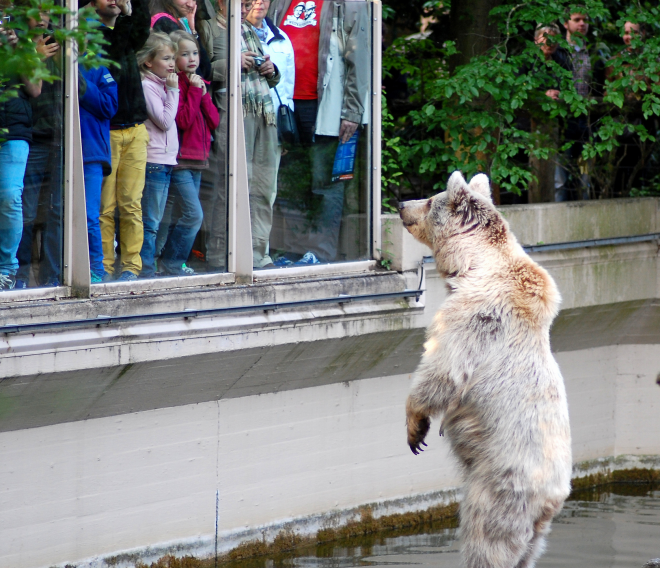
Unlike Bert Archer, Rachel Lu loves the zoo (joined by several readers below):
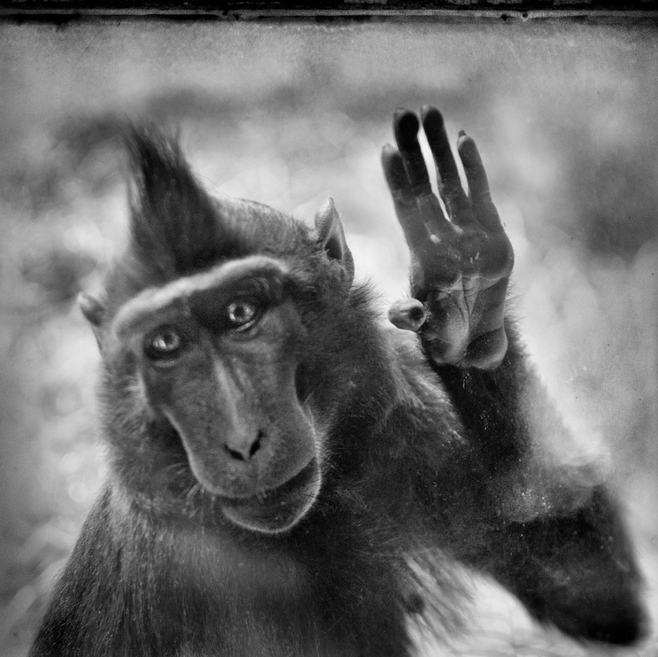
I’m confident [our local zoo] will linger in my kids’ memories as one of the most beloved places of their childhood. I joke to my friends that we’re “zoo junkies” because we generally visit once a week. Those animals are like old friends to my kids, and I’ve outlined many an article from the bench of the monkey house on a quiet winter afternoon. When there are no other visitors, the monkeys will sometimes come down and interact with the boys from the other side of the glass. …
When we see animals in real life, we get a perspective on the natural world that we just can’t get through television.
My kids watch TV, but at their age, understanding the reality of what lies behind the flickering images is quite difficult. (I find that older people often have this problem too.) Recognizing that fact makes me that much more grateful for the opportunity to give them a direct encounter with lions, tigers and bears.
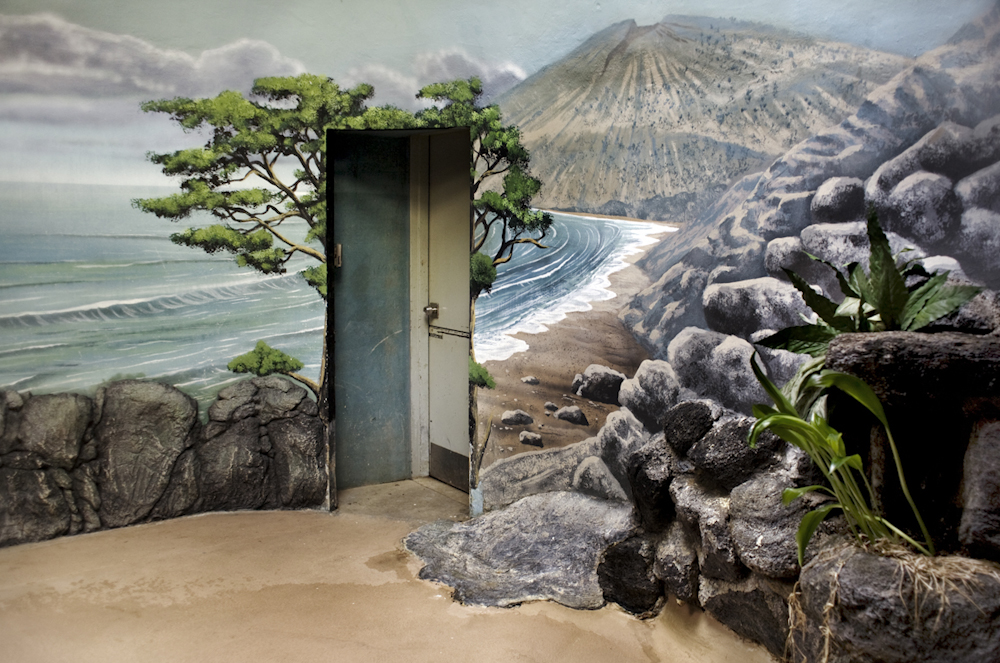
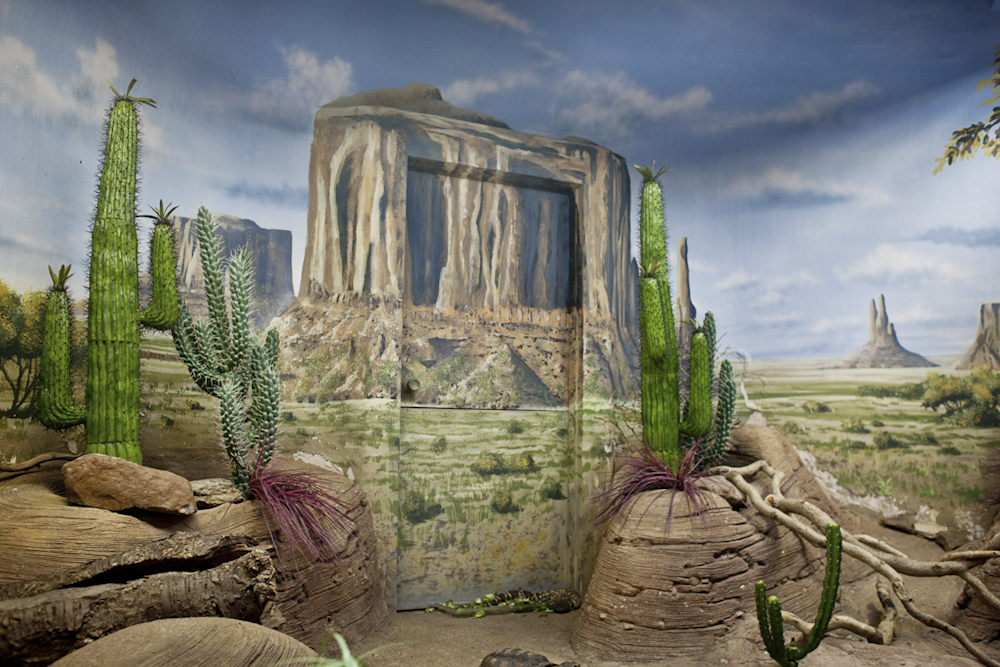
Zoo animals have been their primary conduit for coming to understand that the world contains a diverse array of climates and ecosystems. We discuss why it is that the tiger comes outside in the winter but the giraffes not. We note how the arctic foxes exchange their white coats for grey ones as the seasons change. Even contrived, pseudo-ecosystems enable the kids to recognize how particular animals are suited to their environments. They marvel at the upper-body strength of monkeys and note with amazement that both polar bears and seals, despite their many differences, are adapted to swimming. A nature show could point this out, but they benefit far more from making the connection themselves.
A related email from the archives, responding to this post on captive orcas:
I have at times felt uncomfortable in zoos as well, for the same reason as your reader – it seems an unnatural state in which to view these animals, akin to imprisonment (and often, in a climate that is vastly different from the ones they would typically experience). But your reader is wrong to speak of animals being “snatched from their normal lives”. Perhaps generations ago, that was the case. Yet the majority zoo animals alive today are born into captivity, including over 80% of mammals according to industry counts.
Of course, that doesn’t lessen the power of your slavery analogy (and in fact, it may strengthen it). But bear in mind, too, that many zoo animals are endangered species – sometimes severely so. The practice of keeping such animals in zoos, and breeding them in captivity, is in some cases the only thing standing between a species’ existence and extinction.
Recent Dish on breeding endangered animals in captivity is here. An animal keeper also responded to the orca thread:
The debate over zoos and aquariums is a good and healthy one to have, especially when it results in improvements in the welfare of the animals we are caring for. But this statement by one reader just went right through me: “It just seems incredibly selfish of the human race to snatch these innocent animals from their normal lives and dump them into one we see fit to create for them, all to give families something to do on weekends.”
What were these animals “normal” lives? I readily acknowledge that not all zoos treat animals equally, and some are incredibly abusive, which is sickening. But not all animals in zoos were born in the wild – they were bred in a zoo, raised in a zoo, and would not be able to live in the wild even if we wanted to release them. Others were rescued from the pet trade or taken in from the wild after their mothers were killed or they were injured by human action. Do we simply let these animals fend for themselves? And if not zoos, where else to we put them?
I, and most animal keepers that I know, would love it if the animals we care for didn’t have to be paraded around for dog and pony shows to entertain people. It can be stressful for the animals (no matter how well they tolerate people) and exhausting for the handlers. We would love it if the animals we cared for could roam huge open expanses without fences or bars or cages. We would also love it if it were still possible to see a snow leopard outside of a zoo without having to sit for weeks on end to glimpse ONE of the last remaining of the species. We don’t live in that world, and unless a significant number of us were to die off, we never will.
While zoos may have been originally created to house unusual animals so that people other than rich trophy hunters could see them, zoos do not simply exist for that now. If the people weren’t allowed to see the animals the zoos wouldn’t be able to help conserve the animals we have left. The zoos wouldn’t be able to care for the animals that poachers try to kill, that cars maim, or that people try to keep as pets. A family’s “weekend entertainment” is the bargain that zoos make so that they can help do some good in the world.
But that family’s visit DOES come with a bonus because every once in while if you’re really lucky you get to see the face of a small city-born child who comes face to face with an animal they have never seen before – even common animals like birds and turtles and frogs. And that child realizes that there is something more than steel, concrete and rats in the world. And if that child can appreciate the simple wonder of a turtle, that child might, just might grow up and realize that animals have just as much right to this planet as humans do, and that they are not just for entertainment. And that is priceless.
Another reader is on the same page:
At the headquarters of Denali National Park, there is an exhibit on caribou. They do not have an easy life. Four-fifths of the calves never make it to adulthood, mostly falling to predators who rip them apart and eat them alive. The survivors are plagued by swarms of biting flies and parasites that burrow tunnels in the haunches before they are weakened by age or disease, and ripped apart by a predator.
This contrasts with responsibly-raised farm animals, who have room, board, and medical care, live much longer than their cousins in the wild. They certainly die more humanely than being eaten alive, in fact they die more humanely than most of us do hooked up to machines.
I grew up in the country and saw how wild animals lived. I suspect that most animal rights peoples’ experience with animals is limited to dog, cats, and zoos. While on a bus at Denali, we saw a fox walk by with a bloody squirrel dripping from his jaws. This was a revelation to my wife who was raised in a genteel suburb. From the oohs and aahs it caused it seemed to be a revelation to most of the passengers.
While I certainly back humane treatment of captive animals, I think at the further end, animal rights people, isolated from nature, are projecting their human selves on animals.
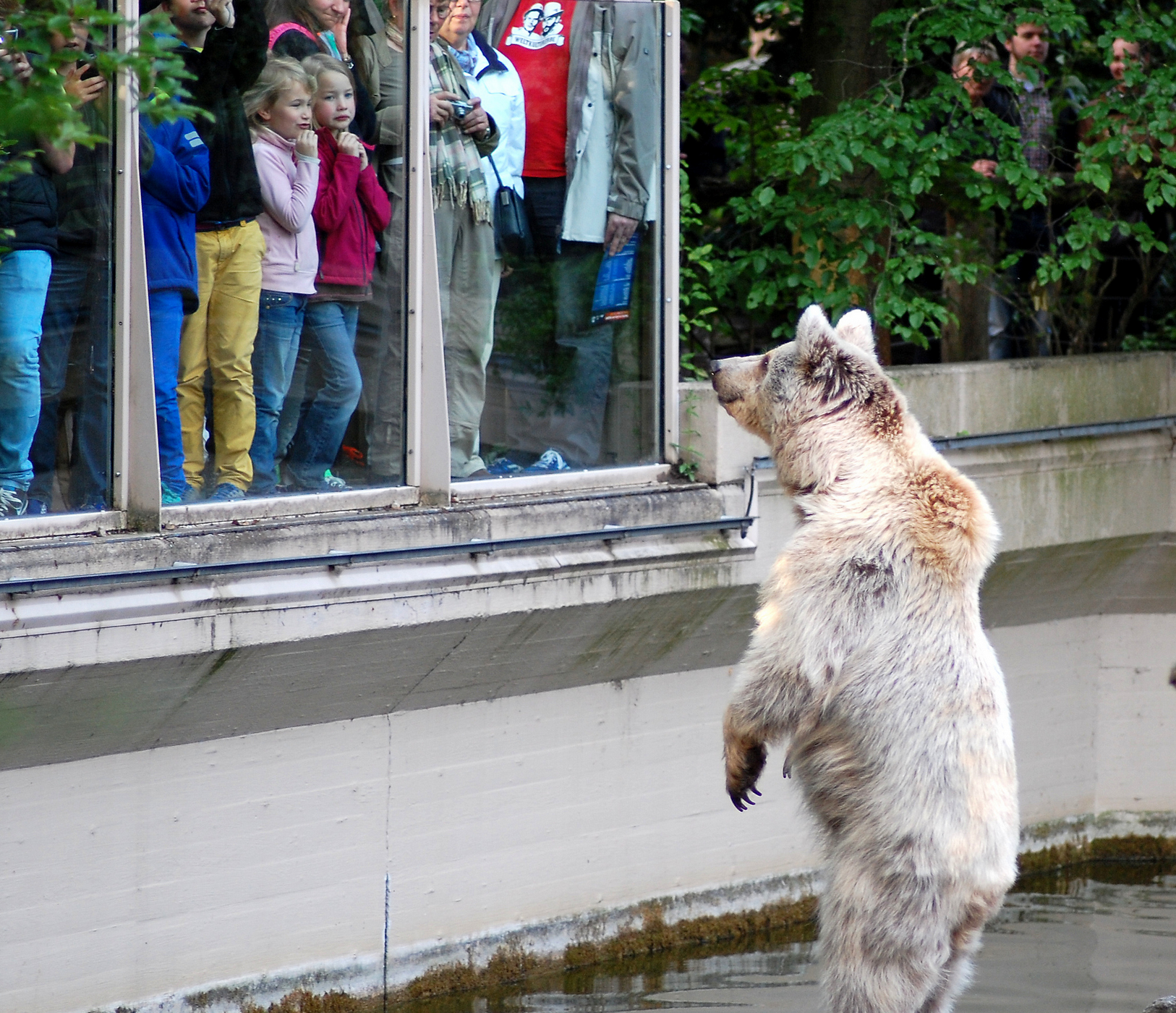
(Photo by Günter Hentschel)

 The Dish