The Ferguson Decision: Tweet Reax

https://twitter.com/michaelhayes/status/537070409720795137

https://twitter.com/juliebosman/status/537069535413563393

https://twitter.com/tanehisicoates/status/537073199985729536

https://twitter.com/sepinwall/status/537069780122238976

https://twitter.com/msjwilly/status/537073781807022080

https://twitter.com/DannyVinik/status/537076177614434305

https://twitter.com/jetpack/status/537082474187485185

https://twitter.com/PaulLewis/status/537088874418540544

https://twitter.com/JonathanBlakely/status/537091695746482177

Ferguson On Edge

Protest Outside Ferguson Police Department

Protesters were arrested last night. And a court decision could drop tomorrow:

The grand jury hearing evidence on the Michael Brown shooting is preparing to meet Friday for what might be its final session, and a decision on whether to charge Officer Darren Wilson could come the same day, law enforcement officials briefed on the plans said.

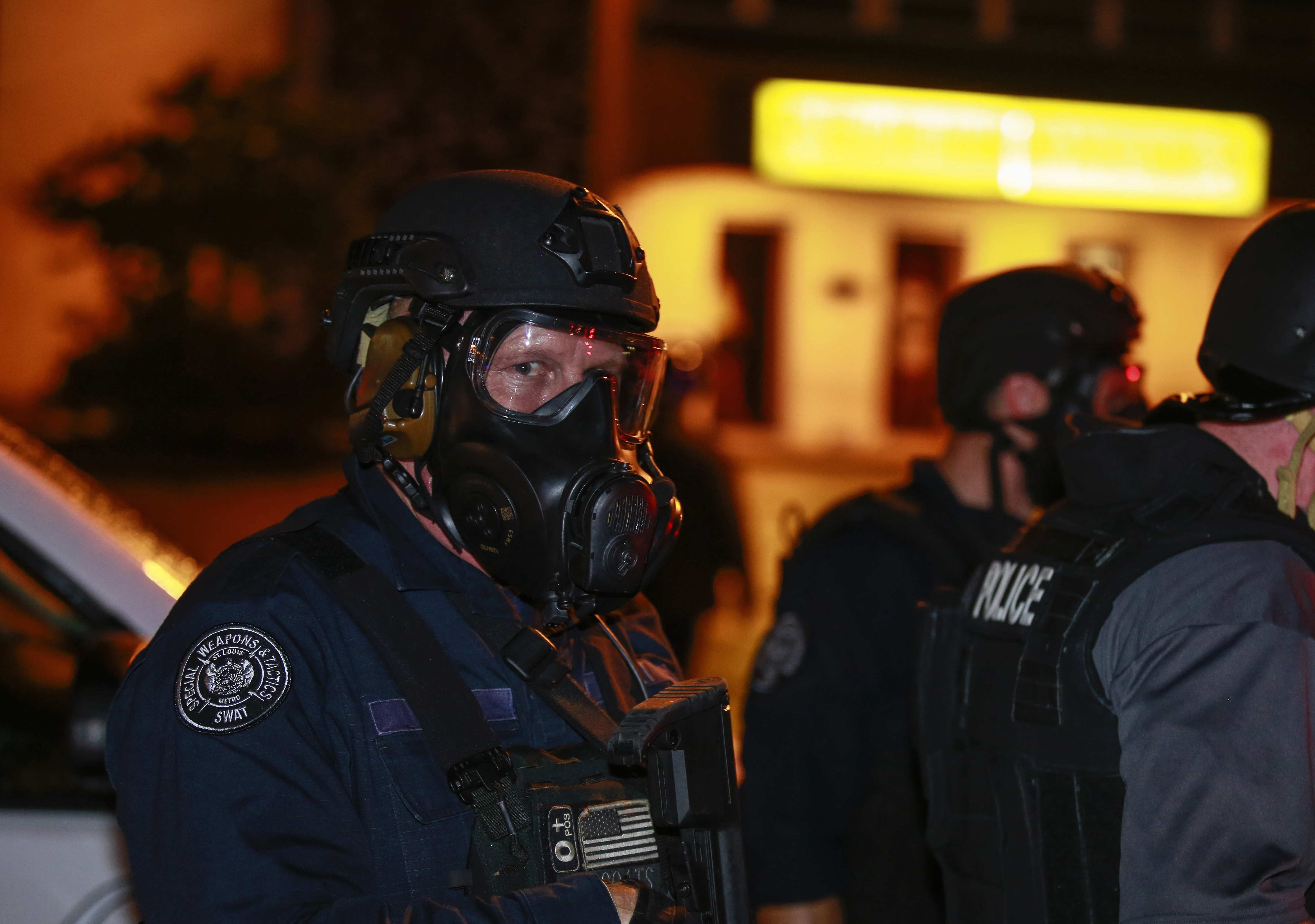
On Monday, Governor Jay Nixon declared a state of emergency and activated the National Guard. Jamelle Bouie disapproves of such actions:

[W]hile many Ferguson residents were disturbed by the damage done during the earliest protests, there’s anger over the choice to declare a state of emergency, and rightfully so.

Remember, the initial Ferguson protests—which began the afternoon Brown was killed—weren’t violent. Instead, at first dozens, then hundreds of people gathered to peacefully protest the shooting and demand answers for why Brown’s body was allowed to lie in the sun for four hours before police took action. If there was unrest that day, it was less because of the protesters and more because of police.

As soon as residents met to protest Brown’s death that day, police brought scores of reinforcements. The Ferguson Police Department called in more than 100 officers from other jurisdictions, with some officers wielding dogs and shotguns. Given the circumstances—an angry community that wanted answers over the death of a teenager—it was an overreaction that engendered mistrust and worsened the situation.

Amy Davidson argues along the same lines:

The grand jury may surprise those who expect it to let Officer Wilson walk away. Those who are watching the people of Ferguson with such worry now may be asked to comprehend them in ways they haven’t before. It is treated as somehow exceptional that there were no riots after the acquittal of George Zimmerman in the shooting death of Trayvon Martin, in Florida. But what is often forgotten there is that what Martin’s parents asked for, first and foremost, was simply a trial of some kind, a chance for their son’s story to be heard in open court—at first, it looked as if it never would be. They got that, if not the full measure of accountability they hoped for. The fearfulness of the authorities in Missouri has been seen as an insult to the black community and a preëmptive strike against perfectly legal peaceful protests. Both of those elements are there, and both, counterproductively, increase tensions and reduce trust.

Paul Cassell hopes for transparency from the grand jury:

Several weeks ago, Bob McCulloch (the St. Louis County prosecuting attorney supervising the grand jury) issued a little-discussed news release, promising that if the grand jury decides not to charge, he will then seek to have the grand jury’s information made publicly available: “If the grand jury does not return an indictment, then I will ask the court to order that the evidence be released to the public as soon as possible if not immediately.”  (McCulloch has also pointed out that if the grand jury makes a decision to return charges, no such motion will be required because the facts will naturally emerge during the criminal trial.)

… It is hard to imagine a court turning down McCulloch’s request to release the grand jury information.  This will make the Michael Brown shooting investigation far more “transparent” than just about any other high-profile criminal investigation.

(Photo: A protestor in a Guy Fawkes mask, raises his hands in front of a line of police outside the Ferguson Police Department as part of continued demonstrations in regards to the shooting death of Michael Brown by police officer Darren Wilson in Ferguson, Missouri on November 19, 2014. By Samuel Corum/Anadolu Agency/Getty Images)

How Did The Ferguson Shooting Really Go Down? Ctd

After new reporting on Michael Brown’s death, Ambinder asks, “did the media get Ferguson wrong?”

Police militarization and an unequal justice system are real problems that deserve sustained scrutiny. These problems are more insidious than a rush to judgment against one particular officer, presumption of innocence be damned. So maybe the best thing to do would be to say, well, in this particular case, it turns out that the police officer might not have acted as wantonly as we thought. But it really doesn’t matter, because the response to the shooting called attention to police abuse and discrimination in a way that resonated across the world. They had tanks! They threatened to killed reporters! The truth here is less important than Truth.

For the news media, though, the “injustice is the story, not Darren Wilson” story won’t wash.

… The journey for racial justice rejects the notion that truth is an effect of power. It is based on the notion that truth transcends power. The media wants to be on the right side of history when it comes to race. Accepting truth wherever we find it, no matter how painful it is to our sensibilities, is even more important when fundamental issues of justice are at stake.

Alex Altman, on the other hand, focuses on what the leaks don’t say:

They don’t explain the origin of the skirmish, which seems to have escalated abruptly. In describing the toxicology report, the Post’s sources say “the levels in Brown’s body may have been high enough to trigger hallucinations,” but there is no scientific link between marijuana and violent behavior.

Most importantly, the leaks do not provide new forensic information about the sequence of fatal shots. “What we want to know is why Officer Wilson shot Michael Brown multiple times and killed him even though he was more than 20 feet away from his patrol car,” Benjamin Crump, an attorney for Brown’s family, said in a statement. “This is the crux of the matter!” The autopsy does not offer any answers.

Bouie makes related points:

[W]e’re stuck with the facts we’ve had since August, none of which gives a conclusive answer to the key question in the case: Who started it? And even if it did—and even if Brown was at fault for the whole encounter—we’re still left with the other important question: Why did Wilson keep firing after Brown moved away?

At this point, any answer is tied tightly to your sympathies. Side with Michael Brown and the Ferguson protesters, and you’re likely to think Wilson overreacted or—at worst—actively abused his power. And if you support Darren Wilson, you’re just as likely to see an honest cop just defending himself from a dangerous aggressor.

How Did The Ferguson Shooting Really Go Down?

Activists March In Ferguson On Nat'l Day Of Action Against Police Brutality

The WaP0 reports on the autopsy of Michael Brown. It “suggests that the 18-year-old may not have had his hands raised when he was fatally shot”:

Experts told the newspaper that Brown was first shot at close range and may have been reaching for Wilson’s weapon while the officer was still in his vehicle and Brown was standing at the driver’s side window. The autopsy found material “consistent with products that are discharged from the barrel of a firearm” in a wound on Brown’s thumb, the autopsy says.

Another key piece of evidence:

Seven or eight African American eyewitnesses have provided testimony consistent with Wilson’s account, but none have spoken publicly out of fear for their safety, The Post’s sources said.

But Trymaine Lee relays some pushback on the WaPo’s reporting. He writes that “one of the experts whose analysis was central to those claims told msnbc that her analysis of the findings had been taken out of context”:

“You cannot interpret autopsy reports in a vacuum. You need to do it in the context of the scene, the investigation and the witness statements,” Dr. Judy Melinek said. “Sometimes when you take things out of context they can be more inflammatory.”

Danny Vinik analyzes the news:

How much stock you put in these results depends, in part, on how much you trust the county medical examiner’s office and the sources who spoke to the Post. The Brown family didn’t trust local authorities at allthat’s why they asked for a private autopsy in the first place. “The family has not believed anything the police or this medical examiner has said,” a lawyer for the family told The Washington Post. “They have their witnesses. We have seven witnesses that we know about that say the opposite.”

In addition, we don’t know much of the evidence that has been presented to the grand jury. These leaks are only part of the story. The Department of Justice, for its part, also condemned the leaks Wednesday, saying, “There seems to be an inappropriate effort to influence public opinion about this case.”

John Cole argues that the “leaks are about one thing, and one thing only- prepping the field for no indictment”:

I think my favorite part was the reefer madness bullshit, in which it was stated he had enough THC in his system to cause hallucinations. Reminded me of the DARE days when cops with straight faces told kids that if they smoked pot they would jump out of windows thinking they could fly.

Jonathan Cohn adds that a “decision to charge Wilson was never that likely, given the broad leeway that Missouri law gives to police who say they are acting in self-defense”:

If these new reports are correct, an indictment is even more improbable. That’s unlikely to sit well with Ferguson residents, whose grievances reflect long-simmering resentment over the treatment of a largely black population by a largely white police force. Brown’s killing instigated protests and, eventually, confrontations with police. But the problems existed long beforehand.

Allahpundit wonders what happens next:

[Benjamin L. Crump, a lawyer for the Brown family] says he has seven witnesses who’ll say that Wilson gunned Brown down unjustifiably. Great, says the defense, we have seven witnesses who say the opposite plus a pile of forensic evidence that shows Brown, who’d just committed a robbery at the local convenience store, not only assaulted a police officer but attempted to seize his firearm. There’s little doubt, barring some bombshell evidence that the public doesn’t know about, that Wilson’s not going to be convicted. The question now is whether he’ll be charged. One theory for all the leaks lately is that law enforcement is trying to prepare the public for the fact that grand jury is unlikely to return an indictment, but I don’t know: Given what Crump said in the excerpt above plus protesters vowing that “it’s going to be a war” if Wilson isn’t charged, sounds like releasing the evidence early isn’t going to calm anyone down. On the contrary, it may be that this is being leaked because Wilson supporters fear that he’ll be unfairly indicted anyway for political reasons, even though there’s no probable cause to think he murdered Brown. That’s probably the outcome city leaders would prefer — indictment followed by acquittal so that they can say the system took the incident seriously enough to force Wilson to defend his actions in open court. Think that result would calm people down? Me neither.

(Photo: Josh Williams walks beside a memorial built on the spot in Ferguson, Missouri where 18-year-old Michael Brown was shot to death by police officer Darren Wilson. The photo was taken on October 22, 2014. By Scott Olson/Getty Images)

Teaching Ferguson

Protest over death of black teen Michael Brown in Ferguson

Rebecca Schuman explores the ways colleges have brought “living history” into the classroom:

The desire among professors and students to explore the context of the Brown shooting has resulted in an informal nationwide movement, in fact, loosely gathered under the hashtag #FergusonSyllabus (begun by Georgetown professor Marcia Chatelain). Participants from a variety of disciplines have offered articles, books, blog posts, videos, and more to help teachers help their students understand what is happening here.

This “syllabus” is certainly far removed from the esoteric fare your average freshman encounters—sure, The Epic of Gilgamesh and drosophila flies are important, but their immediate relevance to 18-year-olds is often a bit of a stretch. The events of Ferguson—and, more broadly, the workings of the U.S. criminal justice system, and the racial and economic segregation of our cities—are, on the other hand, palpable around them now. To transform the needless death of a young man to a “teachable moment” may feel heartless, but that doesn’t mean our students shouldn’t learn from it. In fact, they’re eager to.

(Photo: Police forces in Ferguson, Missouri, a suburb of St. Louis, on August 17, 2014. By Bilgin Sasmaz/Anadolu Agency/Getty Images)

The Lessons Of Ferguson

Joel Kotkin argues that despite what Ferguson has led many to believe, class matters more than race at this point in the US:

[R]ace will not define the 2014 election, or likely those that follow. Instead the real defining issue—class—does not fit so easily into the current political calculus. In terms of racial justice, we have made real progress since the ’60s, when even successful educated minorities were discriminated against and the brightest minority students were often discouraged from attending college. Today an African-American holds the highest office in the land, and African Americans also fill the offices of U.S. attorney general and national security advisor. This makes the notion that race thwarts success increasingly outdated.

But at the same time that formal racial barriers have been demolished, the class divide continues to grow steeper than in at any time in the nation’s recent history. Today America’s class structure is increasingly ossified, and this affects not only minorities, who are hit disproportionately, but also many whites, who constitute more than 40 percent of the nation’s poor. Upward mobility has stalled under both Bush and Obama, not only for minorities but for vast swaths of working class and middle class Americans. Increasingly, it’s not the color of one’s skin that determines one’s place in society, but access to education and capital, often the inherited variety.

In the wake of Ferguson, which the Dish covered extensively here, Jamelle Bouie takes stock of the myths to come out of the fetid corners of right-wing blogs and social media:

Did you know Michael Brown was a killer? Did you know he was a devoted gang member with an extensive juvenile record who routinely robbed convenience stores and committed acts of mayhem? And did you know that when Officer Darren Wilson shot Brown, he wasn’t using unjustified force, he was defending his life? The 6-foot-4, 300-pound 18-year-old fractured Wilson’s eye socket while reaching for his gun, and was killed while charging at Wilson to land another blow.

If this sounds suspect—if it sounds almost unbelievable—then your head is in the right place. Nothing in this narrative is true. Racist innuendo aside, there’s no evidence Brown was a violent gang member, nor is there evidence of any serious wrongdoing—as a juvenile, Brown was never convicted of a felony nor was he facing charges as an adult. And while Wilson was taken to the hospital after his encounter with Brown, he didn’t suffer serious injuries—the fractured eye socket is a myth.

But if you read websites like the Independent Journal Review, dive into far-right media, or explore the world of Darren Wilson support pages, you’ll find plenty of people who buy the fantasy. They reject the mainstream picture of Brown: A typical teenager, struggling to carve an identity and a life out of his beliefs, actions, and missteps. In their minds Brown was a budding criminal, and Wilson a hero. Or, as one Wilson supporter said during a demonstration for the officer, “We’ll all see this in the end that it was a good shooting. You know, it was a good kill.”

Protests Don’t Make You Popular

by Dish Staff

A recent poll on Ferguson found that “fifty-nine percent of Americans — including 67 percent of whites but just 43 percent of blacks — think the protesters’ actions have gone too far.” Robert Shapiro is unsurprised. Data he compiled shows that “the American public has traditionally responded unfavorably to protesters seen as disruptive, even if nonviolent”:

The majority of Americans felt this way toward the Freedom Riders in the Civil Rights Movement and toward civil right protesters and demonstrators in general. The same was true for the Vietnam antiwar movement and student protests on college campuses. The public clearly supported the Chicago police over the protesters during the 1968 Democratic National Convention, and they favored the police and the National Guard responses to disturbances in colleges and high schools. And a majority of women as well as men, no less, objected to the protests by the women’s movement.

Other historical public opinion data provide more insight.

Although most Americans support the right to protest in general, they prefer other means of achieving political goals — notably, the ballot box.  When asked in an October 1983 Louis Harris & Associates survey about “the most effective way blacks in this country can achieve a better break for themselves — take to the streets in protest, or register and vote in larger numbers to increase their political power, or just be patient and hope things get better for them?” only 1 percent said protest, while 85 percent said register and vote.

That said, he cites evidence “that protests put and keep issues on the political agenda.”

How We Turned Our Cops Into Soldiers, Ctd

by Dish Staff

A reader with more than two decades of experience in law enforcement offers his perspective on police militarization:

For the record, I’m a supervisor with a medium-sized police department in Midwest who has also worked in a small town. I’ve been a patrol officer, a detective, and now a supervisor. At heart, I’m an old fashioned beat cop who enjoys walking down a main street and talking to people. I’ve never served in my department’s tactical team, nor am I a veteran.

I’ve seen a lot of changes in my career so far. One of the biggest is the nature of the threat that we face on the street. When I was in the police academy, we prepared for criminals who had cheap handguns and little training. The types of weapons that we face have changed dramatically; the police have simply evolved to meet those threats. I’ll give you a couple of examples:

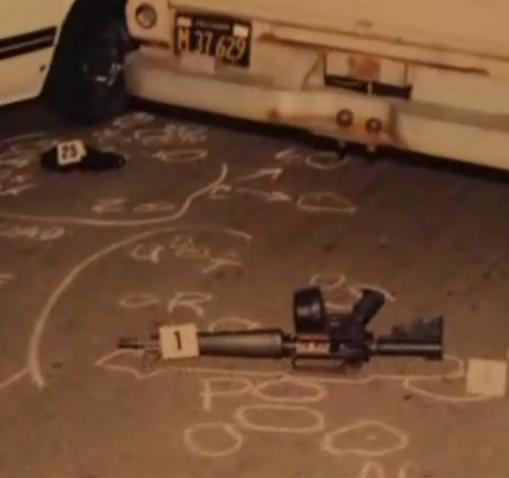
Iexplore111 (1)During the 1997 North Hollywood shootout, bank robbers armed with illegally modified fully automatic weapons exchanged more than 2,000 rounds with responding LAPD officers. The robbers, who wore ballistic vests, were killed after a 44-minute exchange of gunfire. Seventeen LAPD officers and seven civilians were injured in the battle. The after-action review led to changes in the weapons carried by LAPD officers as well as departments around the country. The agencies moved away from shotguns in squad cars and toward military-style assault rifles that could penetrate body armor. Those rifles aren’t cheap – they often cost more than $2,500 each, plus $500 to $1,000 for the equipment to keep them secured inside of the squad car. If I were the head of a cash-strapped police department, I know I would love to get those weapons from a program that transitions D.O.D equipment to local law enforcement.

The second incident that changed law enforcement profoundly was the 1999 Columbine school shooting. Previously, law enforcement dealt with situations like this by sealing off the area and waiting for special tactical teams to arrive. At Columbine, law enforcement realized that it’s not enough to simply lock down the area; rather it’s necessary to go in, find the killer or killers, and neutralize them before they kill any more. Since 1999, I and countless other police officers have undergone days and days of training in “active shooter response.” I won’t bore you with the details, but suffice it to say that the training involved would seem quite militaristic to the public. The skills and tactics we use are very different from what I learned in the academy, and along with that, we have specialized tools. For example, there is an M-4 assault rifle in each of my agencies’ squad cars.

I get that this is militaristic. Going through a school or mall looking for a shooter utilizes tactics any soldier would recognize from operations in Iraq or Afghanistan. We use them and the equipment because it works. The problem that we face in our field is that these tactics often creep into all aspects of our work. The more you become comfortable with the new reality, the more you need to recognize that it’s a reality you only rarely face.

This leads me to my biggest point regarding the Ferguson police department: We need to stop looking at the officers and start looking at the leaders. Everyone above sergeant has set the tone in this organization. They have done the hiring, and they were leading the efforts to deal with the protesters. There may very well be rogue officers causing issues, and if so, it should likely be no shock to the administration. Problem persons in law enforcement agencies fester for years because it can be challenging to fire an officer, especially if he or she is a military veteran. The one constant in every agency that I’ve been a part of is that the chief of police down to the lieutenants set the tone and direction of the department. The sergeants get the message out to the patrol officers and enforce the message. We haven’t heard the police chief of Ferguson say his officers are out of control – because they are doing what he wants them to do.

More Dish on the war zone that is Ferguson, Missouri, here.

(Image of a illegally modified automatic AR-15 used in the North Hollywood shootout via Wikipedia user YEPPOON)

Ferguson Isn’t A Black Issue

by Dish Staff

Amy Zimmerman addresses the outcry over hip-hop stars not weighing in enough:

When a celebrity speaks out about an important issue, it increases visibility—this is a good thing. Nevertheless, the expectation that every African-American star or hip-hop hero must weigh in on Ferguson is a problematic one. Demanding that every beloved black celebrity respond to this issue would be like asking every white celebrity to take to social media whenever a white person, be they a criminal or a victim, makes the nightly news. The next time a mentally unstable white man opens fire on the public, you can be sure that the judgment of the world will fall firmly on that individual, not on Lena Dunham for failing to release a cogent and heartfelt press release.

Expecting every black celebrity with a hit single or an extensive Twitter following to address Ferguson implies that Michael Brown’s murder is a minority issue instead of a human rights one. Furthermore, demanding that any one person who is not directly implicated in the atrocity weigh in on it anyway distracts from the brave protestors, articulate journalists, and passionate public figures who are voluntarily taking on the responsibility of ensuring that Michael Brown’s prematurely silenced voice is heard.

Getting Out The Vote In Ferguson

by Dish Staff

Ferguson’s government is much whiter than its population. But Yglesias doubts that will be true for long:

Nobody who lives in the area could possibly think that local government doesn’t matter any more, and a community capable of organizing nightly protest marches should have relatively little trouble getting people to come out and vote. And if Ferguson’s African-American residents do vote, they should have relatively little trouble installing a government that hears their concerns and leans against the systemic inequities in the American criminal justice system.

In other words, the town at the center of this drama may well see a real improvement in political representation. The deeper problem is going to lie elsewhere — in the many towns large and small where people of color are a minority of eligible voters and the basis of white political power is firmer.

Friedersdorf wants recall elections:

A successful recall of Ferguson’s mayor and city council is the best outcome I can imagine from a protest movement that is justifiably angry, but uncertain about how to achieve its goals and at risk of losing public support if the streets turn more violent. Protesters want transparency in the investigation into Brown’s death, accountability for the police department, and an end to leadership that demonstrates such disregard and seeming contempt for the city’s black people. Perhaps existing pressure on city leaders, or appeals already made to the Department of Justice, will help advance those goals—but while more night protests would seem to offer scant hope for additional gains, replacing the city’s elected leadership would advance the protesters’ goals directly and dramatically. The effort would be nonviolent, it might well increase civic participation for years or even generations to come, and if successful, it would send an inspiring message to those who feel powerless: that a system very much stacked against them is still a far more powerful weapon than a molotov cocktail.

Jonathan Rodden points out that, “while St. Louis is indeed among the most segregated metropolitan regions in the United States, Ferguson and some of its North County neighbors are among the most racially integrated municipalities in Missouri and well beyond”:

Let us not learn the wrong lessons from recent events in Missouri. By no means does Ferguson prove the defeatist claim that blacks and whites cannot live together in peace as the inner suburbs transform. Those of us who grew up in the integrated Ferguson-Florissant area in recent decades know otherwise. It is not a post-racial paradise, but it is a functioning multiracial community. What we are seeing in Ferguson is not merely the latest manifestation of the age-old problem of segregation and housing discrimination. Rather, it is evidence that the best hope for a solution – -the creation of integrated middle-class neighborhoods such as Ferguson — cannot work without political inclusion and accountability.

Fred Siegel is much more pessimistic about Ferguson’s future:

Riots bring but one certainty—enormous economic and social costs. Businesses flee, taking jobs and tax revenues with them. Home values decline for all races, but particularly for blacks. Insurance costs rise and civic morale collapses. The black and white middle classes move out. Despite its busy port and enormous geographic assets, Newark, New Jersey has never fully recovered from its 1967 riot. This year, Newark elected as its mayor Ras Baraka, the son and political heir of Amiri Baraka—the intellectual inspiration for the 1967 unrest.

The story is similar in Detroit, which lost half its residents between 1967 and 2000. Civic authority was never restored after the late 1960s riots, which never really ended; they just continued in slow motion. “It got decided a long time ago in Detroit,” explained Adolph Mongo, advisor to the jailed former “hip-hop mayor,” Kwame Kilpatrick, that “the city belongs to the black man. The white man was a convenient target until there were no white men left in Detroit.” The upshot, explained Sam Riddle, an advisor to current congressman John Conyers, first elected in 1965, is that “the only difference between Detroit and the Third World in terms of corruption is that Detroit don’t have no goats in the streets.”