America And The Lessons Of The 21st Century

[Re-posted from earlier today]

Whenever I read the blog-posts of Walter Russell Mead, or the fulminations of Leon Wieseltier, or the sputtering harrumphs of John McCain, or the neoconservative or liberal internationalist horrified respect for Vladimir Putin’s Great Game of geo-politics, I find myself on the other side of a vast, intellectual chasm. I’ve tried at times in my head to engage the arguments, and have consistently found myself at a loss. It’s not the arguments for this or that military or diplomatic intervention that stump me. It’s the entire premise behind them.

At times, I’ve put it down to a very different response to the Iraq War. Many of these voices decrying Obama’s restraint in the face of evil or US President Barack Obama speaks duringdistant conflict have not drawn the same lessons I did from that defining episode in American foreign policy in the 21st Century. I saw that war as an almost text-book refutation of the logic behind US intervention in this century. The Iraqis were not the equivalent of Poles in 1989. They were deeply conflicted about US intervention and Western liberalism and came to despise the occupying power. The US was not the exemplar of liberal democracy that it was in the Cold War. It was a belligerent state, initiating Israel-style pre-emptive wars, and using torture as its primary intelligence-gathering weapon. Its military did not defeat an enemy without firing a shot, as with the the end-game of the Soviet Union; it failed to defeat an enemy while unloading every piece of military “shock and awe” upon it. A paradigm was shattered for me – and shattered by plain reality. A realist is a neocon mugged by history.
But the more I ponder this, the more I wonder if it isn’t also rooted in an entirely different response to the end of the Cold War as well. I remember vividly some early disputes at TNR as the Soviet Union collapsed. Marty, in particular, was just as vigilant toward the new Russian government as he had been toward the Communist one (and that was during the elysian years of Yeltsin’s doomed, democratic experiment). I found this utterly baffling. For me, the fight against Communism was not a fight against Russia. They were separate entities; one was a global, expansionist ideology, capable of intervening across the planet; the other was a ruined but still proud regional power. Indeed, if we were to prevent a return to Communist norms, I believed we should expect Russia to flex some muscles in its area of influence, for the mccainmariotamagetty.jpgOrthodox church to return as some sort of cultural unifier, for Russia to return to, well, being Russia, with some measure of self-respect. Magnanimity in victory was a Churchillian lesson I took to heart. I hoped – and hope – for more, but came to understand much more vividly what I had unforgivably forgotten after 9/11 – the perils of trying to force democratic advance in alien cultures and polities.
For me, the end of the Cold War was a blessed permission to return to “normal”. And “normal” meant a defense of national interests and no countervailing ideological crusade of the kind the Communist world demanded. In time, it seems to me that the basic and intuitive foreign policy for the US would return to what it had been before the global ideological warfare against totalitarianism from the 1940s to the 1980s. The US would become again an engaged ally, a protector of global peace, but would return to the blessed state of existing between two vast oceans and two friendly neighbors. The idea of global hegemony – so alien to the vision of the Founders – would not appeal for long, at least outside the Jacksonian South. As Islamist terror traumatized us on 9/11, however, I reverted almost reflexively to the Cold War mindset – as did large numbers of Americans. It was the rubric we understood; and defining Islamism as the new totalitarianism helped dispel what then appeared as the delusions of the 1990s, when peace and prosperity seemed to indicate an “end of history”, in Frank Fukuyama’s grossly misunderstood and still brilliantly incisive essay.

From the perspective of 2014, however, the delusions seem to have been far more profound in the first decade of the 21st Century than in the last decade of the 20th. The conflation of Islamism with Communism was far too glib – not least because the former was clearly a reactionary response to modernity, while the latter claimed to be modernity’s logical future; and the latter commanded a vast military machine, while the former had a bunch of religious nutcases with boxcutters. And the attempt to use neo-colonial military force to fight Islamism was clearly doomed to produce yet more Islamists – as the Iraq and Afghanistan interventions proved definitively. More to the point, Americans now understand this in ways that many in the elite don’t:

Screen Shot 2014-02-25 at 1.17.15 PM

From 93 percent to 48 percent is quite some shift in 12 years. Sometimes, when I’m criticized for changing my mind on the wars against Islamist terror, as if I were some kind of incoherent madman, I can’t help chuckling. I can see why it might seem fickle or unprincipled or irrational if I were alone. But when there’s a stampede among Americans on exactly the same lines, I’m clearly not an outlier. People changed their minds because the facts forced them to. The polling on the Iraq war is even worse:

Screen Shot 2014-02-25 at 1.23.03 PM

Again, the shifts are dramatic: from 23 percent believing the war was a mistake at the start to 53 percent ten years later. A third of Americans reversed themselves.

Now, you could argue that these results are just a function of obvious failures in war-planning, or war-fatigue, or the recession. But I think that condescends too much to American public opinion. In thinking about intervention, America no longer has some global ideological rival to counter, and in so far as America does (i.e. Islamist terrorism), there is a widespread understanding that our military attempts to stymie it have been costly failures at best and cripplingly counter-productive at worst. This is a real shift, and I can only recommend Ross Douthat’s latest blog-post that explicates it further.

What Ross is arguing is that Sam Huntington was right to see the persistence of conflict and warfare where the civilizations meet and clash:

Crises keep irrupting along the rough borders that Huntington sketched — where what he called the “Orthodox” world overlaps with the West (the Balkans, the Ukraine), along Islam’s so-called “bloody borders” (from central Africa to Central Asia), in Latin American resistance (in Venezuela’s Chavismo, Bolivia’s ethno-socialism, and the like) to North American-style neoliberalism, and to a lesser extent in the long-simmering Sino-Japanese tensions in North Asia.

But these conflicts mean less to us, because so much less is at stake than it once was. And the reason for that is that Fukuyama was also right:

Huntington’s partial vindication hasn’t actually disproven Fukuyama’s point, because all of these conflicts are still taking place in the shadow of a kind of liberal hegemony, and none them have the kind of global relevance or ideological import that the conflicts of the 19th and 20th century did. Radical Islam is essentially an anti-modern protest, not a real alternative … China’s meritocratic-authoritarian model has a long way to go to prove itself as anything except a repressive Sino-specific kludge … Chavismo and similar experiments struggle to maintain even domestic legitimacy … and what Huntington called the Western model is still the only real aspiring world-civilization, with enemies aplenty, yes, but also influence and admirers in every corner of the globe.

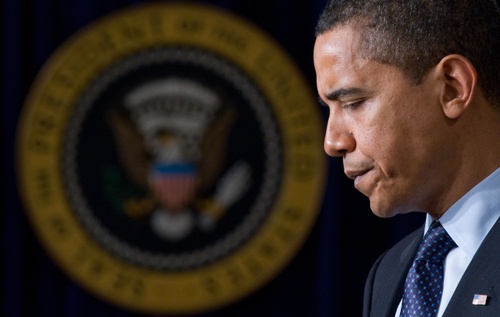
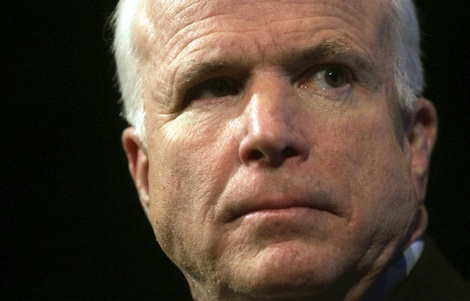
Ross’ is a really elegant overview of the real, historical context for the deployment of American military and even diplomatic and economic power in this century. Military power can achieve less and, more importantly, its success or failure in any specific context matters less. Obama’s restraint is not weakness; and trying to match Putin’s militarist bluster is a mug’s game. The most important thing the president says about Iran is not the need to prevent its developing an operational nuclear weapon, but the articulation of the truth that, compared with America’s global enemies in the past, Iran is a puny power, a failing economy, and a bankrupt ideology. Yes it can still do damage, and we should do our best to restrain it as best we can. But a full-scale war to disarm it? The costs would so vastly exceed the tiny benefits that you really have to be stuck in 1984 to contemplate it. We had the first iteration of this debate in 2008 – between the 20th Century nostalgic, John McCain, and the 21st Century realist, Barack Obama. And Obama won. And won again.

That verdict has not yet changed. And for good reason. What lies ahead is simply the task of resisting some primal impulse to return to the Cold War mindset. Which is what, I’d argue, Chuck Hagel’s plans for slimming the military are really all about.

(Photos: Getty Images)

Does Libya Show Fukuyama Was Right?

by Zack Beauchamp

Matt Yglesias makes a provocative point:

Reading about the serious problems facing Libya’s sundry rebel groups as they try to put a unified political structure together I’m struck by the extent to which the past couple of years have vindicated Francis Fukuyama’s The End of History thesis. Historical events, of course, continue to occur. But each and every one of them re-enforces his 1989 point about the “the total exhaustion of viable systematic alternatives to Western liberalism.”

Amitav Acharya, in an interview we featured recently, disagrees:

I speak here as an IR scholar, not as a specialist in those regions. What has been happening in Tunisia, Egypt and elsewhere in North Africa and the Middle East does attest to the universality of the desire for freedom as you suggest. Though the question I ask is what kind of universalism or whose universalism is it? In the United States, some George W. Bush era neo-cons are celebrating that this is a vindication of their democracy promotion agenda of the kind that gave us the war in Iraq. Others see the uprisings confirming Fukuyama’s ‘end of history’ thesis. Both claims are ridiculous and if this is the kind of universalism we are talking about we are really doomed. One of the things about the Arab Spring was that it was a bottom up process; it was sought by the people of those states and societies. Its origins were local. They were not the outcome of the end of the Cold War or any other major global shock. This is what I mean by subaltern universalism.

A. McE looks at how far Fukuyama has moved from his own ideas.

Fukuyama’s Prescience

by Robert Wright

Today is the one-week anniversary of the one-year anniversary of the Russia-Georgia war, and newspapers are commemorating the event by reporting on new American plans to annoy Russia. 

I won’t get into the question of whether America could have prevented that war by being more attentive to Russian concerns on things like missile defense, Kosovan independence, and NATO expansion. But I do think it’s safe to say that, prior to the war, there was little public discussion of the possible downside of ignoring Russia’s concerns. If you agree that vigorous debate of vital issues is good, then, regardless of your position on America’s Russia policy, you’ll probably agree that people who tried to raise questions about it back when nobody was paying attention should get a pat on the back.

So let’s rewind the videotape and watch Francis Fukuyama—in July of 2008, before the war–call attention to the possible costs of not compromising with Russia on issues it cared about. Note his observation that Russia was “turn[ing] up the pressure in Georgia” in response to American policy.   

No doubt Frank will be rewarded for his prescience by being catapulted to the highest echelons of American power, somewhat as opponents of the Iraq War were rewarded with such positions as Secretary of State and special envoy to AfPak and… Oh, wait.

“We Are All Fukuyamans Now”

Except the president and the man who wants to succeed him as the Republican nominee. It’s frustrating to have read Fukuyama’s work and to find it almost universally misrepresented. The end of history did not mean the end of conflict. It meant the end of an over-arching ideology to rival market capitalism. Fukuyama was wrong to miss Islamism. But he isn’t wrong to see Islamism as such a melange of nihilism, ressentiment, and violence that it has no chance at succeeding, even though it can do a huge amount of damage as it fails.

Fukuyama For Obama

Pretty close to where I have ended up:

ELEANOR HALL: So which president do you think would be the best placed to handle these challenges? Would it be president McCain, president Obama or a president Clinton?

FRANCIS FUKUYAMA: Well, it is a little bit difficult. In my own thinking since I have to vote in this next election, I personally actually don’t want to see a Republican re-elected because I have a general view of the way democratic processes should work and if your party is responsible for a big policy failure, you shouldn’t be rewarded by being re-elected.

I think of all the Republicans, McCain in many ways is the most attractive but he is still is too, you know, he comes from the school that places too much reliance on hard military power as a means of spreading American influence. I think in many ways, Hillary Clinton represents both the good and the bad things of the 1990s and there is something in the style of the Clintons that never really appealed to me and so I think of all the three, Obama probably has the greatest promise of delivering a different kind of politics.

ELEANOR HALL: That is a big shift for you, isn’t it? To go from a registered Republican voter to an Obama supporter.

FRANCIS FUKUYAMA: Yeah, but I think a number of people are doing that this year because I think the world is different at this juncture and we need a different foreign policy and there is this larger question about in American politics, I do think that we are at the end of a long generational cycle that began with Reagan’s election back in 1980 and I think unless you have a degree of competition and alternation in power, certain ideas and habits are going to get too entrenched.

Fukuyama on Modernity

Here’s a concise statement of part of our problem:

We have both a deep philosophical problem and a practical political problem. The two may Leostraussfairuse be related, but not necessarily. The deep philosophical problem is whether you can walk Western philosophy back from Heidegger and Nietzche and say that reason does permit the establishment of positive values — in other words that you can demonstrate the truth of certain ideas.

The practical problem is whether you can generate a set of values that will politically serve the integrating liberal purposes you want. This is complicated because you want those values to be positive and mean something, but you also can’t use them as the basis for exclusion of certain groups in society.

It is possible that we could succeed at doing one without the other. For example, the grounds of success of the American political experiment is that it has created a set of "positive" values that served as the basis for national identity but were also accessible to people who were not white and Christian or in some way "blood and soil" related to Anglo-Saxon Protestant founders of the country.

These values are the content of the American Creed — belief in individualism, belief in work as a value, belief in the freedom of mobility and popular sovereignty…  As kind of a practical solution to the positive value problem, it works pretty well.

And because it has become part of a common culture, defending this basic creed can become a conservative project, in the Oakeshottian sense. We cannot, I think, unthink Heidegger and Nietzsche. But Strauss was far too pessimistic about the West’s capacity to sustain itself.

Fukuyama and Hegel

Gary Rosen fingers a critical turn in Francis Fukuyama’s thought: against Fukyama’s previously neo-Hegelian idea of an inevitable global unfolding of human liberty on the American model:

What’s missing from this, as a reader of the old Fukuyama would know, is the Hegelian twist that gave his 1992 book The End of History and the Last Man its peculiar intensity and breadth. Liberal democracy, in that telling, was not only about the desire for pleasure and physical well-being but also about a second, more elevated drive: the individual’s "struggle for recognition," the spirited – and often political – assertion of personal dignity and worth. About this deeply felt human need, Fukuyama is now silent. Yet in today’s Middle East, nothing is so striking as the dearth of channels for its expression.

Sure. And I tend to agree that democracy in the Middle East would help drain the swamp that gives us hordes of mosquito-type terrorists. But a key premise of conservatism, it seems to me, is that history has no direction, that it can go any which way, and has. That’s why Fukuyama’s last book, which was as much Nietzschean as Hegelian, was in places most unconservative. What true-believing neocons had was a true secular belief – in the principles of America, and their inevitable triumph in every part of the world. Perhaps that belief is still worth having, if only to cheer ourselves up. But it surely must now be a deeply chastened belief; and the process of chastening is not a capitulation to the isolationist left. Far from it. It is a belated recognition of the deeper wisdom of the skeptical, culture-focused Right. I think that’s what Frank is aiming for: not an abandonment of America’s ideals and involvement with the world; but a far more prudent, chastened and subtle engagement.

Fukuyama On Form

I have no doubt that Frank Fukuyama’s essay in the New York Times Magazine will prompt a lot of debate. For my part, I think he gets his analysis almost perfectly right. In retrospect, neoconservatives (and I fully include myself) made three huge errors in the last few years. The first was to over-estimate the competence of government, especially in extremely delicate areas like WMD intelligence. The shock of 9/11 provoked an understandable but still mistaken over-estimation of the risks we faced. And our fear forced errors into a deeply fallible system. The result was the WMD intelligence debacle, something that did far more damage to the war’s legitimacy and fate than many have yet absorbed. Fukuyama’s sharpest insight here is into how the near miracle of the end of the Cold War almost certainly lulled many of us into over-confidence about the inevitability of democratic change, and its ease. We got cocky. We should have known better.

The second error was narcissism. America’s power blinded many of us to the resentments that such power must necessarily provoke. Those resentments are often as deep among our global acquaintances as enemies – in fact, may be deeper. Acting without a profound understanding of the dangers to the U.S. of inflaming such resentment is imprudent. This is not to say we shouldn’t act at times despite them, unilaterally if necessary. Sometimes, the right thing to do will inevitably spawn resentment. We should do it anyway. But that makes it all the more imperative that we get things right, that we bend over backwards to maintain the moral high-ground, and that we make our margin of error as small as possible. The Bush administration, alas, did none of these things. They compounded conceptual errors with still-incomprehensible recklessness, pig-headedness and incompetence in preparing for the aftermath of Saddam.

The final error was not taking culture seriously enough. Fukuyama is absolutely right to note the discrepancy between neoconservatism’s skepticism toward’s government’s ability to change culture at home and its naivete when it comes to complex, tribal, sectarian and un-Western cultures, like Iraq’s, abroad. We have learned a tough lesson, and it’s been a lot tougher for those tens of thousands of dead innocent Iraqis and several thousand killed and injured American soldiers than it is for a few humiliated intellectuals. American ingenuity and pragmatism on the ground may be finally turning things around, but the original policy errors have made their work infinitely harder. The correct response to this is not more triumphalism and spin, but a real sense of shame and sorrow that so many have died because of errors made by their superiors, and by intellectuals like me.