Wait: Hillary Can’t Give Bill A Job?

Yesterday, I wrote:

If Hillary wins, Bill should be secretary of state. A formal role on the world stage is far preferable to an informal role on the inside fucking everything up.

Carpenter wishes this were possible:

[Hillary] probably would [appoint Bill], were it not for the Federal Anti-Nepotism statute of 1967, which bans such eminently sensible acts as a chief executive appointing whomever he or she deems best suited for the executive’s trust and convenience.

From the text of the law in question:

A public official may not appoint, employ, promote, advance, or advocate for appointment, employment, promotion, or advancement, in or to a civilian position in the agency in which he is serving or over which he exercises jurisdiction or control any individual who is a relative of the public official.

So we have a uniquely nepotistic and dynastic democracy in fact, but a law forbidding its being made explicit, and thereby formally accountable. Yep: sounds like America.

Hillary’s Silence On Iran

Stephen Kinzer notes that “one of the surest signs that Clinton is running for the presidency is her refusal to take a position on the greatest geopolitical question now facing the United States”:

A strong statement by Clinton in favor of reconciliation [with Iran] would be a game-changer in Washington. She would be giving a centrist, establishment endorsement of her former boss’s most important foreign policy initiative. That would provide political cover for moderate Democrats terrified of antagonizing the Netanyahu government and the American Israel Public Affairs Committee, which is leading the anti-reconciliation campaign in Washington.

Such a statement, however, would risk outraging pro-Netanyahu groups and individuals who have been among Clinton’s key supporters since her days as a Senator from New York. Having spent years painstakingly laying the ground for a presidential campaign, she does not want to risk a misstep that would alienate major campaign contributors.

Kinzer doesn’t think a deal with Iran would have been happened if Clinton had remained the Secretary of State. However, a few weeks ago, Crowley pointed out that Hillary was open to diplomacy:

She was the first Obama official to suggest that Iran could maintain a domestic uranium enrichment program under an international nuclear deal. And one of her most trusted State Department aides, Jake Sullivan, conducted secret talks with the Iranians in Oman. “She was skeptical that diplomacy would work with the Iranians but absolutely convinced that we had to test the possibilities,” [Dennis] Ross adds.

Who Can Beat Them?

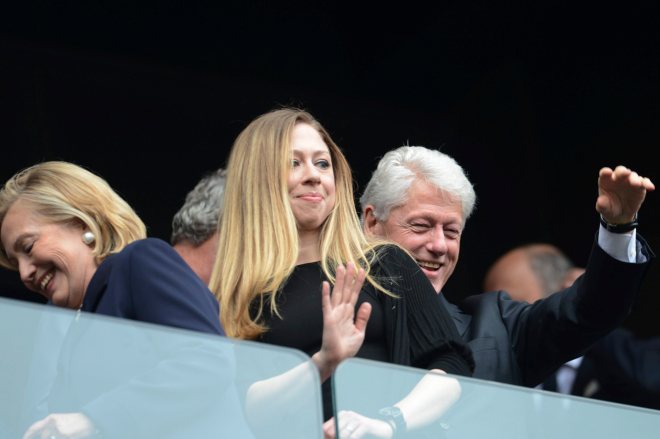
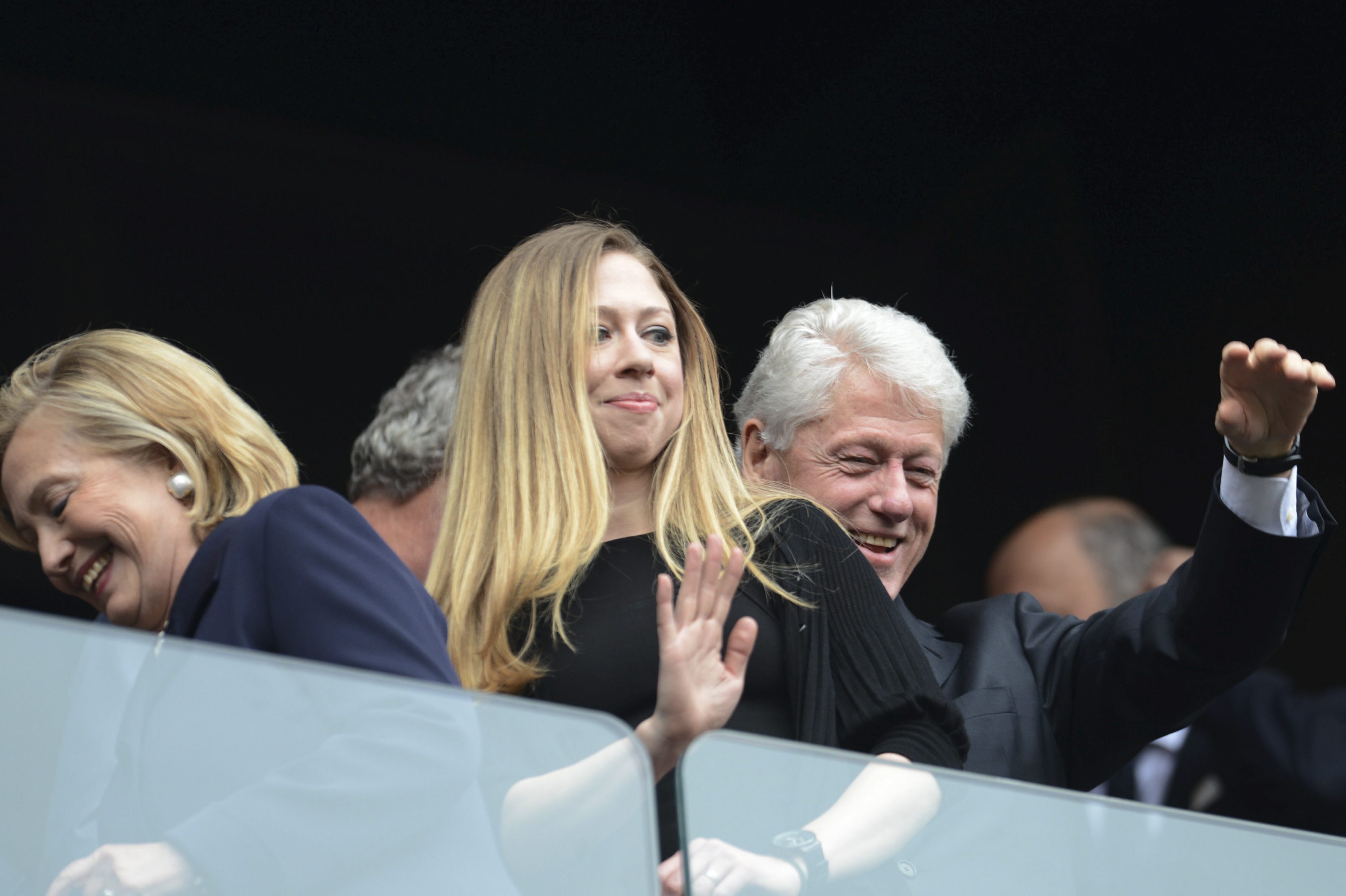
The State Funeral Of Former South African President Nelson Mandela

This is what you call “inevitability”:

Clinton stands at an eye-popping 73 percent in a  hypothetical 2016 primary race with Biden, the sitting vice president, who is the only other candidate in double digits at 12 percent. Massachusetts Sen. Elizabeth Warren, who has signed a letter along with a handful of other Democratic senators urging Clinton to run, is at 8 percent. And that’s it.

That lead is almost three times as large as the one Clinton enjoyed in Post-ABC polling in December 2006, the first time we asked the 2008 Democratic presidential primary ballot question.

Yes, the same was said last time as well, and she still managed to screw it up. But this time, there is no Obama in the wings, and this time, her coronation would follow a humiliation in 2008 and rehabilitation as secretary of state. Obama has also broken the barrier of an African-American president, and Democrats will find the appeal of the first woman president – and the gender gulf that could thereby open up – irresistible.  Even veteran Clinton-skeptics, ahem, find the appeal of a woman president galvanizing – the perfect way to add charisma and excitement to a very establishment and uncharismatic figure. Then there’s the Bill factor – a second Clinton presidency would be a reprise of the two-for-one package of 1992 and 1996. But this time, it would import into the White House the best political salesman in the country, with invaluable foreign policy experience and chops. If Hillary wins, Bill should be secretary of state. A formal role on the world stage is far preferable to an informal role on the inside fucking everything up.

What do her Democratic opponents have that could possibly match this appeal? And whom do the Republicans have? Their centrists are pedestrian, Pawlenty-style Midwesterners with little of the personality and star power that a presidential campaign demands. I mean: Walker? Kasich? They’re solid governors, but … it’s hard to see them in the White House. The base faves – a Ted Cruz or a Rand Paul – could get the nomination pretty quickly, given the new primary calendar and rules. But it would be very hard to frame a race between Clinton and, say, Cruz, as anything but a Johnson-Goldwater moment.

Which leaves Jeb Bush. It would, I guess, be a fitting testimony to the stalling of social mobility in America that a race in 2016 could be between a Clinton and a Bush, just as it was in 1992.

But since American politics is essentially an aristocratic, nepotistic oligarchy pretending to be a meritocratic democracy, many will presumably shrug their shoulders. Bush brings two things to the table: access to the big donor base, and raising the share of the Latino vote for the GOP. But it is hard to see Jeb really being able to unite the establishment and the Tea Party, without some serious internal ructions. And dynasty hurts Bush in a way it doesn’t Clinton.

Bill Clinton’s presidency now appears to have been an elysian time of peace and prosperity. George W Bush’s remains a recurring nightmare for many, especially Independents. And Jeb may not run anyway.

Of course, I may be missing something that throws all of this up in the air – like Christie’s bridge scandal. A scandal could emerge from the shadowy nexus of money, power and influence that comes with the Clinton network. Bill’s zipper could malfunction again. Hillary’s or Bill’s health may conceivably impact the race. Or simply “events, dear boy, events” could shake everything up.

What fascinates me is not just the dynamics of the race that is shaping up, but what could happen after. Imagine the GOP losing to Obama twice, and then losing to their bugaboo of the 1990s in 2016. Wouldn’t that be a shattering blow to morale? Could the GOP be drifting toward its role in the 1950s and 1960s again – a dyspeptic regional party with no ability to win a national majority? Or would a third presidential defeat in a row (and the fifth loss in in the national vote in six elections) lead to a civil war from which a saner Republican party could emerge at last?

I don’t know. But I don’t think this combination of factors will be boring.
Will Hillary Hatred Be The GOP’s Undoing?

Paul Waldman thinks so:

There are few things more fundamental to smart political strategy than the understanding that other people may not share your beliefs, and may not have the same emotional reactions you do to certain people and events. That understanding is what allows you to make thoughtful decisions about how to persuade the number of people you need to achieve your political goals, whether it’s passing a piece of legislation or winning an election. This is something Republicans often struggle with, but when it comes to the Clintons, they’re absolutely blinded by hate. To take just one example, if Hillary runs, we’re going to be hearing a lot about Benghazi, because Republicans are not only sure she did something scandalous, they’re also sure that if they just hammer away at it long enough, everybody else will become convinced, too. But just like with Bill’s impeachment, exactly the opposite is likely to happen: the more they talk about it, the more voters will become convinced that they’ve taken leave of their senses.

And that, more than anything else, may be what gives Hillary Clinton such a good chance of winning in 2016. When they’re looking at her, her opponents just can’t see straight.

Who Will Run Against Hillary?

Obama Accepts Nomination On Final Day Of Democratic National Convention

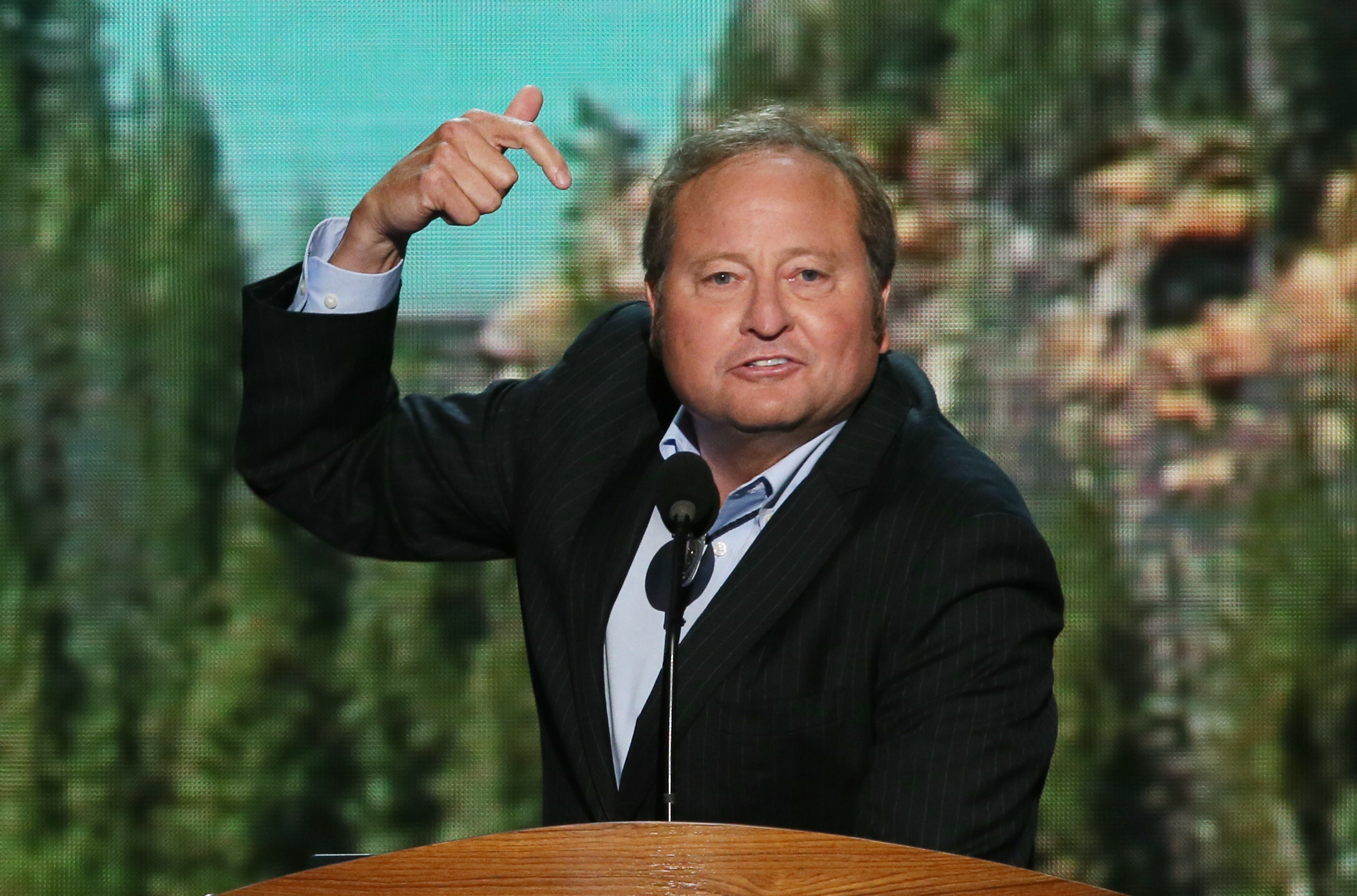
Weigel suspects former Montana Governor Brian Schweitzer:

He’s been visiting Iowa and promising to visit all 99 counties. (It’s on his “bucket list.”) The Venn diagram of people who visit all 99 Iowa counties and people who run for president is basically a solid circle. Schweitzer’s only just been added to presidential polls, where he comes in between zero and 2 percent. He talks about these numbers the way a presidential candidate always does. “The Republicans tend to choose the candidate who came in second place in the last election, and Democrats tend to move on,” he says. “Ask President Ed Muskie how it worked out to be the front-runner. Ask President Howard Dean how it worked out.”

Sam Kleiner looks at where Schweitzer deviates from your average Democrat:

Becoming famous as a “blue man in a red state,” Schweitzer compromised on core liberal commitments to gun control and allied himself with the NRA. In his 2008 run, Schweitzer was endorsed by the NRA with an “A” rating and a personal visit by Wayne LaPierre for a campaign rally. Schweitzer signed an array of NRA-backed bills into law, including a 2009 “stand your ground” bill that the NRA called a “victory.” …

While it’s tempting to write off Schweitzer’s relationship with the NRA as a kind of compromise that Western Democrats must make in order to stay in office, it’s worth recalling that [Montana] Senator Jon Tester was a supporter of the Manchin-Toomey gun control bill. Schweitzer is either a genuine conservative on gun control or, more troublingly, a candidate willing to “tack hard right” in order to get elected, as he would put it.

On the environment, Schweitzer has similarly been far to the right of the Democratic Party, and he isn’t sorry about it. He blamed “jackasses” in Washington for the delays on the building of the Keystone Pipeline. While Western Democrats have a tradition of producing some of the party’s greatest conservationists, including Secretaries of the Interior Stewart Udall and Bruce Babbitt, Schweitzer has gone the other direction. He has been one of the strongest advocates for expanding coal production, with extensive plans to ship coal to China. That plan has been met with fierce resistance from groups such as the Sierra Club. Western Democrats have a rich tradition of being the vanguards of the party’s environmentalist wing, but Schweitzer does not fit there.

(Photo: Montana Governor Brian Schweitzer speaks on stage during the final day of the Democratic National Convention at Time Warner Cable Arena on September 6, 2012 in Charlotte, North Carolina. By Alex Wong/Getty Images)

Is Hillary Already Running?

Maggie Haberman reports on Clinton’s 2016 “shadow campaign”:

Publicly, Clinton insists she’s many months away from a decision about her political future. But a shadow campaign on her behalf has nevertheless been steadily building for the better part of a year — a quiet, intensifying, improvisational effort to lay the groundwork for another White House bid. … Several sources said in interviews that her team is discussing how she will weigh in on policy debates over the course of the next year. She is working closely with clusters of aides on different policy initiatives — one involves child development, and Clinton is also being advised to address income inequality. Her memoir about her time at the State Department, initially expected for June, is likely to be out later in the summer, putting a book tour closer to the time when she would campaign for candidates in the midterms. That’s also closer to when she’s likely to announce her plans, after the November election.

Morrissey yawns:

The first signs of primary campaigns will begin to pop up in about 12 months, if the pattern from the last two cycles holds. People who want to run for the presidency are expected to start doing some preliminary due diligence at this stage in the cycle, regardless. The best that Politico has on Hillary Clinton is that she took one consultant meeting a few months ago?

… Maggie Haberman does a good job of running down some of the insiders and outsiders that would form the campaign, if it launches, but there’s nothing in the piece that suggests that anything has changed at all since that one outside consultation last summer. It will make a useful touchstone for later when Hillary finally decides to enter the race or retire for good, but it gives no insight into where that decision is, nor any surprises on preparation for the campaign as a contingency.

Philip Bump isn’t surprised at the strategists clamoring to campaign for Hillary, given the money involved:

As The New Yorker‘s Ryan Lizza put it, Clinton’s not having yet announced her own campaign left “every Dem consultant hustling for a buck.” That’s meant at least one conflict as those hustlers compete for space. In early 2013, Haberman reports, Clinton aide Huma Abedin (wife of Anthony Weiner) was asked to resolve a dispute between Ready For Hillary and Priorities USA. The former was soliciting money from donors the latter considered its domain. Clinton’s team resolved the dispute by creating a very campaign-like divide: Ready For Hillary would become the field staff, in essence, doing voter contact and data. Priorities USA would continue vacuuming up money from big donors. That split makes obvious why Clinton hasn’t had to announce any actual plans to run. Her decision to postpone any official announcement until later this year — Haberman figures it will come after midterms in November — makes perfect sense. Why go through the legal headache of formulating an official campaign infrastructure when there exist staffers and organizations that can raise money and reach out to voters and serve as an echo chamber without doing so? It gives the Clinton team semi-plausible deniability, distance from seeming as though it’s stepping on Obama’s second term.

Hillarycare’s Ghost Could Haunt Clinton

David Corn advises the Clintons to pray for Obamacare’s success:

Hillarycare ended up a political failure and set back the cause of health care reform for nearly two decades. It’s not an episode that Hillary Clinton would want discussed during a 2016 presidential campaign. If Obamacare thrives, there will be no reason to look back to Hillarycare and drag these charts out of the dustbin of history. But should the Affordable Care Act falter or collapse, a question will loom: What would Hillary do about health care? Her past record would be raked over and that would likely not boost her presidential prospects. Having screwed up in the early 1990s, could she argue that she would do a better job in reforming the health care system than Obama?

It would be best for a Clinton 2016 campaign for health care to be off the table—with no need to revisit all this inconvenient ancient history. That means she and Bill should be hoping that the implementation of Obamacare proceeds well—and they should do all they can to encourage that. So Bill Clinton ought to coordinate (closely) with the White House on what stuff he should be explaining. It’s not only the president’s political fortunes that are tied to Obamacare.

Hillary Isn’t Too Old To Run

by Patrick Appel

Nate Cohn reviews the actuarial tables:

A 65-year-old white woman has the same odds of dying the following year as a 60 year old white male. That puts her in roughly the same place as George H.W. Bush when he sought the presidency. She probably has a better chance than Ronald Reagan did. It would seem to give her much better odds than vice president Joe Biden, who’s a male and already older: eight percent of 69-year-old white males will die before the 2016 presidential election.

Christie has worse odds than Clinton

The New Jersey governor is just 50 years old, but studies show that obesity reduces life expectancy anywhere from six to ten years. According to the University of Pennsylvania life expectancy calculator, Christie’s life expectancy is 73 years, with a median of 74. That gives Christie the worst odds of any candidate: he has a 96.6 percent chance of living to the 2016 presidential election and only has an 84.2 percent chance of surviving until January 2025, when he might be concluding his second term in the White House. In comparison, Hillary Clinton gets a 93.8 percent chance—which lines up nicely with the 92 percent of white female senators, cabinet secretaries, and first ladies who have survived to age 78.

Hands Off Hillary’s Campaign

ISRAEL-US-PERES-CLINTON

Margaret Carlson asks Bubba to stay the hell out of the race next time:

Bill Clinton is now beloved — achieving a comeback no one thought possible. If he meddles in his wife’s 2016 campaign the way he did in 2008, he could lose his hard-won halo. If she lets him meddle, she will go down with him.

He will always loom. What didn’t drive them apart made their marriage stronger. But one thing he hasn’t learned is how to stand by his woman without standing in her way, blocking our view.

So thank you, Bill, for all you’ve done. Now for all womankind, and for the sake of the TBD at the end of Hillary’s Twitter profile, could you go where no man has gone before, except perhaps Denis Thatcher, and take one step back and to the side?

She can’t do this with you.

That’s great advice. Hillary finally broke through as her own candidate and politician – when she ran for Senate. The fact she got the seat because she was First Lady was the only blemish, but her campaign for the presidency truly broke her out of the politics-through-marriage paradigm. Now it seems that Bill is already prepping for her candidacy, by joining with McCain against Obama on Syria. But Bill is not, it seems to me, a good judge of the future. I don’t think a future Democratic candidate will come from the interventionist, pro-military right. I think it will come from the non-interventionist left. Could Hillary manage that? I think she’s far too Establishment. And stuck in the mindset of the 1990s.

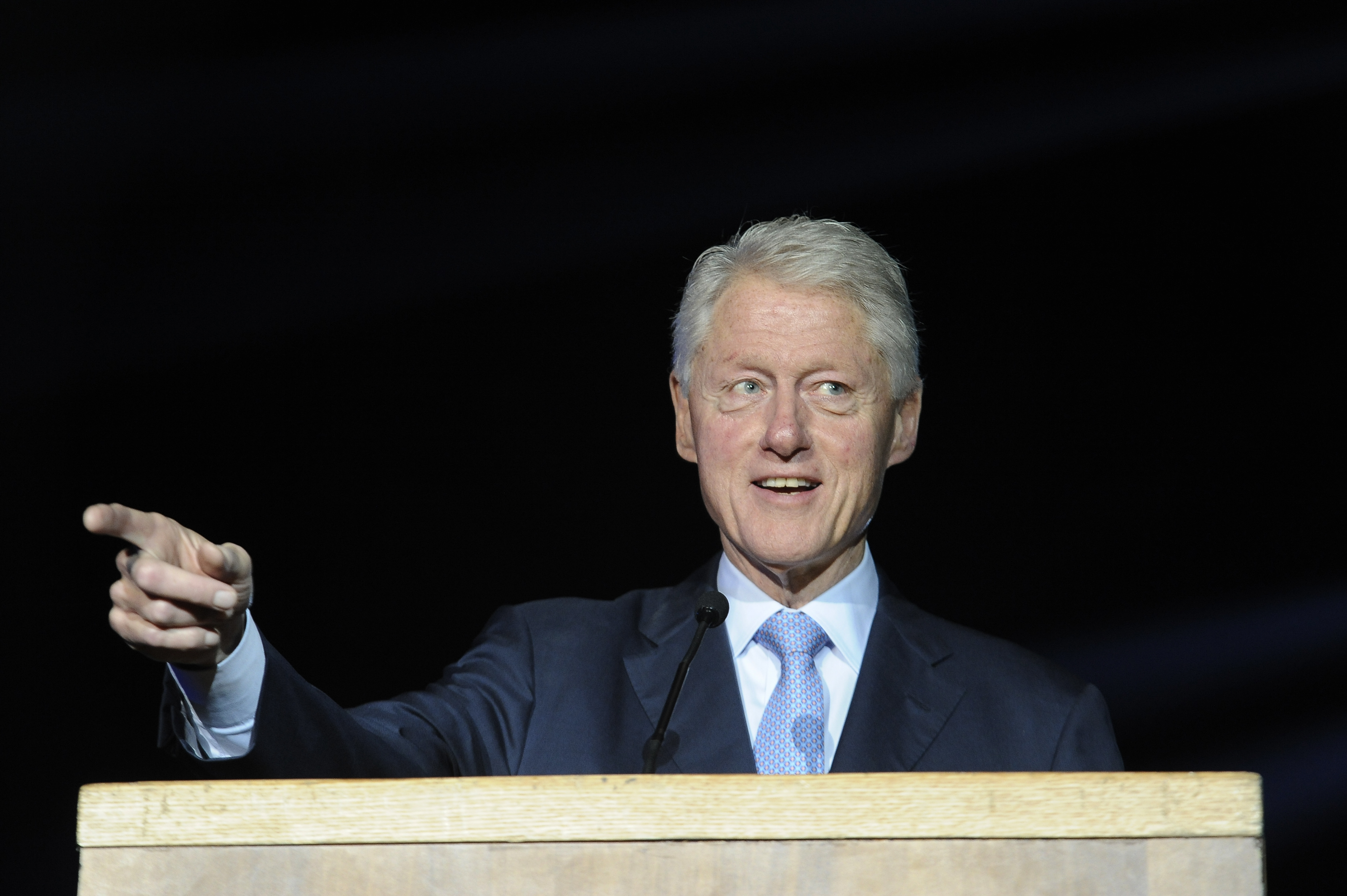
(Photo by David Buimovitch/AFP/Getty)