The Viennese Waltz With Iran Begins

Negotiators are meeting in Vienna this week to begin hammering out a final deal between Iran and the P5+1 on the Islamic Republic’s nuclear program, but the endeavor still faces a few major stumbling blocks:

Perhaps the biggest hurdle to overcome, six-power diplomats said, is Iran’s stance regarding its uranium-enrichment centrifuges, which one negotiator described as a “huge problem”. … “The Iranians have not yet shown a willingness to reduce their centrifuges to an acceptable number, making it difficult to envision a compromise at this point that we could all live with,” the negotiator told Reuters. Another Western official close to the talks confirmed the remarks as accurate.

A senior Iranian official seemed to confirm the assessment. “Our Supreme Leader (Ayatollah Ali Khamenei) has set a red line for the negotiators and that cannot change and should be respected,” he told Reuters. “Uranium enrichment should be continued and none of the nuclear sites will be closed.

On another key disagreement, however, Iran is backing down:

Abbas Araqchi, Iran’s deputy foreign minister, acknowledged amid a week of negotiations in Vienna that Tehran now accepts the principle that as part of the deal sanctions on its economy would be gradually eased as Iran gradually complies with limits on its nuclear activities.

Iran’s official line has been that it would require an immediate lifting of all of the sanctions at the time the deal is signed. The economic penalties have choked off its oil exports and limited its trade, and the Iranian government needs to have them lifted as soon as possible to help restore its teetering economy. “It’s a big deal,” said Cliff Kupchan, an Iran specialist at the Eurasia Group risk consulting firm. “Iran is recognizing that lifting sanctions will be tough and take time here. Araqchi’s statement lifts one barrier, a significant one, to a deal.”

David Sanger latest update (NYT) on negotiations:

The problem is that just as the Americans talk about reducing the number of centrifuges by roughly three-quarters, to just a few thousand operating machines, the Iranians propose expanding the numbers by tens of thousands. (There are 19,000 installed today, but only about half are running.)

At issue is a fundamental difference in points of view — Iran says it wants to produce all its own fuel for nuclear power plants — though it has only one major plant running, and the fuel for that comes from Russia. The West insists Iran should have only a token capacity, for research reactors.

“There’s no splitting the difference here,” said Robert J. Einhorn, who was on the American negotiating team until last year, and still advises the United States. “If the Iranians keep taking the view that they must have the capacity to fuel power reactors, they are not going to even get in the ballpark of the numbers the U.S. is talking about.”

Nader Uskowi scrutinizes the Iranian delegation’s upbeat attitude:

From what is reported of the talks so far, it seems that signing the JCPOA by 20 July deadline seems increasingly unlikely, and the six-month transition period under the current interim JPOA needs to be renewed.

Iranian Foreign Minister Javad Zarif still sounded optimistic, saying the final deal could be struck in July. But Mr. Zarif’s optimism could be because of his zeal to finalize the deal and to have the sanctions lifted as soon as possible. Iran was spending billions of dollars on the Syrian war, and now might be forced to spend billions of dollars more on the Iraqi conflict. The country needs to sell oil and use global banking system to finance the two wars. Considering that urgent need, Zarif might be saying something profound: The JCPOA will be signed, Iran will sign it, even if it has to give in on its demands, including the number of centrifuges.

But Ali Vaez worries that the negotiations will end up bogged down in “false dilemmas”:

The P5+1 is obsessed with the concept of “breakout time,” the time required to enrich enough uranium to weapons grade for one bomb. To lengthen it, the group is trying to define Iran’s “practical needs” for enriched uranium as minimally as possible. By contrast, Iran, having invested enormous resources and pride in its enrichment program, is trying to define those needs in maximal terms.

The negotiations will not get far debating over “needs,” which are ultimately a matter of interpretation. By the same token, breakout calculations are rough and purely theoretical guesstimates. They ignore time-consuming preparatory steps, inevitable technical glitches, the unpredictable weaponization process, the strategic and military illogic of breaking out with a single untested weapon, and the many convolutions of political decision making. Reducing a complex process to a one-dimensional race against time distorts reality, and overlooks competing interests and the natural tendency to avoid risk—including the nonnegligible risk of being caught.

Greg Thielmann and Robert Wright cover misconceptions about breakout time:

As a former U.S. official told the journalist Laura Rozen, “What everyone tends to forget is that, when U.S. government and academic experts speak on breakout timelines, they are usually describing a worst-case scenario … where Iran gets everything right the first time around, even if they are completing procedures they have never attempted before.”

Once a bomb is built, there’s testing to be done. States with nuclear weapons typically conduct multiple test explosions—particularly for the smaller, more efficient designs needed for missile warheads. Eight out of the nine countries that have nuclear weapons openly conducted tests before deployment—and the ninth, Israel, seems to have conducted a clandestine test off of South Africa. Preparing, conducting, and evaluating a test would take months—and would also mean that a new bomb had to be built, since the test would have eliminated the first one.

In short, even if “breakout time,” as conventionally defined, is only a few months, or even a few weeks, what you might call the “effective breakout time”—the time it takes to produce a deliverable weapon—is closer to a year, maybe longer.
Recent Dish on the Iran talks here, here, and here.

The Enemy Of My Enemy Is My Frenemy? Ctd

Daniel Berman doubts the US can cooperate with Iran on Iraq. Not only does Rouhani lack the clout to do a deal with the Great Satan, he says, our interests there are not really aligned – a fact Iran hasn’t forgotten, even if we have:

Iran, is not … unduly concerned about the breakdown of the Iraqi state. While Tehran does not desire a Sunni Islamist Iraq, it doesn’t particularly want a multicultural or even strong Shia led Iraq either. Such a state, especially if it remains democratic, would IRAN-IRAQ-US-UNREST-ROUHANIpose a serious threat to the legitimacy of the Iranian regime, especially given the relatively “liberal” outlook of Iraq’s Shia clergy compared to Iran’s. Many senior Iraqi clerics showed sympathy for the Green Movement in 2009 and Iran is not interested in a repeat.

The best shot Iran has at preventing one is for Iraq to be dominated by a weak Shia regime in the south and center dependent on Iranian military support. Such a government would be unable to seriously oppose Iranian policies, or to allow its senior leaders to criticize Iran’s internal arrangements. It would also allow Iran to effectively exclude the United States from the country, something that would be harder in a state with substantial Kurdish and Sunni influence. Iran therefore has an interest in supporting Maliki to the extent that the fall of Baghdad is prevented, but has no real reason to want to win his war for him. This is also why the United States should not raise its expectations too high regarding cooperation with Iran. The goals of the Iranian and American governments in Iraq are still far too great.

A cautious Frum asks why we should protect Maliki when he’s really Tehran’s guy, not ours:

Now, the most extreme and brutal of the anti-regime forces inside Syria has turned against Maliki. He is seeking American help, and Maliki’s patrons in Tehran appear content to see the United States rescue their client. According to some reports, the Iranians view U.S. aid to Maliki as a strategic partnership that could smooth the way to a nuclear deal more favorable to them. Is this situation not utterly upside down? It’s Iran that has a vital interest in the survival of Maliki, not the United States. It’s Iran that should be entreating the U.S. for assistance to Maliki—and Iran that should be expected to pay the strategic price for whatever support Maliki gets.

Abbas Milani sees cooperation between Iran and the US as a heavy lift:

Both in Iran and the U.S., as well as the Middle East region, there are powerful forces and countries that feel threatened by any Iran-American rapprochement. Iran wants to keep Iraq together, keep Shiites if not Maliki in power, and keep the IRGC’s extensive network of militia and economic presence in Iraq intact. The U.S. clearly has no love lost for Maliki and his sectarian politics, is gingerly moving toward favoring a loosely federated Iraq, and certainly does not want to encourage, or enable, Iran’s increased power in Iraq. Moreover, the two countries find themselves on opposing sides of the war in Syria. While Rouhani took four daysonly after much cudgeling by conservativesto congratulate Assad on his “election” victory, radical conservatives keep insisting that keeping Assad in power is a key strategic goal of the Islamic regime. In spite of these tensions, the specter of ISIS haunting the Levant is strong enough to bring the old foes together, if only briefly, to try to put the genie of Salafi extremism back in the bottle.

In Tom Ricks’ view, Iran is playing a long game here, and winning:

I don’t think that Iran has a failed state on its hands. What it had for several years after 2001 was the threat of American-dominated states on both its western and eastern borders. Now it faces no such threat, and is consolidating its hold on the Shiite rump in Iraq, from Baghdad to Basra. That’s a big piece of important territory that represents extension of Persian control to the Euphrates, and because that area includes Basra, tighter control of much of the Persian Gulf. And after Iran finishes there, I think eventually it will turn its attention to the Kurds and get some of the oil up there. But no hurry.

But the Bloomberg editors argue that we need to hold our noses and work with Iran in order to prevent complete chaos in Iraq:

The bigger question isn’t whether the U.S. should try to work with Iran, but whether it can. Events are moving so quickly that the chance for a political settlement may soon pass. ISIL is boasting of executing 1,700 Shiite soldiers in a transparent attempt to provoke the Shiite retaliation that would inflame moderate Sunnis and ignite a Syria-style civil war. Hard-liners in Tehran may also prefer to replicate their success in propping up Assad in Syria, pouring gasoline on the fire rather than work with the Great Satan in Iraq.

McCain’s usual partner in foreign-policy adventurism, Senator Lindsey Graham of South Carolina, has it right. Working with Iran to stabilize Iraq, he said, is akin to the Allies working with Stalin to defeat Hitler in World War II. Then, as now, the U.S. had to prioritize threats and try to work with any willing partner to counter them — even when that partner was an enemy.

I remain ambivalent, but inclined to live with Iran’s attempts to prevent any ISIS inroads in Baghdad. As for any US military intervention, I think Tom Friedman has been on a roll lately:

It feels both too late and too early to stop the disintegration — too late because whatever trust there was between communities is gone, and Maliki is not trying to rebuild it, and too early because it looks as if Iraqis are going to have to live apart, and see how crazy and impoverishing that is, before the different sects can coexist peacefully.

It is a delusion to believe the US can play any meaningful role in that sad process of learning. In fact, the more we intervene, the more we postpone Iraqis reckoning with their own actual options. Previous Dish on the potential for US-Iranian cooperation here and here.

The Enemy Of My Enemy Is My Frenemy? Ctd

The US and Iran got to talking about the crisis in Iraq yesterday. The Guardian notes was “the first time the two nations have collaborated over a common security interest in more than a decade”:

John Kerry, the US secretary of state, pointedly declined to rule out military cooperation in an interview with Yahoo News, but US and Iranian officials later stressed that there was no prospect of military cooperation, and none was discussed in Vienna, where the talks were described as short and inconclusive.

“We are open to engaging the Iranians,” said a senior State Department official, who characterised the discussions as brief. “These engagements will not include military coordination or strategic determinations about Iraq’s future over the heads of the Iraqi people,” the US official said, on condition of anonymity. The Iranians confirmed that military cooperation was not on the cards. “The disastrous situation in Iraq was discussed today. No specific outcome was achieved,” a senior Iranian official told Reuters.

The UK, meanwhile, is reopening its embassy in Tehran. Calling Iran “the most stable country in the Middle East right now,” Trita Parsi scrutinizes why cooperation with the US is a good move for the Islamic Republic:

Iran … will pay a price if it clings to an outdated understanding of the regional and global strategic landscape. Contradictory messages have come out of Tehran, with officials telling Reuters that they are open to collaboration with the United States against ISIS, and then having their Foreign Ministry spokesperson strongly oppose U.S. military intervention. Similarly, the U.S. position seems to be shifting, from first denying any plans for talking to Iran about Iraq to signaling a desire to sit down with Tehran.

Iran’s key objective is to be recognized as a stabilizing force. But that is a role it ultimately cannot play if it simultaneously wishes to challenge the United States. Unlike in Afghanistan, any cooperation in Iraq will likely be more public. If Iran plays a constructive role, the world will notice. But changing old patterns require courage, strength, and political will. It remains to be seen if the leadership in Tehran can deliver those — or if Washington will be receptive.

My own preference would be for very light coordination with the Iranians if they are really the only force capable of halting ISIS’s advance on Baghdad, and no US troops anywhere, but for defending key US assets like the embassy.

The neocons will howl as their botched war further empowers their arch-enemy in Tehran – see this classic know-nothing-learn-nothing piece from the Greater Israel fanatic, Elliot Abrams – but I tend to agree with Allahpundit. A shrewd strategy

to “blunt Iran’s rise in the region” would be to force them to fight a two-front war against ISIS in Syria and Iraq without western help, not to start bombing their enemies while sternly warning them not to capitalize once we’re gone.

Then there’s how all of this impacts the delicate negotiations over Iran’s nuclear program – now significantly weakened undr the provisions of the interim agreement. Could mild cooperation in Iraq facilitate a resolution? Again, the neocons are quick to state the opposite. Jonathan Tobin claims that Iran’s negotiating power over the US and Europe at the P5+1  just increased exponentially:

The administration’s zeal for a deal that would end the confrontation over Iran’s nuclear ambitions has been no secret since it concluded an interim pact last November that tacitly recognized Iran’s “right” to enrich uranium and started the unraveling of the economic sanctions that had taken years to enact and enforce. The Iraqi crisis not only strengthens Tehran’s already strong bargaining position in the continuing P5+1 talks; it also gives President Obama one more reason to seek to appease Iran rather than pressure it to make concessions on outstanding issues such as its ballistic missile program or its nuclear military research.

The talks, I presume, will stick to their original agenda, and not include the entire neocon wish-list (which is really a poison pill for any rapprochement). A good omen – and Jennifer Rubin is hyperventilating:

It seems the president will do anything to avoid using U.S. power in the region, even if it means accelerating Iran’s influence in Iraq. Imagine the reaction of our allies in Egypt, Sunni Gulf states and Israel when we let on that we are going to be assisting Iran’s hegemonic vision and thereby bolstering the state sponsor of groups including Hamas and the Muslim Brotherhood. In lieu of strengthening U.S. influence in the Middle East, Obama seems ready to bolster Iran’s. And if he is bent on this course, surely he’ll not challenge Iran and its puppet in Syria. Why, that might “upset” Iran and either wreck a nuclear deal or force Obama to handle Iraq on his own.

But Paul Pillar sticks up for cooperation, calling the ISIS surge “one of the most salient and clearest examples in which U.S. and Iranian interests are congruent”:

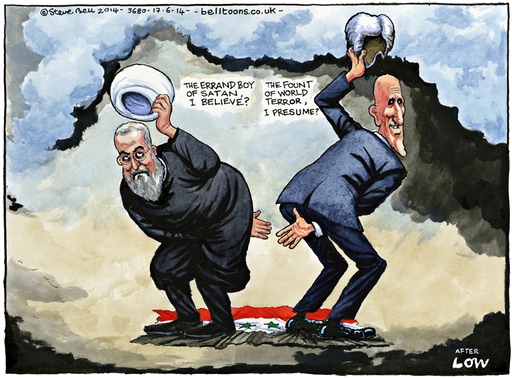
There is right now an excellent opportunity for useful coordination between Washington and Steve Bell 17.06.2014Tehran regarding messages to be sent to, and pressure to be exerted on, Prime Minister Maliki. If both the United States and Iran—the two foreign states on which Maliki’s future most depends—tell him the same thing about the need to move beyond his destructively narrow ways of governing, such pressure might begin to have a beneficial effect. Although the Iranians have been happy to see the Shia majority in Iraq finally get out from under Sunni political domination, they also are smart enough to realize that Maliki’s performance is more a prescription for unending instability and Sunni radicalism, which neither the Iranians nor we want.

The United States and Iran have wisely been concentrating over the past year on the nuclear issue, so as not to complicate the negotiations with a premature broadening of the bilateral agenda. The ISIS offensive may be a reason to move up the broadening a bit.

But maybe we’re not the ones who ought to be talking to Iran. “The real fault,” Bilal Y. Saab writes, “should be assigned to those actors who, despite having tremendous influence and real leverage over the majority of the Iraqi antagonists, have so far decided not to intervene politically. That’s Iran and Saudi Arabia”:

A dialogue between the Iranians and the Saudis is desperately needed not just to stop Iraq’s bleeding and prevent another full-blown civil war, but to extinguish at least the major Sunni-Shi’ite fires throughout the Middle East that are fueling this violence and chaos.

This is not a naive call for putting an end to an old and fierce rivalry between Saudi Arabia and Iran and to an historic feud between the two biggest branches of Islam. That’s just not going to happen. Instead, this is a realistic invitation for two regional heavyweights who, for better or worse, speak for the majority of Sunnis and Shi’ites in the Middle East, to negotiate a path out of this catastrophic situation. Call it arms control, dialogue, or cooperation. The bottom line is that they need to sit down and talk about ways to manage or stabilize their regional competition by agreeing to hard rules that would benefit both, otherwise Arab League chief Amr Moussa’s nightmare scenario of the gates of hell opening in the Middle East will turn into a reality.

Previous Dish on the potential for US-Iran cooperation here, and on Iran’s intervention in Iraq here and here.

(Cartoon by Steve Bell. The analogy is to David Low’s classic cartoon on the Hitler-Stalin pact. Yes, Bell appears to see the US as the equivalent of Stalin’s totalitarian state.)

Iran’s Quagmire Now?

IRAN-IRAQ-US-UNREST-ROUHANI

Aki Peritz insists that Iran is biting off more than it can chew in Iraq:

Iran can only go so far to pacify Iraq with its own forces. The IRGC and its Shia proxies are reviled in Sunni-majority areas, and an effort to hold territory by these groups would eventually cause a major backlash among the population. So Iran would have to eventually withdraw, leaving a power vacuum, again, in those areas.

More broadly, many of the socio-economic and sectarian drivers that brought Iraq to this horrific juncture would remain in place after the shooting stopped. A semi-failed state containing thousands of virulently anti-Shia veteran fighters on its western border will remain a long-term national-security nightmare for Tehran.

The economic impact of a war-torn Iraq must also be considered, as Iran sends some $5 billion in non-oil exports to their neighbor every year. But, as for the rest of the region, Bruce Riedel believes it will be Iran’s enemies who suffer if the intervention is successful:

Saudi Arabia long ago lost the battle for influence in Iraq, but it will see its role further diminished with both a hostile ISIS and a hostile Iran splitting the pie on its northern border. If Iran emerges as the savior of Iraqi Shiites, the Shiites of Bahrain, Kuwait and the kingdom’s eastern province will be further inclined to see Iran as their savior, too.

Since Israel defines Iran as its greatest regional rival, it is also a loser. Certainly, moderates in the Arab world will be increasingly squeezed between extreme Sunni groups and Shiite Iran. They will be less inclined to take conciliatory steps toward Israel that will be unpopular and dangerous. Jordan is the most vulnerable moderate state.

If Iran helps stop ISIS outside Baghdad, the impact will be felt in Syria. The Iranians and their Hezbollah allies will gain further credibility as the only force that is actually on the ground resisting al-Qaedaism. Tehran will have emerged as the leader of a block of Shiite-dominated states, each looking to Iran for critical security support.

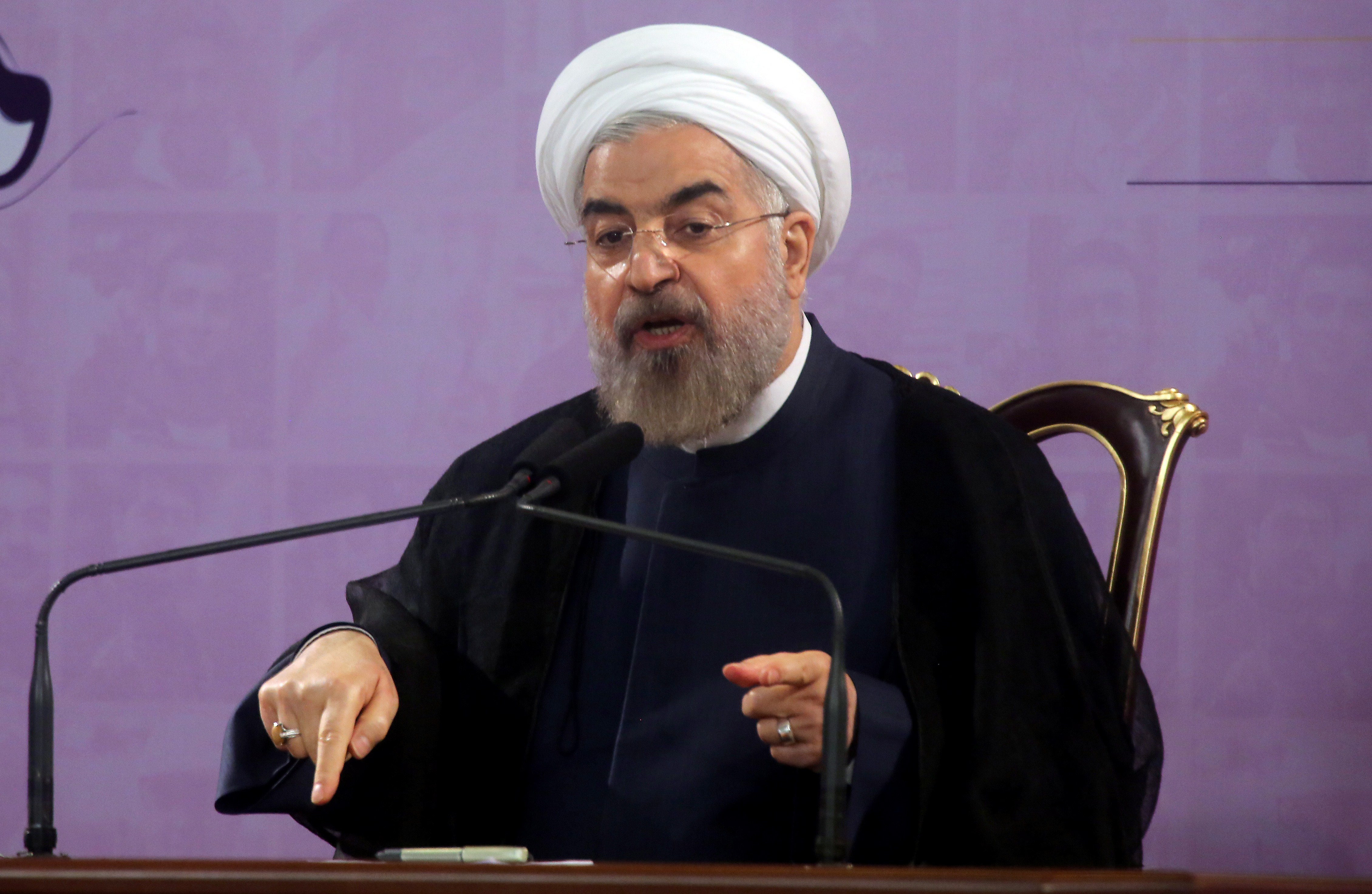
(Photo: Iranian President Hassan Rouhani speaks during a press conference in the capital Tehran on June 14, 2014. Iran may consider cooperating with the United States in fighting Sunni extremist fighters in Iraq if Washington acts against them, Rouhani told journalists. By Atta Kenare/AFP/Getty Images.)

The Enemy Of My Enemy Is My Frenemy?

As more evidence surfaces of Iranian forces joining the conflict in Iraq, the WSJ reports that the US and Iran will now engage in direct talks toward resolving the crisis:

The U.S.-Iran dialogue, which is expected to begin this week, will mark the latest in a rapid move toward rapprochement between Washington and Tehran over the past year. It also comes as the U.S. and other world powers try to reach an agreement with Iran by late July to curb its nuclear program. …

The U.S. officials said it wasn’t certain yet which diplomatic channel the Obama administration would use to discuss the Iraq situation. One avenue could be through Vienna, where senior American and Iranian diplomats will convene starting Monday as part of international negotiations aimed at reaching a comprehensive agreement to curb Tehran’s nuclear capabilities.

Over the weekend, Rouhani himself expressed an openness to working with the US to confront ISIS:

“If we see that the United States takes action against terrorist groups in Iraq, then one can think about it,” he said, despite the lack of diplomatic relations between Tehran and Washington for more than three decades. “We have said that all countries must unite in combating terrorism. But right now regarding Iraq… we have not seen the Americans taking a decision,” Rouhani added.

But a Foreign Ministry spokesman also mixed that signal by suggesting Western intervention would only complicate a situation Iran believes it can handle all by itself. Ian Black surveys the debate:

Commentators in Tehran and Washington have argued that these old enemies share significant interests in defending the status quo in Baghdad: for example, both had urged Maliki to act more inclusively to stop alienating Sunnis for fear of empowering Isis. “Iraq is one of those places that contradicts the popular notion that Iranian and American interests constitute a zero-sum game,” the analyst Kenneth Pollack, a CIA veteran, commented on the eve of the April elections. “There, what is bad for Iran is often just as bad for the United States and what they want to see is often what we want to see as well.”

Whether those common interests will extend to actual, as opposed to de facto, military coordination – US air strikes or drone intelligence in support of Iranian revolutionary guards, or Iranian-advised Iraqi units – remains to be seen. It is fascinating too to speculate whether any cooperation could impact on the ongoing talks on Iran’s nuclear programme, a month before the deadline for a deal.

Meir Javedanfar thinks through the ramifications for Rouhani:

In the short run, President Rouhani also has much to gain. The ISIS victories will make Iran look like an attractive partner to the United States in the fight against ISIS. Should the West decide to cooperate with Iran, this would boost Rouhani’s position domestically, as he could say his moderate approach toward the United States made the country dependent on Iran for help. Rouhani could then use such help as a bargaining chip in the P5+1 talks to extract further concessions.

However:

There could also be domestic repercussions against Rouhani’s interests.

The head of the Basij organization, Gen. Mohammad Reza Naghdi, has already accused the United States of being behind the ISIS attacks. The spokesman for parliament’s National Security Commission, Mohammad Hossein Naghavi Hosseini, has publicly accused the Saudis (as well as Israel and the United States) of being behind the ISIS attacks.

The longer the ISIS crisis continues, the more difficult it will be for Rouhani to create a diplomatic rapprochement with the United States, as this crisis could strengthen the hand of Iran’s conservatives, who are against such a scenario. The same applies to Rouhani’s aspirations to improve relations with the Saudis.

Stepping back, Keating tries to sum up the bizarre intersection:

Relations between Iran and the U.S. have improved since Hassan Rouhani became president last year, but this hasn’t been a great couple of weeks. Nuclear talks have hit an impasse over the number of centrifuges Iran will be allowed to maintain for nuclear enrichment. It now seems unlikely that a deal by the July 20 deadline set by negotiators. It seems like it should be possible to compartmentalize the nuclear issue while the two sides work together on another pressing priority.

But the bigger obstacle may be Syria, where Iran has been one of the primary international backers of Bashar al-Assad’s government. Iran views ISIS as the inevitable consequence of American, Arab, and Turkish support for anti-Assad rebel groups. The U.S. view is that Assad’s brutal response to the moderate Syrian opposition led to the growth of radical opposition groups. It’s hard to wrap one’s head around a situation where the U.S. and Iran are fighting as allies on one side of the porous Syrian-Iraq border and essentially fighting a proxy war on the other side, but all bets are off when it comes to Middle Eastern geopolitics at the moment.

Robin Wright has some important reminders:

In 2010, James Jeffrey, the U.S. Ambassador [in Iraq], estimated that Iran was linked, through its surrogates, to the deaths of more than a thousand American troops. “My own estimate, based just upon a gut feeling, is that up to a quarter of the American casualties and some of the more horrific incidents in which Americans were kidnapped … can be traced without doubt to these Iranian groups,” he said.

Even after Washington announced its intent to leave Iraq, Defense Secretary Robert Gates charged that Iran’s support for Shiite militias was intent on “killing as many as possible in order to demonstrate to the Iraqi people that, in effect, they drove us out of Iraq at the end of the year.” When the United States ended its combat mission, in 2011, it did not leave even a residual force behind, because Iraq—under Iran’s strong influence—refused to sign a Status of Forces Agreement granting immunity to U.S. troops for acts deemed criminal under Iraqi law.

Marc Pyruz adds that Iran’s current strategy against ISIS will need to change from how it tried to fight the US:

[Quds Force] direction of battle in Iraq is set to differ in key respects from the period of American military occupation. During that period, the American military relied on combat aviation, overwhelming firepower and a heavy logistical presence. The current situation in Iraq is very similar to what is taking place in neighboring Syria, where IRGC-QF tactics have been developed against determined, hardy Jihadist fighters dug often in built-up or urban environments, with IRGC-organized militias often times proving more motivated and reliable in combat.

One of the weak links for Iraq is the lack of a capable air force. The Iranian air forces’ fixed wing combat aircraft– IRIAF and IRGC-AF –are not in a state of fit and lack the numbers of operable aircraft for sustained operations, and any potential losses can not be replaced with additional acquisitions. To some extent, this might explain certain Iranian officials’ public statements of floating the idea of a shared role [with the US] in stabilizing the military situation in Iraq.

That idea seems to have piqued the interest of even Butters, who yesterday, while calling Iran the Stalin to ISIS’s Hitler, nevertheless endorsed some kind of collaboration:

“The Iranians can provide some assets to make sure that Baghdad doesn’t fall. We need to co-ordinate with the Iranians and the Turks need to get into the game.”

“We should have discussions with Iran to make sure they don’t use this as an opportunity to seize control of parts of Iraq. They’re in this, we need to put a red line with Iran.” Graham said the US should “sit down and talk” with Iran. “To ignore Iran and not tell them ‘Don’t take advantaged of this situation’ would be a mistake,” he said.

Jessica Schulberg sees no other choice:

While there are political barriers to an outward alliance with Iran, the U.S. needs to recognize the influence that Iran has in the Middle East, and harness the cooperative gains made in the nuclear negotiations to wider cooperation in dealing with Syria and Iraq. … While it is not clear what form their intervention will take, collaborative effort with the Iranians, whether overt or covert, is necessary in stabilizing Iraq.

Iran’s Soccer Politics

Suhrith Parthasarathy looks at how association football influenced the modern history of Iran:

Drawing links between sport and the larger cultural and political ethos of a nation can often be tenuous and far-fetched. But, in Iran, when soccer returned to the hub of social life in the late 1990s, it served, as David Goldblatt wrote in his book, The Ball Is Round: A Global History of Soccer, as a “rallying point for opponents of the conservative elements in the theocracy.” Tehran’s national soccer stadium, built in 1971 and which can hold more than 100,000 people, is called “Azadi,” meaning “freedom” in Farsi. But ever since the 1979 revolution, which saw the Islamisization of the nation, women were altogether prohibited from watching soccer at Azadi. The boisterous celebrations following the team’s victory in Melbourne, therefore, served as much as a means to help break such shackles as it has to entrench a new form of expressing not only joy but also political protest in the country. Next month, when Iran plays in the 2014 World Cup in Brazil, its matches will reverberate in significance well beyond the soccer pitch.

John Duerden fast forwards to today, when the sport remains just as politically significant:

Popular passion for the game is such that no leader can afford to ignore it. One of the first international figures that President Hassan Rouhani met after taking office last August was Sepp Blatter, the controversial chief of the International Federation of Association Football (FIFA), football’s international governing body, who backed Iran’s bid to host the 2019 Asian Cup.

If Rouhani hadn’t immediately grasped the power of the game, it was made abundantly clear soon enough. Just one week after his historic election inspired thousands to take to the streets, crowds of roughly equal size turned out to celebrate Iran’s qualification for the 2014 World Cup. By scoring political points in his meeting with Blatter, however, the new Iranian president was just following the example set by his predecessor. According to a diplomatic cable published by Wikileaks, Mahmoud Ahmadinejad “has staked a great deal of political capital in Iranian soccer … in an effort to capitalize on soccer’s popularity with constituents.”

Yet Iranians (NYT) don’t seem all that excited about the World Cup this year. That’s no coincidence:

It is more than the daunting competition and the controversies surrounding Team Melli that keep the Iranians from warming to the World Cup. The authorities have been working hard to nix any soccer related excitement.

Tehran’s cinemas have been told by the police that they are not allowed to show World Cup matches to a mixed audience of men and women, “out of respect for Islamic morals.” A plan to show Iran’s games on some of the large electronic billboards across the city was canceled, and on Wednesday, restaurant and coffee shop owners said they had been told by the Ministry of Islamic Guidance and Culture to refrain from decorating their establishments with the national flag or the colors of other countries.

“We want to decorate our restaurant with German flags,” said one restaurant owner who asked to be identified only by his first name, Farhad. “But even that is not allowed. Fun, people gathering in large groups, such things make the authorities nervous.”

Democrats For War With Iran, Ctd

Three Senators back off the AIPAC poison-pill bill to scuttle diplomacy with Iran, before it has been given a chance. It seems many were co-sponsoring a bill they never intended to vote on. Translation: it was an easy give for AIPAC, as long as it never actually happened. Or if you want to gussy that up into a rationale, this is about as good as it gets:

A spokesman for Sen. Michael Bennet (D-Colo.) said Wednesday that merely introducing the bill — but not voting on it — was helpful to negotiations. “Senator Bennet supports the President’s diplomatic efforts and would like them to succeed. The pertinent question isn’t about when we vote on the bill, but whether its introduction is helpful to the negotiations. He believes it is,” spokesman Adam Bozzi said.

And he believes that even though the president has said it isn’t helpful to the negotiations. Still, it’s good to see a small amount of pushback against AIPAC and in support of the president.

A Better Relationship With Iran

Post Election March

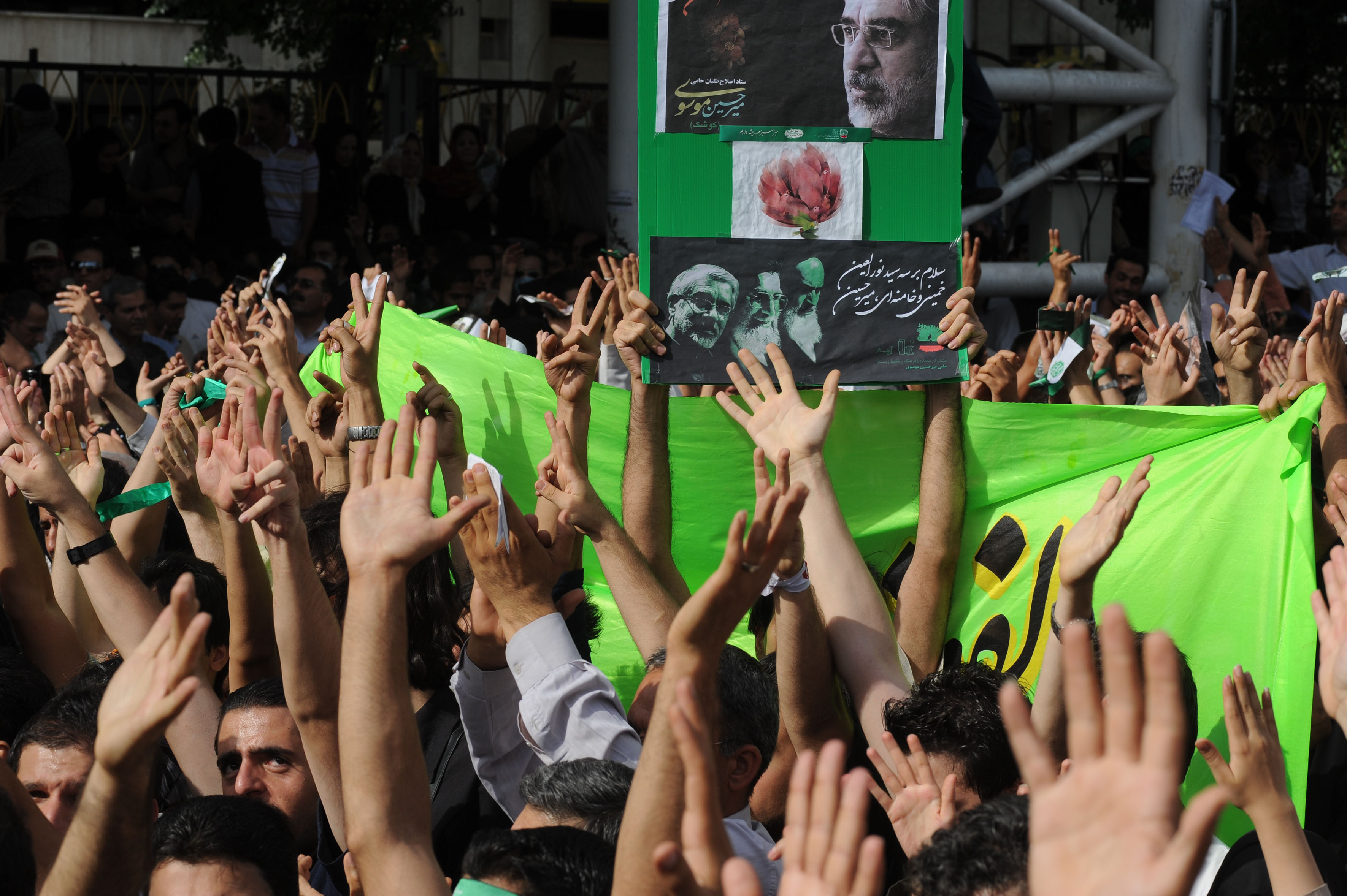
Walt imagines what it might produce:

When trying to make their case, in short, both sides tend to focus solely on the downside. But what about the potential benefits of a successful negotiation? To judge the pros and cons of diplomacy properly, we have to consider not just the downside of failure, but also the potential upside of success. And I don’t mean just the possibility of limiting Iran’s nuclear program (a desirable goal in itself), but also the more important possibility of putting U.S.-Iranian relations on a fundamentally different path (which is what AIPAC, et al are really worried about).

Among the potential benefits he outlines:

[I]f you’re not a fan of the clerical regime, you might want to consider killing it with kindness instead of bolstering it with belligerence. More than half of Iran’s population is under 35, and many are eager for better relations with the outside world (including the United States). Making it easier for Iranians to travel, get educated in the United States, and get exposed to the rest of the outside world will put those aging mullahs in a very awkward position. Have we learnt nothing from the failed Cuban embargo, which has helped keep the Castro Bros. in power for half a century? If we really believe in the transformative power of markets, Hollywood, hip-hop, the Internet, democracy, and free speech, let’s turn ‘em loose on Tehran. If your goal is a more moderate Iran, that approach is likely to work a lot better than ostracism, covert action, and repeated threats of military force, which merely galvanize Iranian nationalism and help justify continued repression by hardliners.

My view is that ignoring the positive potential of this engagement is a betrayal of the Green Revolution. And they do not deserve to be betrayed.

Democrats For War With Iran, Ctd

Cory Booker Marries Same Sex Couples As NJGay Marriage Law Goes Into Effect

Jeffrey Goldberg tries to talk sense into Iran hawks:

[A]t least in the short term, negotiations remain the best way to stop Iran from crossing the nuclear threshold. And U.S. President Barack Obama cannot be hamstrung in discussions by a group of senators who will pay no price for causing the collapse of negotiations between Iran and the P5 + 1, the five permanent members of the security council, plus Germany. “You have a large group of senators who are completely discounting the views of the administration, the actual negotiators, the rest of the P5 + 1, the intelligence community and almost every Iran analyst on earth,” said Colin Kahl, who, as a deputy assistant secretary of defense for the Middle East during Obama’s first term, was responsible for preparing all of the options that the President says are still on the table.

If these negotiations were to collapse — and collapsing the negotiations is the goal of some of the most hawkish hawks — the most plausible alternative left to stop Iran would be a preventative military strike, either by the U.S. or by Israel (Arab states, which are agitating for an American strike, wouldn’t dare take on the risk of attacking Iran themselves). Such a strike might end in disaster. …

The whole column is worth a read. Another sound point:

[W]hy support negotiations? First: They just might work. I haven’t met many experts who put the chance of success at zero. Second: If the U.S. decides one day that it must destroy Iran’s nuclear facilities, it must do so with broad international support. The only way to build that support is to absolutely exhaust all other options. Which means pursuing, in a time-limited, sober-minded, but earnest and assiduous way, a peaceful settlement.

Beinart declares that “the sanctions bill is all about torpedoing a nuclear deal”:

An analysis of the legislation by longtime senate foreign relations committee staffer Edward Levine notes that to suspend the new sanctions indefinitely, President Obama must certify that “Iran will…dismantle its illicit nuclear infrastructure.” That’s pretty vague. But AIPAC’s summary of the bill helpfully explains that “Iran’s illicit nuclear infrastructure” includes “enrichment and reprocessing capabilities.”

Which would be fine, except that the Obama administration has already conceded that it can accept limited Iranian uranium enrichment so long as it’s not near weapons-grade and is closely monitored by inspectors. To suspend the sanctions, in other words, a final nuclear deal would have to include provisions that the governments of both Iran and the United States have already insisted it will not include.

Larison responds:

It’s not surprising that the bill has set such a maximalist requirement, since the bill’s co-sponsors have previously expressed their opposition to allowing Iran to retain any enrichment capabilities. This is why no one should take seriously the claim of the bill’s supporters that they are interested in a diplomatic resolution to the nuclear issue. According to their own standard, they will only accept a deal with conditions that Iran has repeatedly stated that it will never accept, which means that no achievable final deal can avoid triggering the sanctions that they wish to impose. It is little wonder that Iran views the passage of a new sanctions bill as a deal-breaker. If the bill became law, it would mean that the U.S. had already reneged on commitments that it made in the interim agreement.

Kilgore wants anti-war Democrats to make some noise:

You will hear some Democrats and even a few Republicans claim they are trying to strengthen the adminstration’s hand in their negotiations, but that’s a shuck. The whole idea is to torpedo the talks because Bibi Netanyahu believes they are aimed at the wrong goal: keeping Iran from developing nuclear weapons, as opposed to Bibi’s demand that Iran lose its capability of developing nuclear weapons. If that means war, so be it. This time around, of course, those in the Democratic Party opposing a drift into war have the White House on their side, and the precedent of what happened when a lot of Democrats supported a similarly avoidable war with Iraq. But if antiwar Democrats don’t start making some real noise, the configuration of forces in Congress will continue to deteriorate, and we could be looking at a war foisted on an unwilling commander-in-chief.

And now the House is preparing to pass the Senate’s bill, which “would speed the process of sending a bill to Mr. Obama’s desk because the two chambers would not have to go through the process of reconciling their different bills.” It’s also intended pressure Reid into allowing a vote on the Senate bill. Larison zooms out:

When it came to the questions of bombing Libya and Syria, the House leadership was perfectly happy to defer to the executive, but when it comes to the conduct of diplomacy that is properly part of the executive’s responsibility they are only too ready to butt in and meddle where they aren’t wanted or needed. The one constant in this behavior is that most members of Congress find a way to take whichever side makes conflict with other states more likely. If the executive wants to launch a war on its own, Congress will stay out of the way, but if it wants to strike a deal that makes a future war less likely to happen they are suddenly very concerned to make their views known.

(Photo: Senator Cory Booker, who is sabotaging his own president’s diplomacy on Iran, by Kena Betancur/Getty Images.)

Democrats For War With Iran, Ctd

President Obama Departs The White House

Fallows weighs in. Read it. This truly is a critical moment for the US after 9/11. It’s one reason we elected Obama twice. And yet his own party is now trying to sabotage it, when the possibility of a breakthrough – agreed to by all the major powers – is real and as yet not fully tested. Money quote:

Republicans led by Mitch McConnell are pushing for a sanctions bill that is universally recognized (except by its sponsors) as a poison-pill for the current negotiations. Fine; opposing the administration is the GOP’s default position.

But a striking number of Democrats have joined them, for no evident reason other than AIPAC’s whole-hearted, priority-one support for the sanctions bill. The screen clip below is from AIPAC’s site, and here is some political reporting on AIPAC’s role in the sanctions push: NYTPolitico, JTA, Jerusalem Post-JTA, and our own National Journal here and here. Also see Greg Sargent in the Washington Post.

Fallows has a quote from the AIPAC website, the main lobbying group for war. It’s worth reading as well. Fournier, no Obama fan, also gives a great money quote here:

Obama dithered and stumbled on Syria, but his instincts were right: Avoid bloodshed if at all possible. He is acting prudently on Iran. He is the commander in chief, and you’d expect fellow Democrats to give him the benefit of the doubt. Is the Democratic opposition to Obama based on the merits or born of political calculation? If it’s the former, wayward Democrats had better be right, because the stakes are high. If it’s the latter, shame on them and their “antiwar” party.

Amen. None of these Democratic Senators are prepared to give the president the lee-way to try to avoid another disastrous and unwinnable war in the Middle East. Their sanctions bill would kill the only alternative to the war AIPAC wants. Democrats in New York and New Jersey should let Schumer and Menendez and Booker know that sabotaging their own president and the only potential for peace is inexcusable. That goes for Michael Bennet’s inexplicable betrayal as well.

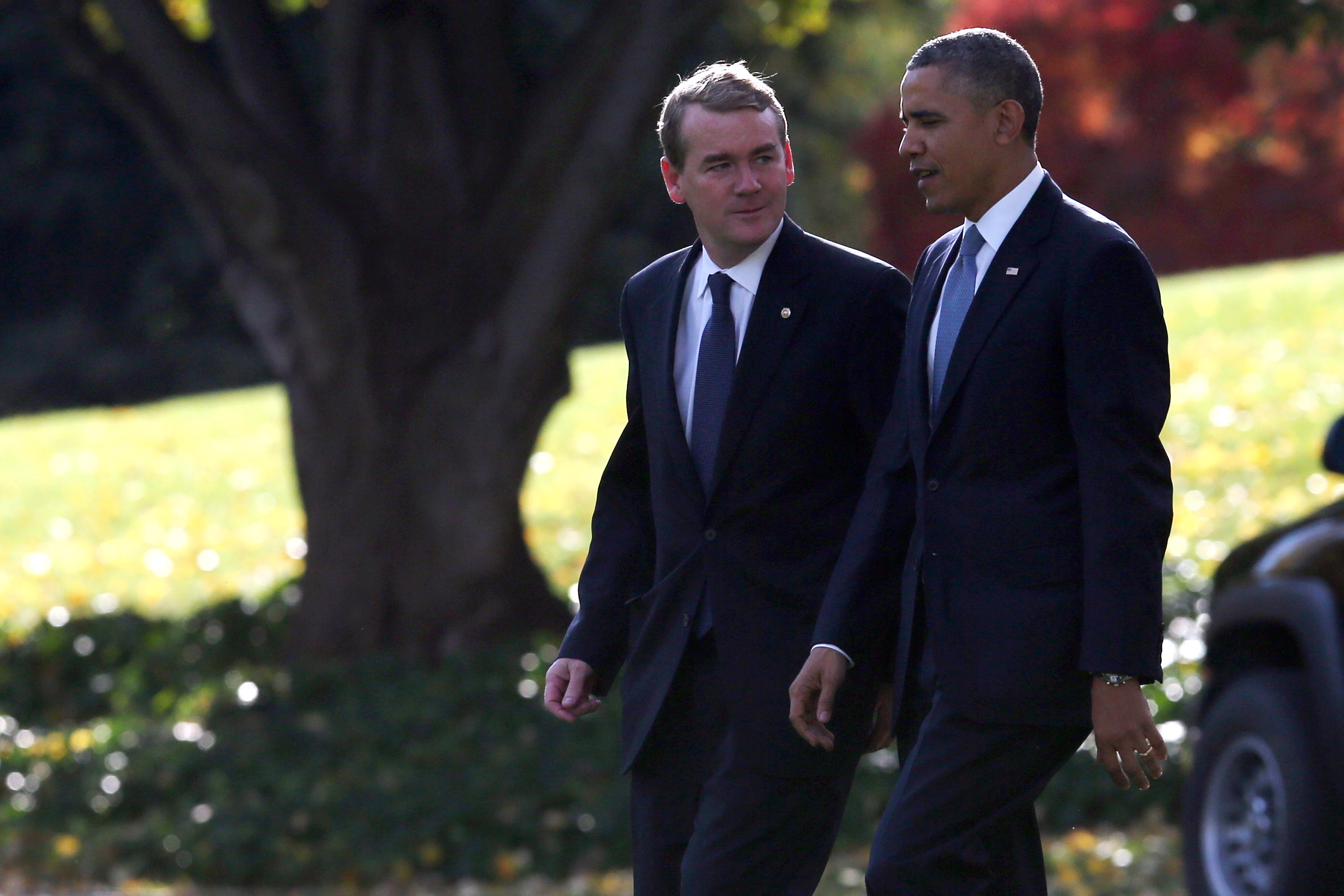
(Photo: U.S. President Barack Obama walks with Sen. Michael Bennet toward Marine One to depart the White House November 6, 2013 in Washington, DC. By Mark Wilson/Getty Images.)