The Enemy Of My Enemy Is My Frenemy? Ctd

Daniel Berman doubts the US can cooperate with Iran on Iraq. Not only does Rouhani lack the clout to do a deal with the Great Satan, he says, our interests there are not really aligned – a fact Iran hasn’t forgotten, even if we have:

Iran, is not … unduly concerned about the breakdown of the Iraqi state. While Tehran does not desire a Sunni Islamist Iraq, it doesn’t particularly want a multicultural or even strong Shia led Iraq either. Such a state, especially if it remains democratic, would IRAN-IRAQ-US-UNREST-ROUHANIpose a serious threat to the legitimacy of the Iranian regime, especially given the relatively “liberal” outlook of Iraq’s Shia clergy compared to Iran’s. Many senior Iraqi clerics showed sympathy for the Green Movement in 2009 and Iran is not interested in a repeat.

The best shot Iran has at preventing one is for Iraq to be dominated by a weak Shia regime in the south and center dependent on Iranian military support. Such a government would be unable to seriously oppose Iranian policies, or to allow its senior leaders to criticize Iran’s internal arrangements. It would also allow Iran to effectively exclude the United States from the country, something that would be harder in a state with substantial Kurdish and Sunni influence. Iran therefore has an interest in supporting Maliki to the extent that the fall of Baghdad is prevented, but has no real reason to want to win his war for him. This is also why the United States should not raise its expectations too high regarding cooperation with Iran. The goals of the Iranian and American governments in Iraq are still far too great.
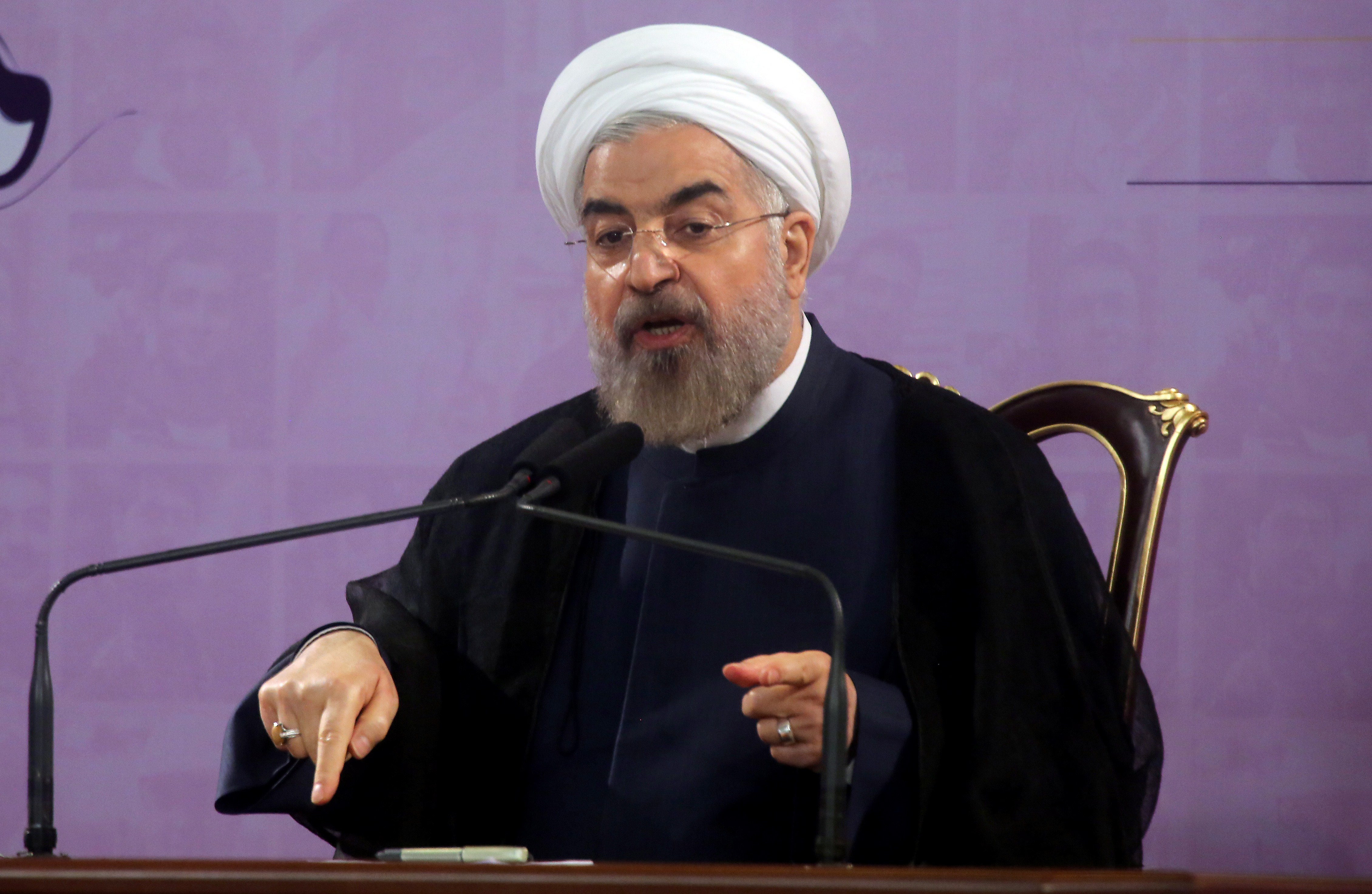
A cautious Frum asks why we should protect Maliki when he’s really Tehran’s guy, not ours:

Now, the most extreme and brutal of the anti-regime forces inside Syria has turned against Maliki. He is seeking American help, and Maliki’s patrons in Tehran appear content to see the United States rescue their client. According to some reports, the Iranians view U.S. aid to Maliki as a strategic partnership that could smooth the way to a nuclear deal more favorable to them. Is this situation not utterly upside down? It’s Iran that has a vital interest in the survival of Maliki, not the United States. It’s Iran that should be entreating the U.S. for assistance to Maliki—and Iran that should be expected to pay the strategic price for whatever support Maliki gets.

Abbas Milani sees cooperation between Iran and the US as a heavy lift:

Both in Iran and the U.S., as well as the Middle East region, there are powerful forces and countries that feel threatened by any Iran-American rapprochement. Iran wants to keep Iraq together, keep Shiites if not Maliki in power, and keep the IRGC’s extensive network of militia and economic presence in Iraq intact. The U.S. clearly has no love lost for Maliki and his sectarian politics, is gingerly moving toward favoring a loosely federated Iraq, and certainly does not want to encourage, or enable, Iran’s increased power in Iraq. Moreover, the two countries find themselves on opposing sides of the war in Syria. While Rouhani took four daysonly after much cudgeling by conservativesto congratulate Assad on his “election” victory, radical conservatives keep insisting that keeping Assad in power is a key strategic goal of the Islamic regime. In spite of these tensions, the specter of ISIS haunting the Levant is strong enough to bring the old foes together, if only briefly, to try to put the genie of Salafi extremism back in the bottle.

In Tom Ricks’ view, Iran is playing a long game here, and winning:

I don’t think that Iran has a failed state on its hands. What it had for several years after 2001 was the threat of American-dominated states on both its western and eastern borders. Now it faces no such threat, and is consolidating its hold on the Shiite rump in Iraq, from Baghdad to Basra. That’s a big piece of important territory that represents extension of Persian control to the Euphrates, and because that area includes Basra, tighter control of much of the Persian Gulf. And after Iran finishes there, I think eventually it will turn its attention to the Kurds and get some of the oil up there. But no hurry.

But the Bloomberg editors argue that we need to hold our noses and work with Iran in order to prevent complete chaos in Iraq:

The bigger question isn’t whether the U.S. should try to work with Iran, but whether it can. Events are moving so quickly that the chance for a political settlement may soon pass. ISIL is boasting of executing 1,700 Shiite soldiers in a transparent attempt to provoke the Shiite retaliation that would inflame moderate Sunnis and ignite a Syria-style civil war. Hard-liners in Tehran may also prefer to replicate their success in propping up Assad in Syria, pouring gasoline on the fire rather than work with the Great Satan in Iraq.

McCain’s usual partner in foreign-policy adventurism, Senator Lindsey Graham of South Carolina, has it right. Working with Iran to stabilize Iraq, he said, is akin to the Allies working with Stalin to defeat Hitler in World War II. Then, as now, the U.S. had to prioritize threats and try to work with any willing partner to counter them — even when that partner was an enemy.

I remain ambivalent, but inclined to live with Iran’s attempts to prevent any ISIS inroads in Baghdad. As for any US military intervention, I think Tom Friedman has been on a roll lately:

It feels both too late and too early to stop the disintegration — too late because whatever trust there was between communities is gone, and Maliki is not trying to rebuild it, and too early because it looks as if Iraqis are going to have to live apart, and see how crazy and impoverishing that is, before the different sects can coexist peacefully.

It is a delusion to believe the US can play any meaningful role in that sad process of learning. In fact, the more we intervene, the more we postpone Iraqis reckoning with their own actual options. Previous Dish on the potential for US-Iranian cooperation here and here.


Is It Time To Abolish Iraq?

IRAQ-UNREST-VOLUNTEERS

Steven Cook glumly predicts that the country as we know it is finished:

Had Maliki been inclusive—something that was impossible given the constraints and incentives of Iraqi politics—he likely would have still confronted resistance from areas of the country that chafe at the centralizing propensities of those in the capital.  And herein lies the fundamental problem of Iraq:  The country’s political physics create pressure to pull it apart.  To the extent that people in Anbar and neighboring areas, no less the Kurds and many in the south, do not want to be ruled from Baghdad, it only gives impetus for rulers there to accumulate power in an effort to ensure that the country remains intact.  Yet this only fuels yet more resistance to the capital. It seems that only Saddam-like brutality could keep the country together. Once American forces smashed that system of fear, the process of dissolution was set in motion.

Rosie Gray collects told-you-sos from Bush-era advocates of partitioning Iraq into Sunni Arab, Shiite Arab, and Kurdish states:

“Clearly it would have been better 10 years ago to accept the reality because then Sunnistan would not be an ISIS state, it would be something that was more tolerable,” [Peter] Galbraith said. Still, he said, “It’s really a matter of time and not very much time before they go to full independence.” As for Biden, the highest-profile supporter of such a plan at the time, [Les] Gelb said the vice president still supports a potential federal system in Iraq. “He still agrees with it, still wants to try,” Gelb said. “He’s realistic and understands that it’s a long shot.” Gelb said that other than Biden, he doubted there was much support inside the administration for such a plan.

Clive Irving looks back at British spy Gertrude Bell’s role in the invention of Iraq:

In reality, the Iraqi borders had been arbitrarily drawn and disregarded 2,000 years of tribal, sectarian, and nomadic occupation. The Persian frontier was the only firmly delineated border, asserted by mountains. Beyond Baghdad the line drawn between Syria, now the property of France, and Iraq was more cartography than anthropology. Nothing had cooled the innate hostilities of the Shia, in the south, who (in a reversal of the current travesty in Baghdad) were virtually unrepresented in Bell’s new assembly, and the Sunnis to the north, as well as the Kurds, the Armenians and the Turks, each with their own turf. [T.E.] Lawrence, in fact, had protested that the inclusion of the Kurds was a mistake. And the desert border in the south was, in Bell’s own words, “as yet undefined.”

The reason for this was Ibn Saud. Bell wrote in a letter to her father, “I’ve been laying out on the map what I think should be our desert boundaries.” Eventually that line was settled by the Saudis, whose Wahhabi warriors were the most formidable force in the desert and who foresaw what many other Arabs at the time did: Iraq was a Western construct that defied thousands of years of history, with an alien, puppet king who would not long survive and internal forces that were centrifugal rather than coherent.

But Debora MacKenzie argues that Iraq’s borders are not the problem, and warns that partition could actually make things worse:

Commentators have been quick to blame Sykes-Picot for the current unrest, but experts disagree. “The violence in Syria is not some messy centrifugal separation of an artificial state into its primordial ethnic or sectarian ingredients,” says Elias Muhanna of Brown University in Providence, Rhode Island. The idea that humans are naturally divided into clear “nations”, each with its own political territory, has failed to stand up to anthropological investigation. John Breuilly of the London School of Economics, says former colonial empires were carved into multi-ethnic states partly because people were intermixed and ethnic groups ill-defined, and partly to avoid conflict by privileging particular groups.

With prosperity and even-handed government, multi-ethnic states from Belgium to Malaysia are viable. … Countries with diverse populations can be stable if their governments are capable of guaranteeing security to everyone, in some cases perhaps by creating large, semi-autonomous enclaves like the Kurds in Iraq. The alternative is reshuffling the region’s population into ethnically or religiously defined states, such as the one ISIS wants. However, the migration and “ethnic cleansing” that follow is likely to be considerable – and violent.

And Robin Wright focuses on political reconciliation:

Any plan for stability—whether Iraq remains a single state or breaks into three—has to begin with the underlying political problem. Last week, President Obama called for a multiethnic governing council in Baghdad but, with insurgents less than fifty miles from the capital, that option is now too little, too late.

Iraqis must become invested in their own political order and risk putting their lives on the line to secure it. Unfortunately, Maliki may not be willing to either cede the powers required for a just resolution or to step aside. His intransigence has sabotaged Iraqi nationalism—though others share in the blame—and simply propping him up could eventually be costly. On Tuesday, Maliki defied international appeals for political outreach. Instead, he declared a boycott of a Sunni political bloc and put the blame for Iraq’s disintegration on Saudi Arabia. “We hold them responsible for supporting these groups financially and morally, and for the outcome of that—which includes crimes that may qualify as genocide: the spilling of Iraqi blood, the destruction of Iraqi state institutions and historic and religious sites,” his government said in a statement. So Washington will have to be bold and blunt with him—and even consider withdrawing support. Leaving the political work undone a third time around only risks yet another failure—and who knows how many more.

(Photo: Iraqi Shiite tribesmen brandish their weapons as they gather to show their willingness to join Iraqi security forces in the fight against Jihadist militants who have taken over several northern Iraqi cities, on June 17 2014, in the southern Shiite Muslim shrine city of Najaf. By Haidar Hamdani/AFP/Getty Images)

Maliki Doubles Down On Sectarianism

Forty-four Sunni prisoners were killed in Baquba yesterday, quite possibly by Shiite militias fighting on behalf of the Baghdad government:

Iraq’s military spokesman, Lieutenant General Qassim al-Moussawi, told reporters that the men were killed when the police station where they were being held was shelled by the Sunni militants. However, three local policemen told the Associated Press that Shiite militiamen shot the detainees, who were suspected of having ties to ISIS, as the militants tried to free them. Meanwhile, a “police source” from Baquba told the New York Times that the prisoners were executed by the police when ISIS attacked. “Those people were detainees who were arrested in accordance with Article 4 terrorism offenses,” he said. “They were killed inside the jail by the policemen before they withdrew from the station last night.” Officials from the morgue in Baquba told both the Times and the AP that most of the dead prisoners had bullet wounds in their heads and chests.

This wouldn’t be surprising, considering that Maliki appears to show little interest in making nice with Sunnis or Kurds, despite warnings from both Washington and Tehran that he’d better do so and quickly (NYT):

President Obama has made it clear that the United States will not provide military support unless Mr. Maliki engineers a drastic change in policy, reaching out to Sunnis and Kurds in a show of national unity against the Sunni militants, whose shock troops are the extremist Islamic State in Iraq and Syria. Without that, analysts say, the country is at risk of a renewed sectarian war in which Baghdad could lose control over nearly a third of the country for the foreseeable future. But Mr. Maliki is showing few signs of changing his ways.

Just as he did in a similar, though not nearly as threatening, crisis in 2008 in Basra, he is pinning his hopes on the military option. He is determined to use the Shiite fighters he trusts to stabilize the country and, he hopes, rout the Sunni insurgents and reimpose the government’s control over its territory.

Mataconis comments that this is the “worst way possible” of responding to the crisis:

The way forward from here is unclear. Even if al-Maliki did enact the reforms that Obama and others are suggesting, it’s not clear that it would be enough to make up for years of what Sunnis and Kurds view as repression. It’s going to take a lot more than just appointing a few Sunnis to the Cabinet to make up for what has happened in the past, for example. At the moment, though, it doesn’t seem as though al-Maliki is at all interested in political reform in Iraq. Reports are indicating that he and his advisers have taken to wearing military uniforms and rallying the Shiites against what is seen as impending attack on Baghdad. This morning on MSNBC, Richard Engel suggested that al-Maliki may end up responding to the uprising in Iraq in a manner similar to the way that Bashar Assad responded to the uprising in Syria in 2011. If that happens, then we’d be facing the possibility of an Iraq headed into ethnic civil war on a scope that would make Syria look like a picnic. At that point, we may have no choice but to respond.

Frederic Wehrey argues that fanning sectarianism only helps ISIS remain cohesive, when by rights it ought to collapse under the weight of its own extremism:

Already, fissures are developing over its uncompromising vision and imposition of sharia law. For every Tweet of trash collection, vaccinations, and children’s toy drives, there are corresponding images of mass executions, crucifixions, and beheadings. Add to this is its longstanding policy of extortion. And its recent killings of captured Iraqi soldiers countermands injunctions by its Sunni tribal allies, such as the emir of the Dulaym, to spare the security forces for their “brave decision” to surrender. A leader of one of its Baathist allies in Mosul recently accused it of being made up of “barbarians.” Tensions could also develop between its Syrian cohort and its overstretched Iraqi branch, which has swelled in the recent campaign, about goals and priorities.

But one thing is sure to make ISIS consolidate and flourish: a slide to sectarian war, spurred by a heavy-handed response by al-Maliki’s army and its allied Shiite militias. The tribes, ex-Saddamists, and other aggrieved Sunnis will endure its draconian mores if they see in it a useful umbrella in an existential fight for their people’s survival. Like Zarqawi, this is precisely what ISIS is aiming for by killing Shiites.

Previous Dish on the sectarian dimension of the Iraq crisis here.

No Airstrikes, For Now

This is a relief:

Obama has opted not to conduct airstrikes in the immediate future partly because ISIS targets are difficult to identify, and it’s unclear if they would significantly alter the situation on the ground. U.S. military action has not been ruled out entirely, and in addition to the roughly 275 U.S. troops sent to Iraq to secure the American embassy, special forces soldiers may be deployed to assist the Iraqi army.

The New York Times reports that one option still under consideration is a “targeted, highly selective campaign of airstrikes” against ISIS, probably using drones. The campaign probably wouldn’t be launched for days or longer, and would depend on whether the U.S. can find a suitable target.

Zack updates us on possible US plans:

What the American response to the crisis in Iraq will look like still isn’t clear. The leading option appears to involve three planks. First, the deployment of US special forces to gather intelligence, provide battlefield guidance to Iraqi combat units, and possibly train Iraqi soldiers. Second, securing commitment to political reform from the Iraqi government, whose favoring of the Shia majority over the Sunni minority has exacerbated the conflict. Third, look for some avenue to cooperate with other countries in the region to support the anti-ISIS campaign (how that would be accomplished isn’t specified).

That said, airstrikes aren’t permanently ruled out. “U.S. strikes are still actively under discussion,” the Journal reports, “but [senior administration] officials cautioned Tuesday that they don’t expect Mr. Obama to put military action back on the table quickly.”

Robert Farley is against an aerial campaign:

Thinking of air power as a tool to simplify war and avoid its difficult complications is, tragically, a characteristic of the American strategic set, but there’s no reason we should continue to indulge it.

Yglesias Award Nominee

“In spite of the things I felt at the time when we went into war, liberals said: We shouldn’t get involved. We shouldn’t nation-build. And there was no indication the people of Iraq had the will to be free. I thought that was insulting at the time. Everybody wants to be free. They said we couldn’t force freedom on people. Let me lead with my mistakes. You are right. Liberals, you were right. We shouldn’t have,” – Glenn Beck.

The Best Of The Dish Today

Art Basel 2014 - Press Preview

The events in Iraq have unveiled the core reality of that country’s sectarian vortex, but they’ve also revealed something just as disturbing at home. Far from feeling any remorse, or expressing the slightest regret, or analyzing their own catastrophic misjudgments, the architects of the Iraq disaster are actually proud of the devastation they caused for no reason. To read Tony Blair is to witness a mind unsullied by fact or history or responsibility. There is not a scintilla of the self-awareness – let alone the shame – that one might expect from any responsible adult. I have to say Boris Johnson gets it exactly right:

I have come to the conclusion that Tony Blair has finally gone mad. He wrote an essay published last week that struck me as unhinged in its refusal to face facts. In discussing the disaster of modern Iraq he made assertions that are so jaw-droppingly and breathtakingly at variance with reality that he surely needs professional psychiatric help.

If Blair needs help, what can we say of Paul Bremer – yes, Paul Bremer, the man who disbanded the Iraqi military – actually having the gall to go on CNN and blame Obama for his own responsibility for hundreds of thousands of deaths? We have Bill Kristol – with a straight face – actually going on cable news and arguing that not only does the US have to intervene, but that we have to fight both Iran and ISIS and Maliki simultaneously. He actually then has the gall to ask that we do not re-litigate his own record in fomenting this bloodbath! Paul Wolfowitz and Lewis Libby are teaching a course on wartime leadership! James Fallows is far too kind.

And now the country’s resident and proud war criminal, with his failed politician daughter, are in on the act. As you might expect, theirs is a poisonous little tract, asserting ludicrously that Iraq was a victory, denying any responsibility for introducing extreme Islamism into Iraq, parlaying their own cronies in the Middle East as representative of anything but their own bubble, and blaming everything, as usual, on the man who has steadfastly managed to de-leverage the US from the Bush-Cheney catastrophe.

The Cheneys have indeed been slamming the Kristol meth. And they do so, as usual, by insinuating the president is on the side of our enemies. Take this disgusting sentence:

Despite clear evidence of the dire need for American leadership around the world, the desperation of our allies and the glee of our enemies, President Obama seems determined to leave office ensuring he has taken America down a notch.

This from the man who left office with a cratering economy, two lost wars, a bankrupted Treasury, and a record of torture and military incompetence unknown in modern American history.

What we’re seeing now is the inability of the neocon mind to adjust even a smidgen in the face of empirical reality, to absorb just a soupçon of history, to accept even a minimum of responsibility. Mercifully, the American public is not drinking the same poisonous Kool-Aid twice:

According to a Public Policy Polling survey released Tuesday, 54 percent of voters say they agree more with the president on Iraq, compared with 28 percent who said they agree more with McCain.

Today, Hillary Clinton have another mealy-mouthed answer about her past record – and neocon fanatic Bob Kagan declared he hoped to have her ear in the White House.

We covered the fascinating set of questions posed by the latest outbreak of sectarian mass-murder in Iraq: Could the US and Iran cooperate in Iraq? How organized is ISIS? How different from al Qaeda? Are the Kurds part of the answer? Are air-strikes? How does the Iraq bloodbath affect the Syrian civil war? And why is Paul Wolfowitz on television?

Also: why Schick razors are desperate enough to put small animals on men’s faces; and fellating bears (not in Ptown).

The most popular post of the day was Clinton’s Latest Drivel; followed by Kristol Meth.

Many of today’s posts were updated with your emails – read them all here.  And you can always leave your unfiltered comments at our Facebook page and @sullydish. 19 26 more readers became subscribers today. You can join them here – and get access to all the readons and Deep Dish – for a little as $1.99 month.

See you in the morning.

(Photo: A visitor walks next to the artwork “Continuel Mobile – Sphere rouge” by Michelangelo Pistoletto in the Unlimited section of Art Basel on June 17, 2014 in Basel, Switzerland. By Harold Cunningham/Getty Images.)

The War Beyond Iraq, Ctd

Nicholas Blanford sees ISIS’s Iraq campaign changing the Syrian regime’s war strategy, which in turn has implications for Lebanon:

Although sworn enemies on paper, ISIS has largely refrained from fighting the Syrian regime to focus on building an Islamic state in northern Syria and ousting more moderate rebel rivals. In return, the regime has left ISIS alone, allowing the Syrian military to concentrate on fighting the moderate rebel groups. At the same timeAssad also points to the brutal exploits of ISIS and other jihadist groups in the conflict to justify its argument to the international community that it is fighting Islamic “terrorists.” The Iraq upheaval appears to have changed that calculation. It has also injected uncertainty into Assad’s reliance on Iraqi Shiite fighters to seize the upper hand in Syria’s war. In recent weeks, “thousands” of Iraqi Shiite fighters who were in Syria to defend the Assad regime have left, according to a diplomatic report from a European embassy in Beirut. …

A drawdown of Iraqi Shiites could make Syria’s regime even more dependent on Hezbollah fighters, further straining the Lebanese group’s support base. Lebanese Shiites generally have supported Hezbollah’s intervention in Syria, especially when Shiite areas of Lebanon suffered suicide bombings last year by extremist Sunni groups. But the last car bombing occurred at the end of March, and since then Lebanon has enjoyed a period of relative calm. Now, there is a sense of unhappiness building among the families of Hezbollah fighters. They are increasingly asking how much longer their fathers, husbands, brothers, and sons will be sent to fight and die on the Syrian front.

Jean Aziz notes the anxiety of the Lebanese that this war will spread to their country in new and more dangerous ways:

With the progress made by ISIS in Iraq, there are once again Lebanese fears of the possibility of ISIS sleeper cells in Lebanon or at least the possibility that its progress in Iraq will revive hopes and illusions among other fundamentalists on Lebanese territory to join their “brothers” in jihad, even if they do not have an organizational link to ISIS. With more than 1 million displaced Syrians now on Lebanese territory, one cannot be certain that there are no fundamentalists among them.

Lebanese politicians opposed to the Damascus regime refer to a second source of concern. Recognizing the danger of these Sunni fundamentalists, they raise the possibility that Syrian troops might deliberately take advantage of the “erasing” of the international border between Iraq and Syriaby ISIS and resort to doing the same along the Syrian-Lebanese border. They believe that the Syrian army might initially carry out limited incursions, but then expand or legitimize them under the pretext of pursuing ISIS militants on both sides of the border between Lebanon and Syria. They fear that Damascus would dare take such steps in eastern and northern Lebanon because of possible international, in particular Western, indifference in blessing any step that targets Sunni fundamentalist terrorism.

Looking across the Gulf to the Arab petro-states, Keating imagines some anxious fidgeting:

Qatar has officially stopped giving aid to more radical groups under U.S. pressure, and Saudi Arabia has also backed off its support of the rebels, a process the culminated in the removal of spy chief and Syria point man Prince Bandar bin Sultan earlier this year, but private donations from Saudi Arabia and the Gulf states—notably Kuwait—have likely continued. For the last few months, the Saudi government in particular has been attempting, somewhat awkwardly, to both continue to fund non-extremist groups fighting Assad while combating the growth of al-Qaida and its affiliates and offshoots. The kingdom has good reason to fear the revival of an al-Qaida-like group with wide territorial ambitions. The government claims to have broken up a terrorist cell in May that had links to both ISIS and al-Qaida in the Arabian Peninsula. ISIS has also reportedly launched a recruitment drive in Riyadh. …

None of the likely outcomes in Iraq—a prolonged period of violent chaos in Iraq giving extremists a new base of operations, unilateral Iranian intervention, U.S.-Iranian cooperative intervention—is going to be viewed very favorably across the Gulf.

Kurdistan’s Moment?

IRAQ-CONFLICT-KURDS

Koplow insists that Turkey’s best course of action right now is to support an independent state for the Kurds in northern Iraq:

The best way to neutralize ISIS as a threat is to strengthen the KRG, whose peshmerga already took Kirkuk in response to the ISIS takeover of Mosul, and can keep the conflict with ISIS in Iraq rather than having it cross the border into southeastern Turkey. In the past, even considering supporting the KRG as an independent state was not an option, but the circumstances have changed now that it is clear just how weak and ineffectual the Maliki government is. Ankara should be getting in front of this issue, recognizing that even if the Maliki government survives it will be only through the intervention and support of outside powers such as the U.S. and Iran (which is not a phrase I ever envisioned writing) and that the consequences of angering the Maliki government pales in comparison to the consequences of an actual radical jihadi state bordering Turkey.

Furthermore, if Turkey still subscribes to the theory that strengthening Barzani and the KRG sends the message to Turkish Kurds that Kurdistan already exists without them and thus they need to drop any hopes of separation or independence for themselves, then now is the time to test out whether this theory is actually correct.

Throwing our weight behind the Kurds is also on Adam Garfinkle’s list of policy recommendations for the US:

Above all, we should further tighten relations with the Kurds in what used to be northern Iraq but is now an independent state in everything but name.

We probably should try to get on the same sheet of music with the Kurds, offering support but counseling prudence—in other words, collecting some leverage so we can influence the behavior of Barzani et al. in future. Personally, I’m fine with the Kurds in Kirkuk, so long as they occupy and eventually stabilize the city with genuine justice for all of the city’s communities.

By the same token, we should begin private and earnest, if inevitably complex and difficult, talks with the Turks to discuss what conditions, if any, could lead to a mutual and simultaneous recognition of Kurdish independence from Washington and Ankara.

Mohammed A. Salih spells out why the Kurdish Peshmerga are Iraq’s best hope for defeating ISIS:

There are over 100,000 Peshmerga fighters, according to Halgurd Hikmat, a senior official at the Kurdistan Regional Government (KRG)’s Ministry of Peshmerga. They are either veterans of the Kurdish struggle against Saddam’s regime or new recruits who have to go through an intensive training that lasts around 50 days. While they are officially under the command of Iraqi Kurdistan’s president, Masoud Barzani, in practice they answer to leaders aligned with the competing Kurdish political factions, the Barzani-led Kurdistan Democratic Party and the Patriotic Union of Kurdistan, led by Iraqi President Jalal Talabani. But when it comes to protecting Kurdish territory, those divisions are meaningless. Nearly 40,000 of the Peshmerga forces divided into 16 battalions are united under the KRG’s Peshmerga Ministry. The rest have yet to be unified.  All Peshmerga are now mobilized in the fight against ISIS.

Update from a reader:

I’m an American doctor who has visited Iraqi Kurdistan several times since 2006. One of our projects was the first medical paper looking at the long-term psychological impact of the chemical weapons attacks launched by the Iraqi government on Kurdish civilians in Halabja. The argument we are having in America about who “lost” Iraq completely misses the point, because in truth there never has been one Iraq to lose. The American elite’s obsession with a multiethnic Iraq is something that’s not shared by any of the people who actually live in that country.

For Kurds the whole concept is ridiculous. They survived an attempted genocide at the hand of Sunni Arabs just 25 years ago. For the past decade they have cooperated with the American unity policy in Iraq, only to become targets of Al Qaeda inspired bombings, kidnappings, and ritual beheadings. Now they find themselves in the surreal position of having to protect thousands of these same good neighbors from their own home grown terrorist movement. If you were a Kurd, what would you think of a State Department hack telling you that you lack sufficient commitment to Iraq’s unity?

Kurds are right to reject any self-serving advise coming from the American government to cooperate with Maliki. A more creative American policy would acknowledge the reality of what the Kurds have built, which is a prosperous and peaceful nation state in the mountains of Northern Iraq. It’s a nation whose soldiers and diplomats worked amicably alongside Americans through all the darkest episodes of the Iraq wars. It’s a nation where not a single American soldier died during ten years of bloody military involvement in Iraq.

An ally that we don’t have to constantly sustain with billions of dollars of bribes would be a refreshing turn in our Middle East policy. We should embrace that opportunity.

Previous Dish on the Kurds here and here, and on Turkey’s Iraq policy here.

(Photo: Iraqi Kurdish Peshmerga fighters stand to attention in the grounds of their camp in Arbil, the capital of the autonomous Kurdish region of northern Iraq on June 14, 2014. By Safin Hamed/AFP/Getty Images)

Err Strikes

Zack Beauchamp urges observers to be skeptical of the Rasmussen poll suggesting that 46 percent of likely voters favor airstrikes in Iraq:

The wording of the Rasmussen question says something important — that’s also false. Here’s how the Rasmussen question in airstrikes read: Do you favor or oppose the United States making military airstrikes in Iraq to help the government fight al Qaeda-led insurgents? The premise of Rasmussen’s question is wrong. The most important anti-government group, the Islamic State of Syria and the Levant (ISIS), is not al-Qaeda led. They splintered from al-Qaeda in February, essentially over the question of whether al-Qaeda could order ISIS around (ISIS had stopped obeying al-Qaeda orders, including ones to tamp down on civilian casualties).

Not only is this a clear mistake, but it’s a relevant one: al-Qaeda has a particularly bad perception among the American public. Americans believe, rightly, that al-Qaeda is out to attack the American homeland, and would likely be more supportive of fighting it than a separate group of Islamist militants.

Earlier Dish on the distinction between ISIS and al-Qaeda here. Juan Cole rejects the strategy of “shock-and-awe” bombing against ISIS, which he doubts would work:

Air power can be useful if it is employed in lending close air support to an attacking military force on the ground, which is itself made up of good fighters with popular support.

American air power saved Kosovo from a Serbian massacre by helping repel Serbian armor and giving support to Kosovar irregulars. In Afghanistan, US air power helped the Northern Alliance win against the Taliban in fall 2001. But the Taliban were unpopular in Mazar, Herat and Kabul, and the Northern Alliance was welcome in those cities. The same tactics did not succeed in Qandahar, which is in some ways still significantly Taliban territory.

US air power alone would be unlikely to dislodge ISIS from Mosul at this point. The Sunni insurgents look more like Viet Cong (local defenders) than they do like outside attackers (Serbs, Taliban in Mazar). Where the enemy has some local support and is defending, air power has a long history of failure.

Barry Posen also urges a more restrained response:

[W]ar is war: not a scalpel but a battle axe. And once you start swinging that axe, there may be unintended consequences. If the United States were to go so far as to help the Baghdad forces retake Mosul and other cities by providing air support, the Sunni Arabs who live there are not likely to think more kindly of us. If the United States provides such air support, and intelligence support, the Iraqi military will never grow up. The combination will be deadly to U.S. interests. All Sunni Arabs will know that we are the pillar of Shiite hegemony in Iraq. If one is interested in the safety of American citizens, this is not a particularly smart role to assume.

An ISIS statelet straddling Iraq and Syria might provide haven for Islamic terrorists who ultimately decide that attacks on Western targets are in their interests, though there is little sign presently that this is ISIS’s program. But “ISISstan” will not be a great base, or a safe one.

Ryan Cooper reminds us that we have several non-violent options at our disposal, including what should be an undisputed US responsibility toward Iraq:

[W]e can streamline the process for Iraqis applying for refugee status, especially those who worked with the U.S. during the occupation. We have already resettled about 85,000 Iraqis here, but as this famous This American Life episode detailed, the application process is very slow and the red tape is hellish. Vulnerable Iraqis who helped America may not have two years to wait for their first interview.

Jihad 2.0

The above video, produced by what is ostensibly ISIS’s English and German propaganda outlet, is one example of how the militants are selling the cause to young Westerners. Meanwhile, J.M. Berger unpacks ISIS’s Twitter strategy, which is among the most effective of any Jihadi organization:

[A custom-built Android] app is just one way ISIS games Twitter to magnify its message. Another is the use of organized hashtag campaigns, in which the group enlists hundreds and sometimes thousands of activists to repetitively tweet hashtags at certain times of day so that they trend on the social network. This approach also skews the results of a popular Arabic Twitter account called @ActiveHashtags that tweets each day’s top trending tags. …

As a result of these strategies, and others, ISIS is able to project strength and promote engagement online. For instance, the ISIS hashtag consistently outperforms that of the group’s main competitor in Syria, Jabhat al-Nusra, even though the two groups have a similar number of supporters online. In data I analyzed in February, ISIS often registered more than 10,000 mentions of its hashtag per day, while the number of al-Nusra mentions generally ranged between 2,500 and 5,000. ISIS also uses hashtags to focus-group messaging and branding concepts, much like a Western corporation might.

Here’s an example of how effective that strategy has been:

https://twitter.com/intelwire/statuses/478310946385850370

But, much like a Western corporation, ISIS doesn’t have complete control of its online image, and tries to limit the “bad press” that makes it onto social media. Shiraz Maher provides some examples:

Social media, coupled with the ubiquity of smartphones, has meant that individual fighters can now film and upload events to the internet in an instant, often with little thought. Isis is not always happy about this. Just a few weeks ago, the group crucified two men in Manbij, Syria, for alleged apostasy (although supporters say the men were regime spies). A Spanish foreign fighter who had promised his followers a video of the spectacle had to make do with only providing pictures of the sadistic act. “Our leadership forbade anyone from filming it,” he said.

This is not the first time Isis has warned its members about their online activity. Earlier this year, the group chopped off the hand of a man in Raqqa. It was a dark, torrid affair with the swordsman requiring several attempts before finally severing the man’s hand. After understandable public outcry, the group has now prohibited anyone from filming similar events. It still goes on, of course, but anyone brandishing a smartphone will be censured. In many senses, this represents the “pluralising” of the global jihad. Whereas we had one or two voices to analyse in the past, we now have hundreds.

In response to the online jihad, Iraq has turned off the Internet in five provinces:

First, Internet service providers are instructed to fully cut access to Anbar, Diyalah, Kirkuk, Ninawa, and Saleh El Din provinces in their entirety, as well as to eleven other areas of the country. According to international Internet tracking firm Renesys, some of these areas, but not all, saw their access blocked a few days earlier. And at least some of the blocked areas are known to be spots of heavy fighting between the Iraqi government and the surging militant group known as Islamic State of Iraq and Syria (ISIS).

The Iraqi government also instructed Internet service providers (ISPs) to reinstate or maintain the existing bans on Facebook, Twitter, YouTube, and Skype, and to create new bans on other communication and social media services like Tango and Instagram. Finally, just in case anyone’s trying to use basic technology to get around those bans, the ban tells ISPs to try to block any use of virtual private networks (VPNs)—a way to reroute your Internet connection to access sites from a middle location—during the local hours of 4 pm to 7 am.

Twitter has also been shutting down accounts linked to the Islamic State that have been posting pictures of their atrocities, but Adam Chandler wonders if that’s a mistake:

While ISIS’ use of a social media platform to show pictures of grisly executions is repugnant, if anything, we’ve learned in recent weeks that social media campaigns (however problematic) have the power to impel the international community act on issues where awareness is typically low or muddied by the complexity of a particular situation. There is very little divining needed when mass executions are being documented and publicly glorified by a terrorist group. With the Twitter account suspended, the pictures of the ISIS insurgency and many of its horrific consequences have been preserved. They may be more useful out in the open.