If You Thought Obama’s Syria Policy Was Bad …

Try Erdogan’s. The Turkish prime minister’s decision to go all-in against Assad, Henri Barkey remarks, has backfired pretty severely:

At the start of the conflict, Erdoğan presumed that by putting his weight behind the rebels he would be speeding up regime change in Damascus; in fact, he and many others were confident that change would occur within six months. Obviously, they were wrong. The costs to Turkey range from the ever-increasing numbers of refugees severely taxing the social fabric in certain locations—not to mention the financial burden—to the loss of face for Erdoğan at home and in the region to fragmenting relations with regional powers such as Iran and Saudi Arabia. According to a recent Brookings report, there are a million Syrian refugees, most of whom have blended into Turkey and do not reside in camps. The cost to the Turkish treasury has already exceeded $2.5 billion. Furthermore, the Syrian crisis touches all the hot buttons of Turkish politics: the sectarian differences between the majority Sunni population and the Shi’a offshoot Alevis and the ethnic divisions along Turkish-Kurdish lines.

Meanwhile, ISIS militants continue to hold hostage 80 Turkish citizens captured in Mosul, most of them diplomats and staff from the Turkish consulate and their families. Tulin Daloglu plays up the irony that Turkey is now threatened by the same jihadist elements it has been tacitly supporting in Syria for several years:

Turkey’s Foreign Minister Ahmet Davutoglu has been on the defensive for over a year about Turkey’s potential links to these radical extremist groups in their fight to bring down Syrian President Bashar al-Assad. Although it is improbable that Turkey directly provided support to these groups, it wasn’t until June 3 that Turkey finally designated Jabhat al-Nusra, another al-Qaeda spin-off group, as a terrorist organization. Turkey officially stated that the May 2013 Reyhanli car-bomb attack — the worst terror attack this country has ever seen, killing 52 Turkish citizens — was the work of the Assad regime, but the widespread belief was that it was an al-Qaeda attack.

Turkish authorities speaking on condition of anonymity, however, told Al-Monitor that the ruling Justice and Development Party could not admit it as such back then, and could not spell it out this time in Mosul. “They can’t say it because it would contradict the whole belief system of their core base,” one official said. “But the fact of the matter is that Turkey is certainly being threatened by al-Qaeda offshoots.”

Aaron Stein considers the manifold problems the implosion of Syria and Iraq has created for Turkey:

The major overland routes to Basra from Turkey run through Mosul. Ankara has already lost its ability to truck goods to the Gulf through Syria and may now have to deal with the same issue in Iraq. If  Turkey loses this route – and I think the taking hostage of 28 truck drivers may mean that this is inevitable – it could have some impact on Turkish trade with the region. In this regard, the importance of the KRG’s stability becomes even more paramount. In addition to the aforementioned security issues, the maintenance of a stable area of export is always near the top of the Turkish foreign minister’s agenda.

Turkey must also be concerned about the abysmal performance of the Iraqi security services. If Iraq descends further into chaos, Turkey will have to contend with two failed states on its borders. And in the absence of centralized authority, the expansion of ISIS territory could continue. However, in a perverse way, Turkey also does not want to see the rapid influx of advanced weaponry into Baghdad to support a fight against ISIS. Turkey is wary of Maliki’s sectarian agenda and does not want the Iraqi strongman to acquire the means to further solidify his hold on power. And any influx of modern weaponry erodes Turkey’s massive conventional superiority over the Iraqi state and could lessen Ankara’s air superiority over Kurdistan.

And, while the crisis may force a rapprochement between Turkey and Iran, Semih Idiz frames this as a product of Ankara’s weak position in the region:

It is no secret that Turkey and Iran are at odds over Syria, not to mention other issues, and have been engaged in what amounts to a proxy war, supporting opposing factions in that country’s sectarian civil war. The picture may be changing, however, with Syrian President Bashar al-Assad consolidating his power in regions under his control, while jihadist groups establish themselves in parts of northern Syria along the Turkish border as well as Iraq’s Nineveh province. …

Ankara and Tehran still disagree, of course, on Syria and Egypt, but it is Turkey that appears to be on weak ground in these respects. Ankara is therefore likely to be the party that gradually modifies its policies to match the reality on the ground. The belated designation of Jabhat al-Nusra as a terrorist organization, after numerous warnings from Washington and Tehran, already hints at change in this respect.

A Failed State In The Making?

Refugees Flee Iraq After Recent Insugent Attacks

Daniel Byman doesn’t see how ISIS will be able to handle actual governing:

ISIS may be good at preaching fire and brimstone to motivate its followers to kill themselves and their enemies, but the bloodthirsty thug with an AK-47 isn’t much good at helping you find health care or repair your house after it’s been shelled. It can loot and terrorize, but the patient work of providing services or otherwise running a country are beyond it. Even more damning, the movement itself is prone to divisions—violent ones. Power is a function of charisma, not institutions, making rivalries more likely and creating vacuums when a leader is killed. Moreover, having opened the door to declaring other Muslims apostate, it is impossible to close it: You can always find some deviation to fight over or declare a rival insufficiently zealous. The presence of so many foreign fighters often makes this worse. Locals’ zealotry is tempered by their relatives and other personal connections to home; the true-believing foreigners often accept no compromises and, at the same time, their presence exacerbates local resentment and nationalism.

But, in Aaron Zelin’s examination of how ISIS has run Syria’s Raqqa governorate, he points out that the group seems pretty well-organized, in both brutality and road maintenance:

The group … has a surprisingly sophisticated bureaucracy, which typically includes an Islamic court system and a roving police force. In the Syrian town of Manbij, for example, ISIS officials cut off the hands of four robbers. In Raqqa, they forced shops to close for selling poor products in the suq (market) as well as regular supermarkets and kebab stands—a move that was likely the work of its Consumer Protection Authority office.

ISIS has also whipped individuals for insulting their neighbors, confiscated and destroyed counterfeit medicine, and on multiple occasions summarily executed and crucified individuals for apostasy. Members have burned cartons of cigarettes and destroyed shrines and graves, including the famous Uways al-Qarani shrine in Raqqa.

Beyond these judicial measures, ISIS also invests in public works. In April, for instance, it completed a new suq in al-Raqqa for locals to exchange goods. Additionally, the group runs an electricity office that monitors electricity-use levels, installs new power lines, and hosts workshops on how to repair old ones. The militants fix potholesbus people between the territories they control, rehabilitate blighted medians to make roads more aesthetically pleasing, and operate a post office and zakat (almsgiving) office (which the group claims has helped farmers with their harvests). Most importantly for Syrians and Iraqis downriver, ISIS has continued operating the Tishrin dam (renaming it al-Faruq) on the Euphrates River. Through all of these offices and departments, ISIS is able to offer a semblance of stability in unstable and marginalized areas, even if many locals do not like its ideological program.

But, even if it’s sustainable, Angelo M. Codevilla doubts that “Sunni-stan” will pose much of a threat to the region:

Pushed into Syria’s eastern end, the international Sunni brigade flowed into Iraq and joined with their local brethren. Jointly, they control a compact area comparable in size to that which Iraqi Shia control to the Southwest, to what the Syrian regime controls to the West, and larger than what the Kurds control in the North. This Mesopotamian Sunni-stan is poor, however, land-locked, and surrounded by peoples who are very much on guard against its conquerors. It is difficult to imagine what power these people might wield once money from the Gulf stops coming in.

It would behoove U.S. policy makers to stop impotent regrets about the loss of a “united, democratic, progressive Iraq,” which ever existed only in their own minds. Rather, they should get used to the region’s new map and demand of Sunni-stan’s sponsors in the Gulf that they guide it to getting along with its neighbors.

(Photo: Iraqi children carry water to their tent at a temporary displacement camp set up next to a Kurdish checkpoint on June 13, 2014 in Kalak, Iraq. Thousands of people have fled Iraq’s second city of Mosul after it was overrun by ISIS militants. Many have been temporarily housed at various IDP (internally displaced persons) camps around the region including the area close to Erbil, as they hope to enter the safety of the nearby Kurdish region. By Dan Kitwood/Getty Images.)

Send In The Kurds?

That’s what Michael Knights proposes to fend off the ISIS menace:

The geometry of the battlefield makes the Kurds particularly vital: ISIS pursued Iraq’s retreating forces south of Mosul for over 200 miles, with most units ordered to rally on Taji in Baghdad’s northern suburbs. This has given ISIS significant depth on the north-south axis, meaning that the government may need to painstakingly retake a sequence of key insurgent-held cities in turn. But due to the Kurds’ advanced positions all along ISIS’ eastern flank, the jihadist movement has very little west-east strategic depth if key centres like Mosul were counterattacked from the Kurdish-held areas. Kurdistan has offered the use of its airbases to U.S. forces many times, and they would be an ideal place from which to conduct limited U.S. airstrikes. This was precisely the formula – U.S. special forces advisers and pesh mergas – that crumbled Saddam’s hold on Mosul and northern Iraq in a matter of days in 2003.

The Iraqi Kurds are generous and brave: they hate the extremism of radical jihadist groups and will not tolerate a major jihadist center in Mosul, located just an hour’s drive east of the shining new skyscrapers of Erbil, the Kurdish capital. Indeed social media reporting of Kurdish martyrs in the fight against ISIS are proliferating. The Kurdish pesh merga are already fighting ISIS at half a dozen points from the Syrian border to Iran, with Baghdad’s air forces in support in some areas.

Jay Newton-Small takes a closer look at what the Kurds stand to gain from this conflict:

The fact that an estimated 5,000 ISIS fighters now stand between Erbil and Baghdad only serves as a physical barricade of a partition that has been in effect for at least six months, if not years. As Iraq falls apart, the Kurds are discretely moving towards their long-sought-after goal of an independent state. “We’ve said all along that we won’t break away from Iraq but Iraq may break away from us, and it seems that it is,” Qubad Talabani, deputy prime minister of the Kurdish Regional Government, tells TIME. “There’s been many times that we felt it could happen, that it was only a matter of time that it would happen, and it has.”

Talabani also argues that his government would be a better ally for the US than Maliki’s. In an interview with Eli Lake, he claims that the Kurds aren’t gunning for a land grab:

Talabani told The Daily Beast that the Peshmerga deployment to Kirkuk was actually approved by Prime Minister Nouri al-Maliki. “No one has asked us to abandon those posts in Kirkuk,” Talabani said. “On the contrary, the Iraqi prime minister’s office gave us the green light to do what we can to protect as much territory as we can in the north.” The fact that Peshmerga secured positions in Kirkuk with the blessing of Maliki’s Shi’ite-dominated government is in itself a sign of how desperate things have become. …

Talabani said the presence of Peshmerga troops at Kirkuk—which has significant oil resources itself—does not change its status. “It doesn’t change anything on the ground, ultimately we have said Kirkuk belongs to the Kirkukis,” he said. “It’s something we always felt rests with the people of Kirkuk. The fact that there are no longer Iraqi units outside the city, it does not change Kirkuk’s status in the country.”

Keating, however, doubts the Kurds will hand their gains back to Baghdad without extracting some major concessions:

If ISIS is eventually beaten back, it’s likely going to require the help of what seems to be the country’s most organized fighting force, and the conflict will likely end with Kirkuk and several other cities under the control of Kurdish forces. The Kurds may cede these gains back to Baghdad, but I’d expect their price to be high.

Finally, in an interview we highlighted earlier today, Kirk Sowell pushes back on the notion that the Kurds have been operating some kind of autonomous paradise, noting that after an oil dispute the Maliki government had stopped making the monthly payments on which the Kurds were deeply dependent:

[C]oming in to this crisis, the Kurds were on the verge of insolvency. Like, complete insolvency. The only thing that kept them alive was that the Barzanis and the Talabanis [leading Kurdish families] have massive amounts of money stored back that they’d been stealing all of these years. They used it to keep the Kurdish region afloat, or at least pay the peshmerga [independent Kurdish militias].

He calls the new conflict with ISIS a “lifeline” for the Kurds:

Maybe they can get Baghdad to restore their payments, maybe they can’t. If Baghdad doesn’t restore their payments, they might as well declare independence right now. Now that they control Kirkuk, they can export the oil they control to Turkey. They don’t yet have the infrastructure to replace what they were getting from Baghdad, so it would be rough for a year or two. But eventually they’d do OK. So they’re really the big winners here.

Between A Rock And A Sectarian Bloodbath

IRAQ-UNREST

Harith Hasan examines how Iraq’s Sunni population views ISIS:

Most Sunnis maintain their suspicious view of the Shiite-dominated government in Baghdad, but they do not see ISIS as a good alternative. It is true that ISIS has largely invested in the sectarian tension in Iraq and the region, but its objectives go beyond the Iraqi borders or the major concerns of Iraq’s Sunni community. Through its simultaneous involvement in Syria and Iraq, ISIS established its distinct entity and identity with an agenda that is largely indifferent to Iraqi politics.

However, fighting ISIS has yet to become a Sunni priority. One reason is the growing strength of the organization and its proven ability to carry out revenge against “traitors,” as was the case with the assassination of Khamis Abu Risha, a leader in the anti al-Qaeda awakening groups (Sahwa) which previously were a key voice in the anti-government rallies in Anbar. Second, the Sunni elite is divided and increasingly incapable of determining its communal priorities, and some of its members think that the main problem lies in the policies of Prime Minister Nouri al-Maliki’s government.

Joshua Landis offers an ominous prediction about the coming Shiite backlash:

I would not be shocked to see significant ethnic cleansing of Sunni neighborhoods in Baghdad should ISIS attack and give the Iraqi Army a run for its money.

After all, the Iraqi army is large, has helicopters, sophisticated intelligence capabilities, tanks, artillery and all the rest. They were caught napping and without esprit de corps, much as the Syrian army was. But capable officers will emerge who will strip down the “power-sharing” fat that the US built and rebuild it based on loyalty to Maliki and Shiism, if most of that has not been done already. This is what happened in Syria, when we saw the Syrian Army unravel at the base during the first year of the Sunni uprising. The Syrian military was quickly rebuilt along sectarian and regional lines to make it much stronger and more loyal, with locally recruited Iranian style National Defense Forces modeled on the Islamic Guard. If Sunnis choose to form such local militias and ally with the Shiite regime, so much the better. If they do not and choose to lay low until they figure out whether ISIS can win in their regions, the Shiites will go it alone and assume all Sunnis are a fifth column.

In an fascinating interview with Zack Beauchamp, Iraqi politics expert Kirk Sowell highlights the near-complete unviability of ISIS-controlled Iraq:

[T]here’s no money [in northwest Sunni Iraq]. All these provinces are dependent on Baghdad for their budgets. This is what held Iraq together all these years — it would have fallen apart years ago had it not been for this financial dependence. Anbar [an insurgent-controlled Sunni province] is totally dependent; over 95 percent of their money comes from Baghdad. They got a little bit of money from customs when they controlled the [Syrian] border, but they don’t even get that now. Ninevah [the insurgent-controlled province containing Mosul] is going to suffer a complete economic collapse. …

[E]ven if the insurgents had some oil, [which they don’t,] they couldn’t develop it. They’re able to make use of the Syrian oil infrastructure because it’s already developed; but to the extent that there are oil reserves in the insurgent-controlled territory they’re not developed. So there’s nothing to sell.

So in principle they could make their own state, but only if they’d be willing to starve. It’d be a permanent downward economic spiral — like Gaza, basically.

Meanwhile, Shireen T. Hunter argues that the most significant factor in Iraq’s political instability is “the inability of Iraq’s Sunni Arabs and its Sunni neighbors to come to terms with a government in which the Shias, by virtue of their considerable majority in Iraq’s population, hold the leading role.” She even claims that the Maliki government’s closeness to Iran was not so much a choice as a necessity after being isolated by the country’s Sunni neighbors:

In short, by exaggerating the sectarian factor, Iraq’s Sunni neighbors have exacerbated Shia fears and made it more difficult for them to pursue a more inclusive policy vis-à-vis the Sunnis. Further, most killings in Iraq have been in Shia areas, undertaken by Sunni extremists of various kinds who are funded by Sunni governments in the region. The plight of the Shias has also not been limited to Iraq. Similar mistreatment in Bahrain, Saudi Arabia, and Pakistan has gone unnoticed by the West, while the exclusion of Iraq’s Sunnis from leadership posts in Baghdad has been blown out of proportion. Western and especially US dislike of Iran has been a major cause for the disregarding of mass killings and assassination of Shias.

But Nussaibah Younis insists that most Sunni grievances are legitimate and must be treated seriously, especially now:

Iraqi Sunnis don’t want to be governed by Isis, they don’t support the massacre of Shia civilians and they don’t want another civil war. But they also don’t believe there is a place for them in Maliki’s Iraq. Iraq’s politicians must persuade them that a future does exist in which Sunnis can participate as equal citizens in an Iraqi state, and that this is something worth fighting for.

I glean from much of this that Obama’s caution is easily the smartest posture. ISIS may well have begun a process by which they are destroyed. And allowing your foes to self-destruct is a talent of the president’s over the years.

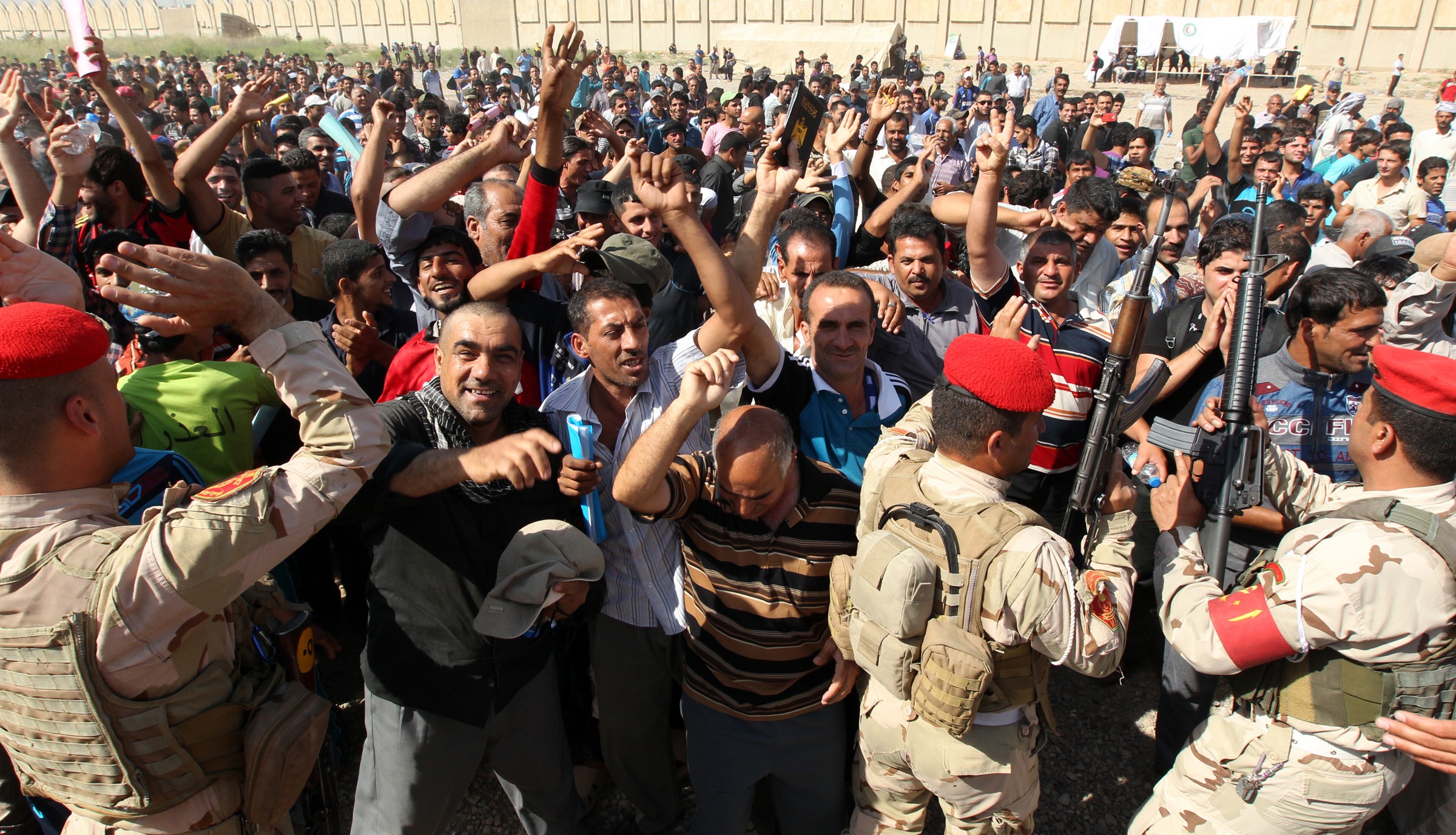
(Photo: Iraqi men, who volunteered to fight against the Jihadist militants, gather around buses in Baghdad, ahead of being transported for training at Taji infantry camp on the outskirts of Baghdad, on June 16, 2014, as security forces are bolstering defenses in the capital. By Sabah Arar/AFP/Getty Images.)

Diplomacy Instead Of Drones?

When it comes to confronting ISIS, Matt Steinglass encourages the US to embrace a supporting, rather than primary, role:

It is much easier and less risky for America to aid the Iraqi government as part of an anti-ISIS coalition with Turkey and Iran than to do so in the guise of Iraq’s leading patron or ISIS’s archenemy. And a limited programme of military aid might be enough to ward off Republican attacks that the administration is doing nothing about ISIS; critics will be hard pressed to explain to a war-weary public why America should be doing even more to reinsert itself into Sunni-Shiite bloodshed in Iraq. This, in fact, appears to be the policy the Obama administration has selected.

I don’t see why the president should do anything to satiate the desires of the neocons – even a “limited program” of military aid. We’ve already given Maliki a huge amount of aid and he has proven unable to use it wisely. Without some serious concession to the Sunni minority – something I cannot see happening for real – it would merely increase the likelihood of ISIS getting its hands on our aid, rather than having it actually making the slightest bit of difference. But if this scenario rings a bell for you, you’re not hallucinating:

Iran, Turkey, and other regional players will have to take the lead in backing the Iraqi government and combating ISIS, because America lacks the expertise, the political will, and ultimately the capacity to do that job. We’ve tried it; it didn’t work. Perhaps the endgame will end up looking something like what happened in South-East Asia 40 years ago. After America’s departure and the collapse of its hapless proxies, regional powers moved in to assert their interests and create a new geopolitical order.

It’s not an accident that the latest Kagan war-manifesto also argues that we should never have left Vietnam either. Janine Davidson, who rejects the viability of airstrikes, thinks pre-conditioned aid is probably America’s only rational play:

[W]e can help Iraq get its security forces back in order.  The uncomfortable truth is that it will take time. Iraq is in for a long, hard fight; any assistance the United States provides cannot be a quick, one-off effort.

More importantly, a successful strategy will require pressure on Maliki, whose horrifying treatment of the Sunni minority is largely attributable to Iraq’s current woes. As Dr. Walter Ladwig observed in his review of the United States’ new counterinsurgency doctrine, outside intervention in such conflicts can only succeed if the host nation is willing to change its ways—this, in turn, requires a motivating event and outside pressure[.]

Meanwhile, Gordan Chang is waiting for China to finally throw its weight around:

[The Chinese] would have a much harder time [than the US]  if Iraq’s 3.7% of global production suddenly went offline.  China, which is increasingly dependent on energy imports, is now that country’s largest foreign customer, taking an average 1.5 million barrels a day, almost half of Iraq’s production. China National Petroleum Corp., a state enterprise, swooped up Iraqi oil after last decade’s war—Beijing, by the way, sold arms that ended up in the hands of insurgents fighting Americans—by accepting Baghdad’s razor-thin margins and onerous conditions.

Then, many said it was China that won the Iraq War because it signed the major oil deals afterwards. As a result, Beijing now has a lot riding on the outcome in Iraq as ISIS takes on the Shiite-dominated ruling group in Baghdad.

But Russia, according to Fyodor Lukyanov, is likely to butt out:

Despite the serious Russian-US standoff over Ukraine, Moscow will definitely not try to play the role of spoiler and exacerbate the problems the United States faces in the region. There is too high a risk of collapse of the entire regional system, so close to the Russian borders. This is even more so because Russia-friendly Iran in this situation is as interested as the United States in maintaining the status quo in Iraq.

Moscow, however, is unlikely to undertake active efforts to assist Washington. For the Russian leadership, as well as for Russian public opinion, what is happening in Iraq is a verdict on the entire US policy after the Cold War, and the symbol of the resounding failure of those who only recently displayed the utmost arrogance toward everyone who disagreed with their policies. Putin sees in Iraq yet further proof of how right he was.

Iran’s Quagmire Now?

IRAN-IRAQ-US-UNREST-ROUHANI

Aki Peritz insists that Iran is biting off more than it can chew in Iraq:

Iran can only go so far to pacify Iraq with its own forces. The IRGC and its Shia proxies are reviled in Sunni-majority areas, and an effort to hold territory by these groups would eventually cause a major backlash among the population. So Iran would have to eventually withdraw, leaving a power vacuum, again, in those areas.

More broadly, many of the socio-economic and sectarian drivers that brought Iraq to this horrific juncture would remain in place after the shooting stopped. A semi-failed state containing thousands of virulently anti-Shia veteran fighters on its western border will remain a long-term national-security nightmare for Tehran.

The economic impact of a war-torn Iraq must also be considered, as Iran sends some $5 billion in non-oil exports to their neighbor every year. But, as for the rest of the region, Bruce Riedel believes it will be Iran’s enemies who suffer if the intervention is successful:

Saudi Arabia long ago lost the battle for influence in Iraq, but it will see its role further diminished with both a hostile ISIS and a hostile Iran splitting the pie on its northern border. If Iran emerges as the savior of Iraqi Shiites, the Shiites of Bahrain, Kuwait and the kingdom’s eastern province will be further inclined to see Iran as their savior, too.

Since Israel defines Iran as its greatest regional rival, it is also a loser. Certainly, moderates in the Arab world will be increasingly squeezed between extreme Sunni groups and Shiite Iran. They will be less inclined to take conciliatory steps toward Israel that will be unpopular and dangerous. Jordan is the most vulnerable moderate state.

If Iran helps stop ISIS outside Baghdad, the impact will be felt in Syria. The Iranians and their Hezbollah allies will gain further credibility as the only force that is actually on the ground resisting al-Qaedaism. Tehran will have emerged as the leader of a block of Shiite-dominated states, each looking to Iran for critical security support.

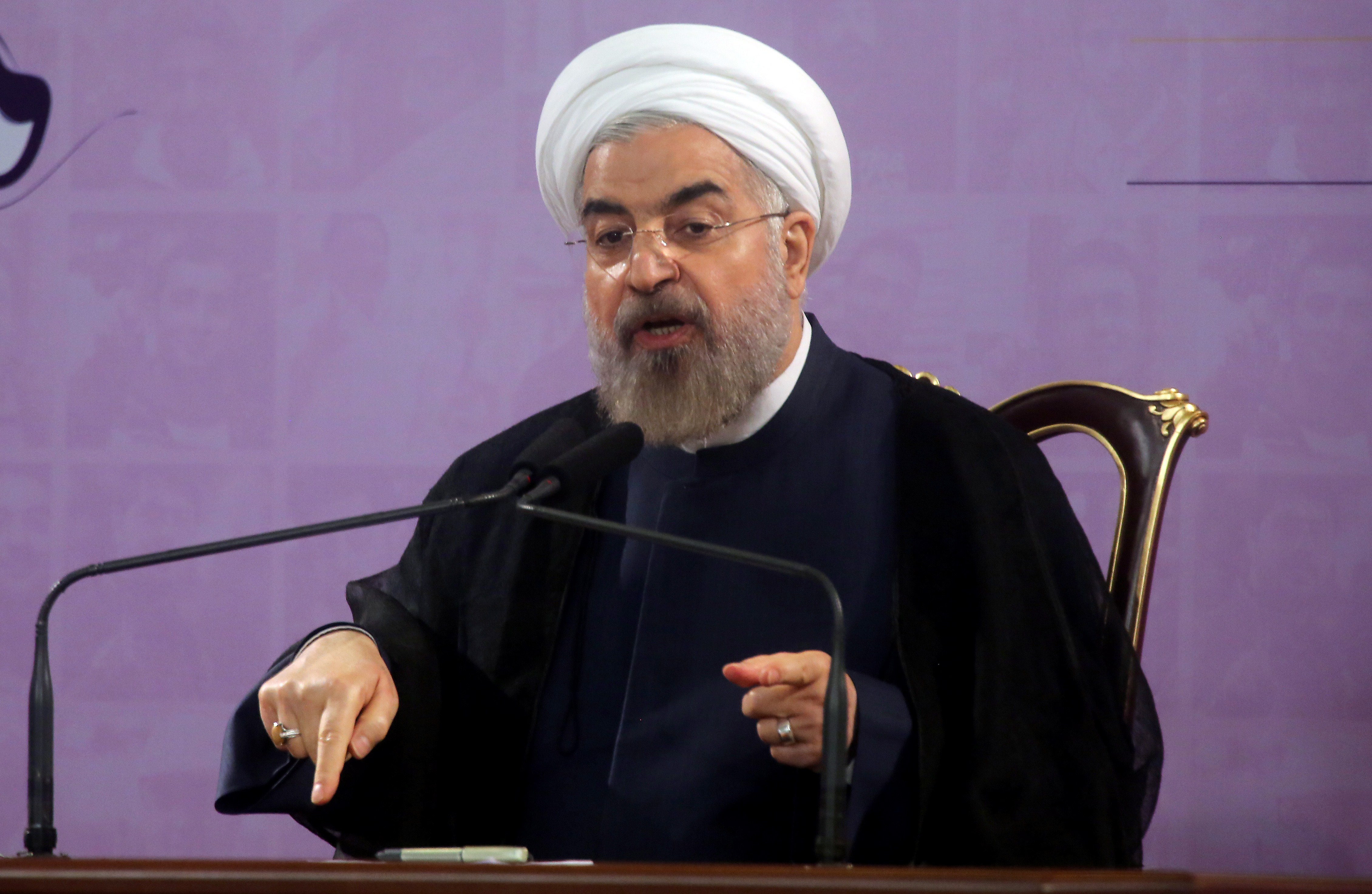
(Photo: Iranian President Hassan Rouhani speaks during a press conference in the capital Tehran on June 14, 2014. Iran may consider cooperating with the United States in fighting Sunni extremist fighters in Iraq if Washington acts against them, Rouhani told journalists. By Atta Kenare/AFP/Getty Images.)

No Drama Obama And Iraq

US-POLITICS-OBAMA

While Iraq unravels, Lexington appreciates Obama’s temperament:

In and of itself, his cool, cerebral analysis is often more rational and less hypocritical than the criticism raining down on him from his political opponents. Republicans in Washington, knowing full well that voters have precisely no appetite for a return to Iraq, content themselves with accusing the president of allowing the world to fall apart and emboldening wicked men and dangerous foes through a lack of attention and “weakness”. By this they seem to mean that Mr Obama should stop saying that American force may not be capable of fixing the world. They do not mean that they actually want Mr Obama to do anything with American force.

Which merely goes to show there is only one grown-up in Washington these days, and we’re lucky he is in the White House. I was particularly impressed with the president’s insistence on continuing his California fundraising trip. What he’s doing by this business-as-usual approach is to try and defuse the Beltway’s cable-news-driven hysteria of the minute – usually larded up with insane levels of parochialism and partisanship – so that a saner foreign policy can be realized. Amy Davidson also sees Obama’s even keel:

It is not a simple matter, if it ever was, of the people we really like (and who like us) against the ones who don’t. (Try factoring in the role of ISIS in fighting the Assad regime, in Syria, and our possible shared interests with Iran in Iraq, and you’re left with a chalkboard of squiggly equations.) One question to emerge from our wars is our susceptibility to a certain sort of blackmail by regimes we support: without me, there is Al Qaeda and chaos. When Andrea Mitchell, of NBC, asked Senator John McCain, who had been railing against the Obama Administration’s decision to withdraw troops in Iraq, whether Maliki could really be persuaded to change his ways, McCain replied, “He has to, or he has to be changed.” How that would be accomplished was, as always in Iraq—a land we seem to associate with the granting of wishes—left unclear.

That “he has to be changed” remark tells you a lot. It comes from a very 20th Century mindset that saw the world as essentially a “garden to tend,” in David Brooks’ metaphor, and that views other countries as mere objects of American fire-power and will. It usually comes from an essentially benign place – McCain doesn’t want to unleash terror or mayhem or sectarian massacres – but that’s not often how it goes down (see “Shock and Awe” and Abu Ghraib). Davidson later quotes a segment of the president’s interview with David Remnick as a lens into his current thinking. Obama said:

You have a schism between Sunni and Shia throughout the region that is profound.

Some of it is directed or abetted by states who are in contests for power there. You have failed states that are just dysfunctional, and various warlords and thugs and criminals are trying to gain leverage or a foothold so that they can control resources, populations, territory… . And failed states, conflict, refugees, displacement—all that stuff has an impact on our long-term security. But how we approach those problems and the resources that we direct toward those problems is not going to be exactly the same as how we think about a transnational network of operatives who want to blow up the World Trade Center. We have to be able to distinguish between these problems analytically, so that we’re not using a pliers where we need a hammer, or we’re not using a battalion when what we should be doing is partnering with the local government to train their police force more effectively, improve their intelligence capacities.

Jonathan Alter notes that, with regards to this crisis, 2014 Obama is behaving a lot like the 2003 one:

[Obama’s] resistance to foreign adventurism helped propel him to the presidency and keep him there. It’s no coincidence that in a nation weary of war he was the first man elected twice with absolute majorities since Dwight D. Eisenhower more than half a century ago. … Amid the cable noise, it’s impossible to overstate just how little Obama cares about Republican criticism of his foreign policy. He is in no mood to hear I-told-you-so lectures from those who were on the wrong side of a war that has already led to the loss of 4,500 American lives and cost a trillion dollars, including $25 billion to bolster an Iraqi “army” hardly worthy of the name. It’s as if Gerald Ford and Henry Kissinger were under attack in 1975 from Robert McNamara and McGeorge Bundy for not finishing the disastrous war the Democrats started.

Philip Klein doubts the public will blame Obama for the collapse of Iraq, noting that “most people viewed the disintegration of Iraq as inevitable, and they didn’t want to pay the price in blood and treasure in perpetuity, waiting endlessly for the creation of an Iraqi government that could stand on its own”:

CNN/ORC poll taken in December 2011, around the time of the U.S. withdrawal, found that Americans expected Iraq would get overrun by terrorists, but overwhelmingly supported withdrawal anyway.

Specifically, the pollsters offered a series of scenarios and asked if they were likely or unlikely to happen in the “the next few years.” The results: 54 percent said it was unlikely Iraq would “continue to have a democratic government that will not be overthrown by terrorists”; 60 percent said it was unlikely Iraqi security forces would “be able to ensure safety and security in Iraq without assistance from the United States” and 63 percent said it was unlikely Iraq would “be able to prevent terrorists from using the country as a base of operations for planning attacks against the United States.” Despite this pessimism, 78 percent of Americans in the same poll said they approved of the decision to withdraw. …

The only way this becomes a political problem for Obama is if he intervenes and things don’t improve or get dramatically worse. Which is likely another reason why he’s reluctant to get involved.

And the two presidents he most resembles in this are classic conservatives: Dwight Eisenhower and George H.W. Bush.

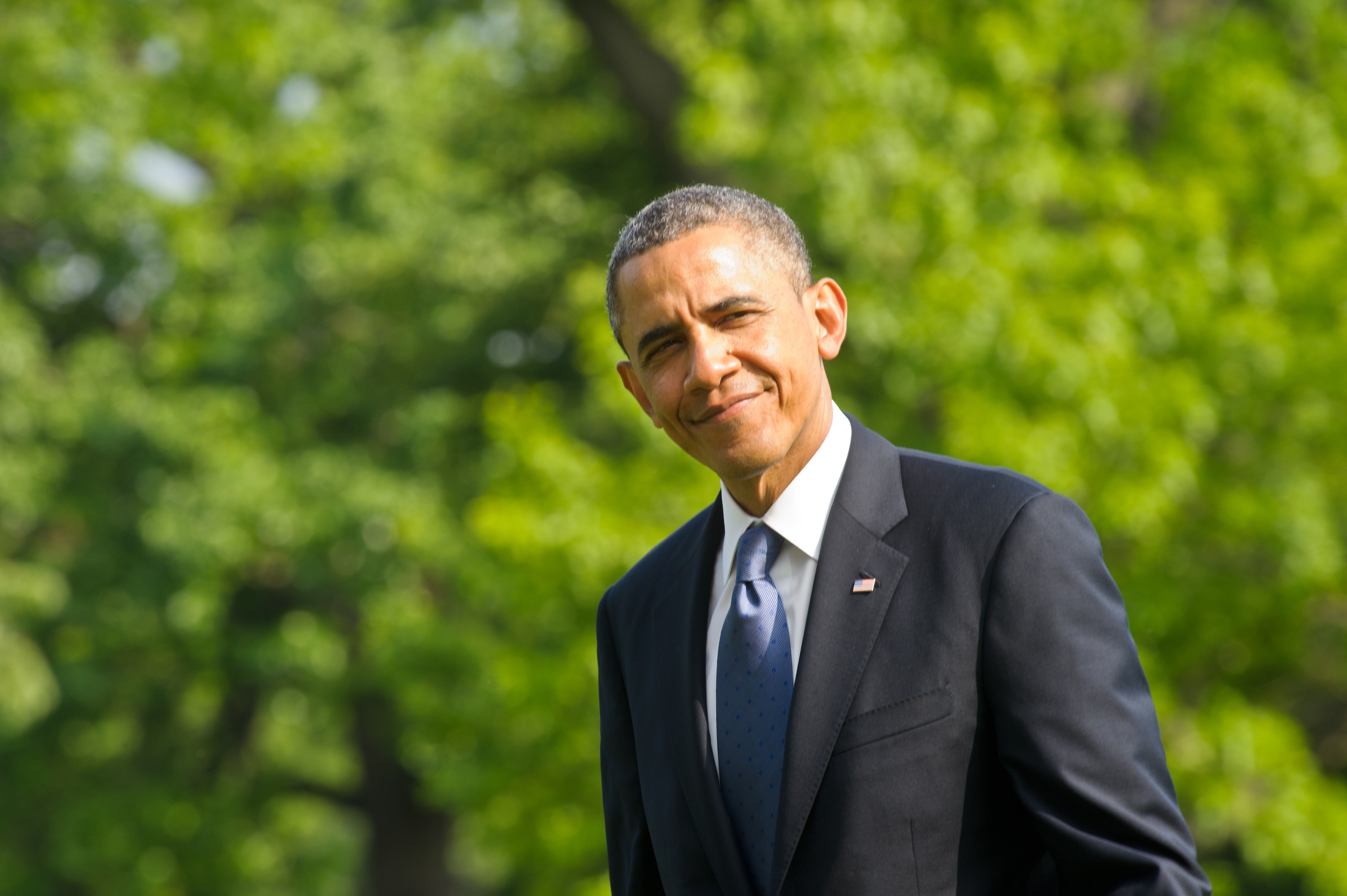
(Photo: Nicholas Kamm/Getty)

The Battle For Baghdad


Analyzing ISIS’s strategic position, Bill Roggio sees the militants’ moves so far as part of an effort to encircle the capital, very similar to the strategy Abu Musab al-Zarqawi’s Islamic State of Iraq employed in 2006:

The ISIS advance toward Baghdad may be temporarily held off as the government rallies its remaining security forces and Shia militias organize for the upcoming battle. But at the least, ISIS should be able to take control of some Sunni neighborhoods in Baghdad and wreak havoc on the city with IEDs, ambushes, single suicide attacks, and suicide assaults that target civilians, the government, security forces, and foreign installations. Additionally, the brutal sectarian slaughter of Sunni and Shia alike that punctuated the violence in Baghdad from 2005 to 2007 is likely to return as Shia militias and ISIS fighters roam the streets.

Meanwhile, many Western embassy personnel are being evacuated and bombings are already happening in and around the city:

In Baghdad on Sunday, a suicide attacker detonated explosives in a vest he was wearing, killing at least nine people and wounding 20 in a crowded street in the centre of the capital, police and medical sources said. At least six people were killed, including three soldiers and three volunteers, when four mortars landed at a recruiting centre in Khlais, 50 km (30 miles) north of Baghdad. Volunteers were gathered by army to join fighting to regain control of the northern town of Udhaim from ISIL militants.

Nader Uskowi adds that the militants’ capture of the Turkmen-majority city of Tal Afar yesterday strengthens their position in Iraq’s northwest:

With the capture of Tal Afar, the ISIL now controls the entire Nineveh province, solidifying their grip on the Tigris valley north of Baghdad. The insurgents want to establish an Islamic caliphate in the area. …

Meanwhile, there were reports of heavy fighting on Sunday between Iraqi security forces and ISIL in the city of Baquba, 37 miles northeast of Baghdad, and the provincial capital of Diyala. If the city were to fall, the insurgents will have three-pronged access to Baghdad: from Anbar to the west, Nineveh and Salahuddin to the north, and from Diyala to the northeast.

And Maliki is calling up his Iranian-trained Shiite militias to defend it:

Before the fall of Mosul this week, the activities of both Asaib [Ahl Haq] and Kataeb Hezbollah had been kept out of the open. Politicians and group members acknowledged the militias’ activities in private, but government spokesmen and Asaib and Kataeb Hezbollah publicly denied their involvement in fighting. Now, with Sunni armed groups pushing to break through Baghdad’s western, northern, southern and eastern edges, Asaib and Kataeb Hezbollah are at the tip of the vanguard of informal volunteers. No one bothers to pretend any more that the fighters are not patrolling and battling in Baghdad’s hinterlands.

Amid rumors and allegations of Iranian advisers or units working in Iraq to defend Shiite territories, the likelihood is that any Iranian presence is tied to these groups, which have been nurtured and trained by Iraq’s neighbor for years.

If ISIS fails to capture Baghdad, James Barnes expects the group to fail spectacularly:

ISIS took over Mosul, parts of Kirkuk and then moved south to Tikrit and have been on the march since. Since then, the Kurds in the north have retaken Kirkuk (they did it in a day) and have sworn to defend Iraqi Kurdistan from any incursion. Mosul is within spitting distance of Kurdish forces and they could, frankly, invade and begin retaking it at any time if they chose to. Western Iraq is a desert and if ISIS is routed on its way to Baghdad and tries to retreat back into Syria it will have an enormous problem doing so. They’d have to either go back north whence they came and possibly face Kurdish forces or they’d have to head straight west across the desert where they’d be sitting ducks for Iraqi (or even Iranian) air strikes. This is a classic case of bad strategy on the part of ISIS. They can get in but unless they take the capital of Baghdad then they have no way of getting out and despite what the news is saying, Iraqi Sunnis don’t have the stomach to engage in a protracted civil war. They’re too few in number, no one would support them, and they’re ultimately Iraqis, not heart eating al-Qa’ida affiliates.

(Map by the Long War Journal)

The Enemy Of My Enemy Is My Frenemy?

As more evidence surfaces of Iranian forces joining the conflict in Iraq, the WSJ reports that the US and Iran will now engage in direct talks toward resolving the crisis:

The U.S.-Iran dialogue, which is expected to begin this week, will mark the latest in a rapid move toward rapprochement between Washington and Tehran over the past year. It also comes as the U.S. and other world powers try to reach an agreement with Iran by late July to curb its nuclear program. …

The U.S. officials said it wasn’t certain yet which diplomatic channel the Obama administration would use to discuss the Iraq situation. One avenue could be through Vienna, where senior American and Iranian diplomats will convene starting Monday as part of international negotiations aimed at reaching a comprehensive agreement to curb Tehran’s nuclear capabilities.

Over the weekend, Rouhani himself expressed an openness to working with the US to confront ISIS:

“If we see that the United States takes action against terrorist groups in Iraq, then one can think about it,” he said, despite the lack of diplomatic relations between Tehran and Washington for more than three decades. “We have said that all countries must unite in combating terrorism. But right now regarding Iraq… we have not seen the Americans taking a decision,” Rouhani added.

But a Foreign Ministry spokesman also mixed that signal by suggesting Western intervention would only complicate a situation Iran believes it can handle all by itself. Ian Black surveys the debate:

Commentators in Tehran and Washington have argued that these old enemies share significant interests in defending the status quo in Baghdad: for example, both had urged Maliki to act more inclusively to stop alienating Sunnis for fear of empowering Isis. “Iraq is one of those places that contradicts the popular notion that Iranian and American interests constitute a zero-sum game,” the analyst Kenneth Pollack, a CIA veteran, commented on the eve of the April elections. “There, what is bad for Iran is often just as bad for the United States and what they want to see is often what we want to see as well.”

Whether those common interests will extend to actual, as opposed to de facto, military coordination – US air strikes or drone intelligence in support of Iranian revolutionary guards, or Iranian-advised Iraqi units – remains to be seen. It is fascinating too to speculate whether any cooperation could impact on the ongoing talks on Iran’s nuclear programme, a month before the deadline for a deal.

Meir Javedanfar thinks through the ramifications for Rouhani:

In the short run, President Rouhani also has much to gain. The ISIS victories will make Iran look like an attractive partner to the United States in the fight against ISIS. Should the West decide to cooperate with Iran, this would boost Rouhani’s position domestically, as he could say his moderate approach toward the United States made the country dependent on Iran for help. Rouhani could then use such help as a bargaining chip in the P5+1 talks to extract further concessions.

However:

There could also be domestic repercussions against Rouhani’s interests.

The head of the Basij organization, Gen. Mohammad Reza Naghdi, has already accused the United States of being behind the ISIS attacks. The spokesman for parliament’s National Security Commission, Mohammad Hossein Naghavi Hosseini, has publicly accused the Saudis (as well as Israel and the United States) of being behind the ISIS attacks.

The longer the ISIS crisis continues, the more difficult it will be for Rouhani to create a diplomatic rapprochement with the United States, as this crisis could strengthen the hand of Iran’s conservatives, who are against such a scenario. The same applies to Rouhani’s aspirations to improve relations with the Saudis.

Stepping back, Keating tries to sum up the bizarre intersection:

Relations between Iran and the U.S. have improved since Hassan Rouhani became president last year, but this hasn’t been a great couple of weeks. Nuclear talks have hit an impasse over the number of centrifuges Iran will be allowed to maintain for nuclear enrichment. It now seems unlikely that a deal by the July 20 deadline set by negotiators. It seems like it should be possible to compartmentalize the nuclear issue while the two sides work together on another pressing priority.

But the bigger obstacle may be Syria, where Iran has been one of the primary international backers of Bashar al-Assad’s government. Iran views ISIS as the inevitable consequence of American, Arab, and Turkish support for anti-Assad rebel groups. The U.S. view is that Assad’s brutal response to the moderate Syrian opposition led to the growth of radical opposition groups. It’s hard to wrap one’s head around a situation where the U.S. and Iran are fighting as allies on one side of the porous Syrian-Iraq border and essentially fighting a proxy war on the other side, but all bets are off when it comes to Middle Eastern geopolitics at the moment.

Robin Wright has some important reminders:

In 2010, James Jeffrey, the U.S. Ambassador [in Iraq], estimated that Iran was linked, through its surrogates, to the deaths of more than a thousand American troops. “My own estimate, based just upon a gut feeling, is that up to a quarter of the American casualties and some of the more horrific incidents in which Americans were kidnapped … can be traced without doubt to these Iranian groups,” he said.

Even after Washington announced its intent to leave Iraq, Defense Secretary Robert Gates charged that Iran’s support for Shiite militias was intent on “killing as many as possible in order to demonstrate to the Iraqi people that, in effect, they drove us out of Iraq at the end of the year.” When the United States ended its combat mission, in 2011, it did not leave even a residual force behind, because Iraq—under Iran’s strong influence—refused to sign a Status of Forces Agreement granting immunity to U.S. troops for acts deemed criminal under Iraqi law.

Marc Pyruz adds that Iran’s current strategy against ISIS will need to change from how it tried to fight the US:

[Quds Force] direction of battle in Iraq is set to differ in key respects from the period of American military occupation. During that period, the American military relied on combat aviation, overwhelming firepower and a heavy logistical presence. The current situation in Iraq is very similar to what is taking place in neighboring Syria, where IRGC-QF tactics have been developed against determined, hardy Jihadist fighters dug often in built-up or urban environments, with IRGC-organized militias often times proving more motivated and reliable in combat.

One of the weak links for Iraq is the lack of a capable air force. The Iranian air forces’ fixed wing combat aircraft– IRIAF and IRGC-AF –are not in a state of fit and lack the numbers of operable aircraft for sustained operations, and any potential losses can not be replaced with additional acquisitions. To some extent, this might explain certain Iranian officials’ public statements of floating the idea of a shared role [with the US] in stabilizing the military situation in Iraq.

That idea seems to have piqued the interest of even Butters, who yesterday, while calling Iran the Stalin to ISIS’s Hitler, nevertheless endorsed some kind of collaboration:

“The Iranians can provide some assets to make sure that Baghdad doesn’t fall. We need to co-ordinate with the Iranians and the Turks need to get into the game.”

“We should have discussions with Iran to make sure they don’t use this as an opportunity to seize control of parts of Iraq. They’re in this, we need to put a red line with Iran.” Graham said the US should “sit down and talk” with Iran. “To ignore Iran and not tell them ‘Don’t take advantaged of this situation’ would be a mistake,” he said.

Jessica Schulberg sees no other choice:

While there are political barriers to an outward alliance with Iran, the U.S. needs to recognize the influence that Iran has in the Middle East, and harness the cooperative gains made in the nuclear negotiations to wider cooperation in dealing with Syria and Iraq. … While it is not clear what form their intervention will take, collaborative effort with the Iranians, whether overt or covert, is necessary in stabilizing Iraq.

1,700 Slaughtered?

ISIS-Salahaddin-Division-WC-10

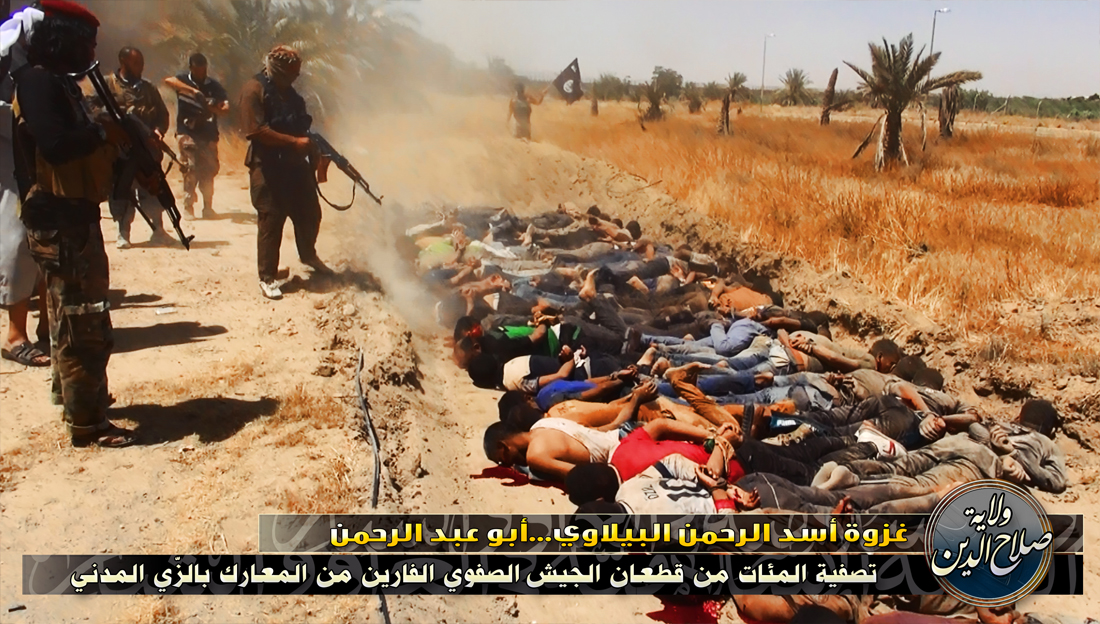
That’s the number ISIS claims to have killed in its ongoing rampage through Iraq. Yesterday the group released a disturbing series of images they claim shows the capture and execution of numerous Iraqi troops last week. Bill Roggio has full details. A glimpse from the NYT:

The photographs showed at least five massacre sites, with the victims lying in shallow mass graves with their hands tied behind their backs. The number of victims that could be seen in any of the pictures numbered between 20 and 60 in each of the sites, although it was not clear whether the photographs showed the entire graves. Some appeared to be long ditches. The photographs showed the executioners flying the ISIS black flag, with captions such as “the filthy Shiites are killed in the hundreds,” “The liquidation of the Shiites who ran away from their military bases,” and “This is the destiny of Maliki’s Shiites,” referring to Prime Minister Nuri Kamal al-Maliki.

If the alleged executions prove accurate, the atrocity would surpass Assad’s chemical weapon attack in Syria last year, which killed 1,400:

The latest attack … would also raise the specter of the war in Iraq turning genocidal, particularly because the insurgents boasted that their victims were all Shiites. There were also fears that it could usher in a series of reprisal killings of Shiites and Sunnis, like those seen in the Iraq war in 2005-7.

A reputable theory explaining the publicity ISIS seeks with these photos: