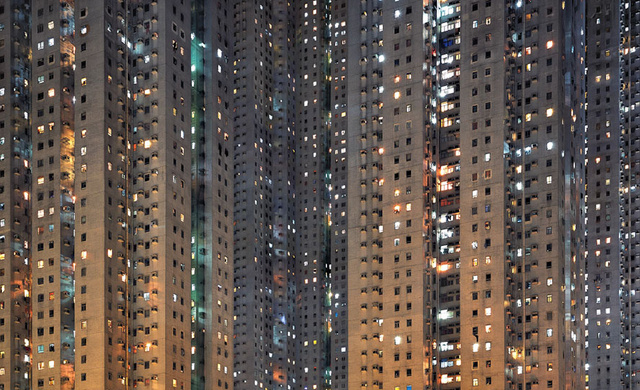
The megacities in China captured by German photographer Michael Wolf are “as surreal as they are kinda terrifying,” states Tom Hawking. Wolf describes his project in an interview with Vice:
First off, what’s a megacity?
Cities that have a population with more than 5 million. I wouldn’t really consider any European city a megacity. Paris has a population of 2 million, whereas in China, for instance, a city with 3 million is considered small. I’m talking about populations of 5, 10, 20 million—up to 25 million.
Why do they look so depressing in your photos?
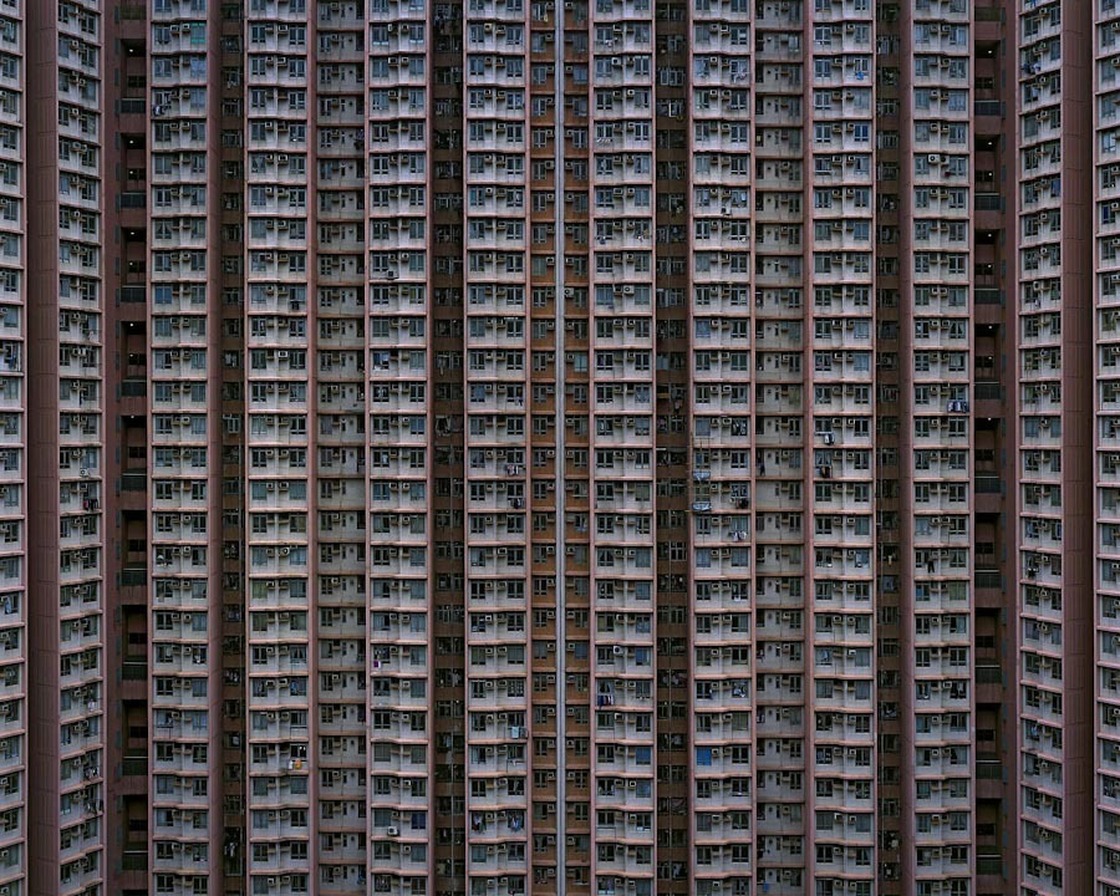
Well, some things about megacities have a lot of downsides. These are profit centers. The people who run them are not really concerned about the populations that live in them. They are concerned about making money. So on the one hand they are very intimidating and frightening but on the other hand they are extremely beautiful. In The Architecture of Density (his photo series featuring an extremely dense Hong Kong high-rise), you can almost see them as a tapestry.
How he describes the message of his work:
I’ve always been a social liberal. I’ve always been for the underclass. For example, I did a project called 100×100 where I photographed 100 apartments in a Hong Kong building that was about to be demolished, all measuring ten feet by ten feet. I am showing the living conditions of the city—but again, I’m looking at the vitality and resourcefulness of the people. They are everyday human beings and that’s what I am trying to document.
Previous Dish on Wolf’s work here.
 The Dish