“Killed In Front Of My Eyes”

On the 20th anniversary of her book, Dead Man Walking, Sister Helen Prejean describes how watching an execution compelled her to become an activist:

I knew when I came out of that execution. It was the middle of the night. I’d never watched a protocol like that — a human being had been strapped down and killed in front of my eyes. I had in front of me the horror of his crime and then the horror of watching the state kill him. I threw up. My first instinct was to run, and then I went and realized I’d been called to tell the story and get it out to the people.

She also seems to be a fan of the new Pope:

When Pope Francis got up and made one of his first speeches, he said the Church has been too self-referential. He said we have to do what Jesus did; we have to go to the margins of society. And he mentioned two things: hospitals and prisons. He said, you know, one of the most serious sins is spiritual worldliness. Jesus said that you’re not to lord over people; you’re to be the servant of each other. I interpret that as addressing the way the Church has been using its position to silence people and control them and threaten them with excommunication. Those are power moves.

Update from a reader:

I remember reading this article by Prejean back in 2005. It had a bigger negative impact on my opinion of Bush than any other single thing I read.

“Open The Doors!” (And The Closets?)

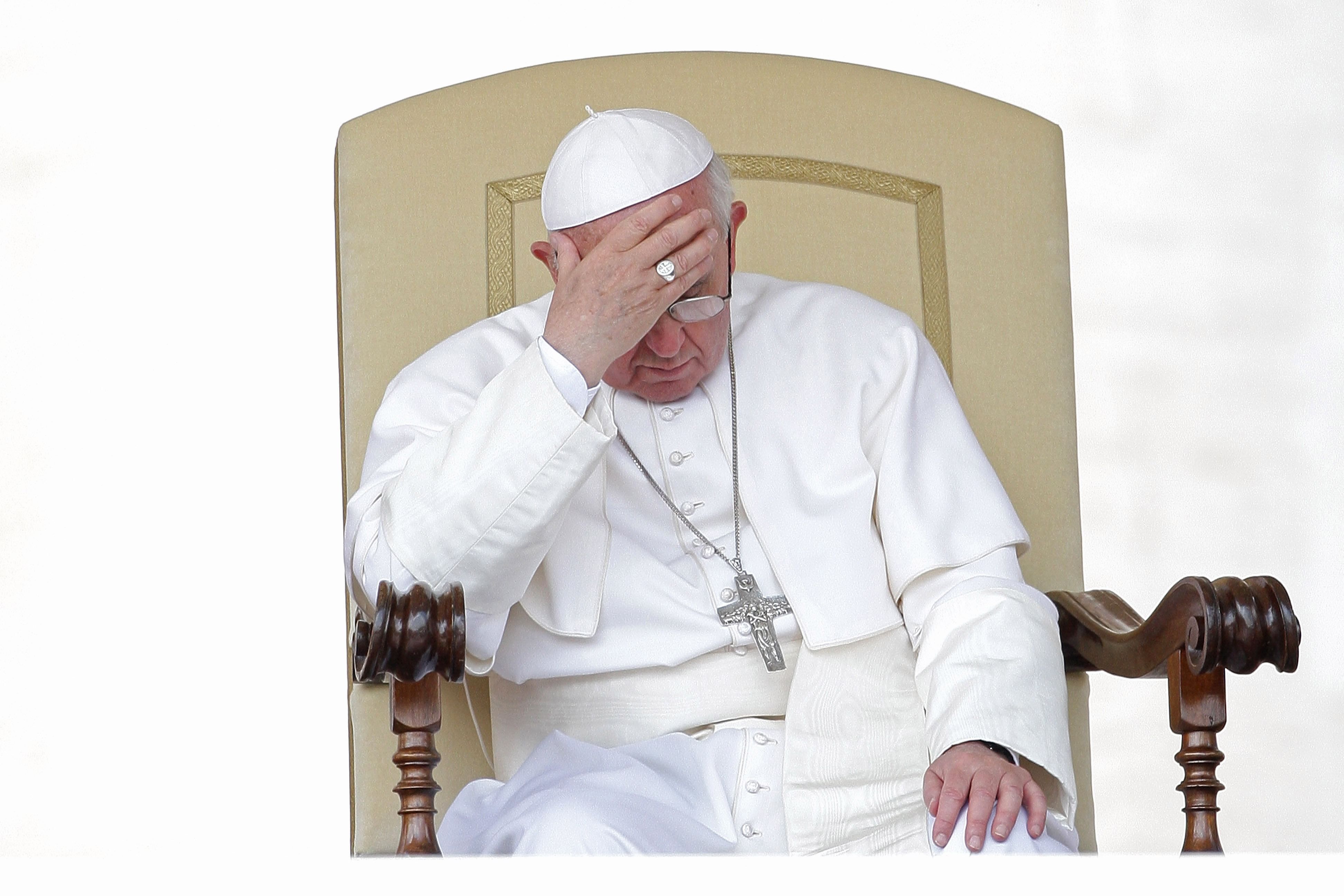
VATICAN-POPE-AUDIENCE

If you want to understand just how vastly different this Pope is from his predecessor, read the full and best translation of his recent impromptu remarks to the Latin American and Caribbean Confederation of Religious Men and Women. They blew me away. Can you ever imagine the anal-retentive doctrine cop, Ratzinger, ever saying this about the body that dictates doctrine that he once headed, the Congregation For The Doctrine Of The Faith:

They will make mistakes, they will make a blunder [meter la pata], this will pass! Perhaps even a letter of the Congregation for the Doctrine (of the Faith) will arrive for you, telling you that you said such or such thing… But do not worry. Explain whatever you have to explain, but move forward… Open the doors, do something there where life calls for it. I would rather have a Church that makes mistakes for doing something than one that gets sick for being closed up…

The heart swells as the voice of Jesus replaces the voice of the Pharisee. Rocco tartly observes that Pope Francis’ “penchant for veering off-text in open company just reached a whole new planet”. You can say that again. I loved this aside in observing how we are often more obsessed with tiny shifts in stock prices than the human being dying of hypothermia down the street:

Computers are not made in the image and likeness of God; they are an instrument, yes, but nothing more. Money is not image and likeness of God. Only the person is image and likeness of God. It is necessary to flip it over. This is the gospel.

And I loved this dismissal both of the uptight traditionalists who cannot see the forest for the rosaries and of those seeking to substitute the core teaching of the incarnation in favor of a vague spirituality:

There are some restorationist groups. I know some, it fell upon me to receive them in Buenos Aires. And one feels as if one goes back 60 years! Before the Council… One feels in 1940… An anecdote, just to illustrate this, it is not to laugh at it, I took it with respect, but it concerns me; when I was elected, I received a letter from one of these groups, and they said: “Your Holiness, we offer you this spiritual treasure: 3,525 rosaries.” Why don’t they say, ‘we pray for you, we ask…’, but this thing of counting… The second [concern] is for a Gnostic current. Those Pantheisms… Both are elite currents, but this one is of a more educated elite… I heard of a superior general that prompted the sisters of her congregation to not pray in the morning, but to spiritually bathe in the cosmos, things like that …

And then a possible clue as to why Benedict XVI decided to break with centuries of tradition and run into hiding after he read a dossier on abuses in the church:

In the Curia, there are also holy people, really, there are holy people. But there also is a stream of corruption, there is that as well, it is true… The “gay lobby” is mentioned, and it is true, it is there… We need to see what we can do…

Was the former Pope subject to blackmail? Were other Cardinals?

If the Vatican’s screwed-up doctrines about gay people have led to genuine threats of blackmail from within the hierarchy, if a faction of benign or malign homosexuals has really been using that leverage for whatever purposes, then we do indeed have a problem, to which the answer must be more transparency – of the kind Francis seems to endorse. The Vatican is refusing to comment on the content of the “private meeting.” But Mary Elizabeth Williams recognizes an emerging pattern:

The pope’s cryptic statement about a “gay lobby” doesn’t do anything to explain what a “gay lobby” actually is, how it’s gay lobbying and what it’s gay lobbying for — or what the Vatican intends to do about what Francis calls the “difficult” work of reforming the genuinely corrupt aspects of the huge worldwide organization he recently became the leader of. But already his actions have revealed a Hillary-like determination to do it his way, protocol be damned. …

Like his institution itself, Francis still got a long, long, lonnnnnng way to go in terms of broadening the definition of love, humility and tolerance. But a guy who’s been tweeting about “the unemployed, often as a result of a self-centered mindset bent on profit at any cost,” is a guy who’s having a good time shaking things up and making splitting headaches for the big shots around him. A guy who remembers that Jesus was a loudmouth and a troublemaker. [Vatican spokesman] Father Lombardi, I hope you’ve got plenty of Advil. Because I have a feeling your boss is just getting warmed up.

Previous Dish on the rumors of a “gay lobby” in the Vatican here and here.

(Photo: Pope Francis smiles after his weekly general audience in St Peter’s square at the Vatican on June 12, 2013. By Alberto Pizzoli/AFP/Getty Images.)

Opening Up Heaven To All

American Catholics overwhelmingly agree with the Pope that non-Catholics can gain access to heaven:

Catholics Heaven

Hertzberg appreciated the Pope’s recent comments:

Something that has always puzzled me is the stated belief of some Christians in a God who is simultaneously (a) good, kind, forgiving, etc., and (b) capable of condemning people who lead virtuous lives to eternal torment (or even some lesser punishment) solely because they do not happen to believe He exists; or because they do believe He exists but decline to accord Jesus the status of supernatural savior, personal or otherwise; or because they regard the Bible as an admirable collection of folktales but no more divinely authored than any other purportedly sacred text or, for that matter, than the works of Shakespeare or the music of Mozart; or because they do not agree with this or that tenet of a particular religion.

If such a cruel, vain, and tyrannical God did exist, I can’t for the life of me see how the proper response would be to worship or even praise Him. Wouldn’t a more logical, more morally sound, more self-respecting response be to join a rebellion against Him—the Hell Liberation Front or some such—and try to overthrow Him?

He follows up here.

The Pope And Atheists, Ctd

Pope Francis Holds Weekly Audience - May 8, 2013

After the Pope’s words on atheists last week, the Vatican walks its Pontiff back:

Pope Francis has no intention of provoking a theological debate on the nature of salvation through his homily or scriptural reflection when he stated that “God has redeemed all of us, all of us, with the Blood of Christ: all of us, not just Catholics. Everyone!”  Consider these sections of the Compendium of the Catechism of the Catholic Church that offer the Church’s teaching on who will be “saved” and how. …

[A]ll salvation comes from Christ, the Head, through the Church which is his body. Hence they cannot be saved who, knowing the Church as founded by Christ and necessary for salvation, would refuse to enter her or remain in her. At the same time, thanks to Christ and to his Church, those who through no fault of their own do not know the Gospel of Christ and his Church but sincerely seek God and, moved by grace, try to do his will as it is known through the dictates of conscience can attain eternal salvation.

As a theological corrective to those suddenly claiming that atheists go to the Catholic concept of Heaven, this walk-back is right. But it misses, it seems to me, the spirit of Francis’ words – which would have not occurred to his rigid and anal-compulsive predecessor. Meeting atheists in the good work of helping and serving others is an indication of openness, of ecumenical commitment to the common good and (in my inference) a sprinkle of mystery about what all of our relationships with God may become in that undiscovered country from whose bourn no traveler returns. Erasmus at The Economist downplays the significance of the Pope’s statement:

In theological terms, neither the pope nor his spokesman said anything new. It’s a basic Christian teaching that the status of humanity as a whole was transformed when God took human form and neutralised the power of mortality by freely undergoing death. It’s also axiomatic that individual human beings are free to accept this divine gift or reject it. The Catholic church has never ceased to see itself as possessing the “fullness of the means of salvation” but especially since Vatican II, the reforming council of the 1960s, it has freely accepted the possibility that God can be at work in places outside the visible boundaries of Catholicism.

Amidst all the apparent contradiction and confusion, there is a basic problem that besets all communication between the religious and the secular worlds. Religious statements are rooted in a metaphysical system, an understanding of the universe, which is pretty foreign to the modern, liberal mind. In traditional Christian thought, the primordial (and for many modern minds, intensely controversial) assertion is the existence of a loving God, from whom humanity has been estranged. Within that system, self-exclusion from that loving God is self-evidently a “hellish” choice; that is almost a tautology, a statement of the obvious. Outside that metaphysical system, statements about exclusion from God’s love don’t make any sense at all, they sound like pious nonsense.

But at the same time, we are wrong to put human limits on the extent of our Creator’s love for us. We must be open to being surprised by the unconditionality of the love that Jesus introduced into human consciousness.

Does The Pope Read Rumi?

leavesofgrass

A reader notes the striking similarity between Francis’ words today and the legendary Persian poet and mystic, as masterfully translated by Coleman Barks and John Moyne:

Out Beyond Ideas

Out beyond ideas of wrongdoing and rightdoing,
there is a field. I’ll meet you there.

When the soul lies down in that grass,
the world is too full to talk about.
Ideas, language, even the phrase each other
doesn’t make any sense.

Quote For The Day

“This ‘closing off’ that imagines that those outside, everyone, cannot do good is a wall that leads to war and also to what some people throughout history have conceived of: killing in the name of God. That we can kill in the name of God. And that, simply, is blasphemy. To say that you can kill in the name of God is blasphemy … The Lord has redeemed all of us, all of us, with the Blood of Christ: all of us, not just Catholics. Everyone! ‘Father, the atheists?’ Even the atheists. Everyone! …

We all have a duty to do good. And this commandment for everyone to do good, I think, is a beautiful path towards peace. If we, each doing our own part, if we do good to others, if we meet there, doing good, and we go slowly, gently, little by little, we will make that culture of encounter: we need that so much. We must meet one another doing good. ‘But I don’t believe, Father, I am an atheist!’ But do good: we will meet one another there,” – Pope Francis, in a homily today that brought tears of relief to my eyes.

A Vatican Spring?

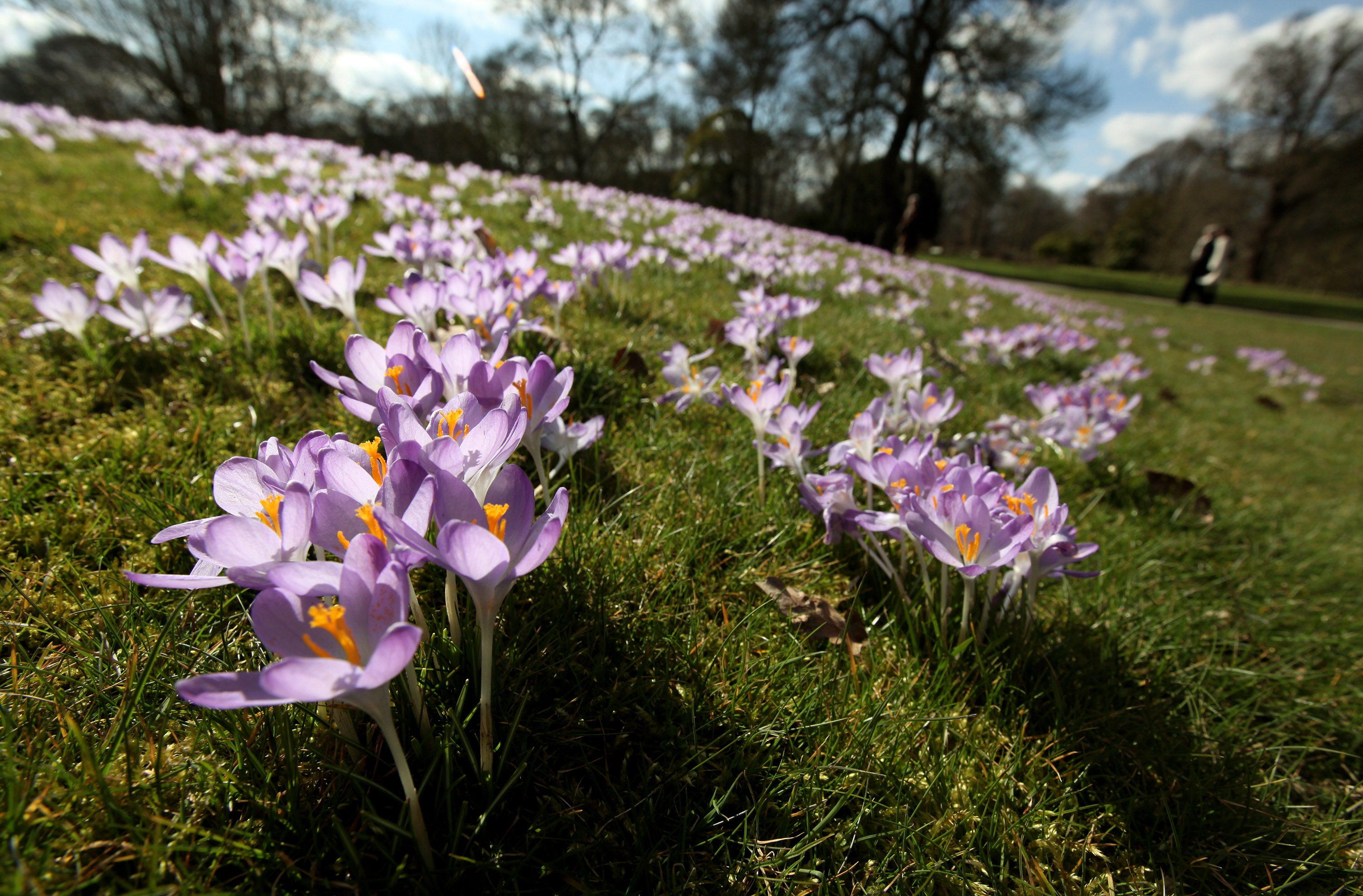
The First Signs Of Spring Are Seen At Kew Gardens

One major piece of disappointment came with Pope Francis’ endorsement of the on-going inquisition of American nuns. I’m not sure entirely what to make of it – is it an early indicator of Francis’ theological conservatism or simply acquiescing to a process already long underway? We will see by the disciplinary actions eventually taken (or not). The nuns would seem to have more in common with the Jesuit Francis, if only because he is aware of the need for outreach among religious orders – even to places and people that discomfort others. That was Jesus’ call, and Saint Francis’ and St Ignatius’. We’ll see what transpires in the end, but, obviously, I hope the Sisters can soon renew their vital work without constantly looking behind their backs.

But three other developments strike me as encouraging. The first – and least sexy – is the establishment of a global council of advisers in the governing of the church. This may seem a trivial reform. It isn’t. It restores the Second Vatican Council’s desire to place the Pope in a less dictatorial position, and to open up areas of authority within the global church as a counter-balance. And so this new governing commission – made up of highly effective cardinals in every continent – is a big shift:

More profound thinkers have read the Pope’s creation of a group of advisers as a bold new step towards fully implementing a model of ecclesial government evoked by the Second Vatican Council – one that is 418W7QTZEEL._SY380_less centralised, more collegial and based on the principles of ­subsidiarity.

“What Pope Francis has announced is the most important step in the history of the Church of the last 10 centuries and in the 50-year period of reception of Vatican II,” said the noted church historian Alberto Melloni. Writing in the Milan daily Corriere della Sera, he said the Pope had “created a synodal organ of bishops that must experiment with the exercise of the consilium”. In other words, shared governance of the Church between the Bishop of Rome and all the world’s bishops.

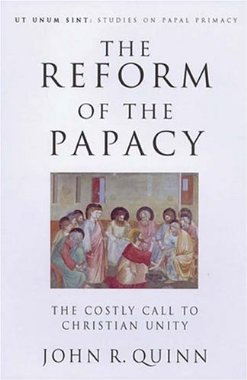
Detailed proposals for this were put forth in Archbishop Quinn’s book, [“The Reform of the Papacy“] which in 2005 appeared in Spanish. Pope Francis read that work when he was still just a cardinal in Argentina and, at around that time, he reportedly expressed his conviction that at least some of its ideas should be adopted.

More surprising is the support for civil unions for gay couples that seems to be percolating on the margins. The Pope argued for them in Argentina within the Jesuit branch he ran (it was the sole argument he lost in his years in president of the Conference), and earlier this year, some wiggle room for gay couples in civil law was mentioned by Archbishop Vincenzo Paglia, president of the Pontifical Council for the Family. This was only a defensive action against civil marriage rights for gay couples, but it was a concession to reality one cannot imagine Benedict XVI ever making. Now this:

The latest expression of support for civil recognition as an alternative to gay marriage comes from Archbishop Piero Marini, who served for 18 years as Pope John Paul II’s liturgical master of ceremonies. “There are many couples that suffer because their civil rights aren’t recognized,” Marini said.

The third indication of good news is the fact that Pope Francis has unblocked Oscar Romero’s path to beatification:

The Vatican’s Congregation for the Causes of Saints has been studying the Romero case since 1996, after the church in El Salvador formally opened the procedure in 1990. At the end of his 20-minute homily Sunday, Paglia said: “Just today, the day of the death of Don Tonino Bello, the cause of the beatification of Monsignor Romero has been unblocked.” Paglia had been received by Pope Francis on Saturday, and presumably the decision to authorize moving forward with the cause came out of that session.

Romero was shot to death while saying Mass in El Salvador on March 24, 1980. While he is seen as a hero to many because of his solidarity with the poor and his opposition to human rights abuses, his cause has also been viewed with suspicion in some quarters, partly because of Romero’s links to the controversial liberation theology movement.

Know hope.

(Photo: Crocuses in bloom. By Oli Scarff/Getty Images)

A Vatican Spring?

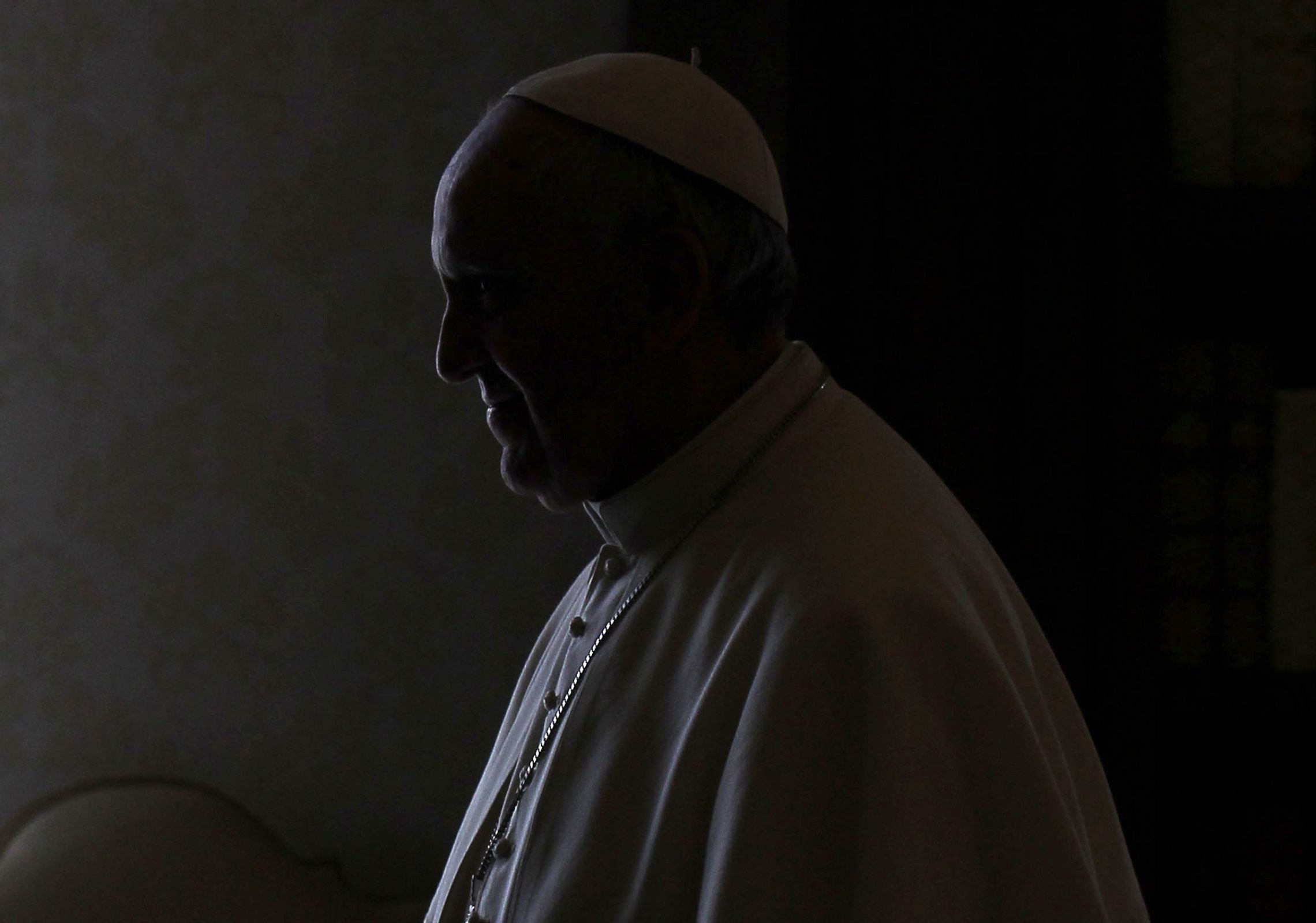
francisshadow

That was Hans Kung’s hope before the recent Conclave. It seemed somewhat naive to me at the time – but naivete in the face of the workings of the Holy Spirit is a good thing for Catholics to have. And we will certainly have to wait some time before we can assess whether the signs of reform become reality in any tangible fashion.

But we can say this much: almost every single action and statement from the new pontiff signals a radical departure from the past 44 years of the Wojtila-Ratzinger church. My favorite unofficial story about the new Pope was relayed to me by hearsay. But at the moment before he was to appear as the new Pope, he was allegedly presented with the papal mozzetta – the big red cape his predecessor loved to wear and an increasing must for any aspiring priest of bishop for the last decade (it had seasonal variations). He turned to the Vatican official who tried to put it on him, waved him away with one hand and said, simply, “Carnevale e finito.” The carnival is over.

Is it? That is the question. Is the Wojtila-Ratzinger era of reaction coming to an end?

You can see the theoconservative religious project from 1979 – 2013 rather as you might the neoconservative political project in the same years. After a major and arguably necessary course correction in the 1980s, by the first decade of the new millennium, the two isms had ended where isms always do: on earth. The theoconservative project ended in a collapse of the church’s moral authority inside the beadazzled Liberace outfits of its intellectual architect, Joseph Ratzinger. The neoconservative project ended in the blood and sands of Mesopotamia.

Benedict claimed he’d bring Europe back to the faith using the sublime, pristine self-evidence of a “new” natural law and the total authority of the Bishop of Rome. But after global rock-star version of the papacy under John Paul II had faded, the increasingly extremist and fastidious orthodoxy that he and Ratzinger had innovated lost altitude fast. It had been propped up by charisma, an evanescent form of authority. And when the prissy Inquisitor, Benedict XVI – with no popular appeal – inherited this mess, he gradually, gaffe after gaffe, fashion accessory after fashion accessory, disappeared beneath his meticulous vast wardrobe. He resigned for reasons we may never fully know – but after an internal dossier on church abuse – financial and sexual – had laid out his failure in stark terms. But he had ceased exercising any moral authority for most Catholics long before that.

All of that project required re-establishing the papacy as something the Second Council had explicitly disavowed: a near-dictator in theological and political and social debate. Conversations were silenced; debates ended; theologians silenced. Vatican II’s insistence on equal authority for scripture and for the laity of the church alongside the papacy were slowly downplayed, while restoring the Pope as some kind of medieval queen – down to the ermine and jewels and over-starched lace – was the objective. In his early years, John Paul II carried all before him in a sweep of drama. But he was to the papacy what Diana was to the monarchy. In the end, he was a dazzling distraction from reality, not a reinvention of it. It was under John Paul II that the rape of children became truly endemic, the cover-up the worst.

The establishment of a global council of advisers – a kind of global cabinet to counteract the Vatican bureaucracy and take the Pope down a notch or two is, in that context, a huge move:

The Italian church historian Alberto Melloni, writing in the Corriere della Sera, called it the “most important step in the history of the church for the past 10 centuries”. For the first time, a pope will be helped by a global panel of advisers who look certain to wrest power from the Roman Curia, the church’s central bureaucracy. Several of the group’s members will come to the job with a record of vigorous reform and outspoken criticism of the status quo. None has ever served in the Italian-dominated Curia in Rome and only one is an Italian: Giuseppe Bertello, the governor of the Vatican City State.

You need not have dramatic doctrinal change – and I don’t expect any on the issues that the Western laity has already moved on from. But you could have real institutional change. Here are my benchmarks: if Bergoglio closes or insists on total transparency for the Vatican Bank; if he defrocks leading bishops and cardinals who have been implicated in any way in the cover-up of child molestation, regardless of statutes of limitations; and if he allows the question of priestly celibacy to be revisited. He has chosen a collegial manner, but he is well known as a decisive man who makes up his own mind and exhibits few qualms about enforcing it.

All of this requires some patience and vigilance. But I fail to see how this new Pope could have more dramatically demonstrated that he intends to move the church away from the last forty years. Where he will lead it is anyone’s guess. But I’m merely relieved there seems to be a recognition that the Benedict path was, in many ways, a dead end. And the church must find new life again – in service to the poor, the sick, the lonely, the imprisoned and the outsider. It must get out of itself and into the world. And it’s happening.

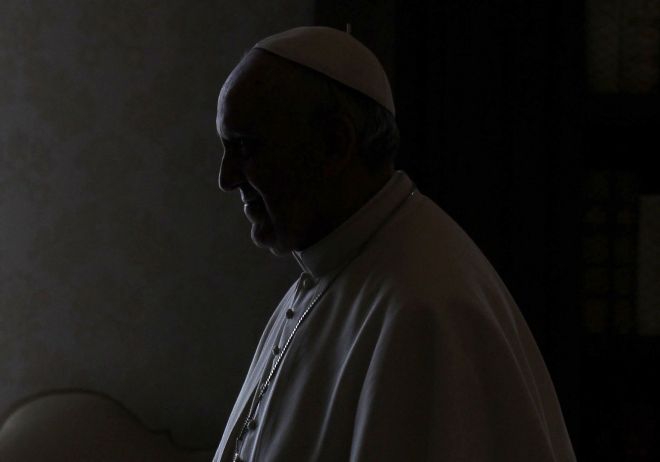
(Photo: Pope Francis stands in the pontiff’s library on April 11, 2013 at the Vatican. By Alessandro Di Meo/AFP/Getty Images.)