This Extraordinary Pope, Ctd

Thomas Reese declares, “I have never been prouder to be a Jesuit or prouder of my church or more surprised by the Spirit”:

For Francis, three words sum up the mission of Jesuits today: “Dialogue, discernment, frontier.” On the last point, he quoted Paul K43692CARAVAG 1VI’s speech about the Jesuits: “Wherever in the church—even in the most difficult and extreme fields, in the crossroads of ideologies, in the social trenches—there has been and is now conversation between the deepest desires of human beings and the perennial message of the Gospel, Jesuits have been and are there.”

Reading this interview gave me greater insight into my Jesuit vocation and into our Jesuit pope. What is clear is that he does not think like a classicist who sees the world in unchanging categories. He is a story teller like Jesus, not a philosopher. He thinks in narrative not philosophical principles. He thinks like a pastor understanding the history of the church but wanting to move with God’s people confidently into the future. He trusts that the Spirit is alive and well in the people of God.

James Martin nods:

Pope Francis is comfortable with gray.  In the interview, he speaks out against what he calls a “doctrinal security” and offers a gentle critique of those who “stubbornly try to recover a past that no longer exists.” Pope Francis asks Catholics to move away from a church that “locked itself up in small things, in small-minded rules.” Instead he invites Catholics, and invites the church, into the world of uncertainty, which is where most of us live anyway.

This is the world into which Jesus walked: the real world, in which people experience uncertainty and confront the need to make decisions.  It is the milieu of the everyday believer.  Jesus entered this world in the first century, and the church must be comfortable in that same world today.

Martin Longman feels odd praising the pontiff:

Pope Francis isn’t changing any doctrine with these kinds of remarks, but he is making a rather clean break with his two most recent predecessors, whose tone and emphasis was much more in tune with the Reaganite Right in this country. … I can’t say for sure how this new pope will influence American politics, but as a liberal I can say that it is a relief not to feel like the Vatican is fighting on behalf of my political opponents anymore. That’s not a comfortable feeling.

K-Lo glosses over the content and praises the tone:

The Francis factor, so to speak, is his focus on opening doors. How will anyone be open to Catholicism if they cannot get past knowledge of some of the prohibitions, without knowledge of the context, without invitation, without a love that compels them radiating from Christians? … That’s very much the Evangelical Catholicism George Weigel talks about, using that same Emmaus-road image, by my quick read. It’s the call of the Catholic to know Christ and make Him known, to set hearts ablaze. In this interview and by his daily witness and words, that’s what this pope is witnessing to, fascinating the world — which may misunderstand at times, as he reproposes some fundamentals and open doors of introduction and renewal.

Damon Linker throws some cold water:

[H]owever much those remarks signal a shift from the rhetorical style of popes John Paul II and Benedict XVI, progressive Catholics need to understand that the change is, and is likely to remain, a matter of words.

Consider what the pope did not say. He didn’t say that homosexual acts are morally permissible. He didn’t say that abortion can be morally acceptable in certain (or any) circumstances. He didn’t say anything to indicate he was interested in revisiting Pope Paul’s 1968 reaffirmation of the church’s ban on artificial contraception. He didn’t imply that he’s interested in revising the church’s strictures against married priests. He certainly didn’t indicate an openness to permitting the ordination of women. The interview contains no sign that the pope is willing to budge on any of the items on the progressive Catholic wish-list of reforms.

Tim Stanley nods, adding, “Some will see this as rewriting doctrine, especially those who exist outside the Church and have absolutely no intention of ever joining”:

The Pope has called for a rejection of a focus on “issues”. But, ironically, it’ll be liberals obsessed with “issues” who pay attention and embrace his message – all those folks who for years have been campaigning for the Catholic Church to jettison Catholicism and embrace women priests, homosexuality, contraception etc. The folks who loathed Benedict – people who willfully interpreted his words as ultra-conservative and who now interpret Francis’ language and hopefully liberal. In particular, those who loathe the traditional Mass will thrill at his warning that it must not develop into an “ideology”. No it must not. It hasn’t. It never will. Frankly, on this issue, I genuinely don’t know what my Pope is talking about.

That last sentence rings true, doesn’t it?

The Rebirth Of Catholicism

K43692CARAVAG 1

I am, I must confess, still reeling from Pope Francis’ new, lengthy and remarkable interview. I can barely believe that these words – so redolent of Jesus’ – are coming from the new Bishop of Rome, after so long an absence. Although the Pope is unfailingly respectful of his predecessor, let no one doubt the sharpness of Francis’ turn away from the dead end of Benedict. His message is as different as the context. Where Benedict, draped in ornate vestments, spoke from the grand edifice of the Vatican, Francis is in the same simple hostel in which he was ensconced during the Papal Conclave. Why?

Community. I was always looking for a community. I did not see myself as a priest on my own. I need a community. And you can tell this by the fact that I am here in Santa Marta. At the time of the conclave I lived in Room 207. (The rooms were assigned by drawing lots.) This room where we are now was a guest room. I chose to live here, in Room 201, because when I took possession of the papal apartment, inside myself I distinctly heard a ‘no.’ The papal apartment in the Apostolic Palace is not luxurious. It is old, tastefully decorated and large, but not luxurious. But in the end it is like an inverted funnel. It is big and spacious, but the entrance is really tight. People can come only in dribs and drabs, and I cannot live without people. I need to live my life with others.

An inverted funnel, which he now wants open to the world and to his fellow human beings. And there is throughout a premise of humility, doubt, mystery, openness to new things. How many times have you heard a Pope be as self-critical in retrospect as this:

My authoritarian and quick manner of making decisions led me to have serious problems and to be accused of being ultraconservative. I lived a time of great interior crisis when I was in Cordova. To be sure, I have never been like Blessed Imelda [a goody-goody], but I have never been a right-winger. It was my authoritarian way of making decisions that created problems.

And when at the outset of the interviews he is asked simply who he is, he replies

I am a sinner. This is the most accurate definition. It is not a figure of speech, a literary genre. I am a sinner.

He speaks of Carravagio’s painting ‘The Calling of St. Matthew” (see above):

That finger of Jesus, pointing at Matthew. That’s me. I feel like him. Like Matthew. It is the gesture of Matthew that strikes me: he holds on to his money as if to say, ‘No, not me! No, this money is mine.’ Here, this is me, a sinner on whom the Lord has turned his gaze.

But, for me, the most powerful argument Francis makes is about what Christianity is. It is not, in the end, about certainty. It is about faith as alive and open in doubt:

In this quest to seek and find God in all things there is still an area of uncertainty. There must be. If a person says that he met God with total certainty and is not touched by a margin of uncertainty, then this is not good. For me, this is an important key. If one has the answers to all the questions—that is the proof that God is not with him. It means that he is a false prophet using religion for himself. The great leaders of the people of God, like Moses, have always left room for doubt. You must leave room for the Lord, not for our certainties; we must be humble. Uncertainty is in every true discernment that is open to finding confirmation in spiritual consolation.

Our life is not given to us like an opera libretto, in which all is written down; but it means going, walking, doing, searching, seeing … We must enter into the adventure of the quest for meeting God; we must let God search and encounter us.

This profound mystery – that as soon as we claim certainty about the nature of God, we have lost the meaning of the nature of God – is at the heart of a Christian’s openness to the divine. Now think of this in contrast to the unrelenting fixation of John Paul II and Benedict XVI on enforcing total uniformity in even the tiniest details of sometimes esoteric doctrine, to banish debate entirely, to assert with more and more rigidity the impermissibility of dissent or doubt among the people of God. In the end, that rigidity is a neurosis, not a living faith. And to those who argue that a more open view of faith-in-doubt is tantamount to anarchy, to relativism, even to nihilism, Francis has a simple answer. No, it is not necessarily about these things, although they remain dangers. What makes all this work is what the Jesuits have long called “discernment.”

The wisdom of discernment redeems the necessary ambiguity of life and helps us find the most appropriate means, which do not always coincide with what looks great and strong. The Society of Jesus can be described only in narrative form. Only in narrative form do you discern, not in a philosophical or theological explanation, which allows you rather to discuss … The mystical dimension of discernment never defines its edges and does not complete the thought. The Jesuit must be a person whose thought is incomplete, in the sense of open-ended thinking.

Faith is not in the head; it is in the soul and heart and body. It is our acting in the world, not our debating the finer parts of infallible doctrine in an “inverted funnel”. And look how Francis uses the term “infallible.” He uses it not to refer to the papacy, but to the people of God, you and me, and not in terms of possession of the truth, but rather the open search for it:

The church is the people of God on the journey through history, with joys and sorrows. Thinking with the church, therefore, is my way of being a part of this people. And all the faithful, considered as a whole, are infallible in matters of belief, and the people display this infallibilitas in credendo, this infallibility in believing, through a supernatural sense of the faith of all the people walking together. This is what I understand today as the ‘thinking with the church’ of which St. Ignatius speaks. When the dialogue among the people and the bishops and the pope goes down this road and is genuine, then it is assisted by the Holy Spirit. So this thinking with the church does not concern theologians only.

This is the core message of the Second Vatican Council that John Paul II and Benedict XVI did their utmost to turn back in favor of papal authority. The hierarchy is not the whole church, just a part of it, in community with all the faithful. And he uses the example of the Blessed Virgin to buttress his point:

This is how it is with Mary: If you want to know who she is, you ask theologians; if you want to know how to love her, you have to ask the people. In turn, Mary loved Jesus with the heart of the people, as we read in the Magnificat. We should not even think, therefore, that ‘thinking with the church’ means only thinking with the hierarchy of the church.

And how we live is the only true expression of what we believe. Here is the rebuke to the theocons and their project:

If the Christian is a restorationist, a legalist, if he wants everything clear and safe, then he will find nothing. Tradition and memory of the past must help us to have the courage to open up new areas to God. Those who today always look for disciplinarian solutions, those who long for an exaggerated doctrinal ‘security,’ those who stubbornly try to recover a past that no longer exists­—they have a static and inward-directed view of things. In this way, faith becomes an ideology among other ideologies.

And where is real faith?

I see the holiness in the patience of the people of God: a woman who is raising children, a man who works to bring home the bread, the sick, the elderly priests who have so many wounds but have a smile on their faces because they served the Lord, the sisters who work hard and live a hidden sanctity. This is for me the common sanctity. I often associate sanctity with patience: not only patience as hypomoné [the New Testament Greek word], taking charge of the events and circumstances of life, but also as a constancy in going forward, day by day. This is the sanctity of the militant church also mentioned by St. Ignatius. This was the sanctity of my parents: my dad, my mom, my grandmother Rosa who loved ​​me so much. In my breviary I have the last will of my grandmother Rosa, and I read it often. For me it is like a prayer. She is a saint who has suffered so much, also spiritually, and yet always went forward with courage.

My own beloved grandmother was a saint of a similar kind. I learned so much about Jesus from simply observing her. She lived a hard life, the seventh of thirteen children raising four of her own with no formal education and earning money cleaning the houses of priests. I can never forget her reaching down on the sidewalks to pick up cigarette butts and teasing the last tobacco out of them to make a new one for her disabled husband. I remember her simple warmth and love for me. I recall watching her get lost in the Rosary at Mass – and realizing that however much education I ever got – more than she could comprehend – none of it could give me the faith she had and lived so effortlessly.

I hear her faith in the words of this new Pope: a faith of simplicity and openness, a faith that caused her not to live in the past or future, but now. As Francis says:

There is a temptation to seek God in the past or in a possible future. God is certainly in the past because we can see the footprints. And God is also in the future as a promise. But the ‘concrete’ God, so to speak, is today … We must not focus on occupying the spaces where power is exercised, but rather on starting long-run historical processes. We must initiate processes rather than occupy spaces…  Our life is not given to us like an opera libretto, in which all is written down; but it means going, walking, doing, searching, seeing…. We must enter into the adventure of the quest for meeting God; we must let God search and encounter us. Because God is first; God is always first and makes the first move.

And it seems that God has again made His move in a world that desperately needs Him; and His new servant, his new prophet, is Francis.

This Extraordinary Pope, Ctd

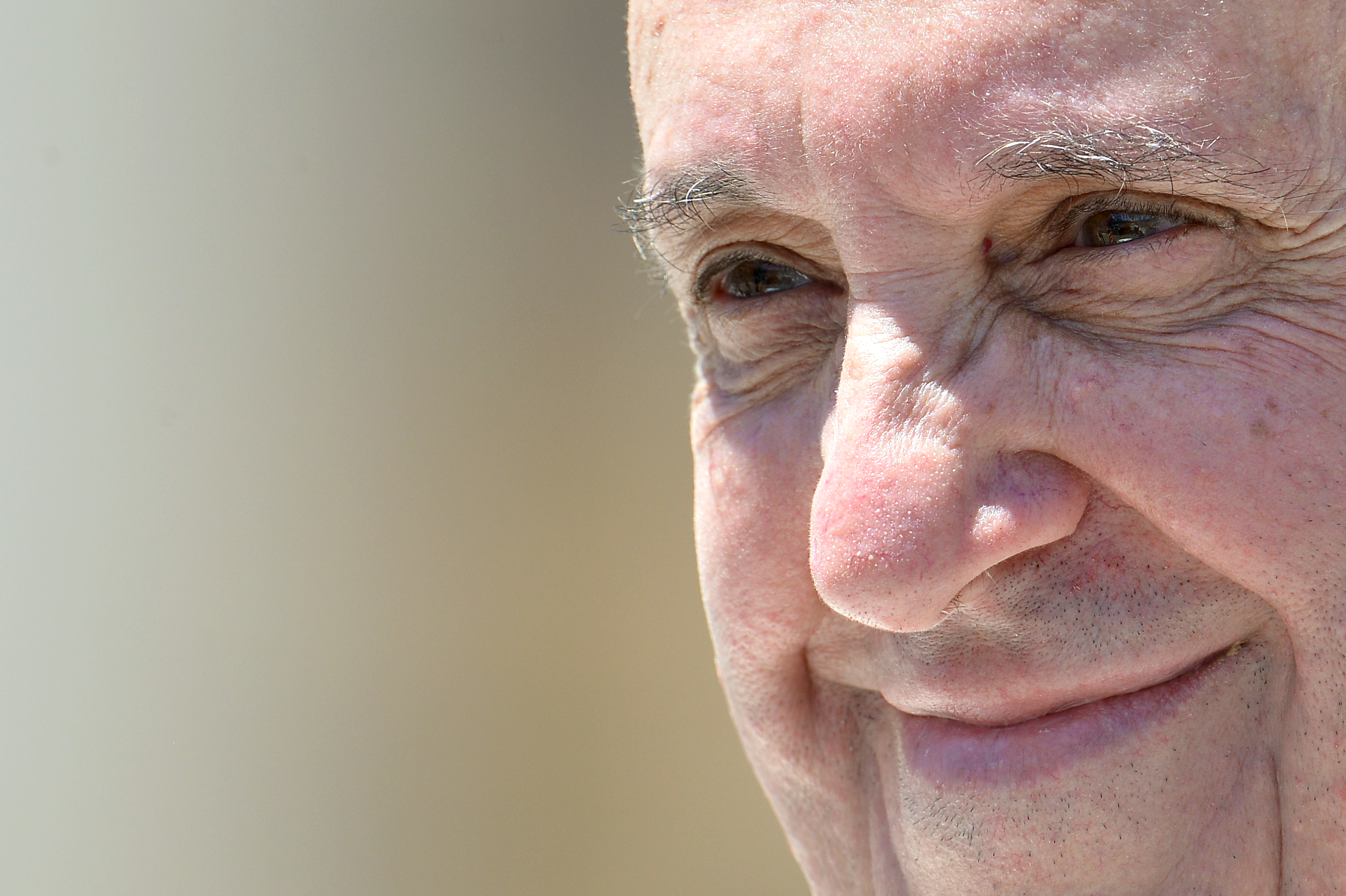
Pope Francis Attends Celebration Of The Lord's Passion in the Vatican Basilica

Well, if the theocons hadn’t got the message by now, they can only blame themselves. The new interview with Pope Francis is a revelation. This Pope is not the Pope of a reactionary faction obsessed with controlling the lives of others – a faction that has held the hierarchy in its grip for three decades. He is a Pope in the spirit of the Second Vatican Council, a Pope with a larger and more humane perspective than the fastidious control-freaks that have plagued the church for so long. I need to read and absorb the full interview – it’s 12,000 words long – before I comment at any greater length. But here are the key phrases that are balm to so many souls:

“This church with which we should be thinking is the home of all, not a small chapel that can hold only a small group of selected people. We must not reduce the bosom of the universal church to a nest protecting our mediocrity.”

And this with respect to the near-pathological obsession of the theocons with abortion, gay rights, and culture war politics:

“The dogmatic and moral teachings of the church are not all equivalent. The church’s pastoral ministry cannot be obsessed with the transmission of a disjointed multitude of doctrines to be imposed insistently. We have to find a new balance, otherwise even the moral edifice of the church is likely to fall like a house of cards, losing the freshness and fragrance of the Gospel.”

For me, obviously, it was wonderful to hear the true spirit of the Gospels with respect to homosexual persons:

“A person once asked me, in a provocative manner, if I approved of homosexuality. I replied with another question: ‘Tell me: when God looks at a gay person, does he endorse the existence of this person with love, or reject and condemn this person?’ We must always consider the person.”

Why must we always consider the person rather than abstract theological certitude? Because that is what Jesus did. And Jesus, quite obviously, is breathing life back into His church.

More soon, after I’ve had some time to read and absorb the whole thing.

(Photo: Getty Images.)

A Prayer For Peace

In light of his vocal appeals for the US to resist intervening in Syria, Michael Peppard sees Pope Francis shifting away from a “just war” approach to international affairs:

The “just war” tradition of the Catholic Church focuses on principles such as just cause, proportionality, last resort, and serious prospect of success, among others. In recent years, some have developed the principle of “responsibility to protect” as a corollary to the received tradition. Some usually progressive American Catholic voices, such as Michael Sean Winters, have argued that military intervention in Syria does qualify as just.

But from Pope Francis’s statements and previous writings, he leans away from the “just war” discourse and toward the just peacemaking school of thought—or outright pacifism. Conflict has been present from the time of Cain and Abel, he said in On Heaven and Earth, but “I believe that war must never be the path to resolution.” The recurrent human attraction to war is exacerbated, he believes, by “the media’s way of putting things, in black and white,” which “is a sinful tendency that always favors conflict over unity.”

That’s my impression too – in large part because just war theory did nothing to prevent the disaster in Iraq. Christians may need, given the terrifying spread of religious terrorism and unimaginably advanced and increasingly accessible means for widespread destruction, to recalibrate toward a more pacifist position. That’s where my own prayers are leading me after the last decade, and Francis is emerging as a potentially vital figure for framing the next century. Alessandro Speciale notes that “Francis took the unusual step of penning a letter to world leaders ahead of a global day of fasting and prayer for peace in Syria that Catholics will observe on Saturday (Sept. 7).” An excerpt from letter:

[I]t is clear that, for the world’s peoples, armed conflicts are always a deliberate negation of international harmony, and create profound divisions and deep wounds which require many years to heal. Wars are a concrete refusal to pursue the great economic and social goals that the international community has set itself, as seen, for example, in the Millennium Development Goals. Unfortunately, the many armed conflicts which continue to afflict the world today present us daily with dramatic images of misery, hunger, illness and death. Without peace, there can be no form of economic development. Violence never begets peace, the necessary condition for development…

It is regrettable that, from the very beginning of the conflict in Syria, one-sided interests have prevailed and in fact hindered the search for a solution that would have avoided the senseless massacre now unfolding. The leaders of the G20 cannot remain indifferent to the dramatic situation of the beloved Syrian people which has lasted far too long, and even risks bringing greater suffering to a region bitterly tested by strife and needful of peace. To the leaders present, to each and every one, I make a heartfelt appeal for them to help find ways to overcome the conflicting positions and to lay aside the futile pursuit of a military solution. Rather, let there be a renewed commitment to seek, with courage and determination, a peaceful solution through dialogue and negotiation of the parties, unanimously supported by the international community. Moreover, all governments have the moral duty to do everything possible to ensure humanitarian assistance to those suffering because of the conflict, both within and beyond the country’s borders.

Francis’ Sunlight, Ctd

Pope Francis Attends Celebration Of The Lord's Passion in the Vatican Basilica

There was a real debate about how to interpret the Pope’s recent conciliatory tone toward gay people. Many, like me, saw the tone as substance, seeing no massive overhaul in doctrine, but a revolution in emphasis that necessitates an eventual change in doctrine. By choosing to emphasize the humanity and dignity of gay people seeking God in good faith – “Who am I to judge?” – this Pope was shifting gears away from the counter-revolution of John Paul II and Benedict XVI against the liberation of modernity. Others insisted there had been no change at all – and that the idea of one was a deliberate or misinformed misreading of the Pope’s comments by the secular press.

Well, we could go back and analyze every sentence of the impromptu press conference – as some have done with surprising results:

He did not say that “homosexuals should not be marginalized.” He said “these persons should not be discriminated against, but welcomed (accolte).” He is citing the words of the Catechism here.

And he did not regurgitate other language from the Catechism about gays’ “objective disorder” or “just” and “unjust” discrimination against them. He ignores the former language and expunges the latter. In fact, the more you examine the presser, the more radical its implications seem.

But now we have more confirmation that this was not a gaffe but a strategy. Well, confirmation might be a bit strong – but one of the American cardinals tapped for Francis’ new, reformist group of eight cardinals is Boston Cardinal Sean O’Malley. He has clearly been in touch with the new pontiff and just gave a speech which confirms the theocons’ worst nightmare. It was at the annual Knights of Columbus convention in San Antonio. K-Lo was there and didn’t see anything but the attendants’ desire to evangelize in the developing world and roll back Obamacare, marriage equality, alleged religious repression, and abortion rights. In fact, her opening paragraph is about the Catholic importance of denying gay couples civil equality. Funny that, isn’t it?

But O’Malley’s speech was an eye-opener to anyone who hasn’t decided to be blind for a while.

The context is worth revisiting. It comes after the American hierarchy has insisted that the issues of contraception, marriage equality and abortion are central to religious freedom and to the Catholic faith. American nuns have also been subjected to an inquisition because they were insufficiently vocal about these issues and preferred service to the poor and needy. The inquisition is not over, but its guiding philosophy appears to have been up-ended:

“Some people think that the Holy Father should talk more about abortion,” O’Malley told approximately 2,000 attendees, according to a copy of the remarks posted online. “I think he speaks of love and mercy to give people the context for the Church’s teaching on abortion,” he continued. “We oppose abortion, not because we are mean or old fashioned, but because we love people. And that is what we must show the world.”

In this picture, it is hard not to see Francis’ challenge to the theocons as a version of Jesus’ rebuke of the Pharisees of his day. It’s a return toward humility and service, and away from the authoritarian control and doctrinal obedience mandated by Ratzinger and Wojtila. It’s a recognition that if Christianity’s global reputation is framed as hostile to gays, women and the marginalized, its doctrinal arguments will never succeed, because the only basis for any Christian argument is love. If Christians are seen as haters or discriminators or wielders of government power to enforce their doctrines, they will not only betray their core, but also fail at reaching the people of modernity.

Yes, the arrival of this new Pope increasingly appears as a watershed in the life of the Church. And not a moment too soon.

(Photo: Getty Images)

A Bishop’s Resignation

Happens a lot these days – usually because of the child-rape conspiracy or financial shenanigans. But this time, it happened just after Pope Francis said conciliatory and Christian things about gay people. The resignation? From one of the most virulently homophobic bishops on the planet, Bishop Simon Bakot of Yaoundé, former president of the National Bishops’ Conference of Cameroon. The resignation was announced by the Vatican:

Bishop Bakot did not resign for reason of age as Catholic bishops are required to do when they reach 75; he is only 66. Nor is he known to have been in ill health or under scrutiny for financial reasons or his own sexual misconduct. The sole reason he is famous is for his staunch opposition to gays. He lumps them with pedophiles and practitioners of bestiality and calls them an affront to God’s creation. He threatens to ‘out’ clergy he opposed by revealing their sexual orientation. He has even been a vocal public supporter of Cameroon’s national day of hatred of gays. The fact that his resignation was accepted the day after Francis’s now famous utterance casts new light on the Vatican’s stance toward gays.

Bakot has described marriage equality as “a serious crime against humanity. We need to stand up to combat it with all our energy.” Once in the vanguard of the Catholic hierarchy’s shift toward the far right, he now seems somewhat stranded.

Know hope.

The Church Tacks To The Center

Douthat recently speculated that Pope Francis might be able to move “U.S. Catholics away from a too-close entanglement with the fortunes and platform of the Republican Party.” Along those lines, John L. Allen Jr. notes that “Francis seems to be repositioning the church in the political center, after a fairly lengthy period in which many observers perceived it to be drifting to the right”:

Veteran Italian journalist Sandro Magister recently observed, “It cannot be an accident that after 120 days of his pontificate, Pope Francis has not yet spoken the words abortion, euthanasia, homosexual marriage,” adding that “this silence of his is another of the factors that explain the benevolence of secular public opinion.”

Yet Francis has imposed no such gag order on himself when it comes to other political topics, such as poverty, the environment and immigration. …

In Rome, the perception is that power brokers associated with moderate positions, such as Cardinal Oscar Rodríguez Maradiaga of Honduras, coordinator of the commission of cardinals, are on the ascendant, while those linked to neoconservative or traditionalist stances, such as Cardinal Raymond Burke of the United States, head of the Vatican’s supreme court, are in decline.

The church may not veer sharply in its political allegiances, but there seems a clear preference for the social Gospel over the culture wars.

The Polarization Of The Faithful

The reasons RR Reno worries about it:

First, religiosity now strongly correlates with partisan loyalty. Nones are overwhelmingly Democrat. Regular churchgoers, especially but not exclusively Evangelicals, trend ­Republican. This politicizes religion. Second, religious people are becoming more and more dependent on the Republican party to protect their interests (religious liberty, for example). We could easily become a taken-for-granted base largely irrelevant to the party’s larger policy debate, as African-Americans often are in the Democratic party. Third, religion, especially orthodox Christianity, may end up implicated in the inevitable failures and corruptions of the Republican party. We may be in danger of recapitulating in some ways the disastrous alliances of the Catholic Church with the European right in the nineteenth and early twentieth centuries.

Douthat wonders if Pope Francis could help Christianity avoid this fate:

I think this analysis suggests a positive case, in the American context at least, for a papacy that simultaneously calls U.S. Catholics away from a too-close entanglement with the fortunes and platform of the Republican Party, and that consistently reminds non-Catholics and non-Christians that there is more to Christianity than the particular set of issues that have (understandably) kept many American believers in a right-of-center political orbit.

The Smiling Face Of The Church

VATICAN-POPE-AUDIENCE

Lost amidst the discussion of the Pope’s recent remarks on homosexuality was this observation from John Allen: the theme that Francis invokes the most is joy:

Every pope seems to have a signature spiritual idea. For John Paul II, it was courage: “Be not afraid!” was his catchphrase to invite the church to recapture its missionary swagger after years of introspection and self-doubt. For Benedict XVI, it was “faith and reason,” the idea that religious belief and intellectual reflection need one another to remain healthy.

For Francis, the best early candidate for his signature touch is mercy, expressed in his repeated emphasis on God’s endless capacity to forgive…

In a recent essay for the Italian newspaper Corriere della Sera, Enzo Bianchi, founder of the celebrated ecumenical monastery of Bose, offered a statistical analysis of the words used most frequently by Francis since his election. He found that the single most commonly used term was “joy,” more than 100 times, followed closely by “mercy,” which the pope has used almost 100 times.

One that note, it’s worth revisiting Francis’ remarks from a homily he delivered during a Mass celebrated in the Chapel of the Domus Sanctae Marthae at the end of May:

The Pope began by referring to the readings of the day from the book of Zephaniah (3:14-18) and the Gospel of Luke (1:39-56), saying that they “speak to us of joy and happiness: ‘rejoice, shout for joy’, says Zephaniah… ‘The Lord is in the midst of you’… He too will rejoice over us. He, too, is joyful”.

“Everything is joy. But we Christians, we are not used to talking about joy, about happiness. I think that many times we prefer complaints! What is joy? The key to understanding this joy is in the Gospel: ‘Elizabeth was filled with the Holy Spirit’. What gives us joy is the Holy Spirit.

“It is the Spirit who guides us. He is the author of joy, the creator of joy, and this joy of the Holy Spirit gives us true Christian freedom. Without joy we Christians can not become free. We become slaves to our sorrows”.

(Photo: Pope Francis smiles after his weekly general audience in St Peter’s square at the Vatican on June 12, 2013. By Alberto Pizzoli/AFP/Getty Images.)

“Gay Men Have Created The Glories Of The Church”

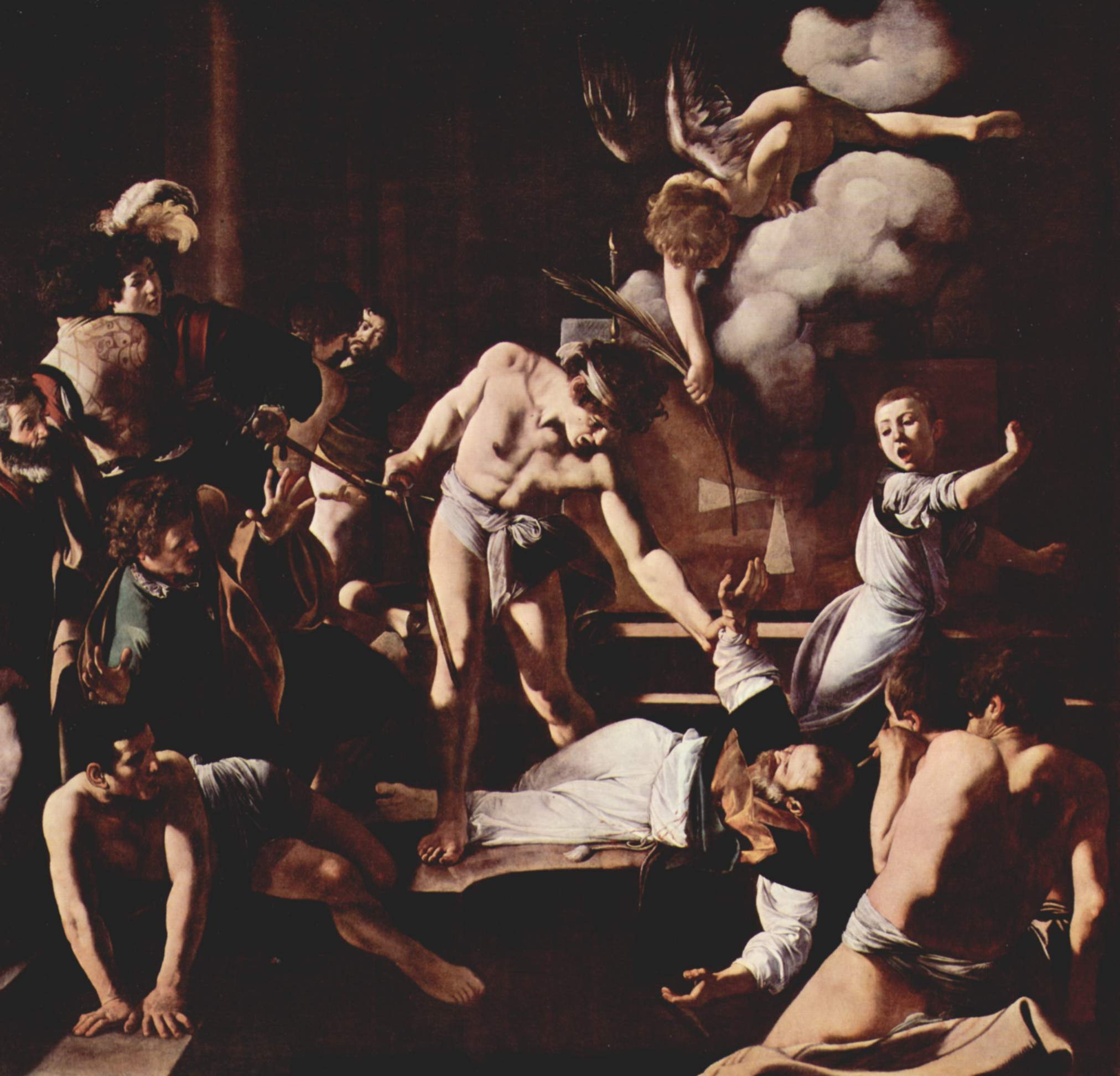
Michelangelo_Caravaggio_martyr

While appreciating the decency of Pope Francis’s recent comments on homosexuality, Jonathan Jones invites him to take a stroll through the Vatican’s art collection if he wants to further contemplate the matter:

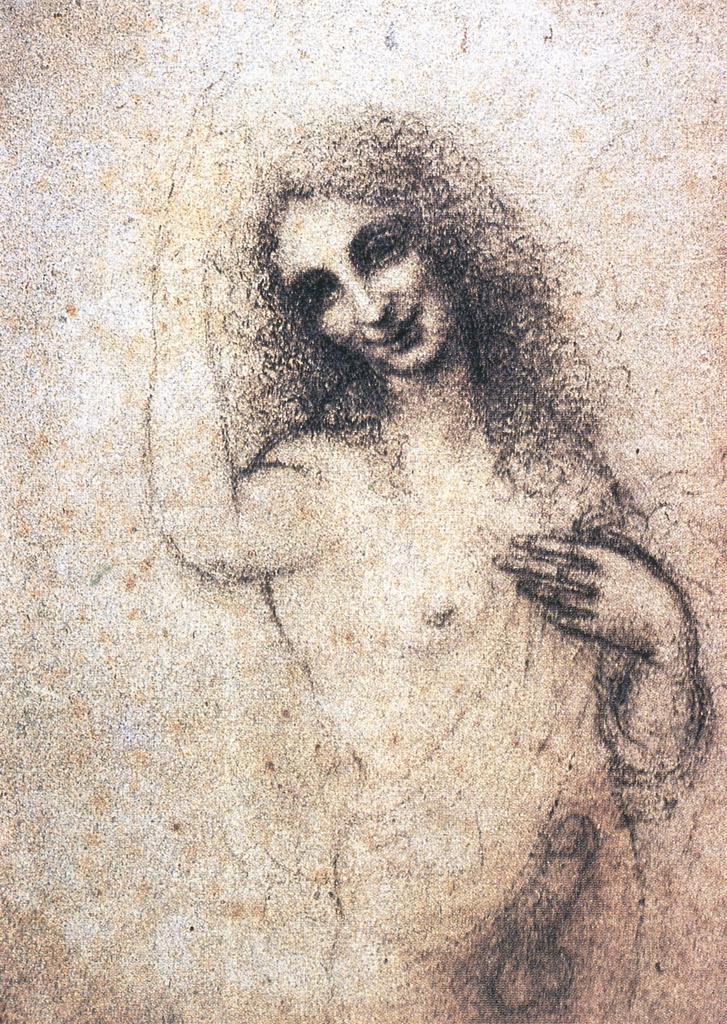
In the Vatican museum he should contemplate Leonardo da Vinci’s St Jerome in the Desert. An ascetic sits in anguished thought in a rocky wilderness in this unfinished masterpiece. It is a great, introspectively spiritual work of religious art whose creator was well known for his love of young men. Leonardo surrounded himself with good-looking assistants and painted a subversively gay icon of male beauty, his bronzed Saint John the Baptist. When da Vinci was in his 20s, he was formally accused of sodomy.

Brooding on these facts, the Pope might walk into the Pauline Chapel, to look upon Michelangelo’s frescoes there. This chapel is in a private part of the Apostolic Palace not open to the public, but I don’t think the Pope would find entry difficult. There, looking at the suffering of the saints, he might consider how Michelangelo courageously expressed his love for men, even as he created some of the most eloquent art of the church.

Is there no escape from this issue? Remembering that some art historians deny the so-called “calumny” that Caravaggio and his clerical patrons were gay, perhaps the Pope might visit the Roman church of San Luigi dei Francesi to look on this master’s paintings of St Matthew. But the demons of desire cannot be suppressed. The naked male flesh in Caravaggio’s paintings tells its own story. By the time Caravaggio came to Rome in the 1590s, Leonardo and Michaelangelo – not to mention the aptly named Italian painter Il Sodoma – had already blazed a gay trail through the art of the Holy City. Caravaggio made art dangerous and exciting again by taking that homosexual impulse to new extremes.

(Painting: Caravaggio’s flesh-filled The Martyrdom of St. Matthew, 1599-1600, via Wikimedia Commons)