The Waning Evangelical Vote

Robert Jones notes that “the number of white evangelical Protestants nationwide has slipped from 22 percent in 2007 to 18 percent today.” He thinks “the fact that there are currently five Southern states—Arkansas, Georgia, Kentucky, Louisiana, and North Carolina— where polling shows that the Senate race margins are less than five percentage points indicates that 2014 may be the year that the underlying demographic trends finally exert enough force to make themselves felt”:

Compared to 2007, just after the 2006 midterm elections, the five southern states where there are tight Senate races have one thing in common: the proportion of white evangelical Protestants has dropped significantly.

1. In Arkansas, where Republican and freshman Representative Tom Cotton is locked in a tight race with two-term Democratic Senator Mark Pryor, the white evangelical Protestant proportion of the population has dropped from 43 percent to 36 percent.

2. In Georgia, where Democratic candidate Michelle Nunn is battling Republican candidate David Perdue for retiring Senator Saxby Chambliss’s seat, white evangelical Protestants made up 30 percent of the population in 2007 but that number is currently down to 24 percent.

3. The proportion of white evangelicals in Kentucky has plunged 11 points, from 43 percent to 32 percent; here Senate Minority Leader Mitch McConnell faces the Democratic Alison Grimes, the secretary of state.

4. In Louisiana, where Republican Representative Bill Cassidy is up against three-term Democrat Mary Landrieu, white evangelicals have slipped from being 24 percent of the population to 19 percent.

5. Likewise, North Carolina has seen a dip in the white evangelical proportion of its population, from 37 percent to 30 percent; here incumbent Democrat Kay Hagan battles Republican Speaker of the North Carolina House Thom Tillis.


Looking Past Despair

In a series of exchanges with Sayed Kashua, an Israeli-Palestinian writer who expatriated to the US this summer, Etgar Keret explains why he maintains hope that change will come to Israel:

It’s easy for me to understand why so many Israelis have chosen despair. The history of this conflict is endlessly depressing. We’ve seen so many missed opportunities, shows of distrust, and lack of courage on both sides throughout the years, occurring almost as persistently as a force of nature. But, even if everyone is to blame for the failure, we Israelis—sorry for dragging you into this, too, Sayed, but a thousand green cards won’t help you; to me, you’ll always be an Israeli—are the only ones capable of beginning a process that will rescue us from this inhuman situation. Israel is the stronger side in this conflict, and, as such, it is the only side that can truly initiate change. And to do that it has to part company with that despair, which, like many other kinds of despair, is nothing but an ongoing self-fulfilling prophecy.

And I believe that it will happen.

I believe that this despair is temporary, and that even though there are quite a few political elements that would rather see us despairing, and even though it sometimes seems as if enormous forces are working to convince us that hope is just another word in our national anthem and not a powerful force that can lead to change, people feel deep down that the terrible situation we find ourselves in is not really the only dish on the regional menu. When I look around, apart from the minority of Jewish messianists cavorting on the hilltops and in the Knesset, I don’t see people who are happy with the existing situation and are willing to accept it. Only some of them have a moral problem with the occupation, but even the ones who don’t realize that until the Palestinian people have a country no one’s going to have an easy time of it here. War is expensive, as our Minister of Defense reminded us recently, and each person in this country is personally invested in the next war, with a son, a father, a brother, or a friend who will go into Gaza for the umpteenth time. And the fact that all those people who are not happy still haven’t found an effective plan of action or a worthy leader they can follow is only a temporary situation. Yes, this temporary situation is terrible, but, paradoxically, the worse it gets, the more inevitable change becomes.

A Poem For Sunday

14511414531_0d6227e3d6_o

Dish poetry editor Alice Quinn writes:

James Laughlin, the founder and publisher of New Directions from 1936 until his death in 1997, was also a prolific poet, who established his style with some guidance from William Carlos Williams, one of his most distinguished authors. In Peter Glassgold’s introduction to The Collected Poems of James Laughlin, 1935-1997, the omnibus volume he has edited, I learned that Laughlin dubbed it “typewriter metrics.” Glassgold describes it thus: “The lines in any given stanza could not vary in length more than one typewriter character.” Laughlin said that he was after “an effect of tension from the war between the strictly artificial pattern and the strictly natural spoken rhythms.”

The poem below was written in the mid-30s, around the time he took a trip to Key West to try to talk Elizabeth Bishop into joining his list. She didn’t say yes, but there’s an enchanting picture of her on the steps of a brothel where they were treated to tea, and, as Laughlin recalled, “Oreo cookies, my favorites.”

“What My Head Did to Me” by James Laughlin:

I guess I like myself
pretty well anyway I
wanted a statue of my-
self so I had a woman

make one it was a head
and she modelled it in
clay then one night I
dreamed I’d killed my

very best friend and
there was my head right
there ready to tell on
me when the police came

I tried to destroy the
face so they wouldn’t
know it was me but my
hands stuck tight in

the clay I couldn’t
tear them loose and
there I was when the
police came held by my

own head with the body
of my friend multi-
plying itself like
endless mirrors down

the street that’s the
thing my head did to
me but of course it
was only a dream see.

(From The Collected Poems of James Laughlin, 1935-1997, edited with an introduction and notes by Peter Glassgold © 1995 by James Laughlin. Used by permission of New Directions Publishing Corporation. Photo by Lori Leaumont)

The Trouble With Religion

In a follow-up interview to his comments featured in our “Trouble with Islam” thread, Reza Aslan elaborates on what the New Atheists get wrong about religion:

I think the principle [sic] fallacy of not just to the so-called New Atheists, but I think of a lot of critics of religion, is that they believe that people derive their values, their morals, from their religion. That, as every scholar of religion in the world will tell you, is false.

People don’t derive their values from their religion — they bring their values to their religion. Which is why religions like Judaism, Hinduism, Christianity, [and] Islam, are experienced in such profound, wide diversity. Two individuals can look at the exact same text and come away with radically different interpretations. Those interpretations have nothing to do with the text, which is, after all, just words on a page, and everything to do with the cultural, nationalistic, ethnic, political prejudices and preconceived notions that the individual brings to the text. That is the most basic, logical idea that you could possibly imagine, and yet for some reason, it seems to get lost in the incredibly simplistic rhetoric around religion and the lived experience of religion.

Below is how he responds when especially problematic verses in sacred texts – such as those permitting the faithful to kill nonbelievers – are noted in debates about religion:

This is the thing — it’s not that you can interpret away problematic parts of a scripture. It’s that the scriptures are inundated with conflicting sentiments about almost every subject. In other words, the same Torah that tells Jews to love their neighbor also tells them to kill every single man, woman, and child who doesn’t worship Yahweh. The same Jesus who told his disciples to give away their cloaks to the needy also told them to sell their cloaks and buy swords. The same Quran that tells believers if you kill a single individual, it’s as though you’ve killed all of humanity, also tells them to slay every idolater wherever you find them.

So, how do you, as an individual, confront that text? It’s so basic, a child can understand: The way that you would give credence or emphasis to one verse as opposed to the other has everything to do with who you are. That’s why they have to sort of constantly go back to this notion of an almost comical lack of sophistication in the conversations that we are having about religion. And to me, there’s a shocking inability to understand what, as I say, a child would understand, which is that religions are neither peaceful nor violent, neither pluralistic nor misogynistic — people are peaceful, violent, pluralistic, or misogynistic, and you bring to your religion what you yourself already believe.

Hasidic No More

In an interview about her forthcoming book, Becoming Un-Orthodox: Stories of Ex-Hasidic Jews, Lynn Davidman offers a glimpse of what life is like in Hasidic communities:

They’re taught to be modest: Aside from dressing in an unrevealing way, this means not talking in a loud voice, not wearing gaudy colors, generally not calling attention to yourself. Men, when walking down the street, will look down so they don’t catch a woman’s eye. Before marriageable age, there is complete and utter separation of the sexes. Inside the Satmar community, there are Yiddish signs indicating which side of the street men walk on and which side of the street women walk on.

The entire day is filled with ritual.

When you wake up, you are not allowed to walk more than three steps from your bed before you encounter a big bowl of water that was placed on the floor the night before. There’s a cup with two handles; you pick it up and pour it over each hand three times. Then you say a prayer thanking God for returning you from sleep. Then you go to the bathroom. There’s a special blessing to say after you go to the bathroom — you thank God that all your organs are functioning. Then there are more prayers, especially for the men. The men are obligated to pray every morning by a certain time. If you go to breakfast, you’re supposed to say a blessing over each food. There’s an order in which you say the blessings. If you have a fruit salad, but you have granola too, which do you bless first? One idea is that if the fruit’s grown in Israel, you bless that one first. There’s a whole system.

Her summary of what typically prompts someone to leave:

They generally have had some childhood experience that doesn’t fit with the ideal Hasidic way. They’re taught that this is the ideal life — but if they’re subject to un-ideal conditions, they start to question what’s wrong. Sometimes there’s verbal or physical or sexual abuse. Perhaps they have two parents whose levels of religiosity differ. This is confusing for a kid, because [they’re taught that] there’s one right way. If their parents disagree, they start to wonder: Is there really one truth? Other people may have cousins or relatives who are secular. One woman said [of her cousins], “They go skiing, they have such a great time — and nobody’s punishing them.” People who leave are mostly young, up to around 25 years old. If you’re married and starting to have kids, it’s much harder to get out.

Aural Sex, Ctd

https://dailymotion.com/video/x24m45q

EJ Dickson profiles Nica Noelle, “a veteran porn director and performer turned ASMRtist”:

Nica has been interested in doing erotic ASMR [autonomous sensory meridian response] since she first stumbled on the community a few years ago. Her project, she tells me, is twofold: She wants to fuse the basic principles of ASMR with traditional POV porn, but she also wants to make the relationship between the viewer and performer more intimate; she wants to turn the viewer on, but she also wants them to feel nurtured, cared for, needed. In short, Nica is trying to capture a feeling that no other porn director has ever tried to replicate before: Love.

But, like some Dish readers, not everyone is thrilled with sexualizing ASMR:

[I]f the ASMR party line is that it’s not intended to be sexual, Nica’s channel, which features her massaging her breasts and speaking in low, seductive tones, doesn’t necessarily support that view point. …

Nica doesn’t have any patience with the argument that her erotic ASMR work makes mainstream ASMR-tists “look bad,” or invites male viewers to give them unwanted sexual attention. “It’s very simple: If you don’t want to add a sexual component to your artistic expression, then don’t,” she says. But she admits she was shocked by the backlash she received for her erotic ASMR channel, though she says she anticipated it to a certain extent.

“Many ASMRtists are already on the defensive about being viewed as doing something dirty or creepy, when actually they feel ASMR is a pure, almost childlike artistic expression; the antithesis of porn,” she told me via email. “I can see why someone who makes videos of themselves clipping coupons or shining shoes doesn’t want to be viewed as a pornographer.” …

As she talks about her new HotMovies project, which will likely feature “erotic ASMR” as a new fetish category, it seems that Nica’s general artistic project has switched focus somewhat: Instead of trying to convince the ASMR community at large that sexualizing brain tingles isn’t dirty or bad, she wants to convince porn viewers that porn isn’t necessarily dirty or bad, that it can be loving and intimate and nurturing and highly erotic, all at the same time. Put another way, she’s transitioned from trying to apply porn principles to ASMR, to applying ASMR principles to porn.

Previous Dish on ASMR here.

App-Based Affairs

Michelle Cottle examines how technology is making it easier to cheat – and easier to get caught:

In an earlier era, a suspicious husband like Jay might have rifled through Ann’s pockets or hired a private investigator. But having stumbled upon Find My iPhone’s utility as a surveillance tool, Jay wondered what other apps might help him keep tabs on his wife. He didn’t have to look far. Spouses now have easy access to an array of sophisticated spy software that would give Edward Snowden night sweats: programs that record every keystroke; that compile detailed logs of our calls, texts, and video chats; that track a phone’s location in real time; that recover deleted messages from all manner of devices (without having to touch said devices); that turn phones into wiretapping equipment; and on and on.

One might assume that the proliferation of such spyware would have a chilling effect on extramarital activities. Aspiring cheaters, however, need not despair:

software developers are also rolling out ever stealthier technology to help people conceal their affairs. Married folk who enjoy a little side action can choose from such specialized tools as Vaulty Stocks, which hides photos and videos inside a virtual vault within one’s phone that’s disguised to look like a stock-market app, and Nosy Trap, which displays a fake iPhone home screen and takes a picture of anyone who tries to snoop on the phone. CATE (the Call and Text Eraser) hides texts and calls from certain contacts and boasts tricky features such as the ability to “quick clean” incriminating evidence by shaking your smartphone. CoverMe does much of the above, plus offers “military-grade encrypted phone calls.” And in the event of an emergency, there’s the nuclear option: apps that let users remotely wipe a phone completely clean, removing all traces of infidelity.

Verse Before Vows?

In a review of Poets in Their Youth, Eileen Simpson’s 1982 memoir of her marriage to John Berryman, Lisa Levy contemplates what inspired the poet and his contemporaries Robert Lowell and Delmore Schwartz – and what drove them apart from their spouses:

To get an idea about how important poetry was to these men — not their wives, who significantly seemed to tolerate the poetry talk rather than participate in it — it’s best to think about if the World Series, the Superbowl, the Stanley Cup, and the NBA Playoffs all happened at the same time with teams like Milton, Yeats, Eliot, and Shakespeare competing.

Randall Jarrell was fond of a game called The Best Three, which he made his fellow poets play obsessively — the best three lines of Milton, of the “The Waste Land,” of Lear, etc. Reading about it in Simpson reminded me of how my friends and I were about music in the 1980s: What’s the best live band you’ve ever seen? Best Stones record? Best UK Punk band before the Clash? Current band from Minneapolis? Band to ever play CBGBs? But while we were obsessed with the new, the poets were wildly concerned with lineages, through lines from the Elizabethans to the Romantics to the Moderns to themselves. The theory is that the generation before — Yeats, Eliot, Pound — would be sure to overshadow this one, no matter how hard Berryman, Schwartz, Jarrell, and Lowell wrote. But that was wrong. If they wrote hard, though, they lived harder, and were extremely hard to live with. It’s not shocking that they took mistresses and to the bottle: poetry was the only thing they could be faithful to.

This was a pivotal time in poetry, and they were the first generation of “professional poets,” a class made possible by MFA programs, generous fellowships, and an actual reading public (as well as popular public readings). Yet despite all of this machinery, the idea of the poet maudit, roaming the streets composing verse about lost loves and sad lives, possessed them. Does it follow that they were then cursed with lost loves and sad lives? One of their constant arguments was about poetry as a vocation versus poetry as work, which seems a false dichotomy. Doesn’t it have to be both?

Oh Baby, He’s A Wilde One

1200px-A_Wilde_time_3

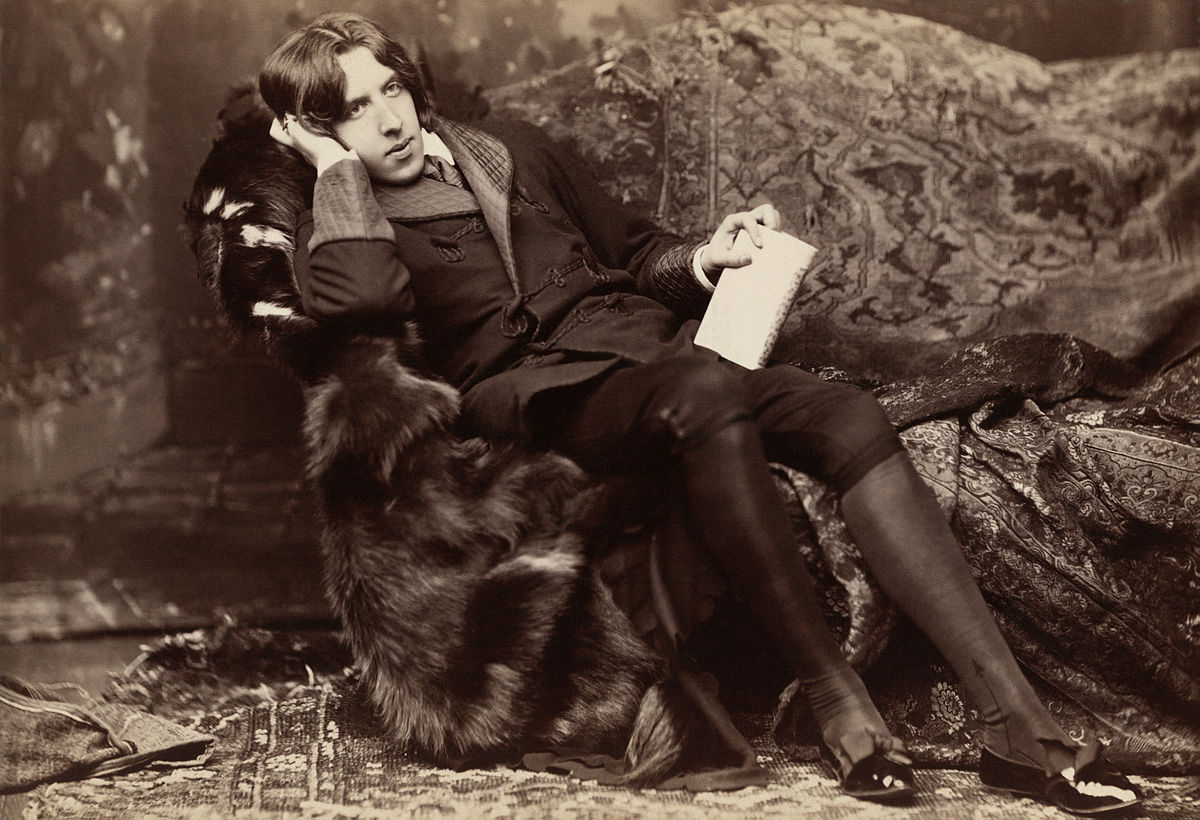
Thursday marked the 160th birthday of Oscar Wilde. To celebrate, TNR republished a classic essay from their archives by George Woodcock, who pondered the writer’s enduring appeal:

Wilde’s broadest appeal lies in the mood of daring thought and enthusiasm from which such insights emerged. It is significant that he had always attracted the adolescent, and in this way has influenced the literary and intellectual awakening of each generation that has followed his own. “I have met no one who made me so aware of the possibilities latent in myself,” said William Rothenstein, remembering his own youth, and many young people who have met Wilde only through his writings have found there an invaluable stimulus at certain stages of their development. This peculiar appeal to the young arises not only from the romantic iconoclasm of Wilde’s ideas, but also from the almost adolescent zeal with which he champions them. … “Disobedience,” he reminds us, “is man’s original virtue. It is through disobedience that progress has been made, through disobedience and through rebellion.” Here the best of the nineteenth century speaks through its most wayward representative.

Richard Ellmann, who wrote a Pulitzer Prize-winning biography of Wilde, details a bit of that rebelliousness in an account of his years as a student at Oxford:

Wilde seems to have enjoyed subverting authorities.

At the examination in Divinity which he had to take at the end of his second year, he went up to the proctor to obtain the examination paper. The proctor inquired, “Are you taking Divinity or Substituted Matter?” (The substituted matter was for non-Anglicans.) “Oh, the Forty-Nine Articles,” Wilde replied indifferently. “The Thirty-Nine, you mean, Mr. Wilde,” said the proctor. “Oh, is it really?” asked Wilde in his weariest manner. (He would talk later of the Twenty Commandments; by miscounting them he discounted them.) The examiner on this occasion was W.H. Spooner, later Warden of New College. Spooner reproved Wilde for being late, to which Wilde replied airily, “You must excuse me. I have no experience of these pass examinations,” meaning that an examination where one simply passed or failed was beneath his notice.

Spooner, himself in orders and a nephew of the Archbishop of Canterbury, reprimanded him by telling him to copy out the twenty-sixth chapter of Acts in Greek. After a time, seeing that Wilde was toiling away industriously, Spooner relented, “You have done enough.” But Wilde continued to write. Spooner said, “Did you hear me tell you, Mr. Wilde, that you needn’t write any more?” “Oh yes, I heard,” said Wilde, “but I was so interested in what I was copying that I could not leave off. It was all about a man named Paul, who went on a voyage and was caught in a terrible storm, and I was afraid that he would be drowned; but do you know, Mr. Spooner, he was saved; and when I found that he was saved, I thought of coming to tell you.”

And of course, it’s hard to mention Wilde without noting his sexuality. Maria highlights his love letters to Lord Alfred Douglas, including this one:

My Own Boy,

Your sonnet is quite lovely, and it is a marvel that those red rose-leaf lips of yours should be made no less for the madness of music and song than for the madness of kissing. Your slim gilt soul walks between passion and poetry. I know Hyacinthus, whom Apollo loved so madly, was you in Greek days.

Why are you alone in London, and when do you go to Salisbury? Do go there to cool your hands in the grey twilight of Gothic things, and come here whenever you like. It is a lovely place and lacks only you; but go to Salisbury first.

Always, with undying love, yours,

Oscar

For more Dish on Wilde, check out this post on the time he (almost certainly) had sex with Walt Whitman.

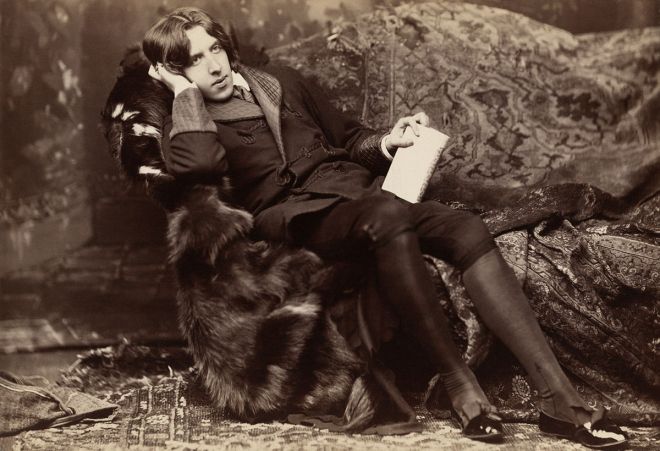
(Image: Oscar Wilde in New York in 1882, via Wikimedia Commons)

Rembrandt At Last

dish_rembrandt

Critics are raving about the show featuring Rembrandt’s later works at London’s National Gallery:

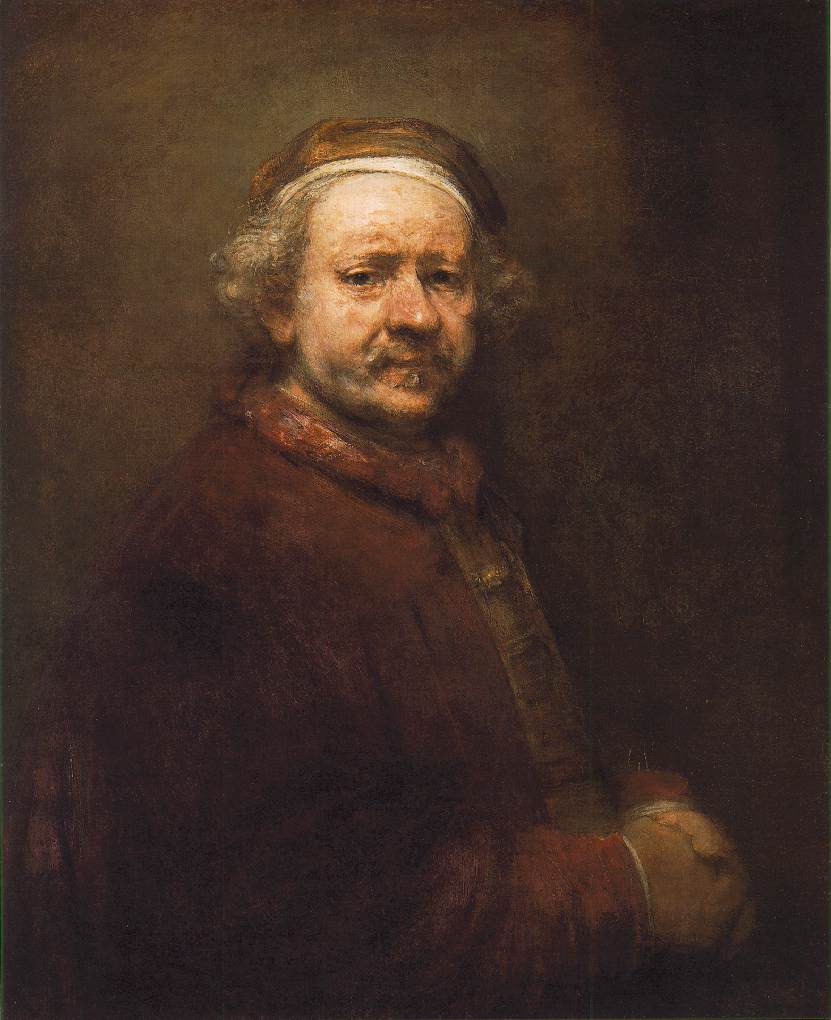
This show is a blockbuster, make no mistake. You know it from the instant you step into the first room, housing four spectacular self-portraits. Dark, lit only by the soft spotlights that illuminate the canvases, it’s as if you’ve walked into a Dutch painting. This room, in which Rembrandts stare unblinkingly out at the spectator—painted between the ages of 53 and 63 (the final year of his life)—boldly proclaim the painter’s unwavering belief in portraying nature in all her pocked, wrinkled, hoary, fragile, unadulterated glory. …

[I]t is the emotional acuity that shines through all these works that makes your heart sing.

Jacob blessing the Sons of Joseph (1656) is such a tender depiction of age and frailty, the hesitant reach of the elderly man for the young child will be recognizable to anyone who has ever known a grandparent. Lucretia (1666), her knife in her hand and blood beginning to stain her shift, rings on a bell to call her family, to alert them to what she has done—she has stabbed herself following her rape by the Roman king Tarquin, rather than live with the shame. Her pallid young face, brow sweating with fear and pain, yet resolute and stiff with sorrow, makes you want to cry.

J.W. at The Economist maintains that “at the heart of everything were, of course, the self-portraits”:

Rembrandt painted himself throughout his career. In his late period he worked repeatedly to catch varying moods of stress and resignation. One self-portrait … done in the final year of his life, shows a man who has lived and knows suffering, who gazes at us with some irony, but with contentment too: sadness leavened by the absolute conviction that this painter knows himself and that only he is able to depict the fact.

It is this that makes late, self-reflective Rembrandt elusive. There was no commercial imperative to paint himself and questions remain. Why did he do it so often? What was he trying to find? Some answers will surely lie in this magisterial National Gallery display. At this stage of his career Rembrandt was often painting, from inside himself, what it is to be human.

In other Rembrandt news, Bendor Grosvernor recently recounted how the number of authentic Rembrandt works has plummeted – from an estimated 600-650 in the first half of the 20th century to around 250 in recent decades:

In 1968, the Rembrandt Research Project (RRP) was established with an admirable objective – to say definitively what was and was not a Rembrandt. But two key factors doomed the RRP’s approach. First, it tried to make attributions by committee, thus allowing indecision and groupthink to reign. It is easier and less risky to say “no” to a picture than to say “yes”. In such situations, the hardest-to-please scholars gain kudos for being “disciplined”, and influence others.

Second, connoisseurship itself fell out of fashion. “New art history” (which became dominant from the late 1970s onwards) believed that connoisseurship was a redundant, elitist practice, and was no longer taught as a key skill for art historians and curators. Social, economic and philosophical generalisation was the order of the day. As a result, the wide and informed debate that should have taken place every time a Rembrandt attribution was questioned didn’t happen. Few ever came to Rembrandt’s defence. As the RRP began to wield its attributional axe, others joined in too, including major museum curators. Rembrandt scholarship became gripped by doubt – if picture X was no longer “right”, then surely pictures Y and Z, which were painted in a similar manner, must be “wrong”.

(Image: Self-portrait at the age of 63 by Rembrandt, 1669, via Wikipedia)