Mum From Republicans On Marriage Equality

Little surprise at this point:

As of Monday afternoon, Sen. Mike Lee was the lone GOP member to issue a statement. His home state of Utah was one of the states where a marriage ban was overturned by an appeals court and the state is now moving forward with allowing same-sex couples to marry. Lee called the Supreme Court decision to not review the appeals “disappointing.”

Steve Benen finds much of the same – but there’s one big exception:

I checked the websites for the House Speaker, House Majority Leader, House Majority Whip, and House Conference Chair, and combined, the four Republican leaders said a grand total of nothing. The same goes for the Republican National Committee, the National Republican Campaign Committee, and the National Republicans Senatorial Committee, all of which published literally zero words on the subject.

But at least their silence demonstrates how politically dead this issue is now, a far cry from the demagoguing of the 2004 election and the Prop 8 campaign of 2008. Timothy Kincaid likewise sees the muted reaction as “a sign that while the fighting isn’t over, we’ve already won”:

[T]he usual voices of the anti-gay extremists have been loud in condemnation. But where are RNC Committee Chairman Reince Preibus? Surely this merits a moment of his time. And as for House Majority Leader John Boehner… well perhaps he’s too busy to comment today. He’s on his way to San Diego to raise money for a gay GOP congressional candidate.

Sure they may both say something about the denial of cert. They may even remind us that they “personally uphold the traditional definition of marriage” or something of the sort. But gone are the days of blistering retort or angry denunciation.

But wait – there’s at least one big turd in the GOP punchbowl sounding off late in the day:

Sen. Ted Cruz (R-Texas) on Monday slammed the Supreme Court for declining to hear appeals on lower court rulings that overturn same-sex marriage bans, calling the justices’ move “tragic and indefensible.” “By refusing to rule if the States can define marriage, the Supreme Court is abdicating its duty to uphold the Constitution,” he said in a statement.

And yet:

“This is judicial activism at its worst,” Cruz said. “Unelected [circuit court] judges should not be imposing their policy preferences to subvert the considered judgments of democratically elected legislatures.”

Judicial activism is the worst, unless it’s judicial inactivism.

Are The Protesters Really Speaking For The People?

HONG KONG-CHINA-POLITICS-DEMOCRACY

Eric X. Li criticizes Hong Kong’s pro-democracy protests for going after the wrong target, arguing that the territory is more democratic today than ever before and that economic stagnation and inequality are the public’s real concerns:

Empirical data demonstrates the nature of public discontent, and it is fundamentally different from what is being portrayed by the protesting activists. Over the past several years, polling conducted by the Public Opinion Program at the University of Hong Kong has consistently shown that well over 80 percent of Hong Kongers’ top concerns are livelihood and economic issues, with those who are concerned with political problems in the low double digits at the most.

When the Occupy Central movement was gathering steam over the summer, the protesters garnered 800,000 votes in an unofficial poll supporting the movement. Yet less than two months later an anti-Occupy campaign collected 1.3 million signatures (from Hong Kong’s 7 million population) opposing the movement. The same University of Hong Kong program has conducted five public opinion surveys since April 2013, when protesters first began to create the movement. All but one showed that more than half of Hong Kongers opposed it, and support was in the low double digits.

But Alvin Y.H. Cheung emphasizes that the movement is about much more than the economy:

Hong Kong’s current system of governance has aptly been described as “the result of collusion between Hong Kong’s tycoons and Beijing’s Communists.”  Half of Hong Kong’s legislature is made up of “functional constituencies” representing “special interests.” The end result of this is that the 1,200-strong Election Committee that currently chooses Hong Kong’s Chief Executive disproportionately favors corporate interests. …

The Umbrella Revolution is the result of this. It is a warning of the comprehensive breakdown of confidence in Hong Kong’s governing institutions – it reflects growing public disillusion with the institutional means of making their voices heard.  The momentum of the protests reflects that disenchantment.

Meanwhile, Christian Caryl wonders why the protest leaders’ Christianity hasn’t gotten more press:

This is myopic. In its origins, Christianity is a product of the Middle East, making it just as “western” as Judaism and Islam. Modern-day Christianity is thoroughly global. The Catholic Church may have its headquarters in Rome, but nowadays the vast majority of Catholics live outside of Europe and North America. Evangelical Protestantism is expanding rapidly in Latin America and Africa — and Christians there see themselves as servants of God, not as “agents of the West.”

The same goes for China. The Pew Research Center’s Forum on Religion and Public Life put the number of Protestant Christians in China at 58 million in 2010 — greater than the number in Brazil (40 million). The scholar Fenggang Yang calculates that China is on track to become the world’s largest Christian country by 2025. Western journalists may not be paying much attention, but that’s one mistake the Chinese Communist Party isn’t about to make. The Party regards religion, and Christianity in particular, as its greatest rival. It’s probably right to do so.

Peter Rutland scrutinizes the movement through the lens of nationalism and identity politics:

Since Hong Kong joined the People’s Republic 17 years ago, young people have been taught Mandarin in school (in contrast to the Cantonese spoken by most residents of Hong Kong) and have had much more direct exposure to Mainlanders, who travel to Hong Kong as tourists in huge numbers. This experience seems to be reinforcing the sense that Hong Kong citizens have a distinct identity and not just a different political system. In recent years polling data have shown a steady rise among those who see themselves first and foremost as “Hong Kong citizens” rather than as Chinese. As one demonstrator, Ashley Au, recently told a journalist: “We don’t feel like we’re a part of China, and I don’t feel Chinese.” This fact is now colliding with frustration over Beijing’s efforts to tamp down the space for political participation.

And Anne Applebaum mulls Beijing’s impulse to paint the protests as part of an American conspiracy:

To the truly authoritarian mind, “spontaneity” is impossible. The state can and should control all organizations. There is no such thing as a self-organized crowd. If people are sleeping in tents in Hong Kong’s central business district or Kiev’s Maidan, somebody must be paying them and directing them, and if it isn’t our state, then it must be someone else’s. I don’t know whether those who talk like this necessarily believe it (for the record, I’m guessing Vladimir Putin does but Hong Kong’s leaders don’t). The vision of foreign conspiracy is self-serving: If there is a foreign power directing the protest, then the government can legitimately destroy it. The conspiracy narrative has an explanatory purpose, too. If the Hong Kong protests are an American plot, then mainland Chinese can safely ignore it.

Follow all of our Hong Kong coverage here.

(Photo: A pro-democracy protester takes part in a protest in the Mongkok district of Hong Kong on October 6, 2014. Exhausted demonstrators debated the next step in their pro-democracy campaign as their numbers dwindled after a week of rallies, and the city returned to work despite road closures and traffic gridlock. By Xaume Olleros/AFP/Getty Images)

Marriage Equality For The Majority!

Marriage Equality

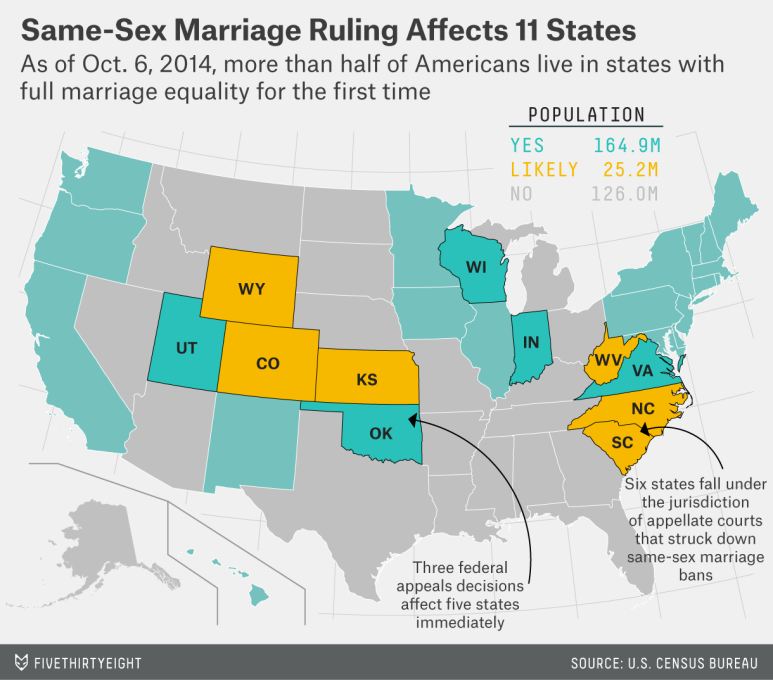
Silver calculates that marriage equality states now “have a collective population of roughly 165 million, according to 2013 census figures”:

That means for the first time, same-sex marriage is legal for the majority of the U.S. population. The 26 states where the practice is not legal have a total population of about 151 million. The Supreme Court’s decision may also lead to the legalization of same-sex marriage in Colorado, Kansas, North Carolina, South Carolina, West Virginia and Wyoming. Those states have an additional 25 million people combined. If they follow suit, 30 states and the District, totaling about 60 percent of the U.S. population, would allow same-sex marriage.

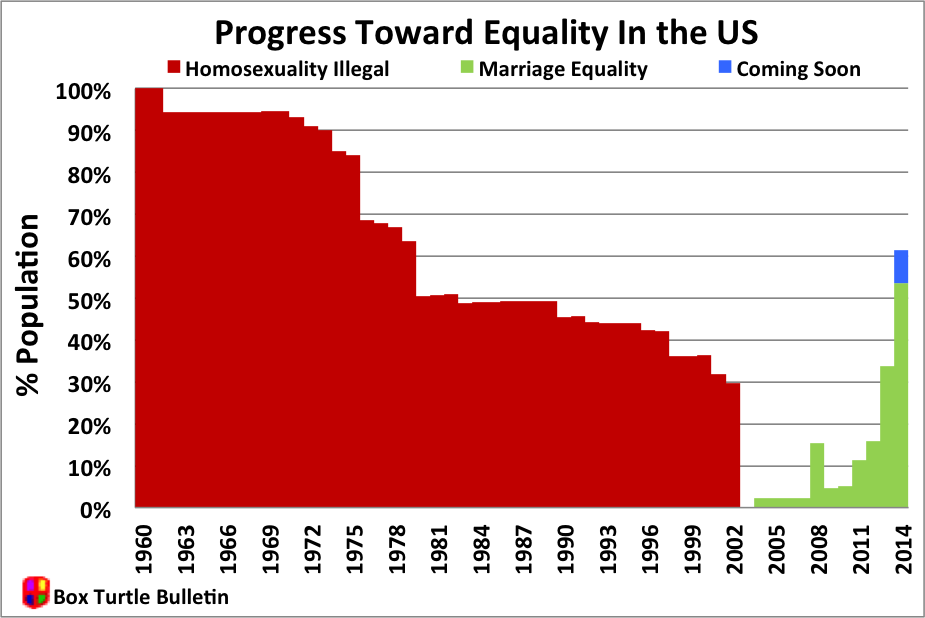
Burroway charts the progress made since the 1960s – a reversal few ever imagined: 

Equality Chart

A New Eugenics? Ctd

Last week, Michael Brendan Dougherty likened the termination of Down syndrome pregnancies to eugenics. But Noah Millman feels that Dougherty’s “fundamental objection … isn’t to eugenics but to abortion”:

[A]ssume that Down Syndrome worked like Tay-Sachs, meaning that you could avoid having a child with the condition by pre-marital screening. Would Dougherty oppose such screening? If so, why? Or, here’s another one: late childbearing significantly increases the risks of your children having Down Syndrome (which is why Down Syndrome births are up in spite of the high abortion rate). Would Dougherty say it’s wrong to take that fact into consideration when deciding at what age to start having children (and at what age to stop)? Would he say it’s wrong for public health authorities to let people know about that fact, and to encourage (via informational campaigns, not physical or financial coercion) women to have children somewhat earlier?

The point he’s trying to make:

Inasmuch as he objects to eugenic motivations, it’s because he worries that by definition any thinking about “better” children makes life into something instrumental, a product, and thereby makes abortion more acceptable. But I don’t think that’s a sustainable view; it makes perfectly normal planning for the future seem corrupt and wrong. Everybody wants their kids to be healthier, including being born healthier. There’s nothing wrong with trying to ensure that—unless there’s something wrong with what you are doing to ensure it, or unless your take your standards of what constitutes “health” to unreasonable extremes.

Meanwhile, a reader merges another thread – the one on child abuse:

Two pieces on the Dish in the past days merged in an uncanny way for me. First, there’s Dougherty trying to make some big broad point about eugenics out of people’s desire to avoid a personal tragedy by aborting Down Syndrome pregnancies. And yes, it is a personal tragedy more than anything else. My Down Syndrome sister is now 46, having lived considerably longer than the doctors in the late 1960s told my mother was the norm. The doctors’ advice then was to “put her in a home and forget about it”. In the end, my parents chose an unsatisfactory middle way of institutionalising my sister but remaining somewhat connected and bringing her home for holidays and such.

My mother, now 78, has never really recovered from that trauma. And trauma does indeed feel like the correct way to describe it. In a devout Baptist home, the sense of God’s wrath was tangible and frightening for an eight-year-old. The view from outside seemed to be that my parents had done something bad physically, spiritually or both, especially as my father was 34 years older than my mother.

If confronted now with the reality of a Down Syndrome pregnancy, I would not hesitate to support termination if my partner agreed. To lump this in with “eugenics”, free of reference to individual circumstances, is a gross distortion of what it’s really like and imputes notions of parental desire for “perfection” that do not enter into consideration.

Second, the extraordinary description of corporal punishment made me gasp, particularly because the “eugenics” claim had reminded me how the trauma of my Down Syndrome sister amplified my mother’s propensity for unrestrained violence. This was the mother that did not detect the repeated sexual abuse of a boy of five and six by a much older step-sibling, in spite of her skill in detecting all other manner of a child’s indiscretions. Indiscretions, real or not, that the mother would address through the delivery of raging, spit-flecked and red-faced beatings with sticks, belts, fists and coat hangers. These would be delivered until the blood appeared or until such time as the breathless howling was deemed to be genuine pain and not merely an attempt to get her to stop. Sometimes I feel as though I’ve achieved something merely by surviving this long.

The way the Dish pulls things together continues to demonstrate that the compartmentalised, neat-and-tidy manner that so much modern pontificating applies to assessing lives and to dispensing counsel is oblivious to the messy and messed-up reality of life. It does no one much good when we treat their choices as the linear outcome of some particular isolatable pathology. Yet that is precisely the way we continue to treat difference and suffering: there always has to be a clean explanation that permits judgments to be made and, on occasion, empathy to be expressed in calibrated doses.

Ruling Against Marriage Equality Was Actually A Bigger FD

Gay Marriage Becomes Legal in 5 States After Supreme Court Declines Challanges

Lyle Denniston digests the big news from this morning:

[F]our other circuits — the Fifth, Sixth, Ninth, and Eleventh — are currently considering the constitutionality of same-sex marriages.  Of those, the Ninth Circuit — which had earlier struck down California’s famous “Proposition 8” ban and uses a very rigorous test of laws against gay equality — is considered most likely to strike down state bans.  If that happens, it would add five more states to the marriages-allowed column (Alaska, Arizona, Idaho, Montana, and Nevada), which would bring the national total to thirty-five.

The reaction in those four circuits could depend upon how they interpret what the Supreme Court did on Monday. If the Court is not likely to uphold any state ban, either on same-sex marriage in the first place or recognition of existing such marriage, lower courts may see good reason to fall in line.  The Court’s actions, however, do not set any precedent, so lower courts are technically free to go ahead and decide as they otherwise would. If they interpret the denials of review as providing no guidance whatsoever, then they would feel free to proceed without reading anything into what the Court has in mind. It is very hard, however, to interpret the Justices’ actions as having no meaning.

In Garrett Epps’ opinion, it’s now more difficult for an appeals court to reject marriage equality:

As long as cert. was pending, the lower-court opinions were in limbo. Meanwhile the issue is pending in the Fifth, Sixth, Ninth, and 11th Circuits. Any panel in one of those circuits must now confront a huge weight of federal authority affirming same-sex marriage. True, other circuits’ decisions are not “binding”; true, the Supreme Court did not give any hint of its position. But that’s still a lot of contrary authority to move against. Any judge writing an opinion that bars same-sex marriage must explain why he or she is ignoring all the previous decisions.

That still could happen. The press has speculated that the Sixth Circuit may soon issue an opinion allowing state bans to stand. The Fifth and 11th are among the most conservative of the circuits. If one of them breaks step, then the Court will have to take that case. And it would seem to most observers that it would be granting to reverse.

Epps doesn’t believe that SCOTUS “will allow thousands of couples nationwide to celebrate marriages, change names, jointly adopt children, become legally one family—and then, in an opinion later in the term, baldly announce that their marriages are in jeopardy or even void”:

If the justices were later to decide against same-sex marriages, a number of the states where, in a few days, it will be legal, would be back at the Court asking for reconsideration. That would be, as Lyle Deniston of SCOTUSblog wisely wrote,“an invitation to legal chaos.” Beyond that, it would be an act of cruelty that I hope is beyond any five of the nine human beings who sit on this Court.

Rick Hansen is on the same page:

The fact that the Supreme Court, without saying a peep, is letting court-ordered same sex marriages go forward in Utah is a huge deal. Now you may think that this could well be reversed once there is a circuit split, perhaps in a case from the 5th or 6th Circuit. But remember, there will now be all of these children from legal same sex marriages performed until the Supreme Court could decide to take a case from another circuit. The idea that Justice Kennedy would let that happen, knowing there could well be a reversal down the line seems unlikely.

Digby nods along with that:

There are already a whole lot of gay parents (always have been, they’re just now able to parent together) and a whole lot of laws that are necessarily being created to deal with that new circumstance. Aside from the obvious moral obstacle of breaking up happy families, there will be the complications of untangling many legal issues.

(Photo: Suzanne Marelius and Kelli Frame hold hands as they wait in line at the Salt Lake County Recorders Office to get a marriage license on October 6, 2014. Marelius and Frame are the first same sex couple in Utah to get a marriage license after the U.S. Supreme Court declined challenges to gay marriage making it now legal in Utah. By George Frey/Getty Images)

A History Of Neglected Teeth, Ctd

A reader illustrates the really high stakes for some people lacking dental insurance:

The exclusion of dental from many medical plans – or the need to add it at significant cost – is completely foolhardy, especially given the links between poor oral health and heart disease.

While there doesn’t yet seem to be consensus about poor oral care causing heart disease, I know it can be fatal for at least one kind of very expensive heart patient. My boyfriend had a heart valve replacement when he was in his late 30s – the necessary outcome of a congenital birth defect that caused him to slowly develop heart disease through his first three decades. He lives a normal life now, though he’ll have at least one more valve replacement before the end of his life, hopefully about 15 years after the first.

What’s the thing that is most likely to send him in for a replacement on an earlier schedule? Bacterial endocarditis, which would attack the prosthetic tissue valve. The most likely thing to cause that? Oral bacteria entering his blood stream and causing an infection in his valve.

He takes massive doses of prophylactic antibiotics before he goes to the dentist. But he’s also one of those guys who had limited dentistry over the last few decades, because he’s self-employed and dental was too expensive in his self-purchased plan. So every time he goes to the dentist, it tends to be for more invasive processes than when I go, because I’ve gone every six months for my whole life, thanks to my insurance.

The cost for his valve replacement? Approximately $500,000 when he had it five years ago.

Why Did SCOTUS Punt?

Timothy Kincaid wonders:

[I]t should be noted that the decision to grant or deny certiorari is not a majority vote. It takes but four justices to decide that a court will hear an appeal. This suggests that either the conservative end of the court is hoping to wait for an appeal that better fits their opposition, or (despite long supposition otherwise) there are not four justices on the Supreme Court that oppose marriage equality and find it’s prohibition to be within the confines of constitutional enactment by the states.

Jeffrey Toobin thinks it’s “possible that neither the liberal nor the conservative bloc felt confident enough of Kennedy’s vote to risk letting him decide the case”:

The conservatives have a special reason for delay. Ginsburg, at 81 the oldest justice, will probably leave during the next president’s term. A Republican president would replace Ginsburg with a solid conservative vote and make Kennedy’s vote irrelevant. So waiting might be an appealing option for them.

The liberals had their own reasons for delay.

Same-sex marriage has marched with great speed across the country. Today’s non-decision means that more than half the states, with well more than half the population, have marriage equality. Those facts create their own momentum. More time equals more states, which might (the theory goes) make Kennedy’s vote easier to get a year from now.

Noah Feldman suspects that the Justices didn’t want to incite a backlash:

Inevitability, it might be thought, is what the Supreme Court waits for before making any landmark decision. But in this case, there is another major consideration: The justices are also worried about fueling a backlash that would render their decision illegitimate, even if it seemed inevitable. The great worry of the Supreme Court – or at least of Justice Kennedy – is that a premature gay-marriage decision would produce the kind of substantial public disagreement that followed Brown v. Board of Education and Roe v. Wade.

Cass Sunstein argues along the same lines:

Many people are stunned by the U.S. Supreme Court’s refusal to review any of the recent lower-court decisions requiring states to recognize same-sex marriages. They shouldn’t be. The court’s silence is a fresh tribute to what Yale law professor Alexander Bickel, writing in the early 1960s, called “the passive virtues.” For the Supreme Court, not to decide is often the best course, especially when the nation is sharply divided.

Bickel was no critic of the liberal Warren Court of the time. He vigorously defended Brown v. Board of Education, striking down school segregation. More broadly, Bickel believed that the court had an important national role as the arbiter of what was required by constitutional “principle.” Nonetheless, he thought that the justices had to be both humble and strategic. An aggressive insistence on vindicating fundamental principle could tear the country apart – and undermine the justices’ own goals in the process.

Spare The Rod, Ctd

A reader writes:

The line from one of your readers about the need to break a child’s spirit made me weep.  It is the last thing any of us need as children.  Parents need to building up a child’s spirit to withstand the inevitable disappointments of adulthood.

On that note, another reader touches on the religious angle of corporal punishment:

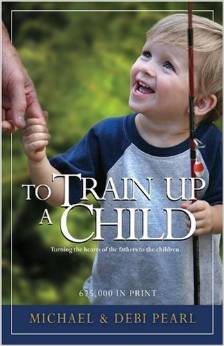
Screen Shot 2014-10-05 at 6.13.53 PMHave you seen this book, To Train A Child?  Apparently is it “christian” to start beating children with a rubber hose before (~12 months) they are capable of understanding of why they are being punished.  A “good christian” parent is supposed to break their children’s will and make them utterly obedient to them as they are obedient to god, all because of a line about “spare the rod, spoil the child.”  It is horrifying how many five-star reviews the book has.  Just reading them makes one wonder how this book can possibly be regarded as “christian” in anything other than a deranged sense of the word.

From a one-star review that cites several horrific passages:

This book has been linked to several cases of child abuse and the deaths of no less than 3 children.

I am the mama of 6 beautiful children – some homegrown, some who came to us from other countries – each of them precious. I firmly believe that each child comes to you a full person. It is my job as a mama to encourage their strong points and give them tools to help them overcome their weaker qualities. It is never, ever my job to decide who they are, to break their spirits or to teach them cruelty in their own homes. My kids range in age from 14-2 and each of them is a blessing. Each of them is different. Each of them needs something different from us regarding discipline. Love your kids. Get to know them. If you are a believer, ask God for guidance. And DON’T BUY THIS BOOK.

downloadSome excerpts: On p.65 co-author Debi Pearl whips the bare leg of a 15 month old she is babysitting, 10 separate times, for not playing with something she tells him to play with. After about ten acts of stubborn defiance, followed by ten switchings, he surrendered his will to one higher than himself. In rolling the wheel, he did what every accountable human being must do-he humbled himself before the “highest” and admitted that his interests are not paramount. After one begrudged roll, my wife turned to other chores

On p.59 they recommend spanking a 3 year old until he is “totally broken.” She then administers about ten slow, patient licks on his bare legs. He cries in pain. If he continues to show defiance by jerking around and defending himself, or by expressing anger, then she will wait a moment and again lecture him and again spank him. When it is obvious he is totally broken, she will hand him the rag and very calmly say, “Johnny, clean up your mess.” He should very contritely wipe up the water.

On p.79 they recommend switching a 7 month old for screaming. A seven-month-old boy had, upon failing to get his way, stiffened clenched his fists, bared his toothless gums and called down damnation on the whole place. At a time like that, the angry expression on a baby’s face can resemble that of one instigating a riot. The young mother, wanting to do the right thing, stood there in helpless consternation, apologetically shrugged her shoulders and said, “What can I do?” My incredulous nine-year-old whipped back, “Switch him.” The mother responded, “I can’t, he’s too little.” With the wisdom of a veteran who had been on the little end of the switch, my daughter answered, “If he is old enough to pitch a fit, he is old enough to be spanked.”

Lord have mercy.

Update from a reader:

I can’t stand to read this thread any longer. It is so painful to realize how I applied some the same practices described because my “church” taught me to. And, even after I left that church, my depression kept me in so much pain that I would lash out against my children’s infractions with those same tactics. I’m so very thankful that I got the treatment I needed for my depression before my children left the home, so I could show them the patient, kind, loving person who was entrapped in that depression.

So painful to read. So desperately necessary to be written.

The Vanishing Idols

VATICAN-POPE-SYNOD FAMILIES

The Synod convened by this remarkable Pope is now in session – and there are some reactionary voices being heard – as there should be. The head of the Polish church just described cohabitation as “the self-mutilation of [a couple’s] love”. He also noted with dismay that “some parents like to teach boys that they should clean up after themselves, and not wait until girls do it for them.” Ed Morrissey just reported that the opening statement by Cardinal Peter Erdo was also uncompromising: “Erdo emphasized that recognition of divorce and remarriage without a church finding of nullity in the first marriage ‘is impossible, while the first spouse is still alive.'”

And this is how it should be. Along with arguments about the need for pastoral change and adjustment – the Pope himself, after all, just married a previously divorced couple in the Vatican! – the arguments for no change at all need to be heard. What’s truly new about this papacy is its endorsement of this very debate – the very thing that John Paul II and Benedict XVI made anathema. Can you imagine this tweet appearing at any time since 1979 until now?

James Alison has taken up that offer. Last Friday he addressed a meeting in Rome for “The Ways of Love,” an international conference on Catholic pastoral care for gay and trans people. It’s not part of the Synod of Bishops on the Family. It’s an off-off-Broadway production, as it were. But it should not be dismissed for those reasons. Some of the most important discussions during the Second Vatican Council occurred informally off-site, and aired issues that emerged eventually as central to the Church’s opening to the modern world. The question of same-sex love and homosexual dignity is not likely to be part of the formal Synod. But it hovers around it – even as the Church in America has intensified its cruelty and unjust discrimination against homosexuals seeking to follow Jesus.

So you may be surprised to find in James’ latest talk in Rome an element of joy and magnanimity. He sees the emergence of gay and trans people’s own self-understanding of our equal worth in the eyes of God as quite simply irreversible, unstoppable – not a breakdown of the church’s teachings but an eruption within it of Catholicity itself:

This has been exactly our experience as LGBT Catholics over the last thirty or so years. It has become clearer and clearer, until it is now overwhelmingly clear, that what used to seem like a self-evident description of us was in fact mistaken. We were characterized as somehow defective, pathological, or vitiated straight people; intrinsically heterosexual people who were suffering from a bizarre and extreme form of heterosexual concupiscence called “same-sex attraction.” That description, which turned us, in practice, into second-class citizens in God’s house, is quite simply false. It turns out that we are blessed to be bearers of a not particularly remarkable non-pathological minority variant in the human condition. And that our daughterhood and sonship of God comes upon us starting as we are, with this variant being a minor but significant stable characteristic of who we are. One, furthermore, which gives gracious shape to who we are to be.

His talk is worth reading in full because it brilliantly analogizes the strictures against gay people to the very early church’s strictures against inclusion of Gentiles. Saint Peter shocked his early followers by insisting that all such categories melted away in the new age of Jesus: “God has shown me that I should not call anyone profane or unclean.” Or in Saint Paul’s words that ring through the ages:

There is neither Jew nor Gentile, neither slave nor free, nor is there male and female, for you are all one in Christ Jesus.

Alison conjures up the radicalness of all this for the Jewish sect then struggling to find its way in the world after the Resurrection:

Well, each one of us was as shocked as the person next to them: the first-class citizens finding themselves on the same level as us, with all their purity and sense of separateness deflated, and having to overcome a certain repugnance about dealing with people like us; and the second class citizens having to get used to taking ourselves seriously and behave as sons and daughters, rather than dirty servant children who had a sort of built in excuse for impurity.

Regardless of where the collective hierarchy is, it is quite clear that Pope Francis does not see gay people as second-class citizens. If they are earnestly seeking the Lord, “who am I to judge?” It is also clear that the moral movement I described earlier today cannot but affect the people of God, as they wrestle with a a new understanding of gay people – which the church itself recognized as long ago as 1975 – and try to do God’s will. But James has moved on already. He sees gay Catholics not as a problem to be solved but as an opportunity to be seized:

We, as well as anyone, know how the Spirit of God humanizes us, not destroying culture, but defanging it from all that is violent and destructive of who humans are called to be. We know that thanks to Jesus there is no such thing as religiously pure or impure food, there are no such things as religiously mandated forms of mutilation, genital or otherwise. We know that only culture, and never God, has demanded the veiling and covering of the glory of the head and hair of women. We know that the same Spirit that taught us these things, making available to us what is genuinely true, has enabled us to discover the graced banality of our minority variant condition, allowing it to be the shape of our love that turns us into witnesses of God’s goodness as we are stretched out towards those who are genuinely suffering from terrible injustice and deprivation.

It may seem bleak for many LGBT people right now, grappling with Christianity and the institutional church’s cruelty and dehumanization. But James sees through this, the way Jesus saw through the exhausted taboos of his time. There is a serenity to him that comes with a faith lived, and not imposed.

(Photo: Pope Francis delivers his speech during  the Synod of the Families, to cardinals and bishops gathering in the Synod Aula, at the Vatican, on October 6, 2014.By Andreas Solaro/AFP/Getty Images.)

The Battle For Kobani

Kurdish fighters in northern Syria, who are desperately trying to hold off an ISIS advance on the border town of Kobani, are pleading for heavy weapons, saying US air strikes are not really helping:

The jihadis, who this weekend generated further outrage with the murder of the British hostage Alan Henning, are simply too numerous to be cowed by the air assault by US fighter jets, the Kurds say. “Air strikes alone are really not enough to defeat Isis in Kobani,” said Idris Nassan, a senior spokesman for the Kurdish fighters desperately trying to defend the important strategic redoubt from the advancing militants. “They are besieging the city on three sides, and fighter jets simply cannot hit each and every Isis fighter on the ground.”

He said Isis had adapted its tactics to military strikes from the air. “Each time a jet approaches, they leave their open positions, they scatter and hide. What we really need is ground support. We need heavy weapons and ammunition in order to fend them off and defeat them.”

Jamie Dettmer reviews the weekend’s events from his vantage point on the Turkish side of the border:

Although the weekend air raids were hardly intense, the effect of even limited U.S. bombing runs was telling. The missiles launched on Friday and Saturday night interrupted what had been salvo after salvo of tank and mortar fire from the jihadists during daylight hours and forced Islamic State militants to move half-a-mile back from the besieged town. They also emboldened the Kurdish defenders, who are lightly armed and fending off heavy armor. On both nights the Kurds counter-attacked and had some successes, destroying at least one ISIS tank.

Despite the airstrikes, the town’s fate hangs in the balance, says Ismat Sheik Hasan, a commander in the YPG Kurdish self-defense forces, whose vanguard is formed by an offshoot of Turkey’s outlawed Kurdistan Workers Party (PKK). Even so, the point of American airpower was made, adding further poignancy to the Kurds’ questioning about why the U.S. is not being more forthright in assisting them to defend the town from an enemy President Barack Obama says he wants to “degrade and defeat.”

Jeremy Bender attributes the ineffectiveness of US airstrikes in Syria to a lack of intel and coordination on the ground:

The US simply doesn’t have the same kind of on-the-ground intelligence presence and capabilities in Syria that it has in neighboring Iraq, where coordination with the Kurds and the Iraqi government allowed American airstrikes to help dial back a major ISIS assault. The US lacks those kinds of partnerships in Syria, and the resulting shortage of intelligence is a major strategic shortcoming — something that may plague the coalition’s overall goal of disrupting and destroying ISIS’ network within Syria.

Liz Sly explains why Turkey hasn’t rushed to save the city:

Turkey remains ambivalent about joining the coalition against the Islamic State, despite a vote in parliament Thursday authorizing military intervention. Turkey is anxious not to take any action that would embolden its Kurdish foes on either side of the border, and the resolution named the Kurdish Workers’ Party, or PKK — the parent organization of the Kurdish militia fighting in Kobane — as one of the targets of any future military intervention, along with the Islamic State and Syria’s President Bashar al-Assad.

Turkish Prime Minister Ahmet Davutoglu signaled late Thursday that Turkey might be prepared to act. “We wouldn’t want Kobane to fall. We’ll do whatever we can to prevent this from happening,” Davutoglu told Turkish journalists. But it remains unclear what Turkey is prepared to do.

Michael Stephens worries:

https://twitter.com/MStephensGulf/statuses/519174472872787968

Adam Chandler presents the battle over Kobani as a sign of how ISIS is adapting to the presence of American air power:

The advance of the Islamic State fighters into a strategically important Syrian city is a development that U.S.-led airstrikes were supposed to preclude. But as many are suggesting, the coalition efforts to stem the Islamic State onslaught have been ineffective. This is, at least in part, because ISIS has changed its tactics.

“In Syria and Iraq, they took down many of their trademark black flags, and camouflaged armed pickup trucks,” The Wall Street Journal wrote of ISIS. “They also took cover among civilians.” The group is also said to have decentralized some of its command structure, adjusted its movements to nighttime, and eschewed the frequent use of cellphone and radio communications.

Australian Defense Minister David Johnston also sees ISIS adapting rapidly:

Johnston acknowledged the potential for Isis extremists to adapt to the expanded air strike campaign by presenting fewer targets to the air forces. “I think that’s pretty certain that they will adapt very quickly not to be out in the open where the Iraqi security forces can call in an air strike.” The embedding of Isis militants in towns was “a much more difficult proposition and I think we’ve started to see adaptation already”, Johnston said. “It was always going to be that the Iraqi security forces would have to step up and go into these towns and clean them out,” he said. In a separate interview on Sunday, Johnston said Isis could be “extremely adaptive” and Iraq could be “quite a long campaign”.