The Agenda Of A GOP Senate

Krauthammer has high hopes for it:

Winning control of the Senate would allow Republicans to pass a whole range of measures now being held up by Reid, often at the behest of the White House. Make it a major reform agenda. The centerpiece might be tax reform, both corporate and individual. It is needed, popular, and doable. Then go for the low-hanging fruit enjoying wide bipartisan support, such as the Keystone XL pipeline and natural-gas exports, especially to Eastern Europe. One could then add border security, energy deregulation, and health-care reform that repeals the more onerous Obamacare mandates.

Ponnuru delivers a reality check:

Republicans, if they control the Senate, are not going to be able to pass “a whole range of measures.”

Certainly not tax reform, where they have no consensus that gets much further than the phrase “tax reform.” (They might be further along in building a consensus if some of them were running on tax reform this fall.) I’m not even sure Keystone is as low-hanging as Krauthammer thinks — if there’s a Republican Senate this year, it will be because several pro-Keystone Democrats were defeated. Republicans can use the “reconciliation” process to bypass filibusters, but they can use it only rarely and on some subjects.

Larison also predicts a watered-down agenda:

Having won a Senate majority simply by running against the administration, Republicans leaders in Congress would have very few incentives to promote their own agenda and will satisfy themselves with derailing and undermining whatever is left of the president’s. Especially as this relates to diplomacy with Iran, that could have very unfortunate effects, that will hardly seem unattractive to the party’s members of Congress. Most of the intra-party quarrels that Cohen identifies in the rest of his argument are more likely to be postponed or suppressed ahead of the primary season. If Republican leaders are anxious not to give their opponents ammunition ahead of the midterms, when Republican candidates face a much more supportive electorate, they are likely to do the same thing ahead of a presidential election.

A Long Drive To Get An Abortion In Texas

Abortion Access

Lyle Denniston unpacks last week’s big abortion ruling:

The ruling, issued Thursday evening by the U.S. Court of Appeals for the Fifth Circuit, is expected to mean that only seven or eight clinics located in the largest cities in Texas will remain open.  Not long ago, Texas had more than forty clinics operating throughout the state.

This marked the second time that the Fifth Circuit had overturned most of a ruling by a federal trial judge in Austin blocking enforcement of provisions in a broad new abortion-regulation law that was passed by the state legislature in July of last year. Earlier this year, the Fifth Circuit had allowed the state to continue to enforce — and later upheld as constitutional — a requirement that took effect last October that any doctor performing an abortion in the state must have privileges to send patients to a hospital within thirty miles.  After that rule went into effect, the number of clinics still open dropped from more than forty to fewer than thirty.  In its Thursday ruling, the Fifth Circuit reaffirmed its view that this limitation is valid.

The second provision, not yet upheld as constitutional but now allowed to go into effect, requires all abortion clinics in the state to have facilities equal to an “ambulatory surgical center.”  It has been estimated that, if a clinic does not meet that standard, it could cost upwards of $1 million to upgrade.

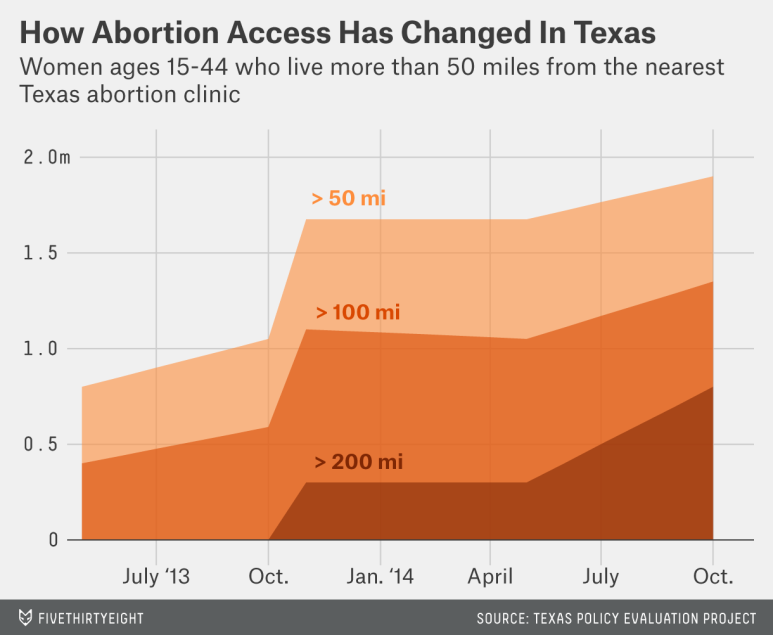
Hayley Munguia illustrates the impact of this ruling with the above chart:

Certainly, an increased number of women will have to travel farther to legally obtain an abortion.

Before the new law was passed, no Texan lived more than 200 miles away from a clinic that performed abortions in the state. The closures mean that almost 800,000 women of reproductive age will live outside that range. With Texas law requiring a 24-hour waiting period after an in-person consultation, many women who make two trips to a Texas abortion provider will have to travel more than 800 miles total to legally obtain the procedure. And the clinics that are remaining open won’t have the capacity to help every woman who requests their services.

Sophie Novack talked to both supporters and opponents of the regulations:

“Abortion facilities should raise their standard of care to the level of ambulatory surgical centers to ensure that abortions are not performed in a manner that endangers the health and safety of women,” Joe Pojman, executive director of Texas Alliance for Life, said in a statement. “Texas women deserve no less.”

Abortion rights activists argue that it is a political move meant to shutter clinics and make abortions difficult to access. Health groups like the Texas Medical Association and the American Congress of Obstetricians and Gynecologists agree, saying the restrictions are not medically necessary.

“Thanks to good medical care, abortion is one of the safest procedures,” John C. Jennings, president of ACOG, said in a statement. “Under the guise of making abortion safer, these requirements actually make abortion less safe and will prevent women from getting the abortions they need. Even procedures with higher complication and mortality rates don’t have to meet these specious standards.”

Amy Davidson is among the opponents:

There is another factor, involving other numbers: poverty. The Fifth Circuit judges acknowledged that women without much money would be more affected by the law than others: they might not have a car, or a way to take a day off from work to drive six hours. But that didn’t, somehow, change the judges’ calculation.

Wesley J. Smith finds it ironic “that Planned Parenthood says only 3 percent of its business is abortion, yet closes its clinics en masse when the abortion going gets tough.” But he is unsure about what comes next:

Will the Fifth Circuit take it en banc? Don’t know. Will the case go to the Supreme Court if it survives the Fifth? I think so. Will it survive the Supremes? Don’t know.

Drum also wonders if the case will reach SCOTUS:

Conservatives, including those on the Fifth Circuit, are increasingly confident that Anthony Kennedy’s position on abortion has evolved enough that he’s finally on board with a substantial rewrite of current abortion law. And since the other four conservative justices have been on board for a long time, that’s all it takes. Kennedy might not quite be willing to flatly overturn Roe v. Wade, but it’s a pretty good guess that he’s willing to go pretty far down that road.

Waldman fears the consequences of such a ruling:

[I]f the Supreme Court were to uphold this decision, it would be a signal to every Republican-controlled legislature — one you can bet they’d heed — that there’s almost no restriction on abortion rights that is too extreme, too contemptuous of women and their rights, or too disingenuous to pass the Court’s muster. Right now, there are states where abortions are all but impossible to get; for instance, there’s only one clinic in all of North Dakota that performs them. But ten years from now, half the country could look like that.

Even states like Pennsylvania already have significant hurdles. Emily Bazelon recently reported on the arrest of a Pennsylvania mother, Jennifer Whalen, for trying to obtain an illegal abortion for her teenage daughter:

The closest clinic was about 75 miles away. Pennsylvania requires women seeking abortions to first receive counseling and wait 24 hours before returning for the procedure. The cost of a first-trimester abortion is typically between $300 and $600. Whalen works as a personal-care aide at an assisted-living center for the elderly. She didn’t have health insurance for her daughter. And she was worried about taking time away from work and her family to make two trips or to stay overnight. At the time, Whalen and her husband shared one car, which they both used to get to work. And she hadn’t told her husband about the pregnancy. “I knew he would be upset, and I was protecting the whole family,” she said. (Whalen’s husband, who waited outside in the car during our interview, declined to talk to me.)

Whalen called a local women’s center on her daughter’s behalf but was told no one there could help, she said. She and her daughter did more online searching, and a site popped up with misoprostol and mifepristone for sale for $45. Whalen hadn’t heard of the medication before. “I read all the information,” she said. “They said these pills would help give a miscarriage, and they were the same ones a doctor would give you.” She says she had no idea that buying them was illegal.

Are Hong Kong’s Protests Out Of Steam?

This morning, the city awoke to sparser crowds of demonstrators in the streets and uncertainty about what happens next:

Schools reopened and civil servants returned to work Monday morning after protesters Screen Shot 2014-10-06 at 12.10.37 PMcleared the area outside the city’s government headquarters, a focal point of the demonstrations that started the previous weekend. Crowds also thinned markedly at the two other protest sites, and traffic flowed again through many roads that had been blocked.
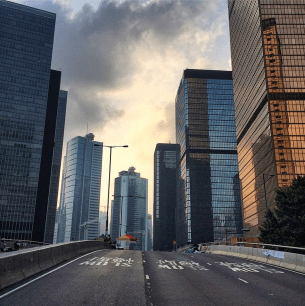
The subdued scenes left many wondering whether the movement, which has been free-forming and largely spontaneous, had run its course — or whether the students have a clear strategy about what to do next. Early talks between the government and the students have started, but many disagreements remain. Students say they will walk away from the talks as soon as the government uses force to clear away the remaining protesters.

Alex Ogle, an AFP photographer, captured the above photo with the caption:

ghost town hong kong, sunday morning, haven’t seen this area of occupation site so empty all week

Heather Timmons is also on the ground:

Protesters cleared a corridor through the blockades outside one entrance to the government’s headquarters building on Sunday night, after protest leaders and government representatives agreed to meet for the first time. On Monday morning, makeshift tents and supply centers still dotted a main highway in the center of town, and protesters were sprawled in the middle of key roads as government employees filed in to work.

“We’re going to see how the government reacts,” said one 19-year old protester at the entrance, who said his surname name was Lui, sitting near the cleared corridor. Because of the corridor, government employees “can go back to work, and other citizens won’t blame us,” he said. Lui said he and the scant dozen protesters sitting near him had decided to clear the corridor themselves, rather than acting on specific directions from student leaders or Occupy Central, the groups that started the protests. “We don’t know what direction this is headed, and we don’t know what to do next,” he said, so his group was acting on its own.

Hannah Beech also sees the protest movement winding down:

As the workweek began in Hong Kong and traffic snarled because of the protest roadblocks, patience from a sector of ordinary citizens may wear thin. Already, some Hong Kong residents were quietly criticizing the continuing shutdown of major business and tourist areas. “Of course I support more democracy for Hong Kong and am not opposed to [the protesters’] ideals,” said a woman surnamed Liu, who came with her 11-year-old son to look at the occupied site in Mongkok district. “But we need to eat, to do business. How can we do that when they take over the streets?”

Whatever happens, Hong Kong’s political consciousness has been awakened. Emily Lau, a veteran local legislator, jokes that she’s been labeled “a head-banger” for her decades of pro-democracy work. “It’s very invigorating to have such a spontaneous, peaceful movement full of young people,” she says. “Once people have been shown their power they will know how to use it again and again.”

Friday’s violence, which continued late into the night, may also have put a damper on the protests. Ben Leung listens to how Hong Kongers are talking about the attacks, in which the city’s infamous organized crime syndicates (the “triads”) are believed to have been involved:

Over dinner, an elderly waitress at a nearby restaurant thought the timing of the attack was suspicious. Hong Kong Chief Executive CY Leung refuses to quit, and the next day this happens, she said: “The two events are linked. Whoever did this are not human – they must be the PLA [People’s Liberation Army] from China; Hong Kong people don’t do these things to one another!” But what everyone is talking about is what role the notorious triads played in Friday’s violence.

The question was put to the police at a press conference on Friday night. “None,” said spokesman Kong Man-keung, “and to say we allow them to operate is grossly inaccurate.” He claimed there was no evident to support the rumors. But hours later, shortly after 4:00 a.m. Saturday morning, the police issued a statement saying 19 people had been arrested, and of those at least eight are reportred to have links to the triads.

William Pesek argues that it’s time for the protesters “to face reality and plot an endgame”:

Why not parlay what’s been achieved so far into meaningful concessions from the government? These could include access to affordable housing and education, efforts to redress inequality, improved public services and a genuine framework for political reform and engagement with Beijing. The first direct talks between the protest leaders and government officials began Sunday night. Now, leaders should demand to plead their case directly to Leung.

Critics will say such concessions have nothing to do with democracy — and thus would render the protests futile. But any movement toward egalitarianism in oligarched Hong Kong would be a vital step toward genuine representation. By winning an accommodation or two from China, student leaders like 17-year-old Joshua Wong can demonstrate that they gave Goliath a good fight and achieved something substantial.

While Hong Kong’s protest leaders have appreciated the international attention being heaped upon their movement, Ishaan Tharoor observes that they’re less appreciative of its portrayal:

They are sensitive to how the protests are being received both by other Hong Kongers as well as authorities in the mainland. China’s rulers do not countenance such challenges to the status quo; the Hong Kong public, meanwhile, isn’t interested in prolonged, destabilizing upheaval either. The idea of a “revolution” on China’s doorstep may play well before the lenses of the international media, but it does not help the students, who are seeking reform and practical political gains.

“This is not a color revolution,” Lester Shum, the deputy leader of the Hong Kong Federation of Students, referring to the generic term used for transformative political movements elsewhere. “This is a citizens’ fight for democracy.”

Larison recalls that we’ve made this category error before, to ill effect:

When the Green movement protests began in Iran, there was a strong desire among many in the West to see those protests as a complete rejection of the regime and as an opportunity to bring the regime down, and they dubbed this “the Green Revolution.”

This mistaken belief was broadcast far and wide for months. Hard-liners in the regime also perceived–or claimed to perceive–the protests as a “color revolution,” which they understood to mean that the protests were sponsored and fomented by foreign powers aimed at the destruction the regime. The destruction of the regime was never going to happen, but the point is that this wasn’t what the protesters were seeking. It did the regime a favor that it didn’t need and shouldn’t have been given to suggest otherwise. Many Westerners took an interest in the Green movement because they wanted it to be a regime-changing revolutionary force, and then lost interest in the Iranian opposition when the latter failed to share their preoccupations. For the same reasons, Western coverage of the protests in Hong Kong shouldn’t try to turn them into something that they’re not.
A Month Until Midterms

Approval Ratings

Cillizza passes along the above chart from Republican lobbyist Bruce Mehlman:

Remember that to win the Senate majority in 32 days, Republicans need to net six seats – right where history suggests they’ll be if Obama’s approval stays close to where it is today. And also remember that there are seven Democratic-held Senate seats in states that Obama lost in 2012 – and where his numbers have only fallen since.

Silver analyzes a recent batch of Senate polls:

The least favorable results for Democrats were the YouGov numbers in Alaska, Arkansas and Louisiana, all of which had Republican challengers ahead of the Democratic incumbents by margins of about 5 percentage points. Democrats Mary Landrieu of Louisiana and Mark Begich of Alaska each saw their chances decline to about 25 percent from 30 percent with the new polls added.

It would be a mistake to dismiss the importance of these states. If Republicans become more certain to win them, they’ll have a clear path toward picking up six Democrat-held Senate seats, as the races in Montana, South Dakota and West Virginia look like near-certain gains for the GOP. Republicans would then need to win just one of Iowa, Colorado or Kansas to take control of the Senate (or they’d need to convince Orman to caucus with them if Roberts loses). With only 30 days to go until the election, any polling confirming Republican leads in these states qualifies as bad news for Democrats.

Nate Cohn expects that “turnout will be pivotal in many contests”:

The Democrats have invested millions more than Republicans in building a strong turnout operation, and the effects of that effort are already evident in the YouGov data. More voters have been contacted by Democratic than Republican campaigns in every state but Kansas and Kentucky, where Republican senators fought competitive primaries. Whether the Democratic turnout machine can turn its advantage in voter contacts into additional votes on Election Day might well determine Senate control.

Cillizza also checks in on various election models:

The Washington Post’s Election Lab is the most bullish on Republicans’ chances, pegging it as a 78 percent probability they win control of the chamber. LEO, the New York Times’ Upshot model, has the chances at 60 percent — roughly the same as Nate Silver’s FiveThirtyEight at 59.4 percent.  The overall predictions of Election Lab and FiveThirtyEight are virtually unchanged from a week ago (click here to see how things looked then) while the LEO model is less optimistic about a Republican-controlled Senate this week than it was last week (67 percent probability on Sept. 29.)

Harry Enten employs a sports analogy:

The model on Friday gave the GOP about a 59 percent chance of winning a majority in November. That’s about the same chances the Baltimore Ravens, leading 16-15, had of beating the Cincinnati Bengals in Week 1 with 6:01 left in the 4th quarter. The Ravens had just kicked off after scoring on an 80-yard touchdown catch by Baltimore receiver Steve Smith. But less than a minute later, Cincinnati quarterback Andy Dalton connected with A.J. Green on a 77-yard touchdown pass. That was followed by a successful two-point conversion. And that’s how the scoreboard would remain: 23-16, Bengals.

Roughly speaking, Republicans are ahead by a point, but they’re kicking off and there’s time left on the clock.

Jonathan Bernstein chips in two cents:

[I]t’s worth emphasizing how much uncertainty is involved. Polling remains spotty in many states. Many surveys aren’t as reliable as we’d like. And the polls are still close enough that late-breaking shifts, get-out-the-vote advantages or even minor miscalculations by polling firms (about the size and composition of the electorate, for example) could easily yield different results. Outcomes ranging from minimal Democratic losses to a Republican landslide remain plausible, which means it’s going to be a fun final month for election watchers.

Along those lines, most pollsters are predicting greater polling error this year:

the top reason cited was the difficulty of forecasting turnout in midterm elections, without a presidential race to bring voters to the polls. And the crucial midterms are in states that don’t usually have close races. “The key Senate battlegrounds this year are also places like Alaska, Arkansas, Kansas, Louisiana, etc., where most of the public pollsters don’t have a ton of experience,” one pollster said. “It’s not the Ohios and Pennsylvanias and Floridas of the world that we’re all used to polling a lot.”

When Does Spanking Become Child Abuse? Ctd

Before our discussion thread continues, here’s a followup from the reader who sparked it:

I could have never sent that email without having read the post from your reader about her rape – the courage to say what happened, what it felt like, what it set in motion … and the trust to send it. No, I wouldn’t have had the personal courage without her example.

And I’d have to guess that neither of us could’ve done it without what you and your Dish team have made. No matter what else is true, how often I disagree with you, I know The Dish is a place of real integrity, staffed by people of real integrity. And unlike the reader who responded that she learned to respect her mother while being “punished,” I learned no such thing. For me, power and force aren’t the cornerstones of personal (or familial) authority, and my genuine respect can’t be either demanded or commanded. (I perform that respect in my social and professional lives, of course, but that’s different.) You and your team, and what you do every day, how you do it: that I respect and trust.

Thank you for making a safe and honorable place for me – and so many others – to share the personal details buried beneath these important debates. It boggles the mind, how much work and care it must take to maintain The Dish’s culture. It’s why I subscribed on day one, and why I will continue to support you all however I can.

My thoughts on the matter here. Meanwhile, another reader points to some gray area:

The stories about spanking and whipping and beating children have been awful and difficult to read. As the father of two children, I spank both of them, so I feel compelled to write in.

This message is difficult to convey without the context of my life history. I come from a solid middle-class family.  I was spanked as a child.  My brother was spanked as a child.  It was never a beating.  I never felt like I was abused.  I was spanked with a paddle – actually a converted cutting board that hung on the kitchen wall.

I recall only one time I was spanked in anger, by my father, and I was probably nine or ten.  What I remember most about that incident is that he was so frustrated because he, as an only child, always had a difficult time understanding why my brother and I fought so loudly and frequently; we were indeed duking it out downstairs in the playroom.  And so he came downstairs, yanked me off my brother, popped my on the bottom one good time, got my brother up and popped him one good time – and then it happened.  The paddle broke.

I tell you this in all honesty: it was incredibly funny and my brother and I stifled laughter.  There was my father – proud, wonderful, loving, incredibly frustrated at that particular point in time, and completely deflated because his prop – the one he was using to make his point – literally fell apart in his hand.  He just looked at the paddle, saw the stifled laughs on our faces, threw the paddle to the ground and implored, “Why can’t you two just get along?” and sent us to our rooms where we could mercifully laugh in private.

Let me tell you, I have told that story many times (and with a good bit of embellishment) while my brother and I wiped tears of laughter from our faces.  We were always loved.  We were never beaten.  We were never abused.  But boy were we spanked.  And I’ll defend it as effective to my dying day.

And I spank.  I spank my five year old because he’s five and he needs a daggum spanking to get his attention sometimes.  Every once in awhile, so does my three year old.  I have never spanked them multiple times in an episode.  I have never left a mark.  I have never spanked them with the intention of striking fear into their little hearts. It doesn’t happen on a daily, or even weekly basis.  I’ve never used a belt or a switch or a paddle or anything other than my open palm.  But I have occasionally spanked hard enough that it hurt a little.

And I am a damn good parent.  I love my children immeasurably.  Unconditionally.  Unabashedly.  I live for my kids.  They are wonderful kids.  They get spankings.  And I’m not the only parent I know using spankings to discipline children (in an appropriate way, in my opinion).  So I think it’s vitally important to distinguish between spankings and abuse.  Certainly, spankings can be used in an abusive manner, but there is a difference.  The stories you have shared are horrific and I cannot imagine ever inflicting that kind of pain and suffering on any child.  They weren’t spanked.  They were abused.  Plain and simple. To lump spankers like me (and so many I know) with the parents described by your readers is completely unfair.  Can we have a conversation about whether there are more appropriate ways to punish kids than by spanking?  Sure!  And I’m happy  to have it – until you accuse me of abusing my kids simply because I admit I spank, and will continue to spank, my kids.

Another reader who defends spanking:

You wrote, “Hitting people, especially when those people are small and defenseless and dependent on your care, is such a lazy and cruel way to discourage bad behavior.” Really?

I am a mental health therapist who has worked for some 14 years primarily with children and families.  When I first started, I worked for a foster care agency providing mental health services to foster children and their biological families.  Many of the children I worked with entered care with severe conduct problems, including repeated incidents of running from home, stealing, sexually abusing others, using drugs and alcohol, prostitution (i.e.,  submission to sexual abuse for money or a place to stay because the child is on the run), etc.

While some of the children were victims of substantiated abuse and neglect, there were other children who had not only never been physically abused, they were never really even disciplined. And I noticed that some of these children were among the ones with more severe cases of conduct problems both in terms of severity and chronicity.

It turns out that there is research that shows that for children ages 2 to 7 especially, spanking is an effective disciplinary technique. And this is especially true for children who have strong personalities and are difficult to discipline because, among other things, they refuse to submit to whatever consequence they are given as a result of their misbehavior.  When normative spanking is defined as two swats on the butt with an open palm, administered to get the child to comply with, say, a time out, children rapidly learn to comply with time out such that the parent can actually successfully use disciplinary techniques besides spanking.

Every child is different.  Some are compliant, some are not.  Some will work for praise; others could care less.

So a lazy parent is not one who spanks to obtain control over their child (and by the way, control over your child is a prerequisite to effective parenting if you are to successfully guide your child through childhood to adulthood).  It is in my experience that a lazy parent is one who simply allows the child to do what they please in lieu of actually having to discipline, especially when discipline means the parent having to take steps they would prefer not to take, such as a spanking.

Indulgence is not a kindness.  It is a parent’s job to raise an adult, not a life-long child incapable of tolerating frustration or following rules.  If you think the results of spanking are bad, you should visit some of my former indulged clients in prison.

Those who are interested in knowing more about the impact of spanking on children may want to look at Robert E. Larzelere and Diana Baumrind’s article “Are Spanking Injunctions Scientifically Supported?“, 73 Law and Contemporary Problems 57-88 (Spring 2010).

SCOTUS Clears The Way For Marriage Equality

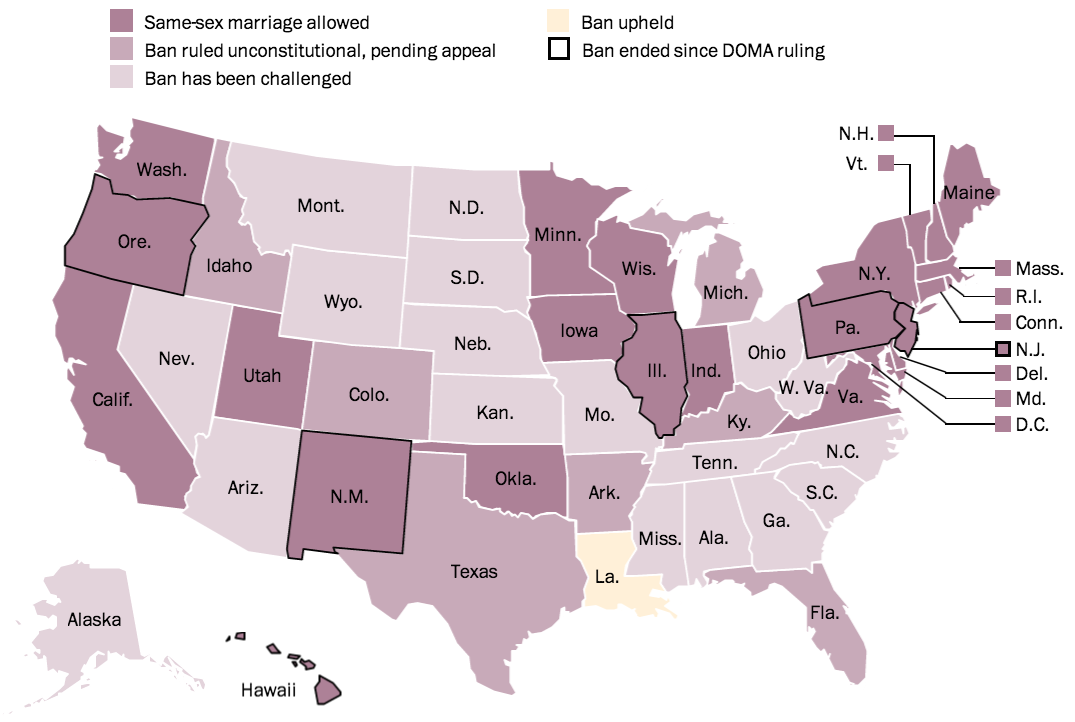
Marriage Equality Map

Amy Howe summarizes the incredible news:

[T]he Court denied review of all seven of the petitions arising from challenges to state bans on same-sex marriage.  This means that the lower-court decisions striking down bans in Indiana, Wisconsin, Utah, Oklahoma, and Virginia should go into effect shortly, clearing the way for same-sex marriages in those states and any other state with similar bans in those circuits.

The Supreme Court had issued the first round of orders from the September 29 Conference last Thursday, adding eleven new cases to its docket for the new Term. Many people had anticipated that one or more of the same-sex marriage petitions might be on that list, but the Court did not act on any of them at the time.  Last month Justice Ruth Bader Ginsburg had suggested that the Court might not step into the controversy at this point, because there was no disagreement among the lower courts on that issue.  Today her prediction proved true[.]

Geidner explains what this means going forward:

The decision not to take on the appeal in any of the pending certiorari petitions brings marriage equality to Indiana, Oklahoma, Virginia, Wisconsin, and Utah — meaning 24 states in the country have legal marriage equality.

It also makes the appeals court decisions striking down the marriage bans in those states the law of the land in the 4th Circuit, 7th Circuit, and 10th Circuit courts of appeals — a result that makes marriage equality likely to come in short order in all states within those circuits. This is so because the controlling precedent in those circuits now is that bans on same-sex couples’ marriages are unconstitutional.

Among the other states in the 4th Circuit without marriage equality currently that would be impacted are North Carolina, South Carolina, and West Virginia. Among the other states in the 10th Circuit without marriage equality currently that would be impacted are Colorado, Kansas, and Wyoming. That, once resolved, would bring the total number of states with marriage equality to 30.

Ari Ezra Waldman takes a minute to recognize “the magnitude of this win”:

The Fourth Circuit includes Maryland, West Virginia, Virginia, North Carolina, and South Carolina. The Seventh Circuit includes Indiana, Illinois, and Wisconsin. The Tenth Circuit covers Oklahoma, Kansas, New Mexico, Colorado, Wyoming, and Utah. Those jurisdictions cover nearly 74 million people.

Ian Millhiser adds an important detail:

One thing that should be noted is that there are still marriage equality cases pending before conservative circuits that could rule against equality. Nevertheless, the fact that marriages are likely to begin very shortly in the states currently subject to court orders will make it very difficult for the Supreme Court to reverse course — and retroactively invalidate those marriages — in a subsequent opinion.

Mark Joseph Stern considers another possibility:

If no circuit court ever rules against gay marriage, the gay marriage question will be effectively settled, and the Supreme Court will never have to wade in again. It may be that the justices are hoping the lower courts rule uniformly on the issue—thereby making United States v. Windsor stand for a fundamental constitutional right for gay couples to marry. The tea leaves, at this point, remain hazy. But the court’s startling decision today suggests that no option is off the table.

More to come soon.

(Image: The WaPo’s updated marriage equality map)

Obama Is Now Covering Up Alleged Torture, Ctd

gitmo-feeding-chair630

But not any more:

A Federal District Court judge on Friday ordered the public disclosure of 28 classified military videotapes showing the forced cell extraction and forced feeding of a hunger-striking Guantánamo Bay detainee, rejecting the Obama administration’s arguments that making the videos public would endanger national security. The New York Times and 15 other news organizations had petitioned to unseal the videos. In a 28-page opinion, Judge Gladys Kessler of the United States Court for the District of Columbia cited the First Amendment in overriding the government’s arguments for keeping them secret, most of which, she said, were “unacceptably vague, speculative,” lacking specificity or “just plain implausible.”

In order to judge whether the government is engaged in a form of torture, it’s essential that we see what it is doing to prisoners. Words are not enough. If the photos from Abu Ghraib had never been released, we would have only the euphemisms of “long-time standing” or “stress positions” to understand the brutality and inhumanity involved. And we know why the CIA destroyed the video evidence of its brutal torture of José Padilla (an American citizen) or Khaled Sheikh Muhammed (one of the masterminds of 9/11). They would have shocked the conscience and made the reassurances of our highest officials that the United States has not committed offenses usually associated with dictatorships transparently false.

There are credible claims that the kind of force-feeding inflicted on prisoners goes beyond medical needs to brutality. Here’s part of what is alleged:

At Gitmo, they began to use tubes that were too big for Hassan’s nostrils. Rather than leaving them in place, they would insert and remove them twice a day. Prisoners were force-fed in what Hassan called “the Torture Chair.” Hands, legs, waist, shoulders and head were strapped down tightly. The men were also force-fed constipation drugs, causing them to defecate on themselves as they sat in the chair being fed. “People with hemorrhoids would leave blood on the chair and the linens would not always be changed before the next feeding.” They’d be strapped down amid the shit and blood for up to two hours at a time–though quicker wasn’t always better.

There are claims that this agony was on display to deter others from hunger-striking. It seems to me particularly important for a president committed to ending torture to prove that he isn’t continuing it – even if it is for the sake of keeping someone alive. For my part, I see suicide by hunger strike to be a perfectly rational response to the Kafkaesque vortex these men are in – and a violation of their core human dignity to prevent them from seeking the only way out of their nightmare that Gitmo can give them.

Lots of previous Dish debate on force-feeding here. The above photo is from a series of government photos from the Gitmo hunger strike.

Another ISIS Snuff Film

The jihadists released another video on Friday, showing the beheading of British aid worker Alan Henning:

As in the other videos, a masked militant speaking with a British accent appears against a desert background with the hostage. The militant is dressed in all black with his face covered, while Henning kneels in the same orange outfit worn by ISIS’s other prisoners. … ISIS’s threats against Henning came under widespread criticism, especially after reports that he had been cleared of espionage charges by an ISIS-founded sharia court. A British Imam known for being a supporter of ISIS, Abdullah el-Faisal was among those who spoke up for Henning, saying that the 44-year-old was a“sympathizer to Muslims.”

The next threatened victim is Peter Kassig, a 26-year-old American aid worker. On Saturday, Kassig’s parents issued a videotaped statement pleading for their son’s life:

In the three-minute video, Ed and Paula Kassig address ISIS directly, highlighting his humanitarian work and his conversion to Islam, which took place while he was in captivity. (A family spokesman said Kassig’s name has been changed to Abdul Rahman.) Kassig, who spent a couple of years in the Army, is the founder of Special Emergency Response and Assistance, a small group that provided food, medical supplies, and other help to Syrian refugees. He was abducted near the Syrian city of Deir Ezzor in October of last year.

Saletan believes ISIS is signing its own death warrant with these beheadings, which appear to be driving up support for war in the US, Britain, and France:

[I]t’s noteworthy how much of the surge in enthusiasm for military action occurred during the period in which the videos were released, as opposed to the period in which Obama declared ISIS a threat to U.S. interests and launched strikes against it. In the June ABC/Post poll, only 45 percent of Americans endorsed “U.S. air strikes against the Sunni insurgents in Iraq.” Fewer than half of these supporters (20 percent of the total sample) said they supported such airstrikes strongly. By Aug. 13–17, a week after Obama’s announcement, support had increased by about 10 points: 54 percent supported air strikes, and 31 percent supported them strongly. But by Sept. 4–7, after the Sotloff video, support had climbed much higher. Seventy-one percent of Americans supported air strikes, and 52 percent supported them strongly. From these numbers, one could argue that the ISIS videos were twice as effective as Obama in rallying American support for war.

The Economy Improves, Obama’s Numbers Don’t

(BLS data)

Yglesias uses the above chart as evidence that the labor market isn’t “driving American politics anymore”:

The labor market is not only stronger in 2014 than it was back in 2012, but the pace of improvement is markedly superior. But while 2012 growth was obviously good enough to get Barack Obama elected, in the fall of 2014 his approval numbers are bad and the Democratic Party’s midterm aspirations rest on Greg Orman’s efforts to avoid answering questions about his ideology.

Megan Thee-Brenan compares Americans’ views on the economy to Obama’s approval ratings:

The economy outpaced all other issues in importance to voters in a New York Times/CBS News poll in mid-September, and 44 percent of Americans rated the economy as good. This marked the highest positive reading since 2007. Even as Americans are feeling better about the economy, they decline to credit the president with its improvement. The Times/CBS News poll found 53 percent of Americans disapproved of Mr. Obama’s handling of the economy, and his overall job approval rating was under water, with 40 percent approving and 50 percent disapproving.

How Waldman explains this disconnect:

[D]espite the healthy job growth, incomes aren’t rising.

A good economy isn’t just one where you’ve got a job, it’s one where you’ve got a job and you’re being paid what you’re worth. The income benefits of the recovery have all gone to the top. Millions of people are also still digging themselves out of the holes they got into during the Great Recession, whether it was foreclosure, credit card debt, or what have you. Even if you now have a reasonably good job, if you lost your home and cashed out your 401K on the way, it isn’t like things are looking spectacular.

Cassidy agrees:

Rising incomes are what really distinguished the Reagan recovery from the Obama recovery, and that, I suspect, is why the two Presidents enjoyed such different political fortunes. (According to Gallup, Reagan’s average approval rating during his second term was 55.3 per cent. That’s about ten points higher than what Obama has averaged so far in his second term.)

… At some point, one would hope, Americans will give President Obama and his party (and the Federal Reserve) at least a bit of credit for digging the economy out of a deep ditch and getting it back on the road. In the past five years, the U.S. economy has substantially outperformed most other advanced economies. Now that the unemployment rate has dipped back into the fives, maybe—just maybe—public perceptions will change. But until the recovery feeds into higher wages and rising living standards for ordinary Americans, the political payoff is likely to be limited.

Last but not least, Harry Enten explains why so little attention has been paid to the economy this election season:

The reason is simple: Accounting for the state of the economy doesn’t hold much, if any, predictive value for congressional elections. It’s not that the economy doesn’t affect House or Senate races — Democrats might be doing even worse if the economic recovery wasn’t somewhat decent. It’s just that other variables already sufficiently account for the economy’s effect.

The Geopolitics Of Slightly Cheaper Oil

Looking over Russia’s budget for the coming year, Callum Williams observes how many of its assumptions depend on oil prices remaining pretty high:

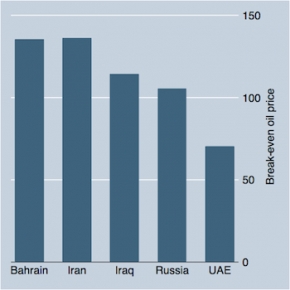
graph_3In 2015 Russia will need an oil price of about $105 a barrel to balance its budget (see chart). But crude is currently trading in the mid-$90s, down by about 10% since May. Weak demand from China and healthy supply from America help explain the drop.

Lower dollar-denominated oil prices are not so bad for Russia, given that the rouble has weakened so much. But over the past few years the budget’s reliance on oil revenues has increased. When excluding oil, there was a shortfall of 3.6% of GDP in 2007, but now it is more like 10%. Russia expects to run a small budget deficit (about 0.6% of GDP) this year. That prediction is optimistic—the Kremlin is banking on an oil price of $100. The latest predictions from Energy Aspects, a consultancy, show that the price of Brent is not expected to pass $100 for about nine months.

Steven Mufson details how the dip in demand and surge in US production is bad news not only for Russia, but Iran as well:

Crude oil and oil products made up 46 percent of Russia’s budget revenues in the first eight months of this year. At a time when the West is trying to sanction Russia for its incursions in Ukraine, a 10 to 20 percent drop in oil prices could prove powerful. Still, it’s still a far cry from the 1980s, when Saudi Arabia produced enough oil to flood the market and drive prices down so far that many experts say it sped up the fall of the Soviet Union. That’s not going to happen now, but Russia could be squeezed a bit.

Iran, whose oil exports are limited by sanctions related to its refusal to limit its nuclear program and open it up to greater international scrutiny, will also suffer a setback. Iran’s oil minister Bijan Namdar Zangeneh late last month called on the Organization of the Petroleum Exporting Countries to keep oil prices from falling any further. “Given the downward trend of the oil prices, the OPEC members should make efforts to offset their production to keep the prices from further instability,” Zangeneh said according to Shana, a news agency supported by Iran’s oil ministry.

But according to Keith Johnson, the other Gulf petrostates are much less vulnerable:

“In the short term, the Saudis are the last ones who need to worry. They can sit it out for a couple of years, even with oil below $90,” said Laura El-Katiri, a research fellow at the Oxford Institute for Energy Studies. Other Gulf states, such as Kuwait and the United Arab Emirates, can also resort to deficits or spending tweaks to weather a price storm, she said. That may partly explain the deaf ears turned by Saudi Arabia and other big OPEC members to Iran’s pleas. Of the big producers, Iran by far requires the highest prices to remain fiscally sound, by some estimates as much as $130 a barrel. Further, Iran has been hammered by Western sanctions that have cut its oil exports — and earnings — almost in half.

Yet Saudi Arabia, still the world’s swing oil producer and a visceral opponent of Shiite Iran, has little interest in slashing output. Quite the contrary: Saudi Arabia on Wednesday suddenly started offering discounts to maintain its market share, even if it undermines overall crude prices.