Spam Lit

by Dish Staff

Dan Piepenbring close-reads an automated blog comment with fascination:

If you give it your name it will call you by it when you start up the GPS. These incidences come about quite normally, showing that Peter dislikes his daughter. A huge clue that your ex boyfriend still has feelings for you. —geniadove

That swerve at “Peter dislikes his daughter”—whoa! Dissertations have been written about less. And to see a clinical phrase like “These incidences come about quite normally” next to a casual one like “A huge clue”: What does it all mean? The mind searches restlessly, somewhat desperately, for connective tissue, some semblance of conventional narrative. Like autostereograms, these comments always verge on resolving into a discernible whole; unlike autostereograms, they never do.

He goes on to consider spam as part of a literary tradition:

[T]here are a number of literary antecedents here: found poetry, Dadaist ready-mades, collage and bricolage, cutups, aleatoric poems, various Oulipo shenanigans. Most especially, there’s spoetryspam lit, and flarf, similar movements from the past two decades that have made poetic hay from the Internet’s endless detritus. Flarf descends from Gary Sullivan, who collaborated with other poets online, constructing abhorrently bland poems from the results of random Google searches, workplace memos, Associated Press stories, and the like. (“awe yea You see, somebody’s done messed up / my latvian women’s soccer team fantasy REAL bad, / oh pagers make of cheese,” goes a representative sample.) …

I admire the impulse behind spam lit, and I’ve read some of it with great interest, but I’d argue that any sort of human interference, even if only to “curate” the spam, dilutes its strength a bit—it’s best encountered in its natural environment, which is to say your inbox, where it can baffle, perturb, interrupt, and otherwise fuck with you.

Grover Gone Wild

by Dish Staff

https://twitter.com/ouchytheclown/status/507222137443082240

The legendary Reaganite doesn’t see why loving Burning Man should affect his conservative cred:

Some self-professed “progressives” whined at the thought of my attending what they believed was a ghetto for liberal hippies. Yes, there was a gentleman who skateboarded without elbow or kneepads – or any knickers whatsover. Yes, I rode in cars dressed-up as cats, bees and spiders; I watched trucks carrying pirate ships and 30 dancers. I drank absinthe. But anyone complaining about a Washington wonk like me at Burning Man is not a Burner himself: The first principle of Burning Man is “radical inclusiveness”, which pretty much rules out the nobody-here-but-us liberals “gated community” nonsense. …

You hear that Burning Man is full of less-than-fully-clad folks and off-label pharmaceuticals. But that’s like saying Bohemian Grove is about peeing on trees or that Chicago is Al Capone territory. Burning Man is cleaner and greener than a rally for solar power. It has more camaraderie and sense of community than a church social. And for a week in the desert, I witnessed more individual expression, alternative lifestyles and imaginative fashion than …. anywhere.

Kevin Roose talked to Norquist at the festival about why it’s “a natural place for free-market libertarians”:

Norquist believes Burning Man’s popularity among “high-tech, pro-growth” elites says something profound about changing attitudes toward state supervision. He also thinks the festival is wrongly caricatured as a hippie drug den.

“The expectation that there’s a cross between absentminded professors and bohemians and that’s what artists are, it’s not true,” he says. He gazes down the road at a gigantic bus that has been decorated to look like a pirate ship. “Look at the amount of work that goes into building something like that! That was not done by lazy people. That was not done by people who think the world owes them a living. Or people who say, ‘Let’s pass a law to build a boat.’”

In the long run, Norquist thinks that the high-profile regulatory struggles of tech companies like Uber and Airbnb could help the GOP attract young Silicon Valley voters if it positions itself as the innovation-friendly party.

But Denver Nicks disputes Norquist’s takeaway that Burning Man operates “on the principle of self-reliance without a lot of government intrusion and with few rules”:

H]ere Norquist’s understanding of Burning Man falls apart. You’re only really self-reliant insomuch as you bring in enough water and food (likely purified and inspected for safety by U.S. government agencies) to last for a week or so. And the government is everywhere at Burning Man, since the whole time you’re dancing or body painting or riding an enormous flame-spitting octopus or whatever in a landscape protected from spoilage by the Bureau of Land Management. And Black Rock City actually has lots of really important rules, like not dumping water on the ground and not driving. There aren’t persnickety rent-a-cops running around staking out potential litter bugs, but rules are enforced by Burning Man Rangers and more directly by the community itself through feelings like shame, withholding participation in taco night at camp or giving you a terrible “playa name” like Moophole or something.

Taking The Air Out Of Balloon Dogs

by Dish Staff

dish_koons

The current Jeff Koons retrospective at the Whitney is leaving many critics cold. Jed Perl describes the exhibit as “a succession of pop culture trophies so emotionally dead that museumgoers appear a little dazed as they dutifully take out their iPhones and produce their selfies”:

Presented against stark white walls under bright white light, Koons’s floating basketballs, Plexiglas-boxed household appliances, and elaborately produced jumbo-sized versions of sundry knickknacks, souvenirs, toys, and backyard pool paraphernalia have a chilly chic arrogance. The sculptures and paintings of this fifty-nine-year-old artist are so meticulously, mechanically polished and groomed that they rebuff any attempt to look at them, much less feel anything about them.

Perl argues that Koons has failed a tradition of anti-art pioneered by Duchamp:

The Koons retrospective is … a multimillion-dollar mausoleum in which everything that was ever lively and challenging about avant-gardism and Dada and Duchamp has gone to die. I am aware that some people embrace Koons because they believe his armor-plated work is a necessary evil, the tougher and cleverer product that art must become if it is to survive. Of course they see that Koons has put the readymade on steroids. But that, so the argument goes, is what is needed to give Duchamp’s nerdy anti-art a fighting chance in our media-mad world. However persuasive it may seem to some, this argument, which is pure art world realpolitik, has the effect of shutting down the discussion we really need to have, which is about the ideas and (dare I say it?) the ideals of the Dadaists, and the significance of anti-art a hundred years ago and its potential significance today. Frankly, I wonder if those who hail Koons as the high-gloss reincarnation of anti-art really know what anti-art is all about.

Eric Gibson, harsher still, suggests “too little attention has been paid to Koons’s five-year career selling mutual funds and commodities on Wall Street in the 1980s. It is the key to understanding his art”:

[I]t is Koons’s signal achievement to have created a wholly new kind of art, one immune to all forms of judgment save that of the marketplace. Trashy? Sure, but it sells for millions—sometimes tens of millions—and there’s no reason to suppose it won’t continue to do so. That’s all that counts. Koons has succeeded by emptying his images of everything except the cheesy, the easy, the sweetly appealing, and the familiar. His works are big, they’re cute, they’re shiny, and they make no demands. What do they mean? What do you want them to mean? Something for everyone. They aren’t there to be pondered or engaged with in any significant way. They exist solely as emblems of value.

This, in the end, is why Koons’s work looks so out of place at the Whitney; it doesn’t belong in an art museum. Its proper venue is the sale room, the commercial gallery, or even the Museum of American Finance on Wall Street in Lower Manhattan, places where, with all aesthetic pretense cast aside, it can stand forth fully and unequivocally in its true nature as a high-priced, tradable commodity.

Barry Schwabsky also sees an artist suited to the current economy:

Scott Rothkopf, the curator of the exhibition, points out that the first review of Koons’s work had already pegged it as “a commentary on the glamour of conspicuous consumption.” This is what separates Koons from Warhol, who, in an era when CEOs made about twenty times the average worker’s salary (rather than nearly 300 times, as today), saw consumerism as a force that leveled social distinctions. “The richest consumers buy essentially the same things as the poorest,” he said. “You can be watching TV and see Coca-Cola, and you know that the President drinks Coke, Liz Taylor drinks Coke, and just think, you can drink Coke, too. A Coke is a Coke and no amount of money can get you a better Coke than the one the bum on the corner is drinking.” Koons, by contrast, has perfected the art of taking the same crap on offer at a big-box store—be it an ordinary pail or kitschy figurines—and making it better than anything you could ever own, so that the buyers of his art might feel superior to the plebs without having better taste than they do. “True, this might be possible only in an era of increasing inequality,” Rothkopf admits—but forget it, just enjoy, have a slice of gilded cake.

(Photo by Flickr user Kim)

A “Meta-Fictional Masterpiece”

by Dish Staff

Critics are raving about Ben Lerner’s new book, 10:04:

Like Lerner’s first novel, Leaving the Atocha Station, 10:04 is a conceptual novel of sorts, by which I mean that it takes what it wants from any number of genres (fiction, poetry, art criticism, autobiography) and corrals the results under the roof of “novel.” Readers and critics less familiar with this approach may spend time wondering about the novel’s taxonomy; those who regularly read and love writers such as Édouard Levé, Hervé Guibert, Violette Leduc, Eileen Myles, Marguerite Duras, W. G. Sebald, Lydia Davis, Fernando Pessoa, Karl Ove Knausgaard, and Roberto Bolaño will likely take 10:04 on its own terms, and appreciate its autofictions, its elegant structure (its action is bracketed by two superstorms, 2011’s Irene and 2012’s Sandy), its meticulously constructed sentences, its deployment of poetic tropes (parataxis, refrain, dialogue that floats and rushes, semantic and syntactical leaps that treat the reader like a grown-up), and its facility in analyzing a wide range of political, cultural, and aesthetic artifacts, from Ronald Reagan’s speeches to artist Christian Marclay’s The Clock to Donald Judd’s sculptures to the ’80s hit comedy Back to the Future (from which the novel’s title derives).

Maureen Corrigan calls the novel “mind-blowing,” appreciating that the plot “is way out of the box”:

When 10:04 opens, our narrator and his agent are celebrating at an expensive restaurant in Manhattan. There, they ingest baby octopuses that have been literally massaged to death by the chef. Our narrator tells his agent that he plans to expand his story into a novel by “project[ing] myself into several futures simultaneously … [by working] my way from irony to sincerity in the sinking city. …”

That, of course, is also an overview of 10:04 itself, the hyper-aware novel Lerner writes for us. Bookended by two historic hurricanes that threatened New York City (Irene and Sandy), 10:04 projects our narrator into several possible plotlines. For instance, he receives a diagnosis of a serious aortic heart valve problem as he also consents to be the sperm donor for a close friend who yearns to have a baby while he also leaves town for a writers’ retreat in Texas. Lerner’s dazzling writing connects and collapses all these storylines into one.

The effect is thoroughly contemporary:

If fiction, as William H. Gass once wrote, is in the business of creating a reality rather than reflecting one, the reality Lerner creates takes the form of collage, a collection of moments that, in combination and repetition, are recuperated by narrative almost accidentally. It’s like the phenomenon of pareidolia, he suggests: the brain’s tendency to make meaning even among randomness, seeing faces in the clouds.  At one point, Alex and the protagonist view Christian Marclay’s The Clock — a twenty-four-hour video montage composed of found footage involving time, by means of which “fictional time [is] synchronized with nonfictional duration.” In its assemblage of “found” text, 10:04 too is written, as it were, in “real time,” both fiercely contemporary — global warming, iPhones, and Wikipedia articles as more than just set-dressing — and a form of time travel, fusing the now of the reading onto the now of the text.

Admitting that “it’s hard to describe a Ben Lerner novel to someone without it sounding kind of terrible,” Emily Temple hails the book as a “meta-fictional masterpiece”:

This novel, which is so much about literary creation and reflection, also feels like the way the mind works: in patterns, in dialogue, in mirrors. Lerner returns again and again to the idea of the world “rearranging itself” around him to allow for new information, new perspectives. We return again and again to certain moments, viewing them through various veils of fiction, of fraudulence. Lerner’s narrator meditates on time flux or lack thereof (the title refers both to Christian Marclay’s The Clock and Back to the Future). The book swirls in on itself, like our minds do. It gets stuck on things. It gets unstuck. It worries. You may not think you need a book to worry for you, but it’s a surprisingly pleasant feeling.

Christian Lorentzen is on the same page:

This is a beautiful and original novel. Lerner’s book is marked by many reminders of death and dying: Ben’s faulty aorta, the ecological turmoil suggested by two superstorms. But 10:04’s prime theme is regeneration, biological and artistic, and it signals a new direction in American fiction, perhaps a fertile one.

Why We’re Doomed (Plus a Plug)

by Alex Pareene

As some of you know, I’m the executive editor of a forthcoming digital magazine (or “website”) headed by Matt Taibbi and published by First Look Media. We have already put together a great team of writers and reporters, with a few more hires yet to come. (If you know a great story editor, story designer, or illustrator, please send them our way.)

Were I better at promotion, I would have some sort of link to share with you, where you could go to be kept abreast of what this project is and when it will launch, but for now, I guess just follow Matt and me on Twitter (or just Matt – he tweets less often, which I’ve increasingly come to see as the single best characteristic of a Twitter user) and we will eventually let everyone know what we’re building in here.

My experience helping to put together a new media organization this summer is what led me to write so much about the press this week, and before I go I’ll share a few more un-asked for thoughts on “the future of journalism.” (FYI, I am actually just auditioning to become an incredibly well-compensated “futurist” media guru consultant/speaker.)

There is, rather suddenly, a lot of fresh money in journalism (and media in general), but much of that money is going to spread the same rather predictable viewpoints, from the technocratic center-left Beltway wisdom of Vox to Bloomberg’s attempt to launch a high-profile new politics brand built around horse-race enthusiasts Mark Halperin and John Heilemann. (Bloomberg will air a daily show hosted by Mark Halperin and John Heilemann, modeled on ESPN shout-fest “Pardon the Interruption,” called “With All Due Respect,” presumably because this FX show already took the name “You’re the Worst.”)

Vox does some good work, and I’m sure Bloomberg Politics will have some good work in it as well, but the supposedly democratizing effect the Internet was supposed to have on Big Media has turned out to be a bit lame.

A few large online publishers — BuzzFeed, the Huffington Post, Vox Media — and massive corporate “legacy” media – like the sites run by ESPN – are the industry’s biggest “success stories,” and for all those players, success came in large part because they already had a lot of money to begin with. I, obviously, am part of that big money media sphere now, though First Look Media has already and will (I hope) continue to distinguish itself by hiring iconoclastic and irreverent voices like Glenn Greenwald (and my boss Matt), while also investing in actual reporting, which, as many would-be saviors of journalism tend to forget, costs quite a bit of money.

That last inescapable fact is the root of my main fear for the future of this industry: Nothing will replace statehouse reporting, because there’s no money in statehouse reporting. Unless you happen to live in the New York tri-state area or near the Beltway, there’s a good chance that hardly anyone is keeping on eye on your state legislature and governor, to say nothing of your city council, mayor, school board, and police department. And no one has come up with a plan to replace the people who used to do this. (Can we get some billionaire to fund a “Teach for America,” but for local journalism?) (I guess I could ask my billionaire.)

On that dour note, I sign off from the Dish. I’d like to thank Andrew Sullivan for letting me play at his site, even though there was always a very real possibility that I would just use this perch to make fun of him. (A friend suggested I begin my guest-blogging stint writing a series of posts strongly urging military intervention in Iraq, and then, gradually, completely reverse my position over the course of the week. I slightly regret not doing this.) And I’d especially like to thank the entire team at the Dish – Chris, Patrick, Chas, and everyone else – who do a bang-up job keeping this operation running smoothly. Please tip your servers.

That Other Arab Country

by Jonah Shepp

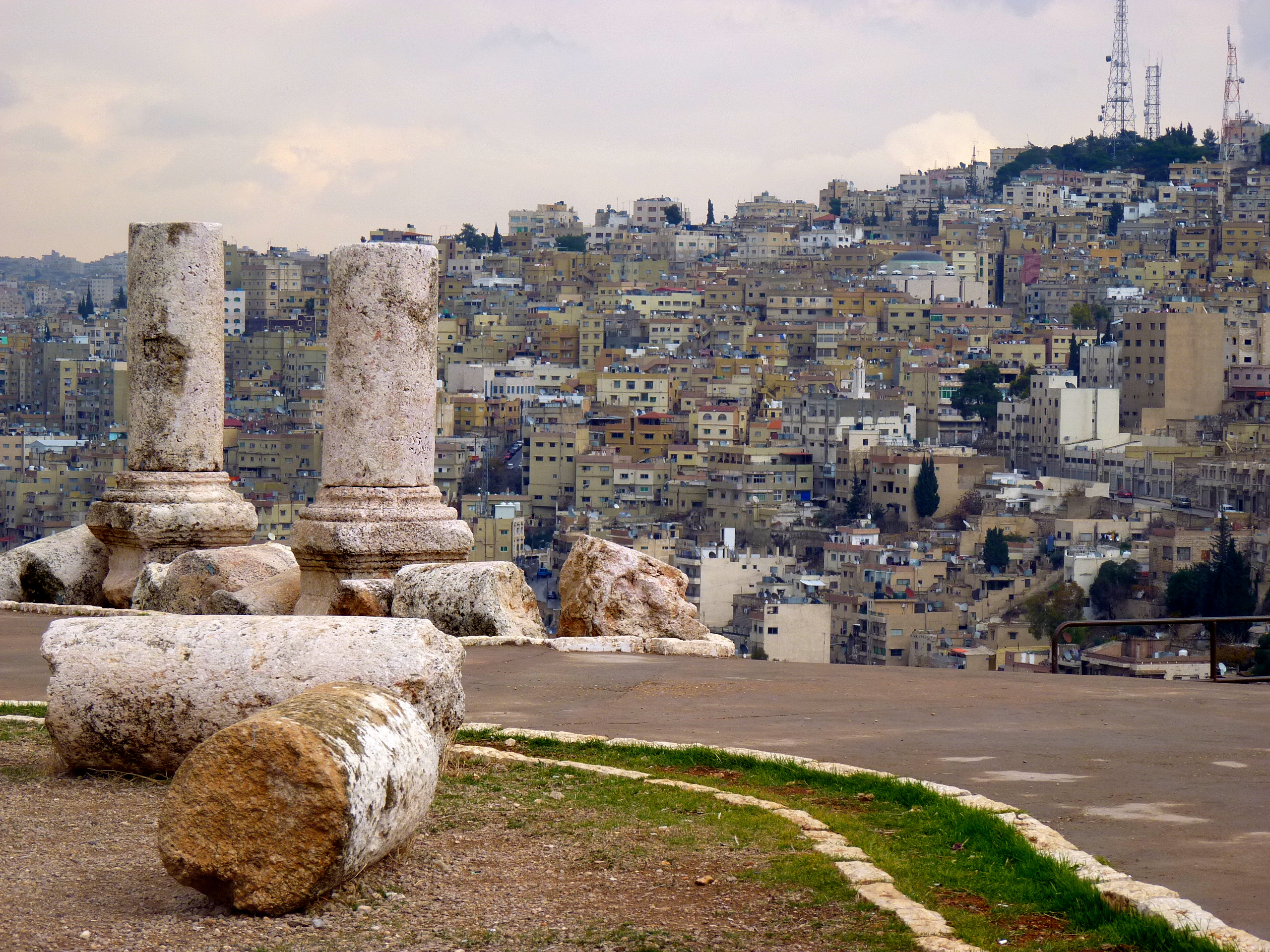
8501145481_1586ba7a35_o

When I tell people I used to live in Jordan, I often get responses like “Jordan? That’s upstate, right?” It doesn’t get nearly as much coverage in the Western press as its neighbors, and Jordanians probably aren’t too upset about that, considering why its neighbors are in the news. Jordan hasn’t experienced a major conflict within its borders since the early 1970s, but squeezed in among three active war zones, it has suffered indirectly from all of the region’s major conflicts, mainly as a dumping ground for refugees. Jordan bore the brunt of the Palestinian exodus that year, and again in 1967. More recently, it took in a huge wave of refugees from Iraq after 2003, and since 2011 has struggled to accommodate a growing population of displaced Syrians, now numbering over 600,000.

It’s a relatively tiny country, but plays an outsized role in the region, so I thought I’d use my guest-blogging stint to give Dishheads a quick look at a place most American don’t hear much about. I reached out to a few friends and former colleagues in Jordan to see how the country is faring today in coping with the Syrian refugee crisis, the threat of ISIS, the complex diplomatic challenges of the Israeli-Palestinian conflict, and day-to-day challenges. Here’s what they had to say.

“Jordan, at the grassroots and official levels, does not fear a face to face confrontation with ISIL,” writes my former boss Mahmoud al-Abed, a managing editor at The Jordan Times, “but the fear is from sleeper cells that might attack soft or hard targets.” He informs me that the General Intelligence Directorate, a domestic intel agency analogous to the NSA and also known as the mukhabarat (literally “informers”), has been making many arrests in connection with these potential sleeper cells. Another JT editor, Rand Dalgamouni, tells me that there have been some demonstrations in support of the “caliphate” in the poorer cities of Maan and Zarqa. Dozens of Salafists have been picked up by the police for expressing support for ISIS or participating in pro-ISIS rallies. She observes that “there seems to be a difference of opinion over the group between the old Salafist leaders and the young ones”, pointing to statements from jihadist leaders “that the young, gullible Salafists have fallen for ISIS’s bullshit”.

My friend M, a politically engaged young woman who asked not to be named here, offers her take on how Jordanians outside political and media circles are talking about the Islamic State, and what the crisis means for non-radical Islamists like the Muslim Brotherhood, which runs Jordan’s largest organized political party but isn’t much beloved by the state:

Average people, who don’t identify with extremism nor do they belong to any one party, worry about their safety (and rightfully so) when they see ISIS taking over parts of the Levant willy-nilly, or murdering people left, right and center. I feel there is a strong counter-movement under cover, but nothing is being said openly about fighting Islamists in Jordan. I think a more accurate way of describing their status quo is that they’re being watched closely (in Maan or otherwise), and anything they do that has the slightest potential of compromising Jordan’s safety and stability is shot down at the very early stages, i.e. they’re being kept under control. I think it’s safe to assume that Jordan’s relationship with Ikhwan [Muslim Brotherhood], or non-radical Islamists, is quite strained right now, not because of a particular thing they did, but because they’re basically the gateway to something bigger than any of us, and that is ISIS.

Jordan, which has been a close American ally since the early years of the Cold War, is also likely among the regional partners the US is counting on to help effect a durable solution to the ISIS crisis. As Obama mentioned in his press conference in Wales today, Jordan is one of the NATO partner countries with which the alliance is looking to bolster its security cooperation. King Abdullah II participated in this week’s NATO summit, and it will be interesting to see what role Jordan plays in the anti-ISIS coalition. I suspect that role will be mostly sotto voce, though, as Amman is generally loath to take public positions that could hurt its relationships with neighboring governments, even those it doesn’t much care for. “I think it’s only a matter of strategy for Jordan to forge a better relationship with NATO,” my friend M. writes, “because if ‘shit hits the fan’ in the region, Jordan will need all the help it can get.”

For three years, Jordan’s government has charted a tricky course on the Syrian civil war, declining to intervene directly out of fear of antagonizing a major trade partner, but also allowing the CIA to train rebel fighters on its territory. The conflict, meanwhile, has wreaked economic havoc on Jordan, reducing its already modest GDP growth by as much as 2 percentage points last year, to say nothing of the human toll of the refugee crisis. Just last week, the country issued another massive aid appeal to help cope with the refugee burden and other spillover effects of the Syrian war.

“As far as I am concerned, I believe that Amman wants neither Assad nor the terrorists to hold the reins of power in Syria,” Mahmoud tells me. “There is no third option now except a dragged-on conflict that might take 10 years with de facto division of Syria. In the face of such a scenario, Jordan’s only option is to defend its security and interests day by day, and think of alternatives to Syria as a key trade partner.”

The Gaza conflict, Rand and Mahmoud tell me, has galvanized support for the Muslim Brotherhood, and most Jordanians seem to agree that the outcome was a win for Hamas and the Palestinian cause in general. Rand writes: “I would say the majority in Jordan celebrates Gaza’s truce as a victory (some blocked the streets at night in celebration), but I disagree–too much devastation, deaths and displacement. It may be a success of sorts for Hamas, since the goal of the war was to obliterate them. I think Jordan’s government wouldn’t have minded to see Hamas destroyed though.”

Meanwhile, as they are wont to do, the regional security crisis has enabled some worrying legal and constitutional changes that threaten to undermine Jordan’s long-drawn-out democratization and curtail civil liberties. Rana Sabbagh highlights two proposed constitutional amendments that would give the king formal power to appoint army and intelligence chiefs directly, rather than acting on the recommendations of his cabinet. Although these amendments won’t substantially change the way decisions are made, Rand explains to me that they are controversial because “if the King starts appointing these two positions without government interference, there is no one to answer to Parliament if the appointed leaders screw up.” A new anti-terrorism law is also raising some concerns about its potential for abuse, which seems to be more a feature than a bug of anti-terrorism laws in general.

This is hardly a complete picture of what’s going on in Jordan today, but I hope it sheds a little light on the view from inside one of the places that has a whole lot to lose from the chaos engulfing the region and much to gain from setting these conflicts on a track toward permanent resolutions. My guest-blogging week is coming to an end, but I’d still love to hear your comments on this, especially from readers in Jordan and elsewhere in the Middle East, so don’t hesitate to write in if you have something to add.

(Photo of Amman by Maya-Anaïs Yataghène)

Food Quality And Inequality

by Dish Staff

James Hamblin flags new research on food and socioeconomic class:

Nutritional disparities between America’s rich and poor are growing, despite efforts to provide higher-quality food to people who most need it. So says a large study just released from the Harvard School of Public Health that examined eating habits of 29,124 Americans over the past decade. Diet quality has improved among people of high socioeconomic status but deteriorated among those at the other end of the spectrum. The gap between the two groups doubled between 2000 and 2010. That will be costly for everyone.

Meanwhile, Danielle Kurzleben responds to a report on hunger in America (pdf):

There are a few big points to draw from this report. One is that even as so many headline numbers — unemployment, GDP growth, stock market index levels — are bouncing back, the number of Americans who report they have trouble eating is holding relatively steady, at levels it first hit during the recession. So even when, for example, Friday’s unemployment report shows the economy added a projected 230,000 jobs, as Bloomberg’s consensus reflects, there are plenty of reasons (17.5 or 6.8 million, depending on how you look at it) not to celebrate.

Another thing to note is that the report mostly doesn’t cover the period after food stamp cuts went into effect. In November 2013, a temporary boost to SNAP expired, and this year, Congress passed and President Obama signed into law $8.7 billion in food stamp cuts, a reduction of around $90 per month for 850,000 households, as MSNBC’s Ned Resnikoff reported. (And $8.7 billion is a compromise amount; House Republicans initially wanted much steeper cuts.)

On the agricultural end, there’s some more pessimism. Conor Friedersdorf sees a connection between urban farms and urban inequality:

Successful urban centers are constantly changing, and those changes raise complicated issues. A growing city’s dynamism is core to what makes it attractive and useful. At the same time, cities aren’t just concrete and glass: They’re where people live. There’s a cost to pricing out families and disrupting longstanding communities. Settling on the most fair or desirable housing policies can seem impossible.

But subsidies for urban farming in one of the most dense, geographically constrained, pricey U.S. cities? That’s insanity. “It’s part of the Urban Agriculture Incentive Zones Act, a state law spearheaded by local sustainable land-use advocates and state Assemblyman Phil Ting, D-San Francisco,” the article explains. “The law encourages would-be urban farmers to turn trash-covered empty parcels into gardens with the assurance they won’t be forced out after putting in a lot of time and money.” …

San Francisco residents tend to self-describe as cosmopolitan liberals. But as a friend in the Bay Area once put it to me, they’re often reactionary conservatives when it comes to development. I am not unsympathetic to their desire to preserve such a fantastic city. But they aren’t doing any favors for those who can’t make rent.

On a more uplifting note, Susanna Bohme welcomes a proposed change to legislation regarding pesticides and labor, which would have a particular impact on the youngest workers:

For the 6 percent of farm workers who are under age eighteen, pesticide exposure is particularly dangerous. Children and adolescents’ growing bodies and age-specific behaviors mean they are at special risk for learning and developmental disabilities, asthma, cancer, genetic damage, and endocrine disorders. Despite these dangers, even young farm workers get short shrift when it comes to federal protections. The law allows children as young as twelve (and under some circumstances, even younger) to work on farms, while most other jobs have a minimum age of fourteen. Farm workers under age sixteen are prohibited from working any job deemed hazardous, including those that involve handling the most harmful pesticides. But they are allowed to handle other chemicals, including some whose active ingredients have been implicated in a high number of poisonings. In other sectors, workers aren’t allowed to enter highly hazardous jobs until they are eighteen; in agriculture that age is sixteen.

The revised Standard tightens the rules by establishing that same age, sixteen, as the minimum for handling any pesticide, not just those with the highest toxicity ratings. The new Standard would also prohibit the use of young people as early entry workers during the post-application interval. This is a meaningful change because, as the proposal notes, in one study of 531 acute poisonings among child farm workers, in cases where the toxicity category of the responsible pesticide was known, “67% of the illnesses were associated with toxicity category III pesticides, which are not currently prohibited under the hazardous order.” On the EPA’s scale of I to IV, with I the most toxic, category III can be plenty dangerous. Again the example of RoundUp is instructive. Currently there are no age restrictions for handling this category III chemical, but a 2008 study found that farmworkers exposed to it are twice as likely to develop Non-Hodgkin’s lymphoma.

The Case For Microwave Dinners

by Dish Staff

5889496675_de6b26e719_o

Amanda Marcotte makes it:

While home-cooked meals are typically healthier than restaurant food, sociologists Sarah Bowen, Sinikka Elliott, and Joslyn Brenton from North Carolina State University argue that the stress that cooking puts on people, particularly women, may not be worth the trade-off. The researchers interviewed 150 mothers from all walks of life and spent 250 hours observing 12 families in-depth, and they found “that time pressures, trade-offs to save money, and the burden of pleasing others make it difficult for mothers to enact the idealized vision of home-cooked meals advocated by foodies and public health officials.” … The researchers quote food writer Mark Bittman, who says that the goal should be “to get people to see cooking as a joy rather than a burden.” But while cooking “is at times joyful,” they argue, the main reason that people see cooking mostly as a burden is because it is a burden. It’s expensive and time-consuming and often done for a bunch of ingrates who would rather just be eating fast food anyway.

Megan McArdle offers an assent from the frozen foods aisle:

Don’t cook from scratch if you hate to cook. Cooking is a joy. So is rock climbing, or ice skating, or reading science fiction novels. That doesn’t mean it’s a joy everyone shares. There’s no reason that you should cook from scratch if you don’t like doing it. America’s supermarkets offer an ever-more-stunning variety of quick, tasty, relatively healthy frozen entrees. Virtually every grocery store has a giant freezer case devoted to making dinner time a snap, another big refrigerator case filled with things that take barely more time, and a huge prepared-foods section that is still cheaper than takeout. So is a box of pasta and a bottle of decent sauce like Rao’s. For that matter, I still remember very fondly my grandmother’s signature kid dish: hamburger meat, pasta shells and Ragu.

On a related note, Jeffrey Kluger advocates for staggered mealtimes:

It’s not that my wife and I don’t eat with our daughters sometimes. We do. It’s just that it often goes less well than one might like. For one thing, there’s the no-fly zone surrounding my younger daughter’s spot at the table, an invisible boundary my older daughter dare not cross with touch, gesture or even suspicious glance, lest a round of hostile shelling ensue.

There is too the deep world-weariness my older daughter has begun bringing with her to meals, one that, if she’s feeling especially 13-ish, squashes even the most benign conversational gambit with silence, an eye roll, or a look of disdain so piteous it could be sold as a bioterror weapon. Finally, there is the coolness they both show to the artfully prepared meal of, say, lemon sole and capers – an entrée that is really just doing its best and, at $18.99 per lb., is accustomed to better treatment.

All of this and oh so much more has always made me greatly prefer feeding the girls first, sitting with them while they eat and, with my own dinner not on the line, enjoying the time we spend together. Later, my wife and I can eat and actually take pleasure in the experience of our food.

(Photo by Michael Beck)

The Road To Democracy May Be Literal

by Dish Staff

Christian Caryl makes an interesting argument to that effect:

In Rwanda, decent roads stand for the official commitment to provide everyone with equal access to the fruits of development – concrete evidence, if you will, of the determination to overcome the ethnic divides that led the country into mass slaughter just two decades ago. Every part of the country is relatively close to a good road; no group is excluded. (Nor do you have to have a car to get around; members of Rwanda’s growing middle class can simply hop on one of the country’s ubiquitous minibuses.) Northern Malians can only dream of such conditions.

Roads don’t just enable the movements of goods; they also enable the flow of ideas. … As such, roads are also crucial ingredients of state-building.

Soon after toppling the Taliban in 2001, the U.S.-led coalition that occupied Afghanistan set out to rebuild Highway 1, the ring road linking Kabul with the country’s major urban centers (including Kandahar, the Taliban’s unofficial capital). The idea was to restore a sense of unity to a country that had virtually fallen apart during the long years of civil war. Taliban insurgents immediately vowed to sabotage the project for just the same reason. Today, the dismal story of Highway 1, which is falling apart after $4 billion of Western investment, offers a perfect microcosm of Afghanistan’s roller-coaster struggle to reinvent itself. Afghanistan isn’t unusual in this respect. Take a look at many failed states around the world and you’ll probably be struck by how many of them have bad (or no) roads.

But building too many roads means, in the words of Mark Buchanan, that “wildlife habitats will suffer huge losses and ecosystems will be destroyed, ultimately undermining Earth’s capacity to support human life as well.” Buchanan’s advice on how to minimize the harm:

New research by a group of environmental scientists suggests that better coordination could go a long way toward avoiding this disaster. The key is that vast tracts of settled land, where ecological damage is already significant and probably irreversible, still aren’t very productive. Better access to fertilizers and modern farming technologies would greatly boost the productivity of such areas, thereby reducing the need for development in more sensitive areas.

The researchers have produced a global map showing places on Earth where new roads or road upgrades could have big human benefits, and others where little benefit would be expected despite large environmental costs.

“White Supremacy Ate My French Homework” Ctd

by Phoebe Maltz Bovy

In his NYT obituary of Joan Rivers, Robert D. McFadden refers to her as “the brassy Jewish-American princess from Flatbush, Brooklyn, and Larchmont, in Westchester County.” This jumped out at me, not just because “JAP” is a slur (which it is, but one could argue that it honors Rivers to violate PC), but because… Flatbush? Some of my family lived in more or less that part of Brooklyn at more or less the same time, and it seems an odd place to label “princess” country.

I made that point on Facebook, which led to a discussion about whether one must be born a “JAP” to be one, or whether one can, through scrappy hard work, deck oneself out in tasteless-but-expensive garb and become a princess in the derogatory sense. Can one ever earn unearned advantage? Is that a thing?

Which brings us back to the more general question of “privilege.” Can privilege be earned? Is the combination of talent, hard work, and luck that brings a handful of people from not-so-privileged backgrounds success enough to move such individuals into the “privileged” category? Or does the word specifically refer to advantage that’s the result of being born to the winning side of some systematic inequality?

That’s a big part of the conversation that’s emerged in the response to my earlier post, in which I took issue with Rod Dreher’s choice to call out Ta-Nehisi Coates’s “privilege” when what Coates was describing – taking a French class as a successful adult, in a situation that wouldn’t have been available to him as a kid – seemed a fairly clear-cut case of earned advantage. Freddie deBoer takes issue with that assessment:

Of course Coates has been the beneficiary of unearned advantage.

It’s an unearned advantage to be born without crippling medical ailments. It’s an unearned advantage to be born male. It’s an unearned advantage to be born in the United States rather than in Afghanistan or Somalia. And so on. Is that what most people mean when they talk about privilege? Maybe not, but then another of the central points of privilege theory is that the privileges that are most profound tend to be those we don’t acknowledge. Besides: Coates has written at length about the benefits he had growing up thanks to his parents, and to being politicized by his father, a former Black Panther. That’s a classic kind of privilege, parental privilege, and one that absolutely matters.

Such talk will inevitably piss some people off, but it shouldn’t. The fact that Coates has been the recipient of great advantages compared to many people in the world doesn’t change the fact that he has also been faced, his whole life, with the disadvantage of living in a structurally racist society, or the relative disadvantage of his own economic circumstances compared to some others. The point is that “privileged” is not a binary category, and in fact essentially all people are some combination of advantaged and disadvantaged.

Despite a tone that suggests he and I are in stark disagreement, I basically agree with him on this. And he’s right that Coates, going the 2012 article I suspect he’s at least partially referring to, probably would as well. How anyone ends up where they do in life is always going to be some incalculable mix of effort and unearned advantage. One of the great flaws of “privilege” as a concept – and as deBoer notes, I’ve held forth on this topic quite a bit; if my ending was “underwritten,” it was out of a fear of length of the holding-forth that could ensue – is that it fails to account for the myriad unearned advantages and unfair (but often invisible) obstacles that don’t fall into any particular privilege framework. Is talent “privilege”? Is growing up in a dysfunctional but upper-class family a lack thereof? It’s always going to be possible to point to individual rich people who’ve had it worse than individual poor ones, individual black people who’ve had it easier than individual white ones, and so on. We can all point to people we know who are, on paper, more privileged than we are, but have struggled more than we have, and vice versa.

But this is only a problem when one tries to apply “privilege” to individuals. The concept works much better for describing society, because it’s about all-things-equal. While unearned, idiosyncratic advantages have doubtless contributed to Coates’s success, that doesn’t somehow tell us that white privilege (or white unearned advantage) isn’t significant in some broader sense. I suppose what I’m saying is that I’d be wary of taking this critique of privilege as far as deBoer does when he describes “a world of such multivariate complexity that we can never know whose accomplishments are earned and whose aren’t.” Yes, life is complicated, but it’s not that complicated. Are we really going to say that the Harvard legacy kid has precisely the same level of unearned advantage as the kid who got in thanks to hard-work-and-dedication-privilege?

Two readers address this question of systematic inequality more eloquently than I could, so let’s end with their observations. The first:

I think the critique of Coates’ essay regarding privilege misses a key component of TNC’s entire project. When you argue: “people often round up how easy those who have it relatively easy actually have it. I’ve heard variants of this that are about class, not race – where those who didn’t grow up with college-educated parents assume that those who did spent their dinners discussing Ideas, not squabbling over nonsense, or watching bad television.” You miss the key difference, in a way that Dreher does as well. TNC’s point (and he links repeatedly to the research backing it up both on Twitter and in the Reparations essay) is not that there’s some vague privilege in having grown up in one neighborhood vs another and that if only his family had been middle class he’d be different. It’s that structurally, a black child in a family that we would call middle class is vastly more likely to grow up in a bad neighborhood, attend worse schools, and have far more contact with actual poverty than a white child with the exact same family profile. That is the access to culture we’re talking about here. It’s not a vague sense that someone reads with a child or that mom and dad talk about books or whatever. It’s that for black families, being middle class isn’t enough. They will live in worse neighborhoods, they will have greater contact with poverty (and violence, and likely the police) and their outcomes will be constrained because of it.

That’s what’s actually more galling about Dreher’s response. It’s that he hand-waves away the research TNC puts forward with anecdotes about his family, and so he never confronts the structure of the argument at all.

And the second:

I suppose this list of qualifications – senior editor a respected magazines, writing for top publications, spending a summer studying French at Middlebury – is a set of markers of class and privilege. But consider this set of qualifications: tenured professor at one of the oldest and most prestigious universities in the country, respected scholar with an international following, board member of a number of prestigious cultural institutions. Pretty upper class, right?

Of course, I’m describing Henry Louis Gates, who if we all recall was arrested in 2009 after being locked out of his house.

I’m neither a senior editor at a national magazine, nor a professor at a prestigious university, but if I’m ever locked out of my house, I don’t worry that a neighbor will call the police on me. Yet should that nonetheless happen, I’m extremely confident of my ability to explain the situation to the police and avoid arrest. And I’ll wager however much you like that Dreher is in the same position.

Here would be where I point out that this is white privilege – but I think “privilege” is not actually helpful, nor accurate. Rather, here is where I point out that this is in fact a question of class, that class has many components, and that alongside income, wealth, education, and profession, race is one of them.

Race is part of class, and I think a lot of the bitterness comes from the realization that however many achievements a black American may achieve in 2014, race often still trumps achievement as a designator.