ISIS And The Islamist Menace

by Dish Staff

Alex Massie contends that ISIS’s peculiarly evil worldview puts us at odds whether or not we choose to be:

Make no mistake, we may not consider ourselves at war with ISIS but they most assuredly reckon themselves at war with us. And with anyone else who does not share their murderous corruption of Islam. The world has rarely been short on horror but there is something especially horrifying about ISIS. If heads on pikes won’t convince you, what would be enough to persuade you this is an evil that must be confronted? And if not confronted today it will have to be confronted eventually. Because these are not people and this is not a worldview that will be content to carve out territory and then, once it has established its base, live quietly and peacefully ever after.

In the end, all the wrangling about cause and effect and who started what and who is to blame this or that becomes a form of dissembling dithering. In the end we are responsible. Not so much on account of the unforeseen consequences of past blunders but because we – the United States and its NATO allies – have the power, the equipment and the opportunity to do something about it.

David Rothkopf identifies the threat of radical Islam as “the principal source of threat to our interests, the stability of the region, and to our allies.” He argues that the US’s Middle East policy should address this threat holistically, rather than on a case-by-case basis:

While the conditions and specific upheavals in each state in the Middle East are, as noted earlier, different, it is this battle that is responsible for the greatest amount of today’s unrest and violence. Whether it is Ansar al-Sharia in Libya or the Muslim Brotherhood in Egypt, Hamas in Gaza or al-Nusrah Front in Syria, al Qaeda in the Arabian Peninsula, or the Islamic State struggling to establish its caliphate, it is clear today that extremist Islam is emerging as a threat so broad that it must be seen in its totality to be contended with.

Further, the ties of these groups to others operating in the periphery of this region — from the Taliban to the Haqqani network, from Boko Haram to Uighur or Chechen separatists — both underscore the global scope of the problem and the potential for significant alliances to help combat it.

Certainly, our traditional allies in the Middle East have come to see the problem as one. Consider the degree to which Israel and Egypt have cooperated to deal with Hamas. Consider that unifying animus toward the Muslim Brotherhood that has linked together not only those two former warring states but also Jordan, Saudi Arabia, Bahrain, Kuwait, and the United Arab Emirates.

Adam Taylor observes that ISIS’s extremist brand is catching on:

What’s really worrying is that despite all the confusion over its name, the Islamic State “brand” actually seems pretty solid — and worryingly global. It’s distinctive black-and-white flag was flown in London last week, and leaflets supporting it were handed out in the city’s Oxford Street on Tuesday. An American was arrested at a New York City airport this month after authorities were tipped off by his pro-Islamic State Twitter rants. The group has began publishing videos in Hindi, Urdu and Tamil in a bid to reach Indian Muslims. There are credible reports that the group is hoping to target Asian countries — and Indonesia is so worried that it banned all support for the Islamic State. The list goes on and on. Whatever you call it — the Islamic State, ISIS, ISIL, or something else — its brand is potent.

Indeed, even China is starting to worry:

China has been fighting a low-level separatist insurgency of its own in Xinjiang for decades and worries that foreign Islamic groups are infiltrating the region, emboldening the simmering independence movement. Uighur exile groups say China’s government overstates its terrorism problem and falsely paints protests that turn into riots as premeditated terror attacks. In any case, Beijing is likely alarmed by IS’s criticism of its treatment of the Muslim Uighurs and the group’s alleged plan to seize Xinjiang, no matter how far-fetched the idea might be. But just how actively authorities will deal with any IS threat remains to be seen.

Furthermore, Andrew Tabler cites “analysts and European and American officials” as saying that “hundreds, if not thousands, of ISIL and Al Qaeda operatives in Syria and the Islamic State are likely planning attacks either back home or elsewhere”:

These include Muhsin al-Fadhili, former head of Al Qaeda’s Iranian facilitation network; Sanafi al-Nasr, head of Al Qaeda’s Syria “Victory Committee”; Wafa al-Saudi, Al Qaeda’s former head of security for counter intelligence; as well as Al Qaeda founding member Firas al-Suri. Members of Al Qaeda Arabian Peninsula (AQAP) are also reportedly in Syria, indicating a growing opportunity for connectivity, coordination, planning, and synchronization with Jebhat al-Nusra and other jihadists. Taken together with national-based Jihadist units from China, the Caucasus, Libya, Egypt, Sweden, and beyond, the “Islamic State” is already the next Afghanistan or Pakistan’s Federally Administered Tribal Areas in terms of a durable safe haven and training ground for global Islamic terrorism.

William Inboden believes the threatened Yazidi genocide opened Obama’s eyes to the scope of ISIS’s fanatical ambitions and is changing the president’s beliefs about terrorism, the Middle East, and American power:

I have written before about the close connections between religious persecution and national security threats. The vicious Islamic State campaign to exterminate Yazidis and Christians further reinforces this point. The Islamic State’s targeting of religious minorities is not merely a side effect of its territorial advances; it is central to the group’s identity and purpose. The worldview of the militant jihadist holds religious pluralism and religious freedom to be anathema, and the Islamic State perversely considers its own measures of success to include eliminating religious minorities. Just as the Islamic State’s persecution of Christians and Yazidis should have been an early indicator of the larger security threat it poses, the longer-term American response to the Islamic State will need to go beyond airstrikes to include a renewed diplomatic commitment to protecting and promoting religious freedom.

Tavi And Age-Milestone Anxieties

by Phoebe Maltz Bovy

This week’s New York Magazine cover story is further affirmation that Tavi Gevinson – still a teenager! – has accomplished more than you ever will. Writes Amy Larocca:

As even casual prowlers of the internet worlds of fashion and style are aware, there’s been quite a lot in Gevinson’s life so far to separate her from her peers, from everyone, really, because she became famous at 11 years old, when a friend’s older sister told her about fashion bloggers and she began walking to a fancy bookshop that carried i-D and Lula magazines and taking pictures of herself in her backyard styled in the spirit of her hero, Rei Kawakubo of Comme des Garçons. When Kawakubo released a capsule collection at the mass retailer H&M while Tavi was in seventh grade, she wrote a nerdy rap tribute (“Rei Kawakubo for H&M / Rei Kawakubo, can I be your friend? / Rei Kawakubo, stalker fan letters I will send …”) and posted it online. The indie queen Miranda July saw it and showed it to her friends Laura and Kate Mulleavy, who design the art-fashion brand Rodarte, and then everyone saw it.

Mercedes-Benz Fashion Week Fall 2010 - Rodarte - Front Row And BackstageGevinson was flown (with her father) to London to make a zine for Pop magazine, but then Dasha Zhukova, at the time the editor of Pop, liked her style—which, at that point, was an avant-garde-granny kind of thing—so much that she ended up on the cover. Next she was in New York at a Fashion Week party at the Gagosian Gallery while Cindy Sherman complimented her self-portraits and Björk wandered by and then Richard Prince did too. …

In anticipation of everything new, she broke up with her boyfriend “totally out of love and respect. You can’t stay with your high-school sweetheart forever,” she says. “People do, but you shouldn’t.” They’d broken up once before, but it didn’t stick. “I flew straight to New York for a wedding,” she says, “and then I visited Taylor Swift at her home in Rhode Island. I hate being heartbroken, but who better to discuss it with than Taylor Swift?” Next was a visit to her friend Lena Dunham on the set of Girls, then it was back to Oak Park, where she and the boyfriend reunited. But it didn’t last.

If you’re over 18 and have yet to cry on Taylor Swift’s shoulder about lost love, you may need to rethink your life choices. While you’re doing that, you may find yourself elsewhere in NYMag, specifically Ann Friedman’s celebration of the age 29:

My 29th year was when things started to click for me, personally and professionally.

I finally found the courage to quit a job I’d long hated and leave a city I liked even less. I was still working really hard, but felt like I was finally gaining some traction. It was around age 29 that the number of fucks I gave about other people’s opinions dipped to critically low levels. Which freed up all kinds of mental and emotional space for the stuff I was really passionate about.

I don’t think I’m the only one. The late 20s and early 30s seem to be a turning point in many modern women’s lives. For a while I’ve been taking note of creative women I admire who come into their own and start producing amazing work on the cusp of 30.Margaret Atwood and Joan Didion published their first books at age 29. Patti Smith recorded Horses at 29. Tina Fey was 29 when she was named head writer of Saturday Night Live. bell hooks published her first major work, Ain’t I a Woman?: Black Women and Feminism, when she was 29.

Friedman clarifies that impending-30-ness doesn’t necessarily equal stardom:

[E]ven for women who realize they still have a lot of things to figure out, around age 30 a sense of acceptance begins to settle in. It’s when many of us experience our first big career payoffs, and allow ourselves to exhale a little because for once it doesn’t feel like we’re building our lives from scratch. On the cusp of 30 — in stark contrast with prior milestones like college graduation — you’re set up to finally start living your best life, or at least a realistic approximation of it. You realize you’ll never be a wunderkind, and you’re okay with that. In general, you give way fewer fucks.

Like probably most women over the age of 25, I’ve read my share of ’30’ pieces, of which Friedman’s is one, even if it’s technically about 29, as a nod to the recent, highly scientific finding that we – and that’s men and women – peak at 29. What women-oriented 30-pieces seem to have in common is that they’re about providing a silver lining to the presumed over-the-hill status of women no longer in their 20s. And that silver lining is always some variant of, you may not be nubile, but you have your life together! You may get called ‘ma’am’, but you’re past the point of caring about such trivial matters!

The trouble with these pieces is that, while it’s of course possible to generalize about any population, the individual women reading these stories are unlikely to relate – a problem because being relatable is their very purpose. By any age milestone, most of us are going to have exceeded some of the markers and fallen short of others. And the ones we’re going to worry about are the ones we haven’t met. If you’re single and wish you weren’t, advice along the lines of, now that you’re 30, your dating life is in order, and you’re so over caring what you look like? Not so helpful. So, too, if you’re reading about how established you surely are in your career, but you’re unemployed, staying home with kids, or in your fourth – or fourteenth – year of grad school.

The reassurance, in other words, always ends up provoking still more anxieties. It’s strangely more reassuring to read about Tavi – at least there, there’s the solidarity shared by all of us who are not as accomplished as she is.

(Photo: Blogger Tavi attends Rodarte Fall 2010 during Mercedes-Benz Fashion Week in New York City on February 16, 2010. By Paul Morigi/WireImage)

Not Again, Ctd

by Dish Staff

With tensions in the St. Louis area remaining high following the shooting death of unarmed teen Michael Brown, Conor Friersdorf gapes at the now-famous photo of heavily armed police confronting a local protester:

[T]hose three officers are dressed and outfitted such that they could as easily be storming into an ISIS safe house in Iraq. Actually, they are on the streets of an American city, clad in combat gear, squaring off against a nonviolent protestor in a t-shirt and jeans with both of his hands raised over his head. It is easy to see how visuals like these could dissuade people from taking to the streets to assemble in protest of police shootings, as is their moral and Constitutional right.

A handful of protestors in Ferguson, Missouri have reportedly thrown rocks at police, a wholly unjustified act that ought to result in their arrest and prosecution, if the perpetrators can be identified. But in the image above, the camouflage pants and assault rifles are hardly there to protect against thrown rocks. If the police were dressed as civilians, but with helmets and shields, that would be more understandable. The other bit of necessary context: as mostly black protesters face these pseudo-military troopers to protest what they believe to be a civil rights violation, they’re staring at another police excess that disproportionately affects people like them.

Notably, the photographer, Whitney Curtis, was struck by a rubber bullet while covering the scene. Jay Caspian Kang decries the police response:

[A]s the images and stories from Ferguson, Missouri, joined the news churn, many who registered their thoughts via social media noted that what they were seeing – policemen with dogs and AR-15 assault rifles standing in a Stygian, blue-lit cloud of tear gas; crowds of protesters with their hands in the air, screaming “Hands up, don’t shoot”; members of the press being removed from the scene – did not look like America. The sentiment underlying the shock – that the United States should be better, that we have a Constitution that protects its citizens from violent excesses, that an unarmed young man ought to be able to live through an encounter with a police officer – seems almost precious, when one considers the country’s racial history. … But after last night’s militarized reaction to the protests in Ferguson, it’s worth considering whether the typical ending to the story, wherein the outrage of the community is met with silence on the part of the authorities, has changed for the worse.

Annie-Rose Strasser observes ominously that on Tuesday the FAA issued a no-fly zone over Ferguson “to provide a safe environment for law enforcement activities”:

To get more of a sense of what that means, ThinkProgress called the helicopter dispatcher at the St. Louis County Police Department. St. Louis, not Ferguson, has been “responsible for crowd control,” a Ferguson Police spokesperson said. According to the dispatcher, the department originally requested the no-fly zone – for certain flights; “the ceiling is only at 5,000 feet,” the dispatcher said, though the website actually lists 3,000 feet – for 24 hours. The department then asked the FAA to extend the ban on flying.

The reason? “It’s just for a no-fly zone because we have multiple helicopters maneuvering in the area and we were having some problems with news aircrafts flying around there,” the dispatcher, who would only identify himself by his first name, Chris, said. The effort to stop media from flying over the area to film is troubling, especially in light of reports that police have turned journalists away from the sites of the protests.

Melissa Byrne suggests the police bear some responsibility for the rioting:

They should have gathered people of faith and trauma specialists to listen to the community. They should have ordered pizzas and sodas to feed people into night as they aired their anger and grievances. They should have packed away all need to fight the community. They should have committed to an open and transparent process for justice. They should have not relied on creating the conditions for a riot to cover up for their history of problematic policing. Yes, it was wrong for people to commit property damage, but I am 100-percent confident that non-violent, non-aggressive policing would have prevented the outburst of rage.

Emily Badger examines the racial composition of the Ferguson Police Department:

The St. Louis suburb of Ferguson where the working-class, majority-black population has been clashing with law enforcement for the last three days has 53 commissioned police officers. According to the city’s police chief, three of them are black. These numbers matter not just for the terrible optics of white officers clutching tear gas canisters opposite black residents shouting back. They speak to a fundamental problem rooted deep in history and driving the perception of injustice in Ferguson today: This community isn’t represented in its own institutions of power.

Robert Tracinski, in a post regrettably titled “Why Ferguson Needs John Adams,” urges observers not to rush to conclusions:

We ought to know how much can be distorted, misrepresented, and misunderstood by seemingly official or sympathetic sources on all sides, how long it can take for accurate information to come out, and how equivocal the results can be, with the evidence so evenly balanced as to convince partisans on both sides that they are right. But when every new politically charged shooting comes along, we forget what we should have learned, and there we all go, back to making confident pronouncements about who we think did what, who is the villain, and what is the remedy. The cardinal sin here is the subordination of facts to a “narrative” adopted by activists and by the media. To adopt a narrative about how all police are racist or all police lie about shootings would be as unjust as to adopt a narrative about how all young black men are violent. Instead of insisting on our cherished narrative, we should be calling for the rule of law—which applies for everyone.

But John McWhorter contends that the narrative about racially biased policing is accurate:

I am the last person to jump in with overheated rhetoric that America is engaged in a “war against black men.” There is no evidence of anything so deliberate. However, when more temperately minded people say that black lives are valued less in the clinch than white ones, jump in I must, because it’s true.

A few weeks ago, white 18-year-old Steve Lohner could tote a gun around in Aurora, Colorado (where in 2012 James Holmes gunned 12 people to death and injured 70 others), practically taunting law enforcement  to mess with him, in a quest to make a showy point about gun rights. Who among us can pretend that if a black kid was doing the same thing he wouldn’t be much more likely to wind up killed? Those inclined to pretend might note that meanwhile, black 22-year-old John Crawford was killed two weeks later for holding a toy gun at a Wal-Mart in Ohio. This kind of thing sits in black American minds and creates a sense of alienation.

Meanwhile, Landon Jones mulls over the shooting in light of St. Louis’ troubled racial history:

There is no large city in America more burdened by racial tension and mutual suspicion than St. Louis. The racial and economic problems that have beset America’s cities are particularly intense in my hometown. Despite the city’s large black population, the single black person I met during my childhood in the 1950s was my parents’ housekeeper, Willie Brown. She would arrive at our house once a week and go to the basement to change into her maid’s dress. St. Louis is the city that produced Miles Davis, Chuck Berry, and Josephine Baker. Yet when Michael Brown died, white and black residents quickly drew back to their default positions of mutual distrust: Black people took to the streets to express their anger, while white citizens expressed dismay at the chaos. There are echoes of this throughout the city’s history.

But Jelani Cobb emphasizes that such an event could happen anywhere:

Three weeks ago, Eric Garner died as the result of N.Y.P.D. officers placing him in a choke hold, a banned tactic, following a confrontation over selling loose cigarettes. His death echoed that of Renisha McBride, the nineteen-year-old who was killed when she knocked on a stranger’s door following a car accident, which in turn conjured memories of Jonathan Ferrell, who was shot ten times and killed by officers in North Carolina soon after the death, in Florida, of Jordan Davis, shot by a man who wanted him to turn down his music, which in turn paralleled the circumstances of Trayvon Martin’s demise. For those who have no choice but to remember these matters, those names have been inducted into a grim roll call that includes Sean Bell, Oscar Grant, Amadou Diallo, and Eleanor Bumpurs. These are all distinct incidents that took place under particular circumstances in differing locales. Yet what happened on Staten Island and in Dearborn Heights, Charlotte, Jacksonville, and Sanford have culminated, again, in the specific timbre of familial grief, a familiar strain of outrage, and an accompanying body of commentary straining to find a novel angle to the recurring tragedy.


Spiking Surrogacy

by Dish Staff

Writing in the NRO, Jennifer Lahl issues a call to end surrogate motherhood:

[T]hese arrangements in my view are fraught with medical, ethical, and legal problems that affect women and the children they produce in negative ways. Take the breaking news of Baby Gammy in Thailand: The surrogate mother was carrying twins for the intended parents and did not know until late in her pregnancy that Baby Gammy had Down syndrome; allegedly the parents did not want the disabled child and asked the surrogate mother to abort the disabled fetus; the surrogate mother refused, carried the fetus to term, and is now parenting that child. Or consider the story breaking in Italy about an embryo mix-up, in which a woman just gave birth to the twins of the wrong couple; or the case of the wealthy young Japanese businessman who has fathered 13 babies via surrogacy. These stories should wake the world up to the gross human-rights abuses of women and children in the surrogate-mother industry.

Mark Joseph Stern seizes on the piece, arguing that “the larger question of surrogacy is poised to cause a catastrophic rift within the conservative movement as a whole”:

Why do some Republicans want to legalize surrogacy contracts? Easy: Straight people, including straight men, need surrogates. Although some surrogacy opponents try to frame their argument as a fundamentally anti-gay one, this is a bit of a ruse. Gay couples represent only a fraction of all potential surrogacy clients; most people in need of a surrogate are infertile straight couples. Surrogacy opponents, then, may try to capitalize on existing anti-gay animus to further their cause—but really, their hostility to the practice is tethered to their broader enmity toward modern conceptions of sexual autonomy.

This animosity toward sexual liberty is the barely stifled undercurrent of pretty much every anti-surrogacy article out there. For a fringe group of conservatives, gay marriage and abortion are just the tip of the iceberg. What truly disgusts them is the whole array of modern sexual and reproductive practices, from egg donation and IVF to divorce and remarriage. To orthodox Catholics, the widespread acceptance of assisted reproductive technologies and non-traditional families is a grotesque violation of natural law and the start of a horrifying brave new world in which technology trumps humanity.

Zooming out, Amel Ahmed notes that about 100 policymakers and activists will be meeting in The Hague this week to discuss ways to improve and standardize national laws on surrogacy:

Some nations tightly restrict surrogacy or ban it outright, while others have no surrogacy laws and provide no oversight. In the United States, some states forbid surrogacy contracts. Others, including California and Illinois, have regulations to help enforce agreements. Some countries, including India and Thailand, have fairly lax regulations and are popular destinations for parents from developed countries such as Australia and Japan who are looking for affordable surrogate mothers. In India alone, about 3,000 clinics offer surrogacy services, according to Sama, a New Delhi organization working on women’s health issues. Despite the proliferation of clinics, there is no international consensus on how to establish legal parentage in the context of surrogacy arrangements. This can leave children exposed to potential risks, including abuse and denial of citizenship.

Writing last week, Jessica Grose examined the situation in Thailand:

I asked Joan Heifetz Hollinger, an affiliate of Berkeley Law School’s Center for Reproductive Rights and Justice, if we are going to keep seeing these legal messes for decades to come. In a word, yes. … It’s a particular mess in Thailand right now, Heifetz Hollinger says, because it’s currently a boom country for surrogacy, but, in another legal gray area, surrogacy is not explicitly legal or illegal there. (In the case of Chanbua, the Thai Ministry of Public Health is now reportedly saying that by being a surrogate, she violated their human trafficking laws.) A lot of couples who had previously used Indian surrogates are now using Thai surrogates, because some Indian provinces are starting to make restrictive laws around surrogacy, doing things like banning foreign gay couples and single people from using Indian surrogates.

In Thailand, the state recognizes the surrogate as the legal mother, according to the U.S. Embassy (though, again, surrogacy isn’t exactly legal). But the biological father can be listed on the birth certificate as well – only if the surrogate is unmarried. If the surrogate is married, her husband is listed as the father. … There are no easy answers here, only questions, often ones that are so complicated that you could not make them up if you tried.

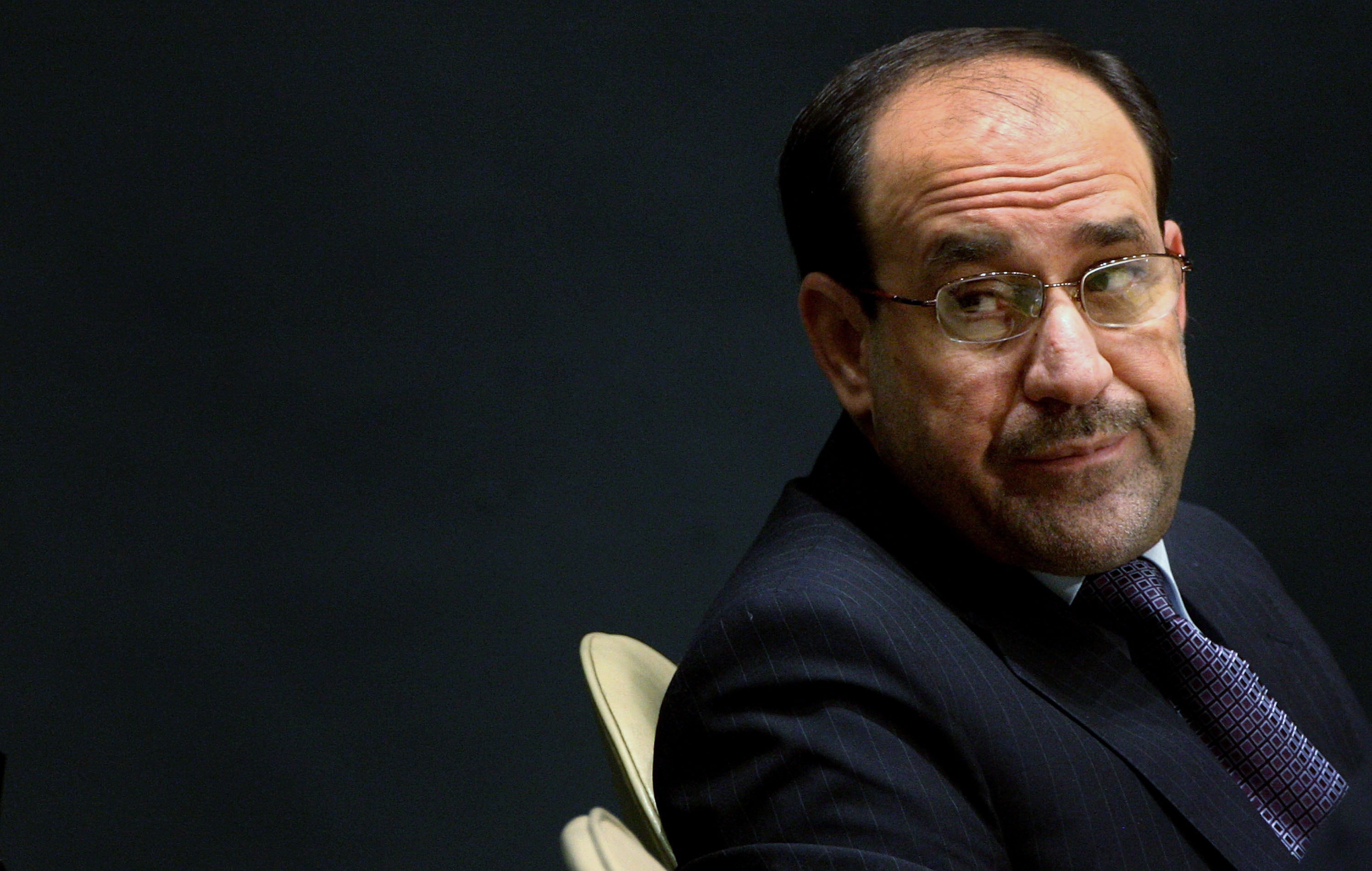
Maliki’s Last Stand

by Dish Staff

World Leaders Converge At 62nd U.N. General Assembly

Despite – or more likely, because of – the emerging consensus that it’s time for new leadership, the embattled Iraqi prime minister insists that he will remain in his post until a court orders him to vacate it:

“Holding on (to the premiership) is an ethical and patriotic duty to defend the rights of voters,” he said in his weekly televised address to the nation. “The insistence on this until the end is to protect the state.” Al-Maliki on Monday vowed legal action against President Fouad Massoum for carrying out “a coup” against the constitution. “Why do we insist that this government continue and stay as is until a decision by the federal court is issued?” he asked, answering: “It is a constitutional violation — a conspiracy planned from the inside or from out.”

Iraqi troops imposed heightened security in Baghdad Wednesday as international support mounted for a political transition. Tanks and Humvees were positioned on Baghdad bridges and at major intersections on Wednesday, with security personnel more visible than usual. About 100 pro-Maliki demonstrators took to Firdous Square in the capital, pledging their allegiance to him.

Josh Voorhees outlines the supposed constitutional basis for Maliki’s claim:

The issue of who’s in the right is a complicated one, all the more so given the Iraqi constitution’s often vague and muddled wording.

The letter of the law calls for the president to nominate a prime minister from “the largest Council of Representatives bloc.” In this case, that would be the State of Law coalition, which both Maliki and Abadi belong to. According to Reidar Visser, a historian and expert on Iraqi politics, there may once have been a case that Maliki deserved the chance to form a government. But such an argument quickly fell apart over the past 48 hours as the State of Law coalition split its support between the current prime minister and the man nominated to replace him. “Maliki’s promise to bring the case before the Iraqi federal supreme court will [now] be of academic interest only,”Visser has concluded.

Having lost the support of both Washington and Tehran, Maliki’s fate looks sealed, but he could still cause trouble:

“Ultimately, Maliki certainly cannot survive as ruler of Iraq without Iranian and U.S. support,” said Faysal Itani, a resident fellow at the Atlantic Council. “The question of his premiership is not very relevant now; he’s no longer prime minister of Iraq, whatever he says.” Michael Eisenstadt, of the Washington Institute for Near East Policy, said Maliki had lost support inside and outside Iraq, with 38 of the 96 lawmakers in his State of Law bloc backing Abadi just as Washington and Tehran effectively told him to throw in the towel. “In practical terms, Maliki’s fate as a legitimate politician is sealed,” Eisenstadt said. …

Even if he steps down, Itani cautioned that Maliki could make life difficult for Iraq’s next rulers. Maliki, Itani said, has spent years appointing loyalists to key positions throughout Iraq’s government and security organizations. He could emerge as a “pretty powerful de facto militia leader, capable of causing all sorts of headaches for the U.S., Iran, and his Shiite rivals,” Itani said. Eisenstadt, meanwhile, said Maliki could decide that violence is the answer.

And Maliki’s past misdeeds, Juan Cole adds, might make things difficult for his intended successor, Haider al-Abadi:

Unfortunately, in order to resolve the current crisis in Iraq, al-Abadi needs internal allies more than external lip support. He needs more than pro forma support from the Kurds in confronting IS in Diyala, Salahuddin and Ninawa provinces. And, he needs to detach some of the Sunni tribal leaders from the IS. The last time the Sunni rural notables allied with Baghdad against al-Qaeda, they were treated shoddily. Al-Maliki declined to continue their stipends or give very many of them government jobs. Since they had fought terrorists, they were often targeted for reprisals by the terrorists. And, al-Maliki even prosecuted some who had fought Baghdad before changing their minds and joining “Awakening Councils.” The difficulty is that when al-Abadi goes to the tribal chiefs, he may not get much of a hearing. He is after all from al-Maliki’s party.

(Photo: Spencer Platt/Getty Images)

Clinton Out-Hawks Obama, Ctd

by Dish Staff

Fallows is troubled by Clinton’s recent comments:

[I]n this interview—assuming it’s not “out of context”—she is often making the broad, lazy “do something” points and avoiding the harder ones. She appears to disdain the president for exactly the kind of slogan—”don’t do stupid shit”—that her husband would have been proud of for its apparent simplicity but potential breadth and depth. (Remember “It’s the economy, stupid”?) Meanwhile she offers her own radically simplified view of the Middle East—Netanyahu right, others wrong—that is at odds with what she did in the State Department and what she would likely have to do in the White House. David Brooks was heartened by this possible preview of a Hillary Clinton administration’s policy. I agree with Kevin Drum and John Cassidy, who were not.

Ezra thinks the interview demonstrates that Clinton’s nomination isn’t inevitable:

There is a pattern that has emerged in almost every recent interview Clinton has given: liberals walk away unnerved. She bumbled through a discussion of gay marriage with Terry Gross. She’s dodged questions about the Keystone XL pipeline. She’s had a lot of trouble discussing income inequality. I initially chalkedsome of this up to political rust. I am quickly revising that opinion.


Waldman sees Clinton’s disregard of the liberal base as a consequence of her not having a viable Democratic challenger:

Over the next two years there will probably be more situations in which Clinton winds up to the right of the median Democratic voter. That would be more of a political problem if she had a strong primary opponent positioned to her left who could provide a vehicle for whatever dissatisfaction the Democratic base might be feeling. But at the moment, there is no such opponent. Her dominance of the field may give her more latitude on foreign affairs — not to move to the right, but to be where she always was. Neither Democrats nor anyone else can say they didn’t see it coming.

Scott McConnell despairs:

George W. Bush once had the wit to joke about major financial elites being his “base”, but with Hillary the gap in attitudes between the major money people and the base of Democratic voters is substantial, and no joking matter.

As yet, amazingly, Hillary has no real opponent to the nomination. Centrist inside politics watchers have concluded her Goldberg interview means that she carefully calculated that she can run to the right and face no consequences. It’s probably true that most of the names floating about, Brian Schweitzer and Elizabeth Warren pose little threat to a Clinton coronation. But someone who could talk coherently about foreign policy—James Webb, for instance—might be a different matter, though no one besides Webb himself knows if he has the discipline and energy to take on what would a grueling, and probably losing campaign. The absence of the genuine challenger to a hawkish Hillary leaves one depressed about the state of American democracy.

However, Noam Scheiber thinks Clinton’s comments are risky:

Team Obama has calculated that it’s in the president’s interest to see Clinton succeed him. I suspect that will remain the case, Axelrod’s venting notwithstanding. But Obama’s advisers are not the same as Obama’s donors, many of whom have never loved the Clintons and still don’t to this day. A few more comments like this and many will be happy to ante up for Warren or some other challengerperhaps even Biden, whose loyalty to the president many Obama donors consider his most important quality.

Tomasky agrees with Hillary brushing off the Democratic Party’s base. But, he writes, “I don’t think she’s a neocon hawk”:

[U]nlike McCain, who preens his way around Washington saying that that ISIS’s strength is entirely Obama’s fault, at least Clinton says, “I don’t think we can claim to know” what would’ve happened had the FSA been armed two years ago. That’s a humility the neocons lack. It’s a crucial distinction, and it’s a pretty damn important quality in a president.

How Philip Klein understands the game Clinton is playing:

Clinton is trying to strike a balance — she wants to distance herself from President Obama on foreign policy in areas in which he’s viewed as a failure, but she wants to preserve the veneer of experience that comes with having served as his Secretary of State. The problem she’s going to run into is that it’s easy to see how these two goals could conflict with one another. To the extent that Clinton touts her vast experience as Obama’s Secretary of State, it becomes more difficult to separate herself from the administration’s foreign policy.

Suderman gets the last word:

She wants to suggest some differences between herself and Obama, but not with any clarity, and not in a way that creates any real distance between them. And she’ll probably want to keep most of whatever differences she does reveal confined to the realm of foreign policy, partly because that’s where her experience is, and partly because the Democratic base isn’t likely to support major departures in domestic policy. Which means that unless there’s some big, unexpected break coming, she’ll essentially be running as a slightly more hawkish version of Obama. Inevitably, that means she’ll be tied to Obama’s less-than-popular presidency and controversial domestic agenda. Unless Obama’s current approval ratings improve—which of course they could over the next two years—that’s not great a place to be.


Many Jobs, Few Hires

by Dish Staff

Jobs Market

Ben Casselman analyzes the latest job market numbers:

U.S. employers listed 4.7 million available jobs at the end of June, 700,000 more than a year earlier and the most since 2001, according to new data released Tuesday. Meanwhile, the number of unemployed workers has been falling steadily and is now below 10 million. As a result, the remaining job seekers face their best prospects of the recovery: There are now two unemployed workers for every job opening, down from about seven at the height of the unemployment crisis.

Matt Phillips throws cold water on the news. He proclaims that “American companies want workers—they just aren’t actually hiring them yet”:

 US job openings have been at highs not seen since early 2001. Openings touched 4.67 million in June, up 2.1% from May. So if there are job openings, and business owners intend to hire, surely they’re hiring, right? Well, not so fast. The [Job Openings and Labor Turnover Survey] hiring rate is nowhere near as buoyant as the job opening rates.

Jared Bernstein’s take:

Here’s what I think is going on. The job market has in fact been tightening, but in a somewhat unusual way: through diminished layoffs more so than through robust hiring (see figure here and this important related work as well).  The former—fewer layoffs—is keeping the short-term unemployment rate nice and low. The latter—tepid hires—is keeping the long-term jobless rate high. That’s creating the illusion of decreased matching efficiency but it’s really just the result of the persistent slack and the unusually high share of long-term unemployment with which we’ve been stuck for years now.

Arming The Kurds, Ctd

by Dish Staff

The EU could not agree yesterday on whether to arm Kurdish fighters in Iraq, but gave member states permission to do so on their own. This morning, France announced that it would send an immediate shipment of weapons:

The sudden announcement that arms would begin to flow within hours underlined France’s alarm at the urgency of the situation in Iraq, where the Islamic State fighters are threatening the autonomous Kurdish region in northern Iraq. … French authorities have pushed other European Union members to do more to aid Christians and other minorities being targeted by the Islamic State group extremists. E.U. foreign ministers will hold an emergency meeting Friday to coordinate their approach to the crisis and to endorse the European arms shipments already announced, according to an E.U. diplomat speaking on condition of anonymity pending the official announcement later Wednesday.

Rick Noack notes that Germany is also considering sending weapons to Iraq, which might also entail arming the peshmerga directly. That would mark a major change in policy for the world’s third largest arms exporter:

“If Germany decides to arm the Kurds, this would be a watershed moment. Germany has so far refrained from delivering such aid to militants,” said journalist Thomas Wiegold, a leading authority on Germany’s defense industry.

In the past, Germany had always refused to deliver arms to rebel groups such as those fighting in Libya or Syria, although it did earlier approve the delivery of arms to Iraq. Iraqi Kurdistan, however, is a semi-autonomous region within Iraq, which makes it difficult for foreign governments to directly negotiate arms deliveries. Direct support would also contradict E.U. guidelines that rule out deliveries to warring parties that belong neither to the European Union nor NATO.

Meanwhile, the Kurds have sent the Pentagon their wish list of advanced weaponry, which, according to Eli Lake, includes armored personnel carriers, night vision equipment, and surveillance drones:

The Pentagon has yet to respond to the Kurdish request. But the list is an indication of the rapid expansion of the multi-pronged American campaign in Iraq. On Tuesday, the U.S. military announced it would be sending 130 more U.S. military advisers to northern Iraq, bringing the total number of troops to over a thousand in country. American boots on the ground will only be a small piece of the larger effort against ISIS, however.

The U.S. is scheduling up to 100 attack, surveillance, and humanitarian airdrop missions a day over Iraq.  Those flights are being carried out by drones and manned fighters, U.S. Navy and Air Force aircraft alike. But American forces are not the ones calling in those strikes, as has become commonplace in warzones throughout the world. Instead, Kurdish fighters are identifying targets for the American bombing runs, breaking with years of U.S. military practice meant to ensure that the right targets are hit—and civilians are not.

Depression, Success, And Lies Of The Mind

by Elizabeth Nolan Brown

spirit animalYesterday I bemoaned those who would turn Robin Williams’ death into a mandatory mass therapy session. But that isn’t to say I don’t appreciate some of the conversation his suicide is provoking. If you’ve never been clinically depressed, the idea that someone like Williams could possibly find life wanting tends to seem absurd.

But depression is a “lie of the mind,” to borrow an old Sam Shepard title. It cares not for your comedy-god status or your loving family. It cares not that plenty of people have it worse. “Depression is a skilled liar, using what you know is true as basis for a massive fraud,” wrote journalist John Tabin yesterday. “If you’re suicidal, you’re where I was five years ago,” he tweeted. “Please read”:

Bu3KI4iIMAI0PVZ


I got teary-eyed reading that, and not just because Tabin is someone I know and like. There’s also the pain of recognition: I could have written nearly every word he did here. This is my depression story, too.

But then again, it is almost all depression stories. That is what will strike you if you read very many of them. The building blocks of depression are always the same: hopelessness, isolation, pain. The absolute, iron-clad conviction that nothing will ever change. Then (if you’re lucky) come hard-won coping tips. An uneasy peace between you and your biology. But it can all be illusory, as Tabin mentions—you are fighting to overcome a brain that wants you to die using that same brain. You will often have to keep coming up with new tricks.

Can you imagine doing that for a lifetime? I don’t think it speaks ill of anyone who eventually decides the tradeoffs aren’t worth it. As a Dish reader lamented via email:

…when someone dies after a lifelong battle with severe mental illness and drug addiction, we say it was a tragedy and tell everyone “don’t be like him, please seek help.” That’s bullshit. Robin Williams sought help his entire life. He saw a psychiatrist. He quit drinking. He went to rehab. He did this for decades. That’s HOW he made it to 63. For some people, 63 is a fucking miracle.

People unfamiliar with how depression works think Williams’ wealth and success should’ve been an antidote. Dave Weigel deconstructed this myth yesterday at Slate, with rare help from personal anecdote:

If you’ve never suffered from depression, or had a public career, the suicide of a successful person makes no damn sense. It’s the same reason why an artist quitting or breaking his band up makes no sense—you wanted something, and you’ve finally grabbed it, so why would you ever give that up? What’s wrong with you?

Depression is what’s wrong with you. I’ve been medicated for depression since 2001. In 2002, after a particularly low episode, I was taken in by campus police that marked me as a risk for self-harm. I then voluntarily checked myself into a mental hospital.

I like seeing men like Weigel and Tabin sharing their stories right now. Too often, depression is still viewed in a gendered light. And because women are expected to be emotional, I don’t think our stories resonate as strongly with those who don’t understand depression. That it really isn’t a disease about emotionality falls on the proverbial deaf ears.

But perhaps the hardest thing for people to understand is that depression doesn’t respond to rational incentives. It doesn’t matter if you have a new, awesome job or a new, awesome baby. It doesn’t matter if you’re a world-famous actor or a successful political journalist. Here’s Weigel again, explaining how the depression-brain tricks you:

One: You earned none of what you have. You’re a fraud. People are going to find out. Everything your critics have said about you, from the guy who lobbed dodgeballs at your head to the hate-mailer who hated your Iowa story, is completely right.

Two: All that other stuff you feel, the negativity and the screw-ups? You definitely earned that, because you’re meant to fail. You’ve succeeded, and you still feel this way? Why, that’s proof that you won’t possibly feel better.

Three: Nobody truly likes you. They can desert you at any moment. They’re succeeding, and you’re not.

It’s contradictory, and pointless, and bears very little relationship to the reality of what you’re going through. It’s unpredictable in a way that makes you feel callow; I’ve been sad but functional after the deaths of family members, then horribly depressed while walking home on a random Wednesday.

The random-Wednesday bit is one of its most insidious parts. And it also makes it tricky to calibrate your response. Is this afternoon funk just an afternoon funk? Is there something secretly bothering me? Or am I once again spiraling into a totally irrational and unprovoked cycle of hate and emptiness that will last for months? Only time will tell! 

Any sort of conclusion here feels pat and forced, so I’ll just say that I’m glad people are sharing about and discussing this right now—and in ways more nuanced than “depression is bad, get help!” Thanks, Tabin. Thanks, Weigel. Thanks everyone who is sharing stories (I’d be amiss not to mention these very good takes from Helen Rosner, Molly Pohlig, Chris Gethard, and Jim Norton). Oh, and thanks GlaxoSmithKline! Wellbutrin is my spirit animal…

The No-Drama Doctrine

by Dish Staff

Cameron Hudson finds the Obama Doctrine of genocide prevention sensible, if not particularly satisfying to those who would have liked a more robust American response to the crisis in Syria:

In an interview Friday with Tom Friedman of The New York Times, Obama remarked, “When you have a unique circumstance in which genocide is threatened, and a country is willing to have us in there, you have a strong international consensus that these people need to be protected and we have a capacity to do so, then we have an obligation to do so.” Some would argue that this explanation walks back from the high-minded justification for the forceful response to the potential massacre in Benghazi, Libya, in late 2011 when Obama asserted that a failure to act “would have stained the conscience of the world.” More importantly, it sets a new and seemingly higher bar for taking action to prevent genocideone that is unlikely to be replicated very often.

If that’s the intent, it is not necessarily a bad thing.

Genocide prevention, as a community of practice, is in need of bookending. In a world full of nailsor potential nailsthe U.S. military is the literal hammer. Absent a clear understanding of the circumstances when force could be used to save lives, advocates and communities at risk hold out false hope that the cavalry is coming, when it so rarely is. Understanding when a military response is on the table and when it is not will focus our attention on the cheaper, more politically palatable non-military options that should always constitute the heart of genocide prevention.

Aaron David Miller argues that despite the decision to strike ISIS, Obama remains as risk-averse as ever:

The Friedman interview revealed another important reason why Obama’s risk aversion is likely to endure. The president raised the issue about the lack of follow-up to help Libya after Qaddafi’s overthrow. “Then it’s the day after Qaddafi is gone, when everybody is feeling good and everybody is holding up posters saying, ‘Thank you, America.’ At that moment, there has to be a much more aggressive effort to rebuild societies that didn’t have any civic traditions…. So that’s a lesson that I now apply every time I ask the question, ‘Should we intervene, militarily? Do we have an answer [for] the day after?'”

Even though he doesn’t come out and say it, you get the sense that if there was a chance to do it over again he’d be much more engaged. But there’s another way to read the president’s comment, too. And that’s this: Military action is only one step in a complex process that requires a huge investment to create a relatively stable and functional transition from authoritarian to democratic rule. And Obama understands that hitting the Islamic State (IS), as necessary as it may be, is hardly a panacea for rebuilding the new Iraq. More to the point, that’s not America’s job. And Obama isn’t going to correct his Libya mistake by getting bogged down in nation-building in Iraq.

But Micah Zenko expects the mission in Iraq to expand beyond Obama’s stated limits, because they all do:

The expansion of humanitarian interventions — beyond what presidents initially claim will be the intended scope and time of military and diplomatic missions — is completely normal. What is remarkable is how congressional members, media commentators, and citizens are newly surprised each time that this happens. In the near term, humanitarian interventions often save more lives than they cost: The University of Pittsburgh’s Taylor Seybolt’s 2008 review of 17 U.S.-led interventions found that nine had succeeded in saving lives. But they also potentially contain tremendous downsides — as recent history demonstrates.

On April 7, 1991, the United States began airdropping food, water, and blankets on the largest refugee camps along the Turkish-Iraqi border that were sheltering Kurds displaced by Iraqi Republican Guard divisions brutally putting down an uprising in northern Iraq. That same day, when asked how long the U.S. military would play a role within Iraq, President George H.W. Bush declared, “We’re talking about days, not weeks or months.” In support of the humanitarian mission in northern Iraq, the United States concurrently began enforcing a no-fly zone above that country’s 36th parallel. In August 1992, a U.S.-led no-fly zone south of the 32nd parallel of Iraq was formed by unilateral declaration to compel Saddam Hussein’s cooperation with U.N. weapons inspectors and to protect the Shiite population caught in a counterinsurgency campaign in the southern marshlands. Bush was right about the U.S. military involvement not being weeks or months: The northern and southern no-fly zones lasted another 10 and a half years.