The Biggest Loser In The Gaza War

Hussein Ibish nominates the Palestinian Authority for the dubious distinction:

There is no question that Abbas and the PA were suffering a crisis of legitimacy in recent months, at the same time that Hamas was enduring an even greater crisis at virtually every register. But now, at least, Hamas has seized the initiative, albeit at a hideous cost. It alone appears to wave the Palestinian flag, however speciously. It alone claims to have a strategy for national liberation — armed struggle and “resistance” — no matter how implausible.

The danger is that the bloody and reckless hostilities between Israel and Hamas at least constitute something, which a PA armed with nothing may find difficult to counter politically. With each successive flare-up of violence between Israel and Hamas, the Islamist group has taken more blame from both Palestinian and broader Arab public opinion for the deaths and destruction. Hamas’s political “bounce” from nationalist sentiment against Israel has been more fleeting. But if the PA still appears ineffective, marginal, and irrelevant, even the heaping of public blame on Hamas might not stop it from gaining significant ground in the Palestinian political landscape.

But the PA has taken some action – namely, appealing to the UN Security Council and attempting to leverage its longstanding threat to seek an ICC investigation of Israel:

“We call on the Security Council to adopt a resolution that condemns the Israeli military aggression against the Palestinian civilian population in the Gaza Strip, calls for its immediate cessation, calls for the lifting of the Israeli blockade on Gaza Strip, and calls for protection of the Palestinian people,” Palestine’s U.N. envoy, Riyad Mansour, told the Security Council in an emergency session on Gaza.

Mansour said that if the Security Council failed to respond to his government’s appeals, the Palestinian Authority would “have no recourse but to turn to the judicial bodies of the United Nations and the international system.” The remark appeared to be a veiled warning that the Palestinians were prepared to ask the Hague-based International Criminal Court (ICC) to probe Israel’s military conduct. The Palestinians had previously agreed to hold off on asking for an ICC investigation into Israeli conduct as long as U.S.-brokered peace talks showed signs of progress.

Hamas now says it has captured an Israeli soldier, which Ishaan Tharoor says could further strengthen the group’s position relative to the PA:

[F]or militant groups like Hamas, one captured Israeli soldier is vital currency. Israel rebukes Hamas for not accepting the offer of ceasefires brokered by outside parties, but the ceasefires on offer did nothing to satisfy Hamas’s longstanding demands regarding the release of Palestinian prisoners (including some who were re-arrested after being freed in the exchange for Shalit), the loosening of border controls in heavily blockaded Gaza and the payment of salaries to some 40,000 public employees in Gaza. …

Hamas was not in a particularly strong position to win any of its demands — that is, until it claimed to have captured another Israeli soldier. If that proves true, then it could be a game changer. Still, the biggest loser in the wake of the Shalit release was neither Israel nor Hamas, but the Palestinian government of President Mahmoud Abbas, who has long been at odds with the Islamists. In one fell swoop, Hamas won a real victory — the release of over 1,000 Palestinians — when years of Abbas’s diplomatic wrangling and quixotic missions for U.N. recognition have achieved little to improve the lot of Palestinians.
Criminally Bad Parenting, Ctd

A reader steams:

If we’re going to lock this woman up for an unsupervised visit to the park, why not lock up all the middle- and upper-class parents for the supervised abuse of team sports like football and soccer, where head trauma occurs at such an alarming rate? But of course, no one would dream of that. We only lock up poor black women trying their best to earn a living and have few options for childcare.

Another adds:

By that logic, my parents should both be rotting in jail! I grew up in California in the late ’80s, and was only really limited by how far I could ride my bike. My days were spent exploring the creeks and hills of south San Jose, swimming at the lake, rollerblading (ugh) to the comic store, and hanging at the 7/11 playing Street Fighter II. All on my own, with no adult supervision, and the understanding I’d be home for dinner. I wouldn’t trade my childhood for anything, and I’m saddened that letting your kids loose is now criminalized.

But another dissents:

Are these bloggers for real?  It’s my understanding that the arrested mother left her kid at a park – far enough from her home that the kid was effectively stranded – for the entirety of her work shift. If they think this is comparable to someone allowing their child to visit a park on their street corner for a couple of hours unattended, they need to get their heads examined.

Another adds some more context: “Let’s juxtapose South Carolina law enforcement’s decision to arrest a mother for permitting her 9-year-old daughter to play alone at a park with the fact that the Palmetto State currently has no law requiring firearm owners to prevent children from gaining access to firearms.” A parent is on the same page:

As a cautious and earnest parent, when I hear about a new initiative to “protect kids from harm,” a moment of fear strikes when I consider the possibility of being held criminally responsible for an accident. Especially when the decision is made by someone that doesn’t know me or my kids, or what our kids are capable of. We all take chances sometimes, and it’s up to us as adults to figure out our boundaries and to listen when our kids communicate their boundaries.

Even so, I am frequently outraged by news stories articles that describe tragic incidents when a kid picks up Dad’s (or Mom’s) loaded gun from a table and shoots a sibling or a friend to death. Inevitably, police deem it as an “accidental shooting” and that’s the end of the story. Criminal neglect? No. Second-amendment rights.

I think these cases should be treated as felony criminal neglect. I am sensitive to the argument that the parent has “suffered enough loss” and locking them up is unnecessarily costly to society. However, in every jurisdiction that I know of, the felony conviction carries with it the appropriate corrective action: the offending parent forfeits the right to own a firearm.

Circling back to the issue of letting kids play unattended, a reader shares a harrowing story:

Last summer, as I was sitting in my living room on a very hot day, our 6-year-old went out to play and had been out for about five minutes, 10 max. She was allowed to go outside if she stayed on our side of the street and didn’t go past the corners. We live in a residential neighborhood, know our neighbors, and it’s a short block.

As I was sitting there, our daughter walked in, distraught. I asked, “What is the problem sweetie?” She said pouting: “A woman just made me come inside.”

I asked her if she knew who the woman was (“No”) and why (“I don’t know, I was just playing on the corner”). Just then a middle-aged woman came up to our door and pounded on it. Since I was in a T-shirt and boxers (did I say it was boiling hot?), I opened the door to shield myself. She just started laying into me: How dare you let your child out there alone? She could have been snatched off the street! You should be ashamed! and more

I was a taken aback, to say the least. I asked her where she saw her (on the corner) and then explained to her that it was a safe neighborhood and that we knew the neighbors. She’d have none of it. She just kept yelling at me and said, I’m calling the police! I was shocked. I told her to go ahead, that I had had enough and shut the door. She stood on the porch for a long time, until I went to the door again and told her to get off our property. She went to the street and talked on her phone. Just then my husband and our 10-year-old came home. I explained who the woman was.

That night, just as our daughters were going to bed, a policewoman came by. I told her the story. She said she got a call and had to check. Before she walked away she asked one more question: “Were you in your underwear? The woman was concerned you were in your underwear.”

“Yes,” I said, “I was in my boxers, it was freaking hot today and the air conditioner was not working.” She gave a knowing smile and walked away.

That was quite an experience. Frankly, I was more concerned that woman would return and snatch her away than I would ever be of someone else. She was just nutty enough to do it.

More Dish on the subject here.

Growing Up Gazan

Mourning for 3 children killed by Israeli airstrikes

First, a reminder of why there are so many images of wounded and dead children coming out of Gaza (and thus appearing on the Dish, to the dismay of many readers):

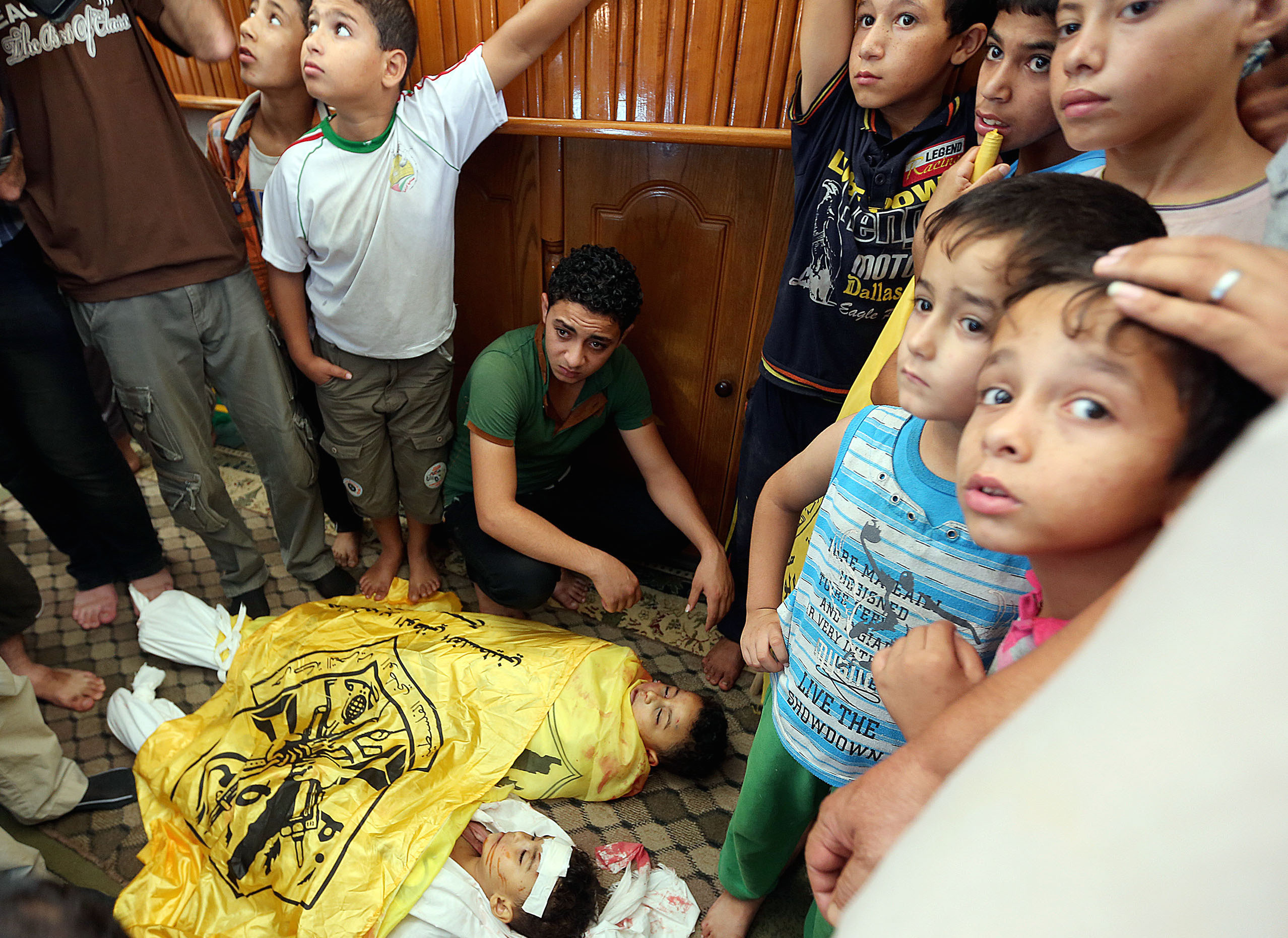
UNICEF says about half the children who’ve died in Gaza during Operation Defensive Edge have been under age 12. (That’s one sixth of civilian casualties, for those keeping count.) In contrast, more than 40 percent of the population is age 14 and younger. Shoot a rocket blindly into the Strip and your chances of hitting a prepubescent child are almost 50-50.

With that in mind, Shlomi Eldar argues that isolation has fed the radicalism of the young men of Hamas’ military wing, along with their delusion that a war with Israel is winnable:

The Qassam Brigades’ militants of today are children of the second intifada. Even before they were recruited or enlisted in the Qassam Brigades, they drank the jihadist messages that the movement spreads among all the needy of Gaza who knock on the gates of its institutions (the dawa — Hamas’ welfare institutions). The great neglect of Gaza in the years Israel controlled it helped Hamas to grow.

In the past, hundreds of thousands of Palestinians worked in Israel, learned its language, got to know its culture and even formed ties of friendship with their Israeli employers. In the course of the second intifada and Hamas’ rise to power, these ties have all been severed. The older generation found itself unemployed and without income and the youth found work with the militant wing of Hamas and the other organizations (Islamic Jihad as well as the popular resistance committees).

These young men, who have not once in their lives left the borders of the Gaza Strip and have never seen Israel, have been fed the stories of the wonders of the Palestinian rocket, which was developed in Gaza’s workshops and can shake Israel. The stories of the glory of Hamas have been impressed well in the young recruits and the doctrine that has been so deeply etched in them has given them the feeling, or the delusion, that salvation could be gained through the rockets that have been developed in Gaza.

And the children who make up a majority of Gazans today don’t necessarily have anything better to look forward to:

A normal life … is nearly impossible in Gaza. It is one of the most densely populated areas in the world — home to about 1.3 million Palestinians, roughly one-third of whom live in U.N.-funded refugee camps. The territory is riddled with poverty, its local economy completely stifled by the blockade. According to UNRWA, about 80 percent of the population receives aid. Official Palestinian statistics put Gaza’s unemployment rate at nearly 40 percent, while youth unemployment hovers around 57 percent.

“We have a whole generation who have grown up under occupation,” says Dr. Mona El-Farra, health chair of the Palestinian Red Crescent Society. “We have a whole society traumatized, living with extensive psychological damage.”

More than half of Gaza’s population is under the age of 18. They have grown up intimately familiar with war: This is the third Israeli bombardment Gaza has faced in just the past five years. “Even if the fighting ends tomorrow,” Farra says, “The poverty won’t end. All of us, especially the youth, will still be trapped.”

(Photo: Relatives of three children killed during the airstrikes of Israel mourn near the death bodies of children in Gaza city on July 19, 2014. By Mustafa Hassona/Anadolu Agency/Getty Images)

Will Europe Pass Serious Sanctions?

Bloomberg View’s editors urge them to:

There is no guarantee that sanctions of any kind will get Putin to back down over Ukraine. But the EU needs to demonstrate that it cares enough and is united enough to stop him — even at some cost to their own interests — if he is to be deterred from further adventures in Ukraine or beyond.

Amen. Vinik doubts, however, that EU sanctions will have teeth:

U.S. sanctions will only act as a deterrent if Europe credibly threatens to impose sweeping sanctions on the Kremlin. If banks don’t believe that the E.U. would ever sanction Rosneft, then they won’t worry about extending euro-denominated loans to it, no matter what the U.S. does. It’s hard to see how Europe can make a credible threat, given the mutually assured economic destruction that would result.

 For that reason, financial markets have not reacted negatively to Thursday’s events. The S&P 500 and Dow Jones index are both up around a percent Friday.

“If what we’re observing is all that we get, then I think the economy fallout on the U.S. is very small,” said Mark Zandi, the chief economist at Moody’s. “I don’t think it’s significant. It’s showing up in a bit higher oil prices. Stock prices are down. This is very, very marginal in the grand scheme of things.”

Yglesias observes that one “quirk of the situation is that the European Union voted for tougher sanctions on Russia on Wednesday, less than 36 hours before the destruction of MH17″:

That included suspension of billions of dollars in loans to Russian public sector projects and potential asset freezes on wealthy Russians who are financing separatist groups in Ukraine. Had these new sanctions not been already agreed to, this menu of options likely would have been the first wave of EU response to a new Russian provocation. But since these measures were already in the works, Europe has already plucked its lowest-hanging fruit and will need to think of some new ideas if more conclusive evidence forces European leaders to deliver consequences.

Meanwhile, Putin passed some toothless sanctions of his own last week:

Moscow knows the new sanctions on Abu Ghraib and Guantanamo officials won’t have much practical effect. But the fact the measures were made public shows that Putin is trying to bolster his argument that the U.S., rather than Russia, is the country that’s egregiously violating human rights and international law.

Convert, Submit, Or Die

IRAQ-UNREST-RELIGION-CHRISTIANS

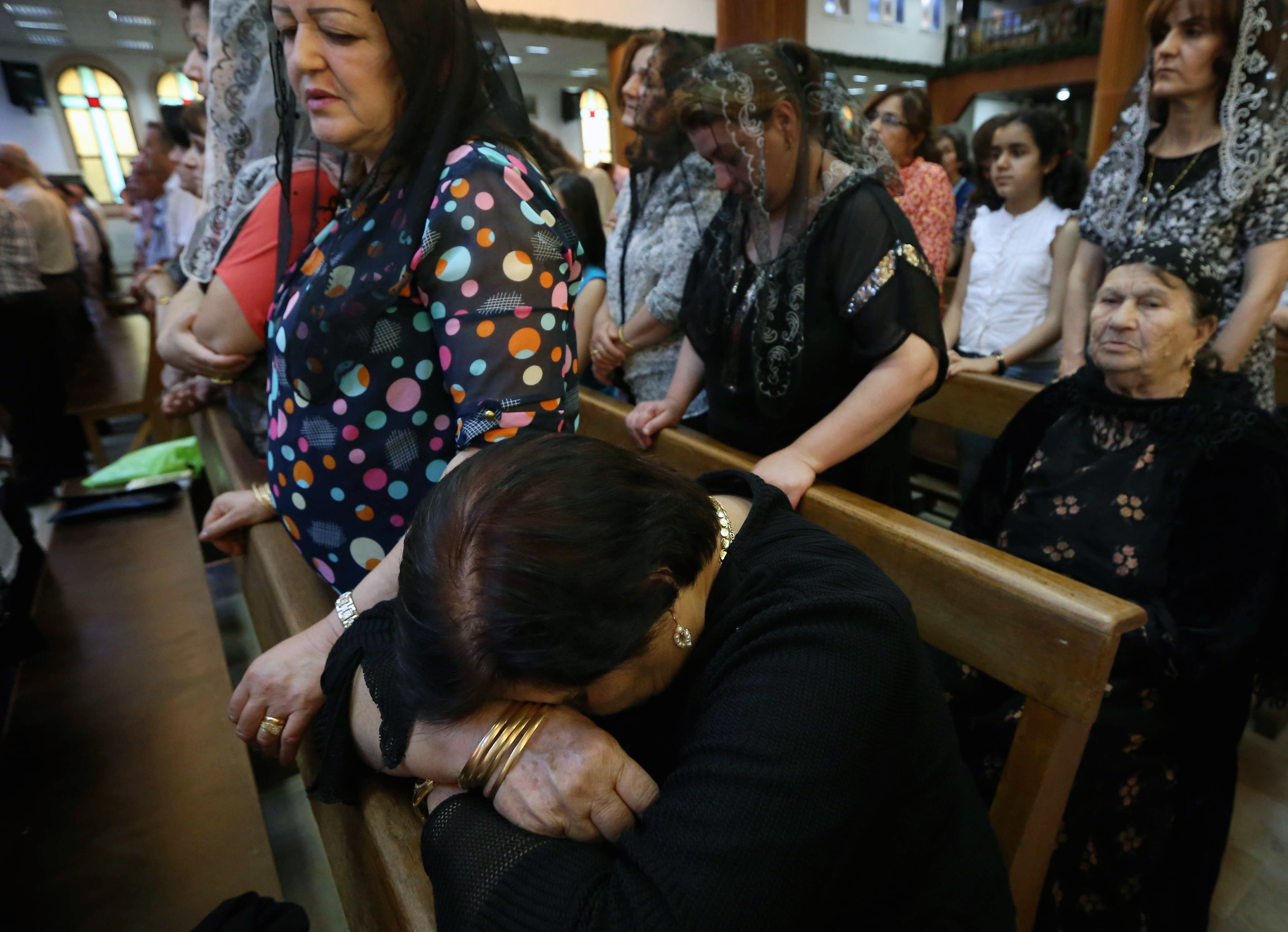
Meanwhile, back in the hellhole of Iraq, the “Islamic State” has issued an ultimatum to Christians in the areas it controls:

In the statement, Isis said Christians who wanted to remain in the “caliphate” declared earlier this month in parts of Iraq and Syria must agree to abide by terms of a “dhimma” contract – a historic practice under which non-Muslims were protected in Muslim lands in return for a special levy known as “jizya”. “We offer them three choices: Islam; the dhimma contract – involving payment of jizya; if they refuse this they will have nothing but the sword,” the announcement said.

A resident of Mosul said the statement, issued in the name of the Islamic State in Iraq’s northern province of Nineveh, had been distributed on Thursday and read out in mosques. It said that Islamic State leader Abu Bakr al-Baghdadi, which the group has now named Caliph Ibrahim, had set a Saturday deadline for Christians who did not want to stay and live under those terms to “leave the borders of the Islamic Caliphate”. “After this date, there is nothing between us and them but the sword,” it said.

Juan Cole comments on the flight of Christians from Mosul, which leaves the city without a Christian community for the first time since the dawn of the faith itself:

Mosul’s fleeing Christians have largely gone to Dohuk or Irbil in Kurdistan, and Kurdish officials have urged Kurds to give them refuge. Shiite shrines and institutions in the holy cities of Najaf and Karbala have also offered to shelter the displaced Christians. Tens of thousands of Iraqi Christians had earlier gone to Syria and Lebanon, though it seems likely that they will try to get to Europe.

Christians are not the only group at risk. There are many small unorthodox Shiite communities in northern Iraq, and they are recipients of the same threats being directed against the Christians. There are also Mandaean Gnostics. In the period of the American occupation, the predecessors of IS such as al-Qaeda in Mesopotamia, had routinely target Christians and heterodox Shiites for bombings and attacks.

Tim Stanley wonders why that persecution of Iraqi Christians continues to inspire little outrage in the West:

It could be that no Westerner wants to return to Iraq, that politicians fear that even discussing the country will lead voters to fear yet another invasion and yet another bloody occupation. Or it could be that we feel embarrassed about the very idea of Christians as a persecuted minority. The reporter John Allen argues that Westerners have been trained to think of Christians as “an agent of aggression, not its victim” – so we’re deaf to pleas for help. That opinion is supported by Ed West in an excellent e-book, and its consequences have been condemned by religious leaders here in the UK. Rabbi Jonathan Sacks has compared the suffering of Middle East Christians with Jewish pogroms in Europe and reminded everyone of the words of Martin Luther King: “In the End, we will remember not the words of our enemies, but the silence of our friends.”

It would indeed be awful to think that the West might remain silent as violence rages purely out of a failure to recognise that Christians can be victimised, or out of a reluctance to cast aspersions on certain brands of Islam. It would make this the first genocide in history to be tolerated out of social awkwardness.

Daveed Gartenstein-Ross and Amichai Magen take a broader look at some of the governance problems jihadists face in their fanatical attempts to impose Islamic law:

Jihadist groups’ rigid religious outlook drives their belief that sharia must be imposed and also the shape that sharia takes for them. Washington Institute for Near East Policy scholar Aaron Y. Zelin notes that the Islamic State’s city charter after the group captured Mosul on June 10 provided for amputation of thieves’ hands, required timely performance of all required prayers, and forbade drugs and alcohol. Further, “all shrines and graves will be destroyed, since they are considered polytheistic.”

This charter has much in common with previous jihadist governance efforts: They tend to have a legalistic and all-encompassing interpretation of sharia, insisting upon even obscure rules. In a previous period of jihadist rule over Mosul – when the Islamic State’s predecessor, Al-Qaeda in Iraq (AQI), controlled the city until May 2008 – citizens were required to follow intricate and bizarre rules. AQI banned the side-by-side display of tomatoes and cucumbers by food vendors because the group viewed the arrangement as sexually provocative, in addition to banning a local bread known assammoun, the use of ice, and barbers’ use of electric razors. These restrictions might be Monty Python-esque, but the punch line was grim: Iraqis were killed for violating them.

Previous Dish on the plight of Iraqi Christians under ISIS here.

(Photo: Iraqi Christians attend a mass at the Saint-Joseph church in Arbil, the capital of the autonomous Kurdish region of northern Iraq, on July 20, 2014. Hundreds of Christian families fled their homes in Mosul on July 20 as a jihadist ultimatum threatening their community’s centuries-old presence in the northern Iraqi city expired. By Safin Hamed/AFP/Getty Images)

The Corner Putin Has Backed Himself Into

Adrian Karatnycky takes a close look at it:

In recent weeks, there had been signs of growing concern among Kremlin moderates and the Russian business community that the proxy war in Ukraine was far too damaging to Russia’s economy and was developing into a potential threat to Russia’s longterm Russian President Vladimir Putin Visits Samarastability. This week, with new U.S. sanctions and the threat of Russian isolation emanating from Putin’s Lockerbie, the Russian stock market fell by over 8 percent.

Putin can seize on this tragedy to move toward rapid de-escalation in eastern Ukraine. He can urge the 15,000 insurgent fighters in Ukraine’s Eastmany of them Russiansto lay down their arms. And he can immediately stop the flow of tanks, missiles, and other weapons to the rebels. Or he can become a Qaddafi-like pariah and plunge Russia into international isolation with his now transparently brazen support for Russian insurgents and Russian proxies who are seeking to create a permanent zone on instability in Ukraine.

No wonder he’s taking his own sweet time. I’m increasingly struck by how little control Putin seems to have over the nationalist, xenophobic and homophobic forces he has unleashed. Ioffe reveals the growing insanity of the propaganda machine:

Did you know Malaysia Air Flight 17 was full of corpses when it took off from Amsterdam? Did you know that, for some darkly inexplicable reason, on July 17, MH17 moved off the standard flight path that it had taken every time before, and moved north, toward rebel-held areas outside Donetsk? Or that the dispatchers summoned the plane lower just before the crash? Or that the plane had been recently reinsured? Or that the Ukrainian army has air defense systems in the area? Or that it was the result of the Ukrainian military mistaking MH17 for Putin’s presidential plane, which looks strangely similar?

Did you know that the crash of MH17 was all part of an American conspiracy to provoke a big war with Russia?

Well, it’s all true—at least if you live in Russia, because this is the Malaysia Airlines crash story that you’d be seeing.

And almost no others so total is the information blackout. Gregg Rowe has a very helpful essay on how this vortex of paranoia controls Putin as much as he controls it. Money quote:

Russia is a nuclear power and a near-dictatorship, but it’s a weak state. This is paradoxical given the overweening authority Putin manages to project, but it’s true. Putin has full authority over the security establishment, but that is no longer enough to endow unquestioned solidity upon the state he built. For one thing, Russia is no longer an isolated command economy. It’s been integrated into the capitalist world … You can police dissidents, but you can’t police the price of natural gas abroad.

If the old Soviet economy has been “privatized” …  so, too, have other parts of Soviet power. Corporate conglomerates, a military-industrial complex, rich and insecure churches, noisy social movements (more of them on the Right than the Left), local governments carving out their own extortion zones, and many more mini- and mega-oligarchies multiply …  For all his shirtless preening, Putin is no muscle-man able to wield top-down control. Instead he must exhort, scare, cajol, and distract the rest of society till he gets his way.

Daniel Berman posits that “the fundamental obstacles to any sort of concerted action against Moscow remain unchanged” for the West. But MH17 will have consequences for Putin:

[T]he tragedy is going to raise the economic costs of Russia’s policy, at a time when even the half-hearted sanctions have started to cause some damage. On a wider level, the events also illustrate the bind that Putin has managed to get himself into with the Ukraine. By encouraging the separatists he has raised their political expectations sky-high in a manner that can neither be met by Kiev nor is it in the interests of Russia to meet, while by arming them, he has vastly increased the amount of damage they can inflict in their frustration. Furthermore, for all the talk about cease-fires, its unclear if Putin could bring all of the groups to the table even if he wanted to, not without leaving the holdouts at the mercy of Kiev, whose success in such an operation would raise the Ukrainian Armies prestige to an unacceptable level.

Putin therefore finds himself trapped. There is no clear political objective behind the separatist campaign that Moscow can sell as a victory; but their abandonment would almost certainly lead to a clear-cut defeat.

Motyl claims that the “Russian militants in eastern Ukraine have lost the battle for the hearts and minds of the local population” and that “formerly pro-Russian populations that the Ukrainian army recently liberated have been genuinely relieved to be free of Russian rule”:

What can continued Russian escalation of the bloodshed accomplish? It can inflict harm on the Ukrainian army and volunteer forces—and only increase Ukrainian soldiers’ resolve to fight. It can increase the physical destruction of the Donbas—and only further alienate civilians. It can encourage the militants to engage in more human rights abuses and atrocities—and thereby outrage the international community. It could even impel the morally desensitized Europeans to impose genuinely painful sanctions on Russia.

And just what does Russia gain from continued escalation? It could establish control over parts of the Russo-Ukrainian border and save its proxies from total defeat. That would permit Putin to save face with his cronies and a Russian population that’s been whipped up to a hyper-nationalist frenzy. But this victory would at best be Pyrrhic. Would Russia annex the territories it devastated? Would it eventually retreat? Neither option qualifies as a strategic victory.

The fact is that Putin has maneuvered himself and Russia into a dead end.

This Executive Order Is Totally Gay

This morning, President Obama signed an EO prohibiting federal contractors and employers from discriminating on the basis of sexual orientation in their hiring practices. Passing along a draft of the order, Geidner highlights what will likely be its most controversial feature:

Notably, the draft of Obama’s order contains no additional religious exemptions for the sexual orientation or gender identity provisions beyond those already contained in the existing executive orders, a request made by some religiously affiliated leaders. At the same time, however, the order does not take action requested by some civil rights groups to rescind an executive order issued by President George W. Bush. The Bush order provides an exemption to Executive Order 11246 for any “religious corporation, association, educational institution, or society” that allows such contractors to hire people of “a particular religion.”

That strikes me as a reasonable position, although I find any enmeshment of government funds with religious groups to be corrosive of both. My preference would be for no religious exemption at all – for reasons I laid out here.

When Obama’s intent to sign the order was announced on Friday, Dreher lost it:

I’ve been telling y’all for years now that the advance of gay rights will come at the expense of religious liberty. This is a prime example. Note that the pro-Obama religious leaders weren’t asking Obama not to issue the executive order banning discrimination against gays in federal contracting; they were only asking for tolerance for religious organizations that serve the public good, but cannot for reasons of religious principle obey the new dictate. There will be no toleration. Error has no rights.

Not if you take public money, Rod. The government should not be countenancing discrimination against a group of its own citizens, period. What the religious right is asking for is to have the government largess and to discriminate on top of it. No dice. Mataconis counters:

As a start, of course, Dreher engages in some extreme question begging here, because one has to wonder exactly how refusing to hire someone solely because they are gay, lesbian, or transgendered, or discriminating against them in salary or work conditions based on those facts, has suddenly become “religious liberty.” …

As for the broader issue, what people like Dreher seem to be arguing is that employers with strongly held religious beliefs should be able to discriminate based on sexual orientation notwithstanding a generally applicable law such as the regulations discussed here. If that’s the case, though, then does that mean that an employer who claims to have a religious objection to women working outside the home should be able to refuse to hire married women, or that someone who claims to have a religious objection to racial equality should be able to refuse to hire blacks? Where, exactly, should the line on what a valid “religious belief” is be drawn, and who gets to draw it?

It gets drawn at gays and women alone. Funny how that happens, isn’t it?

How Do You Solve A Problem Like Vladimir?

Russian President Vladimir Putin Visits Samara

Kirchick wants the full neocon jacket:

It is long past time that the United States and its NATO allies supply the Ukrainian military with the lethal aid it has long requested, so that it can at least defend itself and its airspace from Russia. NATO should deploy more troops to Poland and the Baltic states, which are understandably nervous about Russian designs on their territory and quietly doubt the Alliance’s Article 5 commitment stipulating that an attack on one is an attack on all. Sectoral sanctions that could cripple the Russian economy are also long overdue. And, if Russian involvement in this attack is conclusively demonstrated, Russia should be added to the State Department’s list of state sponsors of terrorism.

I don’t think all of this is necessary – yet. Very little is gained by ramping up a military conflict the US and Europe are not prepared to enter in any sustained way. And the key has to be Europe: they have the real economic leverage; their citizens are the dead; their security is at stake. As for sufficient toughness, Obama should get props for imposing new sanctions on the day of the outrage. He wasn’t caught by surprise this time. But for American sanctions to bite, the Europeans have to be on concert. My sincere hope is that this outrage will spur even the Dutch to greater resolve. Anne Applebaum thinks “we are about to learn whether the West in 2014 is as united, and as determined to stop terrorism as it was 26 years ago”:

When the Libyan government brought down Pan Am 103 over Lockerbie, Scotland, in 1988, the West closed ranks and isolated the Libyan regime. Can we do the same now—or will too many be tempted to describe this as a “tragic accident,” and to dismiss what will inevitably be a controversial investigation as “inconclusive?” It is insufficient to state, as President Obama has now done, that there must be a “cease-fire” in Ukraine. What is needed is a withdrawal of Russian mercenaries, weapons, and support. The West—and the world—must push for Ukrainian state sovereignty to be reestablished in eastern Ukraine, not for the perpetuation of another frozen conflict.

The trouble, of course, is that Russia is slightly more powerful than Libya, don’t you think? And far more economically enmeshed with its European neighbors than ever before. And far more capable of inflicting damage on the rest of us – from sabotaging the talks with Iran to partnering with China in energy deals. But Anne’s right about the core issue:

this cannot stand or be dealt with in any inconclusive fashion. A formal apology for what was obviously a mistake, compensation for the victims’ families, and a verifiable end to the destabilization of Eastern Ukraine are all eminently doable. And yet they may also be something Putin cannot “man up” enough to do – for fear of appearing weak domestically.

Larison lobbies for far more caution:

The U.S. shouldn’t rush to take any action, and it should coordinate its response with its allies in Europe, especially the Dutch, since they have suffered the greatest loss and have the most at stake in this case. Russia should be called on to make a formal apology for the downing of the plane, and it should be expected to make restitution to the families and the countries of the victims. Slapping more sanctions on Russia will be as useless as ever, and pushing for additional sanctions is more likely to fracture whatever unity the U.S. and its European allies have in the wake of the disaster. There will understandably be a strong temptation to take some “tough” but foolish action now, but this is exactly the sort of outrage that requires a calm and cautious response so that it does not become the cause of even more bloodshed and conflict.

I understand the limits of economic pressure – and agree about coordination with the EU. But a calm response need not mean a weak one. Merkel is the key figure here. In some ways, she has Russia’s future with Europe in her hands.

(Photo: Russian President Vladimir Putin speaks at a meeting with regional officials during a visit to the Progress State Research and Production Rocket Space Center on July 21, 2014 in Samara, Russia. Putin is on a one-day visit to Samara. By Sasha Mordovets/Getty Images.)

Bibi’s Strategy

Tensions Remain High At Israeli Gaza Border

With the next Israeli election expected to take place about a year from now, Brent Sasley observes how Netanyahu is responding to domestic politics during the Gaza incursion:

Netanyahu is managing the war carefully and effectively, from the standpoint of Israeli casualties and Israeli security. And Israelis recognize this. While rightist rivals were demanding a full-scale invasion and occupation of Gaza, Netanyahu authorized only airstrikes, testing Hamas’ interest in a cease-fire. He did not suffer any significant backlash in the media or in public debate, even while millions of Israelis were forced into bomb shelters. But pressure to do more was growing: on July 13, about four days before the actual incursion began, about 67 percent of Israelis supported a ground operation. By authorizing one, Netanyahu has given the public what it has demanded.

According to the latest poll, Netanyahu’s caution – restraint, then a limited operation only, backed by large-scale force – has paid off. His Likud party has gained four seats, from 20 to 24, while his former ally Avigdor Lieberman has dropped from 11 to eight seats.

Efraim Halevy weighs the invasion’s benefits and risks for Israel:

Israel must achieve resounding success in this new phase of combatboth to change the present mindset of Hamas and, of course, to maintain national support for the government’s policies. This will entail a campaign lasting several daysthough it is conceivable that it could extend beyond that. Israel has a good chance to achieve its aims: a more restrained Hamas and the reintroduction of the Palestinian Authority in Gaza, at least policing and controlling the southern gateway to Egypt.

But there’s also some risk that this phase of the operationan incursion into a small agricultural swath of Gazafails. And if it does fail, then a more treacherous scenario looms:

an operation that will entail urban warfare in Gazan steets. That mission would have a much more robust agenda. Its proponents talk about the demilitarization of Hamas. What they mean by this is unclear. But any attempt to forcefully strip Hamas of its weaponry would entail untold risks and consequences.

But Martin Shaw argues that the risks of Netanyahu’s war-as-politics mentality and the military adventurism it encourages may be much greater than the prime minister realizes:

Netanyahu’s blowback problem is not just Hamas: its political reinforcement is a predictable consequence of what he is doing, just as the continuing dominance of the aggressive Israeli right is a predictable consequence of Hamas’s rocket campaigns. The real problem is the extreme instability of the wider Middle East, with long-term wars raging in Syria and Iraq, in which the stability of Jordan – absolutely crucial to Israel’s own – is increasingly at risk. The gain to Israel of the brutal new, anti-Hamas Egyptian government is small in comparison.

Israel could find itself, not too far ahead, facing an opposition far worse than Hamas, which cannot be contained by the quick-fix punitive expeditions that Israel has practised in Gaza and Lebanon in the last decade, and which are easily sold to a domestic public and tolerated by western governments. Indeed these assaults, which Israelis now think of as routine, could contribute to a radicalisation beyond Gaza, and beyond as well as within Israel-Palestine, which will genuinely threaten their security in a way in which Hamas can never do.

Seeing an opportunity in Hamas’s declining public support (and assuming, of course, that the war doesn’t reverse that trend), Goldblog urges Israel to pursue a peace settlement by unilateral means, if necessary:

Netanyahu and his ministers are notably inexpert at helping the more moderate Palestinian factions strengthen their hold on the West Bank, and they specialize in putting their collective thumb in the eye of Mahmoud Abbas, the president of the Palestinian Authority. A clever post-conflict Israeli strategy would be to help the Palestinian Authority extend its mandate more deeply into Gaza (I’ll have more about the troubled P.A.-Hamas unity government later), because there is no permanent military solution to Israel’s rocket problem, only a political one.

Some commentators, like the excellent Shlomo Avineri, believe that even Palestinian moderates such as Abbas are incapable of making final-status compromises, because they are “genuinely uninterested in a solution of two states for two peoples because they’re unwilling to grant legitimacy to the Jewish right of self-determination.” I don’t disagree that many, many Palestinians fall into this category. But I’m not giving up yet. Where Avineri is right is in his argument that Israel must take the interim steps, regardless of Palestinian participation, to protect its democratic character.

He isn’t optimistic that the rightist government will heed such calls, though. Neither is Rula Jebreal, who believes what we are seeing in Gaza today is Netanyahu’s idea of a peace strategy:

The ongoing game theory behind the Israeli air strikes and ground invasion is, in effect, “The Netanyahu Peace Plan.” It is just far easier to attack Gaza—in the name of fighting Hamas—than it is to sign a peace agreement with moderates such as Palestinian Authority President Mahmoud Abbas. And the latter has never been Netanyahu’s goal. Quite the contrary: By bombarding Gaza, Netanyahu can dismiss all Palestinian claims to sovereignty and self-determination—in the name of security. In turn, a perverse and cyclical game has emerged in which Israeli occupation and “security campaigns” serve only to engender further retaliatory violence and at the same time further embolden Palestinian extremists.

The moderate Palestinian leadership had already accepted all the conditions Netanyahu demanded. They renounced violence, recognized the state of Israel, and embraced a demilitarized Palestinian state. But in response, the Israeli government made no concessions, the result of which was to effectively destroy the moderate leadership within Palestinian society. Conversely, when Israel negotiated with Hamas and released more than 1,000 Palestinian prisoners in exchange for one Israeli soldier, Israel sent the perverse message that it only negotiates with those who engage in violence, while moderates such as Abbas, who attempt to negotiate in good faith, are humiliated and ignored. The recently reported “secret negotiations” between Hamas and Israel are in keeping with this policy.

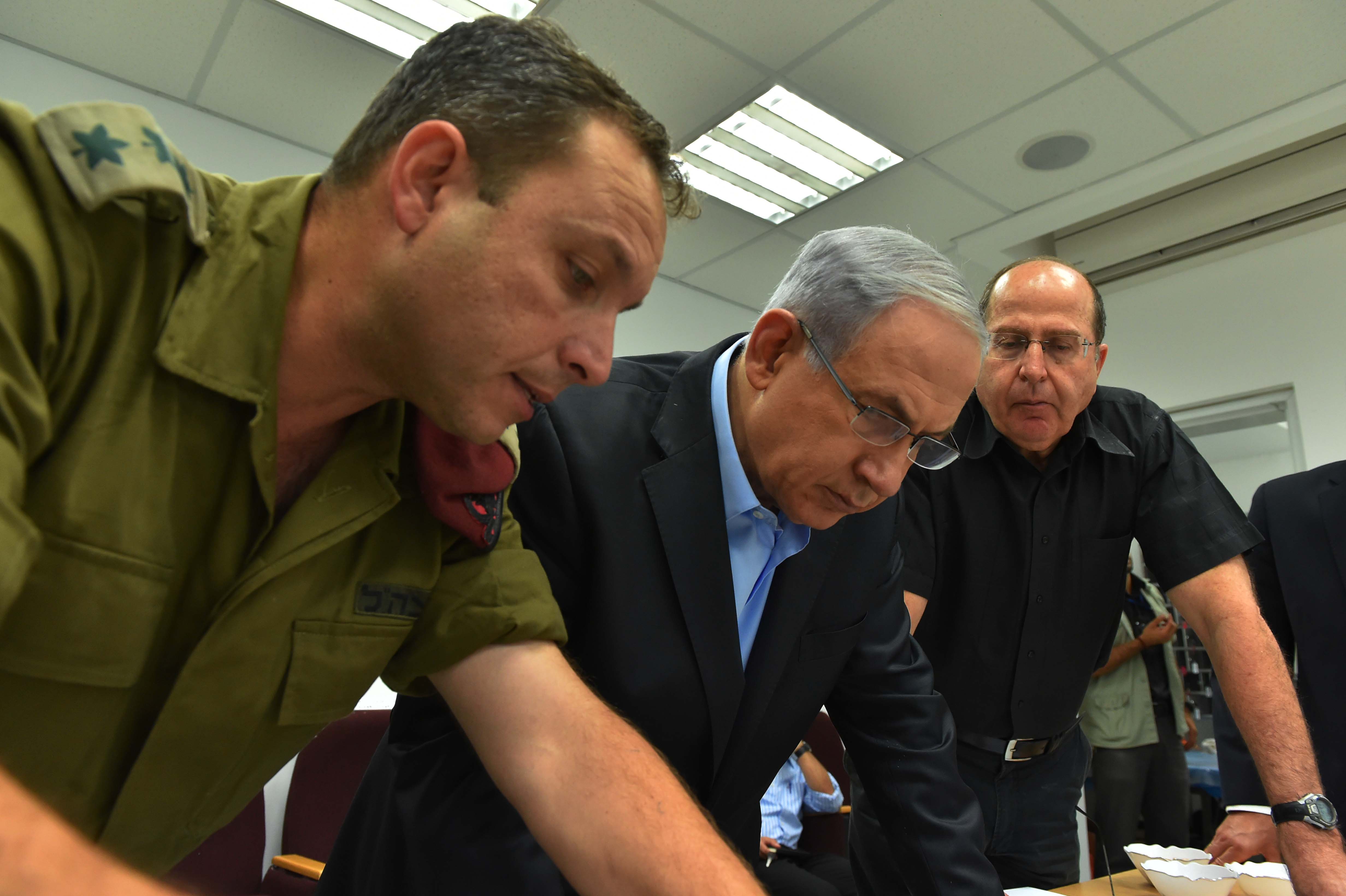
(Photo: In this Israel Ministry of Defense handout, Israel Defense Minister Moshe Ya’alon (R) and Israel Prime Minister Benjamin Netanyahu meet with IDF forices as they visit the Southern Command July 9, 2014 in Beersheba, Israel. By Ariel Harmoni/Israel Ministry of Defense via Getty Images.)

A Man Who Believed We Could Defeat AIDS

UKRAINE-RUSSIA-CRISIS-MALAYSIA-NETHERLANDS

Researcher Joep Lange was on his way to an HIV/AIDS conference in Melbourne before the chaos in Eastern Ukraine cut his life short. Laurie Garrett remembers him:

Like so many of the great AIDS scientists that toiled through the years of extreme loss and urgency before there was effective treatment, Joep Lange absorbed the political dimensions of the pandemic, and gained the skills necessary to translate lab and clinical findings into high-level battles inside the United Nations and across the global stage. He became a leader, in the fullest sense of that word. Like Jonathan Mann, Joep blended science, medicine, and an activist spirit to help bring the life-sparing medicines to people in all of the world – not just rich countries.

The last time Joep and I spent time together we argued, I’m sorry to say. And I may have been completely wrong, he completely right.

The saga we argued about hasn’t played out yet. Joep believed without hesitation that effective treatment, “is like a vaccine,” as he put it. The global epidemic could be stopped, he said, simply by getting every HIV+ person on the planet put on an effective regimen of treatment. Once on medicines, he insisted, the load of viruses in their blood, vaginal fluids, and semen would drop so low that they would not be contagious. And that, he said with a grin, will be the end of AIDS. I was skeptical – there were too many cases of drug resistance, non-adherence to treatment, supply chain failures to deliver vital drugs to remote or impoverished areas. I resented use of the word “vaccine” to describe universal treatment – we still desperately need an actual HIV vaccine, I insisted.

I want Joep’s optimism about eliminating AIDS through treatment to win out. I want to be wrong.

I think Joep was right – and profoundly prescient. Charles Kenny reviews Lange’s work:

Lange’s research demonstrated the importance of simple drug regimens: if people only have to take a few pills with smaller side effects, they are far more likely to take them and stay healthy. He also founded a research collaboration based in Thailand that carried out studies on sexually transmitted disease—including an ongoing study of using HIV treatment as a tool to prevent the spread of the virus.

Harold Pollack considers the legacy Lange has left:

[Friday’s] New York Times includes an old quote from Lange, in which he said: “If we can get a cold can of Coke to any part of Africa, we can certainly deliver AIDS treatment.” In the year 2000, Lange founded the PharmAccess Foundation to improve drug access in sub-Saharan Africa.

This vision caught the imagination of President George W. Bush, among others. At that time, many people believed that the obstacles to providing high-quality care in low-resource environments would prove too severe. I was one of those skeptics. Fortunately, people like Bush and Lange proved the skeptics wrong. The efforts of Lange and others contributed to dramatic improvement in HIV prevention, treatment, and care around the world. These efforts made possible the one genuinely shining accomplishment of George W. Bush’s presidency: the Presidents Emergency Plan for AIDS Relief (PEPFAR), which has saved millions of lives.

For the record, I was wrong too. I was far too gloomy about the potential for the new meds in Africa and the developing world. But what greater legacy can a man leave than the lives now being lived because of his passion?

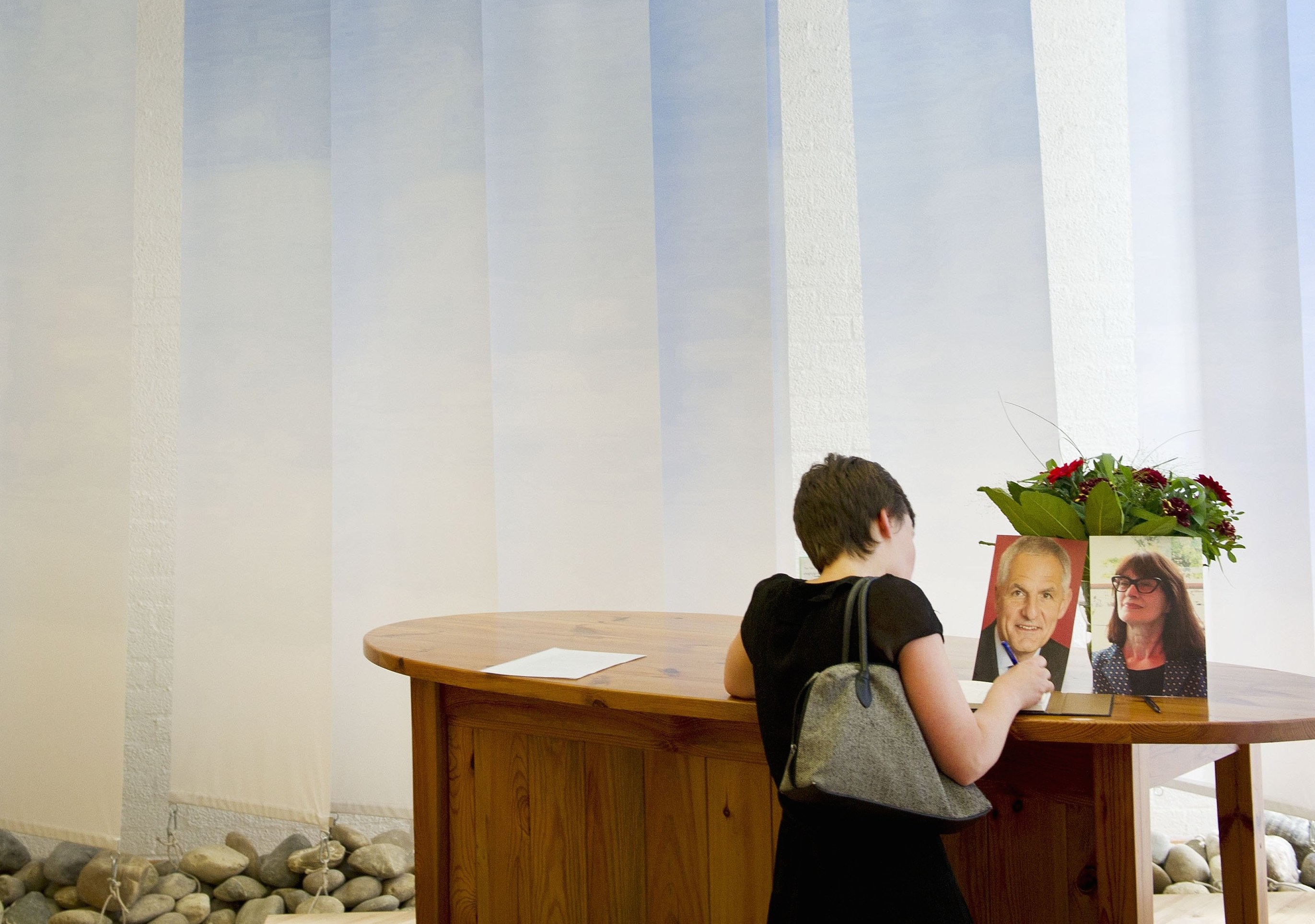
(Photo: A woman signs the condolence book for Dutch Aids expert Joep Lange and his assistant Jacqueline van Tongeren, on July 19, 2014 in the Academic Medical Centre (AMC) in Amsterdam. Lange and Van Tongeren, were on their way to the International Aids Conference in Melbourne when their plane from Malaysia Airlines crashed in Ukraine, last Thursday. By Evert Elzinga/AFP/Getty Images)