Churchill’s Leading Role

Reviewing Jonathan Rose’s The Literary Churchill: Author, Reader, Actor, Michael F. Bishop appreciates the insights offered by approaching Sir Winston through the writing he both produced and loved:

Like Abraham Lincoln, the greatest statesman of the 19th century, Winston Churchill, the 640px-Churchill_waves_to_crowdsgreatest of the 20th, had a genius for language. But unlike Lincoln, Churchill made a lucrative living as an author, inflating both his bank balance and his reputation with prodigious (and shrewdly self-promoting) feats of literary craftsmanship. In this sometimes speculative but immensely enjoyable biography, Jonathan Rose shows that Churchill’s authorial and political careers were entwined and inseparable. And he convincingly argues that while “tracking down literary influences is often dismissed as a purely academic exercise . . . sometimes the lives of millions depend on what their rulers read.”

According to Rose, Churchill was principally driven in life by “the desire to frame a thrilling story” for himself, and “once we understand that as his life goal, then Churchill’s impulsive courtship of danger becomes predictable, explicable, and eminently reasonable.” To Rose, his performance on the world stage was influenced in part by the theater, especially the Victorian melodrama of his youth. This sense of life as a drama, with him in the starring role, prompted both rash judgments and acts of dazzling courage. While a more prosaic outlook might have helped him avoid misadventures, it would have deprived Britain of its “finest hour” in 1940.
In an earlier take on the book, Sam Leith had more on how Churchill’s flair for the dramatic helped  him understand Hitler’s rise:

Rose paints Churchill as a man in love with the bold stroke — the coup de théâtre — and mired in a view of the world as Victorian melodrama. While the fractured categories and stalled certainties of modernism were making the literary weather, Churchill looked backwards. His was a world of clear identities, dramatic reversals and good triumphing pluckily over evil. His ideas of everything from Irish Home Rule to the government of native populations in India are credited with having been formed by the view from the cheap seats. He spoke claptrap — which, as Rose tells us more than once, is a term from melodrama: the inspiring speech the hero makes with his back to the wall, trapping the audience into applause.

This is the stopped-clock version of how Churchill got the fascists right: Hitler was one type of melodramatic villain (dark, shouty, moustachioed); Mussolini (treacherous, semi-comic) another. It just happened that silly old Winston, who sonorously predicted the final crisis of western civilisation once a week or so, happened to coincide with the real thing. Rose’s dimmish view of Churchill seeps up like ground-water. He presents him as an egotistical lunatic obsessed with being remembered as one of the great men of history, heedless of who died to make that dream come true, and with a script for achieving it based, more or less, on a bunch of babyish Victorian pantos.

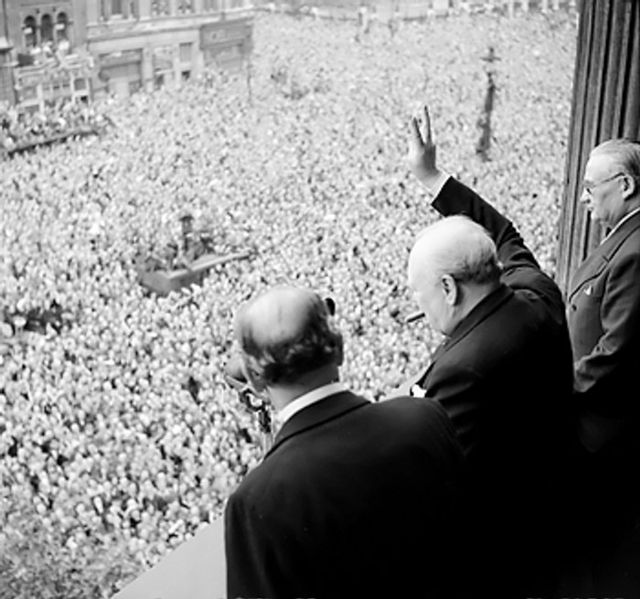
(Image: Churchill waves to crowds in Whitehall on the day he broadcast to the nation that the war with Germany had been won, 8 May 1945, via Wikimedia Commons)


The Moral Case Against Zoos

Intercoastal System

Pivoting off Alex Halberstadt’s piece from last week, Benjamin Wallace Wells argues forcefully against keeping animals captive:

A giraffe who freaks out about men with large cameras, a brown bear whose cage door is the subject of his obsessive compulsive disorder, a 5,000-pound killer whale who shows her trainer who is boss by dragging him underwater for just about as long as he can live, before letting him go — these episodes seem like something more complicated than simple errors of confinement. It is hard to avoid the conclusion that in some way the animals understand that the world around them is an artificial one, that these phobias and psychotic episodes represent reactions to that artifice, or subversions of it. Which means that the central illusion of the zoo is no longer holding. The animals know.

All of which makes [veterinarian] Vint Virga’s project — sustaining that illusion, by incremental changes in how the animals are treated — seem more than a little quixotic. Last August, the Costa Rican government announced it was closing all its zoos. The new policy, the government declared, was “no cages.” (A court ruling has so far kept the zoos open.) I think we’re moving slowly toward the same sensibility. In 25 years, there will likely still be some way for Americans to see exotic animals. But I will be pretty surprised if those places have cages, mirrors, smoke machines, and conference-room tanks for 12,000-pound whales. There may be nature preserves. But it seems to me that we’re pretty rapidly reaching the end of the era of the modern urban zoo.

Relatedly, Laurel Braitman reports on the giving of psychiatric drugs to zoo animals. Here’s the story of the Central Park Zoo’s polar bear Gus:

[T]he zoo staff didn’t want Gus to scare children or their parents, so they put up barriers to keep visitors farther away from the window. Gus soon started to swim in endless figure eights.

Hoping to curb the neurotic behavior, the zoo hired Tim Desmond, an animal trainer who had trained the orca who played Willy in the film Free Willy. Desmond was able to reduce Gus’s compulsions by giving him new things to do, such as bear food puzzles or snacks that took him longer to eat: mackerel frozen in blocks of ice or chicken wrapped in rawhide.

The zoo redesigned his exhibit and installed a play area stocked with rubber trash cans and traffic cones that Gus could pretend-maul. They also put him on Prozac. I do not know how long he was on the drug, or even if it was as effective as his new exhibit and entertainment schedule, but eventually Gus’s compulsive swimming tapered off, though it never went away entirely.

(Image from Daniel Kukla’s Captive Landscapes series. Earlier Dish on Kukla’s work here. See more of it here.)

When Bacteria Get Sick

Michael Byrne explains what happens:

It’s tempting to look at bacteria as a kind of binary realm, with “good” and the “bad” sorts that have good and bad impacts on health, when it’s really not that easy. Our own personal bacterial flora might help keep harmful bacteria at bay through competitive pressure, but the goodness of these tiny helpers is less a function of benevolence than geography – set them loose elsewhere in the body, beyond the inner-outside of the digestive tract, and very bad things will happen. A different set of bad things awaits a host with just a bit too much or too little friendly bacteria, ranging from cancer to inflammatory bowel diseases. While it’s possible to live without gut flora, such an existence portends a wide variety of troubles.

One fascinating aspect of this would-be dualism is how the bacteria that we provisionally know as friendly and harmful interact with each other. We know well enough that our gut flora help us out with immunity and keeping virulent bacterial invaders at bay, but it’s hardly because of some secret intraspecies armistice. A study out [last] week in the journal PLOS ONE examines the response of gut flora (in mice) to colitis-causing bacterial infection elsewhere in the body, finding that our own personal colonies of helper bacteria get sick themselves in a very real sense. It’s an observation that paves the way for not just better understandings of bacterial interrelationships, but also “early warning” tools for diseases.

Getting By In Aleppo

SYRIA-CONFLICT

A resident provides a glimpse into her day-to-day life in the war-ravaged city:

I make my coffee while reading Facebook to see what damage last night’s bombings caused. I am lucky to have the money to pay for a satellite internet connection. This is the only way to get online here in the rebel-held areas of Syria because for almost two years all means of communication have been cut—landlines, the mobile network and the internet—as collective punishment for areas that rebelled against the regime. Fighters and activists use walkie-talkies but as a woman I am not allowed to use one. This area of the city has long been very conservative and women don’t participate in public life; now it is also a frontline in a warzone, even more of a male-only domain.

The electricity is on for around four hours a day, so many people have paid to get an alternative source of power. Local traders invest in huge generators and they distribute electricity to others for a monthly fee. Sometimes the electricity is completely cut off for a week and the generator breaks, like today.

I have breakfast and wash the dishes with a trickle of water to save what is left. The water comes on for an hour per week. That is enough to fill the tank on my roof and with careful use I won’t run out this week. If I do, I will have to buy water from a well. New wells are being dug randomly, without engineers or studies—I recently saw one being dug in the middle of a crowded neighbourhood.

It is 11 am and I put on a hijab (not something I wore before the war) and a loose knee-length sweater and leave to go to a field hospital where a friend I am filming is living. She is the only female citizen journalist working in the northern rebel-held areas and I am doing a profile of her. As well as being dressed conservatively, I have to make sure I have a male “guardian” with me. This area of Aleppo has always been conservative, but before the war visitors could wear what they wanted. That is no longer the case now the social tradition is armed.

(Photo: A Syrian woman makes her way through debris following an air strike by government forces in the northern city of Aleppo on July 15, 2014. More than 170,000 people have been killed in the three-year war, one third of them civilians, according to the Syrian Observatory for Human Rights. By Karam Al-Masri/AFP/Getty Images)

Time To Put Down The Pixie?

https://twitter.com/TheLockPerson/statuses/443795734605729792

Nathan Rabin, who coined the term “manic pixie dream girl” in a 2007 essay, regrets it and wants to retire the term:

In an interview with Vulture, “Ruby Sparks” writer-star Zoe Kazan answered a question about whether her character was a Manic Pixie Dream Girl by asserting: “I think it’s basically misogynist.” … Here’s the thing: I completely agree with Kazan. And at this point in my life, I honestly hate the term too. I feel deeply weird, if not downright ashamed, at having created a cliché that has been trotted out again and again in an infinite Internet feedback loop. I understand how someone could read the A.V. Club list of Manic Pixie Dream Girls and be offended by the assertion that a character they deeply love and have an enduring affection for, whether it’s Diane Keaton’s Annie Hall or Katharine Hepburn in “Bringing Up Baby,” is nothing more than a representation of a sexist trope or some sad dude’s regressive fantasy.

But Lisa Knisley defends the term as an “intensely useful and important” way of describing a real element of our culture, not just movies and TV:

The ability to shorthand what seemed to be a pervasive and powerful cultural ideal of white femininity embodied by the on-screen MPDG has been invaluable as I came to feminist consciousness and began to more deeply analyze the representations of femininity marketed to my generation. But, more than that, the concept of the MPGD doesn’t just describe a gendered film trope—it helps me make sense of non-fictional gender relations as well.

I’d be hard-pressed to say I’ve ever met a real-life MPDG, of course. Flesh and blood women, no matter how they come off at first, are inevitably more complex and substantial than the superficial waifs of our collective pop culture fantasies. Still, for women of my generation, perhaps especially middle-class, heterosexual, white women, the Manic Pixie Dream Girl is one powerful version of our ideal selves and many of us have found ourselves emulating her, wanting to become her.

Elisabeth Donnelly stakes out a middle position, arguing that Rabin’s initial diagnosis of the MPDG was valuable but agreeing with him now that it has become an cliché catch-all for lazy critics:

Where Rabin’s trope started to feel cruel was in the semi-pointless appellation of “manic pixie.” Perhaps it was applicable to the female characters in Garden State and Elizabethtown, but would you really call anyone else a manic pixie, beyond, say, Tinkerbell? In all honesty, when it comes to writing about half-baked, terrible characters in art, we need to use a broader range of terms beyond just slotting all wispy girlfriends into the Natalie Portman-in-Garden State slot. Go deeper. Write with more eloquence about why the character is underwritten, why the lack of an interesting woman in a movie is a problem. Pin it on the follies of the art.

Previous Dish on the MPDG here, here, and here.

Inside The Mind Of Hamas

In an interview with Zack Beauchamp, Hussein Ibish offers his take on what the Gaza crisis means for the militant group’s strategic position:

Hamas has been desperately trying to get out of this morass that it’s found itself in; it really feels trapped and desperate. And they tried to foment trouble in the West Bank, and it didn’t succeed. They didn’t get anything out of the unity agreement, so it’s falling back on what it knows sometimes gets results — which is rocket attacks. What they are hoping for, this time, is concessions not from Ramallah or from Tel Aviv, but from Cairo, Egypt. I don’t think that most people understand that — it’s all about Egypt.

What Hamas can get can only come from Egypt. From Israel, they’re demanding the release of prisoners that were part of the shahid squad [a Hamas military group] that was arrested when Israel was pretending they didn’t know the teenagers were dead. Israel tracked them down and dealt Hamas a serious blow. Which is why Netanyahu isn’t so interested in getting into an artillery/aerial exchange with Hamas — the Israelis frontloaded their retribution. It was all done in the West Bank, before the bodies were found.

Allison Beth Hodgkins also views Hamas as having been backed “into a corner where it had to chose between the Russian roulette of escalation and irrelevance”:

It chose the former — a high stakes gamble to reclaim the mantle of resistor in chief on behalf of the struggle and shore up its tenuous stake in the Palestinian marketplace.

To a large degree, Shlomi Eldar gets it mostly right here when he says that Hamas’ main objective is to avoid looking like a defeated movement. What it really can’t afford to look like is a religiously conservative version of Fatah: weak, ineffective and seen as trading a continued hold on power for continued occupation. While the business of governing the fractious Gaza Strip has forced Hamas to make compromises in order to pay the bills and keep the sewage from overflowing, these compromises have required enforcing the November 2012 ceasefire on all the resistance factions in the strip. This is no easy task in good times (or not so bad times), but with the popular mood turning from generally irritated to downright irate, groups like Islamic Jihad, the PFLP and other new challengers smell blood in the water.

In light of this weakened position, Mitchell Plitnick advises the militants to cut their losses:

There simply isn’t an endgame that represents progress for Hamas. In 2012, when then-Egyptian President Morsi brokered an agreement, Hamas could claim a few minor concessions from Israel (which never really materialized once there was no pressure on Israel to follow through with them). There will be nothing of that sort here, but Hamas seems to be desperately clinging to the hope that it can extract something to base a claim of victory on.

That’s a terrible gamble. It is much more likely that the refusal to agree to a ceasefire is giving Netanyahu exactly what he wants: the chance to deliver a blow to a weakened Hamas regime in Gaza. Hamas has given Netanyahu the means to do this without having to overcome the global opposition that was apparent at the beginning of the current fighting.

Renaissance Kitsch

dish_rosso

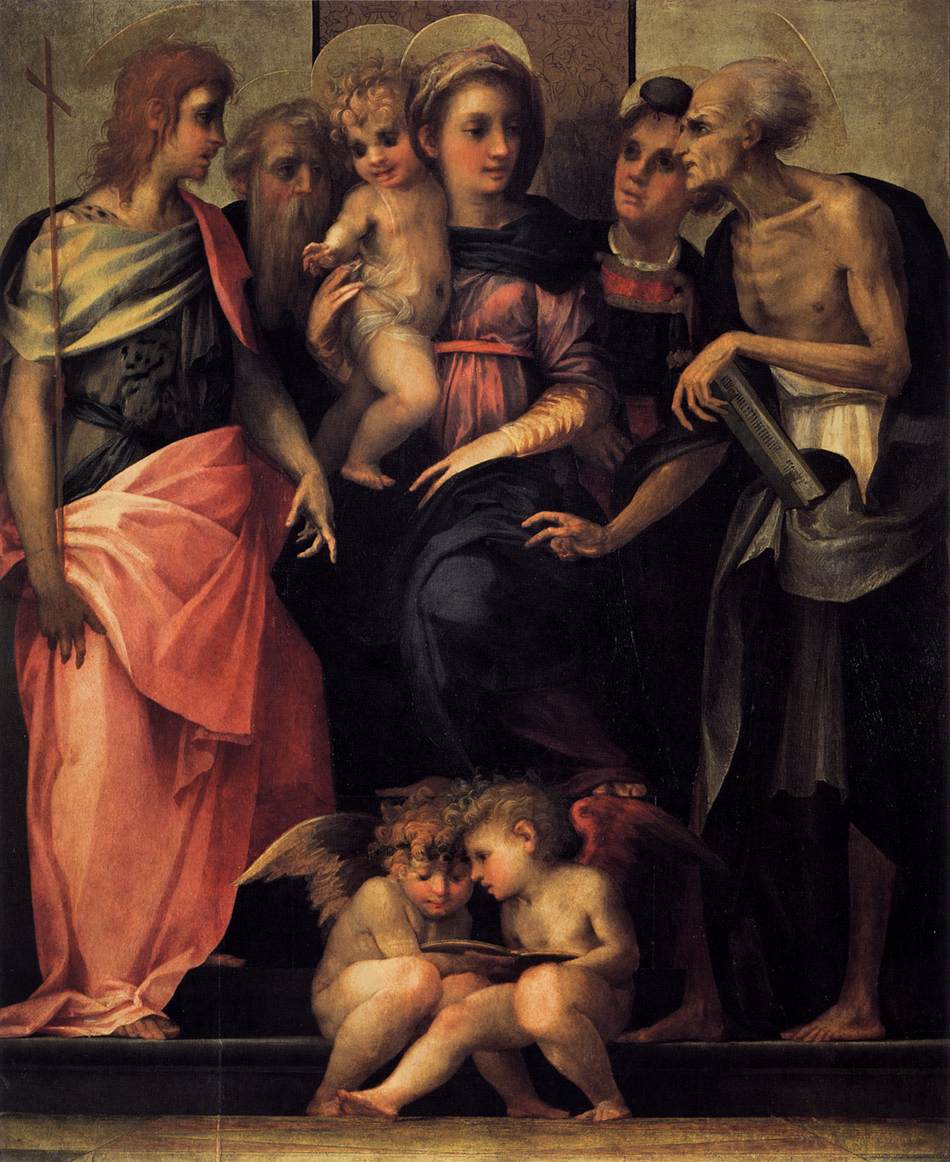
Reviewing the exhibition “Pontormo and Rosso Fiorentino: Diverging Paths of Mannerism” at the Palazzo Strozzi in Florence, Barry Schwabsky applauds the works of Rosso Fiorentino for displaying “truly bad taste.” He argues that “whatever is cringe-inducing in Rosso’s pictures is more or less inextricable from what sometimes makes them so breathtaking”:

Rosso [aka “Florentine Red”] offended established taste almost from the get-go. Vasari tells us that the young artist wouldn’t stay with any master, “having a certain opinion of his own that conflicted with their manners.” Commissioned in 1518 to paint an altarpiece, he invited the patron, Leonardo di Giovanni Buonafede, to view the work in progress; alas, “the Saints appeared to him like devils,” according to Vasari, and so “the patron fled from his house and would not have the picture, saying that the painter had cheated him.”

The work, Madonna and Child With Four Saints, also known as the Spedalingo Altarpiece, was exiled to a small provincial church, where it slumbered until the nineteenth century; in 1900, it was admitted to the collection of the Uffizi and has now moved across town for the Palazzo Strozzi exhibition. As David Franklin writes in the catalog, the learned Carthusian who was so horrified by Rosso’s painting thus far “was a prolifically experienced if conservative patron of altarpieces” whose “reaction, although vehement, was well-informed.”

Schwabsky goes on to describe what makes the painting so unnerving:

Most demoniac in appearance is the harsh and wasted figure of St. Jerome on the right. Franklin suggests that the red-haired St. John on the left—the artist’s namesake, and the only one of the painting’s figures (aside from the infant Christ and the sweetly earnest cherubs at Mary’s feet) who doesn’t appear to be an emanation of the blue shadows swirling around the Madonna’s legs—is Rosso’s way of announcing that the painting was intended as his “impassioned personal contribution to the hothouse atmosphere of Florence in the first two decades of the 16th century.” I shouldn’t wonder. In any case, despite Vasari’s claim that it was all a misunderstanding and that Rosso intended to “sweeten the expressions” of the saints in the process of finishing the painting, they retain to this day the “savage and desperate air” that drove the poor churchman running from Rosso’s door.

(Image of Madonna Enthroned with Four Saints by Rosso, 1518, via Wikimedia Commons)

The Growing Partisan Gap On Israel

partisan-mideast

Although Americans’ sympathies remain broadly on the side of the Jewish state, our views on the conflict are becoming more politically polarized:

73 percent of Republicans favor the Israeli side, compared to 44 percent of Democrats, and 45 percent of Independents. Moreover, this partisan gap has widened considerably since 1978, when the gap between Republicans and Democrats was only 5 percentage points.

Flagging the same poll, Ed Morrissey remarks that the dramatic increase in Republican support “may end up being worrisome to Israel in the long run”:

The US has a long history of bipartisanship when it comes to our alliance with Israel, even though some members of both parties have criticized it for various reasons. If this becomes another issue of partisanship testing, that will not benefit Israel, nor would it benefit our own politics.

On the other hand, every demographic in the survey has a plurality sympathizing with Israel by a wide margin. Even among the lowest levels of sympathy for Israel — liberal Democrats and religiously unaffiliated — the margins are double-digit at 39/21 and 36/20. There are substantial differences about the level of sympathy in the age demos, but not the balance of sympathy. The youngest demo, 18-29YOs, favor Israel 2:1 at 44/22, while among seniors it rises to 60/9.

Philip Klein adds:

Some political reporters like to talk about the “Sheldon Adelson primary” — of Republican candidates seeking the approval of the pro-Israel casino magnate. As the Pew poll shows, however, the whole idea of of an “Adelson primary” is a sloppy description of what’s happening within the GOP. In reality, support for Israel among Republican primary voters is broad and deep. A 77-percent to 4-percent issue among predominantly Christian conservatives is not representative of the party platform being overtaken by a small cabal of Jews. No Republican has a chance at the nomination if he or she is perceived as anything but a staunch supporter of Israel, and this goes far beyond Adelson.

But that means, of course, further enabling of Greater Israel’s maximal goals, and an ever-spiraling antagonism with much of the Muslim world. And you wonder why I’m resigned to an endless war.

Running Without A Campaign

This embed is invalid

Lynn Vavreck sees it as hazardous for Hillary Clinton:

This is the danger for Mrs. Clinton in running a quasi-campaign instead of a real campaign and holding off on discussing the things she would do as president if she were to run and win. She risks campaigning in a low-information environment of her own making. And that means that instead of debating whether her tax policies would help the middle class, we are left to talk about whether her conception of herself as not “truly well-off” or “dead broke” means she cannot relate to the middle class. Instead of asking what qualities she would favor in nominating justices to the Supreme Court, we instead focus on whether she hid or changed her public position on gay equality over the decades because it was politically expedient.

My deeper worry is that this kind of blah blah tour is where Clinton is most comfortable. Because she does actually and rather aggressively suck at politics itself:

Consider that Clinton has run in three elections. Her two wins in New York are not all that impressive, really. Instead of facing the powerful and well-funded Rudy Giuliani in 2000, who withdrew for health reasons, she was up against Representative Rick Lazio. Lazio only entered the race five months before it ended. And in her re-election in 2006, the New York GOP let a Yonkers mayor, John Spencer, be the sacrificial lamb…

And of course she lost the only electoral race where she faced a credible opponent. In the 2008 race for the Democratic nomination she blew a massive early lead. One of the only reasons she did not get completely pasted by Barack Obama was his horrible off-the-record flub about rural voters “clinging to their guns and religion.” Clinton immediately invented a strategy later used by the Tea Party and Glenn Beck of trying to tar Obama as an alien and radical. In their April 16 debate in Pennsylvania, she tried to highlight Obama’s “relationship with Reverend Farrakhan” and portray him as a supporter of Hamas. This strategy failed utterly.

If I were a Democrat, I’d worry about her useless stump speeches, her increasingly regal and dynastic affect, her lack of any appreciable political instincts, and her propensity to regard herself as a beleaguered victim. Apart from all that, I couldn’t be more impressed.

Are We Abetting Central American Gangs?

Taking a hard look at the refugee crisis, Frum blames it primarily on US immigration policy, which has unwittingly strengthened the gangs from which these children are fleeing. “If you want to migrate to the United States from Central America,” he writes, “you will probably have to seek the aid of a criminal gang. That fact implies a few follow-on facts”:

First, for all the talk of the “desperation” of migrants, those who travel here from Central America are not the poorest of the poor.

The poorest of the poor can’t afford it. Illegal migrants either have the funds to pay for the journey—or can at least receive credit against their expected future earnings. The traffickers don’t only move people. They also connect them to the illegal labor market in North America, and then act as debt collectors once the migrants have settled in their new homes. Salvadorans in the United States are less likely to be poor than other Hispanics are: illegal migration networks don’t have any use for people who can’t generate an income. On the other hand, Salvadorans are also less likely to own a home—their smugglers have first claim on their earnings.

Second, if these latest migrants gain residency rights in the United States, the gangs who brought them to the country will be enriched and strengthened. Gangs, like any business, ultimately depend on their customers. If too many people find that their $5,000 to $8,000 investments in border-crossing are not paying off, the illegal-migration business will dwindle. If, on the other hand, the gangs succeed in exploiting the opportunity Obama created, they’ll attract more business in the future.

Third, each wave of illegal settlement induces and produces the opportunities for the next. The unaccompanied minors smuggled into the United States this year all have relatives back home. If resettled in the United States, they’ll acquire the wherewithal to pay for the transit of those relatives. And, of course, many of these minors either currently belong to the gangs carrying out the smuggling or will soon be recruited by them. That’s another way to pay the cost of the trip.

Recent Dish on the sources of the crisis here and here.