Reel Evil

In an interview about his new film Deliver Us from Evil, which is based on real-life investigations of paranormal activity and demonic possession by NYPD sergeant Ralph Sarchie, director Scott Derrickson explains the connection between his love for Flannery O’Connor and making horror films:

Flannery O’Connor is my creative hero. I think she’s the greatest American writer. Her book, Mystery and Manners, is my creative bible. I’m humbled by the comparison. She’s a true American treasure.

She said to the deaf you have to shout and to the blind you have to draw large and startling pictures. That phrase itself is as good of an apologetic for horror as you’re ever going to speak.

What I love about her work and what I’m still learning is the manner in which she trusted the complexities of narrative to place her readers in the right range to gather what they needed or to miss it if they weren’t prepared for it. In the end her stories are like moral mazes, and you’re not going to be able to get to the end and have a clean takeaway but she will have placed you in an arena of thought until you’ve worked something out. She does all that while being shocking and entertaining and giving you a great tale. If there’s an artist’s philosophy that I aspire to, it’s hers. There’s a love of mystery there.

He goes on to describe how he showed his actors tapes of real exorcisms – and what he makes of their reality:

[S]ome of what happens in the movie is true to life. I’ve seen a guy being held down and his forehead all of a sudden opens up on its own and starts bleeding. If you’re a materialist skeptic you’re going to have to deny that it happened. But Ralph Sarchie was there and saw it. Some of these extreme things really happen.

But what makes it scary is not those inexplicable things, it’s the depth of human suffering that you’re witnessing and the unrelenting banality of evil and the sense of alien presence in these people and the credibility of the testimony of the people who’ve gone through it.

I didn’t show Eric [Bana] one tape; I showed him a bunch of tapes. I even showed him some Islamic exorcisms. This isn’t just a Christian phenomenon. This is an anthropological reality. When the disciples came to Jesus complaining of someone casting out demons even though he was not one of their followers—Jesus says let him do it, because he’s still helping people.

It’s not as wildly dramatic as what it is in The Exorcist or my film but it’s more dramatic than people think. But what’s deeply frightening or disturbing about it is not the paranormal activity; it is the profundity of human suffering at work.

Recent Dish on exorcisms here.
Gents For Rent

When Ted Peckham arrived in Depression-era New York as “a foppish Midwestern arriviste,” he saw dollar signs in the would-be female patrons of “the Stork Club and the Mirador, the Cotton Club and the Savoy.” His Guide Escort Service set up wealthy ladies with men who would “hold coats but never hands” for a night in exchange for some cash:

The illusion of male dominance, however, needed to be maintained. If women were to pay the men directly—and, worse, pay their own checks—the role reversal would turn off both the clients and the escorts. So women would fill two envelopes with cash, one the escort’s fee and the other her budget for the evening, and her date then used her money to pay waiters and bartenders, reasserting his superficial control of the evening.

In January, 1938, an anonymous “girl reporter” for the Hartford Courant sampled the service, reporting that her rather gloomy escort, “Mr. Smith,” was in it for the money, and considered it unglamorous hard work. By handling the money on dates, he kept some control, although only over how much his date drank. The women held the real power, and had to be kept happy. “After three complaints an escort is dropped,” he explains. “Women complain because they don’t draw a Clark Gable for $10.”

But men still controlled the city’s night life and its social codes—men like the columnist Lucius Beebe, the “orchidaceous oracle of café society,” and, less subtly, the bouncers and gangsters guarding the doors at the Stork Club and the Rainbow Room. Single women, especially in multiples, especially of uncertain age, were unwelcome. Even when they were guests at an upscale hotel, women alone could not freely visit all the public rooms. Peckham saw college graduates with no cash to take women out and women with cash but no men to take them, and the solution was simple: he would “bring these two desolate and palpitating groups together.”

A Cronenberg Creeper

The director’s new short The Nest is NSFW from the first frame:

Aisha Harris sums up the appeal of the intensely creepy film:

In the film, shot in a single long take in what looks like a very bleak storage basement, a woman (Evelyne Brochu) goes through a consultation with a doctor (voiced by Cronenberg) in hopes of having a rather unusual mastectomy.

The two discuss her reason for wanting surgery, with the camera focused upon her almost the entire time. There are no peeling, mangled, or deformed body parts here, but the woman’s vivid, visceral description of her supposed condition combined with the mundane, relaxed tone of Cronenberg’s interaction with her might creep some viewers out nearly as much as some of the goriest moments in The Fly.

Scott Beggs praises Brochu’s acting:

It’s constructed as an unflinching POV shot of the young woman, resting entirely on and proving wholly the powerful presence of Evelyne Brochu (who some will recognize from Orphan Black). Simply put, this is a dull film without her intensity and calm insanity (similar to another of Cronenberg’s modern shorts). She sells a delusion to the point that we’re left questioning whether her garage-set surgical consult is actually the right course of action for a human wasp’s nest.

Or maybe the doctor … is a mad opportunist taking advantage of mental illness. Or maybe a dozen other things. We’re left pondering a lot of possibilities, but it seems clear that no matter the reality, what’s going to happen next will be terrible.

Happy Paralysis?

Taffy Brodesser-Akner reviews research by cosmetic dermatologist Eric Finzi, who investigates Botox as a treatment for depression:

[I]n 2003, Finzi launched a small pilot study. He treated several subjects suffering from moderate to severe depression with Botox, paralyzing the muscles in their brows that create expressions of sadness, anger, and fear. The results were astonishing. Nine out of 10 patients reported a complete remission of their depression. … [I]n May 2014, in the Journal of Psychiatric Research, Finzi published the results of a second, much larger study, this one double-blind and randomized, with the results co-authored with Dr. Norman Rosenthal, a professor of psychiatry at Georgetown Medical School. (The project was also funded by Finzi’s clinic.) The study found a 47 percent reduction in scores on the Montgomery-Åsberg Depression Rating Scale among those injected with Botox. The members of the control group, who were injected with saline, exhibited a 20.6 percent reduction.

Brodesser-Akner decided to undergo the treatment herself, with mixed results:

As the weirdness subsided, I realized I wouldn’t characterize myself as less emotional with the Botox. I had the same emotions I’d always had; I just didn’t care about them. And then I wondered what this meant.

We are our feelings, after all. The rest is just blood and tissue. I felt diminished by feeling less deeply, and that, to me, was the most compelling result. We think that the opposite of depression is elation, but that isn’t exactly correct. Happy people don’t walk around ecstatic the way depressed people walk around sad. No, the opposite of depression is the absence of depression—and I suppose, in those terms, the Botox worked. I did experience an absence of depression. But Botox also took away other feelings, the ones we need to make us whole: joy, jealousy, frustration, triumph. Feeling leap-in-the-air excited—that was gone, too.

Surveying Finzi’s research back in March, psychiatrist Richard A. Friedman considered (NYT) its broader implications:

Whether Botox will prove to be an effective and useful antidepressant is as yet unclear. If it does prove effective, however, it will raise the intriguing epidemiological question of whether in administering Botox to vast numbers of people for cosmetic reasons, we might have serendipitously treated or prevented depression in a large number of them.

Mammoth Losses

Satao, a fifty-year-old elephant among the largest in Africa, recently died at the hands of poachers. Elizabeth Kolbert considers the grim picture for the creatures:

Satao was an exceptional elephant; his story is not. Africa, after years of progress in protecting its wildlife, is again in crisis mode. In 2011 alone, an estimated twenty-five thousand African elephants were killed for their ivory; this comes to almost seventy a day, or nearly three an hour. Since then, an additional forty-five thousand African elephants—about ten per cent of the total population—have been slaughtered. …

[A]s disturbing as the recent carnage is, the long-term view is, if anything, worse. Elephants and rhinos are among the last survivors of a once rich bestiary of giants. Australia was home to thirteen-foot-long marsupials. North America had mammoths and mastodons, South America glyptodonts and enormous sloths, Madagascar massive elephant birds and giant lemurs. Before people arrived on the scene, these megafauna were protected by their size; afterward their size became a liability.

The giant beasts couldn’t reproduce fast enough to make up for the losses to human hunting, and so, one after another, they vanished. In this sense, what’s happening today in Africa is just the final act of a long-running tragedy.

Mike Chase, an American conservation biologist, is currently conducting an aerial census of Africa’s elephants. He started work on the project in February, when, he told the Huffington Post, he hoped to “leave people inspired and motivated with some good news.” But the opposite has happened. At a reserve in Ethiopia, where his team had expected to find three hundred elephants, they counted just thirty-six. Now, Chase said, “I feel as though the only good I’m doing is recording the extinction of one of the most magnificent animals that ever walked the earth.”

Previous Dish on poaching here, here, here, and here.

Pass On The Pyrotechnics?

Sarah Miller wonders if celebrating the sound of munitions exploding is really the best way to mark our independence:

Most Americans are very, very lucky to have escaped any homefront experience with war. So there’s perhaps something arrogant about being like, “Whoo! Let’s make lots of sounds that sound like war!” To say nothing of fireworks’ considerable expense, or the fact that they aren’t great for the air, or that they tax fire departments who need to be at the ready for other more important things, especially since wildfires are increasing and intensifying with climate change.

I’m not against fun, and I’m not always against maybe-not-environmentally-friendly fun. Meaning: I don’t blame people for loving giant trucks and speedboats and ATVs. I own a Toyota Yaris that is so light you could punt it like a football, but if money were no object and cars burned dried albizzia flowers instead of fuel, I would drive a Ford F150. But we don’t live in a world where driving a giant car means nothing, or where loud, scary, artillery-like noises mean nothing. Now I’m not saying “Fireworks are bad, ban them!” or “Let’s make the Fourth a day to weave God’s Eyes together!” (Though if someone brings beer, I’m in.) But it’s worth imagining a world without them. And if you don’t believe me, ask the nearest Irish Setter.

Meanwhile, Steven Overly stresses that fireworks injuries are on the rise:

The number of fireworks-related injuries soared to their highest level in more than a decade last year, according to a U.S. Consumer Product Safety Commission report released last week. An estimated 11,400 injuries were reported during 2013, a staggering 31 percent climb compared to 8,700 injuries reported the year before.  … As one might expect, a majority of the fireworks-related injuries last year occurred in the month surrounding Independence Day. CPSC conducted an in-depth study of the 7,400 injuries reported between June 21, 2013, and July 21, 2013. Here’s what they found:

  • Men were more likely to be injured than women, 57 percent to 43 percent.
  • Roughly half of the injured were 25 or younger. Children under 4 accounted for 14 percent of the injuries.
  • Which fireworks caused the most injuries? Sparklers accounted for 2,300 of the 7,400 injuries reported during the in-depth study. The flickering wands burn at roughly 2,000 degrees, Adler noted, and often wind up in the hands of children.
  • Hands and fingers were the body parts most likely to be burned or otherwise injured, accounting for 36 percent of injuries during the month-long study. They were followed by the head and face (22 percent), eye (16 percent) and leg (14 percent).
  • approximately 3 percent were admitted to the hospital. The remaining 2 percent of victims left the hospital without being seen, according to the report.

The Pursuit Of Heresy

Reviewing Matthew Stewart’s Nature’s God: The Heretical Origins of the American Republic, Wendy Smith unpacks his argument that the “principles that inspired the American Revolution … belong to an intellectual tradition dating to ancient Greece and reviled by every variety of Christian”:

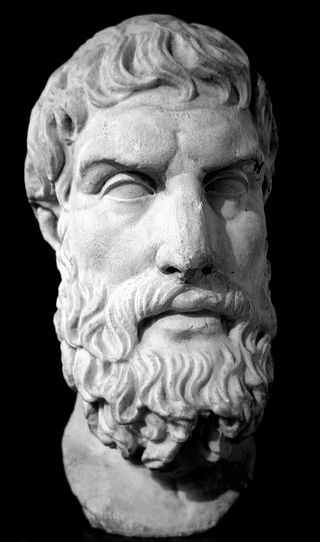
320px-Epicurus_bust2Rooted in the philosophy of Epicurus, who saw happiness as the highest good, this tradition flowered in the 17th century to produce wide-ranging inquiries into the nature of God, humanity, religion and society that got Benedict de Spinoza labeled “the atheist Jew.” Meanwhile, the more circumspect John Locke (careful to mask his iconoclasm with boilerplate declarations of conventional piety) ended up praised by historians as “the single greatest intellectual influence on America’s revolutionaries.”

Yet Spinoza the radical, no less than Locke the moderate, shaped an agnostic world view that shook America loose from Britain. Stewart pays particular attention to two fire-breathers — Ethan Allen, surprise conqueror of Ft. Ticonderoga, and Thomas Young, instigator of the Boston Tea Party — as the most outspoken proponents of a heterodox creed shared by (at minimum) Thomas Jefferson, Benjamin Franklin and George Washington. Contemporaries called them deists when not calling them infidels or atheists, and Stewart devotes considerable care to explaining that Deism, the philosophical engine of the Revolution, is not the Christianity Lite some 21st century conservatives have proclaimed it.

“America’s revolutionary deists,” Stewart writes, “saw themselves as — and they were — participants in an international movement that drew on most of the same literary sources across the civilized world.” His detailed explication of those sources ranges from Epicurus and his Roman popularizer, Lucretius, through early modern Italian freethinkers Giordano Bruno and Lucilio Vanini (both executed at the stake for their apostasy) to the diverse array of English and French intellectuals reacting to Spinoza and Locke.

In an interview, Stewart explains his use of the word “heretical” in the book’s subtitle:

Many of America’s leading revolutionaries were identified in their own time – with good reason – as “infidels.” Even more interesting is that the earlier philosophers upon whom America’s revolutionaries drew for inspiration were widely and correctly pegged as heretics, too. A surprising number were burned at the stake. I should add that they were heretics with respect to not just one but a variety of religious traditions.

Which brings up the second, more theoretical point I want to make in my subtitle. When I say “heretical” I don’t necessarily mean lacking in all religion. Heretics generally come out of religious traditions and remain committed to one form of radical religion or another. What they oppose is the common, mainstream, or orthodox religion. And what they oppose within that common religion, or so I argue, is a set of common conceptions about the nature of morality, the mind, knowledge, justice, and so forth – conceptions that, though not religious in themselves, serve to make the common religion credible. At least since the time of Socrates, the business of radical philosophy has been to challenge and oppose this common religious consciousness. Now, to get to the point: this radical, heretical philosophy was decisive in the creation of the world’s first large-scale secular republic.

(Image: A bust of Epicurus on display in the British Museum, London, via Wikimedia Commons)

Another Slip Down The Slope For Contraception?

SCOTUS is getting another dose of controversy this week (NYT):

In a decision that drew an unusually fierce dissent from the three female justices, the Supreme Court sided Thursday with religiously affiliated nonprofit groups in a clash between religious freedom and women’s rights. The decision temporarily exempts a Christian college [Wheaton] from part of the regulations that provide contraception coverage under the Affordable Care Act.

Koppelman gets to the heart of the matter:

The Obama administration had accommodated nonprofit religious organizations, colleges, and hospitals on the condition that they fill out a form indicating their objection and send that form to their insurance company or administrator, which must then provide the medical services free of charge. Hobby Lobby required that the same accommodation be extended to religious for-profit employers. Some of the nonprofit organizations, including Wheaton College, objected that filing the form made them complicit in the provision of the contraceptives. The Court agreed, holding that the college need only file a letter with the federal government stating its objections.

That would create a byzantine set of regulations, according to Sotomayor:

[T]he Court does not even require the religious nonprofit to identify its third-party adminis­trator, and it neglects to explain how HHS is to identify that entity. Of course, HHS is aware of Wheaton’s third ­party administrator in this case. But what about other cases? Does the Court intend for HHS to rely on the filing of lawsuits by every entity claiming an exemption, such that the identity of the third-party administrator will emerge in the pleadings or in discovery? Is HHS to under­take the daunting—if not impossible—task of creating a database that tracks every employer’s insurer or third­ party administrator nationwide?

Waldman is also worried about the floodgates opening:

On its surface, this case appears to be a rather dull dispute about paperwork. But it actually gets to a much more fundamental question about what kinds of demands for special privileges people and organizations can make of the government on the basis of their religious beliefs. …

[T]here is seemingly no length this Court says the government shouldn’t go to accommodate this particular religious belief.  A company or a university doesn’t want to follow the law? Well, we have to respect that — they can just sign a form stating their objection. Oh, they don’t want to sign the form? Well never mind, they don’t have to do that either.

Morrissey tells everyone to chill:

[T]he issuance of a temporary injunction is not a decision, as Sotomayor well knows. Sotomayor herself issued a temporary injunction to stop enforcement of the mandate on the Little Sisters of the Poor, which caused an eruption of hysteria and Know-Nothing anti-Catholic bigotry at the beginning of the year — a foreshadowing of what we saw this week, actually. A stay is just a pause that allows the courts to consider the issue at hand before enforcement does serious damage to the plaintiff, based on a reasonably good chance for the petitioner to win the case but not a decision on the merits. The court signaled that they want a closer look at the accommodation, not yet that it’s not acceptable.

Dreher’s take:

This is good news, as far as I’m concerned. As a general rule, I hold an expansive definition of religious liberty. As a technical matter, I think that Whelan is right, and that there’s nothing in Hobby Lobby that contradicts the subsequent Court order. Still, I can understand why the three dissenting justices feel sandbagged. Justice Alito, in the majority opinion, held up the HHS carve-out for religious non-profits as an alternative HHS might have offered for-profit companies, but did not. Now the Hobby Lobby majority, joined by Justice Breyer, rejects even that possibility.

But not definitively, and that’s why I think there’s less here than meets the eye. Again, the injunction is temporary, and is no doubt pending the full Court hearing the Little Sisters case, which will decide whether or not the government’s carve-out for religious non-profits is a reasonable and sufficient accommodation of religion.

But Drum worries that the Wheaton injunction is just another step of many more:

For the last few days, there’s been a broad argument about whether the Hobby Lobby ruling was a narrow one—as Alito himself insisted it was—or was merely an opening volley that opened the door to much broader rulings in the future. After Tuesday’s follow-up order—which expanded the original ruling to cover all contraceptives, not just those that the plaintiffs considered abortifacients—and today’s order—which rejected a compromise that the original ruling praised—it sure seems like this argument has been settled. This is just the opening volley. We can expect much more aggressive follow-ups from this court in the future.

Defining The American Dream

1024px-Collossal_hand_and_torch._Bartholdi's_statue_of_"Liberty.",_from_Robert_N._Dennis_collection_of_stereoscopic_views

Chasing the American Dream author Mark Rank lists its three main elements, based on his extensive interviews and social surveys:

The first is that the American Dream is about having the freedom to pursue one’s interests and passions in life. By doing so, we are able to strive toward our potential. Although the specific passions and interests that people pursue are varied and wide ranging, the freedom to engage in those pursuits is viewed as paramount. The ability to do so enables individuals to develop their talents and to truly live out their biographies. America, at its best, is a country that not only allows but encourages this to happen. As one of our interviewees put it when asked about the American Dream, “What I’ve always known it to be is being able to live in freedom, being able to pursue your dreams no matter what your dreams were, and having the opportunity to pursue them.”

A second core feature of the American Dream is the importance of economic security and well-being.

This consists of having the resources and tools to live a comfortable and rewarding life. It includes working at a decent paying job, being able to provide for your children, owning a home, having some savings in the bank, and being able to retire in comfort. These are seen as just rewards for working hard and playing by the rules. Individuals frequently bring up the fact that hard work should lead to economic security in one’s life and in the life of one’s family. This is viewed as an absolutely fundamental part of the bargain of what the American Dream is all about.

Finally, a third key component of the American Dream is the importance of having hope and optimism with respect to seeing progress in one’s life. It is about moving forward with confidence toward the challenges that lie ahead, with the belief that they will ultimately be navigated successfully. Americans in general are an optimistic group, and the American Dream reflects that optimism. There is an enduring belief that our best days are ahead of us. This abiding faith in progress applies not only to one’s own life, but to the lives of one’s children and the next generation, as well as to the future of the country as a whole.

(Stereoscopic image of right arm and torch of the Statue of Liberty, 1876 Centennial Exposition, via Wikimedia Commons)

Don’t Call Them Superpowers

The American goalie who made a record 16 saves in Tuesday’s World Cup match against Belgium also happens to live with Tourette’s syndrome. As Melissa Dahl notes, the neurological disorder may actually help Howard’s goalkeeping abilities:

Kids with Tourette’s have better timing than kids without it. In one study, researchers asked two groups of children — one with Tourette’s and one without — to judge whether two circles were on a computer screen for the same length of time. The kids with Tourette’s were better at the task overall, which could be because their brains have to work harder to suppress their tics, and tic suppression is thought to involve an area of the brain that’s also associated with timing.

People with Tourette’s have more self-control.

In an earlier study, researchers tested cognitive control on people with Tourette’s versus people without, via an eye-movement-tracking experiment. Participants were sometimes told to make speedy eye movements toward a target; other times, the directive would suddenly switch, and they were told to quickly send their gaze away. People with Tourette’s were better at switching back and forth than the people without Tourette’s, and, as with the other experiment, researchers think it may come down to tic suppression.

That doesn’t detract from the accomplishments of a phenom so beloved by America that fans are petitioning to name an airport after him. Indeed, it makes them all the more incredible. But Howard isn’t the first Tourette’s sufferer with incredible sports skills; years ago, Oliver Sacks wrote about a patient who was practically unbeatable at ping-pong:

Sacks cited a study where a control group of “neuro-typicals” and a person with Tourette’s were asked to react as quickly as possible to a situation. The control group proved able to respond two to two and a half times faster than usual and with poor aim. The person with Tourette’s responded five to six times faster than usual and without compromising accuracy. “This is very real, this mixture of speed and accuracy,” Sacks said. “I think it often is part of Tourette’s.”

But another expert is more cautious about making that link:

“The research is not in yet if they can perform at a higher level than can be normally expected,” said Dr. Michael Okun, professor of neurology at the University of Florida at Gainesville and chairman of the Tourette Syndrome Association Medical Advisory Board. Okun has found that other aspects of Tourette’s can prove highly beneficial in a wide range of endeavors. He noted that people with the condition often have obsessive-compulsive tendencies. They repeat tasks over and over with a ritualistic and often perfectionist bent. “Obsessive-compulsive tendencies really help to enhance abilities,” Okun said. “In chess, piano, or when they’re playing goalie for the World Cup team.”

OK, let’s get back to the meme of the week: