
A Problematic POW, Ctd

Idaho Hometown Of Released Army Solider Bowe Bergdahl Celebrates His Release

The president’s decision to exchange five Taliban leaders for Bergdahl continues to draw outrage, and not just from the Palinites. For instance, Ilya Somin doesn’t buy the White House’s legal rationale for not giving Congress advance notice of the deal:

The biggest problem with this argument is that the 30 day notice requirement contains no exception for “unique” circumstances where the President or the secretary of defense believe that obeying it might endanger a soldier’s life. The National Defense Authorization Act and other national security legislation contain numerous provisions that can be waived in appropriate circumstances by the president or the secretary. There is no such waiver or exception in the 30 day notice requirement.

If the president can get around the law anytime he or the secretary of defense believe that it might save a soldier’s life, then he could disregard almost any congressional restrictions on warmaking. For example, President Bush and Secretary of Defense Donald Rumsfeld surely believed that their violations of congressional statutes barring torture of prisoners would help save soldiers’ lives. It is true that the president has the duty of “protecting the lives of Americans abroad and protecting U.S. soldiers.” But in pursuing those objectives, he must stay within the bounds of laws enacted by Congress, whether they be laws restricting torture, or laws restricting the release of brutal terrorists. Candidate Obama understood that when he rightly criticized President Bush back in 2008. President Obama, however, often seems to forget.

Protecting and rescuing an actual, endangered POW on the battlefield strikes me as exactly the kind of exception usually allowed for in executive actions. This was not some kind of ongoing policy; it was a decision to exchange prisoners, requiring secrecy and dispatch. We also find that the health of Bergdahl was a real question:

A secret intelligence analysis, based on a comparison of Taliban videos of Sgt. Bergdahl in captivity in 2011 and December 2013 that were provided to the U.S., found that the soldier’s rate of deterioration was accelerating. The latest video, provided to U.S. officials by mediators in Qatar, has never been publicly shown. Officials who have seen the video described Sgt. Bergdahl’s condition as “alarming.”

But Andrew Rudalevige sees Obama’s signing statement flying in the face of his past criticism of George W. Bush:

As part of the process of negotiating his release, the president decided to override a section US-POLITICS-OBAMA-BERGDAHLof the fiscal 2014 National Defense Authorization Act (Section 1035(d) for those keeping score at home) requiring that Congress receive notification 30 days in advance of a transfer of a Guantanamo detainee. When he signed the bill into law in late 2013, Obama issued a statement noting that while Section 1035 was “an improvement over current law,” “in certain circumstances, [it] would violate constitutional separation of powers principles. The executive branch must have the flexibility, among other things, to act swiftly in conducting negotiations with foreign countries regarding the circumstances of detainee transfers.”

Presumably the administration decided that this was one of those circumstances and — like the Bush administration before it — declined to enforce what it felt was an unconstitutional constraint on the president’s powers as commander in chief. This might be defensible — but it ran hard into those past promises.
In Drum’s view, a court ruling on these powers would be constructive:

This would be useful for a couple of reasons.

First, it would be a sign of whether Republican outrage is serious. If it is, they’ll file suit. If they don’t file, then we’ll all know that it’s just partisan preening. … This is fine if a dispute truly is political. But this, like many other so-called political disputes, isn’t. It’s a clear question of how far the president’s commander-in-chief authority extends and what authority Congress has to limit it. If Republicans truly believe Obama violated the law, they should be willing to go to court to prove it. And courts should be willing hand down a ruling.

Speaking of “partisan preening”:

Obama’s sudden willingness to buck Congress on releasing Gitmo prisoners raises some questions for Amy Davidson:

President Obama’s signing statement on the bill said that it might be unconstitutional if it kept him from acting “swiftly in conducting negotiations with foreign countries,” and, indeed, there is something constitutionally odd about a law designed to keep a specific list of people—some of whom, it can’t be said often enough, have been found not to be threats—imprisoned without trial.

But Obama should not get a pass on this. He has, in general, dealt with congressional attempts to keep him from closing Guantánamo, such as restrictions on spending certain funds to move prisoners, with a sort of learned helplessness, as if all his good will had faced an impassable wall. He has not tried to find the everyday limits of the various restrictions, or challenged them, substantively, in less hectic circumstances. Bergdahl has been a prisoner for years. What else, by that standard, might count as an emergency?

And Greenwald wonders how, in light of this decision, Obama can justify not closing down the facility entirely:

The sole excuse now offered by Democratic loyalists for this failure has been that Congress prevented him from closing the camp. But here, the Obama White House appears to be arguing that Congress lacks the authority to constrain the President’s power to release detainees when he wants. What other excuse is there for his clear violation of a law that requires 30-day notice to Congress before any detainees are released?

But once you take the position that Obama can override — i.e., ignore — Congressional restrictions on his power to release Guantanamo detainees, then what possible excuse is left for his failure to close the camp? … Obama defenders seem to have two choices here: either the president broke the law in releasing these five detainees, or Congress cannot bind the commander-in-chief’s power to transfer detainees when he wants, thus leaving Obama free to make those decisions himself. Which is it?

Meanwhile, the NYT reports that Bergdahl had left a note in his tent the night he went missing to say that he was deserting on purpose. Allahpundit sees another argument in favor of Bergdahl’s release collapsing:

Which would be worse: If Obama didn’t know about the note before making the swap, or if he did know and went ahead with it anyway? … There are vets in Bergdahl’s squad angrily accusing the guy of desertion and, more damningly, the parents of fallen soldiers blaming Bergdahl for their sons’ deaths. When you’ve got people as sympathetic as that hammering you in the media, the only smart play is “I’ll do anything to recover a missing soldier, period.” Message: I care.

But as I say, it’s not true: The White House would have had no problem leaving Bergdahl behind if the Taliban’s ask was Khaled Sheikh Mohammed instead of the five lower-profile savages we handed back to them.

Beutler finds this argument incomprehensible:

I hold no brief for Bergdahl, and take no issue with the Army launching an inquiry into the circumstances of his disappearance. But the inquiry wouldn’t be happening if the military hadn’t first secured his release. Having secured his release, they can now determine whether he deserves to be disciplined by the U.S. military. If you agree with the military’s leave-no-man-behind ethos, then this is the correct order of operationseven if the inquiry yields the most damning possible conclusions. Taking conservatives at their wordand here I’m talking about conservatives who weren’t recently pressuring the White House to do more for Bergdahlthey’re of the incoherent view that the agreed upon terms of his release weren’t worth it, and that those terms should have been proportional to an evaluation of his conduct that can only be conducted with any legitimacy now that the deal is done.

Amen. But Philip Klein decries what he sees as liberal hypocrisy:

Liberals spent a good part of the last decade excoriating anybody who suggested that they wanted Saddam Hussein in power or were pro-terrorist because they opposed the Iraq War, but this is exactly the same form of argument they’re employing by suggesting anybody questioning the deal wants to leave soldiers behind. In other words, they’re focusing on one result of the policy, without considering any of the costs. Unless liberals are going to argue that securing Bergdahl’s release was worth any price — even, say, giving nuclear weapons to the Taliban – by their own logic, they favor leaving soldiers behind.

I think extrapolating this kind of thing from one prisoner exchange – the only one in the longest war the US has ever fought – is more than a little disproportionate. There was also apparently some controversy within the administration over whether to release these particular detainees from Gitmo:

The question of the release of the five Taliban leaders was a recurrent subject of debate in the administration and was a key element of the behind the scenes effort by the State Department and the White House to negotiate a peace deal with the Taliban. The transfer of the five was discussed as a possible confidence-building measure to pave the way for a deal. The debates over their release were contentious, officials familiar with them say.

Those opposing release had the benefit of secret and top secret intelligence showing that the five men were a continuing threat, officials familiar with the debate tell TIME. But in the push from the White House and the State Department to clear the men, opponents to release found themselves under constant pressure to prove that the five were dangerous. “It was a heavy burden to show they were bad,” says the second source familiar with the debate.

And the fact that Bergdahl was held by the Haqqani network in particular, not just “the Taliban” as the White House says, complicates the question of whether we “negotiated with terrorists”:

In September 2012 Secretary of State Hillary Clinton approved an official U.S. State Department designation of the Haqqani network as a foreign terrorist organization. The Afghan Taliban has not been so designated. The Haqqanis are unpalatable for another reason: they keep close ties to al-Qaeda.

Given that Bergdahl was held by an officially designated terrorist group, doesn’t it follow that Obama negotiates with terrorists? Not exactly. The U.S. bargained the release via the Persian Gulf nation of Qatar, which served as an intermediary. “We appreciate the support of the government of Qatar in facilitating the return of our soldier,” White House national security council spokeswoman Caitlin Hayden tells TIME. “We did not negotiate with the Haqqanis.” In short: we dealt with the Qataris, and the Qataris dealt with the Haqqanis. Did we therefore deal with the Haqqanis? Technically, no. In spirit, yes.

Zooming out, Simon Engler says the release also had strategic value:

Saturday’s prisoner exchange with the Taliban was not meant simply to bring Bergdahl home.  The swap was initially developed in 2011 as a confidence-building measure aimed at encouraging broader talks with the Taliban. Since Bergdahl’s release, administration officials and the Taliban have poured cold water on the notion that the swap could signal an opening toward more substantive peace talks between the two.

But Bergdahl’s release at least demonstrates that small-scale negotiations are feasible — and that the Taliban’s representatives in Qatar are legitimately connected to its forces in Afghanistan.

However, Niel Joeck argues that if it was a strategic move, it was a bad one:

President Obama certainly must have weighed these costs [that trading Gitmo detainees for a prisoner would make the capture of Americans more likely] against likely benefits, but here the story gets both confusing and more problematic. His National Security Advisor, Susan Rice, said that the exchange serves U.S. national security interests, presumably meaning that it is part of a broader strategic approach. If it is, however, why did Hagel say it was done to save Bergdahl’s life? The administration’s message is mixed — did the deal have to be struck quickly to save his life? If so, how does that serve a broader strategy?

These misaligned statements therefore raise the question of the strategy in Afghanistan. The release was not discussed with President Hamid Karzai, but were either of the two candidates to succeed him consulted? If not, are we again sowing seeds of mistrust when we develop strategy without regard to the effect on allies?

David Axe, meanwhile, is outraged that Bergdahl is being blamed for the deaths of soldiers who tried to rescue him:

Two hundred and ninety-five coalition troops died in Afghanistan in 2008. Five hundred and twenty-one died in 2009. More than 700 perished in 2010. Bergdahl’s regiment was going to fight—and suffer casualties—regardless of whether planners tailored the unit’s operations to help gather intelligence on Bergdahl’s whereabouts. In fact, if you’re willing to blame Bergdahl for soldiers’ deaths, then you also have to attribute to him all the lives he “saved.” The slight shift in operations that reportedly occurred because of Bergdahl almost certainly kept U.S. units off of some remote roads and out of certain enemy-controlled villages. Attacks did not take place that might have otherwise.

And Republicans can hardly claim they’re not playing politics at all here, seeing as GOP strategists are helping Bergdahl’s critics get press. Previous Dish on the POW controversy here and here.

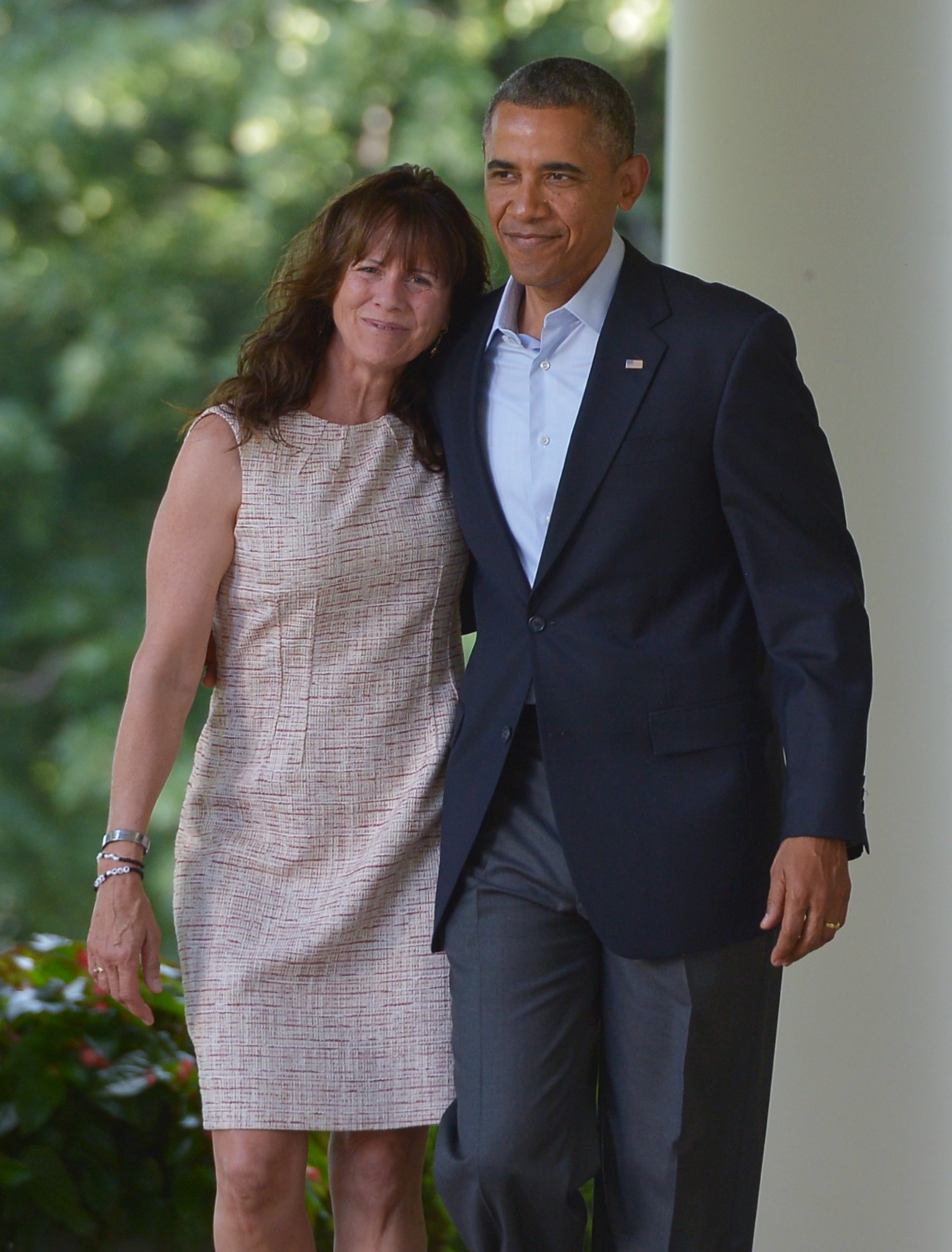
(Top photo: A sign announcing the release of Sgt. Bowe Bergdahl sits outside the Power House restaurant on Main Street June 1, 2014 in Hailey, Idaho. By Scott Olson/Getty Images. Bottom photo: Jani Bergdahl, the mother of Bowe, walks through the Colonnade with President Barack Obama to speak in the Rose Garden of the White House on May 31, 2014. By Mandel Ngan/Getty Images)

Social Network As Kingmaker

Jonathan Zittrain is concerned about Facebook’s ability to swing elections:

All sorts of factors contribute to what Facebook or Twitter present in a feed, or what Google or Bing show us in search results. Our expectation is that those intermediaries will provide open conduits to others’ content and that the variables in their processes just help yield the information we find most relevant. (In that spirit, we expect that advertiser-sponsored links and posts will be clearly labeled so as to make them easy to distinguish from the regular ones.) Digital gerrymandering occurs when a site instead distributes information in a manner that serves its own ideological agenda. This is possible on any service that personalizes what users see or the order in which they see it, and it’s increasingly easy to effect.

There are plenty of reasons to regard digital gerrymandering as such a toxic exercise that no right-thinking company would attempt it. But none of these businesses actually promises neutrality in its proprietary algorithms, whatever that would mean in practical terms.

The Scourge Of Women Laughing Alone With Salads, Ctd

A reader quotes Clive Thompson:

If everyone reading this article posted their best snapshots online, we could seed hundreds of thousands of free pictures of real things and real people in the real world. The true cure for stock photography is inside your camera phone.

This theory would imply that the reason stock photography is so cliche is because photographers aren’t supplying the right photos. The problem is that advertisers are saladlooking for cliche photos. They are looking for diverse people who look happy, authoritative, or whatever other image the advertiser is trying to convey. Photographers are just supplying what advertisers want.

Even if that weren’t the case, it’s not as simple as posting your photos on Flickr and setting the license. If the photo is for commercial use, as most stock photos are, then you have to have model releases from everybody in the photo. If you don’t, then whoever uses your photos would put themselves at risk for a lawsuit from the people in the photo.

Finally, this whole concept is hugely denigrating to photographers. It takes a tremendous amount of skill to create the kind of photos you see in stock art. A random person with their phone isn’t going to be able to produce similar quality work. It would be like saying that the solution to a broken news media is for everybody to post their independent journalism on Facebook (for free naturally).

Update from another reader:

Did Clive Thompson get paid for his rant about stock photos?

If so, then I have to wonder why he’s so willing to give away photos but not give away words. He completely avoids the ethical issues raised by his suggestion.

The reason stock photos are horrible and also ubiquitous is that people just don’t want to pay photographers, and some photographers have been reduced to playing a numbers game by generating endless generic photos. It reduces photography to a numbers game and is the equivalent of being paid by the click. (I realize some places have to deal with agencies, as the Dish does, but you aren’t posting the genuinely meaningless stock photos that are common elsewhere.) I worked with photographers for years, and I think firing photographers so we can look at stupid stock photos or amateur photos from Flickr was cheap and disrespectful, and suggesting that the unpleasant outcome of devaluing their work is somehow improved by using more free work from amateurs is even more insulting. True, there are many excellent amateur photographers, but there are many excellent amateurs pursuing many artistic hobbies. Thompson says that waiting for new-and-improved-stock photos by the pros will take too long, but that’s only because so many professionals have been dumped. Hire them back.

(Photo: A non-stock image from WLAWS)

Has Fat Gotten A Bad Rap?

A new book claims so:

[The Big Fat Surprise author Nina] Teicholz describes the early academics who demonised fat and those who have kept up the crusade. Top among them was Ancel Keys, a professor at the University of Minnesota, whose work landed him on the cover of Time magazine in 1961. He provided an answer to why middle-aged men were dropping dead from heart attacks, as well as a solution: eat less fat. Work by Keys and others propelled the American government’s first set of dietary guidelines, in 1980. Cut back on red meat, whole milk and other sources of saturated fat. The few sceptics of this theory were, for decades, marginalised.

But the vilification of fat, argues Ms Teicholz, does not stand up to closer examination. She pokes holes in famous pieces of research—the Framingham heart study, the Seven Countries study, the Los Angeles Veterans Trial, to name a few—describing methodological problems or overlooked results, until the foundations of this nutritional advice look increasingly shaky.

Mashable interviewed Teicholz, who argues that “we’ve shifted too far in the carbohydrate direction”:

Mashable: So, is the takeaway that you can eat as much bacon, butter and steak as you want?

Teicholz: It sounds extreme when you put it that way. What the science really shows is that a high-fat diet is healthier than a low-fat diet. So the takeaway for me is that it’s fine as part of that high-fat diet to eat meat, cheese, milk and eggs. I think if 40% of your diet is fat, that’s fine.

In an excerpt from her book, Teicholz claims that, for “the first 250 years of American history, even the poor in the United States could afford meat or fish for every meal”:

Ironically—or perhaps tellingly—the heart disease “epidemic” began after a period of exceptionally reduced meat eating. The publication of The Jungle, Upton Sinclair’s fictionalized exposé of the meatpacking industry, caused meat sales in the United States to fall by half in 1906, and they did not revive for another 20 years.

In other words, meat eating went down just before coronary disease took off. Fat intake did rise during those years, from 1909 to 1961, when heart attacks surged, but this 12 percent increase in fat consumption was not due to a rise in animal fat. It was instead owing to an increase in the supply of vegetable oils, which had recently been invented.

David Katz calls Teicholz’s arguments “nonsense.” He insists that “more meatbutter and cheese will not promote your health“:

We are flying in circles. If we had reduced our intake of meat, butter and cheese by eating more vegetables, nuts, fruits and legumes — we might be living in a Blue Zone by now. But we didn’t and we aren’t. We just started eating more starch and sugar. As we all know, America runs on Dunkin’ — tell them what they’ve won, Johnny!

So now, we can add back meat, butter and cheese (the consequences to the planet be damned, apparently) — and then what? We’ll be back where we were when we first recognized we weren’t where we wanted to be. After all, if our meaty, cheesy, buttery diets had been making us lean, healthy and happy in the first place — why ever would we have changed them?

So it’s “more meat” for the myopic, who can’t see far enough back to realize we’ve been there, done that — and it didn’t work out so well for us last time. It’s “more cheese” for the chumps who don’t recognize that the next great diet is one we’ve tried before. In fact, the title of the book by the Wall Street Journal columnist is almost shockingly like the title of Taubes’ piece in the New York Times Magazine from 12 years ago. In 12 years, our progress is nicely captured by going from a “big fat lie” to a “big fat surprise.” We fly in circles, and our kids pay the price.

Fear The Tempest In A Teacup

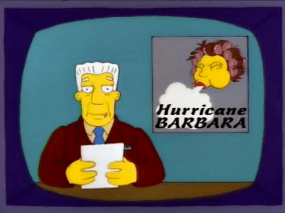
Ed Yong takes note of “a simple fact with an uncertain explanation: historically, hurricanes with female names have, on average, killed more people than those with male ones”:

Kiju Jung from the University of Illinois at Urbana – Champaign made this discovery after Screen Shot 2014-06-03 at 11.36.23 AManalyzing archival data about the 94 hurricanes that hit the US between 1950 and 2012. As they write, “changing a severe hurricane’s name from Charley to Eloise could nearly triple its death toll.” …

[The] Jung team thinks that the effect he found is due to unfortunate stereotypes that link men with strength and aggression, and women with warmth and passivity. Thanks to these biases, people might take greater precautions to protect themselves from Hurricane Victor, while reacting more apathetically to Hurricane Victoria. “These kinds of implicit biases routinely affect the way actual men and women are judged in society,” says Sharon Shavitt, who helped to design the study. “It appears that these gender biases can have deadly consequences.”

Michael Silverberg elaborates:

By rating each hurricane name on a scale of how gendered it was—the most masculine names received 1; girliest names scored an 11—the authors created what they called a “masculine-feminine index.” (Hurricane Judd would likely be rated close to a 1, while Hurricane Anastasia would come in around 11. A more androgynously named Hurricane Sam would presumably fall somewhere in the middle.)

The storms with the highest loss of life also happened to score closer to 11 on the MFI. Follow-up experiments confirmed a correlation between gender and perceived risk. In one such study, participants were asked to rate the destructiveness of a hypothetical storm given a male or female name. They consistently found Hurricane Victor much more menacing than Hurricane Victoria.

But the issue may not be so cut-and-dry:

According to Jeff Lazo, an economist at the National Center for Atmospheric Research, there are many factors that influence storm-preparedness decisions, from prior experience with storms to socio-demographics. “Trying to suggest that a major factor in this is the gender name of the event with a very small sample of real events… is a very big stretch,” he wrote in an e-mail. “I feel that their analysis has basically shown that individuals respond to gender. I am not sure it has applicability to hurricane response. I certainly would not base policy decisions on this study alone,” he said.

Melissa Dahl is also skeptical:

The numbers here just aren’t sturdy enough. The researchers analyzed death rates from hurricanes over the last six decades – but until 1979, hurricanes were only given feminine names. So it’s a bit of a stretch to use three decades of female-only names to reach the conclusion that storms with ladylike names caused more death and destruction. Andrew Gelman, a statistician at Columbia University, expressed skepticism in an e-mail:

If you look at their archival study, you’ll see that their coefficient was not statistically significant!  That doesn’t mean the effect isn’t there, but it does mean that their sample sizes are low, and when you’re talking about hurricane deaths, you don’t have the data to say much more conclusive than that.

Moreover, as Gelman noted, there could be other reasons people react differently to the names – one of the names used in the experiments was “Big Bertha,” for example, which likely brings to mind the nickname “Big Bertha.” (Sure enough, “Bertha” was rated scarier than Arthur, Cristobal, Kyle, and Marco.)

Former National Hurricane Center director Bill Read sees other issues at play:

While the gender bias is likely real, I don’t think it plays a significant role in human response to an approaching landfall. The test conducted for the study involved people who were not under the stress of an approaching hurricane. As quoted in the article, while necessary to eke out the gender difference, it leaves me with the need to know if is this factor significant, or is it very minor in the mix of all other societal and event driven responses. My experience with Rita (massive (over) response to evacuation orders) and Ike (less than ideal response) is a point in fact. In the case of Rita (sweet female), the events three weeks earlier due to Katrina were cited as a contributing factor to over reaction. For Ike (bad boy male), the horrific evacuation for Rita was cited as a reason for under response. I used to think, and still do with caveats, that a more important driver is how strong the storm is at the time action is required. Rita was a Cat 4 heading to 5 when decision time came. Ike was a Cat 2. These two real world events had exactly the opposite response one would expect from the gender bias paper.

(Image hat tip: Alex Lobo)

Should Washington Rank Colleges? Ctd

Several readers sound off:

From inside higher ed (at the community college level), there are several problems with college rankings. First, everyone already knows which is better than what. Four-year research institutions (Duke, Stanford) are better than four-year liberal arts schools, which are equal to or better than four-year state schools, which are better than two-year schools. Our school charges $100 a credit; Temple University charges roughly $800 a credit. Why? Because they can and we can’t. I highly doubt our school costing one-eighth the per year total will rank in the government rankings as “a better buy” than Temple or Drexel, much less the University of Pennsylvania.

Second, public tax support has collapsed over the last 40 years.

Technically (as in legally and constitutionally from the founding of the college), the state and the county are supposed to provide 66 percent of our operating budget, with the school providing the rest. Currently, public funds provide less than half that. Consequently, salaries and benefits have stagnated, forcing the school to rely more on adjuncts and forcing the young and the talented to look elsewhere. Tuition has gone up, shutting out the poorest students from public education.

If the federal government is going to rate us, what about forcing the states and counties to adhere to their obligations? How well can we do with one-third of the support we’ve been promised?

Also, be aware that 80 percent of our students come out of high school without the ability to read, write, or do math at grade level. Our Reading 1 is a third-grade reading level and has 15 percent of our students. Math 1 is basic fourth grade arithmetic – 20 percent of our students are in that. We have high numbers of poor students, immigrant students, and first-generation students, and increasing numbers of special education students, all of whom are expensive to educate and many of whom would not even have been in college 40 years ago when public funding was comparatively greater. Will all of that figure in?

The third factor is that politics and money go hand in hand. Is anyone seriously thinking Harvard won’t get an A? Princeton won’t be tops in everything? Is anyone really going to say Stanford or Duke should be $10K a year? Is anyone going to force the states to fully finance their obligations? The crisis in public pensions suggests not. And even if the whiff of possibility arose – especially for highly financed politically active “for profit” charters/colleges – we have the Indiana example of changing grades to help donors. So who is it really helping? What’s the play?

Another reader:

I understand that there are predatory administrators, that there are colleges offering terrible returns on investment, and that the whole system suffers from structural inequality. These are real concerns, especially for those in the worst situations. But rarely does the conversation turn to what education is supposed to achieve, or what its goals might actually be. Despite the great hubbub about educational reform, about new techniques of education, about technology in the classroom, the underlying thought remains the same: education is what we do in order to get money.

It beggars the modern imagination to think that someone might offer up some (or even all) of their material well-being in order to get an education which does not immediately result in more material well-being. A person considering getting a liberal education, particularly in a field without firm practical applications, is considered slightly daft – or is granted a pardon on account of already being rich. But this underscores the problem. Liberal education has become a luxury of the rich, rather than a prerequisite for free people living in a free society.

I don’t have a policy recommendation or a favored author (save maybe Plato) to tout. This problem is as large as the world and as complicated as people themselves. But I do think, before we start enumerating the virtues of our colleges and, thereby, driving a stake through the heart of “impractical” liberal education, that we should stop to consider what we hold highest.

Another’s two cents:

I’m an engineering professor. I have indeed seen colleges do unwise things with funds. I am a little bit concerned, though, about university ranking systems because they can drive unintended consequences. The proliferation of fancy sports facilities, for example, was in some measure a response to the US News rankings. Universities compete for students. Those that are highly ranked get more and better students, and they can justify higher tuition. If state support is going to disappear (as it pretty much has already in some states), we have to expect universities to market themselves and rankings to drive the marketing. I cannot predict how exactly, but I know this will not end well.

Update from a reader:

In regards to the person who seemingly works at the Community College of Philadelphia, where he/she commented that they charge $100 a credit whereas Temple University charges $800, simply because Temple can.  C’mon, that’s an apples and oranges comparison. Temple is a university that can bestow graduate and doctoral degrees, is a world-class research center, has or at least had some of the top schools in the country for communications, education, art, has a medical center graduating nurses, NPs, PAs, doctors, and dentist. A law school that is ranked #2 for trial advocacy and #11 for international law. Provides on campus housing for 12,000 students, is the force behind the revitalization of North Philadelphia (it can be debated how much the local community benefits but it is vastly improving). As with other major institutions of learning it also provides for a whole range of extracurricular activities from sports programs to a radio station.

I’m not knocking CCs; a lot of student wisely choose them to knock out their core requirements at a lower cost. I doubt there is any noticeable difference between what you can learn from History 101 at Temple or at CCP. But TU (and other major institutions) charge that rate because they offer more than just History 101, they provide access to many more courses than one could get at a CC, access  to top rate research centers, professors, in the case of TU campuses in Japan and Europe, to some extent connections (TU has over 250,000 alumni), sporting events, concerts, the social life, etc. etc.

Is it overpriced and is that price set simply to cover the cost of education? I don’t know. I do think universities have bloated their administrative staffs to unprecedented levels and that payroll expense is passed on to the student base. Probably more so at the Ivies than anywhere else, you’re paying to have that name and the connections and opportunities it provides on your resume. I think you can make the argument that there’s not much of a difference, scholastically, between a Princeton and TU, but to imply that a CC and a University are on the same level except for the course fees is a bit ridiculous.

(And full disclosure, yes, I am a TU grad, as is my wife and all 3 of her siblings. But I’m not arguing specifically for TU, you could replace the schools with University of RI and RICC and the argument stands.)

How To Forget An Atrocity

Beijing is on lockdown as tomorrow’s 25th anniversary of Tiananmen Square approaches:

Government control and interference is evident every year around the anniversary. China has referred to June 4 as “Internet maintenance day,” taking so many sites down for “fixes” that it is unclear which sites are being targeted with restrictions, reports The Washington Post. But this year, the crackdown has reached new levels.

Amnesty International reports arrests and detentions have been on the rise. Scores of activists, lawyers, students, academics, and relatives of those killed in 1989 have been detained, put under house arrest, or questioned, reports Time. Security around the public square has been so strict that tourists have had security officials bar them from the grounds, reports Time. Google services – including Gmail and translation services ­– have been interrupted since late last week, reports Bloomberg.

Lily Kuo remarks on how successfully the Chinese government has erased the events of June 4, 1989 from the collective memory:

[C]ontrary to what some activists might have hoped, the state-mandated erasure of the incident has been extremely effective. Only 15 out of 100 university students in Beijing recognize the iconic picture of “Tank Man” a demonstrator blocking the path of a line of tanks, according to The People’s Republic of Amnesiaa new book on the topic by NPR correspondent Louisa Lim. …

Scouring the Chinese internet for references to June 4 has become an annual event for the government’s censors, but this year’s efforts have gone further than ever before. All Google services in China, including gmail, are now being blocked on the mainland. … As in previous years, even circuitous mentions of June 4 on social media—including the Chinese characters for six and four together, for the date of June 4, the search term “four, open fire” or “25 years“— are being swiftly deleted by censors. China’s version of Wikipedia, Baike, has no entry for the entire year of 1989.

An anonymous Tea Leaf Nation contributor explains why the Internet has not made it any easier for Chinese youth to talk about the crackdown:

The immense interest among those jiulinghou [Chinese children of the 90s] who are in the know has not translated into active discussion, let alone action. Not all of us think it was wrong to use force against the protesters. And we certainly do not all think China should adopt Western-style democracy. But whatever our views are, we dare not openly discuss them online, in public forums, or even in private chats. And since the Internet is where my generation goes to communicate, we are essentially deprived of the chance to engage in civil discourse.

The Internet has chilled an honest reckoning with Tiananmen, not enabled it. While the web has given rise to a level of pluralism China has never seen before, and minted new, grassroots opinion leaders, it has also made everything we write, both in public and in private, more easily surveilled. Before the digital era, officials didn’t have the ability to eavesdrop on every conversation. But now, if I post something politically sensitive online, the conversation is digitally recorded. Everything becomes part of our permanent record.

But Ellen Bork suggests that “China’s communist leaders may find their efforts to suppress memory backfire”:

According to Min Xin Pei, a scholar of totalitarian transitions at Claremont McKenna College, half of China’s population was born after 1976. They don’t remember the chaotic and violent Cultural Revolution in which millions were sent to perform manual labor in the countryside, as marauding Red Guards sowed paranoia among family and friends. Might this contribute to a change of rule one day? “The basis of rule of all authoritarian regimes is one simple fact—fear,” Pei told an audience at the National Endowment for Democracy. “A psychological shift can come very very quickly.” What that shift will bring, no one can say for sure. But the world will have had at least 25 years to prepare for it.

Meanwhile, Heather Timmons contrasts the mainland’s information blackout with the scene in Hong Kong, where the event is well remembered:

Hong Kong is gearing up for its annual candlelight vigil to mark the anniversary, which is expected to attract more than 150,000 people. Local universities are sponsoring exhibitions and talks by witnesses and journalists (including the “Tank Guy” photographer). The Foreign Correspondents Club is screening a documentary featuring interviews with witnesses and journalists who covered the protests.

On a more personal scale, hundreds of groups of Hong Kong families and friends are expected to gather in their homes on the evening of June 4 to commemorate the eventThat will include many people from mainland China, tens of thousands of whom have obtained Hong Kong residency since 1989. At the candlelight event, “in recent years we have noticed more people from mainland China,” said Richard Tsoi, the vice-chairman of the Hong Kong Alliance in Support of Patriotic Democratic Movements of China.

Mariam The Martyr, Ctd

A PhD candidate in Islamic studies lends his expertise:

Finally, a topic I can write to you about without talking completely out of my ass! In a recent post, you quote a Foreign Policy article to the effect that the Sudanese regime’s decision to execute Mariam Ibrahim for apostasy is “a calculated and direct threat to the role the United States has been playing in the world,” and that it is lashing out now because it is “bitter at the United States’ role in the loss of what is now South Sudan.”

Bullshit. As a left-wing academic steeped in postmodern gobbledygook, nothing would please me more than to blame America for the Bashir regime’s behavior. The reality is that the regime is doing what it is doing for reasons entirely internal to Sudan and that have absolutely nothing to do with the US, the international community, or even South Sudan (the creation of which, I would add, owes relatively little to American efforts – that prize goes to regional negotiators like IGAD).

Over the last decade, the fragile coalition of Islamists, military leaders, and businessmen that rule Sudan has been coming apart at the seams. In early 2012, it nearly collapsed all together when some of the most respected Islamists in the governing National Congress Party wrote a scathing letter to Bashir, accusing him of corruption, incompetence, and betraying the Islamic cause. Since then, Bashir has been desperate to prove his religious bona fides to the younger generation of Islamists on which he has increasingly come to rely (see here for a terrific analysis). That means, among other things, sanctioning outrageous judicial decisions like this one.

I’d also add that it seems unlikely the government will actually follow through on Mariam Ibrahim’s death sentence. It feels inappropriate to make predictions about something so horrible, but people need to understand that this isn’t the first time the regime has done this sort of thing, only to backdown at the last moment. In fact, since the apostasy law first went on the books in Sudan in 1991, not a single person convicted under it has been executed. To this day, the only person in Sudan to be executed for apostasy was the famous reformer Mahmoud Muhammad Taha, but he was hanged before Bashir came to power and for reasons that had nothing to do with apostasy.

Sorry for going on at such length, but you’re finally talking about something I actually know something about and I’m desperate to show off.

It’s what Dish readers do best.

Inside The Kink Community, Ctd

A reader can relate:

I liked your post on Playing the Whore and would like to share some insight into Seattle’s Kink community, of which I am a member. The first thing that struck me about the community is how safe it feels. The guiding principle is that anyone can give or take away consent at any time without judgement. This is not something you can expect in the outside world, but it is non-negotiable in here. It’s this level of security that has given me the confidence to explore situations I would not otherwise attempt and has allowed me to derive pleasure in ways I never expected.

I know some people get off on the perv-factor, but nothing I’ve witnessed or engaged in has felt perverted or deviant to me, and I think the open, non-judgmental atmosphere is what enables the seeming normality of it all.

Another factor, to my mind, is that we’re all just regular people; we’re the gal you see on the bus or that guy who works at your bank. You see kinky people everyday going about their normal lives, I get to see them do much more than that and it makes me feel special.

There is something I engage in, however, that I think would be very difficult for outsiders to understand, and that’s okay because I don’t think I would have understood it myself if not for the opportunity to try it in a safe place with people I trust. I like to engage in impact play, on both sides, which results in bruises, wounds and all manner of battle scars. I take great pride in my marks and often photograph them to share, as many others do. I know that my photos can sometimes make it appear as though I were a victim of a violent crime or domestic abuse. I don’t have fantasies about being abused or beaten.

The thing that surprised me most the first time I tried it was that the process is not humiliating or degrading in any way. On the contrary, it can actually be very beautiful. Perhaps it’s because I tried it first as a top and found that I can fulfill this request from another with tenderness and completely without malice resulting in something both intimate and sublime. I guess if I tried to explain it to someone that would be it, the difference is matter of hitting someone out of anger/desire to control vs. hitting someone out of love/desire to please. Different worlds, similar results.

Thanks for shining your spotlight on this world and keep up the good work!

The Ripple Effects Of An Iran Deal

Gary Samore checks in on negotiations with Iran:

[Khamenei] sees a nuclear deal as a way to relieve the immediate threat of economic sanctions, but not as an opening to improve overall U.S.-Iranian relations, much less a strategic decision to abandon Iran’s longstanding nuclear weapons program. Other Iranians, of course, have different hopes. Some Iranians whisper that the United States should be lenient on nuclear terms to help President Rouhani achieve a victory so that he can defeat hardliner factions in the November 2015 legislative elections and ultimately shift Iranian foreign policy in a more moderate direction. Even if true—and it might be—President Obama cannot sell a nuclear deal on the basis of secret promises from closet reformers. He needs to be able to demonstrate real, long-term constraints on Iran’s ability to produce fissile material, and so far there’s no sign President Rouhani can deliver, even if he wanted to. If a deal is to be had, the supreme leader will have to be convinced to sacrifice his nuclear achievements to save the economy.

Michael Young considers Iran’s role in the Arab world:

In some countries where it sees the possibility of controlling the commanding heights of decision-making, the Islamic Republic will perpetuate dynamics of unity. Lebanon is a good example.

However, in countries where political, sectarian and ethnic divisions make this impossible, Iran will exacerbate fragmentation. In that way, it can control chunks of a country, usually the center, while enhancing the marginalization and debilitation of areas not under its authority. Iraq and Syria are good illustrations of this version of creative chaos.

Whether the Iranian approach has been an effective one is a different question altogether. Certainly, it has given Tehran considerable latitude to be a regional player and obstruct outcomes that might harm its interests. But there is also fundamental instability in a strategy based on exploiting conflict and volatility, denying Iran the permanence it has historically achieved through its creation of lasting institutions.

Elliot Abrams adds:

[I]n the Arab world, the critical Iran issue is not its nuclear program but Iran’s aggression, subversion, and interference in Arab countries’ politics. And the fear is widespread in the Arab world that any U.S.-Iran nuclear deal will only give Iran greater resources (when sanctions are lifted) and more freedom of maneuver. Nothing President Obama said in his West Point speech [last] week will diminish that fear; in fact, the President’s words will likely increase the sense in the Arab world that his interest in an Iran nuclear agreement may lead to a bad deal and to acceptance of other Iranian misconduct as part of the price for an agreement.