Everybody Do The Idaho Stop, Ctd

A reader writes:

This Idaho law is how I’ve always ridden my bike – safely, but within reason. It takes a lot of effort to get a bike started from a dead stop – far more than a car – and so often there’s no reason to have stopped (no traffic). I am teaching my eight year old the same method of slow, look, listen, verify – then go, if all is clear. I think that not only does it promote independent thinking (vs. “I must stop at every single red octagon”), it keeps you more aware of your surroundings and focused on the moment. And it’s for this same reason that I prefer the roundabout intersections in my town; you can’t interact with Twitter, email, Facebook, IMs or other distractions in a roundabout situation.

But most of the reader responses were critical of the Idaho stop:

Oh, bullshit. Living in the heart of San Francisco, where bikes are rampant, and the de facto reality is the Idaho stop, I can tell you that the utopian formula you support – “a stop sign is a yield, a red light is a stop sign” – is utter bullshit in practice. In reality, your formula actually means “blow through any stop sign at full speed as if you owned the road, whether there are cars or pedestrians there or not, but slow down slightly for red lights, stopping only if absolutely necessary.”

I can’t tell you the number of times as pedestrians we’ve almost been run down, or the number of times as drivers we’ve been forced to stand on the brakes after entering an intersection only to have a cyclist blow through out of nowhere at 30 mph. Perhaps things are more highly evolved back there in DC, but out here in SF it’s open religious warfare: bikers vs motorists. Motorists, you see, are evil:

carbon-crunching troglodytes from a dead and dying past; they deserve neither courtesy nor consideration. Whereas bikers are holy: righteous riders of the low-carbon future – and as such, immune not only from the laws of man, but of fate as well – Sure! Drag that baby through heavy down-town traffic behind your bike in that darling little bike trailer! The little orange flag will protect her! That, and your pristine holiness. It. Is. Insane.

Don’t get me wrong: Bikes are the future. Cars aren’t. But Idaho is not SF, or DC. It’s the fourteenth largest state geographically, at 83,570 square miles, but has only 1.5 million people – less than a fifth of the Bay Area population. What works in Idaho doesn’t translate trouble-free into SF, and I doubt it would into DC either.

From another part of the country:

Ugh, this “Idaho stop” is just legitimizing my biggest annoyance with sharing the road with bicycles. I really try to be respectful of bicycles on the road. I recognize their right to be there, and the fact that they are very exposed and certain to get the worst of any collision with my car. The state law down here in Louisiana says that if you’re passing a biker, you need to give them a three-foot cushion, which makes plenty of sense. But the reality of that law, especially in a dense urban setting like New Orleans, is that quite often I’m stuck behind a bicycle for long stretches going seven miles per hour because there isn’t enough room to pass. Eventually there will a break in traffic or parked cars or whatever, enough that the biker can veer over a bit and/or I can get around them, but it’s really frustrating to be stuck moving so slowly.

And this Idaho stop thing just means that even if I manage to pass them (legally), at the next red light they’re going to pass me, and I’m going to be stuck behind them all over again. This already happens reasonably often, since plenty of bikers happily ignore the current laws, but making it legal and more common is just going to aggravate drivers even more. I know some bike riders are all for aggravating drivers, since they see this whole thing as some sort of holy war, but I don’t think this world needs any extra road rage.

Another shows a little bit of rage:

I work in midtown Manhattan, and I can’t cross the street during the day without swiveling my head around like Linda Blair in “The Exorcist” because a deliveryman on a bicycle is going the wrong way up a one-way street, running a red light, and would plow into me if I weren’t paying enough attention for the two of us. This happens literally every day, often multiple times (and I understand these guys are underpaid, but if they were being paid more, I think they’d still do it just because they could).

From my perspective, “Idaho stops” send exactly the wrong message because a lot of bicyclists already think they’re above the law, and softening it specifically for them only reinforces their sense of entitlement. Red lights and stop signs are already optional for too many of them, and one-way streets apparently are for the little people. And, by the way, I’ve never seen one of them ticketed, ever.

A pedestrian’s view:

I walk almost everywhere, or use mass transit. I’ve been clipped at least a half dozen times by cyclists who just don’t care to watch for pedestrians. Once, my 3-year-old daughter was knocked to the ground by a cyclist running through a stop sign. My pedestrian friends can add dozens of similar stories of cyclists paying them no mind. I am unconvinced that an Idaho stop is safer or reasonable when considering cars. Until, as a class, cyclists actually start respecting pedestrians in our city, I am utterly convinced that an Idaho stop will just allow the already militant cyclists in our city to further ignore pedestrians and run us down.

Another introduces another type of vehicle:

I must respectfully disagree about the changing rules for bicyclists when it comes to stop signs and lights.  Certainly, bikes have greater fields of view than most cars, but then so do motorcycles.  Should motorcycles be allowed to glide through stop signs?  My current car, a Scion, has worse visibility than my old one, an old Ford Escort station wagon.  Should I have to stop for longer in one car than the other?

Nope. Because uniform rules of the road are the safest for ALL the people using the roads. If cyclists want to share the road (and based on all the complaining I hear from cyclists friends, they do), they have to follow the rules we put on vehicles. Period.

A different view to balance things out a little:

For the drivers who might complain that bicycles should adhere to the same laws as cars, I should note that less than 1% of the drivers I encounter at four-way stops actually come to a complete stop. And they are still going faster when they “pause” on through than I am when I slow down on my bike. This isn’t to excuse the cyclists who fly right through them – they’re assholes and they should be ticketed. They give law-abiding cyclists a bad name and they’re doing something both stupid and incredibly dangerous. Last year I nearly creamed some idiot flying through a stop sign (while he was taking a left, because YOLO I guess) after I had come to a complete stop.

Anyway, in addition to adjusting the cycling laws, a little more mutual respect between bikers and drivers could make a huge difference and save lives.

Another reader brings philosophy into the discussion:

In a college ethics course years ago, taught by a Jesuit, a similar situation was discussed – crossing against the light.  He explained that, if a cop stopped us for that, we might justify ourselves with the principle of epikaia“Epikeia says that a general rule must be applied to a particular situation … taking into consideration all circumstances” and, “For the great canonists of the Middle Ages, epikaia was justice sweetened with mercy.”

In other words, the purpose of this particular law is to regulate traffic so as to avoid collisions.  If there’s no oncoming traffic, you can go ahead and cross against the light.

Another brings in some humor:

Seems to me that people driving cars could use some similar rules.  A friend of mine told a good story. One day in San Francisco, he rolled through a stop sign, albeit in a car. A cop stopped him and was going to give him a ticket when my friend said, “Officer, I swear that stop sign was green when I went through it.” The cop laughed and let him off.
The Highway Trust Fund Is Running Low

HTF-Cash-Flow-Summary-Through-3-28-14

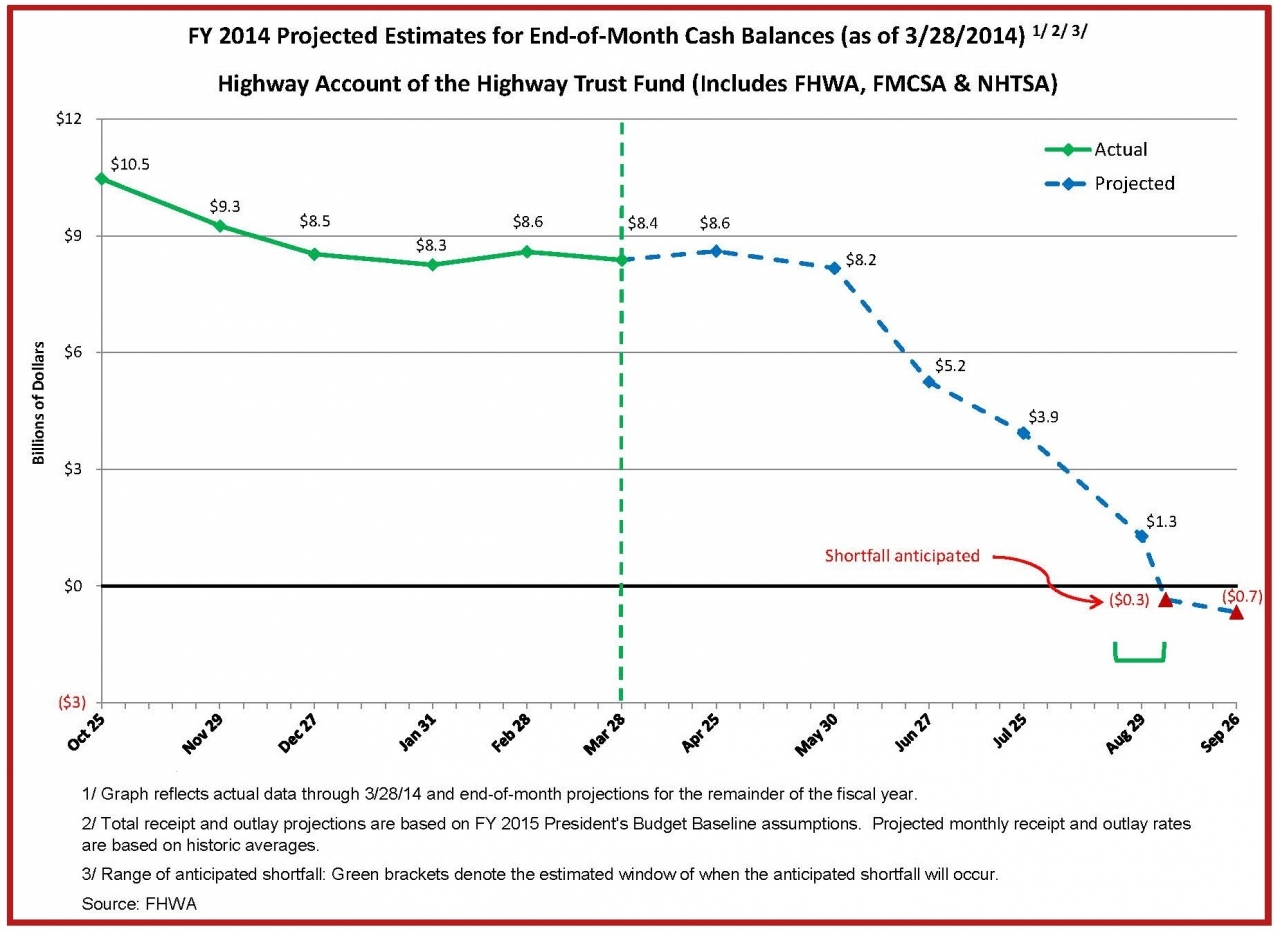
Lydia DePillis explains why the federal fund for transportation infrastructure projects is going broke. Most of the money comes from gas taxes:

Americans are actually using less gas than they used to — both because they aren’t driving as much, and cars are getting more efficient. Meanwhile, Congress hasn’t raised the gas tax from 18.4 cents per gallon since 1994, which is now far behind what it was then when you take inflation into account. Consequently, revenues have started to sputter in recent years … Congress has been aware of this problem for a while now. Instead of raising the gas tax, or finding some other funding mechanism, it’s simply plugged the hole with multi-billion-dollar transfers from the general fund. The last authorization, a $19.5 billion chunk granted in 2012, expires at the end of this September — at which point, unless Congress acts, the federal contribution for hundreds of state projects will drop to zero.

Eric Jaffe looks at how Obama proposes to fix the problem:

It’s too soon to scrutinize the details of the bills, but one element of Obama’s plan seems likely to endure.

That’s an idea to let states place tolls on their free interstate highways. Right now, states can only toll an interstate highway to pay for the construction of new lanes. The new plan would let states create tolls to pay for maintenance of a crumbling highway they have no plans to expand at all. (Three states already have such permission through a federal pilot program — Missouri, North Carolina, and Virginia — but none has acted on it.)

The idea has a little something for everyone. It shifts power to the states, which conservatives tend to like. It makes drivers pay for road use more directly than the gas tax does, which economists like; in fact, the free-market Reason Foundation recently proposed a similar plan. And it lets politicians avoid the unpopular move of raising the gas tax during an election year, which every party likes. For the record, the C.B.O. recommends a 10 to 15 cent per gallon hike.

Ben Adler advocates the simplest solution – raising the gas tax:

The simple thing to do here would be to raise the gas tax. It would guarantee a revenue stream, and it would have the positive environmental side effect of discouraging gasoline consumption. But Obama is afraid to propose that, since it polls poorly and Republicans would reflexively oppose it. Republicans have blocked every effort to raise the gas tax since they took over Congress after the 1994 midterm elections. Rep. Earl Blumenauer (D-Ore.), a leader on smart growth and transportation policy, introduced a bill last December that would double the gas tax. The chair of the House Transportation Committee, Rep. Bill Shuster (R-Penn.), flatly rejected any gas tax increase in February. “Economically, it’s not the time,” Shuster said, as if there ever were a good time in his mind.

But Pethokoukis prefers to get rid of the tax altogether:

Oh, you wouldn’t have to do all at once. You could phase it out over several years. Meanwhile, states and cities could start calculating what their infrastructure needs really are — repairing existing roads vs. building new ones — and the best way to pay for them, such as state gas taxes, broader sales taxes, tolls, or  advanced congestion pricing. …

With added flexibility, AEI’s Richard Geddes thinks state and local governments could consider “investment public-private partnerships” or IP3s. In return for a large, upfront payment, a government would lease a highway to a private entity to operate and collect toll revenue. That initial payment would go into a fund, which would then issue an annual dividend to citizens based on the fund’s investment earnings much like Alaska’s Permanent Fund or Norway’s sovereign wealth fund. A recent AEI analysis performed using data from Columbus, Ohio, suggests that annual payments could be as high as $1,800.

The Bloomberg editors like Congressman Steve Israel’s idea:

Israel, a New York Democrat, suggests allowing companies holding large cash stockpiles abroad for tax reasons to bring their profits home at a preferential rate — on the condition that they spend about 10 percent of the repatriated income on a new kind of infrastructure bond.

The idea is modeled on Build America Bonds — which is good, because that program, started in 2009, performed quite well. With a direct subsidy to issuers, it supported more than $180 billion in public works, and saved state and local governments an average of 0.84 percentage point on interest costs for 30-year loans.

Randal O’Toole, however, questions the entire premise of this debate:

For several years, there has been an almost continuous drumbeat about “crumbling infrastructure” which naturally carries over into the Highway Trust Fund debate. “Nearly one in four of America’s bridges [are] either structurally deficient or functionally obsolete,” says the Washington Post.

In fact, state highways are in excellent condition. The number of bridges that are “structurally deficient,” meaning worn out and requiring extra maintenance, has steadily declined from nearly 119,000 in 1992 to less than 67,000 in 2012, and now stands at less than 11 percent of the total. “Functionally obsolete” bridges represent the other 14 percent of the Post’s “one in four,” but these are simply bridges that have lower clearances, narrower lanes, or other issues that might slow traffic but not create serious problems. As for the 11 percent that are structurally deficient, few are in any danger of falling down: the recent bridge collapses in Minnesota and Washington states were due to design flaws, not maintenance failures.

A disproportionate share of the structurally deficient bridges are locally owned, not state owned. While states pay for most of their roads out of gas taxes, tolls, and other user fees, local governments rely heavily on sales taxes, property taxes, and other general funds. This underscores the importance of funding transportation out of user fees, not general funds.

Shocking Dreams

Scientists may be able to induce lucid dreaming using mild electric zaps:

For decades, people have been manipulating the brain using chemical means – drugs. But in recent years, researchers have begun to use electricity, as well. For example, there’s FDA-approved electrical brain implant that treats tremors associated with Parkinson’s disease.

The new dream study, which was published May 11 in Nature Neuroscience, used a far less invasive method: electrodes temporarily placed at strategic locations on the scalp. The research involved 24 volunteers with no history of lucid dreaming. The subjects went to sleep and eventually dreamed. Then, researchers turned on a 30-second-long electrical signal and then woke them up and asked them about their experiences. It turned out that a 40 Hz stimulation induced lucid dreams 77 percent of the time.

As Helen Thomson notes, the research could ultimately be used to help people with PTSD:

The team suggests that brain stimulation might help people with post-traumatic stress disorder who have recurring nightmares. Perhaps by triggering lucid dreaming, people with PTSD can take control of their dreams and make them less frightening. “That’s what we are looking at now,” says Voss, although the results are not yet available. It is a promising suggestion, says Michael Schredl, who works in the sleep laboratory at Heidelberg University, Germany. He says it will be difficult to expand the applications to help treat mental disorders, but “the idea of studying patients with nightmares or PTSD would be very interesting”.

A Journey, Not An Escape, Ctd

IbogaLife, an organization in Costa Rica, seeks to help addicts transition from heroin to sobriety through a powerful psychoactive drug, ibogaine, which is derived from a Central West-African bush called iboga. Abby Haglage describes visiting IbogaLife ceremonies, where she witnessed a young woman named Grace undergo the treatment:

In the first stage of the ibogaine trip, which lasts four to eight hours, users experience fantasies like walking on water, through fire, or flying. In the next stage, which can last anywhere from eight to 48 hours, users contemplate—usually with images from childhood—the meaning of what they saw. It is during this time that many discover the underlying reasons for their addiction, and, ideally, work through them.

So Grace trances, we watch, the Bwiti music plays. She howls afraid, we play instruments to keep her calm. For many minutes, she’s frozen and silent. The faces of the village soft and solemn around her. Then suddenly, without warning, terror invites itself. Her eyebrows furrow with pain, her mouth falls open in shock, her hand reaching out to be saved. For the next few days, this is her reality.

A week after the ceremony, Haglage talked to Grace about her visions, which she described as “more uncomfortable than scary”:

Finding these things, seeing them, wasn’t easy. “My whole body was on fire. I was in so much pain,” she says. But living through them seems to have changed, at least for now, the way she sees the world. “What this did, it gave me a perspective. That was the whole point of my trip I think, perspective,” she says. “Decisions are not good or bad, but what you hold them up against. I have a choice if I want to keep using and that’s fine, but if I do, it’s going to suck. This is the only life I have, as far as I know, and I’d at least like to give it a shot.” …

As for the trip? “I wouldn’t recommend it to somebody who is trying to have fun,” she says dryly. “If you want your body to explode into 1,000 pieces and rebuild itself into something beautiful, then yeah—but don’t expect it to be pleasant.”

Previous Dish on ibogaine here and here.

The Game Blame

Jesse Walker looks back on the history of moral panics about addictive, violent, or sexually explicit video games:

In December 1993, Joe Lieberman (D-Conn.) convened a Senate hearing on violent video games. His opening statement described some high-profile crimes—a girl abducted from a slumber party, a mass shooting on a commuter train—then declared that “violence and violent images permeate more and more aspects of our lives, and I think it’s time to draw the line. I know that one place where parents want us to draw the line is with violence in video games.”

As the senator slid back and forth between describing real and virtual violence, he argued that these “so-called games” lead to real crimes: “Instead of enriching a child’s mind, these games teach a child to enjoy inflicting torture.” Lieberman and his colleagues singled out some specific releases by name. Denouncing the martial-arts title Mortal Kombat, the senator noted that the Sega version of the game featured splattered blood and decapitation; the Nintendo version did not include those elements, he conceded, but “it is still a violent game.” The politicians also attacked Night Trap, a previously obscure interactive horror movie that Sen. Byron Dorgan (R-N.D.) described as an “effort to trap and kill women.” In fact, the aim of the game was to rescue the women, not to attack them. (After the hearings, sales of Night Trap shot up.)

Beats, By Apple?

It’s rumored that Apple is considering shelling out upwards of $3 billion to acquire Beats Electronics, which, in addition to its ubiquitous headphones, runs a music streaming service. Bob Lefsetz doesn’t see the point:

Tim Cook is an operations guy, he’s clueless, the company has no vision and this is evidence of it. Steve Jobs was famous for saying one thing and doing another, decrying this and then doing exactly that. Anybody with a brain knew that streaming was eclipsing downloads. Except at Apple, where they were adhering to Jobs’s philosophy. But it turns out Apple had no Plan B, no streaming service ready to be launched when necessary. It’s like they never read Clayton Christensen’s “Innovator’s Dilemma,” despite it being vaunted in the tech press for over a decade. If you rest on your laurels, you’re gonna be history tomorrow.

Derek Thompson, on the other hand, thinks buying Beats would be a smart move:

What’s iPhone’s Next Little Thing? Why not: the most popular premium headphones in the world (plus a promising streaming service)?

Headphones? Sure, headphones. Besides clothes, there are five things on my person each time I step out of my apartment: keys, wallet, watch, phone, and headphones. Apple already makes a best-in-class phone and is working on a best-in-class connected watch. But for reasons I won’t even guess, it makes weirdly fragile plastic headphones. Owning the most popular premium headphone manufacturer means Apple is an iWatch away from producing the top high-end version of just about everything I carry around with me when I walk, besides a wallet (which is going to the cloud anyway) and keys (which, who cares). The implications of dominating the high-end ambulatory consumer market in a world where everything is going to mobile seem profound.

Joshua Brustein puts the potential purchase in perspective:

Apple wants to build the best version of whatever device people start using next. If it decided that it wanted to do that through acquisitions, it would likely spend a few billion dollars on, say, the purchase of Fitbit in order to go deeper into wearable computers. Or Apple could make the same bet by scooping up a bunch of engineers from Nike’s defunct FuelBand division.

But Apple hasn’t shown much interest in buying its way into the future. Even if it does spend big on Beats, Apple will look pretty much the same at the end of the day.

Gorby argues that there’s “one good idea in the Apple-Beats deal: and that’s making big acquisitions”:

Beats’ main asset is it’s brand. It’s got a great brand, and it’s a great business success. That’s how it can sell mediocre headphones and make fat margins. Again, more power to them. Great. But Apple is a one-brand company. Its strength is its brand. Taking on a new, separate brand makes absolutely no sense. And if Apple wants to fold Beats into its brand, why buy them in the first place? Why not just make its own headphones. …

The technology landscape changes extremely fast, let’s face it Tim Cook is not the visionary that Steve Jobs was, and Apple has $100 billion in cash that it just doesn’t know what to do. It should make very big acquisitions. Just not Beats.

Mastering The World Of Mad Men

In a Paris Review interview, Mad Men creator Matt Weiner discusses what unites the show’s various outsider characters:

The driving question for the series is, Who are we? When we talk about “we,” who is that? In the pilot, Pete Campbell has this line, “Adding money and education doesn’t take the rude edge out of people.” Sophisticated anti-Semitism. I overheard that line when I was a schoolteacher. The person, of course, didn’t know they were in the presence of a Jew. I was a ghost.

Certain male artists like to show that they’re feminists as a way to get girls. That’s always seemed pimpy to me. I sympathize with feminism the same way I identify with gay people and with people of color, because I know what it’s like to look over the side of the fence and then to climb over the fence and to feel like you don’t belong, or be reminded at the worst moment that you don’t belong.

Take Rachel Menken, the department-store heiress in the first season of Mad Men.

She’s part of what I call the nose-job generation. She’s assimilated. She probably doesn’t observe the Sabbath or any of these other things that her parents did. That generation had a hard time because they were trying desperately to be buttoned-down and preppy and—this is my parent’s generation—white as could be. They were embarrassed by their parents. This is the story of America, this assimilation. Because guess what, this guy Don has the same problems. He’s hiding his identity, too. That’s why Rachel Menken understands Don, because they’re both trying desperately to be white American males.

Of all of them, Peggy is my favorite. I identify with her struggle. She is so earnest and self-righteous and talented and smart, but dumb about personal things. She thinks she’s living the life of “we.” But she’s not. And every time she turns a corner, someone says, “You’re not part of ‘we.’ ” “But you all said ‘we’ the other day.” “Yes, we meant, ‘we white men.’ ”

Mother’s Day Without Mom, Ctd

Reflecting on her mother’s death, Ruth Margalit writes, “I now mark Mother’s Day on my private calendar of grief”:

Meghan O’Rourke has a wonderful word for the club of those without mothers. She calls us not motherless but unmothered. It feels right—an ontological word rather than a descriptive one. I had a mother, and now I don’t. This is not a characteristic one can affix, like being paperless, or odorless. The emphasis should be on absence.

Freddie deBoer praises John Dickerson’s piece on his late mother. And Freddie remembers his “own mother, gone 25 years, somehow, this year”:

I am aware that her memory is passing grain by grain with those who loved her and have left us now themselves, I also know that as long as I am alive to feel that loss, her memory will persist, in a manner I neither want nor would wish away. Because for as far away as she seems to me now, memories like smoke, the truth is I still wake up in the night and feel that powerless grasping, reaching around in the dark for some object that I will never find, and it’s like it was yesterday, my father walking in that door, and I know that I will eat forever and not be fed, and within me that cold fire will burn forever.

A few readers share their sorrow:

My mother died on April 12 of this year.

While it was sudden, it was not unexpected, and it was the saddest day of my life. I have many friends who have lost their mothers, much younger than me (I am 56). It is mind-boggling to realize that whatever sympathy I had to offer – truly rang hollow. Not out of any oversight or short sightedness, but because the magnitude of the loss of one’s mother is not understood one iota, until it happens. Then it hits you like a ton of bricks.

My dear mama was one for superlatives; each year any celebration we had as a family was “the best one EVER!” This year Mother’s Day was decidedly the WORST one ever. I am now in a club that no one should ever be in a hurry to join, even though the majority of us will belong to it, eventually.

When someone who is “unmothered” reminds to you call, hug, kiss, and LOVE your mama – do it! I would give anything for one last superlative …

Another:

Your post struck a solid chord for me. My mother died when I was ten years old on the day after Christmas. She had been sick for two years, but nobody prepared my siblings and I. In our minds, people got sick, but then eventually they got better again. It happened 47 years and two stepmothers ago, but we still feel that ache.

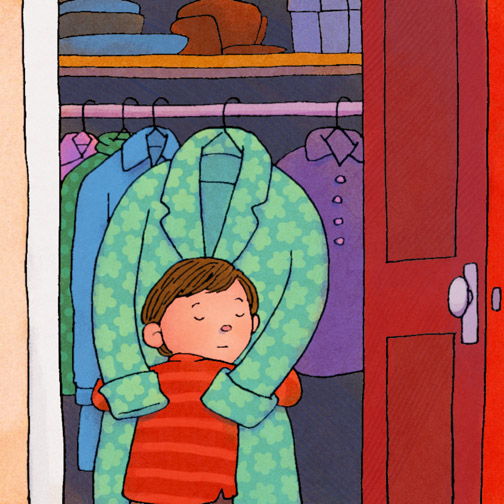
For a while after her death, I found some comfort from the smell of her clothes, still hanging in a hall closet. After some hesitation (I was afraid my friends would think I was being maudlin), I posted the attached image on my Facebook page:

Mother

I was stunned by how many people it touched. Silly me. The loss of a parent doesn’t hurt any less for an adult. It’s universal.

Another reader:

My mother passed away 14 years ago, and this time of year is always difficult but for some reason, this year has been especially difficult. I don’t ever want to begrudge all my Facebook friends who want to share their love for their moms or my mom friends posting photos of their lovely days with their families. But it is a lonely time for those who are “unmothered” (I love that term!) and especially so when I scroll through my Newsfeed on Mother’s Day.

So to see your acknowledgement of that reality in this thread means the world to me. It is a small comfort knowing that I am not alone and that others understand what it’s like.

Everybody Do The Idaho Stop

Joseph Stromberg encourages other states to allow bikers to roll through stop signs and go on red lights, as Idaho has done since 1982:

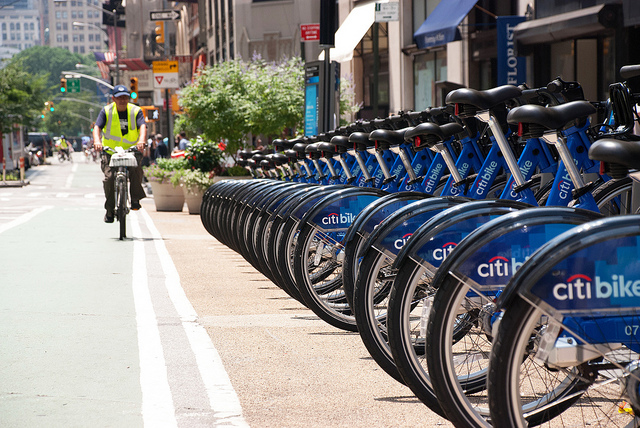
Idaho’s rule is pretty straightforward. If a cyclist approaches a stop sign, he or she needs to slow down and look for traffic. If there’s dish_citibikesalready a pedestrian, car, or another bike there, then the other vehicle has the right of way. If there’s no traffic, however, the cyclist can slowly proceed. Basically, for bikers, a stop sign is a yield sign.

If a cyclist approaches a red light, meanwhile, he or she needs to stop fully. Again, if there’s any oncoming traffic or a pedestrian, it has the right of way. If there’s not, the cyclist can proceed cautiously through the intersection. Put simply, red light is a stop sign.

This doesn’t mean that a cyclist is allowed to blast through an intersection at full speed — which is dangerous for pedestrians, the cyclist, and pretty much everyone involved. This isn’t allowed in Idaho, and it’s a terrible idea everywhere.

Agreed on all counts. As usual, Dan Savage is on my side:

A cop stopped me in the U-District a few years ago after I failed to come to a complete stop at a stop sign.

There was no traffic coming in either direction—and I had slowed down (my days of bombing through intersections are over). But the cop explained as he wrote me a ticket that I had to apply my brakes and come to a complete stop, take one foot off a pedal, and put that foot on the ground. That’s a legal stop. I replied: That would be like telling a driver he had to put his car in park at a stop sign, take the keys out of the ignition, hold them out the window and jangle them. He handed me the ticket.

I’ve continued to roll through stop signs.

Drum is also on board:

I’m convinced. This actually sounds like a perfectly sensible rule to me. Blowing through intersections at top speed is obviously dumb, and you deserve every ticket you get if you do it. But bicycles are a lot slower than cars; a lot less dangerous than cars; and have a way better field of vision than cars. Allowing them to slow down but not stop for stop signs when no one is around makes perfect sense.

On the potato thing, though, Idaho needs to stand down. Let’s all leave the nutritionists alone, OK?

Amazon’s Hit List

The company is apparently delaying shipments of books published by one of New York’s largest publishing houses, Hachette:

Usually, a customer can log in to Amazon, search for a title and receive the book in just a few days (depending on what shipping option is selected). I just searched for Stephen Colbert’s “America Again: Re-becoming the Greatness We Never Weren’t” and, in red above “add to cart,” was a section of text reading “usually ships within 2 to 3 weeks.”

Dreher, whose book is among those affected, is pissed off:

I’m sorry, but who made Jeff Bezos filthy rich? Writers and readers — the same people he’s treating like crap with this garbage, that’s who. What kind of retailer treats customers that way? What kind of retailer treats his suppliers that way?

Alex Shephard points out that Hachette doesn’t have many options for fighting back:

[W]hat, if anything, can Hachette do? They have little leverage to speak of. This is, after all, a post-U.S. v. Apple world. If other publishers were to step up in defense of Hachette—a reasonable thing to do, considering that the other four “Big Four” publishers could be next up on the firing line—they’d have to fear another antitrust suit. The major publishers made that mistake once and the U.S. government stepped in at Amazon’s behest. They won’t make it again.

But Gobry argues that Hachette’s market share makes it, in some sense, the stronger party:

The very fact that Amazon is resorting to these comparatively small-ball tactics (suggesting other books, delaying shipping) is really a show of weakness. Because both Hachette and Amazon know that Amazon can’t afford to pull Hachette from its shelves. If anybody has a monopoly on this situation, it’s Hachette. …

Now, don’t get me wrong. I’m not saying Hachette is the “bad guy” in this story (note: in the vast majority of business stories there is no “good guy” or “bad guy”), or that Amazon should fear Hachette more than Hachette should fear Amazon. Amazon is a very powerful and very audacious company that is clearly going after the publishers on several fronts. But the point is that a hardball fight between a retailer and a supplier is the oldest news in the world, that Hachette, a global multibillion dollar conglomerate, is hardly a helpless flower, and that this is how our economy functions.

Jordan Weissmmann notes that this is not Amazon’s first spat with a publisher:

Amazon has, of course, applied similar hardball tactics in the past. It revoked the “buy” buttons for thousands of books in Macmillan’s catalog when the two companies were in a tiff over e-book prices and removed e-books from the Independent Publishing Group from its site entirely during another contentious negotiation.

This is why many in the book world found it fundamentally unfair that the Justice Department saw fit to bring an antitrust case against publishers and Apple for banding together to force higher pricing on Amazon. Bezos gets to muscle the industry around, yet the publishers—as they would have you believe—are legally bound to sit helpless.

It’s a reminder that, for better or worse, our antitrust laws really have been sculpted with one idea in mind: low, low prices for the consumer. As long as Amazon’s actions seem designed to push down book prices long term, and it’s not colluding with other companies, the law will almost always work in its favor.