Marilynne Robinson’s God

Reviewing Robinson’s new novel Lila, Linda McCullough Moore wants to see a bit more judgement from the author’s deity, claiming Robinson portrays a “God who, as far as I can tell, just wants us all to be happy, if not in this life, then certainly in the next”:

I venture to suggest that Lila is a polemic, and a brilliant one. If we engage the novel at this level, surely it is at Robinson’s express instigation. No matter that the art is heavenly; no child could mistake the conclusions: The Conclusion, Eternal Glory for us all. No questions asked. But also, no questions answered. Are we to be faulted for scratching our heads about this sermon later on a Sunday afternoon? Puzzling out where any God of Holy Writ might recognize himself in the story that she is telling?

Lila’s favorite book in the Bible is Ezekiel, written by the same prophet who says God will separate the sheep from the sheep, a far finer distinction even than the sheep from the goats. But Robinson is having none of it. We’re all just doing the best we can with what we’ve got. Some readers ask what kind of preacher is John Ames. We can only surmise, but we do know what kind of preacher is Marilynne Robinson. Convincing, in a word. Her nonfiction makes a reader think. Her fiction converts the heart. In Robinson there is a balm in Gilead, and it is surely sweet. I’m just not sure where it comes from.

Robinson writes that much is mystery, even as she is spelling out without confusion the ways of eternity and holiness and judgment. She claims the unknowable, even as she specifies God’s ways to man and womankind.

Gracy Olmstead rises to Robinson’s defense:

First, many of the quotes pulled from [McCullough Moore’s] review are Lila’s internal thought processes, as she grapples with the fear that many of those she once knew and loved will not be saved. Thus, these thoughts are not declarative truth statements being made by Robinson. They are all in the voice of Lila, who, as she reads Scripture, wrestles mightily with these questions. They aren’t meant as Robinson’s Gospel: they’re Lila’s still-being-formed-and-sanctified conceptions of the Gospel.

Second: Robinson here is writing to people from Lila’s world, and that is one of the reasons I appreciate this novel so deeply. Gilead was a lofty, lovely book, full of the wizened thoughts of a preacher. In it, Ames struggles with conceptions of grace and redemption, but he does so from a position of wisdom and maturity. Lila presents something different: a soul-grappling that is very raw, intimate, and personal. Moore, in her review, quotes a particular passage by Ames, in which he says, “If the Lord is more gracious than any of us can begin to imagine … then your Doll … is safe, and warm, and happy.” It may sound heretical or evil to some, but really, I think it’s a deeply important statement. Ames is noting that we are fallible humans, and God is mysterious. We do not know the heart of man, nor do we know the plan of God in its entirety. Salvation and redemption are not ours to give, nor are they ours to judge. And so Ames offers this truth to Lila—that God is good, more gracious and loving than the human mind can ever conceive or imagine. And he invites her to rest in that truth, using words that she will understand.

Previous Dish on Robinson and Lila here and here.

If Only Mangers Were Mangier, Ctd

nativity

A reader “couldn’t agree more” that the nativity scene shouldn’t look so clean and pristine:

This is one reason the [above] image has always been a favorite of mine among nativity scenes. It’s from the early 1400s, by the early Northern Renaissance painter known as the Master of Flémalle. Just take a look at how scrawny, sickly, and unappealing that barn-born infant is, lying there in the dirt!

But another notes:

The virgin birth includes a lot of theology (which might be speculative) that it wasn’t as ugly or messy as women who aren’t virgin nor immaculately conceived.

That said, the Manger scenes are usually too clean (it wasn’t in a barn, it was a cave!).  The stoic and pure (carrying an easter lily) Joseph?  There was an umbilical cord and placenta – I haven’t read anything saying he was born without these.

We seem to confuse flashiness and gaudy scenes with celebration.  Christmas should be a humble holiday.  Joyful, but solemn.  Like the birth of Jesus. Mary had many sorrows, the birth of her son was not one of them, even in the process.

Another notes regarding the representative nativity scene we posted:

Perhaps they could start with a family that looks more fitting a Middle East setting than a white upper-class family from Stockholm.

Another adds:

The manger would also be full of animal shit as well.  It was a stable, not a hayride.

Speaking of shit:

For more realism in nativity scenes, go to Catalonia, where any self-respecting nativity scene features a “caganer,” which is traditionally a shepherd taking a dump behind the manger. These days, of course, pretty much any public figure of any renown has a caganer made in his honor:

francis

Previous Dish on caganers and the caga tió, or shitting log, here and here.

How God Died

Morten Høi Jensen surveys a number of recent books on the origins of modern atheism, finding in Nick Spencer’s Atheists: The Origins of the Species the intriguing argument that atheism’s rise was due to “thinkers who wanted to realign the relationship between religion and society,” rather than outright claims that God did not exist:

One of the ironies of Spencer’s narrative, and what gives it a kind of provocative counterintuitiveness, is his insistence on the role of believers themselves in the undermining of their faith. When believers splintered into factions and began questioning each other’s authority, Spencer writes, “they also questioned the texts on which their interpretation was founded, and biblical criticism as an anti-Christian discipline was born.”

In other words, atheism, like a teenage boyfriend, was snuck in through the back door while devout parents were distractedly bickering over biblical interpretation. And once the initial transgression had occurred, religious authority’s undoing was irreversible. Slowly, historians, philosophers, and scientists began to vie with church authorities for the definitive account of human origin and destiny. Even the publication of Edward Gibbon’s Decline and Fall of the Roman Empire (1776), with its claim that, as Spencer puts it, “history was all humanity and accident and irony,” was considered by many to be a subversion of the notions of divine providence. There was no divine intervention in Gibbon’s history, just imperfect human agency.

Spencer finds a parallel argument in Terry Eagleton’s Culture and the Death of God:

The English literary theorist Terry Eagleton joins Spencer in seeing the history of atheism not strictly as a refutation of God but as a series of disagreements over moral and political authority. “The Enlightenment,” he writes early in Culture and the Death of God, “may have been troubled by the question of faith, but it was not especially anti-religious.” The philosophes of the Enlightenment viewed religion in practical, utilitarian terms; it was to be contested when it supported political autocracy but tolerated when it promoted civic virtue. Whatever their own hang-ups about religion, these largely bourgeois intellectuals looked kindly (and not a little condescendingly) on the lower classes clinging desperately to their pious ideology. What harm is a little superstition, the philosophes rationalized, if it guarantees social cohesion?

But Eagleton sees it as “imprudent for the rulers to worship Reason while the masses pay homage to the Virgin Mary,” and his book is partly a critique of those who would use religion as a rationale for an existing social order. Thus he examines the variously philosophical and political attempts to replace religious eschatology with what he calls counterfeit theology. “The history of the modern age,” he argues,

is among other things the search for a viceroy for God. Reason, Nature, Geist, culture, art, the sublime, the nation, the state, science, humanity, Being, Society, the Other, desire, the life force and personal relations: all of these have acted from time to time as forms of displaced divinity.

Recent Dish on the origins of atheism here and here.

“A Love Supreme”

John Coltrane’s brilliant jazz album of that name was released fifty years ago this month. S. Brent Plate reflects on its spiritual qualities:

What is it about Coltrane, and in particular A Love Supreme, that gets some of us going spiritually? Coltrane was after truth, as one biographer put it, and not necessarily “pleasant listening.” I am attracted to this idea, that truth is difficult and can not easily be possessed. The corollary here is that there is no truth in Musak, and not much in the pop charts. In classical terms “truth” and “beauty” are not interchangeable.

Perhaps more importantly, truth is heard. It is an activity of the ears. And these are not necessarily the sounds of words being spoken, but a sensual experience that operate above and beyond the conceptual, intellectual realm. Truth is in the sensual arts, not rational philosophy.

True, Coltrane wrote some unapologetically religious words for the liner notes of A Love Supreme, giving “all praise to God,” and thanking God for his “spiritual awakening” of 1957 which, as we know from his biography, had also to do with his quitting heroin and alcohol. (Even so, the abuses had already been enough that he died of liver failure at age 40.) But who can resist putting the liner notes down quickly and sitting and listening: “Acknowledgement,” “Resolution,” “Pursuance,” and “Psalm,” making up the four parts of the musical journey.

Hisham Aidi, however, finds the album reflects an interest in Islam:

The conventional view is that by 1964, Coltrane had moved away from his Methodist upbringing, adopting a “pan-religious” outlook with a particular interest in Eastern mysticism. In spite of that, “A Love Supreme” is still described as laden with Biblical symbolism: the title “Psalm”, and the rising cadences, reminiscent of black preachers’ style, are offered as evidence that Coltrane was still rooted in Christianity. But ask one of the jazzmen or Muslim elders who knew Coltrane, and you get a different answer.

The saxophonist Yusef Lateef, who died at the age of 93 earlier this year, worked closely with Coltrane between 1963 and 1966. In his autobiography , “A Gentle Giant”, Lateef says: “The prayer that John wrote in ‘A Love Supreme’ repeats the phrase ‘All praise belongs to God no matter what’ several times. This phrase has the semantics of the al-Fatiha, which is the first chapter or sura of the Holy Quran. The Arabic transliteration is ‘al-Humdulilah…’ Since all faithful Muslims say the al-Fatiha five times a day or more, it is reasonable to assume that John heard this phrase from [his Muslim wife] Sister Naima many times.”

Lateef is referring to the poem Coltrane wrote and included in the liner notes of the album. Coltrane wrote: “No matter what … It is with God. He is gracious and merciful” and ends with “All praise to God…” What Lateef and others have noted is that “gracious and merciful” is a translation of “rahman raheem”, the opening lines of the Fatiha. Moreover, say the elders, when Coltrane begins chanting the album’s title for half a minute it sounds like a Sufi breathily repeating “Allah supreme”.

When The Self Is Lost

Gracie Lofthouse investigates depersonalization disorder, which is “characterized by a pervasive and disturbing sense of unreality in both the experience of self (called ‘depersonalization’) and one’s surroundings (known as ‘derealization’)”:

Dr. Elena Bezzubova, a Russian psychoanalyst who treats people with depersonalization in California, calls it a painful absence of feeling. “A mother comes to me and says, ‘My son is in prison, I received a letter from him. I do not care, but it bothers me. Please prescribe me something to cry.’”

It might be the implications of the numbing, as opposed to the actual numbing itself, that cause the most distress. Have you ever played that game when you repeat a word over and over again until it loses all meaning? It’s called semantic satiation. Like words, can a sense of self be broken down into arbitrary, socially-constructed components?

That question may be why the phenomenon has attracted a lot of interest from philosophers.

In a sense, the experience presupposes certain notions of how the self is meant to feel. We think of a self as an essential thing—a soul or an ego that everyone has and is aware of—but scientists and philosophers have been telling us for a while now that the self isn’t quite as it seems. Psychologist Dr. Bruce Hood writes in The Self Illusion that there is no center in the brain where the self is generated. “What we experience is a powerful depiction generated by our brains for our benefit,” he writes. Brains make sense of data that would otherwise be overwhelming. “Experiences are fragmented episodes unless they are woven together in a meaningful narrative,” he writes, with the self being the story that “pulls it all together.” InThe Ego Trick, Julian Baggini writes that people are, as the 18th century philosopher David Hume wrote in A Treatise of Human Nature, “bundles of different perceptions.” “The unity [of self that] we experience, which allows us legitimately to talk of ‘I,’ is a result of the Ego Trick—the remarkable way in which a complicated bundle of mental events, made possible by the brain, creates a singular self, without there being a singular thing underlying it,” Baggini writes.

Lovecraft Never Dies

Charles Baxter explores the persistent appeal – as well as persistent racism and misogyny – of H.P. Lovecraft. He considers how his fiction represents faith, writing that “what accompanies Lovecraft’s depictions of living death is a fundamental conviction that there is something wrong with the whole idea of resurrection, mostly because there is something wrong with life itself. The greatest hope of Christianity is, in these stories, a terrible outcome fervently to be avoided”:

His three best stories, “The Colour Out of Space,” “At the Mountains of Madness,” and “The Dunwich Horror,” can all be read as inversions of Christian themes, as Houellebecq first noted. “The Colour Out of Space” contains a travesty of the Pentecost, “The Dunwich Horror” a travesty of the Incarnation, and “At the Mountains of Madness” a travesty of resurrection, which also appears elsewhere in graveyard-kitsch form in “Herbert West: Reanimator.” Whenever anybody or anything is brought back to life in a Lovecraft story, the resurrection is always botched, and the return to life is catastrophic. Since life itself is a form of sleepwalking anyway, the descent of the “foul” Pentecostal flame in “The Colour Out of Space” can only bring more destruction and misery, the God of these stories being a malicious trickster.

As for the afterlife, or the life to come, the unlucky resurrected ones dwell in various subbasements and oubliettes where they give off “a deep, low moaning” that is “hideous with the pent-up viciousness of desolate eternities.”

In Lovecraft, all the eternities are desolate. When not made out of spare parts and jolted to life by electrical means, the resurrected are hidden away, “leaping clumsily and frantically up and down at the bottom of [a] narrow shaft.” This is not just the depiction of horror but of genuine suffering, the suffering of those perpetually imprisoned and unable to die.

Haunted by the failure of death that can result in zombiism, the stories repeatedly quote “the mad Arab Abdul Alhazred”: “That is not dead which can eternal lie,/And with strange aeons even death may die,” an utterance not of hope but of inconsolable despair. Like “The Rime of the Ancient Mariner,” the stories are haunted by death-in-life and by the prospect of a life after this one that may be even worse than the one you have now.

Muses Speak Out

Chloe Schama explains what it felt like to find herself in her ex’s novel:

I stayed up late that night and finished the manuscript, reading with a strange sense of honor. Isn’t it every woman’s fantasy, to some extent, to be someone’s muse — to feel as though her beauty, intelligence, and grace are so extraordinary that they inspire not just devotion but art? I’d never admit to desiring celebrity, but that doesn’t mean that I’d turn down the chance to be immortalized — or at least captured for a moment — by someone else. At art museums, I’ve always played a game: Matisse or Picasso, Manet or Degas, Rembrandt or Rubens — whom would I prefer to sit for?

But there was horror mixed with the honor. I’d never asked myself: Bellow or Roth, Hemingway or Fitzgerald, Tolstoy or Dostoyevsky? It seemed too terrifying to be made three-dimensional — to be faced with someone else’s portrait of your psyche. If the depiction seems to miss the mark, but includes just enough to make you recognizable, then you’d have to wage an endless personal PR campaign with anyone who came in contact with the text: No, reader, you don’t know me. But if the novel contained some shades of truth — perhaps the attributes you don’t share widely (aren’t they always the most compelling?) — then you face an even scarier prospect: Yes, reader, you know parts of me before we’ve ever met.

On a related note, Karley Sciortino considers why, aside from the allure of being a muse, many of us romanticize the idea of dating artists:

Last winter, Bret Easton Ellis had Kanye West as a guest on his podcast, and part of their conversation centered around the reality of being someone who creates things. Kanye mentioned that he felt particularly self-aware of the artist’s tendency to oscillate between periods of inflated ego and periods of self-loathing. It’s an intense life — there’s the pain of creation, padded by periods of downtime where one feels compelled to escape reality. And stereotypically, sex and drugs have been sedatives for that intensity. But that oscillation can make for a charged romantic relationship. One minute the artist appears so amazing and confident that you can’t help but open your legs, and the next minute they suddenly plummet and become vulnerable and insecure, and need you to open your arms to comfort them. In my experience, despite the fact that artists think they want to be with someone smart and critical, who challenges them — deep down most really just want to be babied. And this is why the artist is appealing not only to those seduced by rebellion and celebrity. It’s also attractive to the nurturing type. Some people love a fixer-upper.

What Freud Got Right

The New Republic recently retrieved from their archives a classic essay by W.H. Auden on Freud’s enduring insights. Auden, writing in 1952, claimed that even if his specific theories were disproven, Freud “would still tower up as the genius who perceived that psychological events are not natural events but historical and that, therefore, psychology as distinct from neurology, must be based on the pre-suppositions and methodology, not of the biologist but of the historian.”

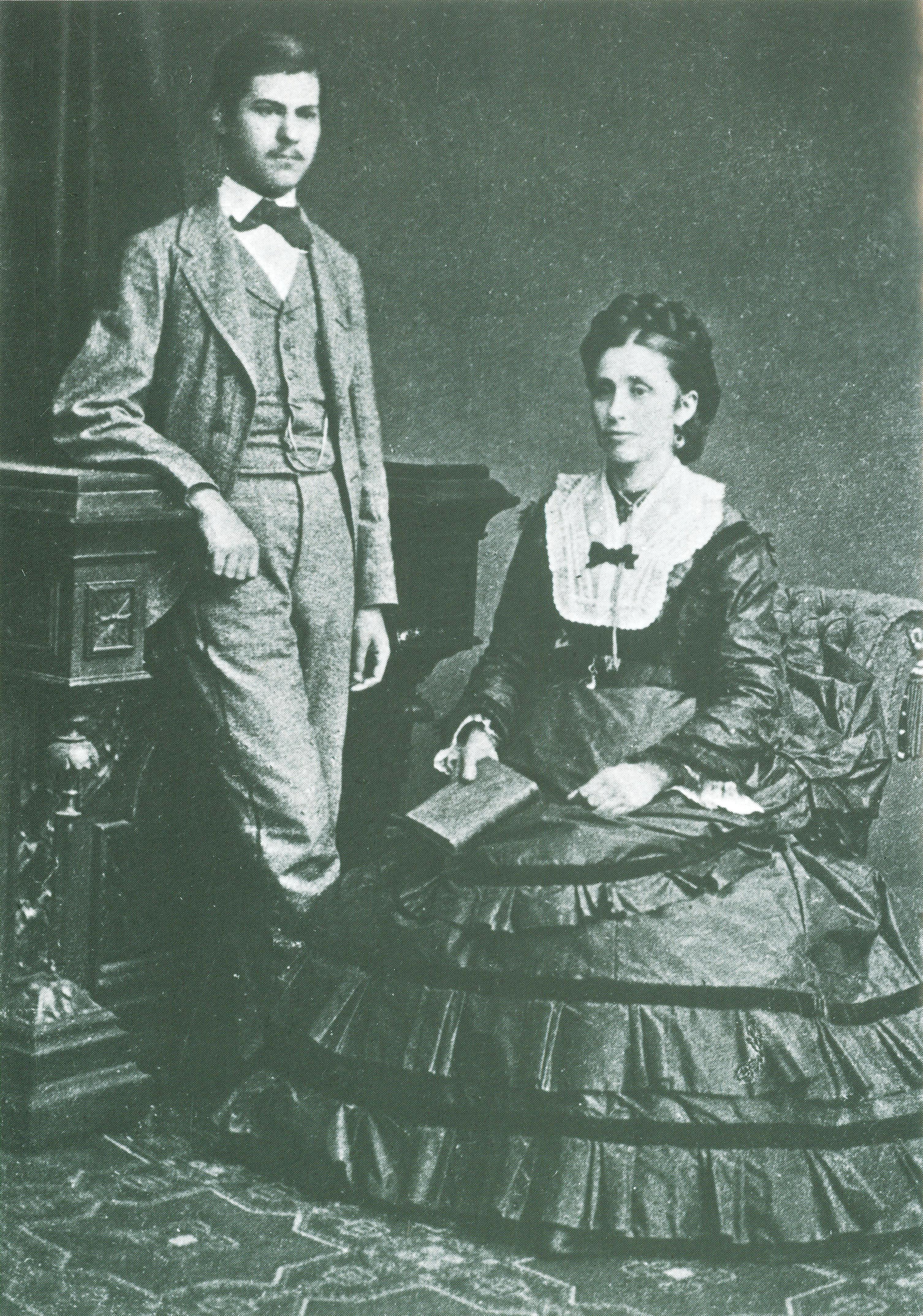
AmaliaFreud (1)As a child of his age who was consciously in a polemic with the “idealists” he may officially subscribe to the “realist” dogma that human nature and animal nature are the same, but the moment he gets down to work, every thing he says denies it. In his theories of infantile sexuality, repression, etc., he pushes back the beginnings of free-will and responsibility earlier than even most theologians had previously dared; his therapeutic technique of making the patient relive his past and discover the truth for himself with a minimum of prompting and interference from the analyst (meanwhile, one might add, doing penance by paying till it hurts), the importance of Transference to the outcome of the therapy, imply that every patient is a unique historical person and not a typical case.

Freud is not always aware of what he is doing and some of the difficulties he gets into arise from his trying to retain biological notions of development when he is actually thinking historically.

For example, he sometimes talks as if civilization were a morbid growth caused by sexual inhibition; at other times he attacks conventional morality on the grounds that the conformists exhaust in repression the energies which should be available for cultural tasks: similarly, he sometimes speaks of dream symbolism as if it were pure allegory, whereas the actual descriptions he gives of the dreaming mind at work demonstrate that, in addition to its need to disguise truth, it has an even greater need to create truth, to make historical sense of its experience by discovering analogies, an activity in which it shows the most extraordinary skill and humor. In a biological organism, everything was once something else which it now no longer is, and change is cyclical, soma-germasoma; a normal condition is one that regularly reoccurs in the cycle, a morbid one is an exception. But history is the realm of unique and novel events and of monumentsthe historical past is present in the present and the norm of health or pathology cannot be based on regularity.

(Photo of Freud in 1872 at age 16, with his mother Amalia, via Wikimedia Commons)

Our Bestsellers, Ourselves

Heather Havrilesky, scanning the last 20 years of the New York Times‘ hardcover-nonfiction bestseller lists, ponders what our country’s taste in books reveals about its readers:

As I Want to Tell You by O. J. Simpson (1995) and The Royals by Kitty Kelley (1997) yield to Dude, Where’s My Country? by Michael Moore (2003) and Plan of Attack by Bob Woodward (2004), you can almost see the support beams of the American dream tumbling sideways, the illusions of endless peace and rapidly compounding prosperity crumbling along with it. The leisurely service-economy daydreams of the late ’90s left us plenty of time to spend Tuesdays with Morrie and muse about The Millionaire Next Door or get worked up about The Day Diana Died. But such luxe distractions gave way to The Age of Turbulence, as our smug belief in the good life was crushed under the weight of 9/11, the Great Recession, and several murky and seemingly endless wars. Suddenly the world looked Hot, Flat, and Crowded, with the aggressively nostalgic waging an all-out Assault on Reason. In such a Culture of Corruption, if you weren’t Going Rogue you inevitably found yourself Arguing with Idiots. …

[T]he most popular nonfiction authors of our day might be characterized by a certain overconfident swagger, the modern prerequisite for mattering in a mixed-up, insecure world.

More often than not, these “authors” aren’t authors at all, in the strict sense of carefully pondering their ideas and diction and lovingly crafting an argument sturdy yet supple enough to carry their work over to a mass readership. In place of the William Whytes, Vance Packards, and Betty Friedans of earlier, more confident chapters of our national bestsellerdom, we have promoted a generation of alternately jumpy and anxious shouters. Generally, these public figurines fall into one of two categories: television personalities who have hired hands to cobble together their sound bites; and middling nonwriters suffering from extended delusions of grandeur. When it comes to hardcover nonfiction, a realm in which (for now at least) books often are physical objects, plunked down on coffee tables as signifiers or comfort totems, Americans don’t seem to be looking for authors or writers or artists so much as lifestyle brands in human form: placeholder thinkers whose outrage, sense of irony, or general dystopian worldview matches their own, whether it’s Glenn Beck, Barack Obama, or Chelsea Handler.

How Veterinarians Affect Human Health

Sasha Chapman explains:

The idea that there is a connection between our health and that of other animals is not new. Sir William Osler, one of Canada’s most admired physicians and a father of modern medicine, is also considered a father of veterinary pathology. He believed that his students, whether medical or veterinary, should study the anatomy and pathology of both human beings and animals. When Osler delivered the inaugural address at the Montreal Veterinary College in 1876, he titled it “The Relations of Animals to Man,” and told students it would not be long before “you find out that similarity in animal structure is accompanied by a community of disease and that the ‘ills which flesh is heir to’ are not wholly monopolized by the ‘lords of creation.’ ” Back then, in lecture halls at the Faculty of Comparative Medicine and Veterinary Science at McGill, veterinary students sat alongside medical students.

Today, such crossover training would be highly unusual.

Most doctors have little to do with animal medicine, unless they’re taking the family pet for a checkup. Likewise, vets rarely take more than a personal interest in human medicine. Each profession keeps to itself, and each tends to collect and analyze its own data separately, making it difficult to share information and identify cross-species health risks. And in the case of zoonotic diseases—those that move from animals to humans—there can be a tendency, between the professions, to develop an us-versus-them mindset. Vets are concerned with their own patients’ health, and doctors with theirs. We segregate these disciplines at our peril. Most of the emerging and re-emerging infectious diseases that have plagued humans in recent decades—including Lyme disease, H1N1, and Ebola—began in animal populations, and were first transmitted to human beings either directly or through our shared environment. Consequences can be devastating, as in the case of plague, which emerges periodically from animal reservoirs.