Another Staggering Death Sentence

Egyptian judge Saed Youssef, who infamously sentenced 529 people to death last month for their alleged roles in the death of one police officer, outdid himself yesterday when he condemned another 682 defendants, including Muslim Brotherhood Supreme Guide Mohamed Badie, to hang for the same crime:

Those found guilty have been charged with contributing to the death of a police officer during a raid on a police station in August. But their individual crimes were all relatively minor, like committing acts of violence or inciting violence, and none of the 683 was charged with participating in the officer’s murder. Badie, in fact, was advocating for nonviolence during the tumultuous aftermath of former Egyptian President Mohamed Morsi’s ouster.

Badie also happened to be in a different city during the incident. … The trial itself lasted a matter of minutes, and most of the accused were tried in absentia.

Bel Trew looks at Youssef’s record:

Judge Youssef first rose to prominence in 2012 when he took over the second district of the criminal court in his hometown of Beni Suef, some 100 kilometers north of Minya. It was there he earned the nickname “The Butcher” for bending the law with his notoriously harsh verdicts:

He once sentenced a man to 40 years in jail for possessing a gun. “He gave him 15 years for the weapon, 15 years for the bullets, then 10 years for getting into the gunfight,” said lawyer Mohamed El-Zanaty, based in Beni Suef, who has worked extensively in Youssef’s courtrooms.

But Youssef only gained international notoriety last year, when he acquitted the area’s security chief and 10 of his policemen accused of killing protesters on January 28, 2011, dubbed the “Friday of Rage,” one of the bloodiest moments of the 18-day uprising that overthrew President Hosni Mubarak.

Karl Vick notes that this level of judicial complicity in oppression is unprecedented in the country:

During the rule of President Hosni Mubarak and his predecessors, Anwar Sadat and Gamal Abdel Nasser, “the judiciary sometimes acted as a brake on the government’s most authoritarian impulses,” Nathan J. Brown and Michelle Dunne of the Carnegie Endowment for International Peace recently wrote, “Now, all the instruments of the Egyptian state seem fully on board. Whereas Nasser had to go to the trouble of setting up kangaroo courts, today there is no need.” Judges have outlawed the Muslim Brotherhood, the Palestinian militant group Hamas, and now the liberal April 6 Movement, named for the date of a planned 2008 public strike in an industrial town that grew into a nationwide protest movement.

The editors at Bloomberg decry the direction Egypt is headed in and say it’s time to cut off the aid:

Egypt’s government says about 500 people have been killed in terrorist attacks since the coup, mainly security personnel. That violence flared in response to draconian policies that offered Islamists no peaceful avenue. Previous attempts to crush the Muslim Brotherhood in Egypt, notably under President Gamal Abdel Nasser, failed miserably. [Yesterday’s] death sentence against the leader of the Muslim Brotherhood, which claims membership of up to a quarter of Egypt’s population, will further aid recruitment for radical Islamist groups that preach violence. …

Al-Seesi’s Egypt is measurably more bloody and repressive than either the Muslim Brotherhood government it replaced or any of Egypt’s previous dictatorships. It’s not enough for the U.S. to merely condemn the mass trials. If the U.S. truly supports the spread of democracy and individual rights in the Middle East, as it claims, then it cannot provide the means to suppress them.

What Is Justice For Child Porn Victims? And From Whom?

Last Thursday, the Supreme Court issued a 5-4 ruling in Paroline v. United States. The court decided that, while a victim of child pornography is owed restitution from any and every person who has viewed it, a single individual cannot be held liable for the entire sum of that restitution. Lyle Denniston explains:

The decision clearly will spare a Tyler, Texas, man, Doyle Randall Paroline, from paying all of the nearly $3.4 million that lawyers for a young woman identified only as “Amy” had demanded from him.  Paroline had two images of her being photographed as her uncle sexually abused her when she was eight years old.  Now a young woman, she had testified that “My life and my feelings are worse now because the crime has never really stopped and will never really stop.”

The Court ruled that a federal district court judge must calculate how much to assess against Paroline personally.  There is no doubt, Justice Kennedy wrote, that Paroline “was part of the overall phenomenon” of distributing and keeping images of the abuse of Amy.  He should have to pay his share and, Kennedy said, it must be enough to send the message that his part in the crime was not victimless. Lawyers for “Amy” had insisted that Paroline, like everyone who has her images and looks at them, contributes to her continuing injury, so each of them should be required to pay the full amount for her losses, in whatever multiples of individuals are found and prosecuted for having the pictures.

In a dissent joined by Scalia and Thomas, Roberts argued that as the statute in question provided no formula for how to calculate such restitution, “Amy” should get nothing from Paroline. Sotomayor dissented in the other direction, arguing that Paroline should pay the full sum or collect it from other offenders himself. Rick Pildes notes that this is all Congress’s fault:

As eight Justices saw it, the text of the law suggested Congress had created a messy situation:  (1) Congress intended to ensure that victims like Amy receive some restitution; (2) Congress did not intend that they receive as much as $3.4 million in restitution from someone who possessed two images of the victim, which is what the victim sought; (3) and Congress had not provided any direct guidance in the statute itself for how courts ought to determine the point between $0 and $3.4 million at which restitution ought to be set.  Congress must have meant something between $0 and $ 3.4 million, but provided no road-map for even generally figuring out how much.  All eight Justices presumably agree it would be better for Congress to address and resolve the general policy issues.  The question is what to do when Congress hasn’t — and, perhaps, what decision from the Court makes it most likely that Congress will do so.

But Paul Cassell, one of “Amy’s” lawyers, argues that the law’s intent was already clear:

[T]he text of the statute makes clear that Congress wanted child pornography victims like Amy to recover “the full amount of their losses” — not some partial, fractional amount.  Moreover, the Court entirely ignored an amicus brief filed seven Senators who were in Congress in 1994, when the provision was enacted.  As Senators Hatch, Feinsten , Grassley, Markey, McCain, Murray, and Schumer explained in their brief, “Congress really did mean what it said.”  They provided drafting history showing that Congress had specifically decided not to include a “proximate result” limitation in the other parts of the statute — only subsection (F).  In other words, Congress meant for victims like Amy to recovery the full amount of their losses from each defendant.

Either way, it seems the matter won’t be settled until Congress amends the statute. Marci Hamilton urges them to make the perps collect the restitution money, in line with Sotomayor’s position:

There is a simple two-part fix, if you parse Justice Kennedy’s and Justice Sotomayor’s views closely enough: (1) Congress should enact a federal rule of contribution among child pornography defendants and (2) replace “proximate cause” with “aggregate causation.”  That would make it possible for the many Amys of our world to obtain restitution from even one perpetrator in the marketplace and obtain full restitution.  The best part of this solution is that it would then incentivize the one defendant forced to pay it all to identify others as contributors.  Let the defendants go after their many contacts in the market for contribution.  That reduces the restitution, even if levied against a single person, from an excessive personal fine, and puts the burden of parsing out blame on the bad guys, not the victims who never asked to be on the Internet in the first place.

Posner proposes an alternative that he considers more just:

The problems with Kennedy’s and Sotomayor’s approaches stem from the same source: When Congress drafted the provision about restitution in the Violence Against Women Act, it thought about traditional types of harms—when one person directly injures another—and not the unusual collective injury in this case. That’s why the justices’ efforts to twist the statutory language lead to unfair and bizarre outcomes.

Congress created this mess, and only Congress can fix it. Every person who is convicted of child pornography should pay a large fine into a government trust. The fine would be tailored to the wealth of the defendant and the magnitude of his wrongdoing. Then this fund would be used to compensate all the identified victims of child pornography, who would share it in proportion to the severity of their injuries. That way, not Kennedy’s or Sotomayor’s, lies fairness.

(Video: Clip from the Law and Order: Special Victims Unit episode “Downloaded Child”, based on the case of “Amy”. It envisioned a much different result than the ruling in Paroline.)

Which On-Screen Violence Is More Senseless?

Game Of Thrones author George R.R. Martin compares the violence in the series to that of drone warfare:

Taking human life should always be a very serious thing. There’s something very close up about the Middle Ages. You’re taking a sharp piece of steel and hacking at someone’s head, and you’re getting spattered with his blood, and you’re hearing his screams. In some ways maybe it’s more brutal that we’ve insulated ourselves from that. We’re setting up mechanisms where we can kill human beings with drones and missiles where you’re sitting at a console and pressing the button. We never have to hear their whimpering, or hear them begging for their mother, or dying in horrible realities around us. I don’t know if that’s necessarily such a good thing.

Zack Beauchamp thinks this is mistaken:

Martin is certainly not alone in questioning the implications of drones, and exploring the human impact of war is a major part of his work. As he’s said repeatedly, his work is designed to be a criticism of war as a human institution, the base cruelty of characters like Joffrey Baratheon and Ramsay Snow exposing what happens during episodes of organized violence. Still, Martin’s own books allow for a lot more nuance around the morality of medieval warfare than he seems to see in its more modern incarnation. The idea that killing in war is somehow better when done with a sword rather than a missile seems to cut against his critique of war itself.

What’s really troubling about both the drone program and slaughter on Game of Thrones isn’t the technology people are using to kill each other. It’s the reasons that they decide to deploy it. On the show, it’s mostly a pointless struggle over which royal family gets to wield power. In real life, it’s the willingness to kill civilians to achieve arguably dubious gains against al-Qaeda. The problem in both cases is the policy of people in power, not the weapons they use to pursue it.

Rethinking Hip-Hop

Questlove bemoans the state of hip-hop, “an entire cultural movement, packed into one hyphenated adjective”:

These days, nearly anything fashioned or put forth by black people gets referred to as “hip-hop,” even when the description is a poor or pointless fit. “Hip-hop fashion” makes a little sense, but even that is confusing: Does it refer to fashions popularized by hip-hop musicians, like my Lego heart pin, or to fashions that participate in the same vague cool that defines hip-hop music? Others make a whole lot of nonsense: “Hip-hop food”? “Hip-hop politics”? “Hip-hop intellectual”? And there’s even “hip-hop architecture.” What the hell is that? A house you build with a Hammer? …

On the one hand, you can point to this as proof of hip-hop’s success. The concept travels. But where has it traveled? The danger is that it has drifted into oblivion.

He relates an encounter he had with a fan:

The other day, we ran into an old man who is also an old fan. He loves the Roots and what we do. Someone mentioned the changing nature of the pop-culture game, and it made him nostalgic for the soul music of his youth. “It’ll be back,” he said. “Things go in cycles.” But do they? If you really track the ways that music has changed over the past 200 years, the only thing that goes in cycles is old men talking about how things go in cycles. History is more interested in getting its nut off. There are patterns, of course, boom and bust and ways in which certain resources are exhausted. There are foundational truths that are stitched into the human DNA. But the art forms used to express those truths change without recurring. They go away and don’t come back. When hip-hop doesn’t occupy an interesting place on the pop-culture terrain, when it is much of the terrain and loses interest even in itself, then what?

Update from a reader:

I would like to challenge Questlove’s assertion that “the only thing that goes in cycles is old men talking about how things go in cycles.” I would challenge him to listen to the music and experience the persona of Jerron Paxton, a musical prodigy who wears tuxedo overalls and interprets the music of early American musicians such as Blind Blake, Jelly Roll Morton, and other luminaries of American folk, blues, and ragtime music. Jerron is part of a resurgence of black stringband music also reflected by the music of the Grammy winning Carolina Chocolate DropsDom Flemons, as well as talented white bands such as the Crow Quill Night Owls and many other more obscure musicians. See an interview with Jerron here. You can hear him playing banjo, fiddle, guitar and piano all over Youtube.

Now, perhaps Questlove means that a particular type of music only enters the popular consciousness once, but that’s certainly not the case. Take, for instance, the time in the late nineties when bands like the Brian Setzer Orchestra and Squirrel Nut Zippers brought big band swing music back into the popular consciousness and the pop charts. When you consider such recurring trends in American popular music, Questlove’s assertion that “the art forms used to express those truths change without recurring. They go away and don’t come back.” is sheer nonsense. There are many thousands of living American folk and blues musicians such as myself who recognize that “the art forms used to express those truths” are constantly echoing and re-hashing one another.

(Video: “The Roots: History of the Hip Hop Band”)

The Smearing Of Ryan As A Racist, Ctd

In a lengthy profile of Paul Ryan, McKay Coppins suggests that last months “dog-whistle” controversy has genuinely shaken the congressman’s confidence:

He is like a singer who has suddenly discovered his lack of relative pitch while on stage, and now worries that every note he’s belting out is off-key. As we talk, he chooses his words with extreme care, and is prone to halting self-censorship. At one point, as he tells me about his efforts during the presidential race to get the Romney campaign to spend more time in urban areas, he says, “I wanted to do these inner-city tours – ” then he stops abruptly and corrects himself. “I guess we’re not supposed to use that.” …

It would be easy to use stuff like this to ridicule him for his tone-deafness, his white-guyness, his sheltered cluelessness. But Ryan, by his own admission, is receiving his sensitivity training in real time. He has charged headfirst into the war on poverty without a helmet; zealously and clumsily fighting for a segment of the American public that his party hasn’t reached since the Depression-era shantytowns that lined the Hudson River were named after Herbert Hoover. It is frequently awkward and occasionally embarrassing, but it is also better than staying on the sidelines.

Yglesias snarks that the article has everything “except for even a teeny tiny shred of insight into how Paul Ryan’s policy ideas will impact poor people”:

For example, what does Ryan’s budget mean for the poor? Well it turns out that the majority of his budget cuts come from programs that benefit poor people.

He wants to reduce spending on poor people’s Medicaid benefits. And on their nutrition assistance. And on their college tuition assistance. And on their access to subsidized private health insurance. Ryan does cut some programs that aren’t aimed at helping low-income Americans, but mostly he cuts programs for the poor.

At the same time as it cuts spending on the poor, Ryan’s budget also has tax provisions. Specifically he calls for $5.7 trillion worth of tax rate cuts. That money, he says, will be made up through unspecified reductions to tax credits and tax deductions. When the Tax Policy Center analyzed the distributive implications of this kind of plan, they found that it increases the after-tax income of the rich while raising taxes on the working- and middle-class.

Meanwhile, Chait sees Ryan “altering the basis for his public appeal in a significant way”:

Ryan burst upon the national scene by presenting himself as a wonk’s wonk, the concerned, helpful man with the calculator here to help America avoid its fiscal crisis. Ryan the Wonk did not always know what he was talking about, but the important thing is that he looked like he did.

The newer iteration wants to make his case in non-pecuniary terms. Point out that his budget enacts a massive upward redistribution of income, and he will tell you about his soul. It is very much the same method used by George W. Bush to ward off criticisms of his fiscal priorities. (When Al Gore stated during a 2000 presidential debate that Bush had taken funding from children’s health insurance in order to cut taxes for oil companies, Bush replied, “If he’s trying to allege that I’m a hard-hearted person and I don’t care about children, he’s absolutely wrong.”) It’s a tactic that meets both Ryan’s needs and the needs of journalists possessed of great confidence in their ability to judge the sincerity of political theater.

Why Net Neutrality Matters

Alexis Madrigal and Adrienne Lafrance explain why advocates of net neutrality approach the issue with such great passion:

This idea of net neutrality—this cherished idea, even, among Internet entrepreneurs and activists—has a long history, roughly as long as the commercial world wide web. It is, Harvard law professor Lawrence Lessig has argued, what makes the Internet special. He used to call the principle e2e, for end to end: “e2e. Not b2b, or b2c, or c2b, or b2g, or g2b, but e2e. End to end. The core of the Internet, the core value that defined its power, the core truth that made innovation around it possible, is this e2e,” Lessig said in a 1999 talk. “The fact – a fact – that the network could not discriminate in the way that AT&T could.”

Comcast couldn’t privilege its own content over Netflix’s or PBS’ or Disney’s or your blog’s. He explained: “The network was stupid; it processed packets blindly,” he said. “It could no more decide what packets were ‘competitors’ than the post office can determine which letters criticize it.”

This was not just a nice thing, it was the very nature of the Internet. Without it, the Internet will become, as Tim Wu put it, “just like everything else in American society: unequal in a way that deeply threatens our long-term prosperity.”

But Jimmy Wales, the founder of Wikipedia, tells Jemima Khan that he’s not that worried about it:

I differ from many of my colleagues, in that I don’t think net neutrality is super-important. The fear is that companies which control the “last mile” to the consumer will leverage that choke point to stifle innovation (unless they get paid extra for it happening). And that’s not an entirely crazy thing to fear, particularly because much last-mile infrastructure remains under inappropriate, government-granted monopoly privileges—or derived from those privileges in the first place years ago.

But if we are worried about a handful of companies getting control of a choke point and using it to squeeze out competitors and make massive profits, we don’t need to look at the layer of network infrastructure and network neutrality. We just need to look at the Apple App Store (and similar), where everything that runs on your iPhone or iPad has to be approved by Apple, with them taking a huge cut of the revenue at every step, with no real competition in sight. Consumers should be very worried about that.

Can you imagine the outcry if 20 years ago Microsoft had decreed that no third-party software could run on Windows without being approved by them, and bought through their proprietary stores? Yet today we accept this model on mobile devices (and soon, I fear, on our computers) without blinking.

Barbara van Schewick discusses some of the dangers she sees in imposing access fees for Internet content:

Why should we care if start-ups or other innovators without significant outside funding cannot pay these fees and therefore lose the ability to innovate? Throughout the history of the Internet, innovators with little or no outside funding have developed many important innovations (including E-Bay, Facebook, Yahoo, Google, Apache Web Server, the World Wide Web, Flickr and Blogger), and there is no reason to believe this would change in the future. Thus, removing (or at least impeding) the ability of this important subgroup of innovators to develop new applications will significantly reduce the overall amount and quality of application innovation.

Finally, access fees may impose serious collateral damage on values like free speech or a more participatory culture by making it more difficult for individuals or non-profits to be heard or to find an audience for their creative works.

And Timothy B. Lee blames Congress for tying the FCC’s hands on net neutrality, noting that the relevant law predates the concept:

The 1996 Telecommunications Act prohibits the FCC from imposing common carrier regulations on “information services,” which (according to the FCC) includes broadband internet access. The law says that information services can’t be subject to common carrier regulations. In its January ruling, the court said that the FCC’s 2010 net neutrality rules constituted common carrier regulation and was therefore illegal. But the court signaled that it would accept a revised set of rules that only prohibited discrimination if it was “commercially unreasonable.”

Is that the result Congress intended? No one really knows. The term “network neutrality” hadn’t been coined yet in 1996. Cable modems and fiber optic services like FiOS were still in the future. Unsurprisingly, Congress wasn’t clear about how to handle concepts and technologies that didn’t exist yet, so the courts have had to make up the rules as they went along.

Book Club: The Indispensable Jesus?

I’m sorry for not jumping into the debate more this weekend, but the pollen bukkake in DC right now has reduced my lung capacity a bit, and thinking about the resurrection is even more difficult while hooked up to a nebulizer with albuterol than is usually the case. Mercifully, many of my responses to this batch of criticism were pre-empted, rather eloquently, by this batch of counter-criticism.

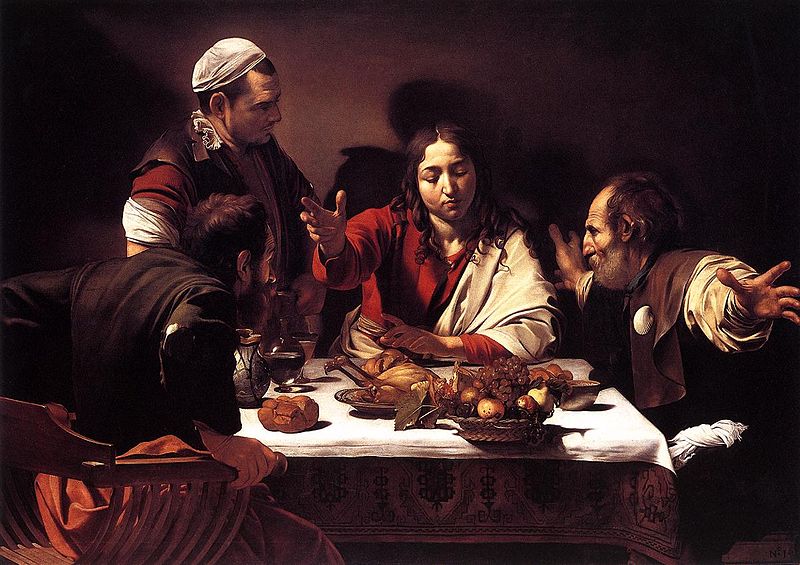
A few thoughts on this question: given the many contemporaneous accounts of other religious figures rising from the dead (indeed several in Caravaggio.emmaus.750pixthe Bible itself), and given that all Christians are supposed to rise bodily from the dead as well, why is Jesus so special? Why is he “consubstantial with the Father” in ways other resurrected beings are not?

The obvious answer to this is that the early Christians obviously believed that he was uniquely divine in some form. Ehrman makes a good case that Jesus was viewed as special by his disciples in his lifetime because they deemed him to be the Jewish Messiah who would reign supreme at the end of the world. The specialness of his being the Jewish Messiah was then combined with the staggering revelation that he had risen from the dead. It was that combination – a resurrected Messiah – that upped the ante, setting the seeds for the gradual evolution of the doctrine of the Incarnation and the Trinity. The story of Apollonius, otherwise very close to the story of Jesus, lacked the Messiah prophesy. And it also lacked the retroactive examination of the Hebrew Bible for various prophesies to be fulfilled in Jesus.

Moreover, as Ehrman notes, although there were countless semi-divine characters and resurrected prophets in the early Christian era, even though the human-divine admixture included angels and strange gods and the off-spring of unnatural sex between gods and humans, only lazarustwo people were ever designated the “Son Of God.” One was the Roman Emperor, Caesar Augustus, and the other was Jesus, a rural apocalyptic preacher from Galilee. That is some elevated company to keep and it begs the question: why Jesus and no one else? What was so special about him?

What’s frustratingly lacking in Ehrman’s book – and it’s not its subject so it’s not Ehrman’s fault – are the teachings of Jesus and the way he lived. I don’t think you can understanding the full impact of the resurrection outside the disciples’ experience of the living Jesus, with his teachings and his healings and his miracles. For me, these remarkable stories are the missing tissue here. It is one thing for a prophet to be put to a gruesome death; it is another thing when that prophet lived and taught in such a way that he seemed to revolutionize human consciousness and then was put to death.

Jesus inverted so much of the world’s familiar lessons: don’t protect yourself in a dangerous world, make yourself vulnerable; don’t seek revenge on those who have wronged you, give them another chance to wrong you; don’t just love your friends, but love your enemies; don’t live abstemiously, give everything you have away to the poor; don’t worry about tomorrow, today will be taken care of; by all means obey the rules but never if they violate the deeper rule of love. Above all: love one another. These stories and sayings and teachings carry huge impact jesus_2.jpgtoday, even though we have lived with them for centuries. But I try to imagine myself as one of the disciples, busily fishing in the Sea of Galilee, and not only being astounded by these ideas, but dropping my life and abandoning my family altogether and following him because of the power of his ideas and example.

Then, in a sudden development, this radically non-violent individual is seized under false pretenses and brutally tortured to death. And again, even here, it is not so much his death that resonates as the manner of his death. He refused to defend himself; he embraced the ridicule; he forgave the men driving nails into his wrists; he reached out in love to one of the poor souls hanging next to him; and he despaired. This happens after most of his loved ones either denied ever knowing him or fled. Only the women who loved him and the disciple Jesus loved stayed behind.

Now put yourself in the place of those bewildered, terrified, disloyal former followers.

In this miasma of fear, guilt, grief and disorientation, they suddenly see Jesus alive and walking around in various visions and mysterious manifestations. There you have the whiplash of the resurrection, and the obvious desire of the disciples to believe that all of it must mean something more profound than merely that Jesus was  a man of God who was unjustly put to death. He was more than that to them – and the resurrection made that indelible. And I find it perfectly reasonable to see why the disciples began to tell and re-tell the stories of Jesus life as a way to keep him alive in their hearts and minds and to buttress and deepen the meaning of this revelation. I find it perfectly human to re-enact his last supper with them as a way to keep his memory and his presence in their lives.

hatchescross.jpgIn other words, Occam’s razor needs to take into account the life-changing ideas and the soul-changing way of life Jesus of Nazareth gave the world. When I say a deeper perfection lies behind the fallible game of telephone that the Gospels are, I mean simply this. The words that Jefferson excavated, the stories that Tolstoy marveled at, the way of life that Francis of Assisi embraced, all of this and so much more come from this man’s words and life. There is always something astounding when the victims of violence refuse to fight back and seek to love instead. It defuses all of our evolutionary impulses. It negates what was previously thought of as human. It instantly makes one think of something divine.

There are many ways of understanding this, and Christians, as Ehrman shows, came up with countless permutations on the notion of God-Made-Flesh within the Trinity. None of it makes any worldly sense, the Trinity especially. It makes sense only as paradox and mystery, not as literal truth. And so I do not have a firm belief in the bodily resurrection of Jesus, because the Gospels don’t either. He is a vision, an angel, a man who walks through doors only to reveal himself in the flesh … and then he withdraws again from view. There is no single, literal account in the Jesus stories of his resurrection, which is one reason I prefer to leave its precise contours a little opaque. Ehrman suggests the conviction that Jesus had risen from the dead might be an instance of a very common form of vision of recently dead loved ones – which was not unique to the disciples but witnessed countless times across the globe then and now. And I sure keep that option open.

But because it is a mystery, I do not discount the possibility of a literal resurrection either. What matters to me is the life-changing message of Jesus, potent and rendered in unforgettable metaphor and parable, lived by him to the astonishment of all who encountered him, and speaking of a form of justice, of life and of love that we rightly associate with some power beyond us – because so much in our evolutionary make-up screams against it and yet somewhere within us we recognize it is the only transcendence we are capable of. In that sense, Jesus was the intersection of timeless truth with time. And nothing could be more miraculous in the long and brutal history of humankind than that.

(The entire discussion for How Jesus Became God is compiled here. Please email any responses to bookclub@andrewsullivan.com rather than the main account, and please keep them under 500 words.

Photos: the road to Emmaus by Caravaggio; the Epstein statue of Lazarus in New College, Oxford; my own personal Jesus; and a cross at Hatches Harbor at the end of Cape Cod.)

A Global Tax On The Super Rich? Ctd

As the econobloggers dig into Piketty’s Capital in the 21st Century, Felix Salmon notices a consensus emerging:

The many reviews of Piketty’s book are surprisingly unanimous on one point: that the weakest part of the book is the final part, where Piketty moves away from diagnosis and starts attempting to formulate a solution. Piketty’s rather French idea of a global wealth tax isn’t getting nearly the same amount of acclaim as the rest of the book is, and is very unlikely to happen: countries will always compete with each other to attract the stateless rich by not taxing them.

Which means that my reading of Piketty is ultimately pessimistic. The dynamics of the world economy are bad, and they’re getting worse; inequality is natural in human history, and right now we’re reverting to a state of affairs which is highly unfair but also both sustainable and, in its own way, unsurprising. Piketty has diagnosed a nasty condition. But I don’t think there’s a cure.

Ryan Avent’s take on Part 4 exemplifies that consensus:

The economics gets a serious treatment in this book, but the politics does not. That’s somewhat ironic; Mr Piketty winds down his conclusion by saying that economics should focus less on its aspirations to be a science and return to its roots, to political economy. But theories of political economy should be theories of politics. And there is no r>g for politics in this book.

There are nods at the importance of the interdependence between the political and economic. He notes that epoch-ending political shifts, like the French and American revolutions, were motivated in large part by fiscal questions. Similarly, he observes that progressive income taxation tended to emerge alongside the development of democracy and the expansion of the franchise. (Though, he also admits, the fiscal demands of world war one deserve most credit for adoption of meaningful income taxation across the rich world.) And he discusses how concern about rising inequality (often among elites) helped motivate rising tax rates in America in the early 20th century.

But the ending the book deserved was another look back at the data, to see whether patterns in the interaction between wealth concentration and political shifts could be detected and described. That’s not Mr Piketty’s area of expertise, necessarily, but neither is most of the stuff in Part 4.

Tyler Cowen points to a review by Ryan Decker that also criticizes Piketty’s conclusion:

Piketty’s data on the rise of middle-class capital ownership raise an important point. A key theme of the book is that poor people don’t own productive assets, so they must rely entirely on labor for income. But is taxation and redistribution the only way to address this situation? This poses a difficult question for those who oppose some form of privatization of government retirement programs. One cannot simultaneously claim that owners of capital stand to gain absurd riches in coming decades and that privatization and choice for Social Security is a terrible idea.* This is not the only possible alternative to taxation, but it is a reminder that one way to treat the problem of poor people not owning stuff may be to help poor people, well, own more stuff. But Piketty simply asserts that “only a progressive tax on capital can effectively impede” increasing wealth concentration (439). More generally, Piketty decries the ability of those with large fortunes to access opportunities for higher rates of capital return than those with smaller starting funds, but he makes no mention of the fact that this is due in part to laws banning small investors from participating in alternative investments. By law, if I want to invest in a startup, I can only do it in undiversified ways (like starting my own firm or investing in a friend’s). We don’t need higher taxes to help lower classes invest better.

Though he praises Piketty’s history of inequality and wealth, Greg Mankiw takes issue with his predictions and prescribed solution:

As we all know, you can’t get “ought” from “is.” Like President Obama and others on the left, Piketty wants to spread the wealth around. Another philosophical viewpoint is that it is the government’s job to enforce rules such as contracts and property rights and promote opportunity rather than to achieve a particular distribution of economic outcomes. No amount of economic history will tell you that John Rawls (and Thomas Piketty) offers a better political philosophy than Robert Nozick (and Milton Friedman).

The bottom line: You can appreciate his economic history without buying into his forecast.  And even if you are convinced by his forecast, you don’t have to buy into his normative conclusions.

Douthat, on the other hand, credits the Frenchman with helpfully complicating our national conversation about inequality:

Piketty’s book, as my colleague David Brooks suggests today, has ended up folded into that “we are the 99 percent” framework by some of its interpreters. But I’m not sure it completely belongs there. Indeed, insofar as he focuses on capital more than income, raises the issue of the petits rentiers and their increasing patrimonies, and  … explicitly talks about the 10 or 12 or 15 percent and not just the 1 percent, I think Piketty implicitly challenges that framework, and in the process raises much harder questions for his professional-class liberal readers … because he’s saying, in effect, that they too are the problem, they too are part of the anti-egalitarian trend, in ways that the comforting “we are the 99 percent” narrative doesn’t capture or admit.

Catch up on the Dish’s coverage of Capital here, here, here, and here.

Maduro’s Political Theater

José Cárdenas calls the peace talks that began in Venezuela late last week a “scam” and warns the US not to fall for it:

What observers need to be aware of is that the opposition representatives arrayed around the negotiating table and those protesting in the streets are not one and the same. As I have written before, the protests began as spontaneous, organic eruptions of student discontent over street crime and economic hardship under chavismo. They were neither called for nor led by the organized opposition forces. As such, the latter does not have the power to turn them on or off depending on which crumbs the government decides to dole out.

All of this means that negotiations will not end Venezuela’s crisis — only real reforms will. Effective reforms would arrest the economic freefall wrought by the hare-brained statist policies of Maduro and his Cuban advisors, and re-establish credible institutions to channel discontent and foster real debate about the future of the country. The problem with that scenario is that to Maduro, all opposition is illegitimate and deserves no voice in the country’s affairs.

Javier Corrales analyzes the class politics of Venezuela’s crisis, disputing the government’s claim that the protesters are too bourgeois to represent the general population:

The claim that the protesters are “too middle class” implies a double criticism. The first is about values: The protesters are imputed to be embracing values that are somewhat elitist, or at least, unpopular among the bulk of Venezuelans, the so-called popular classes. The second is about politics: The protesters have failed to expand their political coalition. They remain circumscribed to a mere quarter of the population.

These criticisms deserve closer scrutiny. Venezuela has been classified as an “upper middle-income” country for decades. Furthermore, the government claims that the country has seen an expansion in the size of the middle class since 2004. In that case, observing that the protests are too middle class seems unworthy of note: What else would one expect from such a country? If there were going to be discontent, especially about governance issues, it would come from the middle classes.

Previous Dish on the Venezuelan crisis here and here.

The Soaring Suicide In South Korea, Ctd

A reader is put off by this post:

I’m staggered that you used the South Korean ferry tragedy as an excuse to run an unhinged rant by an entitled Westerner about the alleged lack of professionalism in “Korean business culture at large”. The Asiana crash was possibly human error – so were plenty of crashes in the West. Korean firms cut corners? General Motors is currently in the news for ignoring a critical problem for years while people were dying. Didn’t your reader wonder for a moment how such an unprofessional bunch of losers, in a country smaller than many American states, managed to build companies like Samsung, LG, Hyundai, Kia, Lotte, that are household names the world over?

The supposed “entitled Westerner” clarified where he’s coming from:

I am Korean-American-British. My family immigrated before I was born from Korea to the US. I spent most of my 20s in the UK where I got naturalized, and then moved to Seoul a year ago. Over the past year I’ve been cataloging a variety of facets of Korean culture that are in need of reform, the biggest areas being sex, business, and education. One thing I’ll give to Koreans is they are very good at introspection when they are put under the spotlight. The chapter on Korean Air in Malcolm Gladwell’s Outliers caused a big stir, but now one of the biggest hagwons (after-school academy) uses it as a source text.

By the way, I should clarify that the comparison to 9/11 is not something I’ve heard on the Korean press; it’s a purely personal observation based on:

  • the level of media saturation
  • anguish due to the man-made nature of incident
  • innocence of victims (high school kids going on vacation!)
  • high numbers of missing, presumed dead but not confirmed
  • logistical difficulty of the rescue effort
  • numbers relative to population (about 300 out of 50 million)

Also, I was half a mile from Ground Zero on 9/11, so it jumps more readily to my mind.

Another reader:

I wanted to give you a slightly different take on what is happening in S. Korea at the moment.

I’ve been teaching English here for the past three years, and I’ve had my share of ups and downs with the people and the culture. Sure, they work too hard, and it’s from start to finish. The kids have homework on every single vacation, which kind of misses the point of vacation, and by the time they hit middle school most of them go to school and academies from 8 in the morning to 8 or 9 at night.

Once they become adults, as your other reader said, face-time is what counts. It’s quite normal to work 6 days a week here for 10 hours a day, no matter your position. Most people are lucky to get one full week of vacation, and good luck with sick days.

Still, one must marvel at what they’ve accomplished here in such a short time. Since the opening up of the economy in the ’60s and ’70s, Korea has served as a model for what is possible. The technological capacity on display here would put most of America to shame. Honestly, you can’t blame them for how hard they work either. My bosses saw their world destroyed during the Korean War. To go from being a citizen of a war-torn, underdeveloped nation to a citizen of modern-day Korea, well one could understand why Koreans value a good work ethic.

That said, they are reeling as a country right now. It’s ironic when you think about it. This is a country that has been at war for roughly 60 years. They have an unpredictable, nuclear-obsessed neighbor to the north that likes to remind them of their situation from time to time. I was here when N. Korea bombed the western island of Yeonpyeong in 2010. It was both tragic and important, but this is so much bigger. Let’s put it this way: think about the firestorm of media coverage that happens every time N. Korea does something provocative compared to the coverage of the sinking of the ferry, and reverse it. That’s what the coverage is like here.

After living here for a few years, I feel as though I can understand why it’s that way too. Children are everything here (I know they are everywhere, but hear me out). When you look at the amount of money parents spend on their children in S. Korea as a percentage of their overall income, it’s staggering. So much is put into providing children with every possible advantage. It’s super competitive and failure isn’t viewed as an option. In turn, the children (specifically first-born sons) are expected to return the favor once parents are ejected from the work force. Children are very sheltered to the dangers of the outside world. It’s extremely safe here (even with N. Korea lurking), and when that illusion of safety gets shattered by an event such as this, it can be very difficult to deal with the feelings afterwards.

Event after event has been and is being cancelled (festivals, races, trips). I was talking to some middle-schoolers today as a matter of fact, and they said all of their school trips for the rest of the year (the school year just started in March) are cancelled. Not only is everything currently being cancelled, but there is the issue of suicide. It isn’t surprising at all to me that the assistant principal killed himself, and don’t be surprised if any of the surviving crew members, especially the captain, do so as well. For Koreans, this is taking responsibility (in fact, this is what the principal said in his note).

As an outsider with a Western point of view, it’s very sad to watch everything unfold. The idea that suicide is a way out is so difficult to grasp. How is killing yourself taking responsibility for the deaths of so many students? Be there for the families and the rest of your students. Help people get through this tragedy. Don’t take the easy way out and leave the survivors to deal on their own. Now is when you should be coming together. Stop canceling events. Do them in memory of those lost. Dedicate everything you do to those people who lost their lives. You are still here, so embrace it.

Another:

Sorry I’m late to this conversation, but I live in South Korea, so I get your posts late. I was a journalist here, and now I’m a lawyer here. I speak Korean fluently. I went to college here. I like to think I know Korea pretty well, and the stuff your readers have submitted strikes me as totally wrong.

Yes, there is a problem with Korean culture that is absolutely behind the rash of accidents and poor responses that plagues Korea, and it’s not Confucianism or bad business practices. It’s a complete lack of safety. This is something so deeply ingrained in Korea that it permeates the culture. I doubt Koreans themselves are aware of how incredibly reckless they are compared to people elsewhere.

People in Korea do not look where they are going when walking. If they bump into someone, they keep walking without saying a word. When they drive, it is a mad rush to get in front of everyone, to the point that newcomers are advised to run red lights just to avoid being rammed. Builders cut corners; investors leap before looking; the South’s generals go golfing when the North threatens apocalypse Everything here is done “bbali bbali,” meaning “fast fast,” which they are very proud of. It is easy to see how that runs the gamut from not looking where you’re going to cutting corners in order to get that ferry to port, ASAP.

For that reason, I chuckled when I saw your reader describe Korea as “safe.” The fact that there is very little visible violent crime does not make Korea “safe.” It is, in fact, very dangerous if you drive, live in or near tall buildings, fly airplanes, take ferries, invest your money, or come within artillery range of the DMZ.

As I was pondering this coming back from the morning workout, I almost creamed a man with my car. I was driving down a narrow curving ramp into my building’s parking lot. He was walking up the middle of it, because … hey, it’s a short-cut.