Putting Mental Illness In A Black Box

Esther Breger criticizes ABC’s new medical drama “Black Box,” about a neuroscientist with bipolar disorder, for perpetuating the trend of treating TV heroes’ mental illnesses as superpowers:

Catherine, the medical director of a fancy neurological center known as the Cube, is apparently amazing at her job, and “Black Box” doesn’t hesitate to draw a connection between her genius and her illness: “Catherine has an insight into her patients that no one else has, allowing her to communicate with them on a different level,” according to ABC’s press notes. She’s fabulously empathetic and intuitive, somehow able to see what all the other doctors miss (though her cases should be familiar to anyone who reads Oliver Sacks’s essays). That’s because, the show keeps reminding us, mental illness goes along with greatness. …

The show’s particular absurdities are all its own, but “Black Box” is part of a long line of fictions that treat psychological disorders as a professional asset.

On TNT’s “Perception,” which will soon air a third season, Eric McCormack plays a schizophrenic neuroscience professor who moonlights as an FBI consultant, solving murders with the help of witnesses he hallucinates. “Mind Games,” which lasted five episodes this spring before getting the axe, starred Steve Zahn as a bipolar genius who used to teach psychology and now runs a “problem-solving” business. Benedict Cumberbatch’s Sherlock Holmes coolly calls himself a “high-functioning sociopath,” but Sherlock fans have been offering competing psychological profiles for Arthur Conan Doyle’s character for decades. “Homeland,” at its best, complicated this dynamic, but Claire Danes’s Carrie Mathison was still gifted with a perception that her saner C.I.A. colleagues lacked. She was a superhero, until she was a lovesick lackey.

Because it’s so painfully clumsy and thoughtlessly constructed, “Black Box” distills what’s unsettling in the rest of these shows into something wholly unpleasant.

Alan Sepinwall also pans the show:

Describing the show makes it sound like the sort of thing Jack Donaghy might have scheduled on the “30 Rock” version of NBC: Kelly Reilly plays Catherine Black, a brilliant neurologist who’s known as “the Marco Polo of the brain,” and who has somehow kept secret from all her friends, colleagues, and even her long-term boyfriend Will (David Ajala) that she is bipolar, and subject to abrupt, extreme mood swings from manic to depressive. Her name is Black, she tells us that people in her field call the brain a black box, and she is an expert at curing everyone’s neurological difficulties except her own! And she frequently refuses to take her medication because she fears becoming dull or, worse, “normal,” which leads her to sleep around, perch on hotel balcony railings while drunk and frequently dance to free-form jazz compositions that only she can hear.

In other words, it’s combining what’s become the most annoying aspect of “Homeland” with the most formulaic parts of “House”(*) with that tired old saw that Fienberg has dubbed the Vocational Irony Narrative.

Capital For Conservatives

Gobry argues that conservatives ought to agree with Piketty’s proposal to shift the tax burden from income to wealth:

To be a conservative is to want a vibrant, innovative economy. All else equal, presumably, in order to have such an innovative economy, you want to have risk-taking and risk-bearing capital. The problem with the global economy isn’t, per se, that the rich have a lot of money. It’s that the rich have a lot of money and, instead of investing it in rocket ships to the moon and dotcom ventures, almost all of them are instead investing it in government bonds and ultra-safe corporate bonds. With inflation at zero and no wealth tax, investing at 2% for no risk is very attractive. If there is inflation and/or a wealth tax, suddenly you have to seek it out bigger investments.

Looked at it very broadly, the conservative “diagnosis” would say something like this: for the broad middle class, what we usually think of as the components of “the good life”, i.e. housing, a job, affordable healthcare, higher education, and so on, are growing increasingly expensive–and in large part this is because of bad government regulation. This is also true of access to capital. As Piketty says, all else equal, we want to increase wealth mobility and access to capital.

Noting that Americans see Piketty as more left-wing than he sees himself, Yglesias points out that he actually wants to cut most Americans’ taxes:

Piketty’s big point about the United States is that we actually do engage in substantial wealth taxation in this country. We call it property taxes, and they’re primarily paid to state and local governments.

Total receipts amount to about 3 percent of national income. The burden of the tax falls largely on middle-class families, for whom a home is likely to be far and away the most valuable asset that they own. Rich people, of course, own expensive houses (sometimes two or three of them) but also accumulate considerable wealth in the stock market and elsewhere where, unlike homeowners’ equity, it can evade taxation.

Piketty also observes that the current property tax system is curiously innocent of the significance of debt. A homeowner is taxed on the face-value of his house, whether he owns it outright or owes more to the bank than the house is worth. “If you own a house worth $500,000 but you have a mortgage of $490,000 then your net wealth is $10,000,” he explains. “So in my system you would owe no tax.”

But Scott Sumner thinks we should measure inequality not by income or wealth, but rather by consumption:

[T]here are plenty of billionaires who splurge on things like 500-foot yachts. Now we are getting somewhere! The labor and materials that went into constructing that yacht could have produced 10,000 cars for average people. That sort of inequality is real. That’s what we (should) mean by “economic inequality.” That’s the way all of us economists were taught, but 99% of us seem to have forgotten what we learned about consumption. Consumption is what you should tax. Of course when we tried to do that a bunch of Democratic politicians who have apparently never heard of Bastiat said the luxury tax was a bad idea because it cost jobs in the yacht making industry. (I’m not joking.) Nor are they willing to cut back on intellectual property protections for companies like Disney.

Capital in the Twenty-First Century is available here.

Book Club: Did Jesus Know He Was God?

Thousands Meet For  2nd Ecumenical Kirchentag

Readers get the conversation started:

I find Ehrman too reductive in his search for what’s true. The same lens of critique that he applies to the literalist – that a certain passage is contradicted, or impossibly out of context – can also be applied to his own conclusions.

For instance: So Jesus is not quoted as explicitly stating that he is God. Does that mean that he himself didn’t believe it? We know that the gospels can’t be trusted as a source of word-for-word quotation – that’s a central part of the author’s set-up. That means finding a lack of such clear self-proclamation doesn’t mean that in Jesus’s own mind, or in his private conversations, he didn’t expressly believe in his own divinity. Perhaps there are rhetorical reasons for why the authors of the gospels withhold such an explicit declaration? Perhaps it’s more powerful and compelling for how it is revealed?

Similarly, we’re left with a problematic assertion if we see Jesus primarily as how-jesus-became-godan apocalyptic preacher: He was wrong, unless you interpret his “prophesy” as being epochal in time span rather than immediate (in the mind of God a generation could last thousands of years, one supposes). But isn’t it equally possible that this clear assertion of his apocalyptic preaching are also examples of rhetorical flourish on the part of the writers – to convince people through fear to change their fundamental belief system?

In the end, what do we know? I think you should consider staying clear of words like “truth,” and instead position the gospels and religion as sources of “meaning.”

These are two sharp points. I’d summarize them this way: The very limits of what these texts can tell us about what actually happened not only leaves the possibility that Jesus had no idea he was God, but for that very reason also leaves the possibility that he did. Both are in the texts. And when you zoom out a little, the very limits of our understanding of this man – filtered through the game of telephone of repeated oral memories – leave a span of possibilities open. The Gospels themselves offer us a variety of contradictory interpretations and factual accounts of many aspects of Jesus’ life and teaching. Maybe instead of trying to make them all make sense, we should let go a little, and accept that we will never fully know and never fully understand. Jesus, to borrow a phrase, is a known unknown and also an unknown unknown. And the very fallibility of the texts make this an unavoidable conclusion.

The Incarnation itself is, of course, utterly baffling. Ehrman shows this by charting an exhaustive survey of how early Christians tried and kept failing to understand it. A human who was exalted to divine status at his death? At his baptism? At his birth? Before his birth? From the beginning of time? You can watch the Christian imagination expand as the years go by when grappling with the ineffable concept of a person both fully human and fully divine. And at every resting point, the idea eludes any rational understanding.

To wit: If Jesus were divine, he would know everything, including his future resurrection, right?

And yet he is clearly racked with fear and agony and doubt throughout the Gospels – sometimes because, we infer, he knows what is about to happen (as in the Garden of Gethsemane), but sometimes also because he appears not to know what is about to happen (did he let Lazarus die by mistake or by design?). How, for that matter, could an omniscient God cry on the cross at his hour of death: “My God, my God, why have you forsaken me?” The narrative of Jesus makes no sense if he is merely a divine omniscience inhabiting a human shell. And it makes even less sense if he is a fallible human being completely bewildered by what is happening to him.

book-club-cartoonSo for me, over the years, as I have thought and prayed and simply wondered about this, I’ve come simply to the conclusion that it makes sense only to God, to a consciousness far greater than a human one, and that if we are to believe, we have to believe in this doctrine as essentially a mystery. I know agnostic and atheist readers will find this a cop-out, and it is, rationally speaking. All I can say is that my own experience of Jesus as a living God in my own life forces me to this unsatisfactory position. I cannot rationally reconcile the divine and the human as single concept. But my faith, my personal experience of Jesus, forces me to accept it.

But if I cannot rationally accept it, what do I mean by accept? I mean an embrace of wonderment at what the force behind all things can be beyond any human understanding. And I mean the sacrament of the Mass which, far from attempting to explain Jesus’ divinity in human form, merely claims to demonstrate it in ritual. I mean the sacrament of nature, where what is absolutely subject to rational understanding, from the viewpoint of science, nonetheless escapes those parameters when one simply regards it with awe. I mean an afternoon in early autumn at the end of Cape Cod, where light and water congregate and commune in something I can only call transcendent. We live in a universe both material and wondrous – and neither denies the other. That is how I have come to accept the incarnation as mystery and as necessity – both in Jesus and in the world.

(Please email any responses to bookclub@andrewsullivan.com rather than the main account. Unfiltered thoughts from readers on Facebook here.)

(Photo: The monumental main cross, symbolizing the Christian faith, is silhouetted in a puddle at the Theresienwiese during dusk of day 1 of the 2nd Ecumenical Church Day in Munich, Germany on May 12, 2010. By Johannes Simon/Getty Images. The original post contained the rather English term “Chinese whispers”, which confused many readers, so I’ve change that phrase to “game of telephone” which is the American equivalent. )

The Roots Of Resegregation

Razib Khan asks why discussions of resegregation focus on the South:

The South has a particular history with race, and that is an important history. But the continuous focus on this region of the country is I think driven in part by the reality that the cultural elites, often white progressives, are not keen on shining a light on the segregation which they themselves have passively accepted in their own lives.

In fact the worst segregation of blacks and whites is in major urban areas of the Great Lakes. According to the Census the most segregated cities are Detroit, Milwaukie, New York, Newark, and Chicago. But for some reason there are fewer exposes on how upper middle class, usually white, couples in major “Blue America” urban areas flee racially diverse public schools for the suburbs or private schools. The reasons for these actions are defensible in my opinion, but one should probably admit that these are likely the major causes of resegregation in the South as well.

To further his argument, Khan cites Reihan Salam’s recent piece on interracial dating. Reihan argues that intermarriage is an important social good:

There are good reasons to question the moral appropriateness of strong same-race preferences and their close cousin, in-group favoritism.

In The American Non-Dilemma, Nancy DiTomaso argues that persistent racial inequality in the United States is not solely or even primarily a reflection of racism and discrimination. Rather, it reflects the fact that whites tend to help other whites without ever discriminating against or behaving cruelly toward blacks and other nonwhites. As long as whites tend to dominate prestigious occupations, and as long as they control access to valuable social resources like access to good schools, the fact that whites, like all people, will do more to help family, friends, and acquaintances than strangers will tend to entrench racial inequality, provided that white people choose to associate primarily with other whites. DiTomaso observes that while Americans place very high value on the idea of equal opportunity, virtually all of us seek “unequal opportunity” in our own lives by leveraging our intimate relationships to achieve our goals, including our professional goals. Yet most of us don’t see the help of family and friends as an unfair leg up. This kind of “opportunity hoarding” is accepted as par for the course.

We could make an effort to eliminate in-group favoritism, but such an effort would inevitably fail, as in-group favoritism is a powerful human impulse. A more sensible course of action would be to do our part to expand the boundaries of the in-group.

Khan adds:

What if in fact most racial inequality is a function of social-cultural racism, rather than institutional racism?

Recent Dish on resegregation here and here.

Go, Go, Fight, Fight, Pay Us A Living Wage, Alright?

Emily Shire lists the grievances of the former Buffalo Bills cheerleaders who are suing the franchise for minimum wage violations and a host of other indignities:

[T]he alleged exploitation was more than just unpaid labor. The Buffalo Jills allege that Stejon [Productions Corp]  and Citadel [Communications Co.] essentially ran a racket, forcing the women to buy calendars and other Bills-related items out of pocket and then sell them on their own time. They even imposed damages if they failed to sell their quotas, according to the suit. Each woman was required to buy 50 to 75 Buffalo Jills swimsuit calendars at $10 each and sell them. If she did not sell them, she was left in the red and “subject to further penalties at the discretion of defendants.” The same went for Jills golf tournament tickets and gift baskets, which could cost each woman $590. Other out-of-pocket expenses included travel and hotel accommodations for the events they had to attend and $650 in uniform costs, the suit says.

That’s not all. From exposure to sexual harassment to menstrual hygiene instructions, the alleged physical appearance rules paint a deeply disturbing picture of archaic, invasive, and manipulative requirements. According to the lawsuit, the Buffalo Jills were given a list of 17 rules governing “general hygiene and body maintenance.” They included “how to properly wash ’intimate areas’ and how often to change tampons.”

Noting that the Jills’ lawsuit comes on the heels of similar actions by the Oakland Raiderettes and Cincinnati Ben-Gals, Amanda Hess asks why these women’s poor pay and exploitation are only just now coming into the spotlight:

Professional cheerleaders have always presented a dilemma for the traditional feminist movement. On the one hand, feminism is committed to fighting for fair pay for women in all areas where they are discriminated against because of their gender. On the other hand, this particular kind of labor—one where women, not men, are enlisted to jiggle their assets at the local golf tournament—suggests another kind of gendered exploitation, and one that’s hard for some feminists to rush to defend. (Headlines about the recent spate of cheerleader lawsuits may focus on the scandalous details, but looking sexy for men is a feature of the job, not a bug.) Lately, it seems the feminist movement has caught up to the cause; it’s no longer particularly controversial to stand up for the legal rights of the women who perform work that nevertheless fails to reflect the ideal, gender-equitable society.

Back in January, Billy Haisley also covered the mistreatment of cheerleaders. He spoke with a former Ravens cheerleader:

For cheerleaders, the real money comes from appearances. It’s still not all that great. If the appearance is for charity, the team will charge $175 per cheerleader per hour; otherwise, it’s $300 per hour. Of that money, our tipster explains, each cheerleader takes home around $50 an hour. Sounds good, but in an average season, a cheerleader will make only 30 or so appearances, and many of those don’t pay at all. For certain charity events, like those set up in the NFL’s or the team’s own name, cheerleaders are expected to attend without compensation, and rules require them to attend charity events at least twice monthly, depending on availability.

Terrorism Works

After investigating the role of terrorism in civil wars in Africa, Jakana Thomas comes away with the sobering conclusion that it’s often a successful tactic:

The popular adage that governments “do not negotiate with terrorists” appears to be untrue, at least in civil war. In a new study published in the American Journal of Political Science, I find that governments embroiled in domestic conflicts in Africa between 1989 and 2010 are more likely to hold negotiations with rebel groups when they engage in more acts of terrorism. Rebels are also likely to gain more concessions from their governments when they execute more terror attacks. …

Instead of asking whether terrorism is effective, we should be concentrating on when and for what purpose is terrorism effective, especially since the empirical record shows that terrorism has both hurt and helped the causes of violent organizations that have employed the tactic. Very little extant research, however, helps us understand this variation.

Reed Wood, co-author of a similar study, makes related points:

Attacks on civilians, we argue, hurt the state more than the rebels — even where the rebels are the ones committing most of the violence. In part, this occurs because maintaining order is central to the state’s victory whereas disorder, instability, and the erosion of state control directly benefit insurgents. When insurgents rely on civilian victimization, they impose significant costs on the state and send credible signals about their willingness to continue fighting a long, costly, and brutal war. The effect is that governments are increasingly likely to make concessions to violent groups, thus permitting the group to attain some of its political goals.

The $84,000 Cure, Ctd

A reader writes:

Hopefully numbers like the price of the hep-C drug will remind us that when it comes to pharmaceuticals, the US is basically subsidizing the rest of the world (and I’m talking to you, countries with nationalized healthcare that negotiate much lower prices than the US).  This is just foreign aid, in another guise, whether it goes to Sweden, France or Egypt.  When we hear about the “efficiencies” and prices of other healthcare systems, let’s remember that part of the reason is coming right out of our pockets.

Another elaborates:

American citizens bear the costs (taxes, military, rule of law, patent system, education of scientists, etc.) of supporting the environment which makes possible the innovation these drug companies achieve.  Then our reward for our collective largesse is that we as consumers get to pay more, by an order of magnitude, for the same drugs than consumers in other countries.  How is that fair?

Another adds:

For patients with a strain that is more difficult to treat, the regiment is 24 weeks. That comes in at $168,000.” Or $1,680 in Egypt – wouldn’t it be more cost effective for insurers to send US patients to “rehab” in Egypt?  That price difference is enough that building a residential clinic from scratch, and flying all of the patients first class to Cairo, is likely to be more cost effective than treating them here.  There is something economically perverse about that.

Update from a reader:

To the reader who suggested sending US patients to rehab in Egypt to take advantage of lower drug costs: It won’t work for the same reason we can’t all take advantage of lower costs of more run-of-the-mill drugs in Canada. It’s not as if Canada has a cornucopia drug supply. Canadian pharmacies buy the stuff from U.S. manufacturers. If the purchasing behavior of a large portion of the U.S. customer base migrated to another country, the drug companies would know, and they would adjust their pricing or their shipping policies.

Medical tourism can work for the individual when there is incentive for individuals to participate (ie, the cost is out of pocket. My daughter had excellent emergency dental work done while studying in Ghana, good enough and cheap enough that if I needed major work done on my mouth, I might consider a long vacation to Accra -because I don’t have dental insurance.) But it is problematic for an institution as large as an insurance company, and it certainly can’t work for a nation.

Book Club: Can Christianity Survive Modernity?

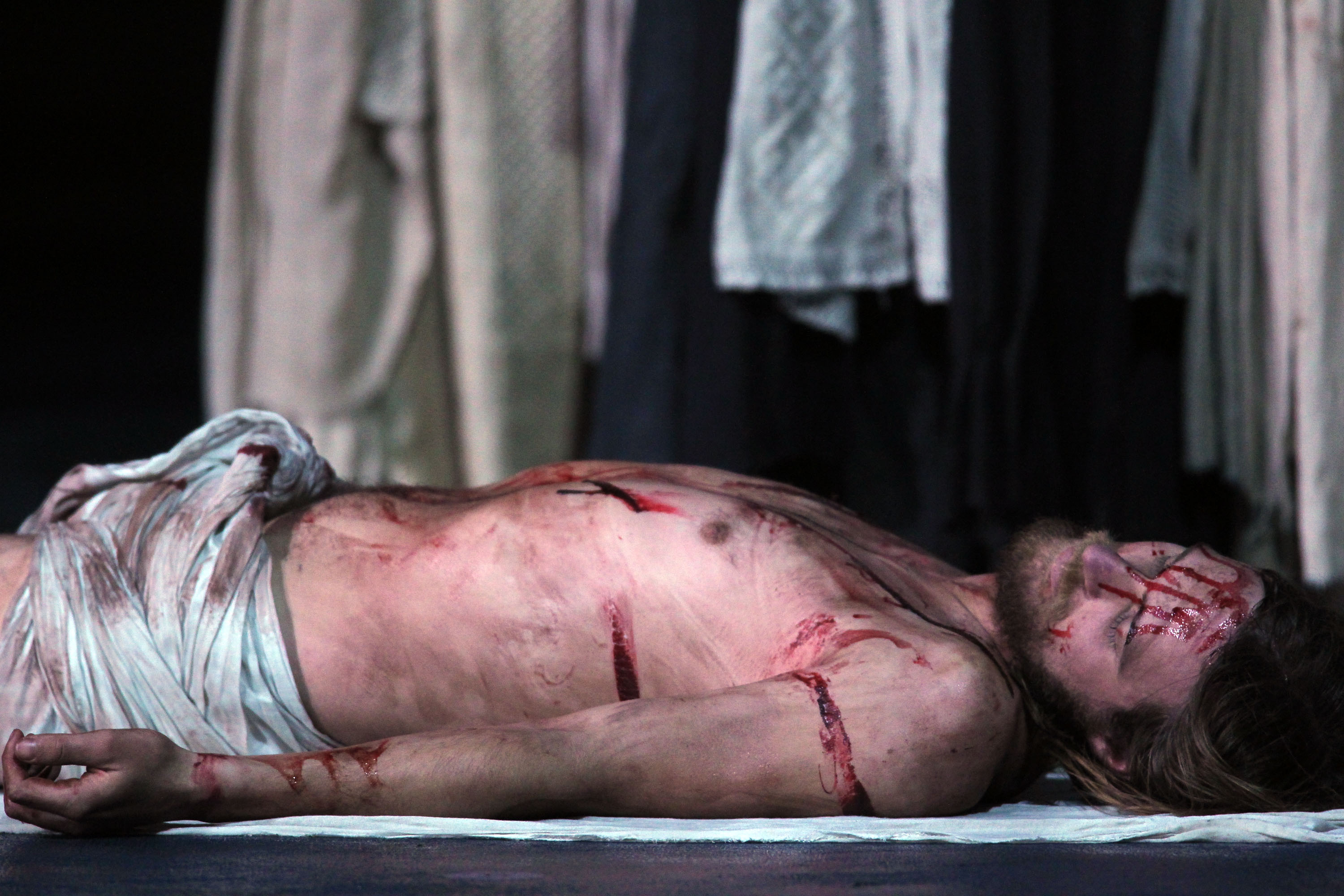
Oberammergau Passionplay 2010 Final Dress Rehearsal

[Re-posted from earlier today]

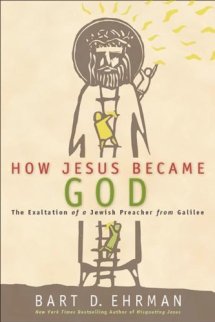
That may seem a rather strange way to kick off discussion of a book about the beliefs of Christians in the decades and first few centuries after the death of Jesus of Nazareth. But it’s the question that lingers in my head after reading Bart Ehrman’s How Jesus Became God: The Exaltation of A Jewish Preacher From Galilee.

What Ehrman does in this book – as he did most memorably in Misquoting Jesus – is explain how the texts that we have about the life, death and resurrection of Jesus came to be written. I am not qualified to judge the details of the scholarship – my knowledge of such matters is a tiny fraction of Ehrman’s. I know no Aramaic or Hebrew and very little Ancient Greek. Readers with more expertise may well, with any luck, deal with some of the specific controversies – such as the notion that Jesus probably wasn’t buried at all – as we go along.

But the book’s main claims about the origins and nature of the texts are not in any scholarly doubt. And bookclub-beagle-trthey challenge the traditional and reflexive mental universe that most Christians, and all fundamentalists, share. For many Christians in the modern world, there is an unchallenged notion of an inerrant text that contains what we have even come to call the “gospel truth.” It is entirely inspired by God. It has complete authority in Protestant circles and shared authority in Catholicism (along with church teaching and the sensus fidelium). It is the sole authorized account of the extraordinary story that changed the world.

And yet it isn’t the only account – we have many other extant Gospels that never made the cut. Those Gospels are not as compelling or as coherent or as influential – but they sure do exist. That very fact – established in the 20th Century – explodes any idea of “orthodoxy” among the first Christians. Like any human beings trying to grapple with grief and empowerment and fear and supernatural experiences, they did not understand them fully at first or ever. They disagreed among themselves about them. They had very different perspectives and interactions with Jesus. In the Gospels themselves, Jesus’ disciples are a mess half the time – misunderstanding him, betraying him, frustrating him, and abandoning him at critical moments throughout. Whatever else the Gospels teach us, they sure teach us not to trust Jesus’ followers for either truth or morality. Peter disowned him three times in his hour of greatest need. And most fled after his crucifixion.

And the Gospels offer radically different accounts of what Jesus did, said and meant. There is no single coherent account, for example, of Jesus’ last words in the cross, or of his first appearances after his death – critical moments that you might think would have been resolved as fact early on, but weren’t. If I were to come up with a phrase to describe what has been handed down to us in these texts, it would be a game of Chinese whispers.how-jesus-became-god
Does this rebut Christianity in a decisive way? For many orthodox Christians, wedded to the notion of a single, coherent and inerrant text, it must. But since the scholarship is pretty much indisputable, it seems to me that it is not Christianity that should be abandoned in the wake of these historical revelations, but a false understanding of what the Gospels and Letters actually are. In the end, the sole criterion of a religion is whether it is true. And if you’re misreading its core texts and failing to understand their origins and nuances, you’re not committed to the truth. You’re committed to a theology that has become more important than the truth.

And I’d argue that seeing them in this flawed and human way does not reduce their power. In fact, their very humanness, their messiness, their reflection of competing memories and rival understandings and evolving theologies make the Gospels a riveting tapestry of anecdotage and love and grief. I think that when you treat these texts that way, the figure of Jesus does not become more opaque. He becomes more alive in moving and marvelous detail through the distorted memories of those who loved him and through the stories that the generations that never saw or knew him in the flesh told each other about who he was. Is this human mess guided by the Holy Spirit? That’s obviously a question only Christians can answer.

My own view is that the sheer vibrancy, power, shock, detail and beauty of these stories – and their enduring resonance over the centuries – makes the presence of the Holy Spirit obvious. In fact, if we want to understand how God interacts with human beings, these Gospels show the way. Even through their obvious literal imperfections, a deeper perfection shines. Agnostic and atheist readers will of course disagree. But my point is simply that, for Christians, there is no need to be afraid of the truth about these texts. Because as Christians, there can never any need to fear the truth. In fact, fear of what such scholarship might reveal exposes a defensive crouch and a neurotic denialism that can only lead us away from Jesus rather than toward him.

The truths of this book that only the neurotic or defensive Christian will deny are the following:

Jesus was not the only first-century figure who was deemed to have a virgin birth, martyrdom and resurrection. In fact, these were quite common tropes in the Greek and Roman world at the time. Jesus was far from unique in being seen as part human and part divine in his time. The understanding of his divinity evolved over the years, as his followers argued among themselves and tried to make sense of the incarnational mystery that emerged from his first followers. Jesus himself was clearly an apocalyptic Jewish preacher who believed that the entire world was about to end, to usher in a new kingdom of heaven on earth. The Gospels are a mishmash of competing memories filtered through decades of repetition and translation and manual transcription. The followers of Jesus in his lifetime were primarily illiterate rural Galileans – far removed from the Greek and Roman sophisticates who later tried to make sense of them. All of this comes down to these peasants’ memories and the stories they told each 0ther and then the world.

We see, in other words, through a glass darkly when we look at these texts. But through that darkness, one palpable truth also emerges. It’s a truth that Ehrman once didn’t believe but now does. There is no question that the very first Christians only truly realized the full import of what they had seen and witnessed after it was too late. Their beloved teacher and friend was dead – and executed in a brutal, if conventional, way. But something happened to them after his death. They believed that they had seen him again alive! The revelation of the incarnation of God was a very early Christian conviction – not something that emerged much later, as was once thought. And in that astonishing vision of a Jesus fully alive after death, so much that had mystified his disciples in Jesus’ life and teachings suddenly became clear. This man truly was God. And his teachings and actions in retrospect suddenly took on a deeper and more cosmic and even more urgent meaning.

To kick off the Book Club discussion, I thought it would be helpful to grapple with the core question of these Biblical texts and how they can be integrated (or not) into orthodox Christian belief and practice. Does this book effectively debunk Christianity’s core claims in modernity … or does it point to a new way of understanding and believing them?

Email us your response to this email address: bookclub@andrewsullivan.com. Please keep them to a 500-word maximum, so we can better cope with the curating and editing. We can tackle more specific arguments and themes as the next week goes by.

(Photo: Frederik Mayet as Jesus Christ performs on stage during the Oberammergau passionplay 2010 final dress rehearsal on May 10, 2010 in Oberammergau, Germany. By Johannes Simon/Getty.)


The Obamacare Debate Is Not About Obamacare, Ctd

I echoed this point a few months ago. Garry Wills nails it:

I fear that the president declared a premature victory for the Affordable Care Act when he said that its initial goals were met, it was time to move on to other matters, and the idea of repealing it is no longer feasible. He made the mistake of thinking that facts matter when a cult is involved. Obamacare is now, for many, haloed with hate, to be fought against with all one’s life. Retaining certitude about its essential evil is a matter of self-respect, honor for one’s allies in the cause, and loathing for one’s opponents. It is a religious commitment.

The irrelevance of evidence in the face of sacred causes explains the dogged denial of global warming, the deep belief that the Obama Administration was responsible for the killing of Ambassador J. Christopher Stevens in Benghazi and that Obama is not a legitimate American. To go back farther, it explains the claims that FDR arranged for the attack on Pearl Harbor and gave much of the world away to Stalin at Yalta (an idea Joe Scarborough is still clinging to). Repealing Obamacare will eventually go the way of repealing the New Deal. But the opposition will never fade entirely away—and it may well be strong enough in this year’s elections to determine the outcome. It is something people are willing to sacrifice for and feel noble about. Creeds are not built up out of facts. They are what make people reject all evidence that guns are more the cause of crime than the cure for it. The best preservative for unreason is to make a religion of it.

A Pivotal Visit? Ctd

Jaime Fuller lays out the goals of Obama’s four-country Asia trip, which began yesterday in Japan:

For this trip, this renewed effort at pivoting will focus on two policies in particular — finishing up the Trans-Pacific Partnership, a 12-country free-trade agreement that has been in the works for five years, and an agreement with the Philippines giving U.S. ships and planes more access to bases there than they’ve had since 1992. In 1991, the country asked the United States to leave Clark Air Base and the Subic Bay naval facility. The military isn’t planning to establish a permanent base again; it is just instituting rotating deployments and stocking up supplies in case of a disaster — a plan similar to one recently instituted with Australia.

Obama will also be talking to Japan about plans to revamp its military. International decisions made at the end of World War II have left Japan with a small military, but the country’s new conservative prime minister, Shinzo Abe, has made revitalizing Japan’s defense and armed forces a priority. The United States likely sees Japan’s morphing role in the region — and growing tensions between Japan and China — as an important aspect of any changes to its role there. Obama’s trip to Tokyo in 2009 was the first presidential trip to Japan since 1996.

Fred Kaplan notes that the visit has been overshadowed by events in Ukraine:

This week’s trip was planned as a makeup session of sorts. Obama’s main goals were, first, to allay the allies’ concerns about America’s commitment to their security in the face of an expansive Chinese navy and, second, to complete a trade treaty, the Trans-Pacific Partnership, which has been central to Obama’s vision of a rebalanced foreign policy.

But, once again, life has gotten in the way.

The spotlight has turned, improbably, to Ukraine. Not only has Russian President Vladimir Putin’s land grab riveted everyone’s attention, it also threatens to upend the whole concept of the pivot, at least for a while. The concept, as Obama initially laid it out, rested on three premises: a desire to get out of the Middle East’s quagmire-wars; a view of Asia-Pacific as the emerging center of dynamic growth; and an almost unspoken assumption (it seemed so obvious at the time) that Europe needed no special minding, that the era of crises on the continent had passed. The first premise is still laudable, the second still persuasive, but the third … well, clearly, the map of Europe is no longer so stable.

Fuller follows up with a refresher on the TPP and why everyone hates it:

As the Financial Times sums up the debate, “But what, precisely, is the Trans-Pacific Partnership? To some, it is the ‘gold standard’ of trade deals. They argue that the 12-member club of aspiring free-trade purists led by the US can jump-start the stalled multilateral Doha round, which the World Trade Organisation initiated in 2001 to break down global trade barriers. To opponents, the TPP is a ‘giant corporate power grab’ that would endanger food safety, access to medicines and national sovereignty.”

The TPP is very large and broad. Think of it like an omnibus bill in Congress, where a bunch of the treaty’s drafters get to toss in pork to keep their constituencies happy. No one is completely happy when an omnibus bill is passed. Same deal here. The TPP covers so many different industries, that few people remain who aren’t worried about what the final treaty may contain. Many of the complaints leveled against the Trans-Pacific Partnership are the same that were made against NAFTA 20 years ago.

Richard Stubbs blames the impasse over the deal on competing American and Asian versions of capitalism:

[O]f all the obvious divisions among the 12 TPP participants it is the clash of capitalisms that is the most difficult to overcome. The Anglo-American participants, especially the US, firmly believe in a market-led approach to economic growth. The Asian partners – notably Japan, Malaysia, Singapore and Vietnam – however, achieved much of their remarkable economic success by relying on a state-guided approach to economic development. These competing visions of how to advance economic growth affect nearly every one of the many issues that need to be negotiated – tariff elimination, reductions in non-tariff barriers, investment safeguards, protecting intellectual property rights and so on.

Clearly the leaders of the Asian partners hoped that by joining the TPP negotiations they would gain access to the US market and force their own economies into further economic liberalisation without arousing too much opposition. But they have become trapped between the rigidity of the US negotiating position and increasing resentment at home as the details of the secret negotiations have been made available.