Is Clarence Thomas Doing His Job?

Yesterday marked eight years since the Justice last asked a question during oral arguments. Toobin finds that Thomas’ “behavior on the bench has gone from curious to bizarre to downright embarrassing”:

In his first years on the Court, Thomas would rock forward, whisper comments about the lawyers to his neighbors Breyer and Kennedy, and generally look like he was acknowledging where he was. These days, Thomas only reclines; his leather chair is pitched so that he can stare at the ceiling, which he does at length. He strokes his chin. His eyelids look heavy. Every schoolteacher knows this look. It’s called “not paying attention.”

His bottom line:

[T]here is more to the job of Supreme Court Justice than writing opinions. The Court’s arguments are not televised (though they should be), but they are public. They are, in fact, the public’s only windows onto the Justices’ thought processes, and they offer the litigants and their lawyers their only chance to look these arbiters in the eye and make their case. There’s a reason the phrase “your day in court” resonates. It is an indispensable part of the legal system.

But the process works only if the Justices engage. The current Supreme Court is almost too ready to do so, and sometimes lawyers have a hard time getting a word in edgewise. In question-and-answer sessions at law schools, Thomas has said that his colleagues talk too much, that he wants to let the lawyers say their piece, and that the briefs tell him all he needs to know. But this—as his colleagues’ ability to provoke revealing exchanges demonstrates—is nonsense. Thomas is simply not doing his job.

Damon Root calls this criticism “nonsense”:

I’ve attended a number of oral arguments in the past two years and I’ve routinely seen Thomas leaning forward, watching the lawyers (and his colleagues), and even conferring quite enthusiastically with both Justice Stephen Breyer (to his right) and Justice Antonin Scalia (to his left). In fact, during the first day of the March 2012 Obamacare oral arguments, which centered on whether an 1867 tax law barred the legal challenge to the health care law from going forward, I watched Thomas and Breyer together poring over a massive book that appeared to be a volume of the U.S. tax code.

What were they up to? It’s possible Thomas was suggesting a line of questioning for Breyer to use. After all, as Thomas told an audience at Harvard law school, he sometimes helps generate Breyer’s material. “I’ll say, ‘What about this, Steve,’ and he’ll pop up and ask a question,” Thomas said. “So you can blame some of those [Breyer questions] on me.”

Toobin is either himself guilty of not paying attention, or he is perhaps too eager to bend the facts in order to paint his opponents in an unflattering light.

Update from a reader:

An older gentleman in my office often leans back, tilts his head back and closes his eyes when listening. It was a bit disconcerting at first, but I soon learned that this meant he was listening, not the opposite. Of course, he would then ask questions or give instructions. But the posture described, even if accurate, does not necessarily signal disengagement. From the Anita Hill nonsense to the present comments on oral argument participation, people have seemed determined to give Thomas hell for everything other than what they should: his consistently wrong opinions.
Ask Reza Aslan Anything: The Biggest Misconception Christians Have About Jesus?

“So was Jesus political?” asks another reader (followed by another question about the Second Coming):

How might most Christians react if Jesus Christ showed up today?

Reza is an Iranian-American writer and a scholar of religions. He is the author of No god but God: The Origins, Evolution, and Future of Islam and, most recently, Zealot: The Life and Times of Jesus of Nazareth, which offers an interpretation of the life and mission of the historical Jesus. Previous Dish on Zealot here, here and here, as well as Fox News’ treatment of Reza here and here.

Previous videos of Reza here. Our full Ask Anything archive is here.

Returning To The Cosmos

Noting that Carl Sagan’s classic 1980 series Cosmos “is enjoying a renaissance these days, in no small part because of its availability on Netflix,” Tom Hawking pens an appreciation of a show that has “aged well because it’s essentially timeless”:

It seems to me that the key point … is that there’s nothing remotely ironic about Cosmos. “Earnest” is something of a dirty word these days, in this post-millennial age of arched eyebrows and knowing chuckles, but Cosmos is as earnest as earnest gets. It’s popular science in the best sense of that term: accessible, engaging and fascinating. Sagan’s wasn’t at all interested in being cool or flashy or anything else — he was interested in telling the world about the cosmos, and sharing the wonders of the universe.

This, of course, only serves to make him all the more appealing. Watching Cosmos today feels like a throwback to a more innocent, optimistic age — it was made only a decade after we put men on the moon, when the idea of space exploration still sounded like a romantic narrative for the future of mankind, before Challenger and Star Wars and endless budget arguments put paid to what must have felt like an inexorable march toward the stars. So much of that age seems like a faded dream now, in this era where the US government spends more on the endlessly quixotic war on drugs than it does on NASA, when the last man set foot on the moon 40 years ago.

In a recent interview, Neil deGrasse Tyson, who will host a new version of Cosmos that premieres in March, discusses what he hopes viewers will get out of the show:

Q: What new material do you cover on the show?

A: In the original there’s a “cosmic calendar,” which we revisit, but upgrade. The calendar is the size of a football field. I walk on the calendar and it lights up. January 1st is the Big Bang. And modern day is just before midnight on December 31st. You realize that cavemen were walking around 15 seconds before midnight, and Jesus was 7 seconds ago. You realize how late we are to the party, and how small we are in time. Knowing that can really affect you.

Q: How so?

A: It affects you because it’s humbling. You can’t come away with this cosmic perspective thinking that you are better than others and want to fight. … I want to share this cosmic perspective, and help people learn to be better shepherds–to learn to be good rather than evil. Ideally I’d want people to be intellectually, psychology, spiritually moved, and realize the role of science in their lives.

Q: What do you mean by spiritual?

A: If you think of feelings you have when you are awed by something–for example, knowing that elements in your body trace to exploded stars–I call that a spiritual reaction, speaking of awe and majesty, where words fail you.

(Video: Sagan discusses the existence of the divine in a clip from Cosmos)

The Yogi Warrior

William Dalrymple explains that “yogis sometimes took very different forms from the peaceful sages the West has loved to imagine as archetypically Indian since Gandhi succeeded in presenting Hinduism to the world as the religion of ahimsa, nonviolence”:

Yogis seem to have gone particularly out of control during the eighteenth-century anarchy between the fall of the Mughals and the rise of the British. This is a subject explored by William Pinch in his brilliant 2006 study of the militant yogis of the period, Warrior Ascetics and Indian Empires.

European travelers of the period frequently describe yogis who are “skilled cut-throats” and professional killers. “Some of them carry a stick with a ring of iron at the base,” wrote Ludovico di Varthema of Bologna in 1508. “Others carry certain iron diskes which cut all round like razors, and they throw these with a sling when they wish to injure any person.” A century later the French jewel merchant Jean Baptiste Tavernier was describing large bodies of holy men on the march, “well armed, the majority with bows and arrows, some with muskets, and the remainder with short pikes.” By the Maratha wars of the early nineteenth century, the Anglo-Indian mercenary James Skinner was fighting alongside “10 thousand Gossains called Naggas with Rockets, and about 150 pieces of cannon.”

Pinch focuses in particular on the well-attested case of Anupgiri, a Shaivite ascetic and mercenary warlord who led a large army of killer yogis and fought with both modern weaponry and spells: Mahadji Shinde, a rival leader of the time, was convinced that Anupgiri had attacked him with a painful case of boils through his “magical arts.” Nor was Anupgiri necessarily a champion of Hindu interests: “Far from thinking of themselves as the last line of defense against foreign invaders, armed ascetics in the seventeenth, eighteenth, and early nineteenth century served any and all paymasters,” writes Pinch.

Is Consistency Overrated?

Emrys Westacott thinks so:

An advantage of not insisting on logical consistency as a sine qua non of any acceptable moral position or ethical theory is that we will be more likely to give due weight to pragmatic considerations. Consider the abortion debate again.

Much ink has been spilled constructing sophisticated arguments to show that allowing abortion is or is not consistent with certain other precepts we adhere to. But an alternative approach is to cut the Gordian knot by not worrying about that and simply asking instead: what are the likely consequences of allowing or prohibiting abortion? If prohibiting it is likely to produce more dangerous backstreet abortions, more unwanted children growing up in deprived circumstances, more single mothers mired in poverty, and so on, then these are reasons for ensuring that it be legal and available. If, on the other hand, its ready availability tends to put a heavy economic burden on the health care system, diminish our respect for human life, and foster less careful attitudes to sex which in turn increases the incidence of sexually transmitted diseases, then these are reasons for banning abortion.

To sum up: I’m not saying that we should stop caring at all about logical consistency in working out our positions on moral issues. But I think it is interesting and reasonable to ask why we do care. Moral philosophers, as theoreticians, naturally tend to focus on the theoretical coherence of statements and their implications. But morality isn’t mathematics. It is perfectly rational, in one sense of the term, to prioritize practical consequences over logical consistency. Once we accept this, we will perhaps be more comfortable taking a pragmatic approach to moral problems, and feel free to do so without dissimulation or apology.

Saint Gilbert?

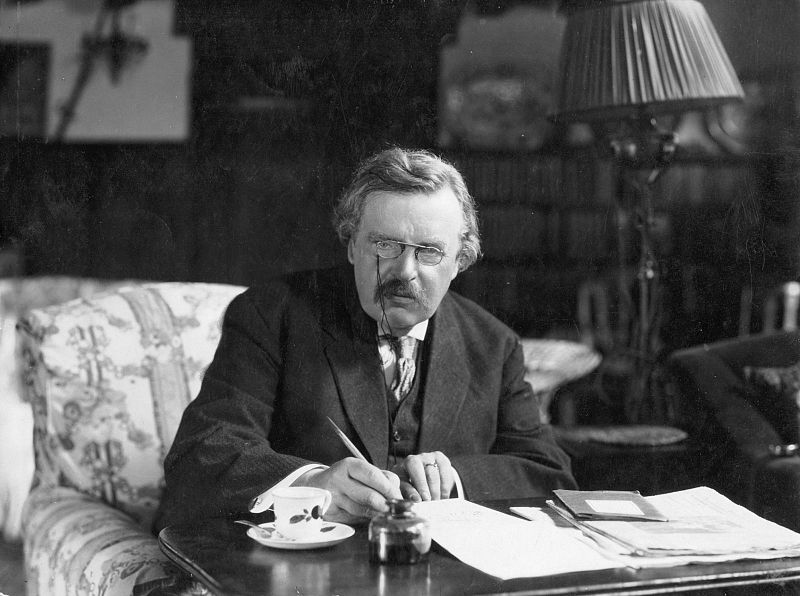
800px-G._K._Chesterton_at_work

William Doino Jr. offers reasons why recent moves to explore sainthood for G.K. Chesterton, the portly, cigar-smoking Christian writer, might gain traction:

Evidence of Chesterton’s holiness begins with his lifelong resolve to heed Christ’s teaching: “Unless you be converted and become as little children, you shall not enter into the Kingdom of Heaven.” Throughout his life, Chesterton’s faith retained a child-like quality: Dorothy Collins, Chesterton’s secretary, said that “Chesterton was so excited by meeting the Pope [Pius XI], that he could not work for two days after,” writes biographer Ian Ker. “She also remembered vividly how distressed he was when he lost a medal of the Blessed Virgin Mary that he always wore.”

Another virtue of Chesterton was his remarkable ability to make friends with his intellectual opponents. No matter how heated his arguments became, he never lost sight of their common humanity; and proof of that is the emotional tributes his adversaries paid him upon his death.

Yet a third characteristic of Chesterton’s holiness was his recognition of sin—especially his own sins—and the urgency to have them forgiven to receive eternal life.

Theologian John Saward believes Chesterton’s autobiography is in the “same noble tradition” of Augustine’s Confessions, and represents a “search for absolution,” and above all a key to “unlock Divine Mercy.” Chesterton’s charity, humility, and passionate love for truth have also been highlighted by Italian scholar Paolo Gulisano, and in a recent anthology, The Holiness of G.K. Chesterton.

In an interview in December, Dale Ahlquist, founder of the American Chesterton Society, suggested that the writer might have a friend in Pope Francis:

I’m waiting for him to quote Chesterton. That’s what I’m waiting for the pope to do. One of the interviews with him describes his study and describes the Chesterton books on the shelf behind him. We know there’s that connection. …

Chesterton is very well-known in Argentina–you know why? Because the guy that always used to quote him in Argentina is Jorge Luis Borges, and Borges is the pope’s favorite writer, even though (Borges was not) a Christian, but because he’s an Argentine man of letters and truly a great social critic and observer of mankind. Pope Francis was always very attracted to Jorge Luis Borges, who quoted Chesterton in the 1970s, when people didn’t quote Chesterton.

(Image of Chesterton in his study via Wikimedia Commons)

Pondering The Prodigal Son

In a column on what the parable of the Prodigal Son can teach us about social policy, David Brooks expresses (NYT) a wish for more grace and forgiveness in American life:

The father … understands that the younger brothers of the world will not be reformed dish_spada and re-bound if they feel they are being lectured to by unpleasant people who consider themselves models of rectitude. Imagine if the older brother had gone out to greet the prodigal son instead of the father, giving him some patronizing lecture. Do we think the younger son would have reformed his life to become a productive member of the community? No. He would have gotten back up and found some bad-boy counterculture he could join to reassert his dignity.

The father teaches that rebinding and reordering society requires an aggressive assertion: You are accepted; you are accepted. It requires mutual confession and then a mutual turning toward some common project. Why does the father organize a feast? Because a feast is nominally about food, but, in Jewish life, it is really about membership. It reasserts your embedded role in the community project.

Dreher squirms at the idea of no-strings-attached love:

I mostly agree with Brooks’s point here, but would emphasize that the Prodigal Son repented in humility. In practical terms, that means he recognized the error of his ways and came back with firm intention of changing. As Brooks says, the reconciliation and redemption of the Prodigal Son requires mutuality. If the Father and the Older Brother do not make it possible for the Prodigal to find welcome and restoration, then it won’t happen. On the other hand, the Prodigal must make a decisive act of humility, which is to turn from his life-destroying ways. Notice the Prodigal doesn’t come back expecting his family to forgive and forget, and restore him to his former state. Having tasted the bitterness of his own waywardness, he just wants to do whatever he can to be part of their community again.

David Zahl and Will McDavid defend the radical message of the parable:

If [Dreher’s response] sounds reasonable, that’s because it is. But Christ’s parable is not about a reasonable son or a reasonable father or their reasonable relationship. Doubtless Dreher means well, but his line of thinking opens the door for forgiveness to be predicated on proper repentance, or what he calls “firm purpose of amendment” (a milder “desire and resolution” in his ex-tradition’s catechism). There may be other biblical passages you could use to defend such a framework, but this isn’t one–after all, the son isn’t even allowed to finish his speech or declare his intent. So if the phrase “firm purpose” makes you shiver, you’re in good company. It’s a reliable recipe for religious neurosis, one which thrusts a person into the kind of excruciating internal guessing game that drove Martin Luther to despair: How do I know I’ve really repented? What if I say I repent but don’t feel it? What if I feel repentant but don’t act on it? What if I only act on it for a while? What if there’s something I need to repent of that I can’t remember? What if my neighbor’s repentance looks a lot firmer than mine? What if I’m in a coma? You get the idea.

(Image of Return of the Prodigal Son by Leonella Spada via Wikimedia Commons)

Thinking Inside The Box

confessionbox

The confession box, in which Roman Catholics admit their sins to a priest, often separated by a screen or lattice, was an innovation of the 16th century Church. In an interview about his new book, The Dark Box: A Secret History of Confession, John Cornwell describes the impact it had on Western understandings of the self:

Confession in the box had an amazing shaping effect on the way that people thought about themselves. It helped foster a very private, and very modern, sense of interiority and guilt, and even new ways of articulating ideas about the body and sexuality. There’s a new focus on the idea of intention, too…. You go into the dark box, deep into your disembodied soul, and consider the degrees of intentionality in your actions. The emphasis is on the private rather than the public nature of sin.

He also highlights its connection to a more nefarious development – the Catholic sex abuse scandal:

Many priests in the wake of the scandal have admitted to using it as a way of grooming and testing children for their vulnerability.

This is something that the great John Jay Report, on pedophile priests, which was done in the US in the early part of the last decade, missed out on. They didn’t see the importance of confession. That’s why I think my book is important in an investigatory sense. I’m bringing that out. The statistics in the report show that a third of all of the crimes of abuse occurred in a confessional setting. … The interesting thing is that from the late 1950s, when all of this started to rise, to the mid 1980s—this was the period in which priests were going outside the box. So you get confession as something that takes place in the privacy of a priest’s room, or in the sacristy, or in his car. But something else happens that is very important: Many priests squared the circle of their offending lives and their pastoral lives by going to confession themselves. There you have the morally weak aspect of confession: this belief that you can commit terrible sins and then go and get them washed away…. There was a case in Australia not so long ago when a priest on trial admitted that he had confessed to sexually attacking children 1,500 times. He’d confessed it 1,500 times!

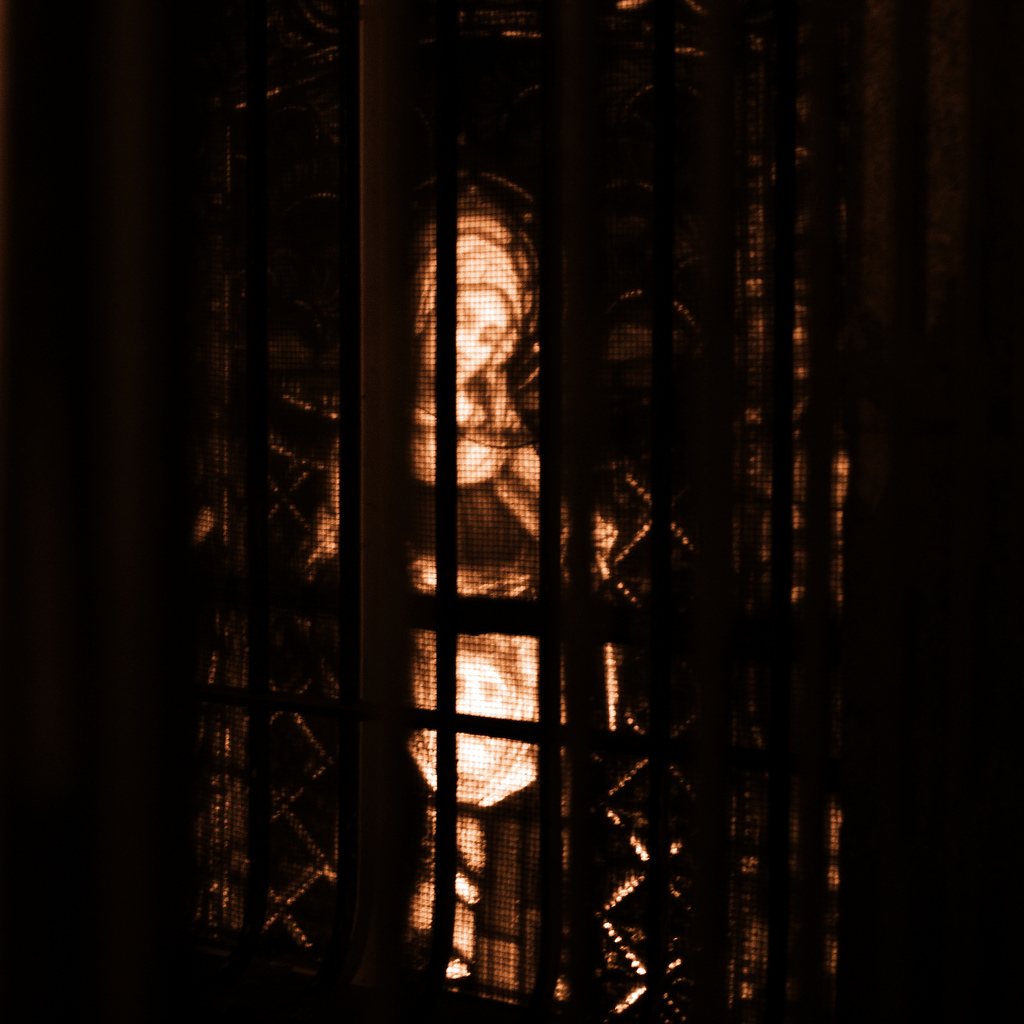
(Photo through screen of a confession box by Angie Chung)

What Porn Addiction Crisis?

Psychologist David Ley recently published a paper on the topic:

If there is so little empirical evidence for porn addiction, why has it become such a popular and widespread concept?

We put forth three reasons. One is that it is an easy answer. It is an easy answer and an easy scapegoat in a society and a media that applies the concept of addiction to any overuse of anything. Secondly, it is a cultural control of sexuality, and particularly the forms of sexuality that are now widely available and difficult to control due to modern technology. There is the old saying “don’t give away the milk away for free because nobody will buy the cow” as a way of controlling sexuality. Well, porn, and Internet porn in particular, doesn’t just give away milk, it puts it in a high-speed faucet right in your room. That is concerning to society, to people in relationships, because it represents a significant loss of control of sexual expression and experience.

Lastly, and this is one of the ones that is gonna be controversial, there is a large, lucrative industry that experiences tremendous secondary gain from the promulgation of this concept. As part of this paper we had a grad student call porn addiction facilities around the country and get an idea of the cost — and the costs were extraordinary. The average was $675 a day. These facilities were recommending or requiring stays anywhere between 15 and 90 days. Insurance doesn’t pay for this; it is cash only. The other thing that is really troubling is that there is no data to show that these very expensive programs generate positive results. There is an industry — and unfortunately I count the media in that as well, because the media makes lots and lots of hay by touting the issue ofporn addiction, and even by raising the controversy of “is it real or not?” There is a lot of money to be made in keeping this thing alive.

High-Tech Sex

A NSFW video demonstrates virtual sex:

When Brian Merchant got a visit from Japanese sex toy company Tenga, he found their robot-assisted virtual sex program “more creepy than erotic”:

Ugh. In terms of function, it was pretty accurate; the robotic sex arm synched up with the virtual sex arm on screen.

“The physical dimensions of the Tenga were narrow, which matched the avatar I was virtua-bangin’,” [Merchant’s colleague Dan] Stuckey said. “I wonder if you’re stuck with the same controller though. What if you’re interested in someone else?”

Still, it’s not hard to imagine a future where someone puts all the pieces together and this kind of thing works seamlessly.

Meanwhile, Daniel Engber is disappointed with “the failed promise of 3-D porn”:

“The main problem is there aren’t a lot of 3-D TVs out there. That’s the biggest hold-back,” [adult-industry reporter and erotic 3-D photographer Mark] Kernes argues. But there are other problems, too.

For one thing, the studios had convinced themselves that 3-D DVDs could not be ripped and spread online. Having lost half its business to freebie websites since 2005, executives sought safe harbor in a new video format. But content pirates were not deterred. “The way it was sold to me is that you can’t torrent a 3-D movie,” says porn journalist Gram Ponante, “and of course that’s not true.” Shooting on This Ain’t Avatar took a full week, more than twice the time it takes to shoot most conventional sex films, but the movie sold just 6,000 units, Ponante says, barely enough to make back its production costs. (Ten years ago, the best-selling porn films would sell about 60,000.)

The same occurred in mainstream soft-core. In 2010 Piranha 3D made a $60 million profit on topless ultra-gore and a dismembered penis flying off the screen. The sequel,Piranha 3DD, was released in 2012 and grossed just $375,000 in the U.S. An erotic import from China, 3-D Sex and Zen: Extreme Ecstasy, got lots of credulous press in 2011 for being the “world’s first ever 3-D porn film” (it wasn’t), but failed to sell that many tickets. And last week saw the release in theaters and streaming video of the latest tent-pole 3-D smut: Nurse 3D, the story of a man-killing, girl-kissing, clothes-not-wearing serial killer whose exploits are somehow neither sexy nor fun.