Grease Thieves

John Colapino reports that used commercial cooking oil has quickly gone from being a cheap additive for animal feed to a sought-after component of biofuels – and thieves are taking notice:

A decade ago, used grease traded on the Chicago commodities exchange for less than eight cents a pound. Now it can go for more than four times that price, providing criminals with a potent incentive to get at spent oil before renderers do. Thieves use bolt cutters to remove locks on container lids or cut through vacuum hoses to suck grease into tanker trucks. A thief driving down a strip-mall alleyway can collect four thousand dollars’ worth in half an hour.

Like other big renderers, Dar Pro has turned to security firms to protect its grease. In 2012, [C.E.O. Randall] Stuewe hired Total Compliance Associates, a Manhattan-based firm headed by Stuart GraBois, a former US assistant district attorney, and Mike Ferrandino, a former F.B.I. supervisor. When I visited the firm’s offices, in a Times Square high-rise, GraBois, elegantly dressed, white-haired man, admitted that he was nonplussed when he got the call from Dar Pro. “I thought, ‘Grease?’” he said laughing. “I didn’t want to say ‘Who cares?’ – but grease? Then you find out what a huge business it is, and how much they’re losing.”

In the past two years, GraBois and Ferrandino have pursued more than a hundred grease cases, using classic crime-busting techniques: surveillance and stakeouts, undercover operations, stings, hidden camera. They still struggle to persuade law enforcement officials to take grease theft seriously, but GraBois insisted that they’re making headway. “You speak to a prosecutor a year ago,” he said, “and it’s like, ‘What are you calling me about?’” Now I think it’s reached a point where they’re believing that it’s real.”

What To Do With Illegal Ivory?

U.S. Fish And Wildfire Service Destroy Six Tons Of Confiscated Ivory

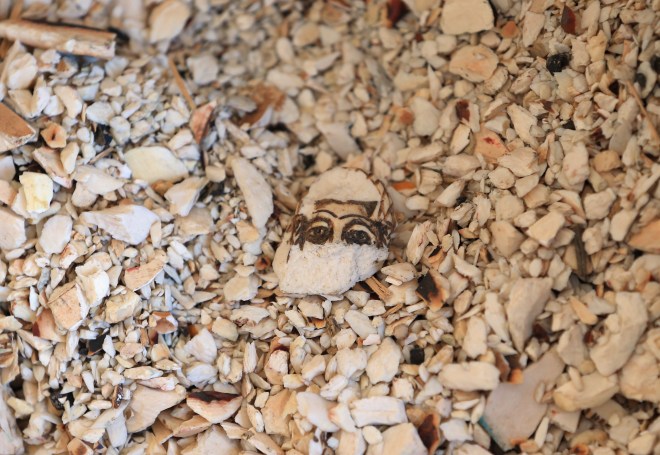
Until last week, the US government had a little-known cache of ivory carvings, jewelry, and other products – all illegal. On Thursday, the Fish and Wildlife Service publicly pulverized all six tons of it:

The so-called “ivory crush” is a first for the agency, which has previously stored all seized contraband at various government facilities. … [It] is only one part of a broader federal initiative to thwart poaching and illegal trafficking. First announced by President Obama in July, the $10 million campaign will also train park rangers and local officials in African poaching hubs, and work towards mandating stiffer penalties for anyone caught smuggling ivory into the United States. Yet another effort, this one launched by the Convention on International Trade in Endangered Species, is performing DNA analysis on seized ivory in an effort to track its origins and zero in on where poaching is most ubiquitous.

These efforts come at a time when elephant poaching is making a devastating comeback: an international ban on ivory sales in 1989 has recently been undermined by increased demand for illicit ivory, and the FWS now estimates that some 30,000 elephants are killed each year.

Bryan Christie calls the crush a largely symbolic act, but adds that “symbolism counts”:

Ivory destruction ceremonies have been a litmus test for where a country stands on the ivory trade ever since Kenyan President Daniel Arap Moi torched 13 tons of ivory in 1989, setting the stage for a vote to ban international trade in ivory by parties to the Convention on International Trade in Endangered Species (CITES). That ban went into effect in 1990. Six months later, the U.S. ivory market collapsed.

With no international market, it might have been reasonable for all CITES parties to destroy their ivory stocks after the 1990 international ivory ban took effect. But the ban did not last. In 1999 and again in 2008 parties to CITES voted to allow ivory sales. The first sale was of 55 tons to Japan and the second, of 115 tons to Japan and China.  In the wake of the China sale, elephant poaching and ivory trafficking have boomed. So has the need for international action.

But Yglesias thinks the destroying the ivory is a mistake:

By destroying the ivory, you create even more ivory scarcity and increase the incentives for future poaching. It seems like the more reasonable approach would be to arrest and punish human beings who are committing crimes, and then sell the seized ivory and use the proceeds to finance more anti-poaching efforts. … Via Tyler Cowen, a 2000 paper by Michael Kremer and Charles Morcom offers a hybrid solution. They say don’t sell the ivory and don’t destroy it either. Instead stockpile the ivory and say it’ll be dumped on the market if the elephant population falls below some critical threshold value.

Meanwhile, Derek Mead worries about parallels with the Drug War:

If this [ivory crush] sounds something like the massively-publicized busts and marijuana burning events that have remained in vogue in the drug war, it’s because they’re indeed quite similar. In both cases, the market has become so large and widespread that catching every vendor simply isn’t feasible. And in both cases, quelling demand and shrinking the market is the most stable long-term solution. By publicizing high-profile busts – or crushing tons of ivory with a steamroller in front of cameras – authorities get the dual benefit of showing potential customers that this is not okay, while also hopefully scaring off some vendors here and there. … The US is making strides this week to fight against wildlife crime, which it is undoubtedly interested in because of the national security angle. But the US crushing ivory, educating citizens, and putting out bounties isn’t enough, just as policing narcotics in some place and turning a blind eye in others has left the drug war stuck in a state of perpetuity.

Update from a reader:

I appreciate your efforts to raise awareness of the global crisis in wildlife poaching and trafficking.  I work for the U.S. Fish and Wildlife Service and was at the event, and I think it’s important to put the crush in its proper perspective. Some have argued that this stock and other illegal ivory stockpiles held by foreign governments should be sold, in an effort to alleviate the demand for ivory. But they are by far in the minority, and don’t represent the consensus of the wildlife community, international law enforcement, and even economists who have studied this issue. Decades of experience shows that allowing ivory to enter legal trade only makes enforcement harder, by giving traffickers additional ways to disguise sources of poached ivory. And past sales have only fueled demand, maintaining the perception among consumers that ivory is a status symbol, rather than an emblem of greed and callous indifference to life.

The ivory we crushed last week is a fraction of the stocks held by foreign governments, and would have no impact on the global market. Tanzania alone holds more than 120 tons, 20 times what the United States has seized. Even if every government sold their ivory stocks, there’s little chance it would alleviate demand. And if by some miracle prices did happen to drop, it would simply open up the market to a vast new segment of consumers in Asia and other parts of the world.

In this sense, critics are partially right. We cannot solve this problem by cracking down on the supply of illegal ivory alone. Unless the demand side of this terrible equation is addressed, poaching will continue at some level commensurate with the risks. But the solution lies in stigmatizing the sale and possession of ivory, not facilitating it. As long as it’s socially acceptable to own ivory, people will attempt to supply it.

Selling our ivory would have sent a terrible message to the world. Judging by the outpouring of support we’ve received from around the world, we’ve sent a far better one by destroying it.

Previous Dish on poaching here.

(Photo: Six tons of crushed ivory is displayed during the U.S. Ivory Crush event at the Rocky Mountain Arsenal Wildlife Refuge in Commerce City, Colorado. By Doug Pensinger/Getty Images)


Four Score And Seventy Years Ago

On November 19, 1863, Lincoln delivered a speech at the dedication of the Soldiers’ National Cemetery in Gettysburg, Pennsylvania. Ilia Blinderman flags the above video of various figures reading those famous words:

Lincoln’s Gettysburg address (whose five versions can be found here) has shown little wear since its delivery on November 19, exactly 150 years ago. While there is some evidence to suggest that the audience was initially nonplussed by the speech’s simple language and striking brevity, today Lincoln’s words are considered to be among the most finely wrought rhetoric in the Western canon: they remain accessible to all, yet seamlessly entwine the thread of equality that ran so clearly through the Declaration of Independence with the idea of the war being essential to the preservation of the Union.

I was ready to gag at some of these celebrities, but found myself unable to. The words carry them. Garry Wills’ 1992 essay, adapted from his book on the Gettysburg address, is well worth re-reading today:

Up to the Civil War “the United States” was invariably a plural noun: “The United States are a free country.” After Gettysburg it became a singular: “The United States is a free country.” This was a result of the whole mode of thinking that Lincoln expressed in his acts as well as his words, making union not a mystical hope but a constitutional reality.

When, at the end of the address, he referred to government “of the people, by the people, for the people,” he was not, like Theodore Parker, just praising popular government as a Transcendentalist’s ideal. Rather, like Webster, he was saying that America was a people accepting as its great assignment what was addressed in the Declaration. This people was “conceived” in 1776, was “brought forth” as an entity whose birth was datable (“four score and seven years” before) and placeable (“on this continent”), and was capable of receiving a “new birth of freedom.”

Thus Abraham Lincoln changed the way people thought about the Constitution … The Gettysburg Address has become an authoritative expression of the American spirit—as authoritative as the Declaration itself, and perhaps even more influential, since it determines how we read the Declaration. For most people now, the Declaration means what Lincoln told us it means, as he did to correct the Constitution without overthrowing it

In a 2009 essay, the historian Sean Wilentz noted a neglected 1852 speech in which Lincoln defended the Fugitive Slave Law, thus reminding us that Lincoln was foremost a politician – something that shouldn’t detract from his greatness, however:

In 1854, when Lincoln began shifting his loyalties to the anti-slavery Republican Party, the tone as well as the substance of his speeches became grander, and the casual racism receded. Lincoln evolved and grew as the Republican Party and anti-slavery public opinion in the North grew. But it is important to understand that those later pronouncements of Lincoln’s were no less political that his earlier ones, no less geared to achieving a particular political goal or set of political goals. Given the enlarged stakes of the sectional crisis and then the Civil War, Lincoln’s goals were actually more political than ever. He was a shrewd and calculating creature of politics; and he achieved historical greatness in his later years because of, and not despite, his political skills. It was the only way that anyone could have completed the momentous tasks that history, as well as his personal ambition, had handed to him. It was the only way he knew how to do anything of public importance, and the only way he cared to know.

Recent Dish on the Gettysburg Address here. For more, Google’s Cultural Institute has assembled a series of commemorative online exhibits.

Disaster Relief Done Right

Humanitarian Efforts Continue Following Devastating Super Typhoon

Charles Kenny’s advice on how best to help the Philippines:

Donor agencies and humanitarian organizations should tell individuals who want to help that they should send cash—not food, clothes, or other supplies. Wherever possible, those organizations should give cash, too. As quickly as possible, donors should move away from a model based on financing nonprofit and contractor provision of services and instead deliver aid through local government authorities.

Victims are far better placed than foreign aid bureaucrats to decide how best to spend resources to recover from the impact of the typhoon. Cash-transfer programs were tried in Haiti and became a significant part of the relief effort after Pakistan’s 2010 floods. Thanks to advances in biometric identification and electronic payments, it’s cheap and easy to ensure that cash transfers reach victims, and the risk of fraud or misallocation is low. Cash transfers are faster and more effective, and they require less overhead than large-scale relief projects—which should be limited to restoring infrastructure and public services.

Aid worker Jessica Alexander, who echoes Kenny on the importance of cash charity, describes the debacles that come from donating clothes and other random items:

I was there after the [2004 South Asian] tsunami and saw what happened to these clothes: Heaps of them were left lying on the side of the road. Cattle began picking at them and getting sick. Civil servants had to divert their limited time to eliminating the unwanted clothes. Sri Lankans and Indonesians found it degrading to be shipped people’s hand-me-downs. I remember a local colleague sighed as we passed the heaps of clothing on the sides of the road and said “I know people mean well, but we’re not beggars.” Boxes filled with Santa costumes, 4-inch high heels, and cocktail dresses landed in tsunami-affected areas. In some places, open tubes of Neosporin, Preparation H, and Viagra showed up. The aid community has coined a term for these items that get shipped from people’s closets and medicine cabinets as SWEDOW: Stuff We Don’t Want.

(Photo: People queue for aid in Tananau, Leyte, Philippines on November 19, 2013. Typhoon Haiyan, which ripped through Philippines over a week ago, has left thousands dead and hundreds of thousands homeless. Countries all over the world have pledged relief aid to help support those affected by the typhoon however damage to the airport and roads have made moving the aid into the most affected areas very difficult. By Dan Kitwood/Getty Images)

How Cleaning Eggs Can Contaminate Them

Ever wonder why most people around the world don’t refrigerate their eggs? Robert T. Gonzales provides the surprising explanation:

[E]ggs run the risk of getting feces on them. Whether that feces contains traces of Salmonella or not, it stands to reason that if an egg gets poop on it, you should wash it off. And, in America, that’s exactly what we do. In an elaborate automated process involving in-line conveyor belts, massive egg-scrubbing machinery, high-volume air-filtration systems and – last but not least – chlorine misters, American eggs are washed, rinsed, dried, and sanitized in an effort to remove as much dirt, poop and bacteria as possible, all while leaving the shells intact. (Read the details in the USDA’s Egg-Grading Manual.)

Or rather, almost intact. When a hen lays an egg, she coats it in a layer of liquid called the cuticle. It dries in just a few minutes, and is incredibly effective at protecting the egg from contamination, providing what European egg marketing regulations describe as “an effective barrier to bacterial ingress with an array of antimicrobial properties.” America’s egg-washing systems strip eggs of this natural protection. “Such damage,” the EU guidelines note, “may favor trans-shell contamination with bacteria and moisture loss and thereby increase the risk to consumers, particularly if subsequent drying and storage conditions are not optimal.” Washing eggs is therefore illegal throughout much of Europe.

Plus, America is home to some sick-ass chickens:

The other reason Americans tend to refrigerate their eggs: our risk of Salmonella poisoning is often significantly higher than it is overseas, because our chickens are more likely to carry it. In the UK, for instance, it is required by law that all hens be immunized against Salmonella. This protection measure, enacted in the late 1990s, has seen Salmonella cases in Britain drop from 14,771 reported cases in 1997 to just 581 cases in 2009.

There is no such law in the United States, and while more farmers are electing to immunize their hens in the wake of a massive Salmonella-related recall in 2010Salmonella infection remains a serious public health issue. Even in spite of our egg-washing and our refrigeration habits, FDA data indicates there are close to 150,000 illnesses reported every year due to eggs contaminated by Salmonella.

Selfie; A Noun

The Oxford Dictionaries have made it their neologism of the year. Defined as:

a photograph that one has taken of oneself, typically one taken with a smartphone or webcam and uploaded to a social media website.

Its usage has increased 17,000 percent in the last twelve months. Did you know it came from Down Under?

Oxford Dictionaries revealed this week the earliest known usage is from a 2002 online ABC forum post. The next recorded usage is also from Australia with the term appearing on a personal blog in 2003. “It seems likely that it may have originated in the Australian context,” dictionary editor Katherine Martin said. “The earliest evidence that we know of at the moment is Australian and it fits in with a tendency in Australian English to make cute, slangy words with that ‘ie’ ending.”

And yes, said Aussie was shit-faced at the time:

Um, drunk at a mates 21st, I tripped ofer [sic] and landed lip first (with front teeth coming a very close second) on a set of steps. I had a hole about 1cm long right through my bottom lip. And sorry about the focus, it was a selfie.

Wait, there’s more:

It has since produced an array of spinoffs, including helfie (hairstyle self), belfie (bum selfie), welfie (workout selfie), drelfie (drunken selfie), and even bookshelfie – a snap taken for the purposes of literary self-promotion.

A Family Tree For Fairy Tales

Victoria Turk explains how anthropologist Jamshid Tehrani is using the tools of evolutionary science to discover the origins of folk stories:

In his introduction to [his] study, published in the journal PLOS One, Tehrani explained that the common historic-geographic method of classifying folktales into “types” was flawed owing to a tendency to lump stories with a few similar plot points together despite dissimilarities they might have, as well as a sampling bias resulting from a focus on European tales over other folklore traditions. Essentially, it’s all very tenuous and subjective.

So he turned to evolution. He used phylogenetic analysis, a technique developed to analyze the evolutionary relationships among biological species, to analyze links between similar folktales. Just as you might map the evolution of an animal by looking at species with similar traits, Tehrani set out to make a tree graph of Little Red Riding Hood’s ancestry based on characteristics it shares with folk stories through history.

Tehrani elaborates on his method:

The idea is to use a biologist’s tool to investigate the evolution of folktales. This is because folktales not only evolve through similar processes as biological species (variation, selection and inheritance), but the problems of reconstructing them are also comparable. Just as the fossil record bears witness to a tiny proportion of extinct ancestral species, the literary record provides scarce textual evidence about early forms of folktales because they have been mainly transmitted through oral means. Phylogenetics can fill these gaps by using information about the past that has been preserved through the mechanism of inheritance.

His findings:

[There’s a] long-running debate about the relationship between Little Red Riding Hood and similar tales from other regions of the world. These include East Asian tales in which a group of sisters are home alone when they hear a knock at the door. It is a tiger (or leopard, or some other predator) disguised as their grandmother. Despite her suspicious appearance (“Granny, why are your eyes so big?!”) they let her in. That night they share a bed, and the tiger eats the youngest girl to the horror of her sisters, who manage to escape.

Another tale, from central and southern Africa, involves a young girl who is tricked by an ogre pretending to be her brother. When her brother finds out he tracks down the ogre, kills him and cuts her out of the villain’s belly. Both these tales bear a clear resemblance to Little Red Riding Hood. But they are also similar to another well-known international type tale: “The Wolf and the Kids,” in which a group of goat kids are devoured by a wolf who gets into their house by impersonating their mother.

By analyzing variables in the plots and characters of 58 folktales using three methods of phylogenetic analysis, I was able to establish, in a paper just published in PLOS ONE, that the African tales are clearly more closely related to The Wolf and the Kids than they are to Little Red Riding Hood. The East Asian tales evolved by blending together elements from both these tales and from local folktales.

Winning Back The Nation’s Trust

Dickerson contends that Obama’s credibility has taken a major hit:

The complexity of the repair job and the history of broken promises means [the Obama team] probably shouldn’t even be guaranteeing the site will be working by a hard date. In a battle for credibility, these claims don’t send calm—they send a warning that another disappointment is coming. Baby please take me back, this time I promise. … Obama’s credibility challenges won’t stop when his incompetently mismanaged health care website is finally repaired. Once that gets fixed, the president will ride another credibility roller coaster: truthfully describing whether the Affordable Care Act is working as designed.

Tomasky’s gives advice to the president:

Actions are needed now. Obama should be up there—not Kathleen Sebelius, and not the website’s Mr. Fix It Jeffrey Zients; Obama—on a daily or near-daily basis explaining to people, “Here’s what we did today to make this better.” He needs to be (non-sports analogy ahead!) like a mayor handling a snowstorm or a garbage strike. That’s what this is. Citizens need to know stuff. They need to feel someone is in charge. One press conference is defense. Daily updates on what’s getting better make for offense.

Of course he’s not going to. If he were that kind of hands-on manager, this mess might not have happened in the first place.

My thoughts on the subject here.

Attacking Obamacare’s Foundation

Yuval Levin believes that the ACA is fundamentally flawed:

The key to Obamacare is something it doesn’t have in common with conservative approaches to health care: It seeks to impose a very specific model of insurance and compel people to buy into it. It has the government strictly define the insurance product, requires insurers to sell it, requires consumers to buy it, and calls that a market.

The result is not just a gross constriction of the economic liberty of all involved, though that is no small problem. And the result is not just high prices, either, though those clearly contribute to the difficulties Obamacare is already confronting. The key consequence of this kind of approach is an inability to find that balance between quality and price that could allow for the greater access and security we want: It is a failure to achieve a more efficient system, which is more or less the whole point of reforming American health-care financing.

Applying expert knowledge from the center is just not a recipe for efficiency in a system as enormous and complex as America’s health-care system. And the idea that we already know what the answers are to the quandaries of health-care financing in our country — whether because other countries have found those answers or because the latest effectiveness research makes it clear — just doesn’t hold up to scrutiny. More important, an evolving system as intricate as American health care isn’t going to be made radically more cost-effective by any one model of efficiency over the long-term anyhow. The appeal of a competitive insurance market in which sellers have a constant, huge incentive to give buyers what they want is that such a system is constantly searching for a better answer to our problem, and so is able to evolve as health care and health financing evolve. It doesn’t get stuck with today’s answer forever, let alone with a wrong answer.

Last week, Levin and Ponnuru suggested an alternative to Obamacare that would use “a flat and universal tax benefit for coverage” and cap the employer health insurance tax break. More details:

People who have pre-existing conditions when the new rules take effect would be able to buy coverage through subsidized, high-risk pools. By making at least catastrophic coverage available to all, and by giving people such incentives to obtain it, this approach could cover more people than ObamaCare was ever projected to reach, and at a significantly lower cost.

The new alternative would not require the mandates, taxes and heavy-handed regulations of ObamaCare. It would turn more people into shoppers for health care instead of passive recipients of it—and encourage the kind of insurance design, consumer behavior and intense competition that could help keep health costs down. Redesigned and directed this way, the flow of federal dollars and tax subsidies would do much less to distort health markets than it has for the last several decades, while getting far more people insured.

In response, Adrianna McIntyre points out problems with high-risk pools:

[T]he pools would need to be incredibly well-funded—conservative health policy scholar James Capretta estimated that adequate funding would be on the scale of $15-20 billion a year to cover 4 million individuals. Remember that back in the real world, the GOP quashed a bill for $4 billion in  one-time high risk pool stopgap funding earlier this year.

In the context of Ponnuru and Levin’s plan, high risk pool funding is in addition to their proposed tax credits, which would be sufficient  for individuals without employer-sponsored coverage to purchase catastrophic plans. Ponnuru and Levin argue that their plan is cheaper and would offer more coverage than the ACA, but the column is fuzzy on details, like the Capretta “repeal and replace” proposal it seems to be patterned on. It would be helpful if they had actually defined what a “catastrophic” plan might entail, for example, so it’s difficult to assess how the costs of this proposal would stack up against the ACA.

A Minimum Income For All?

Switzerland may become the first country to guarantee one by providing all adults about $2,800 each month. Danny Vinik thinks it’s an idea worth importing:

The clear [benefit] is that no American would live below the poverty line. The U.S. has been waging the War on Poverty for a generation now and still nearly 50 million Americans are below the line. This would end that war with a decisive victory. There are knock-on effects as well. Americans would have greater leverage to demand higher wages and better working conditions from their employers thanks to the increased income security. Families could allow one parent to take time off to raise their kids. Eliminating the numerous different government welfare programs would also lead to efficiency gains as adults would simply receive their check in the mail and not have to waste time filling out paperwork at numerous different offices. …

Economists have long shuddered at the thought of a basic income, because it strongly disincentives work. However, a basic income is just that: basic. Most adults would continue to work to earn extra money. The employment effects would not be non-existent and there may be an increase in part-time work. As Lowrey points out, different studies have found the disincentive effects on work are not as strong as economists feared.

McArdle is rightly skeptical:

Consider the cost of real estate, one of the sore points in Switzerland, where there isn’t a whole lot of flat land to build on. In that, Switzerland is a bit like my own home city of Washington: it’s a small area attracting a lot of new, more-affluent residents (wonks and lobbyists, in Washington’s case; international finance types for Switzerland). Many of the poorer residents don’t make enough to compete in the new bidding wars, and they don’t like it one bit.

But suppose we gave everyone in Washington a check for $2500 a month. Would that make it easier for the old residents to get nicer apartments? Not really, because everyone would be getting that check. Poorer residents would have another $2500 to commit to the housing bidding war, but so would the wealthier residents. Unless the $2,500 actually created a larger supply of housing — and that’s as much a matter of planning regulations and building codes as of demand.

She also worries what effect it would have on immigration:

[A] substantial basic income is simply and obviously incompatible with making it relatively easy for people from poor countries to become citizens. A path to citizenship for legal immigrants is one of the foundational values of American society; we are Americans because we are born here or we choose to come here, not because of some ethnic heritage. We couldn’t get rid of it even if we wanted to; the idea that anyone born on American soil is an American is enshrined in our constitution. And of course, if you had to choose between a basic income, and relatively easy immigration, the choice is obvious — at least if you’re interested in improving human welfare.

Alec Liu argues that “the problem, as with many issues economic, is that there is no historical precedent for such a plan, especially at this scale.” However, he concedes a few “isolated instances” of governments providing a minimum income:

Similar plans have been proposed in the past. In 1968, American economist Milton Friedman discussed the idea of a negative income tax, where those earning below a certain predetermined threshold would receive supplementary income instead of paying taxes. Friedman suggested his plan could eliminate the 72 percent of the welfare budget spent on administration. But nothing ever came to fruition.

It’s what makes the potential experiment in Switzerland so compelling. Developed countries around the world are struggling to address the issues of depressed wages for low-skilled workers under the dual weight of automation and globalization.