Late last week, a New Jersey judge ruled in favor of marriage equality, arguing that civil unions are insufficient. Mark Joseph Stern reacts:
The New Jersey ruling is one of several to cite the Supreme Court’s momentous DOMA decision in questioning or overturning gay marriage bans. But this case is unique: Judge Jacobson relies exclusively on the state’s constitution, allowing the issue to avoid federal courts and, more importantly, the Supreme Court. At most, the case will rise to the state’s own Supreme Court. And, given that institution’s liberal bent, it’s quite likely that this new chapter of gay rights in New Jersey will also be the last.
In response to the ruling, Nathaniel Frank spells out why the word “marriage” is so important:
Being married is not just a contractual status among two people but a collective identity. Its power lies in its symbolic authority to reinforce individuals’ commitments because the wider community around them knows what you should and shouldn’t be doing. Marriage functions in this regard as a collective superego by establishing widely shared norms and expectations that strengthen obligations to spouses and children.
But none of this works if you’re just “civil-unioned.” Indeed, marriage is such contested terrain precisely because opponents of gay marriage know the word matters—notwithstanding New Jersey’s incoherent effort to argue that gays should just calm down since labels don’t make a whit of difference.
Are you seriously opposed to hate crime laws? Maybe I misunderstood you. Here’s why simply enforcing “regular assault” laws is inadequate when the motive is hate:
A hate crime is, by definition, designed to strike fear into a group/community of people – not just a single victim. A punch in the face that is motivated by the fact that the victim is gay, or black, Jewish, or whatever, is an attack on the entire group of similar people (a minority group).
If your response is limited to the impact on the single victim, you’re still off-base: of course the intent of the perpetrator matters. That is why we differentiate between say, manslaughter and first degree murder: intent. The victim in all cases is equally dead.
My basic stance on hates crimes is seen above. For more, you can read my NYT Magazine cover-story from 1999, “What’s So Bad About Hate?” Another reader is on my side of the issue:
According to a 2009 study (pdf), 88% of criminologists don’t believe the death penalty is a deterrent to homicides, with 87% saying getting rid of the death penalty would have no significant effect on murder rates, with 75% saying that “debates about the death penalty distract Congress and state legislatures from focusing on real solutions to crime problems.” So, if death isn’t a deterrent, it makes no sense that a longer sentence (if you are found guilty of the crime) would affect any change in behavior.
Another differs:
One of the reasons that crimes of power occur is precisely because the majority offenders carry in their bank of experiences the implicit (and sometimes explicit) promises associated with their power. To whit: that they will NOT be prosecuted according to the normal standards, and that they will NOT be held to account for their actions, precisely because the actions were taken against the powerless.
Regrettable? Of course. It would be great if every assault were prosecuted as assault. But consider Trayvon Martin:
whatever you think of the acquittal of George Zimmerman, it is beyond doubt that he would not have been charged at all for the basic crime were it not for the public pressure applied in pursuit of a trial. Similarly with Matthew Shepard, that the defendants were found guilty and put in prison does not prove that the “system works.” It might prove that, but it could equally prove that public pressure around the death of Shepard encouraged authorities to act on the crime, rather than brushing it away or letting it rest.
I’m with you in theory on hate crimes; yes, in an ideal world, it would be great if the powerful were brought to account for the face-value crime they have committed. But that ideal world is not this world, and hate-crimes statutes have the effect of communicating clearly to privileged groups that crimes against those without a voice are not tolerated – and they have the added effect, when they are on the books at the federal level, of allowing the federal government to take the case out of the hands of local authorities who might be actively impeding the investigation and prosecution of such crimes.
Any rational account of how we hold murders and assailants accountable must, quite clearly, take stock of these power dynamics. Failing to do so is to miss the attainable good in favor of the unattainable perfect.
Another adds:
One of the the primary benefits of the Hate Crimes Prevention Act is that it authorizes the Justice Department to provide financial grants to state and local law enforcement to cover the extraordinary expenses associated with the investigation and prosecution of hate crimes, as well as authorizing the provision of grants for local programs to combat hate crimes committed by juveniles, including programs that train local law enforcement officers in identifying, investigating, prosecuting and preventing hate crimes. If news reporting at the time was accurate, the Laramie police department had to lay off five police officers and the department nearly went bankrupt trying the criminals involved.
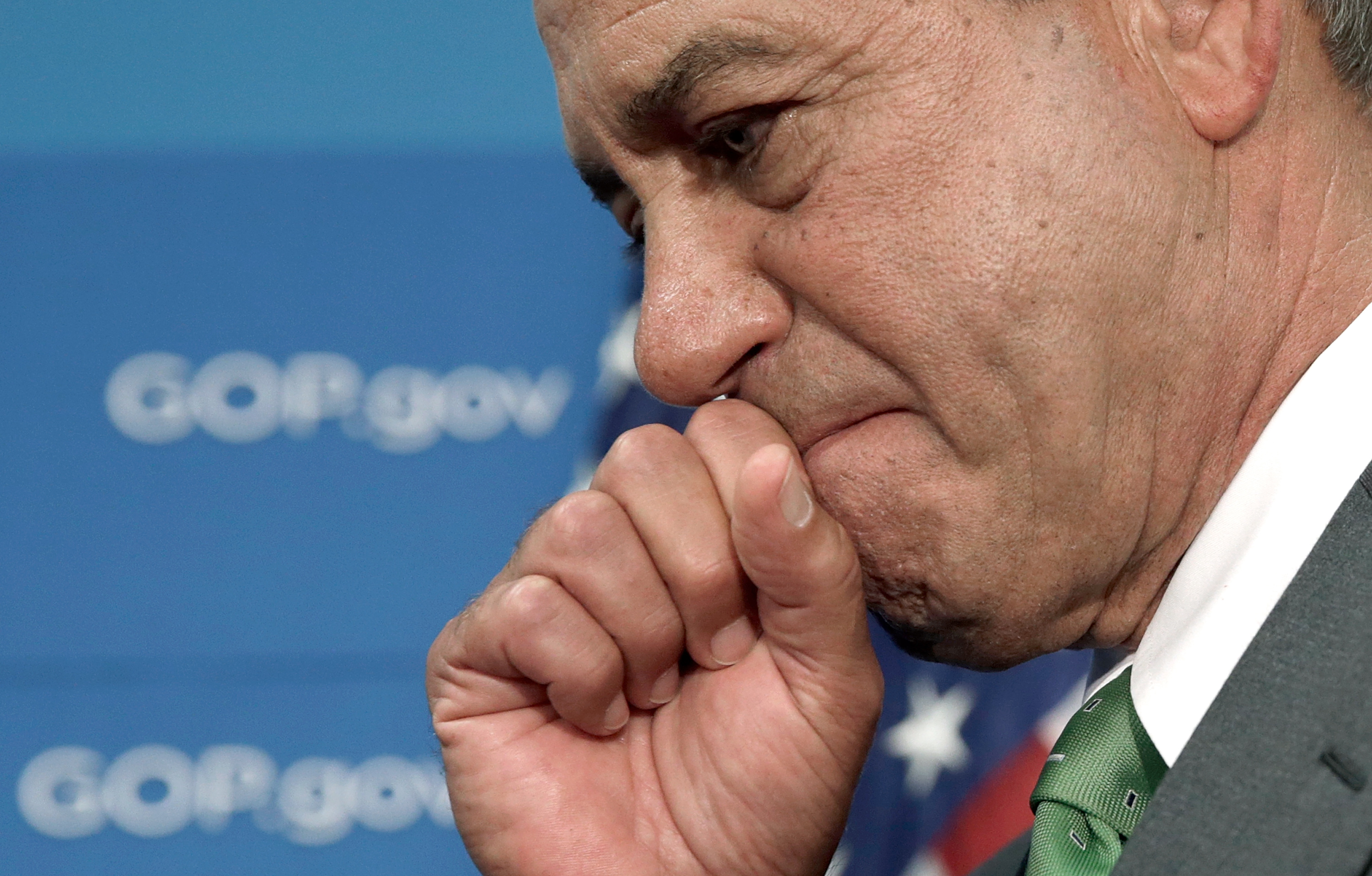
Fallows describes what is happening on the Hill as “a ferocious struggle within one party, between its traditionalists and its radical factions, with results that unfortunately can harm all the rest of us — and, should there be a debt default, could harm the rest of the world too”:
As a matter of politics, this is different from anything we learned about in classrooms or expected until the past few years. We’re used to thinking that the most important disagreements are between the major parties, not within one party; and that disagreements over policies, goals, tactics can be addressed by negotiation or compromise.
This time, the fight that matters is within the Republican party, and that fight is over whether compromise itself is legitimate. Outsiders to this struggle — the president and his administration, Democratic legislators as a group, voters or “opinion leaders” outside the generally safe districts that elected the new House majority — have essentially no leverage over the outcome. I can’t recall any situation like this in my own experience, and the only even-approximate historic parallel (with obvious differences) is the inability of Northern/free-state opinion to affect the debate within the slave-state South from the 1840s onward. Nor is there a conceivable “compromise” the Democrats could offer that would placate the other side.
Josh Marshall’s related thoughts on the extremism of the GOP:
For all the ubiquity of political polarizing and heightened partisanship, no honest observer can deny that the rise of crisis governance and various forms of legislative hostage taking comes entirely from the GOP. I hesitate to state it so baldly because inevitably it cuts off the discussion with at least a sizable minority of the political nation. But there’s no way to grapple with the issue without being clear on this single underlying reality. …
Many people say that the danger is that the Democrats, reasonably enough, will adopt the same tactics once they are back in a comparable position. I worry about that too. But not that much. I think the reality is that they won’t because the sociology and mores of the parties are just different.
It has become so pervasive that I believe it’s lost on many of us just how far down the road of state breakdown and decay we’ve already gone. It is starting to seem normal what is not normal at all.
Robert Costa and Jonathan Strong report on the debate within the GOP House:
The leadership … is worried about the likely public takeaway from any shutdown: Leaders fear that national press would harp on Republicans’ supposed intransigence rather than the Senate’s responsibility. Boehner’s contingent seems almost resigned to the mutual suspicion between the leadership and a group of about 30 conservative members. Sources say distrust is as high as it’s been since Republicans won the House in 2010, and they predict that a sizable bloc would obstruct any watered-down plan.
That aura of Republican infighting will create an interesting dynamic if Tuesday morning comes without an accord. While Boehner and other leaders will be defending the GOP’s position in front of the cameras, there may be a subtle effort to use the episode — and what many expect to be its disastrous political results — as a means of discrediting the hardliners who give the speaker headaches. Conservatives, meanwhile, will try to show that the tactic is helping focus public attention on Obamacare.
Noam Scheiber expects the GOP to lose the shutdown because “unrelenting criticism from fellow Republicans and conservatives is inevitable in these episodes, and it is completely crippling”:
Some commentators have pointed to the fact that, in the weeks leading up to the likely shutdown, Republicans senators and pundits have already been scathing in their opposition to the Tea Partier strategy—Senate conservatives like Tom Coburn and Richard Burr, among others, have been deriding it as idiotic. If this didn’t dissuade the House Republicans, these commentators argue, it’s hard to imagine them being dissuaded post-shutdown.
To which the proper response is: Are you kidding? As 2011 showed, the pre-showdown and post-showdown worlds bear almost no resemblance to one another. Before the two parties plunge into an all-out confrontation, the story mostly resides inside-the-Beltway, followed primarily by well-informed, politically engaged voters. These are the people who would know that Republican Senators like Coburn and Burr (and their reliably anti-Tea Party colleagues, like John McCain and Bob Corker) have been critical of House conservatives. But once the battle is joined—once we’re officially into the payroll tax standoff or the shutdown—the media covers it breathlessly, and like a national story, not a political one. It leads the evening news (both national and local); it seizes newspaper headlines across the country; it works its way into late night talk-show routines. The amount of damage you sustain when members of your own party are sniping at you amid this sort of media glare is simply impossible to imagine beforehand.
I suspect the worst backlash won’t actually come from uninsured or under-insured people who actually buy coverage on the new exchanges. Backlash will come from people with pretty crummy jobs who hear that their hours are cut back. Backlash will come from people with limited employer-based coverage who face higher premiums or encounter other changes such as disliked wellness provisions. Some will look across the fence at decent plans on the new exchanges, only to discover that they can’t receive subsidies if they spurn their employer’s coverage.
Thousands of employers will blame “ObamaCare” for whatever unpopular moves they impose their workers. It’s the obvious play. In many cases, this blame will be mostly or entirely misplaced. Other times, the blame will be justified, reflecting glitches or unintended consequences of the new law. Either way, many workers will believe what their employers tell them. Millions of workers with relatively modest incomes will see their lives getting a little worse when they were hoping that health reform would make their lives a little better. Other people—I suspect many more—will see their lives getting a little or a lot better. Some of the most deserving people will seek benefits and medical care–only to discover that no help is forthcoming because their states rejected Medicaid expansion. Republicans had better hope that this is a disorganized and politically marginal group.
America’s most cherished programs evolved over time: Social Security famously left out agricultural and domestic workers, and didn’t provide the support it does today. Obamacare, as enacted, has similar deficiencies. The minimum coverage that the law guarantees everybody is not that generous, which means even some people with insurance will face high out-of-pocket expenses.
But the relevant comparison is to what those people have now—frequently even less protection, or no protection at all. And that’s the standard by which to assess all of the law’s side-effects. Are employers squeezing retirement health benefits? Yes—but they’ve been doing that for years, long before Obamacare came along. Are some part-time workers losing hours? Yes—but part-time work was rarely stable and at least now all part-timers can get health insurance. Will people trying to buy insurance on the new online marketplaces sometimes find the process difficult and frustrating? Yes—but buying individual coverage is even more complicated and nightmarish now. As a recent Kaiser Foundation briefing notes, the standard applications for insurance in Wisconsin and Illinois include five pages of questions on medical history alone. Under Obamacare, insurers won’t be asking those questions at all.
Collender wonders whether “a government shutdown could be the point that historians one day point to as the beginning of the end for the tea partiers in Congress”:
[G]iven that Gingrich and congressional Republicans were far more popular in the mid-1990s than the tea party is today, and in light of the fact that the tea party and not House Speaker John Boehner (R-OH) or Senate Minority Leader Mitch McConnell (R-KY) is most likely to bear the blame if a shutdown occurs, there’s a good reason to think that at least some of the [Tea Party’s] supporters will find themselves cursing the tea party’s name very soon, especially when the shutdown begins to affect them negatively.
This group will still agree with the tea party’s goals, just not with its tactics. But the tea party will alienate its more intense supporters if it moderates those tactics. Either way, at least some of its base will be lost.
John Bellinger wants the Tea Party to “remember that the United States remains a country at war, not only in Afghanistan, but with al-Qaida and its affiliates around the world”:
Republicans should take no solace in the likelihood that much of DHS, DoD, the FBI, and the intelligence community will remain in place as “essential personnel” during a shutdown. The rank-and-file who work long and stressful hours protecting the country may technically remain on the job, but they and their leaders (including agency heads) already are having to spend much of their time dealing with the distractions of the coming shutdown. Do Tea Party Republicans want the leaders of our intelligence and security agencies focused on protecting the nation, or managing the shutdown of their agencies?
In short, if there were another attack against the United States or its facilities around the world (such as an Embassy), Tea Party Republicans and the American people would not be able to blame the Executive branch — and call for Benghazi-like investigations — for failing to keep the country safe. Members of Congress who had forced a government shutdown would themselves be blamed.
The veil has been rightly described as ‘ghetto walls that a person wears’. It often inhibits normal social interaction – that, after all, is its very purpose – and may preclude those who wear it from integrating into society. But the numbers wearing the burqa are tiny. The French government estimates that fewer than 2000 women wear a niqab or burqa. In Holland some 500 women in a Muslim population of one million do so, in Denmark the estimate is fewer than 200 out of 170,000 Muslims. There has not been, as far as I am aware, a comparable survey in Britain, but there is no reason to imagine that the figures are much different. Given these numbers, the burqa or niqab can hardly be held responsible for creating a sense of social separation.
There is, in other words, no argument for a blanket state-enforced ban on wearing the burqa or niqab in public, such as that imposed in France. The state should no more determine that a woman cannot wear the burqa than it should insist that she must. The fact that a blanket state ban is wrong does not mean, however, that bans are wrong in all circumstances. Issues of security in banks or airports, or of practicality in hospitals, schools or shops may all, as I have already suggested, require specific regulations about facial coverings. So does the issue of justice in a courtroom.
Viceinterviews a few British Muslim women on what it’s like to wear the veil in the UK:
So people not being able to see your face hasn’t changed anything?
It changes the way some people respond to me, as they’re initially disconcerted by my face covering. But I just work extra hard on those ones and grin like mad so that they can see my eyes smiling. But it’s more one’s demeanour that puts people at ease, isn’t it? After all, there are people who are “normally” dressed whose body language or attitudes are intimidating. A person wearing a niqab doesn’t have the same advantage as someone whose face is visible, I admit that, but you could say that someone with tattoos or piercings or an unconventional haircut is similarly disadvantaged, couldn’t you?
I guess so. What do you think of the idea that it’s inappropriate to wear the niqab in some situations, like in court or if you’re teaching children?
As a teacher and as a Muslim, I would like to know that I am not disadvantaging my students in any way. If my covering my face is clearly doing that, I will do one of two things: reconsider my decision to cover, or reconsider my position. That being said, I have conducted workshops in schools with my face covered, but I made sure to let my personality shine through so that I could engage the kids. And I would find a way to “flash” the girls, if possible. But seriously, the question is this: who gets to decide when wearing the niqab is appropriate or not?
Louis C.K.’s observations caused laughter, but a specific kind: the acknowledgement that yes, he’s right, that is how it begins and ends for all of us. Avoiding the fact harms us more than it does us good. … Today there is no more potent contrivance than the mass distraction of cell phones. This is no anti-technological rant—all of our tools have purpose and can be used for good reason. The reasons we justify, however, need to be questioned. As an avoidance of silence, we’re never going to be able to reckon with loneliness. That’s a shame. So much is learned in the quiet space.
Are these old-fashioned modes of entertainment and distraction any less pernicious than the ones we have today? C.K.’s own example mixes the old technology with new. He had the urge to text his friends, he says, while listening to music in his car; his smartphone distracted him from the radio. But what if C.K. had been sitting there in blessed silence, staring out across the open road and contemplating his own mortality? Why did he have to clog the gaping quiet with classic rock? What made his phone distracting, and his radio a source of sadness and joy?
We like to think that antique distractions—Isaac Asimov, Carl Kasell, Bruce Springsteen—are superior to the modern sort. Books and songs enrich us; smartphones make us dumber. “Jungleland” is art; Facebook is a waste of time. But is that really true? I’ll grant the excellence of “Jungleland”—I’m not a monster—but most pop tunes won’t make you cry “like a bitch.” Most are ways to pass the time and nothing more.
Peter Lawler sees C.K. as channeling Aristotle when he describes crying over the Springsteen song:
The song reminded him of his homelessness, of a kind of nostalgia that can’t be reduced to some kind of social or economic or neuroscientific explanation. Louis was “grateful to feel sad,” because it was a “beautiful” and “poetic” prelude to “profound happiness.” The philosophers say that anxiety is the prelude to wonder about the mystery of being and human being, and so it’s who we are to experience that interdependence of misery and joy. Crying even leads to laughing; tragedy and comedy are interdependent. They both help put us in our place as somewhat displaced beings.
For more of C.K.’s musings on mortality, check out the third season of Louie, which just went up on Netflix.
Nirvana’s In Utero just turned 20. Reflecting on his angsty obsession with the band as a teenager, David Zahl grapples with how Christians should think about their media consumption:
The real issue … is not that we make a questionable movie or band that much more attractive with our restrictions, it’s that we miss out on an opportunity to ask a deeper and ultimately more biblical question–what is it inside of us that makes us want to consume what we actually want to consume?
After all, the Bible is fairly unclear on the subject of appropriate television. We may be able to cobble together an answer, it may even make good sense, but it will inevitably differ from that of our neighbor. Fortunately, Jesus more or less directly addresses the High Fidelity quandary. He is recorded in Mark as saying that, “Nothing outside a person can defile them by going into them. Rather, it is what comes out of a person that defiles them.” (Mark 14b-15). Sin flows inside-out rather than outside-in. It is inherited, not achieved, as the St. Paul writes in Romans 5.
In other words, for a piece of culture to gain emotional or spiritual traction in the viewer or consumer, it has to find an internal foothold first. Which is another way of saying that we listen to pop music because we are miserable, not the other way around. The enemy is not out there. Indeed, when we blame or scapegoat media for our problems with anger, or lust, or anxiety, we are inevitably ignoring the logs in our own eyes.
Reviewing John Eliot Gardner’s forthcoming book about Bach, Music in the Castle of Heaven, Daniel Johnson claims that the composer’s “humanity is inseparable from his faith in God’s mercy.” His concluding meditation on the last years of Bach’s life – and the religious vision that informed it:
Blind, crippled by a stroke and dying, he dictated his “deathbed” chorale BWV 668a, Wenn wir in höchsten Nöten sein (“When we are in desperate straits”), which directly addresses God: “Turn not Thy gracious countenance / From me, a poor sinner.” Nothing, it is safe to say, could be less congenial to the “Olympian” mentality of modern man. “It is Bach,” Gardiner defiantly declares, “making music in the Castle of Heaven, who gives us the voice of God — in human form.”
For that reason Bach must remain a closed book to those for whom the category of divinity is meaningless, and hence deny that it is possible “to make divine things human and human things divine”. Music — even Bach’s music — cannot be “divine” unless God is a presence, unseen and perhaps unconscious, in our lives. We instinctively reach for theological metaphors when we experience the numinous quality of sacred art and music. But for these words to mean anything, we must have at least some confidence that the universe itself has meaning. Bach puts us back in touch with that numinous, on occasion even visceral, presence of the divine. And this involuntary response tells us that there is something transcendental within us, at the very core of our being, that recognises itself in this music. We are made in the image of God, the Bible tells us; in the same way, our music is a distant echo of Paradise.