The Last, Last Page

After winning the Trillium Book Award for her short story collection, Dear Life, Alice Munro told an interviewer “it’s nice to go out with a bang,” which seems to indicate she’s retiring from writing. In response, Laura Bennett reflects on our fascination with literary retirements:

There are plenty of novelists whose withdrawals from writing became the stuff of legend. Rimbaud flamed out before his 21st birthday and spent the rest of his life working as a soldier, in a stone quarry, as a salesman of coffee and guns. Salinger’s reclusive retirement fueled the mysterious lightning bolt quality of his legacy: one landmark novel, countless unpublished works. But today, in a culture obsessed with the minute chronicling of celebrity doings, our parsing of writers’ retirements has become preemptive, a kind of artistic augury.

Of course, one needn’t retire from writing as if it were the same as quitting a law firm or terminating an athletic career. It’s nice to hold onto the myth that writers write because some inner urge compels them, rather than publishers or deadlines or financial pressures. And when a writer fails to retire, it is equally a media marvel. Whenever someone over eighty publishes anything, half the book review often reads like a referendum on their age. Cynthia Ozick toldThe New York Times Book Review in March that she was tired of seeing reviews written as a measure of a writer’s mortality. “Middle C [by William Gass] is nearly everywhere accompanied by the numeral 88, as if Gass were a set of piano keys. Even his publisher sees fit to identify him by his years: a masterpiece by an 88 year-old master.”

Recent Dish on Munro’s work here.

The Cannabis Closet: Home Invasion, Ctd

A reader quotes the previous one:

I was told that he did not need a warrant because he had “plain smell”.  I told him that I knew that wasn’t true, and that I was not opening the door without a warrant….

As a former apartment dweller, I would just like to attest that the above is nonsense.  If you smoke in your apartment, I can smell it in the hallway.  When you smoke, some of the odors are absorbed into your carpet, your drapes, your cloth furniture, and your clothing.  And it retains the odor long after you’ve put out your doobie.  Also, most apartments have exhaust fans for one apartment relatively close to intakes for other apartments, so probably your neighbors could smell it in their own units while you’re smoking. And don’t they have rights not have their spaces permeated by your illegal behavior?

Furthermore, many people, me included, have jobs where we get tested for drug use.  I don’t know if second-hand marijuana smoke can cause a false positive, but I sure as heck don’t want to be flagged because my neighbor is a pothead and hasn’t figured out that the smoke is airborne. I don’t think its my responsibility to find out.

My husband smokes regularly, and I find that until he has showered and gone for a pretty significant workout after smoking, I can smell it on him. I clearly don’t have a problem with it – hell, I’m married to someone who smokes regularly. But to try and pretend that it doesn’t smell or impact your neighbor? That’s just insulting. In the meantime, until you can get a space of your own, can I suggest you make brownies? Chocolate aroma bothers no one.

For the record, while I’m not fully on board with your reader’s take on being able to smell the smoke in the hall, I am fully on board with the fact that the cop’s apartment search was wildly inappropriate.

Another:

Your post from the reader whose apartment was searched enraged me.

It has taken me more than 30 years to accept that decriminalizing marijuana is necessary even though I don’t have much tolerance for pot smoking, but I saw no reason for the cops to behave the way they did. I kept wondering why someone hadn’t just complained to the tenant about the marijuana, either face-to-face or anonymously. That’s what I would have done.

But the more I thought about it, the more I became concerned that legalizing marijuana is going to lead to a lot more disputes between neighbors in attached housing. Here’s the problem: construction isn’t necessarily good quality and smoke and odors can go from one person’s space to another. Did this tenant’s marijuana smoke seep through the walls to irritate the neighbor’s asthma or waft up near the baby’s crib? Do some neighbor’s rugs smell like pot smoke whenever the tenant relaxes at home? Is the smoke not bothering the neighbor, per se, but is it making someone’s closet smell like pot, and is that person getting harassed with drug tests at work because they are a teacher’s aide or a crime-and-courts reporter or a hospital cafeteria worker and their supervisor can smell pot on their clothing?

There’s a reason why a lot of people dream of owning the detached house in the suburbs. I have one, but I was widowed a couple of years ago before I hit age 60, and I’m not happy that I may have to live in a townhouse or apartment because I can’t afford this house. I do have problems because my neighbor’s wood smoke sometimes comes down my unused fireplace chimney (even with the flue closed) and fills my first floor with smoke that makes my eyes water and my upholstery smell. I worry that if I rent an apartment I will have noisy neighbors, have to deal with cigarette or cigar – or now, marijuana – smoke, other penetrating odors or volatile chemicals from air fresheners or cleaning products, neighbors who are hoarders, neighbors who burn candles and are careless about fire hazards, or neighbors whose pets cause any of a number of problems.

Now I think there needs to be some candid discussion about marijuana smoke. I am glad smoking tobacco is so restricted these days, and I do think any kind of smoking should be confined to places where it won’t bother someone else. That means if an apartment building is nonsmoking, the nonsmoking rule applies to more than tobacco.

What the police did in Alexandria was despicable. The tenant never deserved such treatment. But maybe the tenant was unaware of some unexpected side effects of their behavior, and so what should have been a polite discussion between tenants turned into a confrontation by proxy by involving the police.

The Limits Of Neuroscience, Ctd

Neil deGrasse Tyson guides you through a long and lively introduction to the field:

Psychiatrist Sally Satel and psychology professor Scott Lilienfeld have a new book out, Brainwashed: The Seductive Appeal of Mindless Neuroscience, which stresses that there are limits to what brain science can teach us. Neuroskeptic praises the book:

The overselling and misinterpretation of neuroscience is everywhere, because – for some reason – we’ve convinced ourselves that the human brain, which has been working away quite steadily for 50,000 years, has suddenly become more important.

Also praising Brainwashed, David Brooks happily downplays neuroscience:

The brain is not the mind. It is probably impossible to look at a map of brain activity and predict or even understand the emotions, reactions, hopes and desires of the mind. … [T]here appears to be no dispersed pattern of activation that we can look at and say, “That person is experiencing hatred.”

Gary Marcus counters Brooks:

It is reasonable to think, based on current research, that no single spot of the brain maps to hatred. But there is no principled reason to think that we will never be able to find some neural pattern, or set of patterns, that correspond to that emotion. …

[T]he idea that the mind is separate from the brain no longer makes sense. They are simply different ways of describing the same thing. To talk about the brain is to talk about physiology, neurons, receptors, and neurotransmitters; to talk about the mind is to talk about thoughts, ideas, beliefs, emotions, and desires. As an old and elegant phrase puts it, “The mind is what the brain does.”

Satel sums up:

The brain creates the mind through the actions of neurons and circuits, yes, but it cannot reveal its nuanced contents. … No matter how intricately scientists understand the brain, they won’t be able to answer why we sabotage ourselves—the question that, in some form or another, has launched a zillion therapy hours. It won’t compel us to adopt a new moral code or revamp our system of criminal justice. … [B]rain-based explanations of our longings, exploits, and foibles are sure to break our hearts.

An excerpt from the book is here.  Previous Dish on the subject here and here.

Kryptoshite

Paul Fairchild applauds Zack Snyder’s new film for forgoing the glowing green rock, calling it a lame trope and reviewing its increased abuse in the comic series:

Red kryptonite was a lump of the good, old-fashioned green stuff that passed through a radioactive cloud of some sort on its journey to earth. Every piece was different. In one issue it caused Superman to endure psychedelic, mind-bending hallucinations. In another it morphed the hero into embarrassing shapes. Each piece of red kryptonite affected Superman for only a day, at which point he returned to his normal state (no doubt because his writers couldn’t find a graceful exit from these crappy plots). … Author and comic writer Peter David put the nail in the lead coffin of kryptonite’s absurdity with his invented send-up in Supergirl #79: pink kryptonite, which makes Superman gay. …

For us mortals, “kryptonite” works without the cape and the big red “S.” It’s a moral weakness, a character flaw. It’s the idea that we’re powerless in the face of this vice or that guilty pleasure. It sounds cool when we describe our shortcomings this way, appropriating Superman’s virtue for ourselves: “cigarettes are my kryptonite.” This kryptonite is metaphorical, a weaker, abstracted copy of a space rock that serves as a totem. But it makes more sense as a metaphor than as an object that’s just a cheap, flimsy deus ex machina.

Recent Dish on Man Of Steel here and here.

Sweet Innovation

Corby Kummer praises the business practices of Tcho, a chocolate company:

What sets Tcho apart from other chocolate makers is that it doesn’t just scout the equator looking for cacao farmers it can admire, hoping they’ll grow great beans that might make wonderful chocolate. The company does something new: it provides growers with all the tools they need to have chocolate tastings during harvesting and processing, the crucial period that determines the price a cacao farmer’s crop will command. Tcho combines coffee roasters, spice grinders, and modified hair dryers to equip “sample labs”—pilot plants that produce tiny lots of chocolate right where cacao is grown. The company gives cacao farmers customized groupware so that they can share tasting notes and samples with chocolate makers. In this way, the farmers can bring entire harvests up to the standards of Tcho or any other buyer.

This is a huge change. Just as some coffee growers have never drunk coffee made from their beans, some cacao growers in remote areas have never tasted chocolate made with theirs. (Since chocolate is much harder to make than coffee, some may have never tasted chocolate at all.)

James Wimberley zooms out:

We often underestimate the importance and the difficulty of ensuring that markets have good information about quality as well as price. A price has one dimension; even a simple product like a carrot has at least six dimensions of quality – weight, size, shape, colour, crunchiness, sweetness, acidity. (Carrot connoisseurs will add some more dimensions of flavour.) A complex product like a car or wine has dozens of qualitative dimensions. Some of these can be assessed intuitively with sufficient accuracy, like the carrot’s crunchiness; others measured, like the car’s turning circle. But in many cases we have poor intuitive judgement, like the comparative weight of bags of staple foods; and in others measurement is problematic, like the bouquet of a wine.

A well-functioning market has to address these problems, and they are not easy – and only some are reliably self-regulating.

Are Energy Drinks That Dangerous?

Tom Laskawy relays the latest development in the battle over beverages:

[The American Medical Association] began an aggressive turn against soda last year when it passed a resolution at its annual meeting that singled out soda for its role in obesity, and included tepid support for a soda tax to fund anti-obesity efforts. And this year, the group announced its support for restricting the use of food stamps (aka SNAP benefits) on sugar-sweetened drinks. Those past actions pale in comparison to the group’s new demand for a ban on marketing energy drinks to young people, however.

It’s a bold move, given that junk-food marketing is such treacherous political territory. Michelle Obama’s Let’s Move anti-obesity effort famously foundered in that area. Consider, too, that energy drink companies have built their brands on testosterone fueled extreme sports that have great appeal for teens and adolescents. …

The question is whether the [Federal Trade Commission] will listen to the doctors. I suppose the better question is whether the FTC can hear anyone other than the food companies that have shouted down every mention of the words “restrict junk food advertising to children.” So far the answer has been no. Perhaps doctors’ efforts combined with the possible acute health risk from high-caffeine energy drinks — the suggestion that someone with a pre-existing heart condition, diagnosed or not, can actually drop dead from drinking them — will be enough to get the government’s attention.

When Can The NSA Target Citizens?

Ryan Gallagher summarizes the latest revelations from Snowden and Greenwald:

The documents confirm beyond all doubt that the NSA can and does incidentally sweep up domestic communications while targeting foreigners, and it has the authority to retain such communications for up to five years. The NSA has to destroy communications concerning “U.S. persons,” except for cases in which the communication intercepted is deemed to contain “foreign intelligence information”; shows evidence of a crime; relates to a security vulnerability; or contains information pertaining to harm of life or property. In some cases, the NSA can incidentally grab Americans’ communications—without any specific search warrant under the broad authority it has under the Foreign Intelligence Surveillance Act—and pass them on to the FBI or other agencies.

Drum examines the new documents:

It’s genuinely unclear how big a problem this stuff is. It’s plainly true that determining whether someone is a U.S. person is sometimes a judgment call, and it’s possible that mistakes are rare. What’s more, if collection of domestic content genuinely is inadvertent, and is only occasionally turned over to other agencies when there’s evidence of serious crime, we should all feel better about this. But we really have no way of knowing. That would require, say, an inspector general to gather this kind of information, and the IG has specifically declined to do this.

He follows up here. Friedersdorf thinks “this makes President Obama’s recent public statements look highly misleading, if not outright lies.” He also asks why this information was classified:

Why are these particular details highly classified state secrets? It’s an abuse of the system — a scandal in itself. What the NSA does with information it collects but isn’t allowed to have isn’t something that needs to be decided secretly and kept secret by self-interested national-security bureaucrats.

Cory Doctorow takes Clapper to task:

[The memos] expose the “truth” behind NSA director James Clapper’s assertion that “The statement that a single analyst can eavesdrop on domestic communications without proper legal authorization is incorrect and was not briefed to Congress.” This turns out to be technically, narrowly true, but false in its implication … As the Guardian’s publications make clear, the NSA operates under a baroque and carefully engineered set of guidelines that allow it to spy on Americans while insisting that it’s not spying on Americans.

And Dan Goodin focuses on the policies that specifically target people using online anonymity services:

[The leeway afforded to analysts] seems to work to the disadvantage of people who take steps to protect their Internet communications from prying eyes. For instance, a person whose physical location is unknown—which more often than not is the case when someone uses anonymity software from the Tor Project—”will not be treated as a United States person, unless such person can be positively identified as such, or the nature or circumstances of the person’s communications give rise to a reasonable belief that such person is a United States person,” the secret document stated.

And in the event that an intercepted communication is later deemed to be from a US person, the requirement to promptly destroy the material may be suspended in a variety of circumstances. Among the exceptions are “communications that are enciphered or reasonably believed to contain secret meaning, and sufficient duration may consist of any period of time during which encrypted material is subject to, or of use in, cryptanalysis.”

The Death Of The Unpaid Internship? Ctd

Jordan Weissman responds to claims that unpaid internships uniquely advantage the rich:

If anything, poor and middle class students are extra likely to get stuck in unpaid internships. Rich kids, by and large, seem to prefer collecting a paycheck. Such were the findings of a fascinating 2010 study conducted for Intern Bridge, a consulting firm that specializes in college recruiting, and one of the few major sources of data on the internship market. After analyzing survey responses from thousands of college students, the paper concluded: “Our findings do not support the common contention that students from the wealthiest families have greater access to unpaid internships, even among most for profit companies. Low income students have a much higher level of participation in unpaid internships than students from high income families.” …

There were a few important exceptions to these trends:

namely, Hollywood, Wall Street and, probably, a good chunk of New York Media. Wealthy unpaid interns, the study reported, tended to cluster in finance, the arts and entertainment. Less wealthy ones tended to work in transportation, health, and manufacturing. So glamour industries may indeed be shutting out the poor. But it’s an open question whether that’s because the opportunities often require working unpaid full time, or if it’s because wealthier students are just more likely to compete for them.

In a separate piece, Weissman picks apart the myth that internships are justified because they lead to better jobs:

For three years, the National Association of Colleges and Employers has asked graduating seniors if they’ve received a job offer and if they’ve ever had either a paid or unpaid internship. And for three years, it’s reached the same conclusion: Unpaid internships don’t seem to give college kids much of a leg up when it comes time to look for employment.

Not A “Good War”, But A Necessary One

As we approach the 150th anniversary of the Battle of Gettysburg (fought July 1-3, 1863), Tony Horwitz calls for Americans to revisit their views of the War Between The States:

[I]n recent years, historians have rubbed much of the luster from the Civil War and questioned its sanctification. Should we consecrate a war that killed and maimed over a million Americans? Or should we question, as many have in recent conflicts, whether this was really a war of necessity that justified its appalling costs? “We’ve decided the Civil War is a ‘good war’ because it destroyed slavery,” says Fitzhugh Brundage, a historian at the University of North Carolina. “I think it’s an indictment of 19th century Americans that they had to slaughter each other to do that.”

Dan Trombly responds that “[i]f we should question [whether the war was justified], we should do so only quickly, because the answer is most obviously yes”:

I am sympathetic to the case that there is no such thing as a “good war,” and readers here probably recall some of my arguments against the unnecessary romanticizing and appropriation of World War II history. Yet to question the worth of [World War II] because it did not originally intend, and could not fully resolve, the worst excesses of totalitarianism or genocide in Europe or Asia does not invalidate the causes for which the war launched. Even more than abolition, ending the Holocaust was not the primary and unifying cause for which the Allies fought, and the moral compromises the United States made in building a coalition to defeat the Nazis were even more uncomfortable than those it made in prosecuting war against the South. But as we can discuss the validity of fighting World War II while still acknowledging its decision to go to war was about far more than the Holocaust and the merits behind that decision, we can discuss the Civil War and acknowledge that before abolition validated it, the cause of Union was worth fighting for.

TNC nods:

The fact is that the Civil War didn’t represent a failure of 19th-century Americans, but that the American slave society — which was itself war — represented a failure of humanity. That failure was the price America paid for its conception. …

I am very sorry that white people began experiencing great violence in 1860. But for some of us, war did not begin 1860, but in 1660. The brutal culmination of that war may not have allowed us to ascend into a post-racial heaven. But here is something I always come back to: In 1859 legally selling someone’s five-year-old child was big business. In 1866, it was not. American Slavery was a system of perpetual existential violence. The idea that it could have been — or should have been — ended, after two and a half centuries of practice, with a handshake and an ice-cream social strikes me as really wrong.

In a later post, TNC emphasizes the infeasibility of the US government simply buying the slaves their freedom. Meanwhile, Esquire is recreating the Battle of Gettysburg through a series of blog posts:

In keeping with the anniversary, we have invited serving Army officer, military historian, keen observer, and longtime friend of the blog Bob Bateman, to contribute regular dispatches about the the Gettysburg campaign, the long series of maneuvers, counter-maneuvers, blind chances and lucky breaks that led up to the epic (and largely accidental) collision of the two armies in a small Pennsylvania college town. Knowing my friend, you will find your assumptions challenged, and some modern parallel drawn, and you will come away from this project knowing a little more about the battle, the people who fought it, and the country that it produced.

The Cannabis Closet: Home Invasion

A reader adds to the classic Dish series:

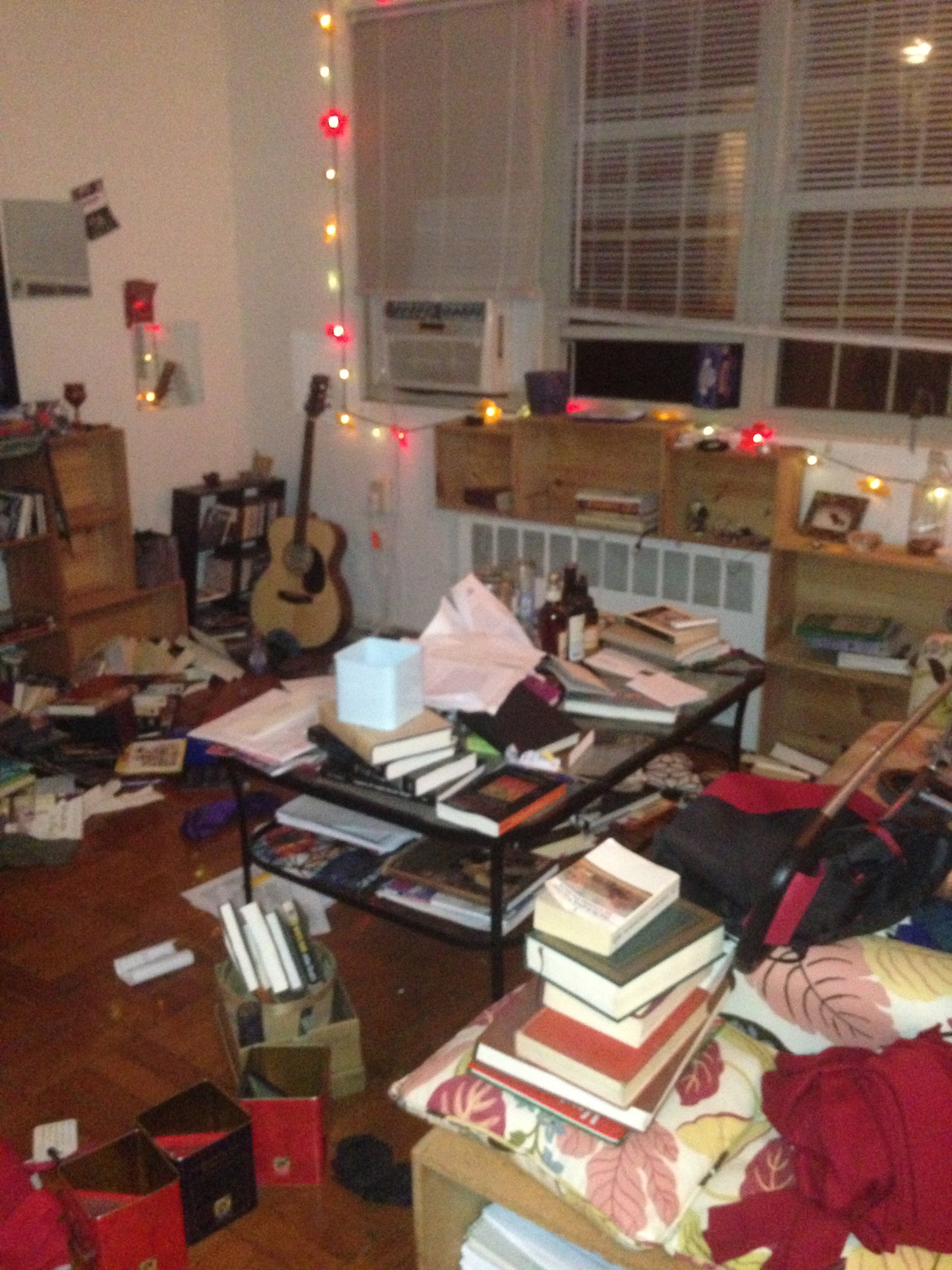
I’m a long-time reader for many reasons.  I’m a writer, Anglophile, was raised Catholic, and have a gay ex-husband whom I love dearly.  I’ve also been a long-time crusader against the IMG_1ridiculous war on marijuana.  About a month ago, I experienced firsthand the persecution that comes from these terrible laws.  I want this story to get out, so that I can help open eyes in any way I can.
For starters, some background.  I’m a 34-year-old woman, divorced in 2006, who has since struggled to put my life back together and garner some stability.  I feel like I’ve done a pretty damn good job, and quite frankly, in the absence of therapy, marijuana has been helpful in managing stress and thinking through issues stemming from childhood abuse so that I can be a whole and healthy person.  I don’t do it in the street, or in cars, or in public at all.  I keep it to myself, behind closed doors, in the privacy of my own home.  I don’t sell, and only have enough on hand for personal enjoyment.

A few years back, I was able to get my financial life together and go back to school to (finally) finish the BA that has eluded me due to these personal and financial issues, with a plan (still in the works) to follow my ultimate dream: moving to England to get my MA and PhD and make a go at a career as a historian and writer, so I can leave the restaurant industry behind.  Well, after 17 years (!!), I graduated with honors in May.  I easily worked 80-90 hours per week, with a two-hour commute to school each way, to make this happen.  I can’t tell you the triumph I felt walking out of my last final.  Too bad it was short lived.

I live in an apartment building in Alexandria, which as a former DC person, you know is the liberal bastion of northern Virginia.  Apparently this does not extend to police harassment.  In March, I was at home, minding my own business, when I heard a knock on my door.

It was a forceful knock (everyone knows how the police knock) and when I looked through the peep hole, I saw a person I did not know wearing blue who claimed to be “building maintenance”.  My father is an attorney, and I interned at the Marijuana Policy Project a few years ago, so the first words out of my mouth were “do you have a warrant?”.  It was amazing how quickly Officer “Building Maintenance’s” attitude changed.  I was told that he did not need a warrant because he had “plain smell”.  I told him that I knew that wasn’t true, and that I was not opening the door without a warrant.

I was then told that if I did not open the door I was “obstructing justice” and that I was “under arrest right now” if I didn’t open the door.  I informed the officer that he was violating my Fourth Amendment rights and that I was not opening the door without a warrant, so we seemed to be at an impasse.  I also informed Officer “Building Maintenance” (who never identified himself as an officer) that I was not clothed, and he told me to open the door anyway.
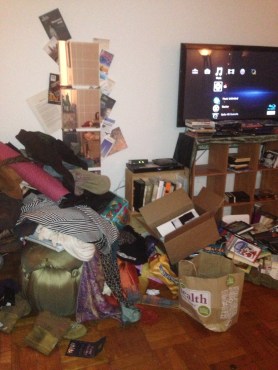
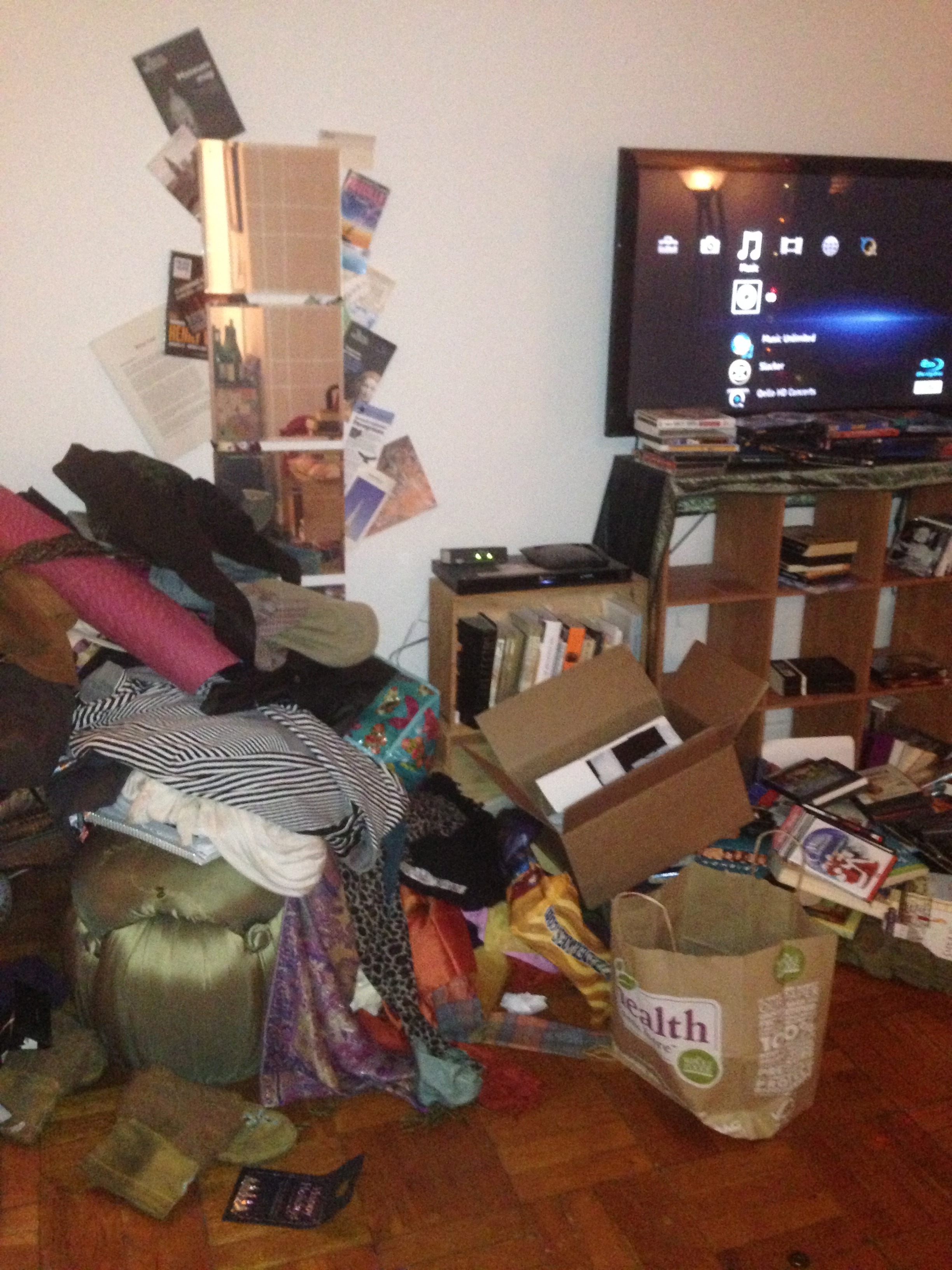
IMG_2I ended up climbing out of my bathroom window to end the harassment, and eventually he went away.  I was astounded that this happened, and took steps to contain the smell even better.  I started exclusively using a vaporizer and burning candles and spraying absurd amounts of air freshener.  I was worried, though, that I became some sort of white whale to Officer “Building Maintenance” because he didn’t scare me into opening the door that day with his threats.  I was also disgusted that some busy body in my building couldn’t mind their own damn business.  This is MY PERSONAL SPACE and what I do in it should be none of your concern.  But my attempts to be as inconspicuous and inoffensive as possible while still living my life the way I choose weren’t good enough for these crusaders.

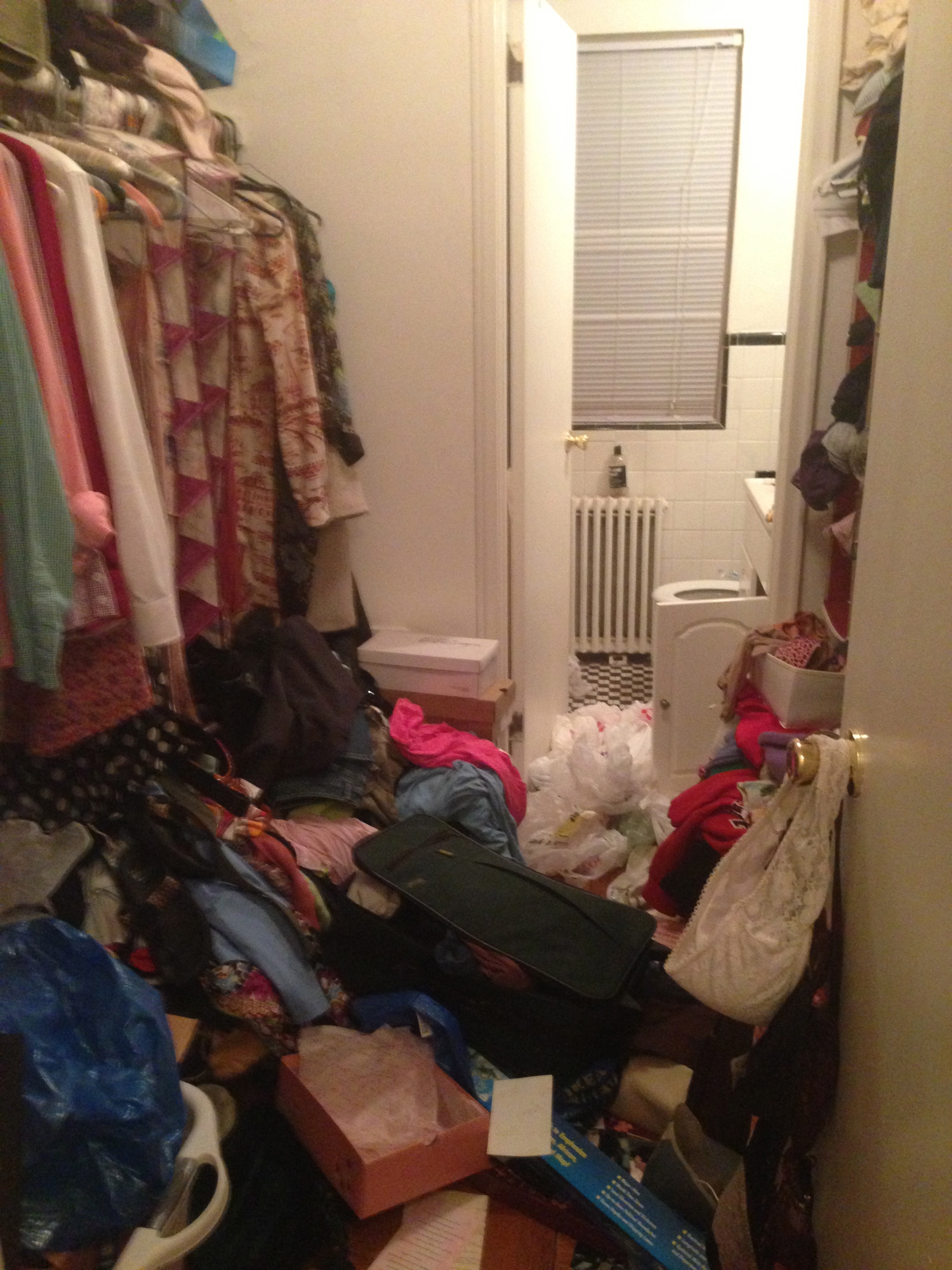
Fast forward to May, the day after my last final.  The week that was supposed to be full of triumph for achieving a goal that had eluded me for half my life, and to celebrate my perseverance.  I got home after a long shift at work (after midnight), to an apartment that looked as if a hurricane had blown through it.  I honestly thought that I had been robbed (photos attached).  Then I noticed that my TV was still there, as was my computer.  I was confused.

Then I looked at my wall.  There was a search warrant tacked to it with a cop’s card that says “call me”.  The mix of emotions that washed over me were overwhelming: fear, anger, relief (that I wasn’t there and that my poor kitty had died a few months earlier before going through that kind of trauma), and what the hell am I going to do?

I texted a friend for support, started attempting to clean up (I’m still not done with that, by the way), and searched the Internet for “marijuana lawyer”.  I’ve always known that justice in this country depends upon the representation that you can afford, and I knew that at this point my amateur’s knowledge of the law wasn’t going to cut it.  I also wasn’t going to cut any kind of deal with these bastards to rat anyone out for leniency, because I have principles.

Luckily, I have been saving for two years to make my dream of graduate school come true, and what they found was laughably minor (a coaster with literally a pinch of weed on it in my freezer … another part of my attempt to be as unobtrusive as possible).  At about 3AM, totally exhausted and stressed, and having not made a dent in the destruction, I knew that I had to get out of my apartment.  I had to work for the next three days, and there was no way I would be able to get any kind of rest there.  I also didn’t want the police to come back without my having legal representation.  So I took pictures of the apartment and the warrant, then packed my bags and walked to a hotel in the middle of the night, with a supportive friend on the phone.

The next day I heard back from the attorney, and spent all of my savings ($3000) to retain her, IMG_1014while at the same time being afraid that I would be evicted.  I sent her pictures of the warrant and gave her all of the absurd information about what was “seized”.  She told me to be prepared to be arrested at any time (even at work … god what a nightmare) and to keep my phone on me.  She told me that she would try to arrange for me to “turn myself in, but that if it went to trial we could probably get the whole thing thrown out”.

I couldn’t believe that this was happening to me. I had never even heard of search warrants being obtained for busting up “smoking weed alone on your couch watching Mad Men” rings. And the justification for the warrant was ridiculous in itself.  The incident where the officer did not identify himself was cited, and another incident was simply made up.  Dirty police work all over the place.

A little while later, I heard back from my lawyer.  She noticed that my name wasn’t on the warrant, which most likely meant that the officer’s information was scant and that there was not likely to be a warrant for my arrest without a name.  So instead of calling the officer, she emailed him with the attitude of “what the hell”.  She immediately heard back, and told me that she thought he was looking for information on me to escalate the situation.  She told me if anyone approached me regarding this situation to tell them to speak to my attorney and give them her information.  I spent a week living on friend’s couches, mostly because I was scared to go home due to the unbelievable personal violation.  What a way to celebrate my graduation!

However, just like I already knew, justice depends on the kind of representation you can afford.  My hiring an attorney effectively ended this once they knew they could not intimidate me into flipping on anyone, and that the pinch they found in the freezer would not stand up in court.  So this turned out as “well” as could be expected, I suppose.  I’m only out my dignity, celebrating my graduation, the savings for making my dreams come true, my sense of security in my own home, and any sense of respect for the police.  I also am not free to relax behind closed doors in the way that I choose because some asshole in my building doesn’t like it.  Also, they sliced up my bedspread in their “search” (god knows why).   That’s being “fortunate” in this type of situation.

So that’s my story.  Keep up the good fight.  I know that I intend to.  I’m going to finally get to England, too.