How Many Nukes Do We Need?

On Wednesday in Berlin, the president announced a new push for nuclear reduction, proposing to reduce US nuclear stocks by one third, to around 1000, and to initiate talks with Russia. Daryl Kimball wants more:

Former military officials, policymakers, and experts agree that a deployed strategic arsenal of 1,000 nuclear weapons is more than sufficient to guarantee the security of the United States and its allies against nuclear attack. In April 2012, Gen. James Cartwright, commander of U.S. nuclear forces under President George W. Bush, suggested moving toward a nuclear force of 450 strategic weapons by 2022.

Even that many warheads can pose a grave and unnecessary threat. An analysis conducted in 2002 by Physicians for Social Responsibility showed that a Russian attack with only 300 thermonuclear warheads hitting U.S. urban areas would kill 77 million Americans in the first half hour from blast effects and firestorms, to say nothing of the subsequent radioactive fallout. A U.S. attack of similar size would have the same devastating impact on Russia.

Joseph Stalin may have been willing to sacrifice tens of millions of innocent Russians in a nuclear exchange during the Cold War, but even President Putin would not.

Matthew Kroenig, on the other hand, argues for nuclear “overkill”:

Even if Russia agrees to match the president’s proposed cuts, the nuclear reductions would attenuate our advantages vis-à-vis Russia and eat into our margin of superiority against other nuclear-armed states, such as China, possibly increasing the likelihood that the United States will be challenged militarily and reducing the probability that we achieve our goals in future crises.

If there is at least some reason to believe that reductions could harm America’s strategic deterrent, then certainly those in favor of reductions provide concrete evidence that the benefits of reductions outweigh these costs, right? Alas, they do not.

The Things They Couldn’t Carry Home

https://twitter.com/jetpack/status/347541111688003585

Max Fisher considers the implications of the massive scrapping of military hardware:

It’s not because the vehicles are old or don’t work – they’re relatively new and appear to work well. The cost of moving them is just not worth the expense. And, maybe more than that, the United States doesn’t see itself as needing every single one of the 24,000 MRAPs designed for combat over sprawling, difficult terrain against bomb-making insurgents. That’s not really a mission the country is investing in anymore. …

The decision to turn these jaw-droppingly expensive vehicles into scrap metal reflects, [Ernesto] Londoño points out, “a presumptive end to an era of protracted ground wars.” It’s hard to miss the symbolism: This military tool, which cost billions to design and was launched to great fanfare just a few years ago as the perfect tool for America’s mission in Afghanistan, is just not as useful anymore. That’s not just a sign of how expensive it is to ship stuff out of Afghanistan, it’s a reminder of how radically America’s long-term interests have changed in the past six years.

Harold Maass notes the ironic justification for the move:

The decision to shred giant trucks and scrap other material was actually the product of a debate on how to reduce waste. Some military leaders wanted to bring home more equipment, but they were overruled because the cost of shipping heavy equipment out of war-torn, landlocked Afghanistan was too high.

Ed Morrissey, meanwhile, focuses on the image that the US projects by abandoning these vehicles:

If we were leaving as a successful pacification/occupation force, we would have allowed ourselves plenty of time to retrieve our equipment despite the logistical challenges that presents.  The need to have that heavy equipment on the ground in an accelerated withdrawal schedule points to the fact that we have not in fact succeeded in Afghanistan in anything other than achieving a stalemate after twelve years of fighting.

We wouldn’t be the first world power to end up leaving under those circumstances, and we can argue that we did better than the Russians and the colonial British in leaving on our own terms.  The haste of our exit, as exemplified by our abandonment of billions in military resources, makes that argument a little tougher to make, and in that region, the image of weakness is not a good impression to make.

Ask Dan Savage Anything: The Birds And The Bees

Apparently being a sex advice columnist doesn’t make The Sex Talk with your kid any easier:

A few years ago, Dan podcasted a conversation with Amy Lang on how parents should talk to their kids about sex. In a recent WSJ Q&A, Dan explained another big talk, only this time one that DJ had to have with him and Terry:

[Q.] In “American Savage,” you talk about the heartbreak you and your husband, Terry Miller, felt when your son felt like he had to “come out” as straight to you. When you adopted DJ in 1998, did it ever occur to you that something like this would happen?

[A.] We weren’t heartbroken that he came out to us as straight — we’re not upset that he’s straight. Far from it. And we saw it coming a mile away. My mother, after she calmed down about me being gay, admitted that she kind of always knew. We kind of always knew that DJ was straight. What was heartbreaking was the realization that he was worried we might not react well to the news. We felt like we had gone out of our way to emphasize that he would most likely be straight, because well over 90% of everybody is, and that we loved him gay, straight, bi, whatever. But he was worried and that was heartbreaking for me. For us.

We had a few conversations when he was younger — prepuberty — during which he insisted that he would be gay. When he was nine he told us that he didn’t like girls and so, you know, case closed: going to be gay when he grows up. We told him that we loved girls when we were nine. Not liking girls when you’re a little boy is almost always evidence of straightness-to-come, not gayness. He doubled down and insisted he would be gay. Maybe that’s the reason he was hesitant — he’s pretty stubborn (wonder where he gets that?), and he basically had to admit that he was wrong.

Dan’s new book, American Savage: Insights, Slights, and Fights on Faith, Sex, Love, and Politicscame out a few weeks ago. My recent conversation with him at the New York Public Library is here. Dan’s previous answers are here. Our full Ask Anything archive is here.

The GOP House Defeats Itself

Yesterday, a Republican farm bill unexpectedly failed in the House. Barro explains what happened:

Opposition was bipartisan. Almost all Democrats voted no because they opposed the food stamp cuts. But 60 Republicans also voted against the bill, mostly because it didn’t cut enough. This is another demonstration of the impossible hand that Speaker John Boehner is playing. He wants his caucus to pass alternatives to Democratic policy proposals from the Senate. But the conservative wing of his caucus places high demands and is willing to vote against leadership-backed proposals.

Chait sees the bill’s failure as “yet another self-defeating rebellion from the right”:

The ultraconservatives could have formed a coalition with liberals who like food stamps to cut agri-socialism. Or they could have formed a coalition with Republicans who like agri-socialism but hate food stamps. Instead, they decided neither one cuts enough money and sunk the bill altogether. It’s actually tragic that there’s finally a large block of Republicans willing to slash the worst domestic program in government, but they’re too crazy and hateful to actually get it done.

Weigel looks ahead:

We’re talking here about a bill that passed in fairly ideal Senate circumstances—a better than 2-1 bipartisan majority. What’s another bill that’s allegedly going to be built like that? The immigration bill, of course.

Beutler also focuses on immigration:

You can watch the farm bill fail and reason that Boehner might think immigration reform isn’t worth it. Or you can watch the farm bill fail and reason that he might decide to dispense with all the member management theatrics and throw in with Democrats and GOP donors. But you can’t watch the farm bill fail and see the House GOP passing a Hastert-rule compliant immigration reform bill and going into conference with the Senate.

Ezra Klein and Evan Soltas have a different perspective:

The prospects of immigration have always relied on the theory that it’s a unicorn — that Republicans see a strategic need to pass it, or let it pass, that they don’t see for virtually anything else in government. Or, to put it differently, the idea is that immigration reform is an exception to the precise rules that doomed the farm bill. Whether that’s true remains to be seen. But the farm bill’s failure doesn’t prove it false.

An Unconditional Victory In The Culture War

lazarus2

A reader responds to the apology from the president of Exodus:

Allow me a small victory dance. Thirty years ago this month I attempted suicide. I was 23 and had just finished a year of horrendous reparative therapy (including aversion therapy). Five years before that my first love killed himself because he couldn’t bear to have people know who he was. I went to my church leader, who subscribed to Exodus views, and he sent me to the hell that was reparative therapy. After a year of that, I was sure my church hated me my and family hated me, but most importantly, God hated me. The only solution was to end a life that was even despised by a loving God. I will not go into details of that attempt, but obviously I made it through. Many more have not.

In fact, I spent the ensuing three decades battling the demons forced on my by reparative therapy – and I won.

I then went on to battle for my rights and my liberty. I am now married to my loving husband of 17 years and have two amazingly beautiful and sweet daughters whom we adopted. My extended family is unconditionally accepting, as are my Mormon in-laws. I have an amazing career as a scientist and lead a fulfilling and joyous life. In spite of Exodus-inspired reparative therapy, I was able to live and find love and a meaningful life. There are thousands of men and women who never had that chance. The demons of self-loathing that reparative therapy instilled in them destroyed their lives.

I was so shocked and surprised when I read that Exodus International was shutting down and apologized – a real apology – that I couldn’t help but break down and sob in joy. I am so very grateful that this has occurred and accept the heartfelt apology.

But please, allow me a small victory cheer. It was a decades-long battle, both personally and as a community, one that saw many lives destroyed. I am giving a victory cheer today for all my compatriots who didn’t make it to see this day. Their suffering has been repented of by the perpetrators. I am giving a small victory cheer for all the future young men and women who might not have to go through that hell because this organization will not exist any longer.

(Photograph: Lazarus rising from the dead, by Sir Jacob Epstein, New College, Oxford. Via Lawrence OP, Flickr. His full album is amazing.)

Do Mascots Need Modernizing? Ctd

image001

The popular thread continues:

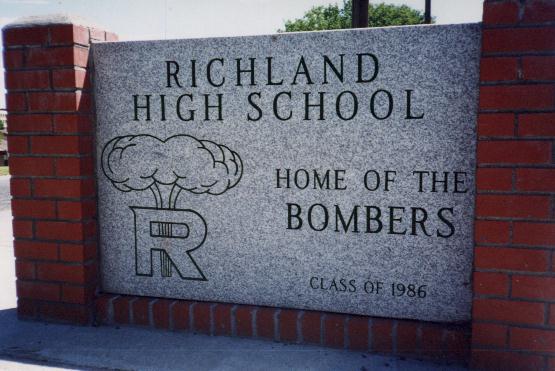
In a different twist to potentially offensive school mascots, consider the Richland High School Bombers, which have an atomic mushroom cloud as their mascot.  The school is near Hanford, Washington, where the “Fat Man” atomic bomb dropped on Nagasaki was manufactured.  There has been substantial controversy over the mascot for some time now (e.g. here and here).

Another adds:

I know what the Hanford nuclear reservation means to that community and how proud they are what they did for the war effort, but … come on.  Being proud of it is one thing, but celebrating and reveling in it is another.

Update from a reader:

I went to Richland High School and even graduated in 1986, the year the sign was made. I don’t think the students understood the gravity of that symbol. The symbol fit with the pro-nuclear stance of the community – the defense aspect that goes all the way back to WWII and the power generating aspect. A good friend of mine was a football coach there and worked hard to bring back the original (I think) meaning of ‘Bomber’ – a plane that was financed by the workers at Hanford. Look up “A Day’s Pay” plane. My friend was really frustrated, though, with some of the adult boosters – team fan club – that pushed the mushroom cloud aspect. (P.S. I love The Dish and am one of your early subscribers!)

Another reader:

The high school in Orofino, Idaho shares its town with a state mental hospital:

Screen Shot 2013-06-21 at 2.39.21 AM

Another adds to this tangent:

North Dakota does indeed have a long and storied history of dealing with colorful team names and mascots.  My favorite has to be the controversy surrounding the Devils Lake Satans.  Yes, you read that right: The high school teams were known as the Satans, complete with a red imp mascot.

After a great hue and cry by evangelical Christians throughout the ’90s, the school board finally voted to retire the nickname and mascot in 2002 and Screen Shot 2013-06-21 at 2.34.15 AMdirected the school to come up with something new.  The overwhelming choice of the students was to change to The Blaze, but that got shot down when someone on the school board realized that “Blaze” was slang for smoking marijuana. The eventual compromise? The Firebirds.P.S.  The best high school sports match-up in North Dakota history: 1981 semifinal basketball game between the Devils Lake Satans and the St. Mary’s Saints.  Oh, you can just imagine the cheers coming from both sets of fans …

Last but certainly not least:

Maybe a little off topic: the mascot for the Arkansas School for the Deaf is the leopard, or, as they put it on their webpage, “Welcome to the Arkansas School for the Deaf Leopards.”

Do We Really Need The Self-Driving Car? Ctd

This embed is invalid


A reader writes:

Just a quick response to the question:  My mother is 88 years old.  She’s in great shape for 88, very self-sufficient.  But she’s not really physically fit to drive and thankfully gave up her car keys willingly about 8 years ago.  Many “seasoned citizens” are decidedly NOT willing to give up their keys, and it’s a terrible battle within families when it’s time for Grampa to give up driving for good.

My mom feels very stranded and many times wishes she could still drive.  She loves the idea of a self-driving car, it would give her back some of the freedom she gave up when she stopped driving.  She’s doubts she’ll live to see the day when self-driving cars are a reality, but I can see how it can really improve the lives of elderly folks, as well as the handicapped.

Another agrees – and expands the argument:

Autonomous cars will be a boon for aging populations.

Many old people rely on their cars but should not be driving. Simply taking them off the road does not help them go to the hospital, store, to socialize and live active lives. But a chauffeur-less car would allow them to do these things without driving.

If there’s an argument that old people should be driven automatically, there’s an argument that all people should be. There’d be far fewer accidents, no traffic, no parking meters, no parking garages, no drunk driving, no insurance issues, no traffic stops, and no DMV. And you could text and talk to your heart’s content, with even a beer if you like, or work on your computer on the way to the office – all the negatives associated with car culture would be abated. You would not need to own a car; you could subscribe to a car service. “Your car” would always be within five minutes of you, among a vast fleet.

Aside from ferrying people around, the most impact from driverless vehicles would be on trucking. “Trucks” would be like those strange little boxy robots in the early Star Wars movies, zipping along on their individual missions. They would completely revolutionize how things are transported and delivered, from the macro to the micro, in driverless trucks of all sizes, down to the pedestrian level. A pharmacy might dispatch your medicines from a secure mini-truck in your area. Order online, get your pills in a few minutes. Or takeout, Amazon goodies – all “things” would be in motion. Not to mention the impact of drone delivery systems. A totally different world, to be sure.

I just wonder if there’s a tradeoff of freedoms. Would you get into your driverless car, and find yourself locked in and being taken to the IRS, FBI, NSA or police for some infraction that’s on your record? Driverless paddy wagons?

An Unconditional Surrender In The Culture War

pompeo-batoni

[Re-posted from earlier today]

It’s very rare that one side in a culture war actively renounces its past positions and embraces a new one. That’s particularly true on the Christianist right, where absolutes hold sway, regardless of doubt or charity. So today is a banner day for those of us who have long fought for the equal dignity of homosexuals as children of the same God as heterosexuals, and deserving of no less love and support. Exodus International, the group that championed “reparative therapy” for gays as the only way to live a Christian life, will soon cease to exist and has offered an apology for its past actions. This is quite a statement from Exodus’s president, Alan Chambers:

Exodus is an institution in the conservative Christian world, but we’ve ceased to be a living, breathing organism. For quite some time we’ve been imprisoned in a worldview that’s neither honoring toward our fellow human beings, nor biblical. From a Judeo-Christian perspective, gay, straight or otherwise, we’re all prodigal sons and daughters. Exodus International is the prodigal’s older brother, trying to impose its will on God’s promises, and make judgments on who’s worthy of His Kingdom. God is calling us to be the Father – to welcome everyone, to love unhindered.

Then this personal apology:

Please know that I am deeply sorry. I am sorry for the pain and hurt many of you have experienced. I am sorry that some of you spent years working through the shame and guilt you felt when your attractions didn’t change. I am sorry we promoted sexual orientation change efforts and reparative theories about sexual orientation that stigmatized parents. I am sorry that there were times I didn’t stand up to people publicly “on my side” who called you names like sodomite—or worse. I am sorry that I, knowing some of you so well, failed to share publicly that the gay and lesbian people I know were every bit as capable of being amazing parents as the straight people that I know. I am sorry that when I celebrated a person coming to Christ and surrendering their sexuality to Him that I callously celebrated the end of relationships that broke your heart. I am sorry that I have communicated that you and your families are less than me and mine.

That’s an enormous statement given the recent past and, to me, a sign of God’s grace. That’s why when I say “unconditional surrender,” I hope Exodus won’t regard that as some kind of victory lap. It isn’t. It just springs from a deep appreciation of their grace-filled decision to re-examine their conduct as Christians and see where the world may have led them astray. Anyone in the public sphere who openly and candidly comes to terms with an error of judgment, and owns it, and even seeks forgiveness for it, is contributing to a more humane, honest conversation and dialogue.

I’ve never been one of those campaigning to shut these psychological torments/”therapies” down. If that kind of therapy is what an adult wants, I will not get in the way.

In fact, I examined the actual arguments of reparative therapy in some detail in my book, Love Undetectable. The mind is still mysterious enough and the origins of our emotional and sexual attractions so complex, my view has always been to keep an open mind about what makes one a homosexual, before or after birth. I still don’t know. But what I do know is that homosexuality exists, that we are not a chimera, and that we are not straight people, drawn to wicked things. We are simply human beings, as human as any heterosexual, with all that entails for Christian doctrine.

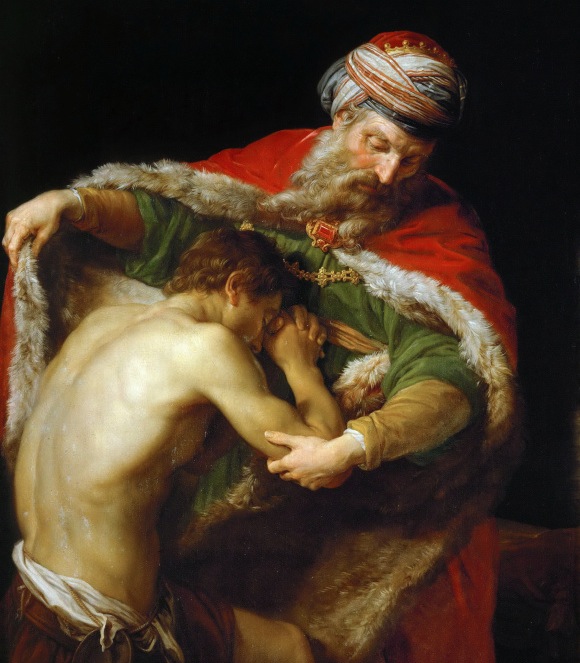
And the older brother of the prodigal son is a fascinating analogy. The older son is still thinking in terms of rigid categories of worthiness and rule-based morality (and the pride that often comes with them), while the father opens his heart and doors to the younger, feckless son, who long ago abandoned every duty and every moral obligation, but who remains his son. The righteous brother is appalled at the overflow of the father’s love to such a miscreant:

Behold, these many years I have served you, and I never disobeyed a commandment of yours, but you never gave me a goat, that I might celebrate with my friends. But when this, your son, came, who has devoured your living with prostitutes, you killed the fattened calf for him.

But God’s love sees past these categories. The only true virtue for Jesus is love – unconditional love, for anyone, in any situation. The parable is about letting go of those strict and sometimes self-righteous moral codes in order to surrender to the expansive and unknowable force of God’s love. I return again to Augustine’s phrase

In essential things, unity. In doubtful things, liberty. In all things, charity.

Finally, one part of the Christian right has grasped the last part of that equation. They have returned from the barren land of Christianism and control of others and toward the fertile valley of Christianity and love for all.

May others follow in their path – as many in the younger generation already are.

(Painting: The Return Of The Prodigal Son, Pompeo Batoni, 1773)

Being African In America


Parul Sehgal interviews Chimamanda Ngozi Adichie, an author born in Nigeria who has lived in the US off and on since age 19, about how she handled race in her book Americanah:

CNA: Race is, I think, the subject that Americans are most uncomfortable with. (Gender, class, sexual orientation, ethnicity, religion are not as uncomfortable.) This is an American generation raised with the mantra: DO NOT OFFEND. And often honesty about race becomes synonymous with offending someone. …

I wanted very much to write an honest book. … I do realize that there is a certain privilege in my position as an outsider, a foreigner, somebody who is not an American. I am really looking in from the outside. I became fascinated by race when I came to the U.S. I still am. I am fascinated by the many permutations of race, especially of blackness, since that is the identity I was assigned in America.

PS: You give [Americanah character] Ifemelu a similar line: “How many other people had become black in America?” Was it a specific moment for you? Did you resent it? Embrace it?

CNA: At first I resented it. A few weeks into my stay in the U.S., an African American man in Brooklyn called me “sister,” and I recoiled. I did not want to be mistaken for African American. I hadn’t been long in the U.S., but I had already bought into the stereotypes associated with blackness. I didn’t want to be black. I didn’t yet realize that I really didn’t have a choice.

Then my resentment turned to acceptance. I read a lot of African American history. And if I had to choose a group of people whose collective story I most admire today, then it would be African Americans. The resilience and grace that many African Americans brought to a brutal and dehumanizing history is very moving to me. Sometimes race enrages me, sometimes it amuses me, sometimes it puzzles me.

I’m now happily black and now don’t mind being called a sister, but I do think that there are many ways of being black. And when I am in Nigeria, I never think of myself as black.

Adichie’s TED talk, “The Danger of a Single Story”, is seen above.

(Hat tip: Paper Trail)

The World’s Hidden Refugees

In honor of World Refugee Day, Caitlin Dewey calls our attention to internally displaced people (IDP), populations fleeing conflict without crossing borders who are thus “without the benefit of an international sanctuary”:

IDPs aren’t always as visible as refugees, perhaps because their growing numbers don’t swell international camps or burden neighboring countries. But … refugee numbers have mostly stayed stable over the past five years, despite devastating conflicts in Syria, Mali and the Congo. It’s the number of IDPs that continues to grow year-over-year: up to 17.7 million in 2012, from 15.5 million the year before. Some estimates put that number even higher — the International Displacement Monitoring Centre cites 28.8 million IDPs in 2012, its highest ever recorded. …

All displaced people are vulnerable. But internally displaced people can face particular challenges, advocates say, because they often depend primarily on their own government for support, even when that government is the thing displacing them. And international aid groups that work with IDPs often have to go through national governments to get help to the displaced.

Harold Maass adds some perspective:

The number of people around the world who have been forced to flee home due to war or some other life-threatening crisis hit a 19-year high in 2012, according to a new report by the United Nations’ refugee office. In all, 45.2 million people have been displaced by conflict and crisis. “This means one in each 4.1 seconds,” says Antonio Guterres, the U.N. high commissioner for refugees. “So each time you blink, another person is forced to flee.”

Elizabeth Ferris applauds UN efforts, but argues that they won’t be enough:

The United Nations High Commissioner for Refugees (UNHCR) does a wonderful job, by and large, in responding to immediate humanitarian needs of refugees and in many cases of IDPs, but UNHCR alone can’t find solutions for the world’s refugees and IDPs. Concerted action is needed by governments, development actors and private citizens to find solutions for refugees and IDPs. Finding solutions for people who have been displaced for years is hard work and political commitment is needed. World Refugee Day reminds us of the urgent need to redouble efforts to bring an end to displacement wherever possible and as soon as possible. It should be completely unacceptable that today a third generation of refugees is being born in Dadaab refugee camp in Kenya.