What’s A Bisexual Anyway? Ctd

Add your two cents to our anonymous poll:

This embed is invalid

Many more readers are sounding off:

I think bisexuals are not out as much as gay people because we can pass. Somewhere in this NPR segment is some data that most bisexuals eventually marry a person of the opposite gender. Like the previous reader said, my sexual experiences with women are not exactly fodder for Christmas dinner family discussion, and as I’ve not had a relationship with another woman, there’s not much to say. My husband knows I also like women, but I’m not technically out to my family.

Another:

I expect someone’s already pointed you at Lisa Diamond’s longitudinal study, Sexual Fluidity: Understanding Women’s Love and Desire, but I thought I’d note it just in case, as this book and the concept of remaining “unlabeled” was very meaningful to me.

Another quotes the original reader:

I don’t tell anyone because whom I fuck and how is my own business and nobody else’s. I don’t need support. I don’t want to be part of a sexual community. I just want to do what I want to do and not get any shit about it, which is 100% possible if I just keep it to myself.

That’s what all the closeted guys say. At least the kid in Arkansas terrified of his father has a good reason. The reader admits he identifies as straight because it’s more convenient. Those of us who are mostly or exclusively homosexual don’t have that luxury, which is why we come out. And coming out is the moral thing to do because it might help that kid in Arkansas knows he’s not a freak.

That reader sounds like one of the reasons a lot of gay guys don’t date bisexual guys. Many of them don’t want to publicly acknowledge their relationships, since they prefer the privileges that come with heterosexual relationships and heterosexual identity. By the way, does he keep it to himself to the exclusion of the women he dates and might eventually marry?

Another is far less resentful of that reader:

Thanks to your bisexual reader for reminding me that sometimes what is important to you may be virtually meaningless to someone else, a lesson which should be accepted with good grace. I’m a bisexual woman, but unlike your reader, my bisexuality is integral to my identity. Perhaps my family’s rejection of my sexual identity has something to do with this (I come from a very religious background, although I’ve since given up the faith). I’ve also been in serious relationships with both men and women, and while whom I fuck may not be anyone’s business, it is relevant if someone wants to get to know me.

I think what it comes down to is whether you view sexuality as self-defined (in which case your reader wouldn’t be bisexual) or based on sexual behaviour (which would mean your reader is actually in the closet, regardless of what he claims). But however you look at it, this issue creates a tension between bisexuals like me, who are tired of being lumped together (by both straight and queer folks) with people like your reader, with all the stereotypes that entails, and bisexuals like your reader who don’t want to be judged as disingenuous for occasionally straying outside the rigid sexual boundaries set by society.

Another bisexual woman tells her story:

I grew up in a very liberal household. My mother took pride in being one of the few white students in college in Louisiana who befriended the black students when they were admitted to the school. We were a household that welcomed “everybody.” So when I was raised to understand that “bisexuals don’t exist,” I believed it. I believed they were closeted gay people, just like my parents told me.

I was always attracted to men, but later in high school and in my early college years, I started having sex dreams about women occasionally. I talked to one of my boyfriends about this and he once asked me if I was bi. I became unnecessarily defensive. In my mind, of course I wasn’t bi. I just thought Eliza Dushku (Faith from Buffy) was very attractive.

In my late teenage years, I came to accept that bisexuals existed, but distanced myself from that label for early adulthood. I would occasionally kiss or fool around with a female friend when I had been drinking, but often felt like I needed to be a certain level of drunk for this to be acceptable, or excusable, behavior.

It wasn’t until last year, when I was talking to one of my best friends who is gay about his coming out experience that my parents’ words echoed through my head “bi people don’t exist.” At that moment, I finally realized I was, in fact, bisexual. I proceeded to awkwardly tell my husband and a few of my closest friends, but only a few people.

I still feel incredibly awkward about it, and will feel the hesitation when I use the word “bisexual” to identify myself. At the same rate, I’m frustrated that I only figured this out in my late 20s, and I believe I missed out by not having the opportunity to date women, since I’m now happily married.

I try to be vocal about my sexuality, in hopes that by me talking about bisexuals existing I might somehow help other younger versions of myself come to terms with their sexuality. I don’t like considering it a “coming out” process, because the situation is so different than what I know my gay friends have experienced, but it’s important for me to embrace it and be vocal about it.

I do agree with your reader that sexuality is a fluid thing, and most people I’ve told about my sexuality have said something along the same lines. However, I still fear the stigmas. How will people react when I tell them I’m bi? I’m a married woman who has only dated men. People will question me and doubt me and think I’m just trying to get attention. But it’s an important part of my identity, and so I try to talk about it, which is part of why I am sharing my story with you.

Another reader:

I’m fascinated (in a vaguely horrified way) at your reader who commented: “I have always believed, and almost all of my female friends agree, that women are, by their very nature, “bisexual” (unless they are gay), and that it is the rare woman who is 100% heterosexual.” Really? The “rare woman”? I guess I am one of those “rare women”.

I have had many sexual relationships and many friendships with other females. I have been involved in polygamous relationships (the hinge point of a V, or perhaps a multi-directional W, depending on how you look at it. And I am solidly hetero.

I love my women friends. As friends. As sisters. As who they are. I have even loved the partners of my sexual partners, albeit not in a sexual way. But I have no interest or desire in having sex with another woman. It is not a turn on for me, it is not a sexual attractant for me, and I have chosen to NOT be part of poly relationships where there was a need/want for bisexuality.

I believe that your reader is engaging in the Unicorn Belief System, a system whereby straight men believe that all women are bisexual and want nothing more than to get it on with both men and women for the pleasure of the man involved.

There are woman such as myself who has had an encounter with another woman and found it physically pleasurable and enjoyable for what it was, but recognizes that it’s not what they want/need going forward. That doesn’t make me “bi” any more than a gay man who sleeps with a woman to try to figure out his sexuality and has an orgasm while doing so is “straight”. That makes me a person who was exploring my sexuality before settling into what I found out I wanted and needed.
Do We Always Need Scientific Proof?

Last week, advocacy groups Friends of the Earth and GM Freeze released a study that claims to have detected traces of weedkillers in the urine of volunteers throughout Europe. Kara Moses considers the role that such “non-scientific” studies should play in the policy process:

The study was basic, the sample size was small, the report was unpublished. But could it point to an important issue for further investigation? Academics denounced the findings as “not scientific”, saying the results could not be taken seriously and that campaign groups should submit their work to peer-reviewed journals to provide a “genuine contribution to the debate”. Other scientists refused to comment on the study, saying that without it having gone through the review process there was simply no way of commenting on the findings. …

But charities and NGOs often don’t have the resources or expertise to undertake full scientific studies and publish them in journals. Is it even their role to do so? By producing snapshot studies that simply point to an issue, as long they don’t make any grand claims based on their findings, aren’t they simply doing their job of raising awareness of issues that affect society and the environment?

Chris Tackett agrees, distinguishing between the scientific and commercial realms:

It is important for science to maintain standards when it comes to experiment design and statistically significant sample size. But consumers, whether individuals or municipalities, shouldn’t feel the need to wait till there is overwhelming scientific consensus to decide that spraying toxic chemicals all over their lawns or town or crops is not the best idea. Similarly, we didn’t need to wait till there was overwhelming scientific proof to take action on climate change, yet here we are.

The point here is that scientific proof matters in science, but it shouldn’t necessarily be what determines our actions. We can intuit that some things are unwise or dangerous or against our values without needing reams of scientific data to back up our concerns.

Mark Hoofnagle, discussing a study that claimed a link between GMOs and cancer, worries that such thinking leaves environmental groups open to comparisons to climate skeptics:

In his promotion of the underwhelming evidence presented recently against GMO [genetically modified organism] corn and soy, Tom Laskawy wrote against the “GMO-lovers” (uggh it’s just like Warmist) “freaking out” over these results. Umm, no. Freaking out would suggest that a study had been performed that created enough evidence that the extensive literature on safety has in any way been put in doubt. This is not the case. … The study in no way suggests that GM might be harmful to us, because the study doesn’t suggest anything at all. The study authors might make that suggestion, but the results of the study are just as likely to be due to chance as from any effect of GM food. …

That won’t stop us all from being called a “shill” in every comment thread in which we express skepticism of the often outrageous, science-fiction claims of anti-GM advocates like Jeffrey Smith. So what’s this ideology that binds us all together on the ludicrous nature arguments made against GMO, other than a hatred of bullshit? So Laskaway is partially correct, on one side we have groups with a specific and obvious bias with a high probability of ideology clouding their reason on science. On the other side we have the AAASthe European Commissionthe Royal Society, the National Academy of Science Institute of Medicine, and a diverse group of skeptic and science writers from Richard Dawkins to PZ Myers to Dave Gorski and Steve Novella. Feel free any time to take these two weak papers that show nothing, wave them under our nose and call us the ideologues.

What The Hell Is Happening In Brazil?

FBL-WC2014-CONFED-PROTEST

On-the-ground readers report:

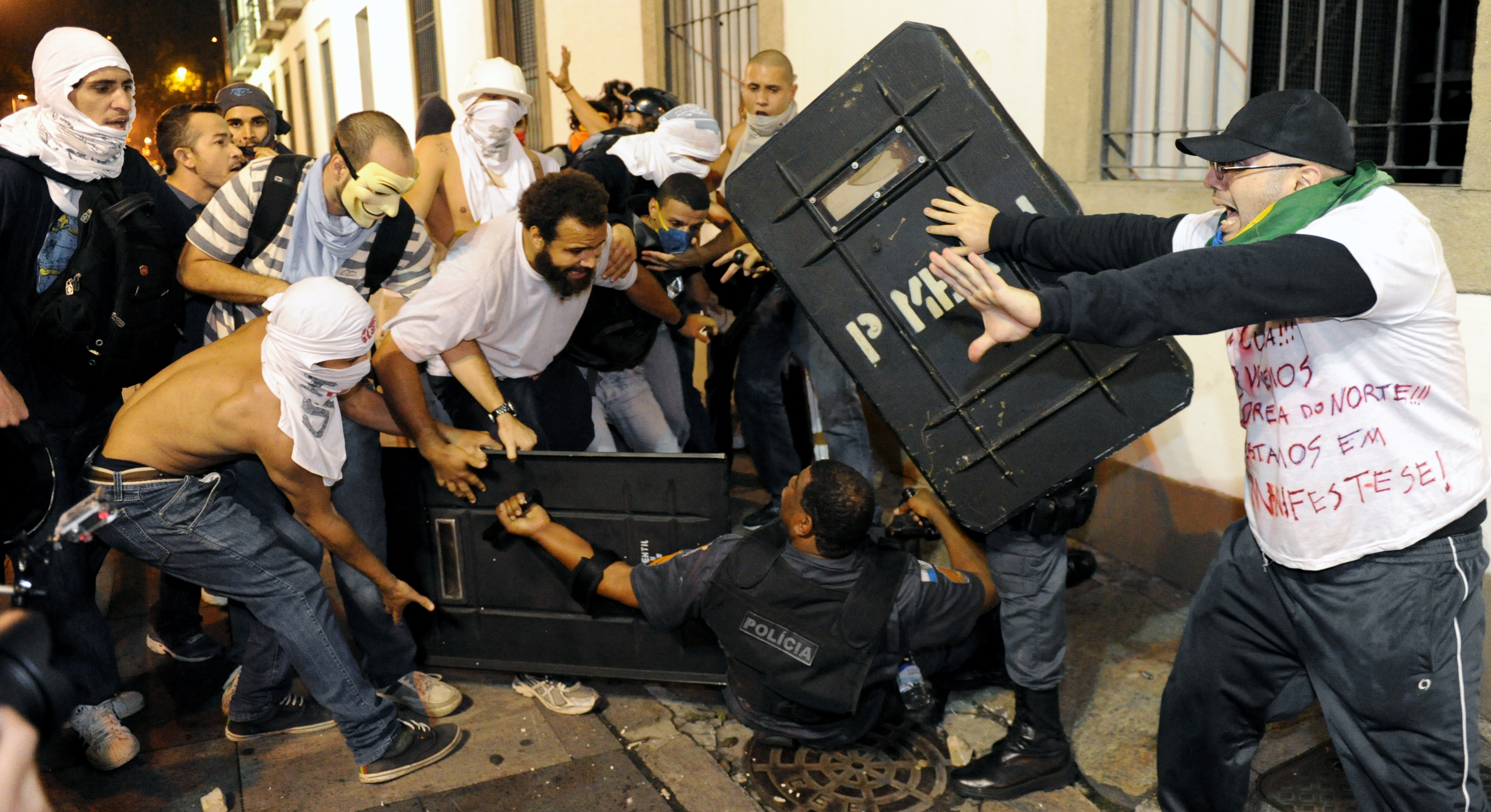
Why nary a mention of the anti-government protests going on in Brazil? Tens of thousands of people are demonstrating in cities throughout the world’s sixth largest economy – certainly big news and something of this scale not seen in South America since the ’80s. Granted it’s not the Middle East. However, it’s a significant event worthy of some coverage/analysis on the Dish, IMO.

The IMO is admittedly biased. I just returned from marching with protestors along Av. Faria Lima in São Paulo. Things were quite peaceful, one could even say festive, as clowns trounced about, a man on stilts danced around (dusted them off before Carnaval it seems), and groups of drummers played classic samba rhythms. Much of this is simply indicative of Brazilian culture – the whole enjoying life and trying to have a good time part of it.

Nonetheless, the general message of the protests was not festive: “We deserve better from our government.”

I saw all sorts of signs and placards admonishing a corrupt government that heavily taxes its people with little to show in terms of public services (education and healthcare in particular). I believe your last post about Brazil was this in January – “Boom Times For Brazil”. There are two sides to every coin, so Dish readers should know that boom times don’t necessarily mean good times for the citizenry of a country that suffers from tragic and wholly resolvable social inequality. It will be interesting to see if the momentum of these protests continues.

On the cab ride home, the driver told me that he doesn’t think anything will be done by the PT party in response to this. Brazil’s President, Dilma Rousseff, was quoted simply saying, “It is natural for young people to demonstrate.” Whether this response throws more fuel on the fire is yet to be seen. Also, there were more than just young people in the crowd tonight.

Another gets more specific:

Things here in São Paulo are getting contentious and it looks as if it could be Taksim all over again. About two weeks ago, some small protests started on Paulista Ave in downtown São Paulo over a $0.10 increase in the bus fares. Of course, the protest was about more than a hike in fare though; it was about the horrible state of Brazil’s infrastructure, government corruption, high inflation and low growth – basically everything that’s dysfunctional about this place.

Predictably the police didn’t handle things well, so more people came out, fueling more protests. Last Friday police began firing on protestors and beating journalists – it looks like the government has finally woken the slumbering beast here. 230,000+ people are said to have headed out to the streets of São Paulo, with large protests in Rio and other major cities as well. Brazilians are apparently even going to protest in front of their embassies as far as away as Dublin and Berlin.

For videos and documentation of some of the violence from Friday, you’ll have to Google Translate this (check out number 9). Here is a good explanation of what the real issues are (like Taksim wasn’t about just a park, this isn’t just about bus fares). A Facebook event page for protests is here. And here is a list of 33 foreign cities Brazilians will also be protesting in.

Also worth noting is that the FIFA Confederate Cup is starting this week, which is basically like a trial run for next year’s World Cup. Brazil’s infrastructure is failing spectacularly there, with some people waiting up to six hours just to leave the airport. So this is basically the worst timing possible for the government, as the world’s attention is about to be on the country anyway.

I’ll be going down to the protest today. I can continue passing along info as I find it.

That reader follows up:

This video shows some of the protests over the weekend in Rio. The reporters in the video are trying to blame the violence on the protesters and are writing them off as just angry youth with nothing better to do – while the video shows police beating people and shooting tear gas at them. The reporters also are lamenting that this is happening during the Confederate’s Cup, as it’s going to embarrass the country on the international level. It was a HUGE deal for Brazil to land the World Cup and Olympics because it meant tons of money was going to be pumped into the country to build infrastructure. Well, the money came and the infrastructure didn’t. So now you have tens, if not hundreds, of thousands of pissed off people on the streets.

Another passes along this video as a good summary of the protestors’ grievances.

(Photo: Demonstrators clash with riot police during a protest in front of Rio de Janeiro’s Legislative Assembly (ALERJ) building in Rio de Janeiro, on June 17, 2013. Tens of thousands of people took to the streets of major Brazilian cities protesting the billions of dollars spent on the Confederations Cup – and preparations for the upcoming World Cup –  and against the hike in mass transit fares. By Tasso Marcelo/AFP/Getty Images)

The Beliefs Of The Non-Believers

Larry Alex Taunton, who has engaged college students for years on matters of faith, delves into the reasons the self-proclaimed atheists among them embrace unbelief. Some aspects of the “composite sketch” he’s gleaned from countless conversations:

They had attended church

Most of our participants had not chosen their worldview from ideologically neutral positions at all, but in reaction to Christianity. Not Islam. Not Buddhism. Christianity. …

They felt their churches offered superficial answers to life’s difficult questions

When our participants were asked what they found unconvincing about the Christian faith, they spoke of evolution vs. creation, sexuality, the reliability of the biblical text, Jesus as the only way, etc. Some had gone to church hoping to find answers to these questions. Others hoped to find answers to questions of personal significance, purpose, and ethics. Serious-minded, they often concluded that church services were largely shallow, harmless, and ultimately irrelevant. As Ben, an engineering major at the University of Texas, so bluntly put it: “I really started to get bored with church.” …

The decision to embrace unbelief was often an emotional one

With few exceptions, students would begin by telling us that they had become atheists for exclusively rational reasons. But as we listened it became clear that, for most, this was a deeply emotional transition as well. This phenomenon was most powerfully exhibited in Meredith. She explained in detail how her study of anthropology had led her to atheism. When the conversation turned to her family, however, she spoke of an emotionally abusive father: “It was when he died that I became an atheist,” she said.

Dreher nods:

“Shallow, harmless, and ultimately irrelevant” — as a description of what I thought of church during my teenage years, does that ever strike a resonant chord within me.

It was only when I got to college and understood that Christianity was so much more than I had ever imagined — that it could captivate the minds and gain the allegiance of men like Kierkegaard, Thomas Merton, Dostoevsky, the designers of Chartres cathedral, and so on — that I began to take it seriously. Kierkegaard in particular revealed to me why I had no use for Christianity as I understood it till then: I thought being a Christian was a feature of being a good middle-class American, and nothing more. If that’s all it is, then, to borrow a phrase from Flannery O’Connor, to hell with it.

I can understand why a bright college student would find atheism more compelling than Christianity, if that’s the only kind of Christianity he had seen.

The Rising Costs Of Flooding

Floods Hit Germany: Northern Elbe River Region

Kate Shepard and James West flag a new FEMA report warning of increased flooding due to climate change, as well as its likely strain on the agency’s budget and individual insurance holders:

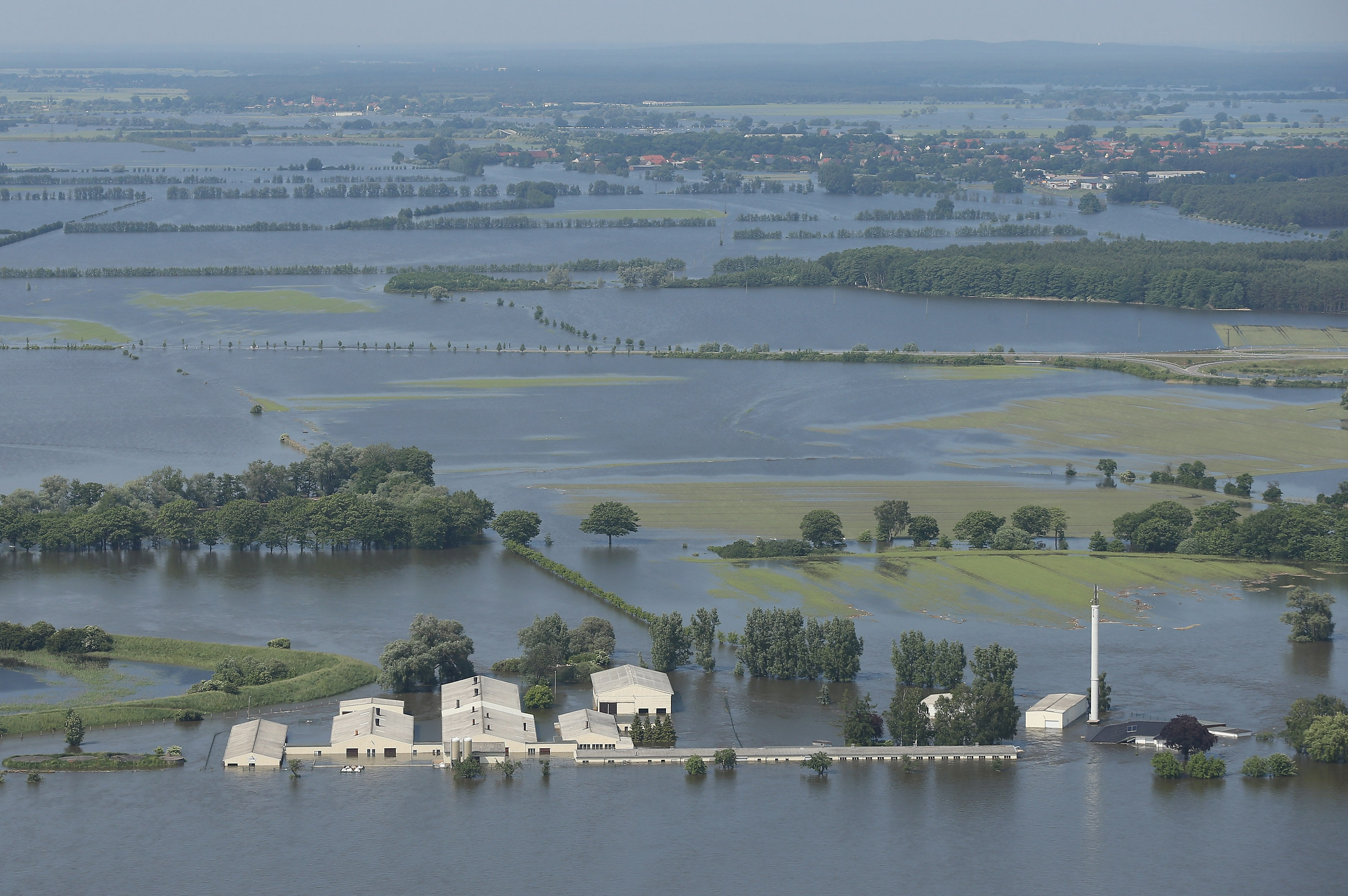
Like previous government reports, it anticipates that sea levels will rise an average of four feet by the end of the century. But this is what’s new: The portion of the US at risk for flooding, including coastal regions and areas along rivers, will grow between 40 and 45 percent by the end of the century. That shift will hammer the flood insurance program. Premiums paid into the program totaled $3.2 billion in 2009, but that figure could grow to $5.4 billion by 2040 and up to $11.2 billion by the year 2100, the report found.  …

Right now, a number of homeowners who get their flood insurance from the federal government pay subsidized rates. But for the program to stay solvent, the average price of policies would need to increase by as much as 70 percent to offset projected losses, according to the FEMA report. That means individual policyholders who now pay an average rate of $560 per year could have to pay as much as $952 per year by 2100.

Ron Bailey pushes back on the piece:

In its rush to declare a crisis that only benevolent government bureaucrats can solve, [Mother Jones] characteristically overlooks the fact that there should be no National Flood Insurance Program in the first place. If private insurers think it’s too risky for someone to build a house on a plot of land due to the high probability of inundation, then why should taxpayers subsidize their folly? Second, assuming that the U.S. government does not manage to stop modest economic growth for the next 90 years that would mean that today’s per capita GDP of $43,000 growing at 2 percent annually would rise to $255,000 by 2100. It is not unreasonable to think that Americans who would be six times richer in 2100 might be able to afford to pay double for their flood insurance.

Meanwhile, in light of NYC’s recently unveiled $20 billion plan to build flood walls, Dana Milbank thinks Bloomberg is doing a solid job on the climate front:

Obama created an “Interagency Climate Change Adaptation Task Force” in 2009 to examine everything from agriculture to sewer system failures and public-health consequences, but much of the work remains theoretical. Bloomberg’s new plan, with 250 specific recommendations and a hefty price tag, puts climate-change adaptation into a more concrete realm. The businessman-mayor called it “a battle that may well define our future for generations to come” and outlined changes to building standards, telecommunications, transportation and a dozen other areas. … Bloomberg spoke confidently, as if he were a general laying out a military plan. But he was really talking about limiting casualties.

But Marc Tracy encourages the mayor to do much more:

Bloomberg is right about guns and, when he has at other times treated climate change as the political issue it is, he is right about global warming, too. But his emphases are all wrong. While Bloomberg has plenty of actual capital (he is worth some $25 billion and has said he intends to give it all away), he is investing his finite national political capital in a watered-down bill addressing an issue that … is nowhere near as important, by virtually any measure, as climate change is. The scourge of guns, the more than 30,000 American deaths they help cause each year, the gruesome mass shootings they enable: Bloomberg is right to hope they go away. But climate change is an existential threat, to everyone. It is probably not accidental that climate change is the reason Bloomberg gave for endorsing Barack Obama over Mitt Romney.

(Photo: In this aerial view, a farm stands partially submerged in floodwaters from the Elbe river on June 12, 2013 in Fischbeck, Germany. The swollen Elbe is continuing to endanger communities along its northern route in Saxony-Anhalt and Brandenburg states, though the bursting of a dyke near Fischbeck has relieved some pressure from towns farther north. Floods have ravaged portions of southern and eastern Germany in the last week, leaving at least eight people dead and forcing tens of thousands to evacuate their homes. By Sean Gallup/Getty Images)

Amazoning Everything

Derek Thompson considers the implications of Amazon Prime Fresh, which allows members to “order fresh food from their couch from Amazon and expect to pick up groceries at the door in a matter of hours”:

A $300 subscription to Amazon Prime Fresh doesn’t just buy access; it also binds shoppers to Amazon as their overwhelming source of all Internet shopping. “It will help to make Amazon the starting point for online purchases — more than it already was — and give consumers even less of a reason to shop anywhere else,” Morningstar equity analyst R.J. Hottovy said. Being the starting point for online purchases is everything: Google’s biggest source of online advertising comes from searches with a shopping intent. Why look anywhere else when only Amazon will get it to you today?

He compares Amazon’s dominance in cloud and e-retail services to the “quasi-monopolies” enjoyed by cable companies:

Laying cable is hella-expensive for both legal and material reasons (Verizon abandoned its nationwide projects after covering less than 20 percent of the country), cable companies can charge such a mark-up on the communications bundle because they have a massive infrastructure advantage in a high-barrier industry.

Ditto Amazon, which is building a bundle of its own. Fresh Prime offers a unique package of services that takes advantage of the company’s lead in digital and physical infrastructure: infinite books, fast shipping, fresh groceries, free streaming. Who in the world would try to build a competitor to this strange amalgam of hugely expensive and hardly profitable services? No one. And, for [Amazon CEO Jeff] Bezos, that is precisely the point.

“An Old Wound Which Must Be Healed” Ctd

Navid Hassanpour believes that Rouhani is willing to cut a deal on Iran’s nuclear program:

Rouhani is no stranger to negotiating with the U.S. and Europe. He is said to have been a member of the Iranian negotiating team during the Iran-Contra affair, and was the Iranian chief nuclear negotiator under Khatami as the secretary of the Iranian Supreme National Security Council. He is also the head of Center for Strategic Research, a policy research organization close to Rafsanjani. Three out of the final six presidential candidates this year have extensive experience—with mixed results—in international negotiations. This is a signal on where the Islamic Republic’s priorities lie at moment. During the past two weeks, Rouhani repeatedly mentioned he prefers to talk to the Europeans’ chief [sic] instead of wasting time squabbling with Europeans themselves. These words, as a window to Rouhani’s understanding of the World, can also be indicative of the nature of his foreign diplomacy in the next four years.

Paul Pillar is adamant that the West take advantage of this opportunity for a reset:

Rouhani’s election presents the United States and its partners with a test—of our intentions and seriousness about reaching an agreement. Failure of the test will confirm suspicions in Tehran that we do not want a deal and instead are stringing along negotiations while waiting for the sanctions to wreak more damage. Passage of the test will require placing on the table a proposal that, in return for the desired restrictions on Iran’s nuclear activities, incorporates significant relief from economic sanctions and at least tacit acceptance of a continued peaceful Iranian nuclear program, to include low-level enrichment of uranium. … Passage of the test also means not making any proposal an ultimatum that is coupled with threats of military force, which only feed Iranian suspicions that for the West the negotiations are a box-checking prelude to war and regime change.

Jonathan Steele agrees, and suggests Syria be the first topic of conversation:

[T]he first thing Obama should do is to drop US objections to letting Iran attend the proposed Geneva conference on Syria. If Washington is ready to negotiate with Iran on nuclear issues, it makes no sense to exclude it from the talks on Syria. The second thing is to accelerate preparations for the conference itself by putting sustained pressure on Syria’s rebel forces to come up with a negotiating strategy and take part. For Washington to change course here would send an important signal, not only that Iran has to be part of any solution in Syria and the region, but also that the anti-Iranian cancer that has affected American policy in the Middle East since the axis-of-evil speech has at last been excised.

Vali Nasr makes a case for new outreach and meaningful concessions:

To take advantage of Rowhani’s victory and break the logjam over nuclear negotiations, Washington has to put on the table incentives it has thus far been unwilling to contemplate. It will have to offer Iran sanctions relief in exchange for agreeing to Western demands. At a minimum, the United States would like Iran to accept IAEA demands for intrusive inspection of its nuclear facilities; cap its uranium enrichment at 5 percent, and ship out of the country its stockpile of uranium enriched to 20 percent. Iran in turn wants a formal recognition of its right to enrich uranium and, more immediately, the lifting of crippling sanctions on its financial institutions and oil exports. Ahmadinejad is faulted in Iran for wrecking the country’s economy. Populism, mismanagement, and international isolation have combined to put Iran’s economy into a downward spiral. Between 2009 and 2013, real GDP growth has fallen from 4 percent to 0.4 percent, unemployment has risen to 17 percent, and inflation has grown to 22 percent — and those are official numbers, which tend to downplay the gravity of the economic crisis. It is estimated that 40 percent of Iranians live below the poverty line. Reformists will grow in strength if they are able to show that they can reverse that trend by at least getting the West for the first time to offer negotiating away specific sanctions.

Jack Straw, who has sat across the negotiating table from Rouhani before, offers his take on the new Iranian president:

There are … two dangers. The first is to assume that nothing has changed – that Rowhani is merely a better-dressed Ahmadinejad. This is the essence of the belligerent comments from Benjamin Netanyahu, the Israeli prime minister, in the wake of Rowhani’s victory. They are unthinking and self-defeating.

The second danger is to assume that everything has changed, and to expect too much too quickly from Rowhani. Our Government should seek to re-open full diplomatic relations with Iran, but he won’t take office until early August. He has to choose a cabinet – and have his ministers endorsed by the parliament (far from a formality). He has to negotiate with the leader, and the powerful Revolutionary Guards, before he can negotiate with the West. While it will be a huge relief to do business with him, he is a Shia and an Iranian, and intensely proud of being both. But show him and his nation patience, respect and understanding, and there’s a possibility that the 10 years of “E3+3” meetings which started in south Tehran in 2003 might, just, have a happy ending.

You Are What You’re Named

Adam Alter offers an example of what he calls the “linguistic Heisenberg principle,” whereby naming something changes our perception of it:

People generally prefer not to think more than necessary, and they tend to prefer objects, people, products, and words that are simple to pronounce and understand. In 2006, my colleague Daniel Oppenheimer and I investigated the performance of hundreds of stocks immediately after they were listed on the financial markets between 1990 and 2004. We discovered that companies with simpler names that were easier to pronounce received a greater post-release bump than did companies with complex names. (I also wrote about this phenomenon for the New York Post.)

The effect was strongest during the first few days of trading, when investors had little information about the stock’s fundamentals and were more likely to be swayed by extraneous factors. (We also ran a series of additional analyses to rule out the possibility that the effect was driven by different naming trends across different industries, company sizes, or countries, and the possibility that successful stocks seem to have fluent names merely because they’re mentioned more often in the media.) Even stocks with pronounceable ticker codes (e.g., KAR)—the letter strings that investors use to refer to each stock—outperformed those with unpronounceable ticker codes (e.g., RDO) in the short run. An investor who placed a thousand dollars in the ten most fluently named stocks between 1990 and 2004 would have earned a fifteen-per-cent return after just one day of trading, whereas the same thousand dollars invested in the ten least fluently named stocks would have earned a return of only four percent.

“An Old Wound Which Must Be Healed”

IRAN-VOTE-ROWHANI

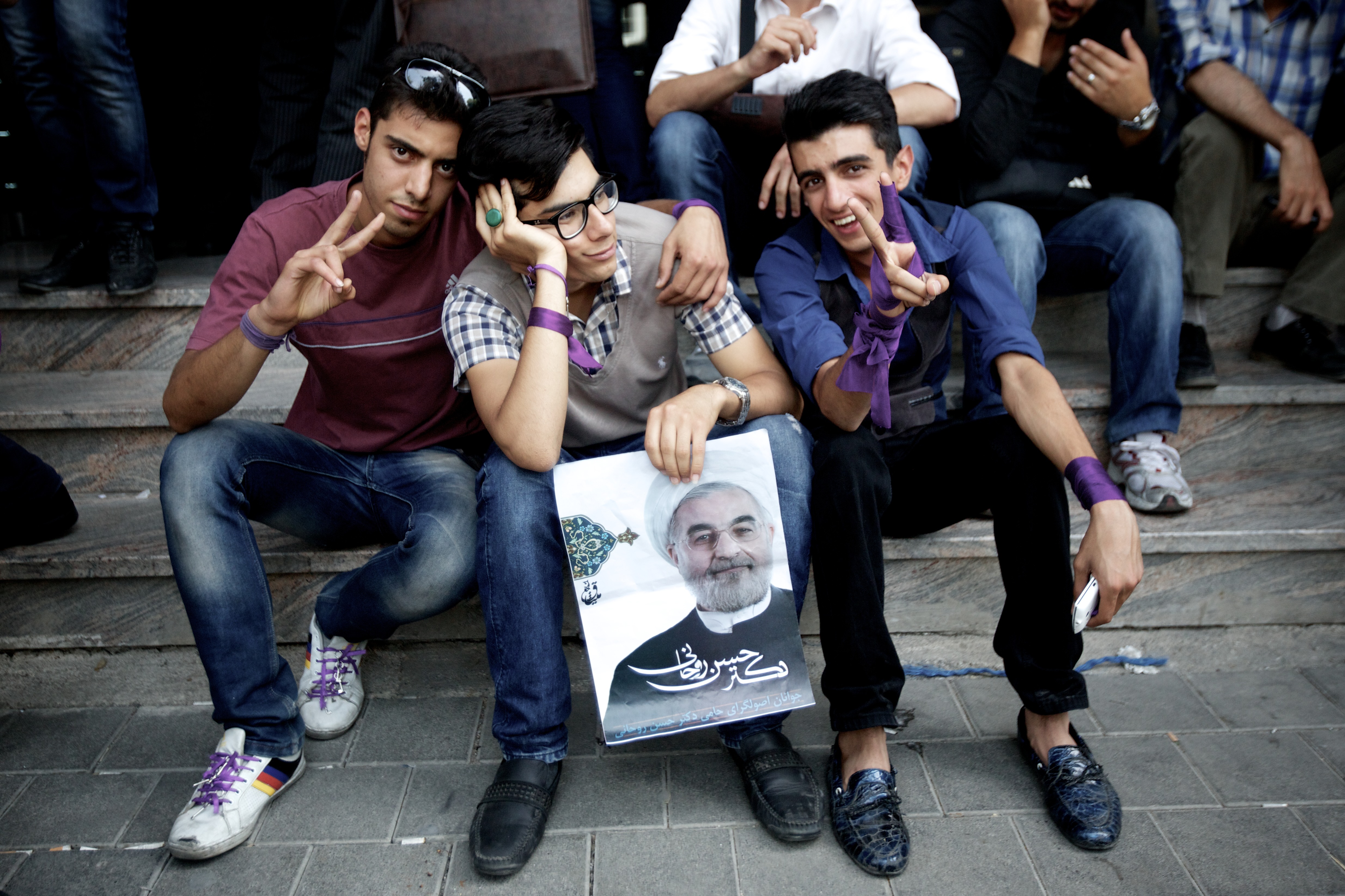
That’s what Rouhani said today about the relationship between Iran and the United States. That old wound, one has to remember, really struck deep in 1953, when the CIA ousted Iran’s first democratically elected government, because it nationalized the Anglo-Persian oil company. Even then, Iran’s desire was to control its own energy supply. We know the rest of the story by now, however tone-deaf so many have become to the role of history in determining that country’s psyche and culture.

No, he did not signal a shift toward direct talks with the US, and offered no opening on the nuclear weaponry potential of the theocracy. But it truly was striking how conciliatory he was to the Sunni Saudi regime:

The priority of my government’s foreign policy will be to have excellent relations with all neighboring countries … We are not only neighbors but also brothers. Every year hundreds of thousands of Iranian pilgrims visit Mecca. We have many common points with Saudi Arabia.

And this is surely encouraging:

First, we are ready to increase transparency and clarify our measures within the international framework. Of course our activities are already transparent, but still we increase it. Second, we will increase the trust between Iran and the world.

Yes, I’m well aware that he is not Moussavi or Karoubi – but they also backed the nuclear program (as does the opposition as a whole). And to immediately knock down any hope for some engagement with Iran seems to me to be insulting the perseverance of ordinary Iranians. The fact of US-Iranian governmental distrust and even hatred is, in the face of that country’s great history and youthful energy, a true tragedy. Jon Snow, who was reporting from Tehran over the weekend, offers a succinct portrait of the country as he now sees it, particularly in relation to the Western stereotypes:

[B]eyond the bugs in hotel rooms, the arrests, and strange people taking photographs wherever you go, there is something continuously absorbing and intriguing about Iran that renders the paranoia it provokes entirely unbearable.

The country is spectacular, the people are approachable, friendly and remain westward-looking. Many are highly educated and skilled, and 6,000 years after the country began, they are still building. In short, they are people the west used to and should still do business with.

For all its faults, Iran remains a haven of peace, surrounded by wars in which the West is deeply involved, and set to become more so after Barack Obama announced his intention last week to arm the Syrian rebels. By midnight on Saturday the Chamran highway that leads to the centre of Tehran was sporting a noisy three-car-wide, five-mile queue of families desperate to join the celebrations.

Meanwhile, Golnaz Esfandiari rounds up a collection of recent statements by the newly-elected Rouhani, including, “Using the Internet, I must say, is one of my hobbies regardless of whether I need it.” Along those lines, there are reports that the video-chat services Skype and Oovoo have now been unblocked for the first time in many months, allowing Iranians in and outside of the country to once again speak more freely with each other.

We should have no illusions that Khamenei is still in charge. But in two consecutive elections, the Iranian people have reached out to the world. We can and should find a way to reach back. In my view, that means a pragmatic path toward seeking more and more transparency in return for a very gradual ratcheting down of sanctions. We may have to go one tiny step after another. But the Iranian people deserve a response that is more than cynical. Look at them these past few days or four years’ ago. How can one be cynical in the face of that?

Previous Dish coverage of the Iranian election here.

(Photo: Iranians supporters of moderate presidential candidate, Hassan Rowhani flash the sign of victory holding a portrait of him as they wait for the final results outside his campaign headquarter in downtown Tehran on June 15, 2013. By Behrouz Mehri/AFP/Getty Images)

A Criminal Factory

Brad Plumer spots new research suggesting that juvenile detention is counterproductive:

[T]o figure this out, Aizer and Doyle took a look at the juvenile court system in Chicago, Illinois. The researchers found that certain judges in the system were more likely to recommend detention than others — even for similar crimes. That is, it’s possible to identify stricter and more lenient judges. And, since youths were assigned to judges at random, this created a randomized trial of sorts.

What the researchers found was striking.

The kids who ended up incarcerated were 13 percentage points less likely to graduate high school and 22 percentage points more likely to end up back in prison as adults than the kids who went to court but were placed under, say, home monitoring instead. (This was after controlling for family background and so forth.) Juvenile detention appeared to be creating criminals, not stopping them.

The authors lay out a couple of reasons why this would be. Going to prison can obviously disrupt school and make it harder to get a job later on. But also, as other researchers have found, many people who end up behind bars end up making friends with other offenders and building “criminal capital.” Prison turns out to be excellent training for a life of crime.

Another troubling new report looks at sexual abuse in the country’s juvenile detention facilities:

Hundreds of teenagers are raped or sexually assaulted during their stays in the country’s juvenile detention facilities, and many of them are victimized repeatedly, according to a U.S. Department of Justice survey. The teens are most often assaulted by staff members working at the facilities, and fully 20 percent of those victimized by the men and women charged with protecting and counseling them said they had been violated on more than 10 occasions. …

The Justice Department survey—covering both secure juvenile detention facilities and group homes, the less restrictive settings into which troubled youngsters are often ordered—involved more than 8,500 boys and girls. In all, 1,720 of those surveyed reported being sexually assaulted. Allen Beck, the author of the report, said that the rates of staff-on-inmate abuse among juveniles are “about three times higher than what we find in the adult arena.”