What Is PRISM, Exactly? Ctd

A reader writes:

After reading Marc Ambinder’s summary, I am hoping people aren’t making the same mistake about PRISM that I once made about Gmail. When Gmail first came out, I was working in the California legislature, and a co-worker and I thought it was a terrible idea for Google to, in effect, “read” everyone’s mail and provide ads targeted to them.  Our boss introduced a bill to prohibit Google from doing this.

I was assigned to defend the bill at a tech conference, and let’s say I had some misconceptions firmly and uniformly corrected.

No one at Google reads (or could read) anyone’s email.  That would be (a) impossible, given the volume of email, and (b) a pretty stupid thing for a company to try to do.  Google has pretty sophisticated algorithms that can scan millions of texts for words and phrases that advertisers believe would be relevant to a particular commercial purpose.  Ads matching those terms are posted next to the email, and no human (except the recipient) has ever seen anything.

I’m not sure if any actual humans ever see any Facebook postings, but my guess is that the first pass of PRISM works like Gmail.  Someone has developed algorithms for potentially dangerous words and phrases, and the millions or billions of Facebook posts are scanned for those.  The algorithm’s bar would have to be fairly high, since the number of posts would be astronomical, I would imagine.

Posts that make it over the bar (still not having been viewed by any human being) would then be collected into some output that IS more closely examined, and this may be the stage where humans might be involved.  Again, I don’t have any special knowledge here, but I honestly can’t imagine how this could work any other way.  The only things that are ever actually seen by human eyes are those that have some markers of potential serious threats.

I can see how some people might still find little comfort in that, and I’m sure there would have to be many false positives in a system like this.  But I think it’s far more consistent with your intuition about why this isn’t such a horrible invasion of privacy – an intuition that it seems a lot of us share.

That difference between technological review of data and human eyes viewing (and possibly abusing) communication is an important distinction.  If PRISM is more like Gmail than like J. Edgar Hoover’s private FBI files, then this has less to do with privacy than some people might fear. I, for one, got over my concerns about Gmail, and happily got one of its first accounts, which I use to this day.

A Losing Smile

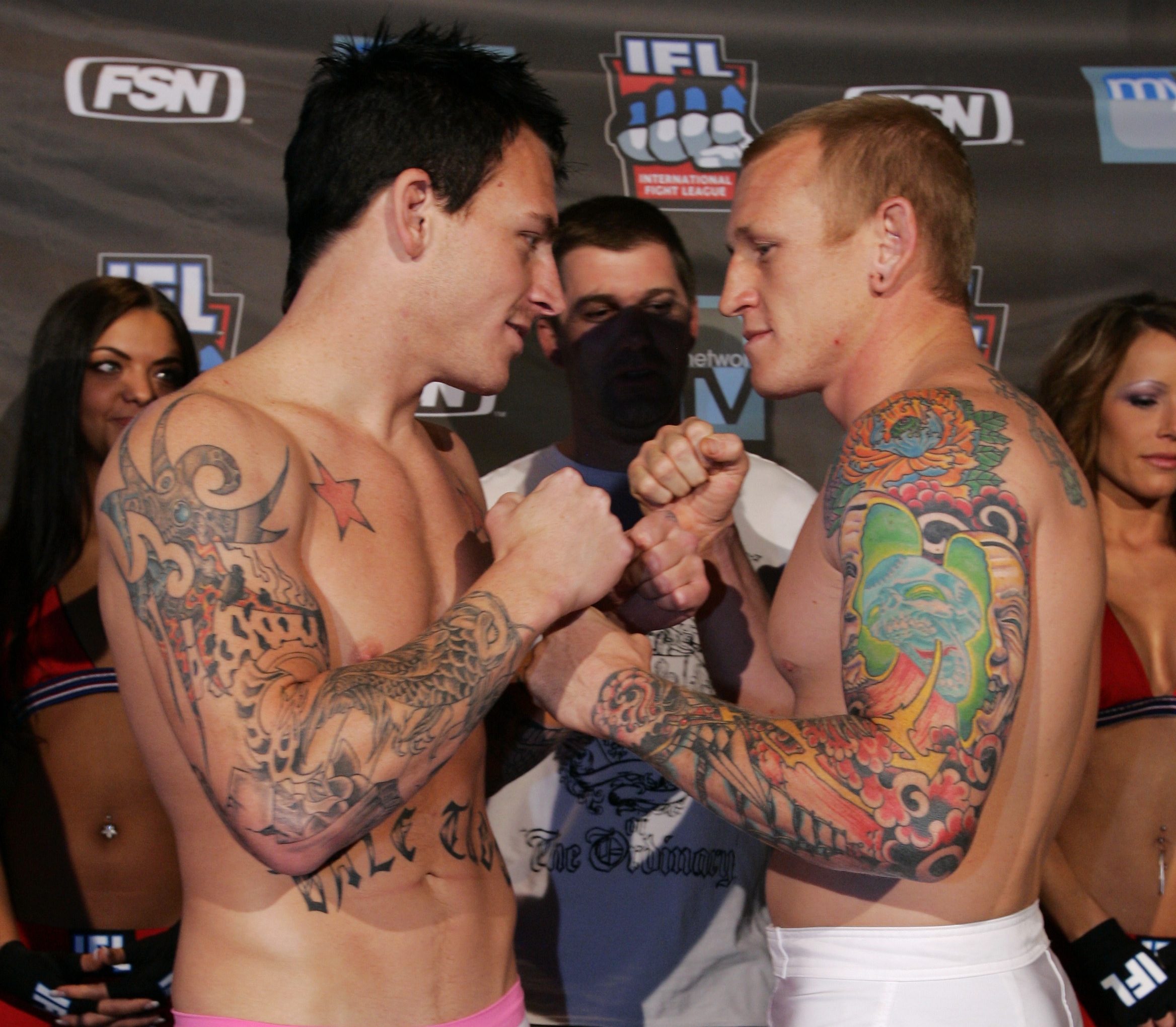
IFL Chicago Weigh-In

Researchers examined (pdf) whether martial arts fighters who smile prior to a fight, which is an unconscious expression of submission, are more likely to lose:

As expected, smile intensity predicted both the outcomes of fights as well as the more detailed measures of in-fight hostility. Interestingly, the smiles predicted both reduced hostility from the smiler as well as increased hostility from his opponent. In other words, it seemed both fighters were attuned to the information being communicated in the pre-fight smile. These results held even when controlling for existing differences in skill (i.e. the betting odds of the fight) and strength (height and weight). Though don’t go drastically altering your gambling strategy just yet -the betting line still did a better job overall in predicting fights compared to just smile intensity. …

You might interpret this as a kind of “nice guys finish last” effect. But that’s not quite right.

The authors also looked at whether smile intensity in the pre-fight photos predicted dominance and outcomes in other future fights. If the smiles are just helping us separate the gentle from the aggressive, then the nice guys should be performing consistently worse than their more hostile counterparts. This was not the case. These smiles are context-specific; they reveal something about the power dynamics between only these two fighters, not something enduring about the kinds of people that these fighters are. A fighter, smiling against opponent A because he knows he is outmatched, might be stone-faced when up against the weaker opponent B (who, by extension, would in that circumstance be reduced to a grinning fool).

(Photo: Justin Levens of the Southern California Condors (L) and Brian Foster of the San Jose Razorclaws (R) face off during the International Fight League weigh-in for the fights between the Condors versus the Razorclaws and the Red Bears versus Silverbacks at Buffalo Wild Wings on May 18, 2007 in Hoffman Estates, Illinois. By Brian Bahr/Getty Images for IFL)

A New Doctor

Well, Helen Mirren was worth a dream. Update from a reader:

BBC just posted a denial that Kinnear is the new Doctor.

They’ve also said that they’ll be taking a couple of months to decide. But if you really want fun Doctor news, here’s a 2000-person poll done last week asking who the favorite Doctor, least favorite Doctor, and how much certain attributes of the Doctor (British, white, male, young) matter to people, broken down by political affiliation, age, etc. Humorously, Eccleston’s incarnation of the Doctor (“every planet has a north”) was proportionately least popular in the north of Britain.

The Jihad Against Assad

Gregory Harms sees cleric Yusuf al-Qaradawi’s call for jihad against Assad and Hezbollah in Syria as evidence of increasing sectarianism:

The influential Egyptian Islamist cleric Yusuf al-Qaradawi recently issued a fatwa, or religious proclamation, with regard to Syria. The sheik called for Sunni Muslims throughout the Middle East to join the rebels in their fight against the regime in Damascus. Formerly an advocate of improved relations between the Sunni and Shiite sects, including the Lebanese Shiite guerrilla organization Hizballah, Qaradawi’s decree further points to sectarian relations moving in the opposite direction. A week earlier, Hizballah leader Hassan Nasrallah openly declared involvement in the civil war on the side of Damascus and promised victory. Sectarian lines – within Syria and across the greater region – are growing sharper by the minute.

Marc Lynch, who is troubled by al-Qaradawi’s declaration, puts it in context:

Qaradawi can no longer claim to speak to a broadly unified Arab public because such a creature no longer exists. Indeed, it is worth asking whether anyone will again occupy his previously central position: The proliferation of media outlets and assertive new voices that define the new Arab public sphere tend to undermine any efforts to claim the center ground. So does the political polarization and the increasingly fierce power struggles which dominate regional politics. It just may be that nobody can fill Qaradawi’s old shoes — not even Qaradawi. All of this makes the Islamist cleric’s latest intervention even more profoundly depressing. Qaradawi has opted to join the bandwagon rather than try to pull Sunni-Shiite relations back toward coexistence. He clearly calculates that anti-Shiite sectarianism in support of the Syrian insurgency is both strategically useful and a political winner.  And those in the Gulf and in the West eager for any opportunity to hurt Iran seem happy to go along.

With the decentralization of political authority and the likelihood of a long Syrian civil war, expect the competition among “Sunnis” to adopt the most extreme stances to accelerate. By the time more responsible figures realize the destructive forces they’ve unleashed — or Qaradawi attempts his standard pivot towards reconciliation — it may be too late.

One Last Reading Assignment

The Daily Beast asked a host of authors and academics what essential book every student should read before graduating college. My pick?

Pascal’s Pensées:

They’re episodic, cryptic, elegant, and sometimes as brief as tweets. But Pascal was one of the greatest mathematicians of all time and his defense of Christianity would help remind today’s students that having a mind and following Jesus is not a contradiction.

Tom Wolfe chose Max Weber’s Economy and Society:

In 1998, the International Sociological Association named Economy and Society the most important work of sociology of the 20th century. Now, there’s a piece of timid praise for you!—since with that book Weber supplanted Darwin as the greatest theorist of the modern age. Darwin’s theory of Evolution fit only dumb animals comfortably. When it comes to the creature who speaks—namely, man—we must look to Weber’s far grander theory of Status.

Enter The Media Martyr, Ctd

A reader adds to this post:

I spent a decade as a government IT contractor and another five years in commercial IT contracting (which I’m back to).  Over the course of my government time I was basically in the same job, but as contracts rebid or companies merged or whatever, I worked directly or indirectly for four different companies.  It’s entirely possible that Snowden was in the job prior to March but under a different lead or sub contracting company.  The relevant question isn’t when did he start at Booz, since that’s really just a paperwork and billing question, but rather when did he start on site.

Another:

Your reader’s suggestion is to call the Ethics Hotline maintained by the NSA? That’s unrealistic to the point of being laughable – what conceivable effect would that have (aside from costing Snowden his job without publicizing the program)? As for the idea that he work with members of Congress, it’s just as silly.  Remember, Wyden and Udall were deeply troubled by the program, but couldn’t say anything because they didn’t want to release classified information.  The only way that this program comes into the public eye is for a hero like Snowden to take the hit and alert everyone.  It seems to be legal, so there’s no crime to report; and yet it’s nevertheless causing a huge public outcry.  The case for leaking this material couldn’t be clearer, and I applaud Snowden for his brave act of civil disobedience.

Huge public outcry? We’ll see. But the debate itself and the end of secrecy around this program are healthy developments, it seems to me. Meanwhile, Noam Scheiber compares the missions of Edward Snowden and Aaron Swartz:

Both Snowden and Swartz (and, for that matter Manning) were precociously talented computer programmers who were frustrated in classroom settings—neither completed high school or college—but easily assimilated knowledge on their own. Both had strong moral and idealistic streaks, along with (apparently) well-worked out, libertarian-ish, ideas about the proper relationship of government to its citizens. Both had high hopes for Barack Obama, but became disillusioned with his administration relatively quickly.

And yet both come off as basically liberal in their outlook, as opposed to anarchist or some other form of radical. Snowden told The Guardian there was a key difference between himself and Manning: “There are all sorts of documents that would have made a big impact that I didn’t turn over, because harming people isn’t my goal. Transparency is.” (Manning observed no such restraints.) Swartz, according to several friends I interviewed for this profile, likewise believed that Wikileaks went too far in releasing information that could do more harm than good. He worried that the group had become an exercise in showmanship and preening.

Now, clearly, there are key differences between Snowden and Swartz. Even though Swartz was facing the prospect of decades in prison, the act that got him in trouble couldn’t have been more than a minor offense under any rational legal code. (JSTOR articles are available to anyone with access to a university or research library; JSTOR itself declined to pursue the case.) By contrast, it’s obvious that Snowden, whether you agree or disagree with his decision to distribute classified material, has undertaken something of enormous legal consequence.

Iran Non-Election Update: The Final Week

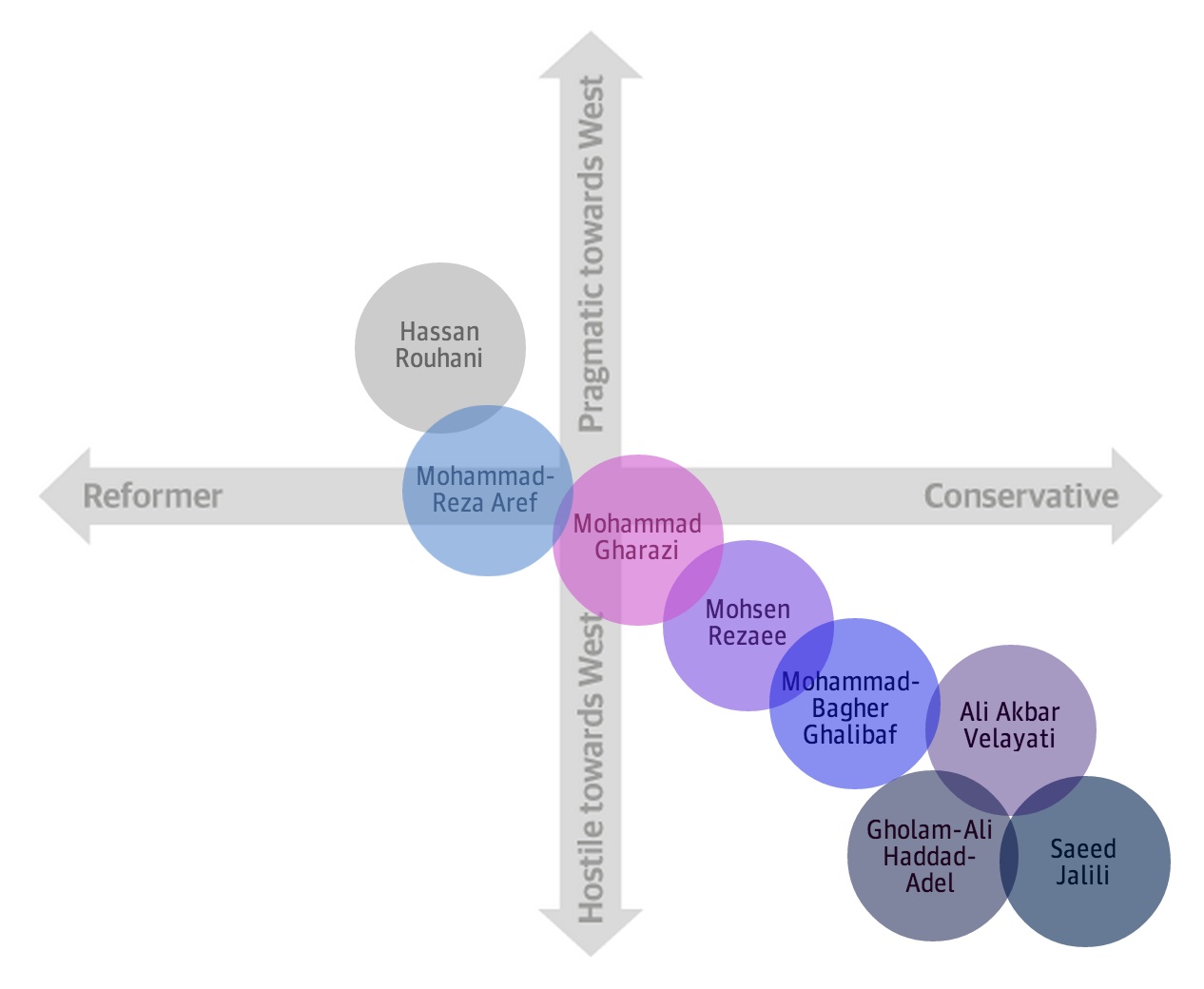
Guardian-IranPresCand-Chart

With Friday’s “selection” fast approaching, Barbara Slavin points out that, “if Iranian elections are supposed to follow a script, [some] of the actors seem to have forgotten their lines.” In particular she notes how much sanctions-related criticism has been directed at Saeed Jalili, the country’s top nuclear negotiator and the candidate widely considered to be Khamenei’s first choice for the presidency:

[During the third debate, former foreign minister Ali Akbar] Velayati and former nuclear negotiator Hassan Rowhani both implied that they would have done far better that had they been in charge [of the nuclear negotiations with the West]. Rowhani, who negotiated with the Europeans from 2003-2005 when he held Jalili’s post, has repeatedly noted that during his tenure, Iran continued to make progress on its nuclear program without being referred to the Security Council and hit with heavy sanctions.

The sanctions have seriously impacted the Iranian economy — the major topic of the presidential campaign. Thus, even if Khamenei had wished to prevent discussion of the nuclear question, he would have had a hard time succeeding.

Slavin believes that while both Rowhani and Velayati may realize they can’t win, they are nonetheless using the freedoms allowed them by their candidacies to criticize the regime. The reformist Rowhani, for instance, has suggested that Iran’s nuclear program should not be a higher priority than the country’s economy, and he has spoken out on other issues as well:

“We will open all the locks which have been fastened upon people’s lives during the past eight years,” Rowhani said during a speech on 1 June in the north Tehran neighbourhood of Jamaran. “You, dear students and hero youth, are the ones who have come to restore the national economy and improve the people’s living standards. We will bring back our country to the dignity of the past.”  … Tuesday night, in a 30-minute documentary more biography than manifesto, he verged on crossing Iran’s media “red lines” as he criticised the harassment of Iranian civilians by “plainclothes people” – a clear reference to the Basij militia – and the country’s “securitised atmosphere”. He also poured scorn on Ahmadinejad’s record, though that is by now a million miles from any red line. Elsewhere in the documentary, Rowhani, who is campaigning on the slogan Government of Proficiency and Hope, talked of “interaction with the world” and gender equality. “In my government, differences between women and men won’t be tolerated,” he said. …

[However, t]hough Rowhani may stimulate the reformists to back him and mobilise disenfranchised voters to the polling venues, he is no firebrand reformer. He has so far cleverly toed the line between appeasing the establishment by showing due deference to Khamenei and exhibiting his revolutionary and Islamic bona fides.

But that’s to be expected from most anyone trying to navigate the regime’s system. It also seems like Rowhani’s campaign may be working from Mousavi’s 2009 playbook:

Supporters entering [a Rowhani campaign rally on] June 8 were handed purple wrist ribbons, the color he’s using on campaign posters. The move may be inspired by Mir Hossein Mousavi’s 2009 campaign, which became so associated with the color green that the opposition born out of post-vote protests became known as the Green Movement. …

Most people at [Rowhani’s] rally were middle-class Iranians in their early 20s, and some also wore purple headscarves, headbands or T-shirts. A spillover crowd lined the street outside. Hundreds of policemen and dozens of police vans were stationed outside the stadium to prevent the possibility of spontaneous protests.

Indeed at a few rallies, Rowhani supporters broke into chants calling for the release of Mousavi and Karroubi, leading to some arrests as well as rumors, so far unfounded, that the Guardian Council would reevaluate and then bar Rowhani from the race. While most analysts believe Rowhani doesn’t have a chance, there are at least some signs that his rhetoric is resonating with voters:

News websites in the country run their own informal polls, and these have shown a strong lead for moderate reformer Hassan Rowhani after three rounds of televised presidential debates. With the conservative camp split among three candidates, [and 50.1% of the vote required for a definitive victory,] this could mean Mr. Rowhani forcing a run-off vote. Nonetheless, the widespread belief that the 2009 election was rigged has prompted caution among most Iranian observers about whether any of the anti-establishment candidates would be allowed to make it through to the run-off, let alone win.

The regime is worried about low turnout as well:

[Authorities] have taken the unprecedented step of scheduling local council elections for the same day, along with by-elections for the Assembly of Experts – a group of clerics that appoints the supreme leader. The authorities hope that combining the three elections will boost the vote, especially as official statistics show that turnout in local elections is often relatively high.

Meanwhile, Max Fisher scans a recent (US) poll conducted among voters in Iran which shows technocratic Tehran mayor Mohammad Ghalibaf in the lead instead:

The poll has 39 percent of decided voters saying they support Ghalibaf, a remarkable lead over all the other candidates. However, the poll also reports that 57 percent of voters are undecided, meaning that presently undecided voters could easily erase his lead. It’s plausible, though, that many of the undecided voters are disillusioned with Iranian politics – an increasingly common sentiment after the protests and crackdowns that followed the disputed 2009 election – and thus not likely to turn out on election day. … The polls look bad for Saeed Jalili, the country’s nuclear negotiator and a fervent nationalist who appears to be a favorite of Supreme Leader Ali Khamenei and the clerical establishment. He received 13.9 percent support from decided voters in the poll, placing him in a distant third.

Jason Rezaian profiles the supposed frontrunner:

Ghalibaf is viewed warily by some of Iran’s political conservatives and clerical rulers, who view him as being more focused on pragmatism than revolutionary ideals. But there are few signs that he would make bold diplomatic shifts or decisions about Iran’s nuclear program if elected. …

Ghalibaf is not just a wonk. With many years in law enforcement, he also has a history of doing what he deems necessary to maintain order, and critics say that has included the use of excessive violence in suppressing the biggest protests of the Islamic Republic’s 34-year history. In a recording that surfaced last month, Ghalibaf can be heard giving a speech to members of the Basij, a state-funded paramilitary group often enlisted to provide assistance to police in times of domestic tension or unrest. In it, Ghalibaf allegedly takes pride in his role in cracking down on protesters in Tehran in 1999 and 2003, and he acknowledges being a key player in the security forces’ violent crackdown against post-election protests in 2009.

Meanwhile, Gholam-Ali Haddad-Adel, a hard-liner candidate without much support, has now dropped out of the race.

(Image: Screenshot of the Guardian’s interactive guide to the Iranian presidential candidates.)
Cannabis And Marriage Equality

Sean Trende observes the rapid mainstream acceptance of both:

In a strange sort of way, Americans have become more liberal on drugs and gay rights because those issues have become more conservative in their presentation.

Remember, when marijuana was first introduced into American society, it was considered a lower-class drug, brought over by Mexican laborers and supposedly indulged in by African-Americans. It was treated as a street drug; one law enforcement officer writing to [Herbert] Hoover in 1929 described it as more damaging than opium or cocaine, and influenced cultural depictions in films like “Reefer Madness,” “Marijuana: Weed With Roots in Hell,” and “Assassin of Youth.” This was the attitude that the “silent generation” and the “greatest generation” held throughout their lives and it is part of why, in Gallup’s 1979 polling, 72 percent of 30- to 49-year-olds and 84 percent of those 50 and older opposed legalization.

But 18- to 29-year-olds were much more favorably inclined toward legalization. The change comes following marijuana’s journey into the counterculture in the ’60s, and those individuals’ subsequent journey to become doctors and lawyers. This shows up, too, in the following tidbit from the report: 30- to 64-year-olds were about as likely to have used marijuana as 18- to 29-year-olds (50 percent vs. 56 percent), vs. only 22 percent of those over the age of 65.

At the same time, cultural depictions of marijuana use have changed. It’s no longer counterculture hippies and African-Americans (remember who smokes up in “Back to the Future”?) who smoke marijuana. It’s Nancy Botwin, the plucky housewife from “Weeds,” supplying the suburban wasteland. And interestingly, the arguments that really move public opinion here are those that are almost conservative in nature: legalization saves money; legalization can forestall the need for property or income taxes (on middle Americans, implicitly); legalization frees up police resources for violent criminals.

He turns to marriage equality:

If you look at public attitudes toward whether homosexuality should be legal over time, they are almost shockingly flat from 1978 (43 percent) through 1996 (44 percent). Support for legalized sodomy then ticks upwards, to near two-thirds support today. Why? Part of this is the age cohort data, but again, I think this is an effect rather than a cause.

Rather, it has to do with the way the case for gay rights is made, and how middle America interacts with it. To my grandparents’ generation, homosexuality was literally unthinkable. Even for me, my earliest images of gay men were those projected by media coverage of gay pride parades and reports of ACT UP members disrupting a Catholic Mass and throwing down the Eucharist in churches. But I had closeted friends in high school that I was pretty sure were gay, and it seemed both blindingly obvious that they weren’t choosing this for themselves and deeply unfair that they could be imprisoned for their sexuality.

But in 1997, something very important happens, and it correlates directly with the increase in acceptance of gays: Ellen DeGeneres came out of the closet, beginning the transition to “Will and Grace” and to “Modern Family.” This was part of a general shift in the discussion of homosexuality. The argument was no longer “let people do what they want.” It was “hate is not a family value.” The presentation of gays in media and entertainment no longer focused on sex (often engaged in by downscale members of society; think “Deliverance” or even “Pulp Fiction”), but on love.

Quis Custodiet … ?

Obama says that the NSA isn’t listening to your calls:

But Conor worries that our system of checks and balances is useless in the era of deep state:

Congress cannot act as a check on the executive branch in the way the Framers intended when hugely consequential policies it is overseeing are treated as state secrets. The Senate, intended as a deliberative body, cannot deliberate when only the folks on the right committees are fully briefed, and the Ron Wyden types among them think what’s happening is horribly wrong, but can’t tell anyone why because it’s illegal just to air the basic facts. Our senators have literally been reduced to giving dark hints.

Walt believes this situation “gives those in power an obvious incentive to inflate threats”:

When no significant dangers are apparent, they will conjure them up; when real dangers do emerge, they will blow them out of all proportion. And having assembled a vast clandestine intelligence apparatus to go trolling for threats in every conceivable location, they can quell skeptics with that familiar trump card: “Ah, but if you knew what I know, you’d agree with me.”

And so the circle continues: An exaggerated sense of threat leads to energetic efforts to shape events abroad, even in places of little strategic value. These efforts inevitably provoke backlashes of various kinds, some of which (e.g., 9/11) do genuinely harm Americans. Because it is deemed unpatriotic or worse to even ask what might have led others to want to attack us, officials merely declare that they “hate our freedoms” and launch new efforts to root out enemies. The result is more surveillance, more secrecy, and even more global intervention (e.g., Iraq, Afghanistan, drone wars, etc.) in an endless attempt to root out all sources of “evil.”

Reihan is conflicted about the expanding powers of the NSA:

I have two clashing instincts: a skepticism of concentrated power (milder than most of my libertarian friends, but still there) and a post-9/11 sense that small networks of hyperempowered individuals can pose a real threat, and that it is appropriate to use technological tools to mitigate such threats. The problem with the latter view, which has definitely been going out of style in the public if not in the national security bureaucracy, is that when the bad guys realize that mobile phones are not the best way to go (as the more formidable of them have long since realized), they will turn to some other, harder-to-detect means of communication. It is inevitable that the NSA will want as much information as it can possibly get, and I’m glad that they’re getting some pushback.

That’s roughly where I fall out too. And Mike Konczal imagines a better surveillance state:

What would a democratic surveillance state look like? Balkin argues that these states would be “information gourmets and information philanthropists.” A democratic surveillance state would limit the data it collects to the bare minimum. Meanwhile, maximum transparency and accountability across branches would be emphasized. Congress and the public would need to be far more involved.

A democratic surveillance state would also place an emphasis on destroying the data that the government collects. Amnesia used to be the first line of defense against surveillance. People just forgot things with time, giving citizens a line of defense against intrusion. In the age of digital technology, however, amnesia no longer exists, so it needs to be mandated by law.

A democratic surveillance state would also require public accountability for the proper conduct of private companies that deal and sell in private information. It’s easy for people to be cynical about not being able to control their privacy when it comes to the government when they also feel powerless against private agents as well.

What’s Up With Immigration? Ctd

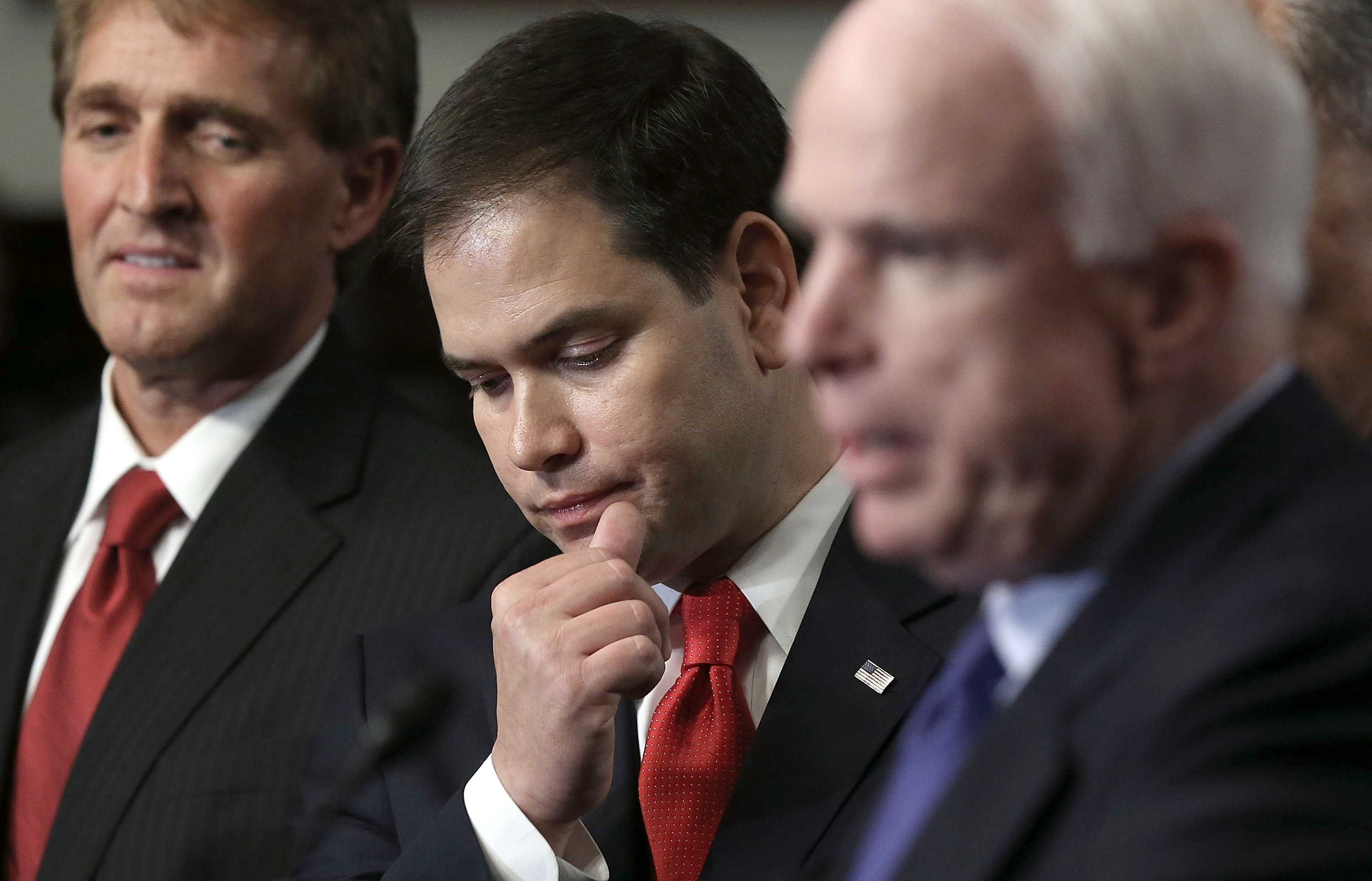
The Group Of Senators Dubbed The "Gang Of 8" Hold News Conference On Immigration Legislation

John Judis worries that Raúl Labrador’s leaving the “Congressional Gang of Eight” shows a lack of commitment to immigration reform among Republicans:

After speaking with people familiar with the House negotiations, including people on the Hill, I have finally discovered what happened, and it doesn’t reflect well on Labrador or on the right-wing Republicans whose views he represents. After agreeing to the outlines of the Senate bill, Labrador insisted that the House version require that those 12 million undocumented immigrants who will become registered provisional immigrants (RPIs) not only purchase health insurance without any subsidies, but also be responsible for whatever additional healthcare costs, including emergency care, that they incur. According to Labrador’s approach, if they fail to pay their healthcare bills, they would be subject to deportation. …

Labrador’s defection, combined with wavering from Rubio, indicates a lack of urgency among House and Senate Republicans to pass any bill at all.

Dylan Matthews, meanwhile, talks to Congressman Mario Diaz-Balart (R-FL) about how he’d like to resolve Labrador’s defection:

I’d like to go to what we had agreed to originally, which is that the folks [on the path to citizenship] have to have private insurance. But the method is less important to me than the pretty clear expectation from the American people that these folks, the formerly undocumented people, are not a public charge, to local hospitals or local government. The best way to do that is what we agreed to, in a bipartisan way, before. We’ll have to see where we move forward.

Diaz-Balart believes that the immigration issue “is the most controversial issue you could ever get involved in”:

There’s going to be pushback on everything, and that’s okay. I think what we have to do is try to come up with legislation based on basic principles, like protect the rule of law, help the economy, and our national security, and within that you have to have the components I told you about. And then see if you can put together a bill like that, that can receive bipartisan support. We’ll see if it’s possible. We’ll know soon enough and it was clearly possible two months ago. The pressure’s from outside, particularly from Nancy Pelosi, who’s jeopardizing everything, but I’m very optimistic. Cautiously optimistic, but optimistic.

Previous Dish on the Immigration bill negotiations here.

(Photo: U.S. Sen. Jeff Flake (R-AZ), Sen. Marco Rubio (R-FL), and Sen. John McCain (R-AZ) speak to members of the media during a news conference on immigration reform April 18, 2013 on Capitol Hill in Washington, DC. By Alex Wong/Getty Images.)