He is forced to concede by CNN’s wonderful Candy Crowley that even his cherry-picked statements from IRS employees prove absolutely nothing for his working assumption that the president somehow organized an inquisition of Tea Party groups via the IRS. Watch him come up completely empty:
Note his bald description of Jay Carney: a “paid liar.” Maybe this is a good opportunity to revisit the past of the chief moral scold and smear artist in Washington. He’s been arrested for being a car thief, suspected of being an arsonist, and exposed as a proven liar. Let’s take the arson first, shall we?
Issa had a warehouse full of electronics that, one night in 1982, caught fire. Investigators later found “suspicious burn patterns,” Ryan Lizza reported, and found that Issa had done some odd things.
A co-worker claimed that before the fire, Issa had put important electronic prototypes in a fireproof box, and that he’d removed the business’s computer and financial files from the building. Investigators also found that less than three weeks before the blaze, Issa had increased the company’s fire insurance from $100,000 to more than $400,000.
“So you add the more than quadrupling of the insurance along with the taking the computer and putting the other stuff in a fireproof box, and you can see why both the arson investigators and the insurance investigators pointed a finger, you know, at Issa after this fire,” said Lizza.
Issa said he had nothing to do with the fire, but the insurance company refused to pay the claim. The two later settled out of court…
The insurance company, meanwhile, had found something peculiar about Issa, unrelated to the arson: there was no indication of where his initial capital came from. After interviewing a family member, an investigator reported, “She was unable to advise us as to his financial banking [sic] to become an officer in Quantum Inc.” A second report noted, “We were unable to find the source of his financing for the business ventures he is engaged in at the present time.”
A member of Issa’s Army unit, Jay Bergey, told Williams that his most vivid recollection of the young Issa was that in December, 1971, Issa stole his car, a yellow Dodge Charger. “I confronted Issa,” Bergey said in 1998. “I got in his face and threatened to kill him, and magically my car reappeared the next day, abandoned on the turnpike.”
On March 15, 1972, three months after Issa allegedly stole Jay Bergey’s car and one month after he left the Army for the first time, Ohio police arrested Issa and his older brother, William, and charged them with stealing a red Maserati from a Cleveland showroom.
The brothers were indicted for grand theft. Darrell argued that he had no knowledge of William’s activities; William claimed that his brother had authorized him to sell the car, and he produced a document dated a few weeks before the robbery that gave him power of attorney over his brother’s affairs. On February 15th, with the investigation ongoing, Darrell returned to the San Jose dealership and repurchased his car, for seventeen thousand dollars. In August, 1980, the prosecution dropped the case. Darrell insisted that he was a victim, not a criminal. William had produced evidence that he had the legal authority to sell the car, and the injured party was reimbursed.
No one’s past is perfect and everyone deserves a second chance. But if you apply the standards of evidence Issa uses to indict the president – pure innuendo, speculation and smears – then you can fairly say that Issa was a likely car thief, con-man, and arsonist. Having figured out how to steal cars, he then repurposed his expertise to set up a company to prevent car theft. In the end, it made him a multi-millionaire. And former crook.
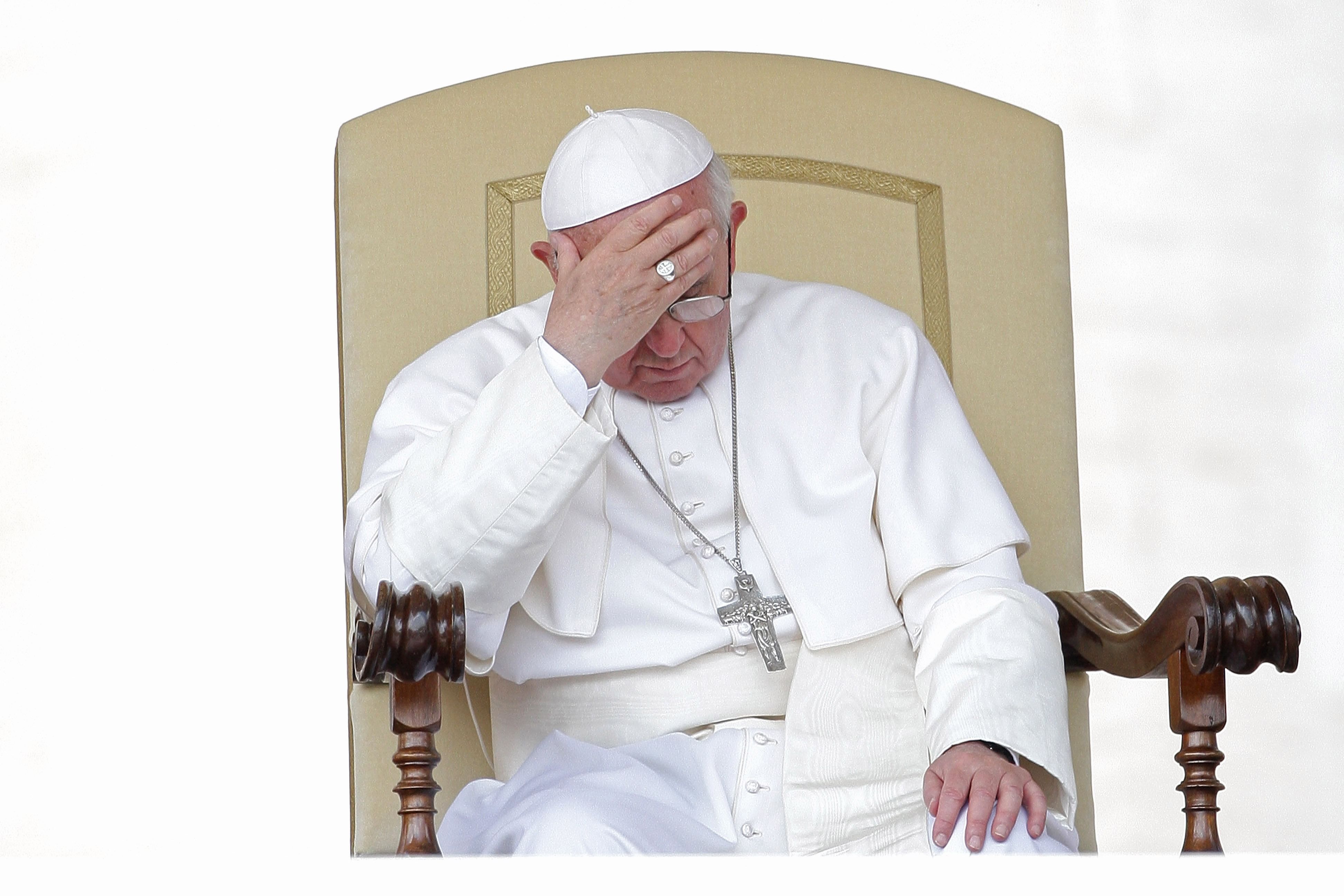
After the Pope’s words on atheists last week, the Vatican walks its Pontiff back:
Pope Francis has no intention of provoking a theological debate on the nature of salvation through his homily or scriptural reflection when he stated that “God has redeemed all of us, all of us, with the Blood of Christ: all of us, not just Catholics. Everyone!” Consider these sections of the Compendium of the Catechism of the Catholic Church that offer the Church’s teaching on who will be “saved” and how. …
[A]ll salvation comes from Christ, the Head, through the Church which is his body. Hence they cannot be saved who, knowing the Church as founded by Christ and necessary for salvation, would refuse to enter her or remain in her. At the same time, thanks to Christ and to his Church, those who through no fault of their own do not know the Gospel of Christ and his Church but sincerely seek God and, moved by grace, try to do his will as it is known through the dictates of conscience can attain eternal salvation.
As a theological corrective to those suddenly claiming that atheists go to the Catholic concept of Heaven, this walk-back is right. But it misses, it seems to me, the spirit of Francis’ words – which would have not occurred to his rigid and anal-compulsive predecessor. Meeting atheists in the good work of helping and serving others is an indication of openness, of ecumenical commitment to the common good and (in my inference) a sprinkle of mystery about what all of our relationships with God may become in that undiscovered country from whose bourn no traveler returns. Erasmus at The Economist downplays the significance of the Pope’s statement:
In theological terms, neither the pope nor his spokesman said anything new. It’s a basic Christian teaching that the status of humanity as a whole was transformed when God took human form and neutralised the power of mortality by freely undergoing death. It’s also axiomatic that individual human beings are free to accept this divine gift or reject it. The Catholic church has never ceased to see itself as possessing the “fullness of the means of salvation” but especially since Vatican II, the reforming council of the 1960s, it has freely accepted the possibility that God can be at work in places outside the visible boundaries of Catholicism.
Amidst all the apparent contradiction and confusion, there is a basic problem that besets all communication between the religious and the secular worlds. Religious statements are rooted in a metaphysical system, an understanding of the universe, which is pretty foreign to the modern, liberal mind. In traditional Christian thought, the primordial (and for many modern minds, intensely controversial) assertion is the existence of a loving God, from whom humanity has been estranged. Within that system, self-exclusion from that loving God is self-evidently a “hellish” choice; that is almost a tautology, a statement of the obvious. Outside that metaphysical system, statements about exclusion from God’s love don’t make any sense at all, they sound like pious nonsense.
But at the same time, we are wrong to put human limits on the extent of our Creator’s love for us. We must be open to being surprised by the unconditionality of the love that Jesus introduced into human consciousness.
In his Jefferson lecture last year, Wendell Berry parsed the distinction between “boomers” and “stickers”:
My teacher, Wallace Stegner…thought rightly that we Americans, by inclination at least, have been divided into two kinds: “boomers” and “stickers.” Boomers, he said, are “those who pillage and run,” who want “to make a killing and end up on Easy Street,” whereas stickers are “those who settle, and love the life they have made and the place they have made it in.” “Boomer” names a kind of person and a kind of ambition that is the major theme, so far, of the history of the European races in our country. “Sticker” names a kind of person and also a desire that is, so far, a minor theme of that history, but a theme persistent enough to remain significant and to offer, still, a significant hope.
[W]hy does he insist on the validity of this binary code? It’s useless — it’s worse than useless, it’s simplistic and uncharitable. There are many reasons why people stay home, and many why they leave; and probably no single person is driven by one reason only. “There’s no such thing as an unmixed motive,” as Rebecca West is said to have commented.
In an earlier essay, “The Conservation of Nature and the Preservation of Humanity,” Berry is more careful to define the terms “boomer” and “sticker” as conflicting internal desires. He warns against seeing these as categories of people, arguing instead that they differentiate between parts of individuals.
As Berry writes, “All of us, I think, are in some manner torn between caring and not caring, staying and going.” The choice to root ourselves in place is not a clear-cut, one-time choice. Rather, it is a long process of refining and ordering our affections, of choosing to submit to the limits of our place rather than to fulfill our individual desires.
The larger problem underlying this sort of misreading of place in Berry’s work stems from a lack of engagement with his fiction. As Jake Meador observes, Berry’s essays are incomplete without his fiction: “If the only thing you read is The Unsettling of America Berry may well come off as an angry white environmentalist with a shocking streak of naiveté. But if you read Jayber Crow, A Place on Earth, or Fidelity, you begin to become acquainted with the entire world associated with the place of Port William and you begin to understand that the place is more than just a physical place, but an entire world and culture marked by certain long-held-and-now-forgotten beliefs.” I know for myself that if I had not first read Berry’s fiction, his essays would have seemed incorrigibly grumpy; they are occasional, contrarian, prophetic, and provocative and aren’t meant to offer his full vision.
Tim Parks, in the throes of translating the Italian writer Giacomo Leopardi, muses on how to get it right:
Fifteen years of diary entries. From 1817 to 1832. Some just a couple of lines. Some maybe a thousand words. At a rhythm ranging from two or three a day to one a month, or even less frequent. Suddenly, translating Giacomo Leopardi’s Zibaldone, it occurs to me that if it were written today, it would most likely be a blog. Immediately, the thought threatens to affect the way I am translating the work.
I am imagining the great diary as the Ziblogone—launched from some eccentric little website in the hills of central Italy. I’m wondering if I should suggest to the publisher (Yale University Press) that they might put the entries up one a day on their site; they could use Leopardi’s own system of cross-referencing his ideas to create a series of links. Fantastic! Perhaps I could start embedding the links as I work. Why not?
No, stop. I have to take a deep breath and remember my job description: faithful, accurate translation true to the tone of the original.
But it is impossible to translate a work from the past and not be influenced by what has happened since. Or at least to feel that influence, if only to resist it. I translated Machiavelli’s The Prince during the Iraq war. States invading distant foreign countries with authoritarian governments, Machiavelli warned, should think twice about disbanding the army and bureaucracy that opposed them, since they may offer the best opportunity of maintaining law and order after the war is over. I remember wanting to translate this observation in such a way that even the obtuse Mr Bush simply could not miss the point. If I could have sneaked in the word “Iraq”—or perhaps more feasibly “shock” and “awe”—I would have.
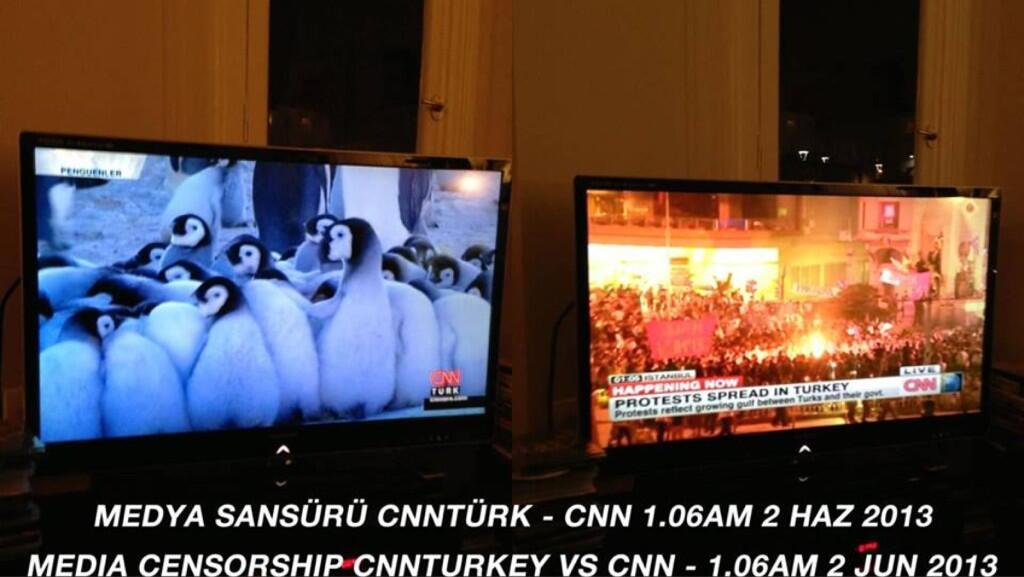
A comparison of the Turkish vs international coverage of Saturday’s protests:
Juan Cole defends Erdogan’s democratic mandate and record:
[His government] was last elected in June, 2011, at which time [his AKP party] received about half the votes in the country (an improvement on past performances). The elections appear to be on the up and up, and [AKP] seems genuinely popular in the countryside and in many urban districts. The economy has grown enormously in the past decade under Erdogan’s rule, Turkey is now the world’s 17th largest economy (by nominal gdp) according to the IMF. It has been averaging 5 percent growth per year at a time when neighbors in the EU like Greece and Spain are basket cases. It has a huge tourism sector that has benefited from the troubles in Egypt, Tunisia and Lebanon. The economy will likely only grow 3% this year, but that is still a good number given Europe’s doldrums.
However, Cole also links the fate of the country’s democracy to the Erdogan government’s exceptionally poor treatment of dissent and the press:
The protests were not mainly about the environment or retaining green parks but about police brutality. Turkey’s political tradition has never been particularly tolerant of dissent, and unfortunately the AKP is continuing in a tradition of crackdowns on political speech it doesn’t like. Reporters without Borders ranks the country 154 for press freedom, and it has 76 journalists in jail, and “at least 61 of those were imprisoned as a direct result of their work.” Observers are astonished to find that Saturday morning’s newspapers in Turkey are virtually silent about the protests. Editors have clearly been intimidated into keeping quiet about these events.
… By preventing peaceful assembly and deploying disproportionate force, and by an apparent imposed news blackout on the protests, the Turkish government is raising questions about how democratic the country really is.
Elsewhere, Aaron Stein surveys the makeup of those who support Turkey’s ruling AKP party:
[T]he dynamics of the protests now reflect many of the fundamental antagonisms in Turkey’s imperfect democracy. Erdogan’s divisive rhetoric and his penchant for authoritarian rule have steadily eroded the party’s support from small constituencies that it could once count on. While the AKP’s voter base is often simplistically assumed to be religious conservatives, the truth of the matter is that AKP supporters include a small number of liberals eager to do away with the undemocratic constitution, a business sector happy with the party’s handling of the economy, nationalists who are pleased with what they perceive as Turkey’s re-emergence as a global power, Turkish Islamists obsessed with the proliferation of Ottomania (a growing desire among the Turkish population to reconnect and reacquaint themselves with the country’s imperial past), and some members of Turkey’s Kurdish minority who are pleased with AKP’s democratic reforms. …
[D]uring the early years of Erdogan’s rule, which were characterized by a sustained push to reform Turkish laws along European Union standards, the ruling party was able to co-opt some parts of the more liberal segments of the population. Lots of people that did not compromise part of the AKP’s core constituency, for example, would lambast Erdogan publicly but would quietly vote for him because he was handling the economy well and they were pleased with the growing liberal freedoms. This dynamic has ended.
Taking another angle, Peter Beaumont zooms in on the rampant corruption that makes people so suspicious of the government development plans like the ones that started last week’s protests:
As Transparency International made clear in a recent survey of Turkey, while its elections largely have been free and fair, corruption, especially linked to the construction industry, has been a growing problem. In April, for the first time ever, two officials in Turkey’s public housing administration – which enjoys a virtually unopposed monopoly to redevelop private and public land, including a 20-year, $400bn urban renewal budget – were charged with extorting bribes and abuse of power. Indeed those who have benefited from recent large projects have allegedly included key players in Turkish society, including members of Erdogan’s own party, a company run by Erdogan’s son-in-law and the Turkish armed forces.
The perception in Turkey that barely regulated development is being driven for the economic benefit of entrenched interests with links to party politics, rather than in the public interest, has been fuelled by the hard data about some of the most controversial developments, including Gezi Park. As a recent article in Hurriyet Daily News made clear, Turkey, and Istanbul in particular, hardly needs more malls. Istanbul already has so many that 11 in the city have been forced to close down.
Tens of thousands of protesters have taken to the streets in more than a dozen cities this weekend following a brutal police crackdown on an Occupy-style sit-in aimed at preventing a popular Istanbul park from being bulldozed:
Protesters lit fires and scuffled with police in parts of Istanbul and Ankara early on Sunday, but the streets were generally quieter after two days of Turkey’s fiercest anti-government demonstrations for years. Hundreds of protesters set fires in the Tunali district of the capital Ankara, while riot police fired tear gas and pepper spray to hold back groups of stone-throwing youths near Prime Minister Tayyip Erdogan’s office in Istanbul.
Istanbul’s central Taksim Square, where the protests have been focused, was quieter after riot police pulled back their armored trucks late on Saturday. Demonstrators lit bonfires among overturned vehicles, broken glass and rocks and played cat-and-mouse on side streets with riot police, who fired occasional volleys of tear gas.
The unrest was triggered by protests against government plans to [demolish Gezi Park and] build a replica Ottoman-era barracks to house shops or apartments in Taksim, long a venue for political protest. But it has widened into a broader show of defiance against Erdogan and his Islamist-rooted Justice and Development Party (AKP).
As of this morning, more than 900 protesters have been arrested and more than 1,000 injured across at least 90 protests throughout the country. Taksim Square remains occupied, although with a smaller group than yesterday. Considering how quickly the demonstrations materialized, Zeynep Tufekci highlights the extensive role social media has played, also noting that while Turkey is no stranger to political protests, she has never seen one this large or spontaneous before. Elif Bauman makes a related point about Turkey’s vibrant protest culture, and why this one seems different:
The feeling of unreality and disconnect is at the heart of the Gezi [Park] demonstrations. Istanbul loves to demonstrate; I can’t remember ever walking through Taksim without seeing at least one march or parade or sit-in, and on weekends there are usually several going on at the same time. Usually, they are small, peaceful, and self-contained, and the police just stand there. For some time now, the demonstrations have had a strangely existential feel. Again and again, people have protested the destruction of some historical building or the construction of some new shopping center. Again and again, the historical building has been destroyed, and the shopping center constructed.
Nearly every slogan chanted on the streets right now addresses Erdogan by name, and Erdogan hasn’t been talking back much. On Wednesday, he told protesters, “Even if hell breaks loose, those trees will be uprooted”; on Saturday, he issued a statement accusing the demonstrators of manipulating environmentalist concerns for their own ideological agendas. It’s hard to argue with him there; there’s little doubt that the demonstrations are less about [Gezi Park’s] six hundred and six trees than about a spreading perception that Erdogan refuses to hear what people are trying to tell him.
In addition, Erdogan and the AKP recently rushed through a law to limit alcohol sales and even targeted kissing in public, moves widely perceived to be theocratically motivated. Regarding the government’s ongoing development plans for Istanbul, Firat Demir explains the outrage:
With no public consultation or discussion, the Erdogan government decided earlier this month to approve a project that would transform Taksim Square into a shopping center, rerouting the traffic that now passes through this vital hub on the European side of Istanbul through tunnels underneath. The news of the project has generated a flood of angry responses from the public, all of which the government has uniformly ignored. Among other things, the proposed redevelopment plan will wipe out one of the few remaining greenspaces in the densely packed area — the latest in a long series of similarly insensitive urban design schemes.
The Taksim plan follows another controversial plan to build a gigantic and spectacularly ugly new bridge on the current site of the Galata Bridge, one of Istanbul’s longest-standing architectural landmarks. The bridge project is the brainchild of Istanbul’s Islamist mayor, an Erdogan ally, who designed it himself. If built, the bridge will completely transform the silhouette of the old city. Apart from the fact that this is the mayor’s sole attempt to dabble in architecture, the complete absence of any public consultation or competition for the project has confirmed, for many Turks, Erdogan’s seeming aspiration to crown himself as the new sultan of Turkey. The ruling party’s misguided ambitions for Galata and Taksim come after a series of demolitions of 500-year-old Istanbul neighborhoods such as Sulukule, Tarlabasi, or Balat that have fed public discontent — particularly since many of those who benefited also appear to have unseemly links with the ruling Islamists. Just to make matters worse, last month the government also finalized a contract for a new nuclear power point despite mass public opposition to nuclear power throughout the country.
The prospective bridge [across the northern Bosphorus] was given the name of Sultan Selim the Grim, the cruellest adversary of Alevis and Shiites in Ottoman history. Conqueror of Egypt, the powerful sultan is known for the massacres of tens of thousands of Anatolian Alevis prior to and after his war against Iran. The bridge might have well been named after Rumi, the great Sufi thinker who spread the teaching of universal tolerance from Anatolia, or any other Islamic humanist. It is not hard to guess how offensive the choice of Selim’s name is for the Alevi community – who form about 10% of the population and are still awaiting an official acknowledgement of their religious identity and worship rights.
Stepping back, Murat Yetkin isn’t sure what the unrest will ultimately lead to, but at the very least the protests mark the first public defeat Erdogan has faced as prime minister, and that his rigid refusal to compromise could cost him still further:
To call this a “Turkish Spring” would be over-dramatizing it. It could be, if there were opposition forces in Turkey that could move in to stop the one man show of a mighty power holder. But it can easily be said that the Taksim brinkmanship marked a turning point in the almighty image of Erdoğan.
Issandr El Amrani similarly wonders if this weekend’s uprising will burst the “much-inflated Erdogan bubble that [has] thrived pretty much unchallenged for the last decade.” Meanwhile, Amberin Zaman offers some key analysis:
My overall impression, and it’s commonly shared, is that the Taksim Park project has morphed into a vehicle for popular resentment against Erdogan’s increasingly dismissive and authoritarian ways. Under a decade of AKP rule, Turkey has become the world’s top jailer of journalists. Its interventionist policy in Syria is causing alarm. The systematic and disproportionate use of force against the slightest display of dissent obscures that the AKP was democratically elected and remains the most popular government in modern Turkish history. Yet, egged on by the slavishly self-censoring Turkish media, Erdogan seems increasingly out of touch.
Zaman adds that next year’s nationwide local elections now loom larger than ever:
Erdogan’s political fortunes hinge on how the government handles the crisis. Pulling back the police and allowing the crowds to gather on the second day was a step in the right direction.
Turkey is not on the brink of a revolution. A Turkish Spring is not afoot. Erdogan is no dictator. He is a democratically elected leader who has been acting in an increasingly undemocratic way. And as Erdogan himself acknowledged, his fate will be decided at the ballot box, not in the streets.
A protester-made video compilation of Friday’s violence in Istanbul is here. To go through a raw feed of photographs of the protests, check out this Tumblr. Reuters has put together an extensive gallery as well, including this photo of a woman being pepper sprayed in the face which many are citing as a major catalyst for the outrage. Update from an expat reader in Istanbul:
Just a quick correction to begin with, you mentioned the name of the replacement of the Galata bridge would be the Selim. This is not true – while there are plans to replace the Galata bridge, I do not believe that there are plans to change the name (although I may be wrong about this point). The Selim bridge is not by Galata (over the Golden Horn), but is in fact the planned third bridge to cross the Bosphorus at the northern end of the straits. It will be the third bridge to do so and has caused immense uproar not just for its name (which your post addressed), but also because of ecological and urban density concerns.
Its construction and the construction of the requisite new and improved roads to it will cause incredible amounts of damage to the forest in the northern portion of the Istanbul metropolitan area. Another issue is the heavy-handed, highly-centralized and authoritarian nature of the bridge’s approval. Erdogan rushed it through without an adequate environmental study and with no input from the local community (a fact shared with the Gezi park and Tarlabasi plans). Two additional mega projects that have caused widespread anger are the third airport, planned to be built to the northwest, and a canal to the west of Istanbul connecting the Marmara to the Black Sea. These two plans are similarly highly desired by ‘King’ Erdogan, but have caused a lot of public anger.
While the relative cost/benefit analysis for any of these projects can be argued (and I personally think the 3rd bridge and a new or heavily expanded current airport are necessary), it is Erdogan’s conduct that is the biggest issue. Whatever he decides is right, he rushes through with little opposition internally in the AKP (everyone is terrified of him, except for those protected by President Gul, who has his own faction within the AKP) and no opposition nationally or locally is allowed.
Erdogan’s dialogue since the protests began has ventured into the absurd, calling the protesters marauders, terrorists, extremists. It has frankly been a fairly diverse and peaceful group. There was certainly violence perpetrated yesterday in particular by a small portion of the protesters (my roommates reported reckless destruction of major brandname stores on Istiklal street), most protesters have been peaceful in spite of massive police brutality and the use of CS and CR gas. I have attached some pictures and videos from the protests in the Kadikoy neighborhood from Friday night/saturday morning (taken at 2:30-3:00am). These are not terrorists or thugs, but ordinary citizens.
No one knows where things will go from here, but if Erdogan loses a bit of his luster, it will certainly help.
Christy Wampole champions the essay, using the word “essayism” for “what happens when [the essay] cannot be contained by its generic borders, leaking outside the short prose form into other formats such as the essayistic novel, the essay-film, the photo-essay, and life itself”:
Essayism consists in a self-absorbed subject feeling around life, exercising what Theodor Adorno called the “essay’s groping intention,” approaching everything tentatively and with short attention, drawing analogies between the particular and the universal. Banal, everyday phenomena — what we eat, things upon which we stumble, things that Pinterest us — rub elbows implicitly with the Big Questions: What are the implications of the human experience? What is the meaning of life? Why something rather than nothing? Like the Father of the Essay, we let the mind and body flit from thing to thing, clicking around from mental hyperlink to mental hyperlink: if Montaigne were alive today, maybe he too would be diagnosed with A.D.H.D.
Why we need to cultivate the more thoughtful, meditative aspects of these tendencies:
Essayism, as an expressive mode and as a way of life, accommodates our insecurities, our self-absorption, our simple pleasures, our unnerving questions and the need to compare and share our experiences with other humans. I would argue that the weakest component in today’s nontextual essayism is its meditative deficiency. Without the meditative aspect, essayism tends toward empty egotism and an unwillingness or incapacity to commit, a timid deferral of the moment of choice. Our often unreflective quickness means that little time is spent interrogating things we’ve touched upon. The experiences are simply had and then abandoned. The true essayist prefers a more cumulative approach; nothing is ever really left behind, only put aside temporarily until her digressive mind summons it up again, turning it this way and that in a different light, seeing what sense it makes. She offers a model of humanism that isn’t about profit or progress and does not propose a solution to life but rather puts endless questions to it.
We need a cogent response to the renewed dogmatism of today’s political and social landscape and our intuitive attraction to the essay could be pointing us toward this genre and its spirit as a provisional solution. Today’s essayistic tendency — a series of often superficial attempts relatively devoid of thought — doesn’t live up to this potential in its current iteration, but a more meditative and measured version à la Montaigne would nudge us toward a calm taking into account of life without the knee-jerk reflex to be unshakeably right. The essayification of everything means turning life itself into a protracted attempt.
Abigail Rine profiles evangelicals questioning their faith’s single-minded emphasis on remaining a virgin before marriage:
The central thrust of these evangelical critiques is a rejection of the “damaged goods” metaphor. On her high-profile website, New York Times bestselling author Rachel Held Evans calls out the “horrific object lessons”…which aim to convince young people that “premarital sex ruins a person for good.” Sarah Bessey, author of the forthcoming book Jesus Feminist, shares her own story of feeling condemned by the “true love waits” rhetoric of her church, which conveyed the message that she, as a non-virgin, was now “disqualified from true love.”
Prodigal Magazine, an up-and-coming online publication that caters to twenty-something evangelicals, recently featured a candid piece on abandoning the concept of virginity. While deliberately keeping her own sexual history private, Emily Maynard, the author of the article, proclaims that she is no longer going to think of herself as a virgin or a non-virgin. “I’m done splitting my sexuality into pieces,” Maynard writes, “I’m done with conversations about ‘technical virginity’ and couples who ‘win the race to the altar.’… I’m done with Christians enforcing oppression in the name of purity.“
The political class—where “the average MP is 50 years old; the average councillor is 60″— appears increasingly sealed off from the classical liberal outlook of the next generation:
The young want Leviathan to butt out of their pay cheques as well as their bedrooms. Compared with their elders, they are welfare cynics. Almost 70% of the pre-war generation, and 61% of baby-boomers, believe that the creation of the welfare state is one of Britain’s proudest achievements. Under 30% of those born after 1979 agree. The young are deficit-reduction hawks. They worry about global warming, but still generally lean towards Mill’s minimal “nightwatchman state” when it comes to letting business get on with it: they are relaxed about the growth of giant supermarkets, for example. …
Far from courting them, the big political parties are running in precisely the opposite direction. Spooked by UKIP, the Conservatives shuffle their feet when the subject of gay marriage comes up. They are preparing to fight the 2015 general election on an anti-immigration platform. Labour has social liberalism to spare. But it has opposed welfare cuts and rediscovered its historical enthusiasm for economic meddling, which it calls “predistribution”. The Chinese leadership quotes Adam Smith more often than Ed Miliband does.
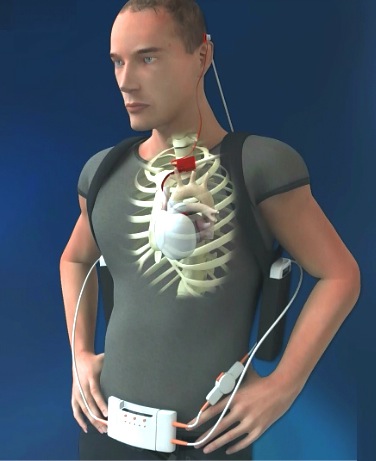
[W]ith demand for heart transplants far exceeding donations, patients can wait for years for a donor heart, while others may be ineligible altogether because of other health issues. An artificial heart can provide a life-saving bridge while a patient waits for a transplant. Surgeons have implanted [the only currently approved artificial heart] in over 1,000 patients. Air is pumped from the external control system (which has recently evolved from a large, 418-pound [air-]driver to a wearable 13.5-pound driver) through tubes that connect through the skin into the device. Puffs of air expand two small balloons inside each chamber of the artificial heart, which pushes blood out of the prosthesis.
[However, in Carmat’s new design,] two chambers are each divided by a membrane that holds hydraulic fluid on one side.
A motorized pump moves hydraulic fluid in and out of the chambers, and that fluid causes the membrane to move; blood flows through the other side of each membrane. The blood-facing side of the membrane is made of tissue obtained from a sac that surrounds a cow’s heart, to make the device more biocompatible. “The idea was to develop an artificial heart in which the moving parts that are in contact with blood are made of tissue that is [better suited] for the biological environment,” says Piet Jansen, chief medical officer of Carmat.
That could make patients less reliant on anti-coagulation medications. The Carmat device also uses valves made from cow heart tissue and has sensors to detect increased pressure within the device. That information is sent to an internal control system that can adjust the flow rate in response to increased demand, such as when a patient is exercising.
 The Dish