How Disasters Spur Democracy

After an earthquake struck southwest China earlier this year, social media and mobile phones proved instrumental in relief efforts. Patrick Meier considers the broader implications for the Chinese government:

[U]sing social media to crowdsourced grassroots disaster response efforts serves to create social capital and strengthen collective action. This explains why the Chinese government (and others) faced a “groundswell of social activism” that it feared could “turn into government opposition” following the earthquake (6). So the Communist Party tried to turn the disaster into a “rallying cry for political solidarity. ‘The more difficult the circumstance, the more we should unite under the banner of the party,’ the state-run newspaper People’s Daily declared […], praising the leadership’s response to the earthquake” (7). …

Aided by social media and mobile phones, grassroots disaster response efforts present a new and more poignant “Dictator’s Dilemma” for repressive regimes. The original Dictator’s Dilemma refers to an authoritarian government’s competing interest in using information communication technology by expanding access to said technology while seeking to control the democratizing influences of this technology. In contrast, the “Dictator’s Disaster Lemma” refers to a repressive regime confronted with effectively networked humanitarian response at the grassroots level, which improves collective action and activism in political contexts as well. But said regime cannot prevent people from helping each other during natural disasters as this could backfire against the regime.

Earlier Dish on crowdsourced disaster efforts here.

(Hat tip: Duck of Minerva)

A 3D Printable Revolution, Ctd

Another possible use for the technology:

[Anjan Contractor] sees a day when every kitchen has a 3D printer, and the earth’s 12 billion people feed themselves customized, nutritionally-appropriate meals synthesized one layer at a time, from cartridges of powder and oils they buy at the corner grocery store. Contractor’s vision would mean the end of food waste, because the powder his system will use is shelf-stable for up to 30 years, so that each cartridge, whether it contains sugars, complex carbohydrates, protein or some other basic building block, would be fully exhausted before being returned to the store.

Ubiquitous food synthesizers would also create new ways of producing the basic calories on which we all rely. Since a powder is a powder, the inputs could be anything that contain the right organic molecules. We already know that eating meat is environmentally unsustainable, so why not get all our protein from insects?

Also, CNN reports on how a 3D printer saved the life of an infant with breathing problems:

“We can put together a complete copy of a body part on the 3-D printer within a day,” [Dr. Glenn] Green said. “So we can make something very specific for a patient very quickly.”

Green then took the splint, measuring just a few centimeters long and 8 millimeters wide, and surgically attached it to Kaiba’s collapsed bronchus. It was only moments before he saw the results.

“When the stitches were put in, we started seeing the lung inflate and deflate,” Green said. “It was so fabulous. There were people in the operating room cheering.”

The Caged Bird Sings, Ctd

A reader writes:

The video and story of Mohamed Assaf reminded of something I’ve been meaning to send you. It’s a music video by activist Israeli-Palestinian hip-hop group DAM, for a song called”If I Could Go Back in Time.” DAM is Tamer Nafar, Suhell Nafar and Mahmoud Jreri, who are from the wrong side of the wall in Lod, a town southeast of Tel Aviv where most of the Palestinians were expelled in 1948. (Yes, there’s an actual wall now separating Arabic and Jewish neighborhoods in Lod, although it was built just a few years ago.) For more than a decade they’ve been rapping about Israel-Palestine issues – home demolitions, discrimination, being painted with the terrorist brush – about drugs and violence in their community and more.

“If I Could Go Back in Time” is beautiful and heartbreaking protest song about a girl who is honor-killed by her father and brother for refusing to marry the man chosen for her. The chorus is sung by the wonderful Amal Murkus, a Christian Israeli-Palestinian who has long been a highly vocal advocate for women’s rights, thereby pissing off both extremist Muslims and extremist Jews.

It’s in Arabic, so be sure to turn on the closed captioning. Know tissues.

Lyrics after the jump:

Suhel Nafar:
‏Before she was murdered, she wasn’t alive
‏We’ll tell her story backwards from her murder to her birth
‏Her body rises from the grave to the ground
‏The bullet flies out of her forehead and swallowed into the gun
‏The sound of her echo screams, she screams back
‏Tears rise up from her cheeks to her eyes
‏Behind the clouds of smoke, faces of her family appear
‏Without shame, her brother puts the gun in his pocket
‏Her father throws down the shovel and wipes the sweat off his forehead
‏He shakes his head, satisfied from the size of the grave
‏They pull her back to the car, her legs kicking
‏Like a sand storm, she’s erasing her own tracks
‏They throw her in the trunk, she doesn’t know where she is
‏But she knows that three left the house and only two will return
‏They reach the house; throw her to the bed in violence
‏”So you want run away huh?” they wake her with violence

‏Amal Murkus (Chorus)
‏If I could go back in time
‏I would smile
‏Fall in love
‏Sing
‏If I could go back in time
‏I would draw
‏Write
‏Sing

‏Mahmood Jrere:
‏She dreams before falling asleep
‏We’ll tell her story backwards, maybe understand
‏The clock hands move right to left
‏She reconstructs her steps as if she were lost
‏She sleeps prepared, money for the taxi
‏Plane ticket and passport under her pillow
‏Answer: leave the clothes in the close; she plans to wear a new life
‏Question: what if they ask what the suitcase is for?
‏She went to bed, leaves table
‏Eats well, she must act today
‏Her nose stops bleeding, that’s what they see
‏But it’s a fresh wound; before they will beat her she will beat them
‏Her mom says “your life is like heaven”
‏She’s right, if you taste the forbidden you better know someone is watching
‏Two hours before dinner, the phone hangs up
‏Her mom is shocked “the flight is delayed”
‏Phone rings

‏Amal Murkus (Chorus)

‏Tamer Nafar:
‏Before she answers, she isn’t even asked
‏The story is like the logic in her life, all backwards
‏Her hands up in the sky, begging for help
‏Their hands up in the sky reciting the Fatiha (ceremony before marriage)
‏The calendar page moves one day back, the time is
‏Afternoon, the argument is over, her brother commands her
‏Blood flows from her lips to her nose
‏A sound of a fist, his hand jumps from her face
‏It’s the first time in her life that she says “NO!”
‏Her mom announces happily “tomorrow you will marry your cousin”
‏If I look through the album of her life
‏I won’t see a photo of her standing up for her rights
‏It’s hard, the pages are stuck to my hand
‏Her past full of blood and tears
‏But we promise you, from her murder to her birth
‏Their expressions filled with anger as if someone announced a crime
‏”Congratulations, it’s a girl”
‏The beginning.

The Paranoid Style

The Daily Show with Jon Stewart Mon – Thurs 11p / 10c
Exclusive – Bill O’Reilly Extended Interview Pt. 1
www.thedailyshow.com

This embed is invalid

Daily Show Full Episodes Indecision Political Humor The Daily Show on Facebook

Let me explain why I remain genuinely baffled by the framework of the current discussion of the IRS scandal. There is little doubt, after the Inspector General’s report, that the Cincinnati office in charge of 501 (c) 4 scrutiny unfairly and unreasonably – even outrageously – seemed to apply political criteria for screening such groups. The question remains why they did this, what their motivations were, to what extent scrutiny of such groups was actually an important task to accomplish, how far that got distorted, and how far up the chain this decision went. These are very important questions, which is why I hope hearings can uncover more evidence than the actual report – and hold specific people accountable, apart from the resignation of the acting head of the IRS (which nonetheless has occurred).

But here’s where I do a double-take, which is roughly what happened as I was curled up on the couch last night watching Bill O’Reilly argue – with no evidence whatsoever – that the Obama administration had decided after the 2010 mid-terms to target Tea Party groups by using the IRS as a politicized bludgeon. This utterly unsubstantiated claim (see above) is now the dominant meme, the working assumption of the propagandists at Fox News. When pressed to defend this extraordinary reach, O’Reilly admitted he was purely speculating – or in his weasel words, “educated speculation.”

Then I read Mitch McConnell arguing that the GOP and its donors are “intimidated” by the Obama administration – because of its desire to see that those exercizing explicitly political speech after the Citizens United decision actually be identified by name. It’s funny, but “intimidated” is not the first adjective that springs to mind when contemplating the Senate Minority Leader. For McConnell, the First Amendment includes protection for extremely wealthy people’s total anonymity even as they funnel unlimited funds toward a political campaign. And the idea that the House Republicans or the Tea Party or the 501 (c) 4s or Karl Rove were in any way seriously intimidated does not seem, shall we say, to be reflected in their extravagant expenditures in 2012 and their evident joy in attacking their sinister, coffee-colored pinata one more time right now. And it’s worth pointing out that getting that 501 (c) 4 approval was not necessary for the entities to spend their money from the get-go. Which they did. To little avail.

Then we hear pundits like George Will and Peggy Noonan actually bring up Watergate as the closest historical analogy – which is, to put it bluntly, deranged. Remember, for example, that this scandal was not exposed by Woodward and Bernstein (although anecdotal complaints were aired in the press at the time) – but was exposed by the IRS itself. The IRS moreover also attempted to end this practice, and when that failed, set up an Inspector General report into the outrageous screening. In such an investigation, the Obama administration properly maintained an ethical distance for fear of seeming to affect the investigation’s findings. Watergate? Are they out of their fricking minds? Or cynics trying to gin up a story in a not-so-great season for ratings?

Then comes the Wall Street Journal with the coup de grace: because the White House kept itself scrupulously distant from the IG report, there is, apparently, no accountability in government:

Alexander Hamilton and America’s Founders designed the unitary executive for the purpose of political accountability. It is one of the Constitution’s main virtues. Unlike grunts in Cincinnati, Presidents must face the voters. That accountability was designed to extend not only to the President’s inner circle but over the entire branch of government whose leaders he chooses and whose policies bear his signature.

What you immediately notice is that under this scenario, Obama cannot win.

If he had interfered with the IG investigation, we would have a shit-storm of major proportions as he would be accused of unethically and improperly meddling in an investigation designed to be independent. Yes, the president runs the executive branch including, say, the Justice Department and the IRS. But his political relationship to those ideally neutral bodies is rightly constrained. And how could the president have intervened before the facts were fully known and weighed by an independent investigation anyway? He’s damned if he did and damned if he didn’t. Which is why his legal counsel was well advised to maintain that wall before the evidence was fully known.

This then becomes, in the eyes of the Washington Post, “shielding” Obama, as if this affair were about plausible deniability, as opposed to ethical government. The very attempt not to interfere is described as some kind of illicit political interference. In the pincer movement from Fox and the WaPo, there is no way Obama himself can come out shining.

I don’t get it. But then I am not working from a conclusion to a premise. I do not believe that the Obama administration is some kind of terrifying left-wing tyranny, exercising lethal political powers to punish its opponents, rifle through their tax returns, and take away everyone’s guns. But for some, all this is a given. Michelle Malkin knew all of this as far back as 2010, when she published her tract, “Culture of Corruption: Obama and His Team of Tax Cheats, Crooks, and Cronies.” If you point out that the first Obama term had a historically minuscule numbers of “scandals”, they will presumably just reply that it’s because they are so brilliant at never getting caught.

The paranoid style is not new in America. But it finds its locus in exactly those populations who feel marginalized by the tectonic cultural and social and economic shifts in the Obama era. And the syndrome is not new. Here’s a passage from Richard Hofstadter’s classic definition of the pseudo-conservative in America:

The restlessness, suspicion and fear manifested in various phases of the pseudo-conservative revolt give evidence of the real suffering which the pseudo-conservative experiences in his capacity as a citizen. He believes himself to be living in a world in which he is spied upon, plotted against, betrayed, and very likely destined for total ruin. He feels that his liberties have been arbitrarily and outrageously invaded. He is opposed to almost everything that has happened in American politics for the past twenty years. He hates the very thought of Franklin D. Roosevelt. He is disturbed deeply by American participation in the United Nations, which he can see only as a sinister organization. He sees his own country as being so weak that it is constantly about to fall victim to subversion; and yet he feels that it is so all-powerful that any failure it may experience in getting its way in the world — for instance, in the Orient — cannot possibly be due to its limitations but must be attributed to its having been betrayed.

Fox News has made pseudo-conservatism very lucrative, and as I watched the pure cynicism of Bill O’Reilly, making even more millions from yet another “book”, and wrily winking that he knows this is all paranoid bullshit, but, hey, it’s what he gets paid for, I felt little but nausea.

Let’s keep the government honest. Let’s get to the bottom of it. But let us not descend into the pseudo-conservative mindset that assumes Watergate-style malevolence purely because it feels good and makes money.

Update from a reader:

I agree 100% with your post. I’ve made the same general argument about Malkin with friends. However, your 2010 date for her book was the paperback edition. The original came out in July 2009, SIX MONTHS AFTER HE TOOK OFFICE. A minor point, perhaps, but it remains stunning to me.
Cicada, It’s What’s For Dinner

Brian Reis spoke with entomologist Louis Sorkin about how to eat cicadas:

Hors d’oeuvres! I’ve seen much worse. But James Hamblin gets queasy:

Some will mention that cicadas are arthropods, like shrimp and lobster. Eating them is just a step away. Just like how cats and cows are both mammals, so it’s okay that you eat cats. Cats that have been living underground for 17 years. And that really is the thing. I’m sure I’ve eaten things that have been underground for 17 years, but not knowingly, not happily.

Cultural differences and social etiquette aside, are they safe to eat?

How many chemicals do they absorb underground? Entomologist Jenna Jadin, a fellow at the American Association for the Advancement of Science, wrote a book of cicada recipes, so she’s not impartial, but she says they’re probably fine in small doses. Still the first page of her book reads: “The University of Maryland and the [cicada interest group] Cicadamaniacs do not advocate eating cicadas without first consulting your doctor.” That caveat seems extreme, but, their words, not mine. It may refer to the possibility of a shellfish allergy. If you have a shellfish allergy, cicadas may not be for you. Meanwhile the site Cicada Mania warns that even dogs should be wary: “Pets can choke on the rigid wings and other hard body parts of the cicadas; pets will gorge themselves on cicadas, and possibly become ill and vomit; pets who consume cicadas sprayed with copious amounts of pesticide can and will die.”

Regulate The Reefer Already

Despite the fact that “Canadian teens were the most likely to smoke pot of all teens in the developed world,” Soraya Roberts isn’t ready to start toking:

Call it reefer madness, but I don’t trust my already-precarious anxiety-addled brain to survive pot intact. Particularly these days—this ain’t the pot my parent smoked. In the ’60s, you got high off a doobie with a potency of 4 percent. These days a hit peaks at 25 percent; such is the strength of “Dr. Grinspoon,” a strain named after the Harvard psychiatrist who wrote several books on cannabis, including 1970’s Marihuana Reconsidered and Marihuana: The Forbidden Medicine.  “If you take hold of Dr. Grinspoon and smoke a lot of it, you could probably have quite a reaction,” its namesake told me. Like insanity?, I didn’t reply. Research shows that people who have predisposition for schizophrenia can experience early onset from smoking marijuana. My genetic loading for mental health isn’t ideal. I wouldn’t want to rock the brain boat.

There is an irony to this thought process, stemming from the fact that I have taken prescription medication for years—for anxiety (peanut gallery: “Of course!”).

I don’t deny the paradox. But there is a certain security to be found in taking a legal drug that the government has tested. Even if the FDA’s methods are not up to snuff, that’s some kind of standard. With pot being illegal, there is no standard. Marijuana may be “healthier than anything you can buy from the pharmaceutical industry,” according to Grinspoon, but how could I ever ensure I was getting the real McCoy? “I’ll try it if you can assure me it will be clean,” I told an acquaintance recently. “Clean? Like, you want it to be washed?” he quipped. Um, no, but I don’t want it to be laced with meth or cut with those synthetic cannabinoids that leave seizures and high blood pressure in their wake. I don’t have any scruples about smoking an illegal joint, but I’m not willing to risk my health for it.

Update from a reader:

Weed laced with meth? Had there been liquid in my mouth when I read that line, I would have done a spit-take. Does she really believe weed dealers put meth in their product so you’ll smoke it and stay up for three days? Clearly Soraya Roberts hasn’t the first clue what she’s talking about when it comes to marijuana. And of course she makes the same old tired objection about today’s cannabis being stronger than ‘my parent’s’ cannabis, with nary a nod toward the dose-response relationship – as though people decide the quantity of weed they will smoke and then do it without regard to the potency and resulting effect.

An Islamist Beheading In Britain, Ctd

Investigations Continue Into The Brutal Street Killing Of A British Soldier

A reader balances this reader’s rage:

I am a Muslim and I was never taught that violence is acceptable. I went to a mosque to study Quran between the ages of 7 and 9. All I know about Islam is to forgive, be patient, love your family, friends, neighbor and be good to people. What the pope says is awesome and most Muslims I know are following just that. The prophet taught humility, forgiveness and love. He forgave people who treated him badly and forgave people who killed his family members. There are a lot of “mullahs” who preach jihad (which doesn’t necessary mean kill the infidel, more like that struggle for the better society with your words, your pen and deeds). The violence that is perpetuated is wrong and is not true to the core of Islam.

It seems Islam is going through its Dark Ages, where lack of education and a confusion of tradition with religion in Muslim countries is causing their people to be manipulated by false sermons of violence against the West as some good deed when it’s a sin and a sin alone.

All I know about Islam is that killing a human being is as if killing the whole humanity. The mindless menace of violence has a grip over the Muslim world right now and hopefully with a better-educated younger generation, where people like me can disagree, will help improve this problem. Killing in the name of “the most merciful and benevolent” God (Allah) is not true. The merciful god in Quran says that no human has a right to take another’s life as it is not his to take, even his own. Muslims aren’t even allowed to commit suicide. Combining that with killing innocent people is beyond my capacity to understand.

Islam is not a monolith. Westboro Baptist Church does not represent every Christian. These people who killed an innocent person in Bahrain are no Muslims; they are Muslims in name and have committed a grave sin against their fellow human being and god.

Another:

A reader wrote, “X number of bombs and deaths a year is a normal part of modern life that only unmanly hysterics bother to get upset about. This is something we have never actually experienced in the civilized world.” This is simply not true.  This reader acknowledges that “[p]ast revolutionary groups killed hostages, planted bombs and committed all manner of violent mayhem to try and destabilize the societies they hated.”  There have been bombings and killings going on in the United States – even suicide bombings – throughout the history of this country and unrelated to Islamism.  The killing in London is a terrible tragedy, but so is this one, and this one, and this one, and these two, and all the rest of these.

Those lefty Muslim apologists at Townhall have listed the 10 worst bombings in U.S. history.  Only one of them (1993 WTC bomb, coming in at #10) was committed by Islamists (another remains unsolved). If violent radical Islam magically ceased to exist today, there would still be “X number of bombs and deaths a year.”  That’s not to say that Islamist terror is somehow excusable, just that your reader may in fact be a “hysteric” on the subject.

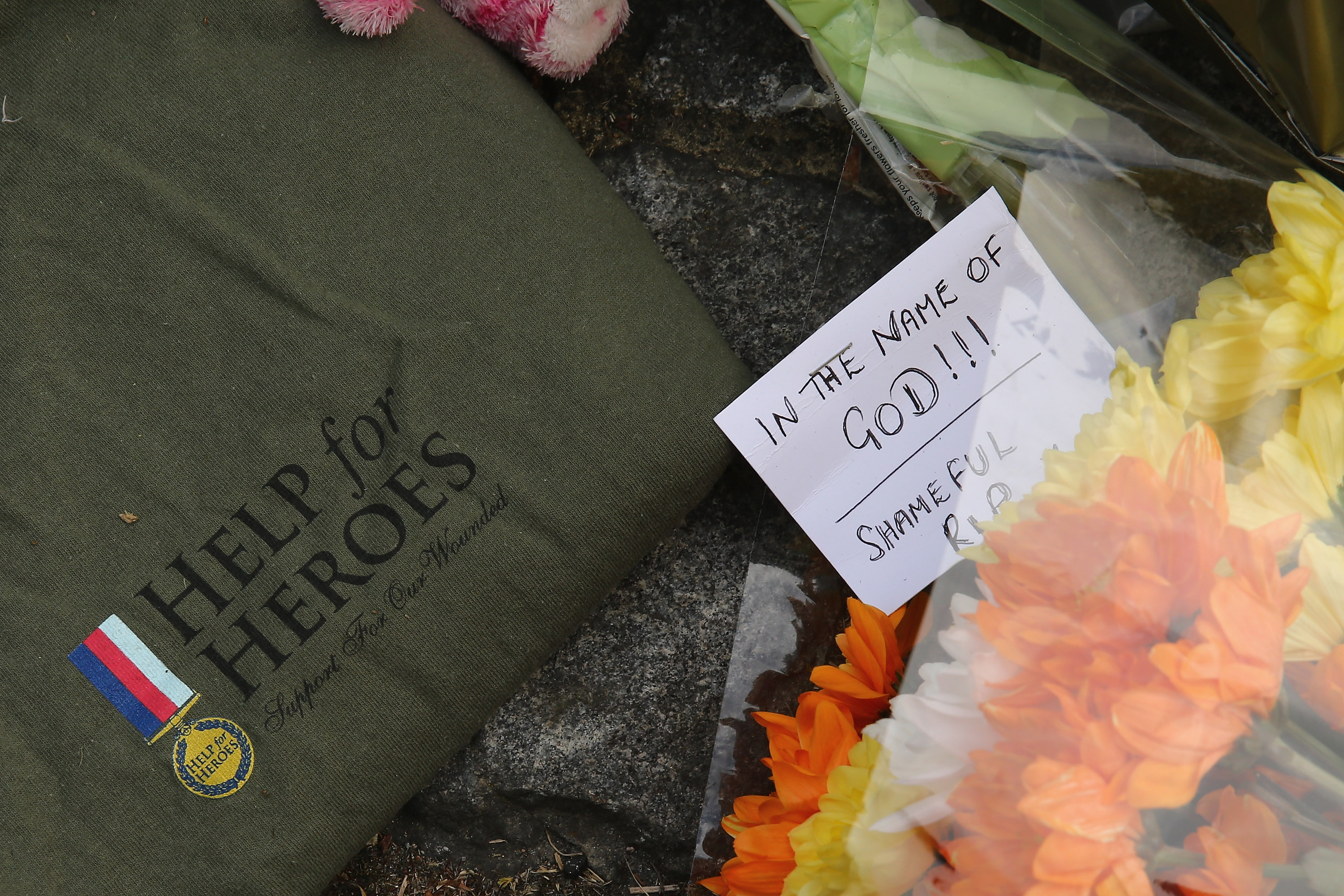
(Photo: Flowers lay outside Woolwich Barracks on May 23, 2013 in London, England. By Dan Kitwood/Getty Images.)

The Next Generation’s Privacy Settings

Pew Privacy

Jared Keller summarizes findings from a new report by Pew and the Berkman Center for Internet Society:

The joint paper found that teenagers are sharing more and more personal information online: 91 percent of teenagers post at least one photo of themselves (up from 79 percent in 2006), while 71 percent post their school name (up from 49 percent), 53 percent post their email address (up from 29 percent), and 20 percent post their cell phone number (up from two percent). At the same time, teenagers are more and more cautious as to who sees this information: about 60 percent of teen Facebook users set their profiles to private (friends only), and most report high levels of confidence in their ability to manage their settings, with 56 percent of users noting that it’s “not difficult at all” to set privacy controls (while only eight percent say it’s “somewhat difficult”).

Danah Boyd comments:

My favorite finding of Pew’s is that 58% of teens cloak their messages either through inside jokes or other obscure references, with more older teens (62%) engaging in this practice than younger teens (46%). This is the practice that I’ve seen significantly rise since I first started doing work on teens’ engagement with social media. It’s the source of what Alice Marwick and I describe as “social steganography” in our paper on teen privacy practices.

While adults are often anxious about shared data that might be used by government agencies, advertisers, or evil older men, teens are much more attentive to those who hold immediate power over them – parents, teachers, college admissions officers, army recruiters, etc. To adults, services like Facebook that may seem “private” because you can use privacy tools, but they don’t feel that way to youth who feel like their privacy is invaded on a daily basis.

Graphic from Pew.

What Threatens The Middle Class?

In his new book, Jaron Lanier blames the web:

Much of the book looks at the way Internet technology threatens to destroy the middle class by first eroding employment and job security, along with various “levees” that give the economic middle stability. “Here’s a current example of the challenge we face,” he writes in the book’s prelude: “At the height of its power, the photography company Kodak employed more than 140,000 people and was worth $28 billion. They even invented the first digital camera. But today Kodak is bankrupt, and the new face of digital photography has become Instagram. When Instagram was sold to Facebook for a billion dollars in 2012, it employed only 13 people. Where did all those jobs disappear? And what happened to the wealth that all those middle-class jobs created?”

Bill Herman disagrees with this thesis:

The best explanation that I’ve seen of America’s growing wealth inequality is Winner-Take-All Politics, in which Jacob Hacker and Paul Pierson start with a simple look at other industrialized countries to show that inequality isn’t an inexorable outcome trade and automation. The Germans and Swedes certainly have similar chances to outsource their manufacturing and use technology to reduce labor forces.

Not only does the rest of the industrial world have the internet, too, better telecom policy means they generally have faster connections and cheaper prices. Yet as measured by the Gini Coefficient, a measure of economic inequality, their economies have far more equal distributions of income in take-home pay and wealth.

The wealth distribution in particular is just shocking — the US has a wealth Gini of .801 (where 1.000 is “one person owns everything”), the fifth highest among all included countries and almost exactly the same as the distribution of wealth across the entire planet (.803). Think about that for a second; we have the same radically unequal distribution of capital within the US as among the entire population of the world across all countries — from Hong Kong and Switzerland to Nigeria and Haiti.

Disorder Disorder, Ctd

A reader writes:

Allen Frances bemoaned, “About half of Americans already qualify for a mental disorder at some point in their lives.” Roughly 100% of Americans already “qualify for” a somatic disorder at some point in their lives.  Does that mean we have too many somatic disorders on the books?   Or does it mean the human body and its interaction with the physical environment is a highly complex system in which there are a lot of things that can go wrong? Consider how complex the brain is as an organ, and how complex the mind is, and how complex the interactions between those things and human culture are.  How many places and ways are there for a system that complex to malfunction?  And how far is our understanding of that system behind our understanding of the human body?   I’m not sure why anybody would be surprised that we’re finding a lot of new mental disorders.

Another:

As someone who seriously studied Foucault as an undergraduate philosophy major, its hard to believe I am about to make what amounts to a defense of the new DSM, but here it goes. One of the reasons some of the definitions have been expanded has to do with insurance reimbursement.

Insurance companies need a diagnosis in order to pay clinicians to treat individuals. This is even more important for low-income individuals, because there is a select set of disorders, referred to as “serious mental illness for which individuals can be eligible to receive treatment. It happens that major depressive disorder is one these illnesses. We also know that the loss of a loved one is an event that can trigger major depressive disorders in individuals who may have not show clinical symptoms prior to the loss. So hypothetically, with the old “bereavement exception” (experience clinical depression symptoms after the loss of a loved one), an individual who may be in serious need of help and cannot afford to pay out of pocket, would not be eligible for services under the old criteria.

Were the motivations to change the criteria primarily driven by concerns for the poor? Probably not. Under these new guidelines, pharmaceutical companies will certainly benefit from physicians prescribing anti-depressants for what has traditionally been understood as the normal grieving process. But I have trouble with people, especially clinicians, laying the blame at the foot of the APA and DSM. Like any diagnosis, the new guidelines are intended to be made by experienced professionals using clinical judgement. They are not meant to be read like a laundry list or a cookbook that is then juxtaposed on an individual.

No, gluttony is not “binge eating disorder” if it’s a conscious choice that you are okay with. But it is an issue if it causes you distress, feels uncontrollable, causes you to gain weight and could lead to a host of other physical and mental health issues. That is why most disorders come with the qualification that they cause distress and impair functioning.

But the larger point is dealing with how our society views mental illness. It seems that implicit in Dr. Frances’ post is the notion that somehow mental illnesses are reserved for the “other”. Sure, about one half of individuals qualify for a mental illness at some point. How many qualify for a physical illness? I am sure the number is much higher. It is true that physical illness is typically much easier to understand that the complexity of the brain and its interactions with the body, and not to mention other individuals and society as whole. But if that is the case, it seems that the more productive conversation is about how our understanding of the brain and mental illness is only emerging and if we think a medical model is appropriate for both capturing and treating human suffering in its various forms.