Will Obamacare Make America Healthy? Ctd

w-medicaid2

Ezra Klein takes the long view of the Oregon Health Study, which showed little to no improvements in health among Medicaid enrollees over a two-year period:

[T]he study was simply too small, with too few sick people, to show the kind of quick health changes the researchers were looking for. Sharply increasing the number of people who are managing their diabetes and mental health, getting colonoscopies and mammograms, and making regular trips to the doctor sure seems like the kind of thing that will improve long-term health outcomes. Other studies with a less rigorous — but still credible — design and a longer timeframe have shown that states that expanded Medicaid saw a six percent drop in death rates among the newly insured group. …

I’ve seen my doctor a few times over the last two years. None of those visits had any measurable impact on my health. But if something had been wrong on one of those visits, the story would be very different. I have health insurance not because it improves my health on any given day, but because regular access to the medical system will, presumably, improve my health over time.

I get that. But if expanding Medicaid does not make people measurably healthier, the cost and benefit equation needs reviewing. I do think the study needs replicating and needs to be undertaken on a longer time scale. But, as it stands, it’s a strong argument for universal catastrophic insurance, which includes mandatory check-ups for preventive care. Drum takes issue with the study’s methodology. Beutler’s criticism:

[The] Oregon study was not designed to address the excess deaths issue, just like studies on insurance’s impact on mortality aren’t designed to test its impact on various health measures across the population. But of course, most real-world excess death studies link tens of thousands of deaths a year to uninsurance. That’s a very small percentage of the millions of uninsured in the United States. But I doubt even Medicaid’s loudest critics would shrug off 10,000 or 20,000 preventable deaths a year in most other contexts.

Chait responds to the digs from conservatives:

Okay: The case for Medicaid expansion is not as strong as I had thought. Now for the caveats: The case for Medicaid expansion is overwhelmingly strong. If a study found that puppies survive steep falls at a higher rate than expected, then you could say the case for throwing puppies out of skyscraper windows has marginally weakened, but would remain extremely strong. Indeed, data notwithstanding, either throwing puppies out of skyscrapers or throwing people off Medicaid are both acts of sadism.

The United States has very high levels of income inequality, a very stingy welfare state, and is the only advanced economy that does not guarantee access to medical care. The Oregon study does not raise particular questions about the efficacy of Medicaid; it raises questions about the efficacy of medical care in general. Measuring the impact of medicine is just really hard to do, yet almost nobody would volunteer to follow this frustrating fact to its logical conclusion and forgo the benefits of modern medicine.

Yes, but since Medicaid is paid for entirely by others, it seems only fair that they be persuaded that it’s actually value-for-money. Douthat’s take on the study:

[I]f it turns out that health insurance is useful mostly because it averts financial catastrophe — which seems to be the consensus liberal position since the Oregon data came out — then the new health care law looks vulnerable to two interconnected critiques.

First, if the benefit of health insurance is mostly or exclusively financial, then shouldn’t health insurance policies work more like normal insurance?

Fire, flood and car insurance exist to protect people against actual disasters, after all, not to pay for ordinary repairs. If the best evidence suggests that health insurance is most helpful in protecting people’s pocketbooks from similar disasters, and that more comprehensive coverage often just pays for doctor visits that don’t improve people’s actual health, then shouldn’t we be promoting catastrophic health coverage, rather than expanding Medicaid?

Liberals don’t like catastrophic plans because, by definition, they’re stingier than the coverage many Americans now enjoy. But this is where the second critique comes in: If the marginal dollar of health care coverage doesn’t deliver better health, isn’t this a place where policy makers should be stingy, while looking for more direct ways to improve the prospects of the working poor?

He puts the point delicately, but it’s a very powerful one, it seems to me. Pete Spiliakos builds on Ross’ recommendations:

Republicans could argue for moving health care financing to a model of catastrophic health insurance coverage, plus coverage for routine preventive care, plus health savings accounts to pay for non-catastrophic health care costs. James Capretta has been working on this [pdf]. Republicans would be able to plausibly argue that their plans would maintain the health care security of middle-class families while reducing health care premiums and expand health insurance coverage for low-earners at lower cost to taxpayers than Obamacare. Republicans can be the party of health care security and more take home pay and lower spending. C’mon people. You can do this.

If we had a sane and pragmatic GOP, this would have been the critique in the first place, together with a program for national catastrophic insurance on the lines Spiliakos suggests. That would have elevated and deepend the debate all round – but ideology and partisanship obscured it. Barro believes the Oregon report reveals insight into a key weakness of the ACA:

Obamacare relies mostly on bureaucratic approaches to achieving cost control. … [Liberals] are right to note that conservatives’ preferred alternative to Medicaid expansion (leaving tens of millions of people uninsured) would be worse for quality of life. But the lesson of the Oregon Health Study is nonetheless that there’s cost-effectiveness information out there that Medicaid and other health insurers aren’t exploiting. And even though conservatives have generally done a terrible job of explaining why, conservative ideas about increasing consumer direction in health care could help to exploit that information and make health care more cost-effective — without repealing Obamacare or stopping the Medicaid expansion.

I have become far less confident that patients can act as real consumers in the healthcare marketplace. There’s such an imbalance of knowledge and the consumer is almost always desperate for a solution, with no leverage to bargain with. Meanwhile, the Florida legislature just adjourned without providing funds for a Medicaid expansion, “join[ing] 24 other states that have either decided against expanding Medicaid, or are leaning in that direction, according to analysts at Avalere Health [who created the above chart].”
A Couple Of Words On Niall Ferguson, Ctd

A reader writes:

The man who apologizes with real contrition and full acknowledgement of the depth and wrongness of his failure is perhaps a greater man than one that never puts his mouth wrong.  God knows we have plenty of shit banging around on the inside of our heads. It is in the base nature of man to wish to demean his fellow and exalt himself.  When it leaks out/misfires, it the mark of a true human being that can fall on his sword in contrition.

Other readers aren’t willing to let Niall off the hook:

Please try to separate your personal relationships from the bigoted nasty things some people say in public. Ferguson’s apology is insincere at best, since he has apparently held those views for many years:

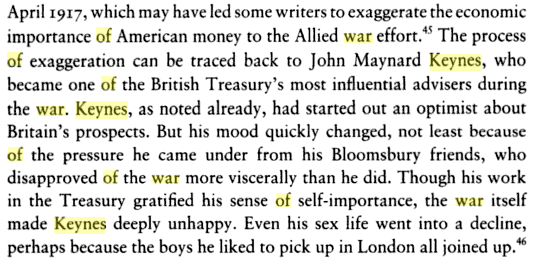
[A]s pointed out on Twitter by Justin Wolfers, there’s this passage in Ferguson’s 1999 bookThe Pity of War:

Screen shot 2013-05-04 at 3.08.43 PM

So it seems this is a theory Ferguson has held for a while, that Keynes’ boy-kissing affected his policy somehow. It wasn’t an “off the cuff” remark he made at a conference when Ferguson thought he was just speaking to his finance bros who wouldn’t mind a little joking about the gays with their theory. It’s an argument he made in print and published fourteen years ago.

And from page 400 of The Pity of War:

There is, however, no question that a series of meetings with one of the German representatives at Versailles added an emotional dimension to Keynes’ position. Carl Melchior was Max Warburg’s right-hand man (……..) It may be that Keynes’ subsequent declaration that he ‘got to love’ Melchior during the armistice negotiations at Trier and Spa obliquely alluded to a sexual attraction. As we have seen, Keynes was an active homosexual at this time. However, it seems more likely that Keynes was simply captivated by the sound of his own pessimism…..

I read both those passages and I simply see a historian dealing with the facts of Keynes’ private life. I don’t see any homophobia in there myself. Another reader:

No doubt there is much to say about Niall Ferguson’s lapse into the homophobia latent in our culture, and his apology, and also about the truths of gay life in all of its dimensions. But shouldn’t this also be an occasion to reflect on Ferguson as an intellectual who claims special expertise on economic history and economic policy and international affairs? Keynes, after all, famously wrote on all of these subjects. How could a scholar so mangle Keynes’s quotation about “the long run,” as you noted?

Ferguson’s assertion about Keynes’s economic thought was no passing mistake. It was programmatic. It was ideological. It was about dogma – not history, not economics as a scholarly field. And it was in that context that Ferguson’s deployment of homophobia was not accidental, no matter that homophobia is not a character trait of Ferguson. The issue here is not only homophobia, but also intellectual bad faith.

Another notes:

Small sidepoint: Adam Smith, who said that Burke was “the only man I ever knew who thinks on economic subjects exactly as I do, without any previous communications having passed between us,” was a lifelong bachelor who never had children.

The Suburbia Genre, Ctd

dish_RHP_Anonymization

Ian Stansel examines it:

[H]ow can we not feel the pangs of existential anxiety when the national—and indeed human—drive to distinguish oneself from one’s neighbor comes into conflict with the simultaneous values of suburban uniformity? Their economic comfort does not prevent us from feeling for these suburban characters; we relate all too well to the dual struggles for belonging and individual identity.

“Economic circumstances might force you to live in this environment,” [Richard] Yates writes in his 1961 masterpiece [Revolutionary Road], “but the important thing was to keep from being contaminated. The important thing, always, was to remember who you were.” A strange quote. The “economic circumstances” spoken of here, when taking a larger view of the world, involve being relatively well off. And “contamination” may seem a bit melodramatic in the light of significant poverty and struggle found across the globe.

But this is what so much literature is about: yearning for something beyond the material. Love. Honor. Empathy. Knowledge. And in the case of the suburban novel, identity. Even in books where there is a mortal danger to the protagonists, they have something more at stake. Living is not enough. The characters ache for a connection to their own humanity. Also from Yates:

Look what happens when a man really does blow his top. Call the Troopers, get him out of sight quick, hustle him off and lock him up before he wakes the neighbors…The hell with reality! Let’s have a whole bunch of cute little winding roads and cute little houses painted white and pink and baby blue; let’s all be good consumers and have a lot of Togetherness and bring our children up in a bath of sentimentality—and if old reality ever does pop out and say Boo we’ll all get busy and pretend it never happened.

It is the desire of these characters to be human, completely and unapologetically, with all the confusion and contradictions and insecurity that that entails, all the depressions and elations and deaths and births and malodorous bodily functions—and yet still belong to the order of the community. We all struggle to exist as multiple selves that are often at odds with each other: parent and child; teacher and student; healer and disciplinarian; warrior and peacemaker; insider and outsider. The suburbs represent this precarious and ultimately unsustainable equilibrium.

Previous Dish on suburban fiction here.

(Photo: Robert Harding Pittman, Lake Las Vegas Resort | Las Vegas, USA, from book and exhibition project “Anonymization“)

Hating On Christian Hip-Hop

Christianity Today got the President-elect of the Southern Baptist Ethics & Religious Liberty Commission, Russell Moore, to write their May cover story on Christianity and hip-hop, replete the with cringe-inducing title of “W.W. Jay-Z?” Here’s the question that the article begins with (the rest is behind their paywall):

The violent edge of rap—”it’s just so angry”—is most often what I hear behind American Christians’ ambivalence about the new wave of Christian hip-hop. But not all of this ambivalence is reactionary, revealing white-bread taste. It’s a real question: Can one authentically rap the Sermon on the Mount, with its Beatitudes, warnings against anger, and meekness? No doubt one can set Matthew 5–7 to rhyme and meter, but would it still be hip-hop? If not, does that rule hip-hop out as legitimate Christian art?

Jonathan Fitzgerald unloads on the piece:

To put it plainly, May’s cover story, “W.W. Jay-Z,” written by Dr. Russell Moore is an unmitigated disaster. And that’s to say nothing of the misleading — but attention-grabbing — title on the cover, “Why the Gospel Needs Hip-Hop.” It is so horrendous that, upon reading it, I knew immediately I had to respond, but I couldn’t figure out where to begin or how to go about responding.

One of Fitzgerald’s objections is that Moore neglects the history of Christian hip-hop:

Although Moore refers several times to the contemporary crop of Christian rappers as “new,” he shows no evidence that he’s aware of what was “old.” In fact, I’m not even sure after re-reading several times if he is calling the whole phenomenon of Christian rap new, or just this most recent manifestation. But let’s give him the benefit of the doubt and hope that he’s just saying that Lecrae and Shai Linne and Trip Lee and their ilk are the newest brand of a Christian hip-hop culture that is just about as old as hip-hop in general. But if he knows this to be true, why not mention this long lineage? How can you have a meaningful conversation about the interplay between gospel message and rap music without looking at those who have both succeeded gloriously and failed miserably before this most recent crop?

If he had any knowledge of those that came before, the question of whether or not the gospel can be communicated through rap lyrics would be moot. He could have skipped that question altogether and looked instead at the ways it has been done. If he wanted to see his bias about rap being bolstered by threat of retaliation, he could have looked at how Christian groups like Gospel Gangstaz, T-Bone, and C.M.C’s (among others), appropriated (badly, as if that wasn’t obvious) the “gangsta” style for Christ. But from there, he would have had to acknowledge that there’s not just one feeling of rap music, and as such, Christian rap groups ended up being quite diverse, particularly through what I call the golden age of Christian hip-hop, the mid- to late-90s. Good luck trying to group LA Symphony, Tunnel Rats, Grits, or Cross Movement under one general “feeling.”

Confessing Through Song

Russell D. Moore eulogizes country singer George Jones, who passed away recently, calling him “the troubadour of the Christ-haunted South”:

Some may see hypocrisy in the fact that Jones sang gospel songs. The same emotion with which he sang of drunkenness and honky-tonking, he turned to sing of “Just a Little Talk with Jesus Makes Things Right.” He often in concerts led the crowd in old gospel favorites, such as “Amazing Grace” or “I’ll Fly Away.” But I don’t think this is hypocrisy. This is not a man branding himself with two different and contradictory impulses. This was a man who sang of the horrors of sin, with a longing for a gospel he had heard and, it seemed, he hoped could deliver him. In Jones’ songs, you hear the old Baptist and Pentecostal fear that maybe, horrifically, one has passed over into the stage of Esau who, as the Bible puts it, “could not find repentance though he sought it with tears.”

Larry Rohter recalls witnessing Jones weep on his tour bus:

I don’t think he was drunk. He talked about how he was trying to stay dry for Tammy, who by that time had already re-married and divorced again. Within a year or two, he would develop a cocaine habit that would send his career off the rails, but there was no sign of that either. This was just George Jones in real life and real time.

It is hard today, in a time when irony has become a dominant cultural mode and artists are screened from reporters by phalanxes of handlers, to imagine so public a breakdown happening or a celebrity letting his pain be so visible. But Mr. Jones wasn’t ashamed or embarrassed by that display, and when he went back to the stage for a second set of what he described to me as “sad, sloppy tear-jerkers,” his singing was even more passionate and inspired, with his twangy, somewhat nasal voice cracking in all the right places with what had to be genuine feeling, not artifice.

“The Chemical Life”

Mason Currey chronicles the great writers and thinkers whose work was spurred by uppers:

The poet W.H. Auden is probably the most famous example. He took a dose of Benzedrine (a brand name of amphetamine introduced in the United States in 1933) each morning the way many people take a daily multivitamin. At night, he used Seconal or another sedative to get to sleep. He continued this routine—“the chemical life,” he called it—for 20 years, until the efficacy of the pills finally wore off. Auden regarded amphetamines as one of the “labor-saving devices” in the “mental kitchen,” alongside alcohol, coffee, and tobacco—although he was well aware that “these mechanisms are very crude, liable to injure the cook, and constantly breaking down.”

Another telling example:

[P]erhaps the most notable case of amphetamine-fueled intellectual activity is Paul Erdös, one of the most brilliant and prolific mathematicians of the 20th century. As Paul Hoffman documents in The Man Who Loved Only Numbers, Erdös was a fanatic workaholic who routinely put in 19-hour days, sleeping only a few hours a night. He owed his phenomenal stamina to espresso shots, caffeine tablets, and amphetamines—he took 10 to 20 milligrams of Benzedrine or Ritalin daily. Worried about his drug use, a friend once bet Erdös that he wouldn’t be able to give up amphetamines for a month. Erdös took the bet, and succeeded in going cold turkey for 30 days. When he came to collect his money, he told his friend, “You’ve showed me I’m not an addict. But I didn’t get any work done. I’d get up in the morning and stare at a blank piece of paper. I’d have no ideas, just like an ordinary person. You’ve set mathematics back a month.” After the bet, Erdös promptly resumed his amphetamine habit.

Quotes For The Day

First, Burke on capitalism, via Corey Robin:

There must be some impulse besides public spirit, to put private interest into motion along with it. Monied men ought to be allowed to set a value on their money; if they did not, there would be no monied NPG 655,Edmund Burke,studio of Sir Joshua Reynoldsmen. This desire of accumulation is a principle without which the means of their service to the State could not exist.

The love of lucre, though sometimes carried to a ridiculous, sometimes to a vicious excess, is the grand cause of prosperity to all States. In this natural, this reasonable, this powerful, this prolific principle, it is for the satirist to expose the ridiculous; it is for the moralist to censure the vicious; it is for the sympathetick heart to reprobate the hard and cruel; it is for the Judge to animadvert on the fraud, the extortion, and the oppression: but it is for the Statesman to employ it as he finds it; with all its concomitant excellencies, with all its imperfections on its head. It is his part, in this case, as it is in all other cases, where he is to make use of the general energies of nature, to take them as he finds them.

And what Keynes actually said about the long term:

The long run is a misleading guide to current affairs. In the long run we are all dead. Economists set themselves too easy, too useless a task if in tempestuous seasons they can only tell us that when the storm is past the ocean is flat again.

One historical note as well that Robin notes: Burke left behind one son who left no others. Keynes did procreate, but his wife miscarried. This, of course, did not make him bisexual, Howie; he was still gay at a time when you could be jailed for it.

I’m also always struck when some American conservatives think of Keynes as some kind of crypto-commie.

He believed in running surpluses in times of growth – and in spending in times of recession. If we had adhered to those two principles in the last 13 years, we’d clearly be better off. And note the real culprit here: George W. Bush’s reckless tax cuts and unfunded wars after inheriting a fragile surplus.

Just for the record, here’s Keynes unloading on Marx:

How can I accept the Communist doctrine, which sets up as its bible, above and beyond criticism, an obsolete textbook which I know not only to be scientifically erroneous but without interest or application to the modern world? How can I adopt a creed which, preferring the mud to the fish, exalts the boorish proletariat above the bourgeoisie and the intelligentsia, who with all their faults, are the quality of life and surely carry the seeds of all human achievement? Even if we need a religion, how can we find it in the turbid rubbish of the red bookshop? It is hard for an educated, decent, intelligent son of Western Europe to find his ideals here, unless he has first suffered some strange and horrid process of conversion which has changed all his values.

I’ll have more to say about homosexuals and future generations tomorrow. It’s actually an important and interesting subject – despite the ugly, stupid remarks that occasioned it.

The Profanity Treatment

In the late 1950s, Charles E. Dederich, a member of Alcoholics Anonymous, developed his own recovery program called “Synanon.” At its center was “The Game”:

The Game consisted of a dozen or so addicts sitting in a circle. One player would start talking about the appearance or behavior of another, picking out their defects and criticizing their character. But as soon as the subject of the attack tried to defend him-or herself, other players would join the barrage, unleashing a no-holds-barred verbal onslaught.

Vulgarity was encouraged—“talk dirty and live clean,” said Dederich—and so the other members would accuse the defendant of real and imagined crimes, of being selfish, unthinking, of being a no-good, ugly, diseased cocksucker who was too weak to go straight and was too much of an asshole, junkie, cry-baby motherfucker to admit it.

Faced with this unrelenting group assault, the recipient would eventually have little choice but to admit their wrongdoing and promise to mend their ways. Then the group would turn to the next person and begin all over again.

“The first time it hits you, it absolutely destroys you,” remembered a former Game player. “No matter how loud you scream, they can scream louder,” recalled another, “and no matter how long you talk, when you run out of breath they’re there to start raving again at you. And laughing.” Emotional catharsis was the aim. There were only two rules: no drugs, and no physical violence. It was vicious, but it actually seemed to work. “One cannot get up,” remarked Dederich, “until he’s knocked down.”

Some NSFW fodder seen above.

Artistic Communion, Ctd

Andrew O’Hagan contemplates writers whose work was informed by another medium:

[N]ovelists are so often attached to second art forms that wear their physicality or their beauty outwardly. Ernest Hemingway considered bullfighting an art form and, indeed, he thought writers should be more like toreadors, brave and defiant in the face of death. For Japanese novelist Yukio Mishima it was the art of the samurai – he loved the poise, the nobility, the control, tradition, all things you would say of good prose – and he died in a ritual self-killing. But most novelists take their influence seriously without letting it take over. They are emboldened by a love of opera, as were Willa Cather and the French novelist George Sand, or by modernist painters, as Gertrude Stein was, each of these brilliant women finding in the spaciousness and drama of the other art form an enlarged sense of what they themselves were setting out to deal with on the little blank page.

In The Guardian, O’Hagan invites six novelists to describe the second art that drives their passion.  John Lanchester names video games:

There’s a curious link between video games and the novel, and it is to do with the experience of being inside a world created by somebody else, but having the freedom to make up your own mind about what you find there. The novel takes you further and deeper inside someone else’s head, but the aspect of agency inside video games, the fact that you can make choices that genuinely affect the story, is fascinating and genuinely new. I’m sure that there’s going to be some hybridisation between the two forms: a new beast, slouching towards us carrying in one hand a Dualshock controller and in the other a copy of A la recherche du temps perdu. I’m eagerly looking forward to meeting the beautiful mutant.

Earlier Dish on novelist Ben Greenman’s inspiration over painter Amy Bennett here.

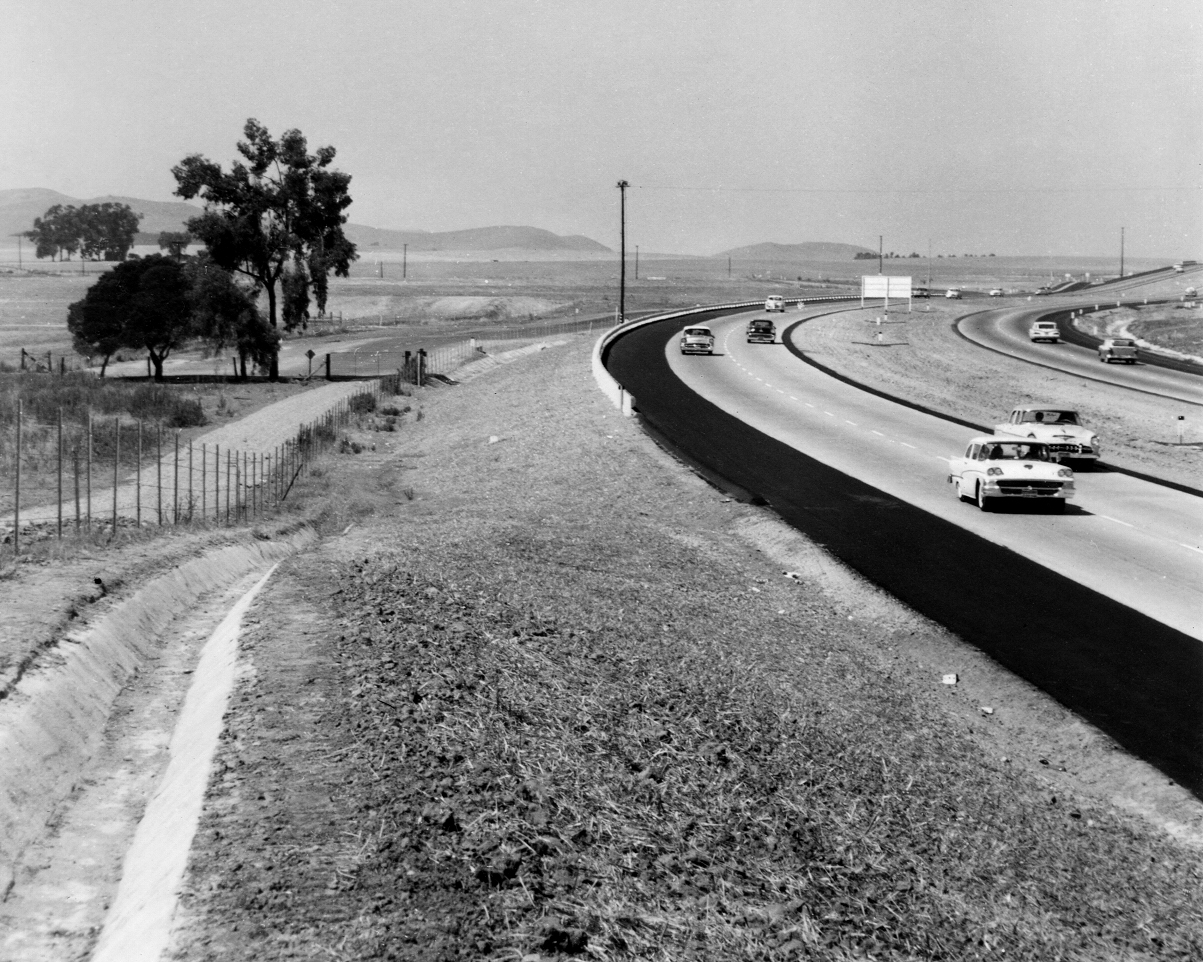
Ode To A Highway

Maria Bustillos lovingly describes her favorite route:

California natives always call it just ‘The Five’: not Highway Five or Interstate Five or I-5. The whole road is some 800 miles (1,200km) long, and is the only US interstate touching the borders of both Mexico and Canada. If, like me, you prefer to drive rather than to fly between Los Angeles and the Bay Area, the 400 or so miles along this route are the most distinctively Californian, the most revealing of the strange diversity of this landscape and its people, its terrible moral conflicts, and the weird vitality of its countless subcultures. The Five is unendingly rich and full of interest, despite all caricatures to the contrary; despite, or rather because of its glowing, gorgeous emptiness.

Once on the road, “the car becomes a meditation chamber”: 

It all happens by itself. Breathing slows, the benevolent sky swells out, almost always a blue so pure, clean and enamelled that even worries of climatic catastrophe recede for a moment. Maybe there are some clouds, artfully arranged. Choose your moment to leave town — I like to leave at around 5am, just before rush hour — and there won’t even be any traffic to speak of. Just the white noise of the purring engine to amplify the calm, blissful silence, which will at last find its way into even the most stubbornly busy mind.

Dropping into the Central Valley from the mountains surrounding the Tejon Pass is like breaking open a petit four, getting past the glossy, pretty exterior: inside is the cake. The urban surfaces of California are what we see in movies and on TV: slick, manufactured, shouting, cajoling, bamboozling, seducing, ready to sell you something. And then the confected beauty of the city gives way; now the land reaches far out to the sky. Your ears pop from the pressure change, and a sign advises you that the next gas station is 19 miles off.

(Photo courtesy of Orange County Archives)