
The Gun Lobby, The Israel Lobby, And Double Standards

AIPAC Lobbyist

The last few weeks have been a fascinating insight into the language used to describe a powerful lobby in Washington. I’m not talking about the extremes here; I’m talking about mainstream left-of-center media. Let’s focus for a minute on the New York Times. Here are a handful of quotes from the paper’s recent editorial comments on the NRA, in chronological order:

“Americans puzzled by the growing gap between popular support for gun controls and Washington lawmakers’ obeisance to the gun lobby should know about the Congressional Sportsmen’s Foundation … This charity shows how deeply rooted the influence of the gun industry is on Capitol Hill and why getting sensible gun measures out of Congress is so hard, even after young children are massacred in their classrooms,” – NYT editorial, March 13.

“President Obama is being shouted down by the gun lobby … the president has been unable to break through the blockade set up by one of the most powerful and relentless lobbies in Washington… Polls show that more than 80 percent of Americans support universal background checks, but where are those Americans in this debate? The best-organized voices that officials have heard are those thwarting common sense on guns, forcing lawmakers to curl up and cower,” – NYT, April 4.

“South Dakota is currently leading the race to the bottom by arming teachers in their classrooms, but just wait; the pandering to the gun lobby is ferociously competitive,” – Bill Keller, March 24.

“Enactment of much-needed gun control legislation is being suffocated by thralldom to the gun lobby,” – a NYT letter, March 30.

“These senators made their decision based on political fear and on cold calculations about the money of special interests like the National Rifle Association, which in the last election cycle spent around $25 million on contributions, lobbying and outside spending,” – Gabby Giffords, NYT, April 17, in an op-ed called “A Senate In The Gun Lobby’s Grip.”

Pay attention to the rhetoric: the gun lobby holds the Senate in “thralldom”; senators fear its power to wreak revenge on them electorally or through advertisements – they are forced to “curl up and cower”; they exhibit “obeisance” to this small but intense lobby; they are in the lobby’s “grip.” The gun lobby is regarded as the reason there is a gap between public opinion broadly and the Senate’s voting patterns.

This is all Chuck Hagel ever said about the Israel lobby. The chief smear artist, Greater Israel fanatic Bret Stephens, called use of the word “intimidates” with respect to the Israeli Lobby as “ripe” with the “odor of prejudice”. In Stephens’ words:

The word “intimidates” ascribes to the so-called Jewish lobby powers that are at once vast, invisible and malevolent; and because it suggests that legislators who adopt positions friendly to that lobby are doing so not from political conviction but out of personal fear.

But that theme is exactly what has been ubiquitous in the NYT for the last few months – with respect to the NRA. Take Gabby Giffords’ words:

These senators made their decision based on political fear and on cold calculations about the money of special interests …

And yet no one has accused her of bigotry. Has it occurred to Stephens et al that she wasn’t being bigoted about the power of the NRA over Senators, and that “fear” of the NRA’s ability to destroy political careers is salient here. It is just as salient with AIPAC or creepier groups like Bill Kristol’s ludicrously titled “Emergency Committee for Israel,”  – more so, in fact, given that almost every AIPAC initiative gets close to 100 percent support. Note, for example, how, during Israel’s pulverization of Gaza’s people and infrastructure in 2009, the American public was evenly divided. Not the Congress. As Glenn Greenwald noted at the time:

Not only does Rasmussen find that Americans generally “are closely divided over whether the Jewish state should be taking military action against militants in the Gaza Strip” (44-41%, with 15% undecided), but Democratic voters overwhelmingly oppose the Israeli offensive — by a 24-point margin (31-55%).  By stark constrast, Republicans, as one would expect (in light of their history of supporting virtually any proposed attack on Arabs and Muslims), overwhelmingly support the Israeli bombing campaign (62-27%).

And remember that Rasmussen over-polls white older Republicans. So how did the US Congress react?

It unanimously passed by a voice vote a resolution backing Israel’s right to self-defense which Glenn described as a “completely one-sided, non-binding resolution that expresses unequivocal support for the Israeli war, and heaps all the blame for the conflict on Hamas and none of it on Israel.” AIPAC subsequently bragged about it.

My point is simply that talking about the Israel lobby in exactly the same way that everyone talks about the gun lobby is not and never has been ipso facto anti-Semitism. It is simply using very familiar rhetoric to bemoan the overweening influence of special interest groups in distorting public policy. The gun debate, it seems to me, proves this definitively, revealing the cynical, calculated wolf-crying behind the usual charges of anti-Semitism.

Imagine an op-ed in the New York Times which used exactly the same language about AIPAC as used about the NRA. Let’s look at those examples again.

“Americans are puzzled by the growing gap between popular opposition to West Bank settlements and Washington lawmakers’ obeisance to the Israel lobby …” “The pandering to the Israel lobby is ferociously competitive” … “Freezing Israeli settlement growth is being suffocated by thralldom to the Israel lobby” … “Polls show that Americans support an end to the West Bank settlements by 2 – 1 …  but where are those Americans in this debate? The best-organized voices that officials have heard are those thwarting common sense, forcing lawmakers to curl up and cower” … “A Senate In The Israel Lobby’s Grip.”

Bret Stephens would find all this self-evidently anti-Semitic. The truth is that it is simply anti-special interest group. Yes, language describing nefarious lobbies behind the scenes pulling strings to get their way has been used in the past by anti-Semites. But if that kind of language is barred with sole respect to the Greater Israel Lobby, then the debate is effectively crippled – which is, of course, the point. For so long, the anti-Semitism card has been disgracefully, cynically played so that we can be stopped from debating the undemocratic distortion of our politics by special interest groups – in this case arguing for a foreign country’s brutal pounding of a de facto refugee camp.

Mercifully, the blogosphere has begun to break this double standard. Better late than never. One simple word of advice to bloggers writing about this: do not be bullied by threats. You will be smeared as a bigot, as I have been many times. But that says a whole lot more about them than it does about you.

(Photo: The American Israel Public Affairs Committee lobbyist line up outside of Russell Senate Office Building in Washington, D.C. on March 5, 2013. By Douglas Graham/CQ Roll Call/via Getty.)
Dissents Of The Day

The in-tray is still inundated with readers upset over the ongoing Dish debate over Jihad:

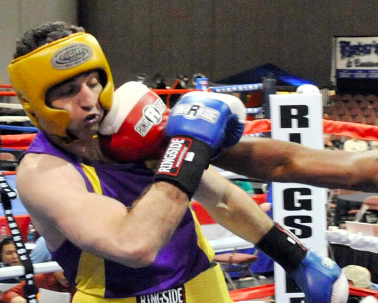
Dude, please pay attention to every word in the excerpt you’re trying to refute here. Words like Screen shot 2013-04-25 at 11.49.31 AM“compounded” and “linked to changing behaviors,” and even “depression.” For someone who’s been on the case regarding brain injuries in the NFL and some of the tragedies those injuries may have helped set the stage for, you seem rather inconsistent to label even considering this angle as “parody.” Even if you don’t want to stray to far from focusing on the religious aspects of this attack, wouldn’t finding similar damage to Tamerlan’s brain at least help advance awareness in the debate about sports in America?

Yes, maybe. But my mockery was not about CTE, which is a serious condition (but not often found on those as young as Tamerlan). It was about some ideological liberals’ desperation to find some kind of way to blame this on anything but Jihad. Why?

Another reader:

What is up with you this week? “liberal wish-mongering” “liberal bullshit” “high-minded nonsense”. Is this how you shore up your conservative bona fides these days?

It is dispiriting to read a usually articulate and considered writer flailing about, knocking down strawmen for what seems like no purpose. Are you getting lots of hate mail? It’s worth noting that your moral compass with regard to terrorism does not work very well, as you highlighted a couple months ago during the 10th anniversary of the Iraq invasion. You have admitted to a form of post-9/11 PTSD. Perhaps it’s worth taking a step back and remembering that “to see what’s in front of one’s nose needs a constant struggle.”

I am not a blogger who tries to shore up my liberal or conservative “bona fides”. I have offended both sides just as much over the years, depending on events and issues. I write what I think is true. I think a desperate search for something other than religious motivation for the terrorism is a form of denialism. Another reader:

For a guy who over reacted rather shamefully after 9/11 (“fifth column”, support of the Iraq war) maybe you want to tone down the utter confidence in your understanding of what has just taken place, a confidence that is producing rather routine snide dismissals of anyone who wants explore the issue in directions you disagree with, or simply want to say “we don’t know yet”. You may be entirely right in your assessment of what took place, but there is going to be a lot more information to come out. Neither your finest, nor more interesting moment. Frankly, rather brutish and bullying.

The most original reaction:

Your smug knee-jerk rejection really crottles my chitlins.

Knee-jerk rejection? When I explicitly wrote: “Yes, we can explore every angle.” One angle a little more fruitful might be a check on his testosterone levels. He looks a little juiced to me in the photos we have. And that could exacerbate his religiously-inspired violence. CTE seems much larger a stretch.

Unfiltered feedback from readers on our Facebook page here and here.

(Photo: Tamerlan Tsarnaev (L) fights Lamar Fenner (R) during the 201-pound division boxing match during the 2009 Golden Gloves National Tournament of Champions May 4, 2009 in Salt Lake City, Utah. By Glenn DePriest/Getty Images)

How Humane Can Slaughter Get?

Mac McClelland visits “one of the first ranches to … to gain Certified Humane Raised and Handled approval”:

The next cow, the cow I watch die, is quiet. It is black. It comes casually down a walkway. It steps into a squeeze chute, the metal hugging cage that closes in on the cows’ sides to calm them. Scott Towne, the guy in charge of the killing, hits it with a CASH Knocker, a blank shell shooting from a metal apparatus at the end of the long, wooden-handled device and into the front of the head above the eyes, denting the skull but not penetrating its brain, rendering the animal insensible. Instantly the cow’s eyes close. Its neck is lax and its mouth open, easy as a child asleep at the dinner table, or a businessman asleep on a plane.

Stopping at a bar on the way home to bourbon-gargle the lingering deathiness and nausea from the back of my throat, I ponder the cow’s existence. Whether or not farmers should torture animals, or keep them in disgusting and overcrowded and shit-filled conditions, or murder them slowly, are not even questions. Prather’s Northern California grass-munching herd is obviously as well treated as any in natural life, but “good” death is not so easily codified.

“Can you make a slaughterhouse perfect?” Grandin asked in Iowa. “No, nothing in this world that’s a practical thing can be made perfect. That’s just impossible.”

For those who kill animals for a living, making peace with those imperfections is a daily affair.

Prohibition In The Lab

Shaunacy Ferro reveals the dizzying red tape that surrounds scientific research on psychedelics:

Currently, according to the DEA, it takes about 9 months to get FDA and DEA approval for a license to research Schedule I substances, though researchers are a little more skeptical. “The DEA’s not in a hurry to grant these licenses,” according to [David Nichols, one of the founders of the Heffter Research Institute to study psychedelics].

Only 349 scientists have them, and that number is on the downswing: Three years ago, there were 550 licenses in the U.S. Nichols suggests that this could be a result of the DEA cracking down on researchers with extraneous licenses. In the past, Schedule I licenses had been renewed on a yearly basis without much fuss, but in recent years the agency has required Nichols to submit his current protocol and justify why he still needs the license.

The free market hasn’t stepped up because “no pharmaceutical company needs or wants to get involved”:

There’s no money in it for them. Though drugs like LSD and psilocybin are relatively easy to make in the lab, as [ Multidisciplinary Association for Psychedelic Studies] founder Rick Doblin pointed out in a 2012 interview, “psychedelics are off-patent, can’t be monopolized, and compete with other psychiatric medications that people take daily.”

“My colleagues say to me, in these days of nanotechology and targeted therapy, what are you doing?” says Donald Abrams, a professor of medicine at the University of California, San Francisco who has done research on medical marijuana. “We live in the 21st century. Studying plants as medicine is not where most investigators are putting their money.” And without the outside funding to continue researching, a scientist’s career goes nowhere, so even fewer scientists want to get involved.

The Invisible Bejeweled Hand

Upscale items and services are generally cheaper in NYC:

In a high-income city like New York, grocery costs are 20 percent lower for high-income people than they are in a low-income city like New Orleans (whereas costs are about 20 percent higher for low-income people in the rich city than the poor city). That’s because there’s a very high concentration of highly skilled people here, so there are a lot of vendors competing for the business of those high-income people, effectively lowering costs and increasing the variety of products that appeal to this consumer group.

Professor Handbury looked specifically at food, but she said that for most things you buy, there are probably positive externalities that come from living around a lot of people who have tastes similar to yours.

Catherine Rampell’s NYT magazine article goes into more detail:

Part of the reason high-income residents get good deals, Handbury explains, results from a particular economic system. Highly educated, high-income New Yorkers are surrounded by equally well-educated and well-paid people with similar tastes. More vendors compete for their business, which effectively lowers prices and provides variety. There’s also a high fixed cost to distributing a niche product to an area; if there’s more demand for that product, then the fixed cost can be spread across more customers, which will justify bringing the product to the market in the first place. That’s why companies go through the expensive hassle of distributing, say, St. Dalfour French fruit spreads in rich cities but not in poor ones and why New York can support institutions like the Metropolitan Opera.

“He Won The Race”

A reader points out that the caption on the picture of Stylianos Kyriakides posted earlier undersells “arguably the most significant Boston Marathon victory of all time”:

That’s the best you can do? I don’t think you could have understated Stylianos Kyriakides victory any more. Kyriakides’ victory in the Boston Marathon in 1946 changed the world.  There’s a very, very inspirational story behind the picture. Do you know what it is?

William Lambers summarizes Kyriakides’ achievement:

His mission was to bring attention to famine and suffering in his homeland. During World War II the German Army left Greece practically in ruins and short on food. Aid was desperately needed. April 1946 was a pivotal time in world history; hunger then was the World War II enemy that had yet to be defeated. …

For Kyriakides, the Boston Marathon offered an opportunity to shine the spotlight on the hunger in his homeland. He faced a tough challenge. There was the defending champion Johnny Kelley and other great runners to contend with. Kyriakides also had to overcome years of living in the harsh occupation conditions with below-average nutrition. His life had been spared by German troops because he was a marathoner and had competed in the 1936 Berlin Olympics.

Kyriakides overcame the odds, overcame the great Johnny Kelley, and sprinted to victory in the marathon. When he crossed the finish line he shouted “For Greece!” for he knew what this victory would mean in telling the world of his country’s plight. His mission was not over even after he crossed the finish line, though. Next was touring the country to raise donations for Greek relief.

For those interested in learning more about Kyriakides, the reader recommends Running With Pheidippides: Stylianos Kyriakides, the Miracle Marathoner, by Nick Tsiotos and Andy Dabilis.

Being Master Of Your Own Domain, Ctd

Readers push back against Adam Weinstein:

The NoFap “movement” is much more about Internet porn than it is about fapping, whether the participants are aware of this or not.  It’s not that frequent masturbating in itself is detrimental to sexual performance; it’s that frequent masturbation to online pornography is detrimental to sexual performance.  For the first time in human history, a male can view more sexually arousing females in one hour than our ancestors did in a lifetime.  The ubiquitous nature of Internet porn has provided a level of sexual novelty that our brains have not evolved to handle.  The key here is dopamine and the brain’s reward circuitry.  It’s one thing if you masturbate to mental images.  It’s another if you just look at porn.  Combine the two to orgasm, day after day, and you will have very real, very detrimental consequences to sexual performance. And once you do this for years on end, it becomes increasingly difficult to maintain boner-levels of dopamine when you’re with just one, 3-dimensional woman.

There is an epidemic of younger guys who are struggling with erectile dysfunction, seemingly due to the over consumption of Internet porn. Check out Gary Wilson explaining the problem in his TEDx talk [above].  So you get this group of guys who can’t get aroused by a real girl (or guy), maybe throw in some other issues such as depression and social anxiety, and due the psychological and social aspects of masturbation, they misinterpret cause-and-effect and quite “fapping” when they should be quitting porn.

Another confesses:

I can’t even maintain an erection in a condom anymore, and during sex often think about the porn scene I watched the previous (or that same) day.  Refraining from porn, deleting our downloaded collections, is an attempt to get some control back in our lives.

Another recommends a website that might help:

The Your Brain on Porn site, for all its pseudoscientific sins, was the first place I found that convinced me that maybe too much porn wasn’t such a good idea.  I’d heard that a lot before, but always from people who said it would rot your brain and turn you into a crazed junkie craving your next lolicon bukkake fix, or from people who implied that clearly, a true manly man wouldn’t need such artificial aids for his sexual needs, both of which are viewpoints I reject.  After browsing on NoFap, I kind of get how porn and masturbation can be natural and healthy for some people, but just not a good idea for others, especially those who did too much too early and missed a lot of early sexual experience.

Another:

I’m as skeptical as the next guy about the magic bullet properties of nofap. They’ll write it cures depression, inspires motivation, and makes you irresistible to women. This should be taken with a grain of salt. But I can tell you from experience – as a 33-year-old gay man who’s been on Viagra for seven years, who was given my first tablet from a 30-year-old man who was dependent on them, who has a handful of straight and gay friends who “can’t stay hard with condoms”, who knows guys who fight ED in their early 20s, and knows guys who can only come if it’s on someone’s face – there’s something happening to young men these days.

A lot of guys find the forum from the website yourbrainonporn.com. It features Gary Wilson’s TedX talk “The Great Porn Experiment” and Philip Zimbardo’s “The Demise of Guys”. It’s compelling stuff; the idea that Internet porn is not your father’s Playboy collection, that our brains aren’t equipped to handle what we’re putting them through, and the effects of tying dopamine reception to internet porn daily, for years at a time.

I encourage you guys to check out the site. It’s an interesting subject, and it deserves better than what New York magazine and Gawker gave it.

The Phish Model

Rohin Dhar explores the success of the popular jam band, whose revenue from ticket sales over the past four years “handily [surpasses] more well known artists like Radiohead, The Black Keys, and One Direction”:

From 1989 onward, before the band had even been signed to a record label, Phish was profitable from live touring. … Because Phish achieved financial independence before the music industry even recognized them, they more or less could do whatever they wanted.

The took their early profits and started their own management company, Dionysian Productions. They hired a staff of 40+ people that handled their elaborate stage productions and back office operations. They built their own merchandise company so that their shirts and other paraphernalia reflected the band’s artistic sensibilities. They even started a mail order ticket company so that fans could send them money orders and buy tickets directly from the band.

… Perhaps more so than any major musical artist today, the Phish business model is derived from having hard core fans of its live music. When Madonna sells out arenas across the country, she’s selling tickets to her various fans that live everywhere. When Phish sells out arenas or festivals across the country, it’s because the same die-hard fans fly across the country to see the band. In the rare instances where fans don’t make the trek and the shows don’t sell out, the band punishes the no-shows by performing a particularly epic set. In a forum where ardent Phish fans compare how much money they had spent on going to see the band, the answers were in the tens of thousands of dollars.

The Immigration Reform Calculus, Ctd

Alex Engler’s analysis from February looks at how immigration reform could affect the House. He finds that, “while the Republican Party has a great deal to gain from successful bipartisan immigration reform, House Democrats face little benefit and even, paradoxically, the possibility of significant losses.” The main reason why:

Democrats currently control the majority of districts with large Hispanic populations. There are 39 Republican districts that are more than 20 percent Hispanic, and only five that are more than 50 percent Hispanic (compared to Democrats’ 76 and 28 districts, respectively).

This concentration of the Hispanic vote means that “a dramatic shift in Hispanic support toward Democrats would have yielded startlingly small gains in the House”:

Under the 42 percent Hispanic voting scenario, a 10 percentage point shift toward Democrats would net only one additional seat, and a 20 percentage point shift would turn only six seats. Conversely, shifts away from Democrats by Hispanics could be devastating. Under the 42 percent scenario, a 5 percentage point shift toward the GOP would have turned five races into Republican victories. A 10 percentage point shift to the right would have handed Republicans 12 seats, and a 16 percentage point shift would have flipped 21 districts. Using the lower turnout models reduces the number of seats changing hands, but the narrative remains the same.

Drum adds his two cents:

This doesn’t answer the question of which party immigration reform is likely to help. What it does say is that it’s a no-lose proposition for Republicans. Even if it turns out to help Democrats more, Republicans aren’t likely to suffer much because of it.


Eco-Friendly Intoxication

Reduce your carbon footprint with a shot of Scotch:

Helius Energy officially cut the ribbon on its new Scottish biomass power plant in Rothes [last week] at the inauguration of the latest facility capable of turning whisky by-products into energy.

The Helius CoRDe Ltd biomass energy plant and animal feed processing unit in Speyside was formally opened yesterday by HRH The Duke of Rothesay, with promise of delivering clean power to 9,000 homes in the region. The 8.23MW combined heat and power plant has been developed by a joint venture incorporating biomass power developer Helius Energy, Rabo Project Equity BV, and the Combination of Rothes Distillers Limited (CoRD), and will now replace the carbon intensive CoRD plant that has previously been used to process waste biomass produced by the region’s world famous whisky distilleries.