The Dawn Of Pawn

by Chas Danner

An example of early-style Staunton Chess Set

Jimmy Stamp traces the design-origins of the modern chess set:

Prior to 1849, there was no such thing as a “normal chess set.” At least not like we think of it today. Over the centuries that chess had been played, innumerable varieties of sets of pieces were created, with regional differences in designation and appearance. As the game proliferated throughout southern Europe in the early 11th century, the rules began to evolve, the movement of the pieces were formalized, and the pieces themselves were drastically transformed from their origins in 6th century India. Originally conceived of as a field of battle, the symbolic meaning of the game changed as it gained popularity in Europe, and the pieces became stand-ins for a royal court instead of an army. Thus, the original chessmen, known as counselor, infantry, cavalry, elephants, and chariots, became the queen, pawn, knight, bishop, and rook, respectively. By the 19th century, chess clubs and competitions began to appear all around the world, it became necessary to use a standardized set that would enable players from different cultures to compete without getting confused.

That set would come about because of Howard Staunton, a London chess player and promoter who introduced and popularized the design that is now ubiquitous throughout the world:

According to the most widely told origin story, the Staunton set was designed by architect Nathan Cook, who looked at a variety of popular chess sets and distilled their common traits while also, more importantly, looking at the city around him. Victorian London’s Neoclassical architecture had been influenced by a renewed interest in the ruins of ancient Greece and Rome, which captured the popular imagination after the rediscovery of Pompeii in the 18th century. The work of architects like Christopher Wren,William ChambersJohn Soane, and many others inspired the column-like, tripartite division of king, queen, and bishop. A row of Staunton pawns evokes Italianate balustrades enclosing of stairways and balconies.

(Photo: An example of early-style Staunton Chess Set. By Frank A. Camaratta, Jr./ The House of Staunton, Inc. via Wikimedia Commons)
The Foreign Correspondent Formula

by Patrick Appel

Shafer wishes North Korean coverage wasn’t so predictable:

Pyongyang reliably remains defiant; talks have resumed or been proposed, canceledor stalled, while a U.S. envoy seeks to lure the North back to those talks to restart the dialog; North Korea is bluffing, blustering, or is engaging in brinksmanship; tensions are grim, rising, or growing—but rarely reduced, probably because when tensions go down it doesn’t qualify for coverage; North Korea seeks recognitionrespect, or improved or restored relations, or to rejoin the international community, or increased ties to the West that will lead to understandingdeals with North Korea are sought; North Korea feels insulted and is isolated by but threatens the West; the Japanese consider the North Koreans “untrustworthy“; the West seeks positive signs or signals or messages in North Korean conduct but worries about its intentions; diplomats seek to resolvesolverespond toovercomedefuse, the brewingseriousreal crisis; the escalating confrontation remains dangerous; the stakes are high, but the standoff endures.

Bruce’s Bromance

by Chris Bodenner

Bruce Springsteen

A reader builds off this post:

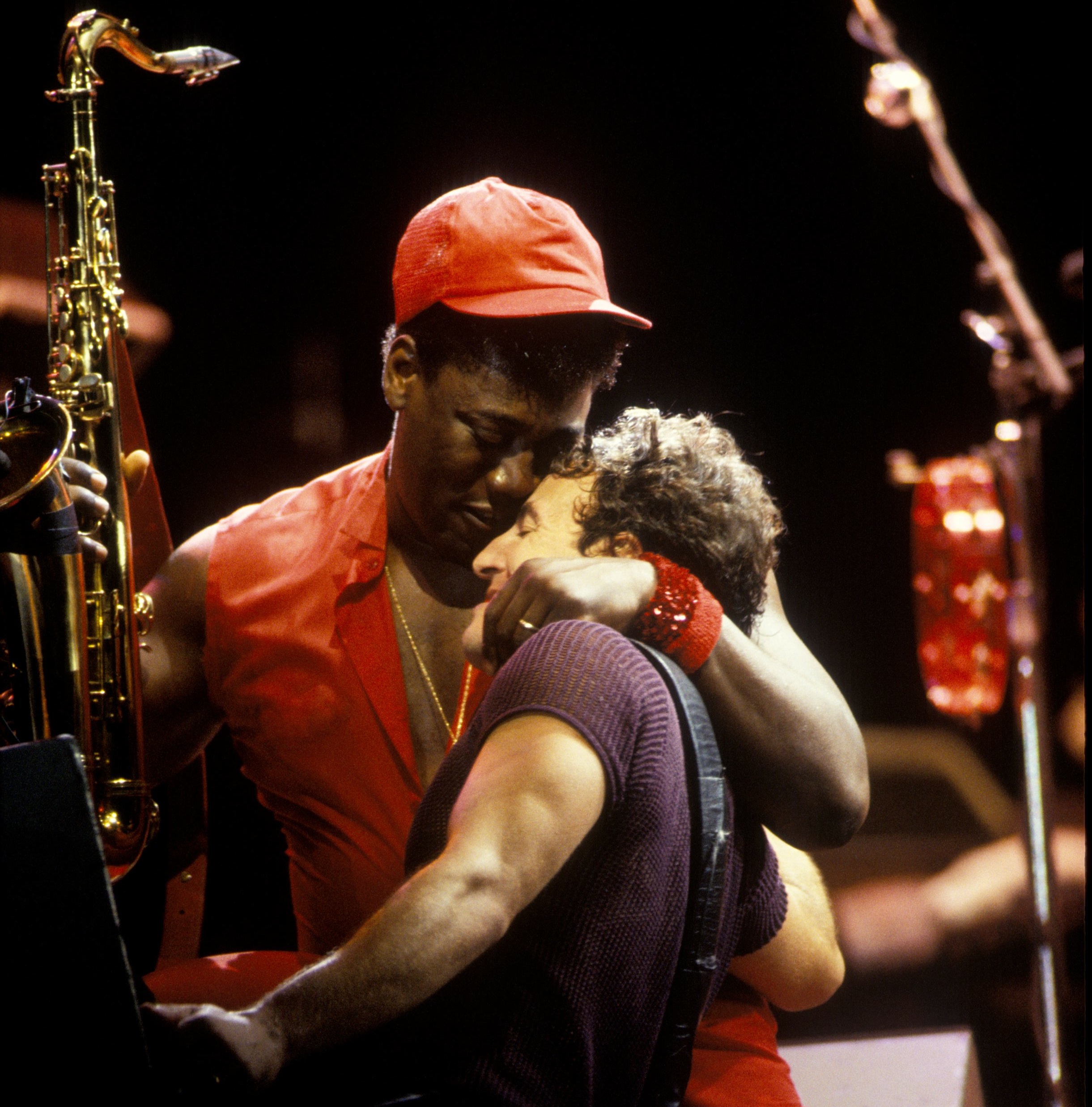
Whenever I hear discussions about high-profile men jokingly (or not?) expressing sexual attraction to other men, I’m always curious that no one mentions Bruce Springsteen. To most people, obviously, Bruce is the pure embodiment of unfettered American masculinity. And yet for the 40 years he played beside Clarence Clemons, until Clemons’ death in 2011, the two men had this clearly intense, complicated relationship that was enacted and re-enacted every night onstage – culminating in a long, deep kiss on the mouth – without irony or camp, just pure, exuberant love between two men, without a need to be defined as straight or gay.

See it here, in a series of quite touching and beautiful photos. There’s also a fleeting shot of it live, in the official “Born to Run” video, at about 0:18. (Though note that commenters continue to feel the need to provide the “NOT gay” disclaimer.) Of course, both men married women (multiple times each) and have large families. Who knows and who really cares what their sexuality is? I think it’s sort of beside the point. More interesting to me is the sheer intensity of their love and their fearlessness in expressing it without the need to declare, “Of course we’re both straight!”

To the contrary, when Clemons described the kiss in 2009, he didn’t bother to mention sexual orientation:

It’s the most passion that you have without sex. Two androgynous beings becoming one. It’s love. It’s two men – two strong, very virile men – finding that space in life where they can let go enough of their masculinity to feel the passion of love and respect and trust. Friendships are based on those things, and you seal it with a kiss.

(Photo: Clarence Clemons and Bruce Springsteen of the E Street Band embrace while performing on stage in Los Angeles c.1981. By Richard E. Aaron/Redferns)

The UN’s Deadly Incompetence, Ctd

by Brendan James

A Zimbabwean cholera patient sits in his

Not long ago we posted on the UN’s cover-up of a cholera outbreak in Haiti, sparked by a peacekeeping mission in 2010. It turns out there was another outbreak on their watch, in Zimbabwe, which left 4,000 dead in 2008-09. A whistleblower in the UN tried to warn his superiors about the growing epidemic, but was fired by his chief officer, on behalf of that officer’s friends in Mugabe’s government. It was an election year, after all. Armin Rosen digs deeper:

The UN and [officer Agostinho] Zacarias’s chief responsibility should have been to Zimbawe’s embattled civilian population. Instead, both failed to live up to their obligations — even as they were conspiring against someone who had exceeded them. That campaign even seeped into the tribunal proceedings, as Zacarias and the UN made specious and unsupported claims in court that Tadonki had been accused of sexual harassment while based in Harare. It didn’t work, but the UN’s efforts are continuing even now: the UN has stated that it is appealing its own tribunal’s decision, and according to [lawyer Robert] Amsterdam, the World Body has taken the first procedural steps necessary to retry the case. At a March 6 press conference, a UN spokesperson refused to comment on the case — except to say that “judgments of the UN Dispute Tribunal are not final until they have been confirmed by the UN Appeals Tribunal,” and that “the Organization intends to file an appeal of this judgment.”

(Photo: A Zimbabwean cholera patient sits in his bed on February 27, 2009 at a hospital in Harare. By Desmond Kwande/AFP/Getty Images)

How Powerful Is The Bully Pulpit?

by Patrick Appel

Jonathan Bernstein recently argued that Obama should talk more about fighting climate change. Digby is puzzled:

I had thought the bully pulpit is not only useless, but often counter-productive, so this is a surprise to me. Ezra Klein explained it to us all in this New Yorker piece from 2012, wherein he outlined all the political science numbers-crunching that proves public opinion is fairly irrelevant to public policy and presidential rhetoric even more so. Indeed, the thesis says that while the president coming out publicly for a particular policy may be able to harden his own troops’ resolve from time to time, he also hardens the opposition against him, so government basically can only be effective through the use of backroom deals and inside the beltway politicking

Bernstein’s response:

[A]s far as I understand it, the data we have on public opinion and the bully pulpit are mainly about short-term effects, and especially the (non-) effects of attempting to move Congress on specific legislation by changing public opinion. I don’t think we know much, if anything (and I hope someone will correct me if I’m wrong) about long-term effects, if any. I mean, we know that Ronald Reagan didn’t make US voters more conservative during his presidency…but I don’t think we know anything about what, if any, long-term effects he might have had either on specific issues or ideology in general — including effects concentrated within conservatives. Or, to put it the other way: we could have something here similar to campaign effects in which strong professional electioneering tends to cancel out; if one side saw the minimal effects results and decided to not campaign at all, we’re fairly certain that it would create a very large effect. If Democratic presidents preach liberal ideals it might not change any minds, but if they don’t, it might fail to “educate” a generation of Democratic activists.

The Fracking Divide

By Doug Allen

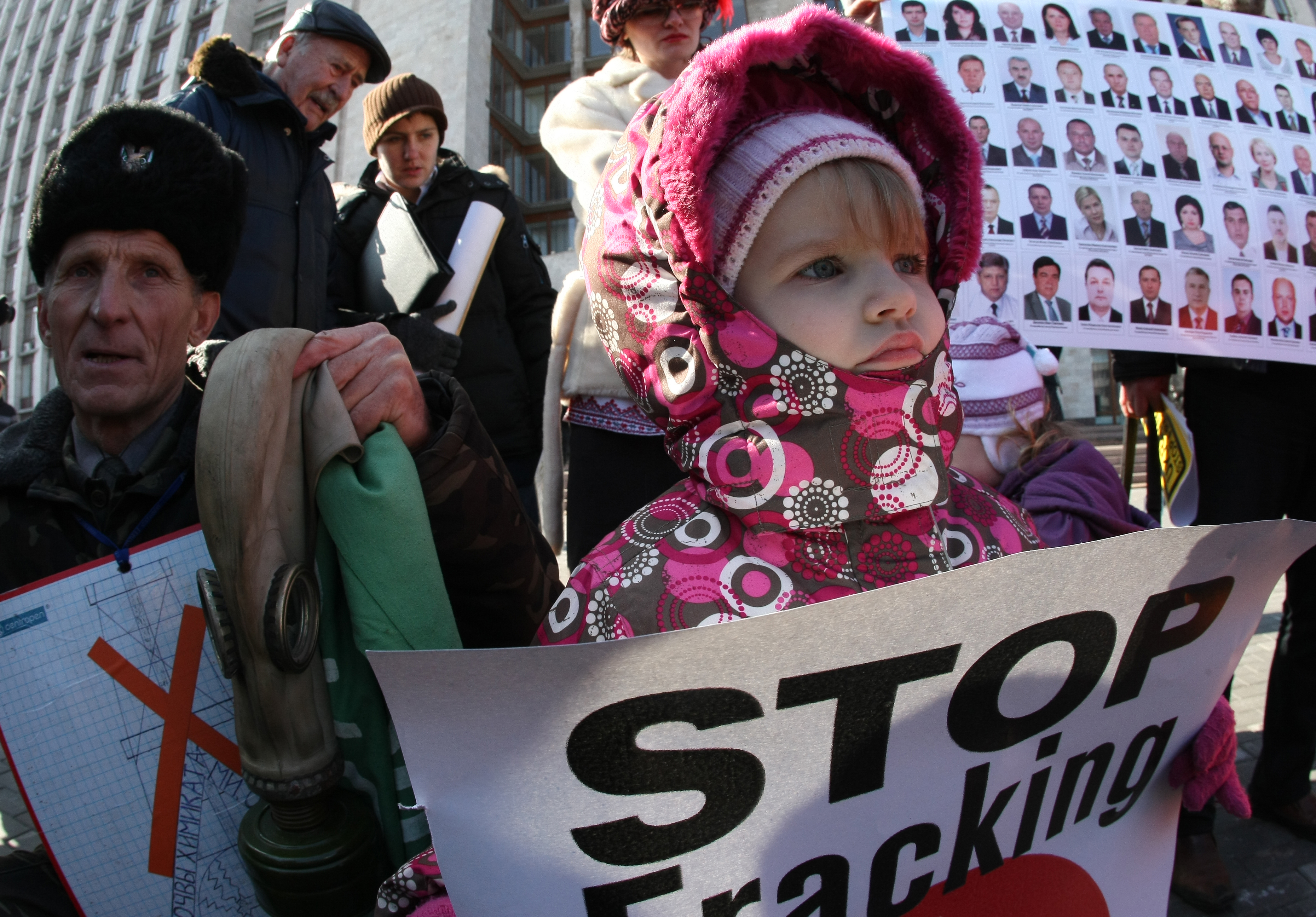
UKRAINE ECOLOGY-GAS-PROTEST

Kevin Drum thinks the recent Citigroup report that sees natural gas as a major ally for renewable deployment will cause some tension among environmentalists:

If this analysis is correct, it’s going to provide some major heartburn for environmentalists. Fracking, for all its dangers, may turn out to be the least of our various fossil fuel evils.

Jason Mark focuses in on how this issue is dividing green advocates:

[S]ince the fracking boom began in earnest, a larger, anti-fracking grassroots has emerged. … Some homeowners had their wells contaminated with flammable methane. Places like Ohio and Arkansas that weren’t used to seismic activity started to experience earthquakes when underground wastewater injections stimulated geologic faults. Today, the movement against gas fracking has become a cause célèbre (Yoko Ono and Mark Ruffalo have an “Artists Against Fracking” group) and is one of the most invigorating issues among grassroots environmentalists. …

[Ted] Nordhaus and [Michael] Shellenberger [of the Breakthrough Institute] have a nearly opposite worry: that the intensity from [anti-fracking] partisans like [Sandra] Steingraber and [Maura] Stephens has forced some big green groups to retreat from gas. The World Resources Institute, a D.C.-based environmental research organization, is an example of that shift. As recently as early 2012, the organization was expressing qualified enthusiasm for gas as a “potential game changer” that “should be part of America’s low-carbon energy mix.” But when asked recently to comment on the gas controversy, Jennifer Morgan, director of the institute’s climate and energy program, chose her words carefully. “It’s an extremely fraught and tough discussion,” Morgan told me. “I think we recognize both the risks—and the risks are significant—and the potential opportunity.”

I’m pretty firmly in the Nordhaus/Shellenberger camp on this one. Among the resources that can provide the operational support needed for high levels of renewable penetration in our energy mix, I think natural gas strikes the best balance between cost and environmental impact. It would take major advances in energy storage or “clean coal” technologies to convince me otherwise.

This does not mean that we shouldn’t worry about the problems caused by natural gas extraction and transport. There is evidence [pdf] from the Marcellus Shale formation that natural gas wells were contaminating local groundwater resources, but the study’s authors were unable to determine whether the leakage was due to unplanned fractures or leaky well-casings. It seems to me that the latter is solvable through better industry standards and/or regulation, while the former is a more fundamental problem. Studies from Arkansas [pdf] and Wyoming are similarly inconclusive about the link between fracking and water contamination.

The other major uncertainty surrounding the environmental impact of natural gas is the effect of methane leakages, or “fugitive methane emissions” along the delivery chain. These leakages are especially problematic since methane is a much more “powerful” greenhouse gas, with 25 times [pdf] the heat-trapping ability over 100 years of CO2. Michael Obeiter and James Bradbury explain the implications:

At the point of combustion, natural gas is roughly half as carbon-intensive as coal. However, this comparison fails to account for upstream fugitive methane emissions. When used for electric power generation, natural gas is typically much more efficient than coal, but natural gas is not a more energy efficient fuel option for all uses—for example, in the case of vehicles. Also, if fugitive methane emissions exceed 3 percent of total gas production, natural gas’s climate advantage over coal disappears over a 20-year time horizon.

The critical question is: Given the current extent of U.S. natural gas production—and the fact that production is projected to expand by more than 50 percent in the coming decades—are we doing everything we can to ensure that emissions are as low as is technologically and economically feasible? The answer to that question today is clearly “no.”

Clearly, there is more information to be gathered about the environmental impact of extracting natural gas and using it for electricity generation, and I look forward to the conclusion of a currently running EPA study to fill in some of the gaps in our knowledge. Even before the conclusion of this study, however, I would like to see the EPA start looking into ways to eliminate leakages where it is “technologically and economically feasible,” whether below the surface or above. But until I see more convincing evidence indicating that fracking cannot be done safely and cleanly, I think natural gas will continue to be an important part of any long-term strategy to reduce emissions.

(Photo: Alexander Khudoteply/AFP/Getty Images)

How Graphic Should War Coverage Be? Ctd

by Chris Bodenner

Add your two cents to our survey:

This embed is invalid

A reader continues the thread:

When I was a journalism student, a visiting professor once told us a story. His editors had sent him to cover a state execution, where he sat with members of the victim’s family and various representatives of the state. He watched this man die and returned to his office with a grisly story full of graphic details. His editor told him there was no way the paper could print something so horrifying, to which the then-reporter asked, “Then why did you send me?”

Another:

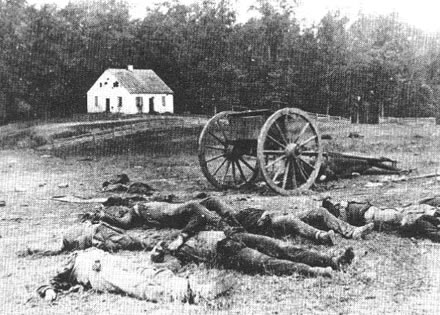
Going back even further than WWII, the intensely graphic photos that Matthew Brady and his team took on the matthew_brady_photobattlefields of the Civil War showed civilians, for the very first time, the true horror of war.  These photos are present at nearly every National Historic Battlefield and are an important reminder of what young men on both sides of the Civil War were willing to face for four years.  To my knowledge no one has protested to the NPS to take down the interpretive signs that show these pictures because they are too disturbing or violent.

It is easy to point to the people today who do not want to see modern-day war photos and say that they want to hide their heads in the sand – that they want to deny what is happening halfway around the world.  But there is also a key difference between battlefield photos now and then: Color.

Color photos of a dead soldier are much different than black and white photos.  How much more vivid and horrific would that photo of Kim Phuc been had it been published in color?  It is easy to overlook the blood, gore and trauma of a battlefield injury in black and white.  The mind knows it is there, but the emotions react more to the presence of the person in the photo, empathy and horror that this man or woman was gunned down in the prime of his life.

But color forces a person to see, first and above all else, the blood.  Red will draw the eye immediately.  No longer is the viewer looking at the person’s face and imagining being in that situation or sympathizing with the family left behind.  Rather, like watching a slasher movie, the viewer is simply looking at the grotesqueness of the injury, wherever that injury is.  I would argue that color in fact dehumanizes a battlefield photo so much that it DOES become obscene in a way.  It turns a very human tragedy into a Hollywood set piece.

That is not an excuse not to publish these kinds of photos.  But I do think we need to examine what we want to really show in these photos, what emotions we want to evoke, and whether or not the photos that show intense and graphic war violence in very living color will really accomplish what we’re setting out to do.

(Photo of Antietam by Matthew Brady)

The Stigma Against Cheap Weddings, Ctd

by Patrick Appel

In response to this post, a reader writes:

I am one of 6 children and a member of an even larger Irish-Slovak Catholic extended family.  My wife and I are both college graduates with liberal arts degrees; getting by just fine, but by no means with the disposal income that would be required to throw a nice event for the number of people whom we consider ourselves to be really close to.  Once invites are extended beyond parents and siblings, the number of people we would “need” to invite would immediately jump into the hundreds.  We simply did not have the budget for this (and it was not a matter of choosing not to dip into savings; savings do not exist).  So, with some emotional and brief interpersonal turmoil, we only invited our immediate families and a close personal friend each to stay at 2 beach houses we rented for a weekend in Cannon Beach, Oregon.  Our guest list was 30 people.  We prepared the food ourselves, we bought the beer, wine, and liquor from costco, there was no photographer, or other hired help.  It was a family celebration, as it seems, is the whole idea behind a wedding ceremony, in the first place.

We were able to provide a level of setting/accommodation, food, beverage and activity that we could never have dreamed of if we had to extend invitations beyond the sphere that we did.  But, we were able to host an amazing event for the 30 most important people in our lives, that they all still talk about.  It was an amazing weekend for all involved.  In fact, though we would have liked to share that experience with many, many more people, I think that everyone– us included –enjoyed that experience much more than a rented party facility with standard catered fare, DJ/band, floral centerpieces, etc.  We recognized the importance and significance of making our commitment to each other in front of those who are most important in our lives, and wanted to provide them with an experience that they would always remember.  I think we definitely achieved our goal, and though the cost was definitely in the thousands of dollars, it was much less than half of what the “average” wedding costs today.

Both my wife and I have many friends from the East/West/Midwest young educated class that have chosen to celebrate their nuptials in similar fashion.  I think a nice intimate event shared with those you love most is a much more pleasant and ultimately meaningful celebration than the very expensive cookie cutter fiesta that leaves all involved feeling frazzled and stressed.  If I am going to spend $30k on something, I am going to get a lot more out of it than what I have witnessed siblings, cousins, and friends get out of their rather humdrum, but very expensive weddings.

Another reader:

Maybe I was lucky, but last year when my husband and I decided to abandon our plans for a blow out wedding, and instead opt for a small ceremony at my parents’ house over Christmas with family already in town, no one was quick to judge our financial situation. When we sent out invites, I told everyone “I found out I was going to have to pay $600 for table cloths. That’s not happening.” I don’t care how much money we have — that’s just ludicrous! Instead of the financial judgement, though, we got frequent calls asking “Are you pregnant???” from any family or friends over the age of 50. When we mentioned this to friends closer to our age, it was amazing — each of them said “That hadn’t even crossed my mind!” Either there’s a big generational divide in assumptions here or our friends were lying to our faces.

Anyway, our wedding was amazing and meaningful and perfect, and exceedingly cheap to boot! We even streamed it online for the family and friends we had to cut off the invite list to keep costs down. They were happy to watch, and happier to not have to attend or bring a gift. It was perfect all around! (And I’m still not pregnant, Uncle Jim.)

A final reader makes an important point:

“Average cost” does not necessarily mean “typical cost.”  This is especially true with something like a wedding, where the wealthy spend exorbitant sums and skew the statistic.  If four couples have $9,000 weddings and one couple has a $100,000 wedding, the average wedding cost is $27,000 — but let’s not interpret that to mean that that’s what most people should expect to pay.

A 2007 WSJ article provided better numbers:

For the three surveys, the median wedding cost is closer to $15,000. The median is the middle figure when you line up a set of numbers in order of size. It is a popular choice for social statistics because it is unperturbed by very small or very large numbers.

Debating Debates

by Doug Allen

Howard Kurtz responds to Stuart Stevens’ call for fewer debates in the primaries:

It’s not surprising that Stuart Stevens wants fewer presidential debates, since his candidate Mitt Romney got beat up in so many of them. But his suggestion, in his debut column for The Daily Beast, that the debates be wrenched away from the networks is way off the mark. Maybe he’s suffering from posttraumatic debate syndrome, but these televised extravaganzas actually give the country a good look at how the candidates perform under pressure. … A strong candidate knows how to hit major-league pitching.

Justin Green counters:

I’ll indulge the sports metaphor: having 18 debates before the first actual vote is like asking a pitcher to throw 300 pitches while warming up in the bullpen.

At a certain point, all you’re doing is wearing down your arm. And after, let’s say, four or five debates, a voter will have all the information he or she needs to make an informed choice. The Michele Bachmann screeds about stealth jihad, the Ron Paul demands for a gold standard and Newt’s rambling about Newt-things quickly reach the point of no longer being helpful to the democratic process. …

[W]as there a single moment from the primary debates that added something substantive to the presidential race? Did we really learn how any of the candidates handled themselves under pressure? Were conservative ideas vigorously debated, with differing viewpoints well-represented? Were conservative voters offered a variety of options that gave them a hand in shaping the future of the Republican Party? Did the debates strengthen the GOP? Did they strengthen the general election?

My answer on all counts: no.

Francis Emerges, Ctd

by Matthew Sitman

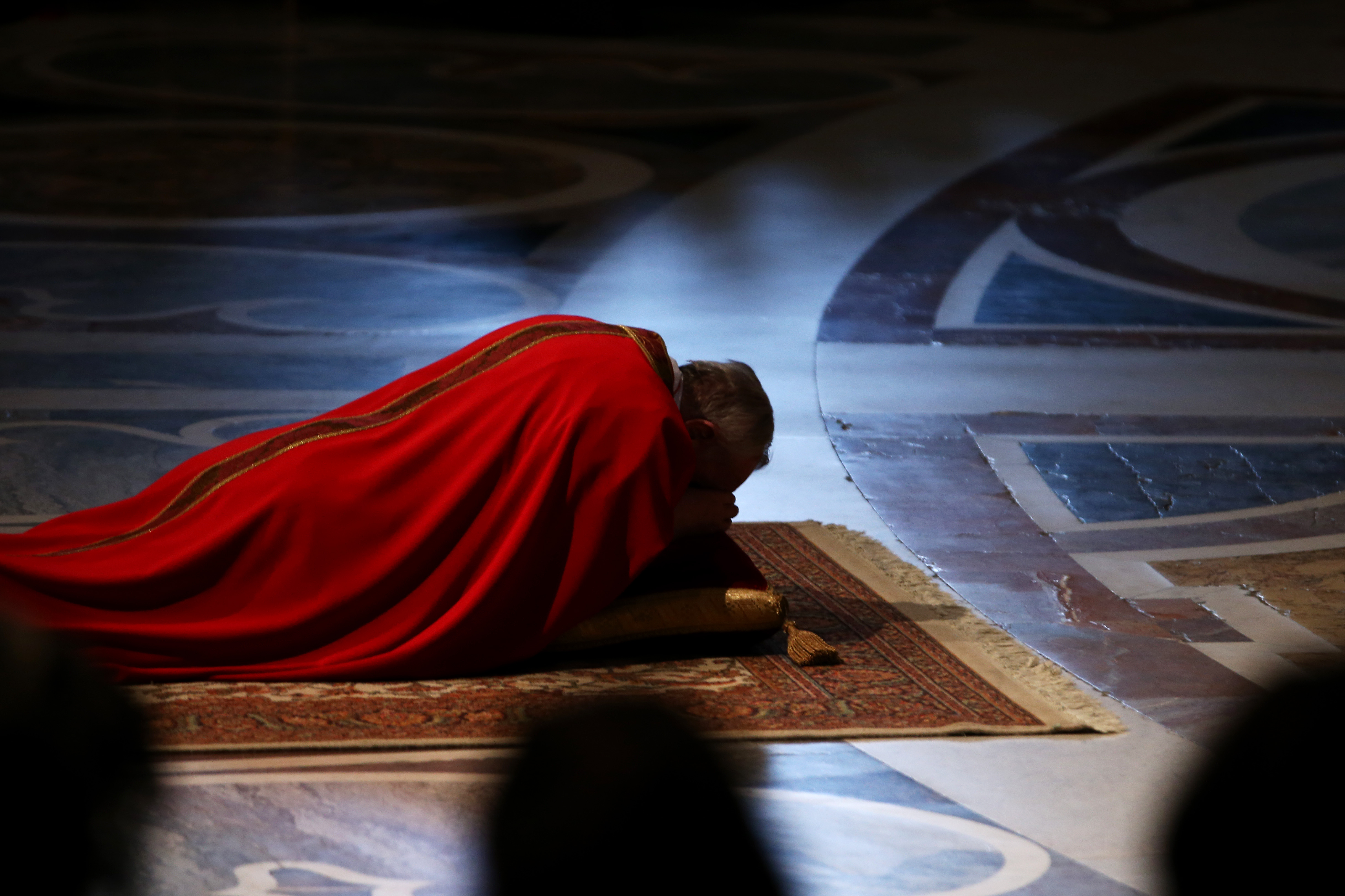
Pope Francis Attends Celebration Of The Lord's Passion in the Vatican Basilica

J. Michelle Molina finds the heart of Jesuit formation – St. Ignatius’s Spiritual Exercises – to be a revealing, but thus far largely neglected, way to understand Pope Francis:

No matter how we stake our political or religious claims, any effort to understand the man ought to include a sense of the Spiritual Exercises, a Jesuit meditative program of spiritual renewal that connects self-reform to transformative action in the world. These meditations offer a framework with which to interpret Francis’s actions because they have provided the key metaphors with which the Jesuit Bergoglio has sought not only to know himself, but also to engage the world.

One point of emphasis in the Exercises:

[The Jesuit] joins the twin goals of contemplation and action in a world understood in both geographical and existential terms. “Jesus knocks from within so that we will let him come out.” These words echo a very Jesuit notion that personal reform is linked, in the words Bergoglio drew upon to inspire the conclave, to an evangelizing church that is “called to come out of herself and to go to the peripheries, not only geographically, but also the existential peripheries: the mystery of sin, of pain, of injustice, of ignorance and indifference to religion, of intellectual currents, and of all misery.” He has eschewed certain liturgical vestments as, quite literally, trappings that would encumber his desire to walk in the world. And this sense of self in the world likely inspires Francis’s controversial symbolics, such as the washing of women prisoner’s feet.

I think this is very perceptive, especially because – as Molina intimates – it allows us to avoid imposing simplistic categories on Francis. Recently we featured a quote from Jody Bottum that made exactly this point, that our usual political labels don’t make much sense when applied to Francis, nor, at its best, historic Christianity more broadly. There’s no reason we should expect a man forged in spiritual practices developed in the 16th century to fit comfortably within any contemporary ideology scheme. And even more, the notion of contemplation joined to action in the world seems particularly fitting when considering Francis, as he appears to be intent on his deeds, from the simplicity of his lifestyle to the washing of a woman’s feet, conveying as much as his words. That style of leadership, that way of living, surely has its roots in the rich tradition of Ignatian spirituality.

There’s one other point worth making here. Molina notes this about Francis’s experiences with the Spiritual Exercises:

Bergoglio has made the full 30-day version of the Spiritual Exercises at least twice and has repeated the shorter, eight-day version every year since he entered the Society of Jesus in 1958.

A 30-day regimen of prayer, meditation, and introspection is an experience most of us probably have trouble fully imagining. One aspect of Ignatian spirituality, as Molina’s article makes clear, is knowing yourself. To overcome or transcend the self one must be acquainted with the darker corners of your soul. The humility and compassion Francis evinces, I suspect, comes at least in part from the rich inner life, the self-critical inward turn, that is a part of the Exercises. A deep awareness of your own faults and failures – a contrite heart – is the precondition for the extension of mercy and love to others. It isn’t surprising, then, that the Jesuit “activism” of Francis has skewed not toward ideological, political ambition, but humble service. Molina’s sketch of the new pope’s Ignatian formation goes as far toward explaining why this is so as any account I have read.

(Photo: Pope Francis prays on the floor as he presides over a Papal Mass with the Celebration of the Lord’s Passion inside St Peter’s Basilica on March 29, 2013 in Vatican City, Vatican. By Dan Kitwood/Getty Images)