Shining Light On Solar

VVV at The Economist upends the conventional wisdom on the US/China green-energy trade, noting that in 2011 the US actually exported more solar, wind and smart-grid technology to China than it imported:

One important explanation for this is that while China has strengths in large-scale assembly and mass manufacturing, it lacks the innovation to come up with high-value inputs. So American ingenuity is required to supply Chinese factories with such things as polysilicon and wafers for photovoltaic cells, and the fibreglass and control systems used in wind turbines.

When Chinese solar firm Suntech flirted with bankruptcy last week, Todd Woody explored another wrinkle of the US-Chinese solar relationship:

Look up at a rooftop array in California and it’s likely the solar panels came from China. Between 2007 and 2010, for instance, China’s share of the California market jumped from 2% to 46%. If Suntech and other Chinese companies go bankrupt, warranties on their solar panels will likely become worthless, leaving solar installers like SolarCity liable for any future product failures.

Seeding Innovation

Last month SCOTUS heard oral arguments for Bowman v. Monsanto:

The question before the Court is surprisingly simple: when a farmer buys a Roundup Ready soybean seed, is it free to do what it wishes with the seeds harvested from the Roundup Ready plantings?  The farmer (Bowman) says yes – arguing that Monsanto’s rights in the seed and its progeny are “exhausted” by its sale of the first seed.  Monsanto, by contrast, argues that because it never made or sold the harvested seeds, those seeds cannot be replanted without violating the patent.

Ronald Bailey worries about the consequences were SCOTUS to rule against Monsanto:

If the Supreme Court does “eviscerate” seed patent protections, agricultural biotech companies could turn to genetic engineering solutions similar to the Technology Protection System (TPS), an approach developed in 1999 by the U.S. Department of Agriculture and the seed company Delta & Pine Land Company (now owned by Monsanto). TPS consists of an array of three genes that causes a second generation of seeds to be sterile so that farmers would gain nothing by saving them. Bowman himself suggested in 2009 to the Federal District Court that Monsanto could protect itself against people like him by deploying TPS.

Uncle Sam’s Sister

Garance Franke-Ruta hails Columbia, “the feminine historic personification of the United States of America, who has since the 1920s largely fallen out of view”:

[S]he was as recognizable to Americans of yesteryear as the man in the top-hat and tails remains today, and when the suffragettes donned robes and armor, they garbed themselves in her rebel warrior’s spirit. From the 18th century until the early decades of the 20th, Columbia was the gem of the ocean, a mythical and majestic personage whose corsets or breast-plates curved out of her striped or starred or swirling skirts with all the majesty of a shield. She was honored from the birth of the nation — “Hail, Columbia!”, whose score was first composed for the inauguration of President Washington, was an unofficial anthem until the “Star-Spangled Banner” displaced it as the official national one in 1931 — to the birth of the recording and film industries, which is why we have had Columbia Records and Columbia Pictures. Yes, that lady with the torch at the start of the movies isn’t just some period-costume-wearing chick — she is a relic of this earlier personification of America, immortalized forever by the most American of industries.

America was Columbia in the same way that England was Britannia and France was Marianne. America’s capital is the District of Columbia; New York City’s great early private university was Columbia College (now University).

Why did her star fade? Garance’s view: “Female national personifications in general fell out of vogue as women took on a growing role as emancipated citizens.”

(Photo: A suffrage pageant in 1913 via Wikimedia Commons)

The Prison As Opera House

DL_Haarlem

David Leventi photographed world famous opera houses and Dutch roundhouse prisons, “a study in contrasts between beauty and squalor, opulence and poverty, serenity and cacophony”. And yet the domed structures have some eerie similarities as well:

Screen shot 2013-03-11 at 2.27.29 PM

From an interview with the photographer:

Domed prisons are the closest examples of Jeremy Bentham’s Panopticon model of mass surveillance prison design – a central guard tower with a complete view of surrounding prison cells. This concept was designed so a central observer could monitor all of the prisoners at once, without any particular prisoner being able to feel under inspection. The domed prisons have the same architectural structure as an opera house (without the opulence), but the difference is in who is observing whom. In an opera house, the audience of many is observing a few. In these domed prisons, it’s the reverse.

He was struck by the relative barbarism of US prisons compared with those in Holland:

Prisoners in Stateville prison [in Illinois] are treated like animals… It is loud. The warden at Stateville gave me assurances. But he also told me not to show any fear. One prisoners was running against the bars the entire time I was there. Bang. Bang. Bang. Endlessly. It was shocking. Everything at Stateville was the complete opposite to what I experienced in the Netherlands…  I have always had stage fright. Photographing from the center of a round prison causes anxiety. The inmates are all yelling, jeering, talking, in cacophony. You become the center of attention, and taking the photograph becomes a performance in itself. At first I was intimidated, but then I blanked everything out and focused on photographing. It must be the same for the performer.

(Photo: Haarlem Prison, Netherlands, and the Bolshoi Opera House, Moscow, by David Leventi)

How Racism Was Made

TNC mulls it over, after his illuminating NYT column:

Last night I had the luxury of sitting and talking with the brilliant historian Barbara Fields. One point she makes that very few Americans understand is that racism is a creation. You read Edmund Morgan’s work and actually see racism being inscribed in the law and the country changing as a result.

If we accept that racism is a creation, then we must then accept that it can be destroyed. And if we accept that it can be destroyed, we must then accept that it can be destroyed by us and that it likely must be destroyed by methods kin to creation. Racism was created by policy. It will likely only be ultimately destroyed by policy.

I do not see how one can remove from the human psyche the deep evolutionary urge to determine friend from enemy. Group loyalty is deep in our DNA. It was integral to our survival for over 200,000 years. The meek did not inherit the earth. They were killed by bigots.

And in fact, we have only really had a few centuries of real multi-racial and multi-cultural societies which have not explicitly adhered to codes of “us” and “them”. I don’t think group hatred will ever end in human consciousness, because I think the law reflects our original sin, and cannot erase it. I think, for example, that there will always be homophobia – even if we lived in an idea left-liberal world in which the government policed our statements and indoctrinated us effectively in schools. Gay kids – simply because they are different – will be targeted by other kids for ridicule, exclusion and bullying. We should do what we can to protect them – but lying to them by saying that homophobia will one day disappear does not seem to me to be giving them any favors.

In other words, I don’t believe the law created racism any more than it can create lust or greed or envy or hatred. It can encourage or mitigate these profound aspects of human psychology – it can create racist structures as in the Jim Crow South or Greater Israel. But it can no more end these things that it can create them. A complementary strategy is finding ways for the targets of such hatred to become inured to them, to let the slurs sting less until they sting not at all. Not easy. But a more manageable goal than TNC’s utopianism.

How Can Obamacare Be Improved? Ctd

After diving into the latest Congressional Budget Office projections for Obamacare, Jed Graham predicts an ominous future for the exchanges set up by the law:

CBO projections now not only imply that the subsidized exchange pool will shrink more precipitously, but the average benefit will rise 5.7% a year — faster than the 5% seen last August. This combination of fewer beneficiaries and faster benefit growth implies that low-income and older beneficiaries will make up an increasing share of the insurance pool. ObamaCare subsidies rise with age and decline as incomes rise; falling to zero for households who earn more than 400% of the poverty level. …

CBO’s new forecasts suggest more healthy people will opt not to pay an ever-growing chunk of their income, when they can pay a smaller fine and still get the same coverage at a fixed price when they need it, perhaps with a several months delay. More people who skip coverage will be exempt from the mandate because minimum coverage exceeds the law’s affordability threshold, the CBO noted.

Justin Green sees an easy-to-miss opportunity for Republicans:

Attention Eisenhower conservatives: this might just be your moment to offer reforms to fix ObamaCare. Just maybe. Instead, we’ve got Marco Rubio joining Ted Cruz’s effort to defund ObamaCare. Can such a push work?

Weigel unpacks the reasoning behind what he calls an “empty threat”:

Rubio’s ploy is easy to understand. He’s trying to push through an immigration reform bill that’s anathema to Republicans. His most famous co-sponsors, John McCain and Lindsey Graham, spent yesterday attacking Rand Paul for a filibuster that the base embraced immediately. So he needs to get behind the occasional stunt.

Previous Dish on Holt-Eakin and Roy’s suggestions for improving Obamacare here.

But What If Three People Love Each Other? Ctd

800px-Joseph_F._Smith_family

Readers are responding to this post in droves. Below are all their best arguments against legal polygamy (with pro arguments coming shortly):

Your readers debate the polygamy objection to gay marriage, but they both miss the actual answer that has been provided by the courts a long time ago – and it makes perfect sense.  Bans on polygamy are constitutional because the discrimination is purely numerical and thus applies equally across racial and gender lines, etc.  The law says you can only have one spouse, and that law applies to blacks, whites, men, women and, yes, ultimately heterosexuals and homosexuals.  It is the same reason it is constitutional to legislate an age when you can marry, an age before you can vote, or the maximum speed that you can drive on a highway.

All laws discriminate in some sense.  But purely numerical discriminations do not discriminate based on a person’s inherent nature and, thus, are (usually) constitutional.  Its also why it is possible (if not necessarily advisable) to criminalize polygamy. Society is free to decide that polygamy is an accepted marital arrangement.  Indeed, we already accept serial polygamy (e.g., Newt Gingrich).  But constitutional considerations would be implicated if society tried to legislate that only whites or only heterosexuals could be polygamous.  At bottom, the polygamy question is a red herring to the gay marriage debate.

Another:

In addition to the excellent response from another reader which you posted, I have to add this: In societies that previously recognized polygamy, it was almost exclusively polygyny and not polyandry; a man could have more than one wife, but no wife could have more than one husband. I’m going to assume that we’re doing away with that scenario on the basis of gender equality alone, but a quick look at the details of what polygamous marriage would look like makes it clear why polygyny (provided legal gender inequality) is actually manageable but generalized polygamy isn’t in most cases.

Let’s do away with genders and just talk about three people, A, B, and C.  Person A wants to have a polygamous relationship with B and C.  In the US, the primary legal result of marriage is the formation of a single legal household entity that encompasses two people.  So, if A and B become one household, and C marries A, are B and C now married too?  If not, you have a legal mess on your hands that should be obvious.  And it gets worse if C wants to marry D as well, but A and B do not.

There is an argument to be made for “group marriage,” where an arbitrary number of people enter into a marriage contract with each other. Let’s also provide that any individual can voluntarily “divorce” him or herself from that married household.  I could see a legal basis for this, although my question would be: does this even resemble anything that we would call “marriage” anymore?  Is there any way in which the complex group dynamics inherent in human nature don’t split this “marriage” into factions?  And for that matter, what really is needed here that isn’t provided by, say, incorporation?

Perhaps there’s an argument to be made for arbitrary “adoptive families” that aren’t families at all.  For a less explosive example, let’s imagine two unrelated people who come to cohabitate as siblings and not romantically or amorously.  In the same way that four co-“married” polyamorous individuals might want hospital visitation rights and inheritance rules, these two people might want some protections without being married.  I can see an argument for that, but I can’t see calling it marriage.

Another way to look at it:

The reason for a two-person marriage works much better than three-person marriage is not due to government policy. It is entirely social. Pardon me going all geeky here but this is how I think:

Three-unit systems where all equal to each other are inherently more unstable than just two-unit systems. Imagine that the probability of two people having a great interpersonal relationship is x. In a two-unit system, probability of stability is x. But in a three unit system it has to be x to the power of 3, since three relationships have to be great. Note that x is less than 1. So x^3 is much much less than x. A stable society can not function with such a high divorce rate.

In ancient societies and in some places even now, polyandry and polygamous marriages are traditional. They work because of special social circumstances and in lot of cases one or more of the persons in the marriage has more weight than the rest and they stay cohesive only because of those special circumstances. Once everybody wants equal weight, things will collapse.

Another points to a variety of complicated scenarios:

What happens if Wife #1 wants a divorce but Wife #2 objects? When the husband dies, are the two women still married to one another? Does the estate get disbursed or do they have to keep on sharing it? The assumption is that if it’s one man and two women, if one of the women dies the remaining man and woman are still married. What do you do in community property states? What happens in the community property state when Wife #2 dies during the middle of the divorce of Wife #1. Does the husband get to keep everything or does the about-to-be-divorced wife get half instead of one-third? If they were divvying up things three ways before she died and she does it three hours before the final decree does the surviving wife have a half interest in the third? What about if she dies three hours after? The husband dies before both wives. Do the kids of Wife #1 get a say in the end-of-life decisions being made about Wife #2?

Another runs through a similar series of situations and concludes:

We do not have the laws in place to support plural marriage. I don’t know for sure, but I suspect that most of the countries that do allow plural marriage allow only one form of plural marriage: a single man and multiple wives. Our constitution will certainly not allow that restriction if we decide to go down that road. We would have to build those laws, and I don’t think we have anyone wise enough to craft laws to cover a fraction of the situations that would develop. People who want some sort of a plural marriage will have to resort to lawyers and contracts to formalize their relationships on a case-by-case basis. I realize that is what people used to say about same sex marriage. The difference between the two situations is that we already have a body of law to govern the marriage of two people.

One more for now:

Please continue to make a clear distinction between gay marriage and polygamy.  The best argument for gay marriage is that it harms no one and is good for gay people and their children.  No one has managed to come up with even a shred of evidence that gay marriage is harmful to anyone, and not for want of trying.  Polygamy, on the other hand, is demonstrably bad for women and children, in ways that go far beyond creating a surplus of unmarried men.  An excellent resource on this topic is A Cruel Arithmetic: Inside the Case Against Polygamyby Craig Jones.

(Photo: the full family of one Joseph F Smith, c 1900, a known polygamist. This picture depicts members of his family, including his sons and daughters, as well as their spouses and children. Via Wiki.)

In Praise Of The Defense Sequester

csbachartmon

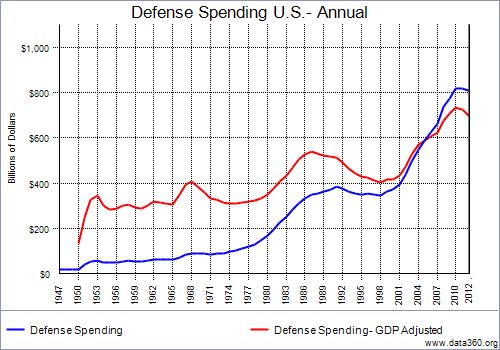
There’s a truly hopeful piece in the NYT today that’s a further argument for the sequester. The military is slowly beginning to think through where and how to cut – in ways that can only help lower the debt and make massive land invasions of foreign countries much less feasible.

Inside the Pentagon, even some senior officers are saying that the reductions, if done smartly, could easily exceed those mandated by sequestration, as the cuts are called, and leave room for the areas where the administration believes more money will be required. These include building drones, developing offensive and defensive cyberweapons and focusing on Special Operations forces.

Given the way procurement and bases are spread across the states to prevent rational cutting and pruning – as would happen in any private sector company – I’m not sure the Democrats and non-neocon Republicans should ever end the defense sequester. How else are we going to cut defense spending given our corrupt, horse-trading, not-my-military-base Congress? And look at the chart above. Are we really spending more now than we did during Vietnam or the height of the Reagan defense buildup? Yes, we are.

Even as a percentage of GDP? Yes, we are:

dsg539_500_350

I know we have a base-closing commission – but we all know its limits and manipulation (especially after the beginning of “House of Cards”). As the institution fights over “slices of a $530 billion budgetary pie that many experts think should be shrunk by one-fifth over the rest of this decade,” Thomas P.M. Barnett’s bet is on the army:

At roughly 560,000 men and women, the Army is bigger than it has been since 1994, when it was still crashing from its Reagan-era Cold War heights of 780,000. Later in the 1990s, the Army bottomed out at 480,000, and there’s no reason it can’t go back to that level, given that none of the fabulously high-tech wars being dreamed up by Pentagon planners calls for multiyear occupations of distant California-size countries.

(Charts via Ezra and data360)

Peak Satellite?

Tim De Chant fears the likelihood that “sometime in 2016, for the first time in over 50 years, the U.S. won’t have a polar orbiting weather satellite”:

Currently, the U.S. has 24 Earth-observing satellites in orbit. Their missions are widely varied, covering more than just weather. There are satellites that monitor tropical rainfall (key in our understanding and prediction of hurricanes), keep an eye on land-use change (important for urban development and habitat conservation), and observe the ice sheets that cover Greenland and Antarctica (an indicator of sea level rise). …

In 2007, the National Research Council issued a report on the overall status of the U.S. Earth observation system. What they found wasn’t promising.

“The extraordinary U.S. foundation of global observations is at great risk,” they wrote. Today, more than five years later, the situation hasn’t improved. Of the 15 satellite missions reviewed for that report, “I believe two of those are actually on track,” says Dennis Lettenmaier, a hydrogeologist at the University of Washington and member of the NRC committee. Budget shortfalls have jeopardized nearly every program. “Notionally, at least, there was enough money to do all those things, so it wasn’t supposed to be about there not being enough money,” he says. That changed when the economy soured. When NASA started running short on funds, it went looking for programs to cut. Satellites that were many years away from launch got the ax. “NASA basically just dropped them all,” Lettenmaier says.

“Technology Breeds Crime”

Frank Abagnale, the former conman played by Leonardo DiCaprio in Catch Me If You Can and who now works as a security consultant, explains how forgery has only gotten easier:

To forge a cheque 50 years ago, you needed a Heidelberg printed press, you had to be a skilled printer, know how to do colour separations, negatives, type-setting… those presses were 90 feet long and 18 feet high. There was a lot of work involved in creating a cheque. Today, you open a laptop.

If you are going to forge a British Airways cheque, you go to their website, capture the corporate logo and put it in the top right corner. You then put a jet taking off in the background and make a really fancy four-colour cheque in 15 minutes on your computer. You then go down to an office supply store, buy security cheque paper and put it in your colour printer.

Fifty years ago, information was hard to come by. When you created a cheque you had no way of knowing where in reality British Airways’ bank was, who was authorised to sign their cheques and you didn’t know their account number. Today you can call any corporation in the world and tell them you are getting ready to wire them money and they will tell you the bank, the wiring number, the account number. You can then ask for a copy of the annual report and on page three are the signatures of the chairman of the board, the CEO and the treasurer. It’s all on white glossy paper with black ink — scanner ready art. You then just print it onto the cheque.