Rumsfeld’s War Crimes Mount

The Guardian, in a 15-month investigation, has unearthed the fact that Donald Rumsfeld brought veterans from the dirty wars in Latin America, Colonel James Steele and Colonel James H Coffman, to empower sectarian warfare against the Sunni insurgency in Iraq. He set up detention centers for Sunni insurgents that were run by Iraqis but monitored and checked on by two men, one of whom reported to Rumsfeld, the other to Petraeus. So we have the first solid evidence that Petraeus, the golden mediocrity of Washington, was also an abetter of the worst forms of torture imaginable:

“Every single detention centre would have its own interrogation committee,” claimed [Iraqi General Muntadher] al-Samari, who worked with Petraeus’ and Rumsfeld’s designated men on the ground] … “Each one was made up of an intelligence officer and eight interrogators. This committee will use all means of torture to make the detainee confess like using electricity or hanging him upside down, pulling out their nails, and beating them on sensitive parts.” There is no evidence that Steele or Coffman tortured prisoners themselves, only that they were sometimes present in the detention centres where torture took place, and were involved in the processing of thousands of detainees.

But reporters witnessed horrifying war crimes in US-occupied Iraq, under the authority of those reporting directly to Rumsfeld and Petraeus:

Samari claimed that torture was routine in the commando-controlled detention centres. “I remember a 14-year-old who was tied to one of the library’s columns. And he was tied up, with his legs above his head. Tied up. His whole body was blue because of the impact of the cables with which he had been beaten.”

Gilles Peress, a photographer, came across Steele when he was on assignment for the New York Times, visiting one of the commando centres in the same library, in Samarra. “We were in a room in the library interviewing Steele and I’m looking around I see blood everywhere.”

The reporter Peter Maass was also there, working on the story with Peress. “And while this interview was going on with a Saudi jihadi with Jim Steele also in the room, there were these terrible screams, somebody shouting ‘Allah, Allah, Allah!’. But it wasn’t kind of religious ecstasy or something like that, these were screams of pain and terror.”

How did we find all this out? Bradley Manning’s leaks. Sometimes a whistleblower is not only a traitor. He can also be a patriot, uncovering war crimes. The full documentary can be seen here. A five-minute version is here.

Chelsea Clinton, NBC And “Journalism”

A reader writes:

I’ve enjoyed your series on “Sponsored Content” and the fusion of news and advertising, but you haven’t really touched upon the granddaddy of them all: the fusion of politics and “news”. Here is an example: “NBC Today News: Chelsea Clinton: Hillary is as Vibrant as Ever“. Here we have an NBC News employee writing a “journalism” piece on Secretary of State Hillary Clinton.  It uses quotes from Chelsea Clinton, who just happens to also be a NBC News Employee.  In addition, the article is written by an NBC News “contributor” – Eun Kyung Kim – who just happens to be the Director of Communications for the National Women’s Business Council, which provides advice and counsel to the President of the United States. In addition, this “contributor” worked as a Senior Advisor on Communications and Policy to the White House in 2011. According to Eun Kyung Kim’s LinkedIn page, she has a “Proven record of originating, developing and implementing strategic communications plans that help raise a brand’s visibility and build relevant audiences.”

This article by an NBC NEWS division is nothing more than a press release, which was practically written by Hillary herself.

Let’s examine some of Eun Kyung Kim’s other pieces of “journalism” for NBC News, shall we? “Hillary Clinton to Write Second Memoir“, “Hillary Clinton Steps Down, but (reluctant) Style Legacy Endures,” “Hillary Clinton: “Maybe I’ll get a Decorating Show”Chelsea Clinton reveals Politics, Kids are a Possibility“, Michelle Obama: “Bangs are my Midlife Crisis.” This is simply advertising for Powerful Democratic Women.  Pure propaganda.  And written by a current Director of Communications to a Presidential Advisory Counsel under the guise of a journalist. And lastly, this whole ruse is pitched to the low information voter under the morning news provided by the popular Today Show.

Venezuela After Chávez, Ctd

SPAIN-VENEZUELA-POLITICS-CHAVEZ

Michael Moynihan waves goodbye to the strongman:

His was a poisonous influence on the region, one rah-rahed by radical fools who desired to see a thumb jammed in America’s eye, while not caring a lick for its effect on ordinary Venezuelans. In his terrific new book (fortuitously timed to publish this week) Comandante: Hugo Chávez’s Venezuela, The Guardian’s Rory Carroll summed up the legacy of Chávez’s Venezuela as “a land of power cuts, broken escalators, shortages, queues, insecurity, bureaucracy, unreturned calls, unfilled holes, uncollected garbage.” One could add to that list grinding poverty, massive corruption, censorship, and intimidation.

William J. Dobson doubts Chávez’s brand of politics will survive him:

Chavismo served only to showcase the man who propounded it. A man whose humble origins and charismatic personality helped forge a connection with the country’s poor, a population who had long been excluded from politics. A man whose style, voice, and methods were so unpredictable that it took his opponents more than a decade to even understand whom they were opposing.

Jennifer Cyr isn’t so sure:

The chavistas … could remain a political and social tour de force in the country for some time. After fourteen years in office, Chávez leaves behind an institutional, social, and international legacy that will be difficult to overcome. Perhaps just as important, his memory will surely live on among those Venezuelans who fell under his spell, declaring that they love Hugo Chávez (“yo lo amo”). Whether his closest confidants can continue to fuel that love after his death is an open question. (His refusal to cultivate any sort of progeny to succeed him, as well as potentially conflicting interests within Chavez’s coalition of support, help very little in this endeavor.)

Francisco Toro looks at how Chávez spent Venezuela’s oil wealth:

Where Chávez was able to transcend the Cuban model, it was largely due to the advantages of life at the receiving end of an unprecedented petrodollar flood. By some estimates, Venezuela sold over $1 trillion worth of oil during his tenure, and so his was government by hyperconsumption, not rationing. The petroboom allowed Chávez to substitute the checkbook for the gulag; marginalizing his opponents via popular spending programs rather than rounding them up and throwing them in jail. Rather than declaring all out-war on business, he co-opted them. Rather than abolish civil society, he created a parallel civil society, complete with pro-government unions, universities, radio stations and community councils. Such enhancements were tried before by left-wing populists in Latin America, but always failed because they ran out of money.

The Economist adds:

A majority of Venezuelans may eventually come to see that Mr Chávez squandered an extraordinary opportunity for his country, to use an unprecedented oil boom to equip it with world-class infrastructure and to provide the best education and health services money can buy. But this lesson will come the hard way, and there is no guarantee that it will be learned.

Diego von Vacano argues that Chávez’s form of government wasn’t populist but “democratic Caesarism”:

This term, unlike ‘populism,’ describes a regime that seeks to use constitutional, juridical, and legal procedures to institutionalize reforms aimed at ameliorating the plight of poor and working-class citizens. While populist regimes such as that of Perón and Getúlio Vargas in Brazil relied on demagoguery to stay in power, democratic-Caesarist regimes rely on constitutional and public-law mechanisms to legitimate the authority of a form of republicanism with a strong executive that possesses a martial, anti-imperial component.

Gideon Rachman sees few countries are following Venezuela’s example:

The contrast with former President Luiz Inácio Lula da Silva in Brazil is striking. Although Chávez was a military man and Lula was a trade-unionist, both leaders espoused radical, left-wing ideas in their early careers. The difference is that Lula was much more pragmatic in office. This does not mean that he sold out. On the contrary, like Chávez’s Venezuela, Lula’s Brazil placed a heavy emphasis on redistributive policies that favoured the poor. Lula was also happy, on occasion, to play to the gallery with some anti-imperialist rhetoric. But he was also prepared to make his peace with big business and with the United States. Brazil has become a favoured destination for foreign investors.

And Massie insists that Chávez “didn’t matter that much”:

In truth, Chavez was vastly over-estimated by Washington. Listening to bone-headed Republicans you could have been forgiven for supposing this bullshitting caudillo was a Latin American Stalin. Chavez never represented much more than a modest threat to mainstream American interests. It suited both sides to flatter Chavez and over-estimate his influence.

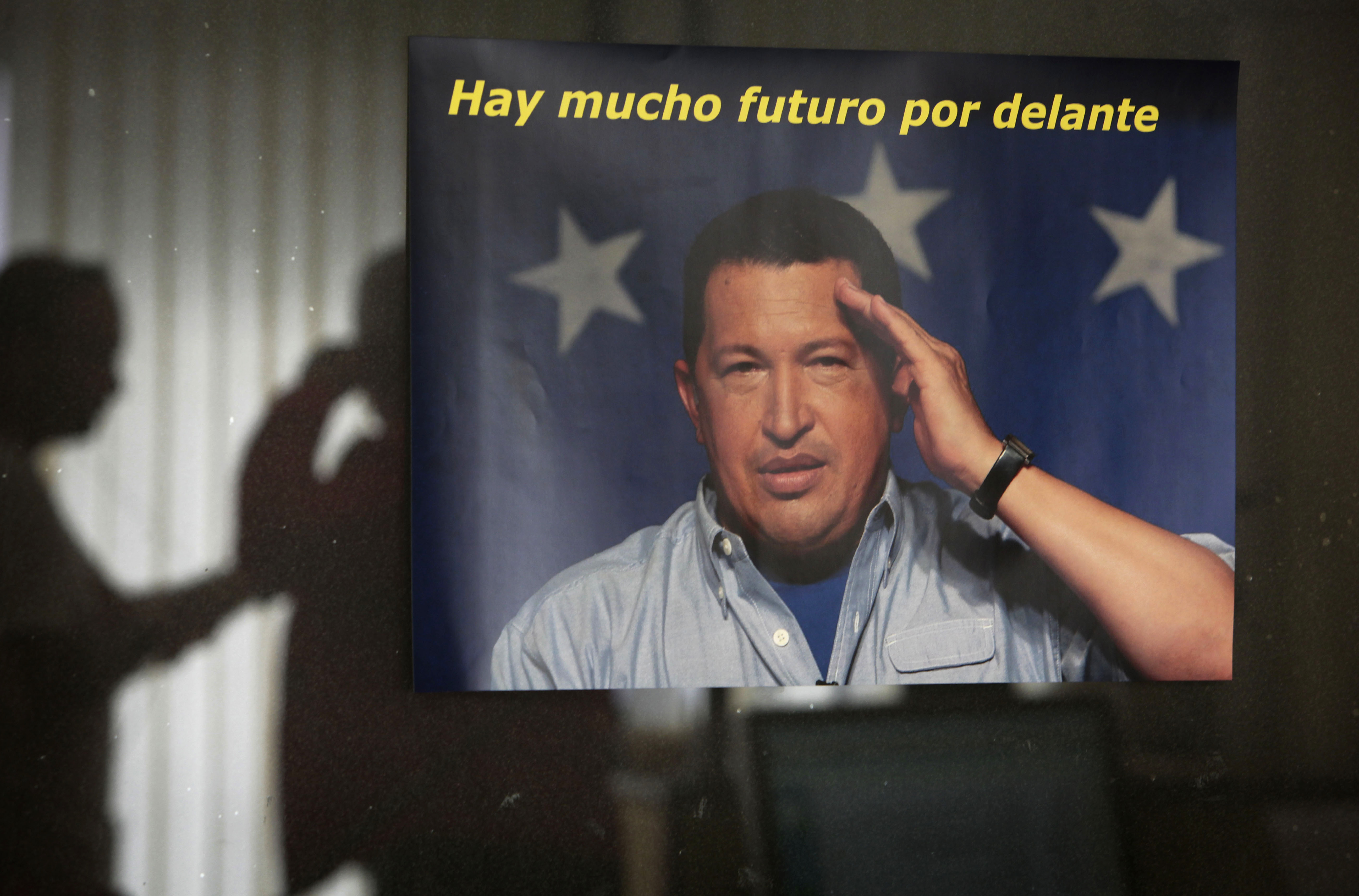
(Photo: A poster of President Hugo Chavez reading ‘There is a great future ahead’ is seen at the consulate of Venezuela of Santa Cruz de Tenerife on March 6, 2013. By Desiree Martin/AFP/Getty Images)

Hitch And Sully: A Christian Dissent

Christ_Taking_Leave_of_the_Apostles

A reader writes:

I’ve enthusiastically followed your conversations about religion with Christopher Hitchens. But this latest part of the conversation provoked me like none of the others.

Nothing Hitchens said bothered me, a practicing, but non-fundamentalist Christian, in the least. His objections seem aimed at a faith that bore no resemblance to mine. Even more, his arguments curiously parallel those of religious fundamentalists. Everything is to be taken literally – even, most weirdly, the parables of Jesus and notoriously difficult passages like the Sermon on the Mount. For instance, Jesus’s saying that we should “take no thought for tomorrow” is rendered by Hitchens as “moral advice” to be treated as a simple command. Treated as such, he calls it “wicked” and “evil” because, understood literally, that means Jesus is telling parents to neglect their children and for individuals and communities to make sure they starve by abandoning the slightest trace of prudence. Reading this teaching of Jesus this way genuinely is not very careful or intelligent. I honestly can’t believe that’s really what Hitchens thought it means, that Jesus was commanding his listeners to harm others, let alone children.

You note at one point that commands like this are “impossible.” I agree. And maybe that’s the point. That Jesus is not so much (to continue with the above example) commanding parents to harm their children, but exposing our hearts – showing us that our attachments, our search for mastery and control, our lust for money, that all these strivings are futile and the enemies of living in a genuinely compassionate and peaceful way. That trying to take the future and impose our will on it leads to destruction, both of ourselves and others. Hitchens treats Jesus like a hucksterish advice columnist for first century Palestine.

Do this, do that, follow these simple directions. My example isn’t fanciful – he reads the Gospels with about as much nuance as I do the morning paper. Instead, why not read the Gospels by treating Jesus, among much else, as a masterful psychologist, a prophet who strips away all the strongholds of our egos, our achievements, our delusional belief in our own self-sufficiency. Isn’t this what Jesus is getting at when he tells us, in Matthew 15, that out of the heart proceeds a whole array of sins and misdeeds. Jesus never settles on the exterior, but is a penetrating analyst of our interior lives – our thoughts, our desires, our “hearts.” This fact alone, that Jesus finds the chief faults of the world come from within each of us, means that by necessity interpreting his words cannot be done in the simplistic, hyper-literal way Hitchens does. We must, like Jesus did with every person he encountered, dig beneath the surface to the inner logic of his commands, move from the letter to the spirit, to what his commands expose about our hearts. We should read Jesus, to deploy an over-used word, “existentially.”

Ultimately, Jesus was not a giver of “moral advice” or the purveyor of a checklist of commands. He was both teaching and enacting a way of being in the world, a way of life, a way radically discontinuous with our natural instincts. At every turn, he took the wisdom of the world, our expectations of what we, left to our own striving and tendencies, should do to solve our problems, and showed their futility. Looking at the world around us, might we not think, if but for a moment, that there was more to this strange, wandering teacher than Hitchens is willing to concede?

(Painting: “Christ Taking Leave of the Apostles” by Duccio, between 1308 and 1311.)

How Did Cheney Get Iraq So Wrong?

Frum’s answer:

How could they have been so cocksure in the face of so much contrary opinion from seemingly well qualified people? They had good reason for their self-confidence. Over the previous quarter century, the group around George W. Bush – famously nick-named “the Vulcans” – had joined battles over the Cold War and over the Gulf War against many of the same people who would later oppose the Iraq War. The Vulcans had proved right; their opponents had proved wrong.

And those of us who followed and supported the Vulcans fully expected that history would repeat itself in Iraq: boldness would win.

I remember vividly a conversation I had in my gym’s locker room with a Republican friend just before the war started. I had begun to worry – with the Turks balking, Rumsfeld posturing and the war plan nebulous and quite possibly under-manned. His response was simple (paraphrasing from memory): our military is so great these days they can accomplish anything. That tells you the impact of the post-Cold War triumphalism that had slowly replaced strategic thinking in our late-imperial phase. For my part, I remember reassuring a non-political skeptic the following (same paraphrase) on the eve of the war: You wait. We’ll find bunkers crammed with chemical weapons and possibly nuclear weapons that could end up in al Qaeda’s hands and in our cities. I promise you they’re there.

I trusted Colin Powell. I’d never seen a military intervention fail, except in Somalia. I’d seen new democracies spring from barren soil in post-Soviet Europe. Saddam was a monster and could never be removed peacefully. I became convinced by my own conviction. Here is my late April 2003 post clinging to the idea that Saddam and al Qaeda were in contact (a shady story in the Sunday Telegraph):

We know that Saddam had elaborate designs to make chemical and biological weapons. No serious person doubts that – although whether he tried to destroy evidence before the war, how extensive it was, what exactly it amounted to, are still questions in search of good answers. (But we’re getting warmer, it seems.) So what does a free country do when confronted with an enemy state, with WMDs, that we strongly suspect is in league with terrorists like al Qaeda, but cannot prove without invading? It’s tough. My view is that, after 9/11, we have little option but to launch a pre-emptive strike and hope for retroactive justification. But I understand why people demand proof before such action. This new finding – and I bet there will be more like it – strengthens my position, I think. The threat was not the weapons as such; it was the regime, its capacity to make and use such weapons and its potential or actual alliance with al Qaeda.

Looking back, the key phrase in the following sentence is pretty clear:

My view is that, after 9/11, we have little option but to launch a pre-emptive strike and hope for retroactive justification.

I’m not excusing my confirmation bias, my broad brush against opponents of the war (although I refuse to accept that they were all skeptical of the WMDs’ existence; many were just anti-Bush and anti-war), or my violation of just war doctrine. But the truth is: 9/11 worked. It terrorized me and it terrorized a lot of people. When you are in a state of terror, the odds of future terror seem much greater and the risks of inaction graver. Yes, I was excitable and over-reacted. The only solace is that I was a pillar of calm and prudence compared with the people running the country.

Release The Torture Report!

Abu_Ghraib_56

Jane Mayer notes that the government has produced the definitive report on the Bush-Cheney torture program. It was a long process to get to the truth and past the CIA’s self-serving bullshit, so effectively conveyed to Mark Boal and Kathryn Bigelow. You and I paid for this:

Working often seven days a week in catacomb-like basement offices, they have culled through some six million pages of nearly indecipherable internal intelligence documents in search of the truth. From this research, they have compiled a six-thousand-plus-page report with something like thirty-five thousand footnotes. To make it more digestible, they have boiled this down to a three-hundred-page summary…

More to the point, in his hearings for CIA director, John Brennan, formerly ambiguous about the war crimes of some of his CIA colleagues, we discovered this:

Brennan had claimed publicly in 2007 that the C.I.A.’s treatment of terror suspects had produced valuable intelligence, and perhaps even saved lives. But after reading the report, Brennan acknowledged under oath that he now doubts this.

In response to a question from Saxby Chambliss, the Republican vice-chairman of the Intelligence Committee, Brennan said, “I must tell you, Senator, that reading this report from the committee raises questions about the information that I was given at the time, the impression I had at the time.”

The only logical inference from this is that the CIA lied to Congress and even perhaps the Bush-Cheney administration about the nature of the evidence produced by using the torture methods of the Gestapo and the Chinese Communists.

But, of course, the CIA is somehow a separate government all itself and now is busy redacting, editing and presumably pruning the Senate Intelligence Committee’s report. Senator Feinstein gave the CIA six months to finish the job. The deadline has passed.

It seems to me that the pro-torture case or the anti-torture case would be greatly enhanced by a deeper and better understanding of what actually happened under the rogue vice-presidency of Dick Cheney. There will never be a more definitive report than this one. There should be no question that it be released immediately – to us, the general public, so we may better understand the scale, nature and results of torture, and thereby assess the public defenses of the torturers.

Why is this report not available yet? Why is the CIA allowed to see, let alone, doctor the Senate Intelligence Committee report? And where is the president? He promised us a more transparent presidency. Yet on the gravest matter imaginable – the evidence that senior government officials authorized war crimes – a comprehensive report is still bottled up and kept from us. The US has already taken a huge blow to its moral standing because of the psychotic ego of Dick Cheney. The only way to try to reverse this is at least to be honest about what this country did. And the principles it betrayed. And the bad intelligence it may or may not have acquired.

Why, in other words, have we been debating a movie “based on true events” when we have the truth to debate … and our own government is withholding it from us?

Venezuela After Chávez

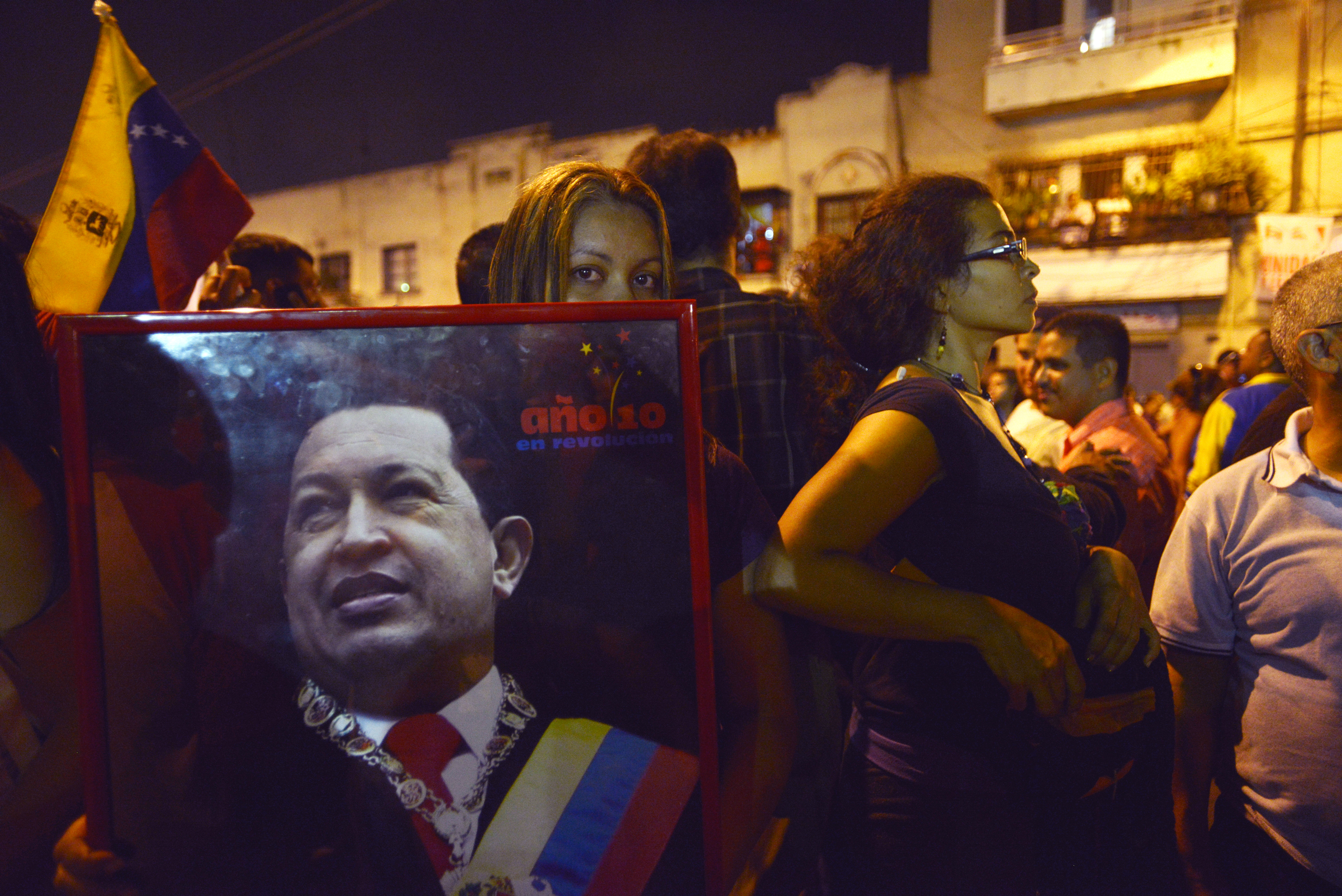
Venezuelans In Caracas Area React To Death Of Hugo Chavez

Succumbing to cancer after several months of treatment, President Hugo Chávez died yesterday, ending his 14-year rule and leaving a radically transformed Venezuela with uncertain days ahead [NYT]. For now, Vice President Nicolas Maduro will assume power for 30 days until a new election is held. Looking over the past few decades, Venezuelan blogger Francisco Toro argues that his country paid a huge price for El Comandante’s legacy:

[D]ebasement of the public sphere set the stage for the million insanities that came to pass for public policy making in the Chávez era: the gasoline given away almost for free by a government that loves to excoriate others’ environmental records, the ruinous subsidy to importers and to Venezuelan tourists abroad implicit in the exchange control system; the unblushing blacklisting of millions of dissidents; the manically self-destructive insistence of piling on tens of billions in unsustainable foreign debt at a time of historically very high oil prices; the nonchalant use of imprisonment without trial to cow dissidents and intimidate opponents; the secret spending of a hundred billion dollar slushfund beyond any form of scrutiny; the incessant repression of independent trade unionists; the botched nationalization and virtual destruction of industry after industry, from steel — to electricity — to cement — to the agro-food sector – the list goes on and on.

Oscar Guardiola-Rivera is far more positive about Chávez:

The facts speak for themselves: the percentage of households in poverty fell from 55% in 1995 to 26.4% in 2009. When Chávez was sworn into office unemployment was 15%, in June 2009 it was 7.8%. Compare that to current unemployment figures in Europe. In that period Chávez won 56% of the vote in 1998, 60% in 2000, survived a coup d’état in 2002, got over 7m votes in 2006 and secured 54.4% of the vote last October. He was a rare thing, almost incomprehensible to those in the US and Europe who continue to see the world through the Manichean prism of the cold war: an avowed Marxist who was also an avowed democrat.

Now that he’s gone, the question is whether “chavismo” – a muscular and internationalist push for socialism in Latin America – will outlive Chávez. Jon Lee Anderson sets the scene:

What is left, instead, after Chávez? A gaping hole for the millions of Venezuelans and other Latin Americans, mostly poor, who viewed him as a hero and a patron, someone who “cared” for them in a way that no political leader in Latin America in recent memory ever had. For them, now, there will be a despair and an anxiety that there really will be no one else like him to come along, not with as big a heart and as radical a spirit, for the foreseeable future. And they are probably right. But it’s also Chávism that has not yet delivered.

Daniel Lansberg-Rodriguez suspects that Venezuelan “chavismo” will die with the man:

Come what may, domestically the party may yet be able to trudge along in slow decline for a period — perhaps eventually splitting into several independent parties that sporadically cooperate (much like the Venezuelan opposition does now). Yet without Chávez, the international side of the revolution — on which he has staked much of his legacy — cannot last.

Recently the former minister of Trade and Industry, Moisés Naím, predicted a crisis to follow Chávez’s death:

Crushing headaches will soon be inevitable across the country, including within the private sector but especially among the poor. President Chávez has bequeathed the nation an economic crisis of historic proportions. The crisis includes a fiscal deficit approaching 20 percent of the economy (in the cliff-panicking United States it is 7 percent), a black market where a U.S. dollar costs four times more than the government-determined exchange rate, one of the world’s highest inflation rates, a swollen number of public sector jobs, debt 10 times larger than it was in 2003, a fragile banking system and the free fall of the state-controlled oil industry, the country’s main source of revenue.

David Blair warns of the consequences for Venezuela’s oil economy especially, which constitutes 96% of export earnings:

Chavez toughened the terms for foreign energy companies, causing many to leave. The result was that oil production fell from 3.1 million barrels per day in 2001 to 2.7 million in 2011, representing a cumulative loss of tens of billions of dollars. While betting Venezuela’s future on oil, Chavez also placed his country on a path of steadily declining output. Mr Maduro must try to reverse this disastrous combination; otherwise the social programmes that were Chavez’s great achievement will eventually become unaffordable. And there lies the rub: reviving production would mean accepting the expertise of the foreign oil companies that Chavez so fiercely denounced.

Simon Tilsdall hopes fresh leadership in Venezuela will give Obama a chance for a broader rapprochement in Latin America:

Whether the opportunity is grasped depends partly on Maduro, a Chávez loyalist but a reputed pragmatist with close ties to Raúl Castro in Cuba. Yet it depends even more on Obama, whose first term, after a promising start, ended up perpetuating Washington’s historical neglect of Latin America. He now has a chance to do better. The political climate seems propitious. Economic and cultural ties are also strengthening dramatically. Trade between the US and Latin America grew by 82% between 1998 and 2009. In 2011 alone, exports and imports rose by a massive 20% in both directions.

(Photo: People react to the death of Hugo Chaves outside the military hospital on March 05, 2013 in Caracas, Venezuela. By Gregorio Marrero/LatinContent/Getty Images)
Peak After Peak

Vince Beiser paints an ugly picture for fossil fuel fighters such as McKibben:

The widely circulated fears of a few years ago that we were approaching “peak oil” have turned out to be completely wrong. From the Arctic to Africa, nanoengineered materials, underwater robots, side-scanning 3-D sonar, specially engineered lubricants, and myriad other advances are opening up titanic new supplies of fossil fuels, many of them in unexpected places—Brazil, Australia, and, perhaps most significantly, North America. “Contrary to what most people believe,” declares a recent study from the Harvard Kennedy School, “oil supply capacity is growing worldwide at such an unprecedented level that it might outpace consumption.” …

[T]he problem has never been exactly about supply; it’s always been about our ability to profitably tap that supply.

We human beings have consumed, over our entire history, about a trillion barrels of oil. The U.S. Geological Survey estimates there is still seven to eight times that much left in the ground. The oil that’s left is just more difficult, and therefore more expensive, to get to. But that sets the invisible hand of the market into motion. Every time known reserves start looking tight, the price goes up, which incentivizes investment in research and development, which yields more sophisticated technologies, which unearth new supplies—often in places we’d scarcely even thought to look before.

Frum points to the next emerging market:

Mexican oil production has been declining over the past decade, mostly because of under-investment and mismanagement by the state oil monopoly, Pemex. … In October, Pemex announced discovery of a big new field in the Gulf of Mexico. Newly elected Mexican President Enrique Pena Nieto is urging his country to amend its constitution to allow foreign investment in Mexican oil fields. Experts assess that opening the Mexican oil industry to global investment will revive Mexican oil production and boost Mexico’s economic growth by potentially 2 points a year. Nieto’s PRI party — the very party that nationalized Mexican oil 80 years ago — is expected to vote this weekend to approve the new policy.

Israel’s “Freedom Riders”

Two Palestinian activists sit inside as

That’s a reminiscent photograph, isn’t it – of a disenfranchised minority, now forced to ride not at the back of the bus but in a completely segregated one? I mentioned last night that Israel’s Ministry of Transportation introduced separate buses for Palestinians and Jewish settlers traveling between Israel and the West Bank, after the latter complained to the government that Arab passengers were a threat. Oren Ziv reports and provides photos of the scenes yesterday:

Such measures may be shocking to those unaware that in East Jerusalem and the West Bank, separate-but-unequal bus lines already exist, as detailed by Mya Guarnieri. But, as with the many forms of de facto discrimination in Israel and the occupied Palestinian territories, these buses are not legally segregated. So predictably, Israel’s transportation minister insists that, even with the new bus lines, “Palestinians entering Israel will able to ride on every public transportation line, including existing lines in Judea and Samaria [Israeli terms for the West Bank occupied Palestinian territories]“.

A simple poignant anecdote:

Back on the 210 bus to Eyal, Middle Eastern music was playing to a half-full bus of middle aged men who fit a profile that is classified as a low security risk. “It’s ironic,” notes Mussa Mohammed, a tile layer from Nablus. “Inside Israel we are free to ride the buses and train, but on the way back to our homes in the West Bank we are separated out.”

Jake Wallis Simons is wary of the word “apartheid” and tries to place the move in context of Israel’s balancing act between combating terror and protecting civil rights:

The question, as with my experience at Ben Gurion airport, is where one draws the line. In Israel, this matter is debated frequently and officially by moral philosophers and religious figures, particularly when it comes to military operations. They get it wrong sometimes, and spectacularly so. But often, on a day-to-day basis, they get it right.

Nevertheless, it has to be noted that the timing is strange. Apart from the blast on the bus in Tel Aviv during the last Gaza offensive, there hadn’t been a suicide attack on Israel’s bus network for six and a half years, which is a striking figure given that 29,000 Palestinians commute to Israel daily.

Anna Lekas Miller calls it is symptomatic of an already “separate but equal” system:

[S]egregation between Israeli and Palestinian passengers on public transportation is hardly new. In Jerusalem, the “Central” bus station operates buses connecting Jerusalem to Tel Aviv, Haifa, the Dead Sea and several Israeli settlements throughout the West Bank. These buses do not have to stop at checkpoints—as the passengers are Israeli citizens, soldiers and settlers. Some of these buses—the settler buses—are heavily subsidized by the Israeli government, and thus often travel the city half empty. It’s easy for these buses to have a set schedule. The bus station itself is indoors, air-conditioned and even equipped with a Kosher McDonalds.

Aeyal Gross compares the new policy to a 2009 move to bar Palestinians from using a key highway in Israel, which Israel’s courts struck down as illegal:

Differing circumstances aside, the policy reversed by the High Court in the case of Route 443 is similar to the Transportation Ministry’s new policy regarding certain bus lines, insofar as both involve the development of a means of transportation for the citizens of the occupying state and its separation from the local population. This violates the rules of international law whereby occupation is a temporary situation only, and the occupying power must administer the territory for the benefit of the local population.

In this sense the bus issue is only one more component of Israel’s de facto annexation of the territories, an annexation accompanied by the creation of a regime of segregation – which is of course unequal – between Jews and Palestinians.

Corey Robin juxtaposes the Haaretz report with the text of Plessy v. Ferguson.

(Photo: Two Palestinian activists sit inside as Israeli bus as it rides between a bus stop outside the West Bank Jewish settlement of Migron, near Ramallah, and a checkpoint leading to Jerusalem, on November 15, 2011. Palestinian ‘Freedom Riders’ reenacted US civil rights movement’s boarding of segregated buses in the American south by riding Israeli settler buses to Jerusalem. Several Israeli transportation companies operate dozens of lines that run through the occupied West Bank and east Jerusalem, many of them subsidized by the state. While it is not officially forbidden for Palestinians to use Israeli public transportation in the West Bank, these lines are effectively segregated, since many of them pass through Jewish-only settlements, to which Palestinian entry is prohibited by a military decree. By Ahmad Gharabli/AFP/Getty Images.)

The “Nasty Party” Stigma Returns

Alex Massie worries that most Brits now see the relatively moderate Tory party as “pretty right-wing”:

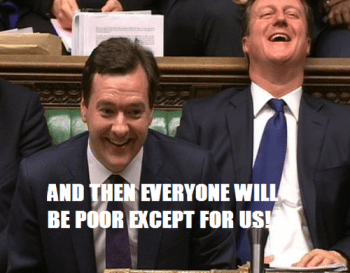
tumblr_mgdtu6dVxJ1qg8c5yo1_500The people may be wrong but that’s what they think. And why wouldn’t they? The Tories have been very good at telling the country what they don’t like but rather less good at telling us what they do like. … They’re against foreign judges, foreign workers and foreign students. They’re against people on benefits or in receipt of tax credits and they’re against “free” university education. Worst of all, perhaps, they’re against taxing millionaires and remain blind to the damage cutting the top rate of tax for the very richest Britons has done them. Then, though a little unfairly, they’re seen as being against gay people’s desire to marry each other and, more generally, they’re seen as being against (or at least uncomfortable with) much of modern British life.

And he believes these positions are obscuring the party’s accomplishments:

[T]he government has some good stories to tell. Recent setbacks notwithstanding, there’s a good story to be told about education reform. The same is true of employment growth and even, if the framing is done properly, of welfare reform. But we don’t hear very much of these things and nor do we hear much talk of what the government is actually doing. Instead the party bangs on and on and on about what it is against but only rarely about what it is for.

The Economist pegs the party’s recent rightward shift as a strategy to win a crucial election in a battleground borough:

[David Cameron] would be well advised to consider the party’s dark night of the soul in the early 2000s. In the eminently winnable 2005 election (a time when, polling suggests, Britons were both more exercised about Europe and less socially liberal than they are now), the Conservative Party ran an UKIPish campaign under the slogan “are you thinking what we’re thinking?” Back then the answer from electorally-decisive voters was: “err, no”. The same, it seems, was true in Eastleigh yesterday. The party should be wary of making the same mistake in 2015.

(Image from the tumblr of English teenager Rachel Dawn, who titles it “British politics in a nutshell”)